
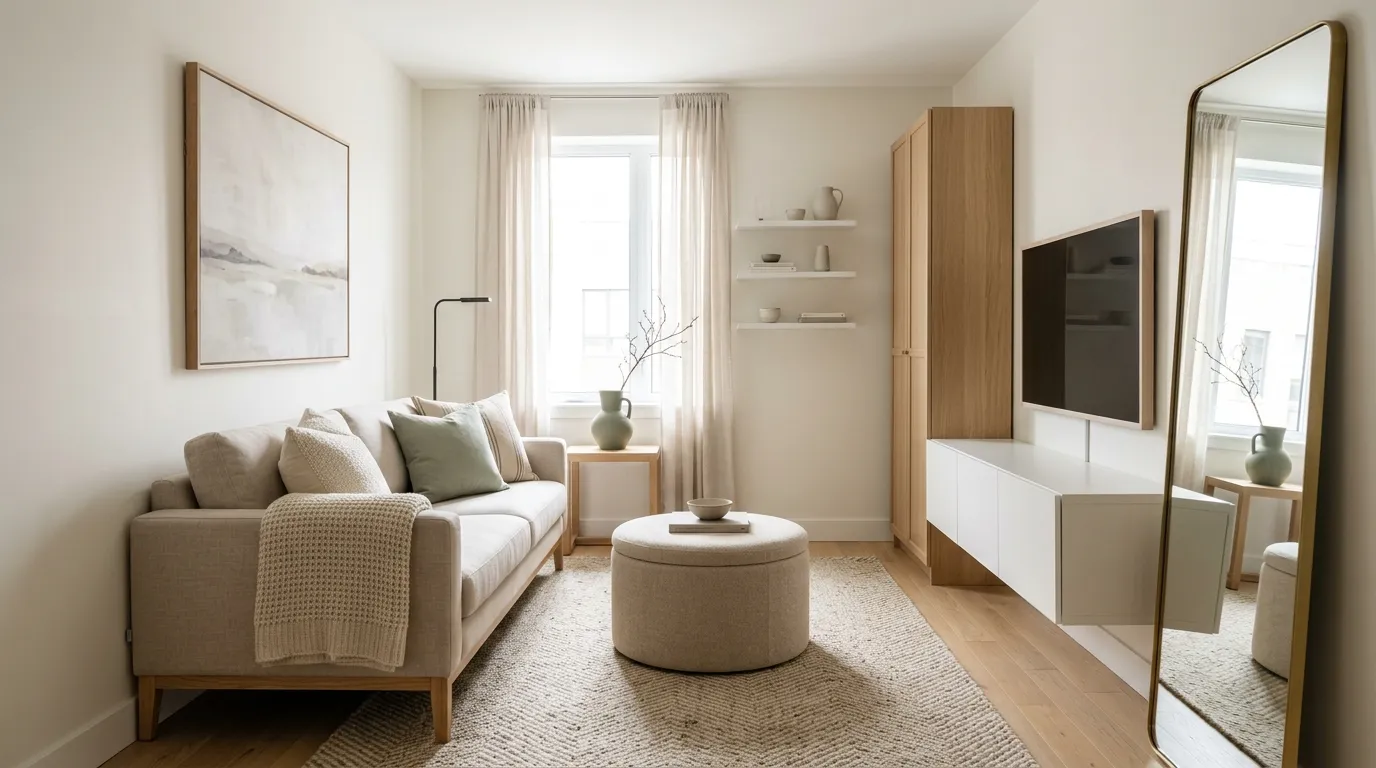
11 Decorating Ideas for Small Living Room With No Clutter
There’s a specific kind of frustration that comes with a small living room that feels cluttered no matter how much you clean. You tidy up, and within a day, it feels crowded again. The truth is, in a small space, clutter isn’t always about mess—it’s often about too many items competing for too little room.
The good news is that decorating a small living room doesn’t have to mean choosing between style and function, or constantly battling visual chaos. With the right approach, you can create a space that feels calm, organized, and genuinely put-together. This guide covers 11 practical decorating ideas for small living rooms that focus on reducing clutter while still making the room feel warm, styled, and complete.
Let’s get into what actually works.
Why Small Living Rooms Feel Cluttered So Easily
Before jumping into specific ideas, it helps to understand why clutter shows up so quickly in small spaces. In a larger room, extra items have room to spread out and blend in. In a small living room, every object is more visible, which means even a small amount of excess can feel overwhelming.
Common culprits include too much furniture for the available square footage, decor items placed without a clear purpose, and a lack of dedicated storage, which leads to everyday items piling up on visible surfaces. Once you understand these root causes, the decorating ideas for small living rooms below will make a lot more sense—they’re designed to address the source of the clutter, not just cover it up.
1. Choose a Few Statement Pieces Instead of Many Small Ones
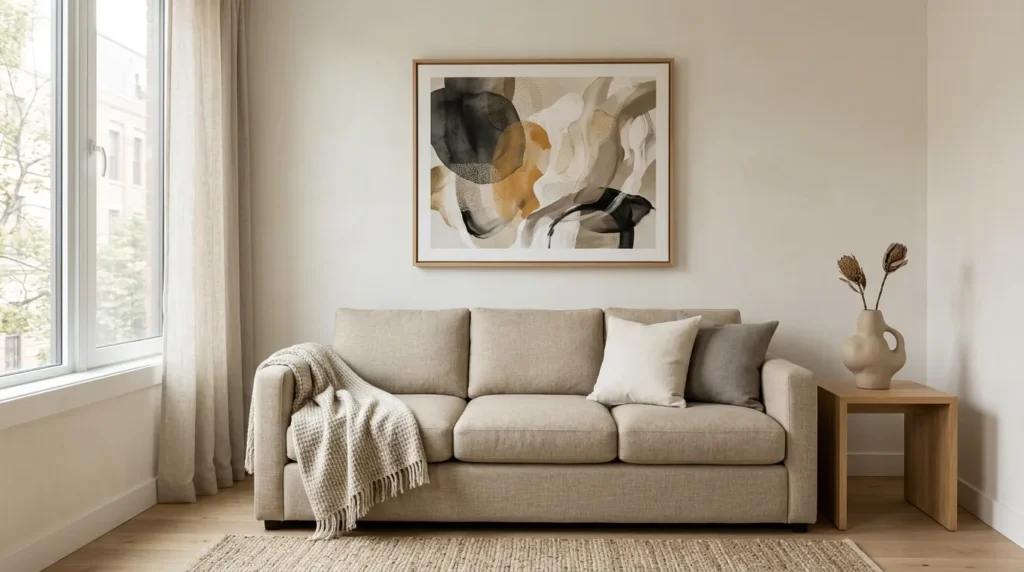
One of the most effective decorating ideas for small living rooms is resisting the urge to fill every empty spot with something decorative. A room with three or four thoughtfully chosen statement pieces almost always looks more intentional than one filled with a dozen small trinkets.
Instead of scattering small decor items across shelves and surfaces, choose a few pieces that genuinely stand out:
- One piece of artwork sized appropriately for your wall
- A single well-designed vase or sculptural object
- One textured throw blanket rather than several competing patterns
This approach naturally reduces visual noise while still giving the room personality and warmth.
2. Use Closed Storage for Everyday Clutter
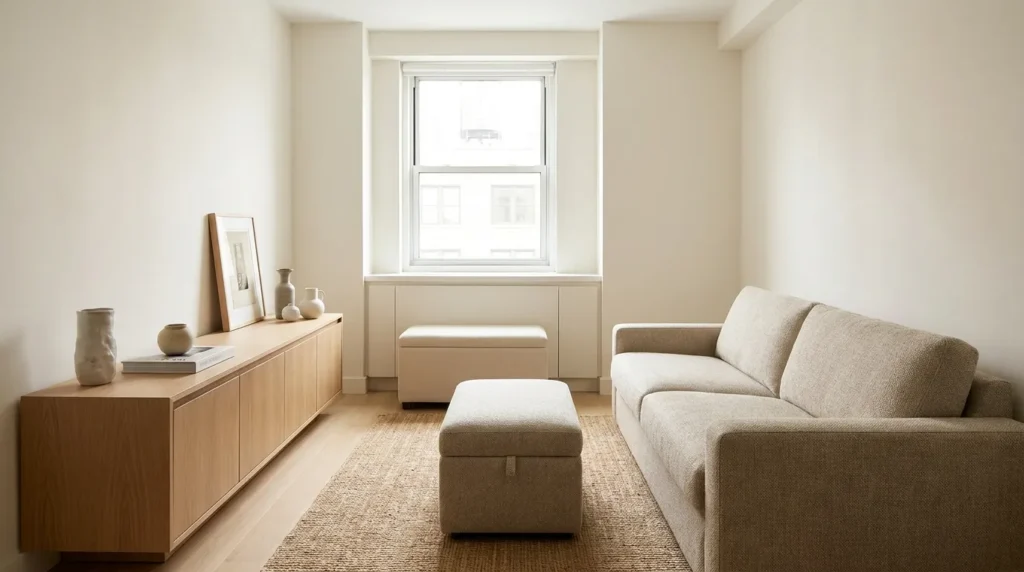
Open shelving looks great in photos, but in real life, it often becomes a magnet for remote controls, mail, and miscellaneous items. If clutter is a genuine concern, closed storage solutions are usually more practical for everyday living.
Consider furniture that hides mess while still looking intentional, such as a media console with doors, a storage ottoman for blankets or magazines, or a bench with a lift-up seat for shoes and bags near the entry. These pieces let you keep the room tidy without requiring constant cleanup, which is especially valuable in small spaces where mess is more noticeable.
3. Stick to a Simple, Cohesive Color Palette
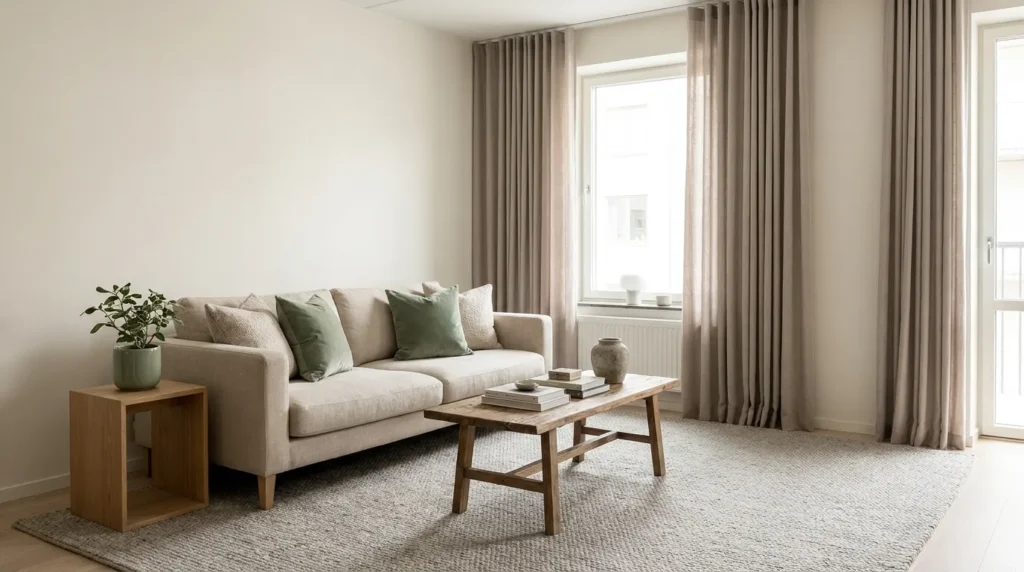
A scattered mix of colors can make even a tidy room feel chaotic. One of the simplest decorating ideas for small living rooms is narrowing your palette to two or three main colors, then layering in variation through texture rather than competing hues.
A good starting formula:
- One neutral base color for walls and large furniture
- One secondary tone for rugs or curtains
- One accent color used sparingly in pillows or small decor
This kind of cohesion makes the room feel calm and organized, even before you address actual physical clutter.
4. Be Intentional About Wall Decor
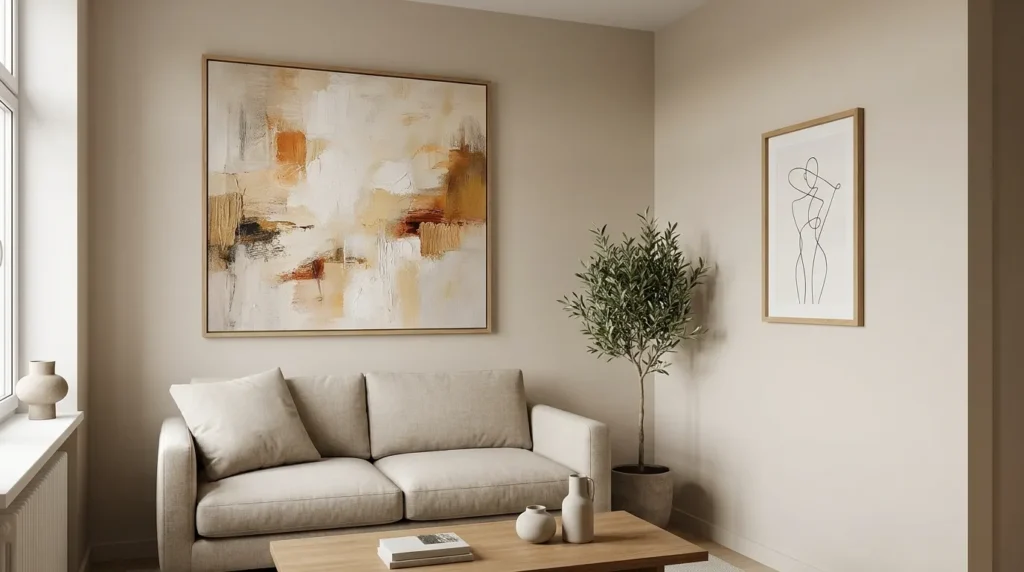
It’s tempting to fill every bare wall in a small room, but overcrowded walls can contribute just as much to a cluttered feeling as physical objects. Instead of hanging multiple small frames or mismatched pieces, choose one or two larger, well-placed items per wall.
A single oversized piece of art, for example, often has more visual impact than a gallery wall crammed into a small space. If you do want a gallery-style display, keep the frames consistent in color or style so the grouping reads as one cohesive piece rather than scattered clutter.
5. Limit Furniture to What You Actually Use
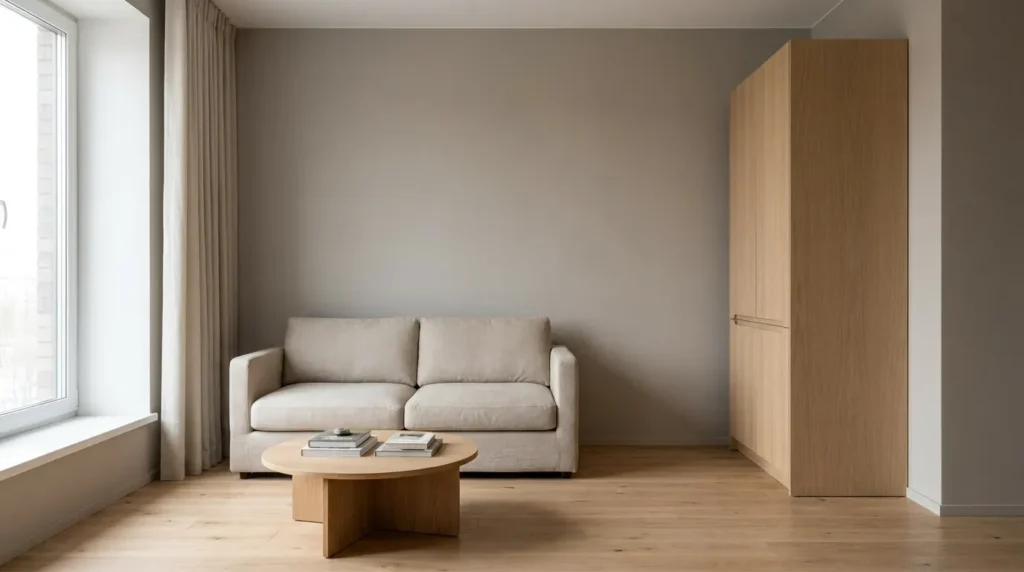
It’s easy to accumulate furniture over time—an extra side table here, a chair that seemed like a good idea there—until the room feels overloaded. Take an honest look at your current setup and ask whether each piece is truly necessary.
A clutter-free small living room usually needs just the essentials: comfortable seating, one functional surface like a coffee table, and a single storage piece. If you find yourself with furniture that rarely gets used or exists only to hold more stuff, it may be worth removing rather than working around.
6. Create a Designated “Landing Spot” for Loose Items
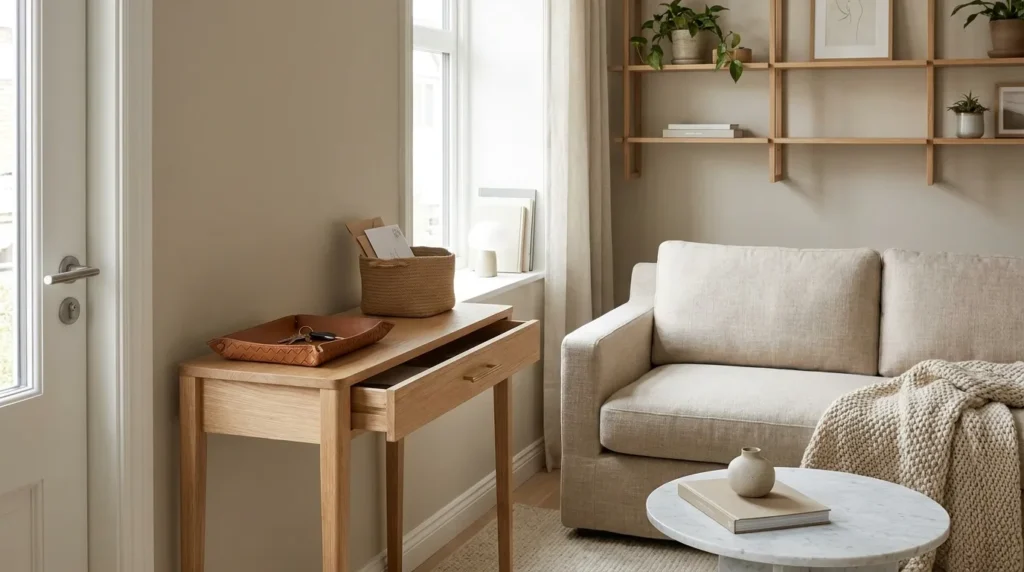
Clutter often accumulates because everyday items don’t have an assigned place to go. Keys, mail, remotes, and chargers end up scattered across surfaces simply because there’s nowhere designated for them.
Solving this is simple: choose one small tray, basket, or drawer specifically for these loose items. This single change can dramatically reduce visible clutter, since everything has an obvious home instead of ending up wherever it was last set down.
7. Use Furniture With Built-In Storage
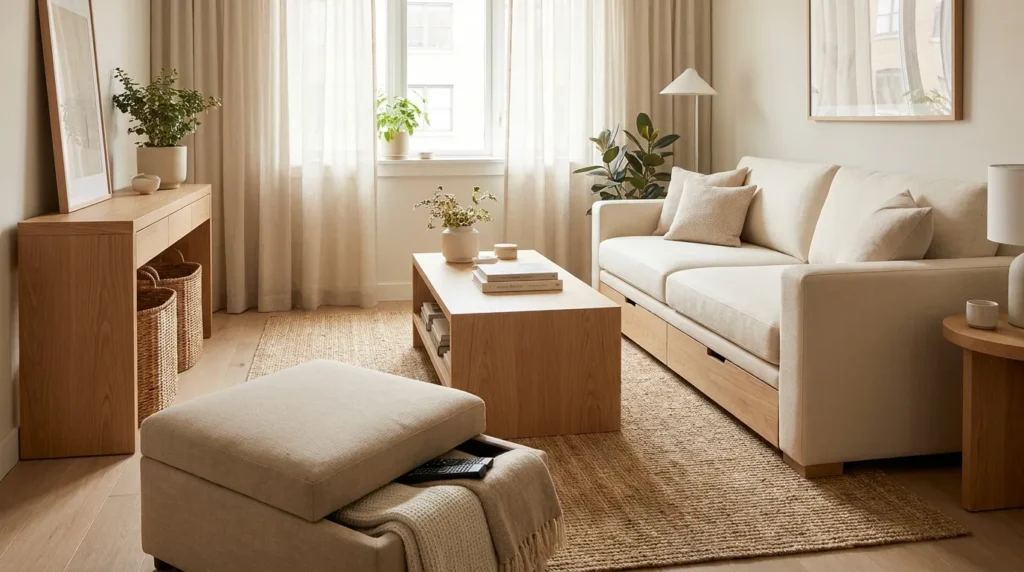
Furniture that pulls double duty is one of the most practical decorating ideas for small living rooms, especially when clutter is a concern. Coffee tables with drawers or shelves, console tables with baskets underneath, and ottomans with hidden compartments all provide extra storage without taking up additional floor space.
This approach lets you keep items like blankets, magazines, or electronics accessible but out of sight, which helps maintain a clean, uncluttered look without sacrificing functionality.
8. Keep Textiles Simple and Limited
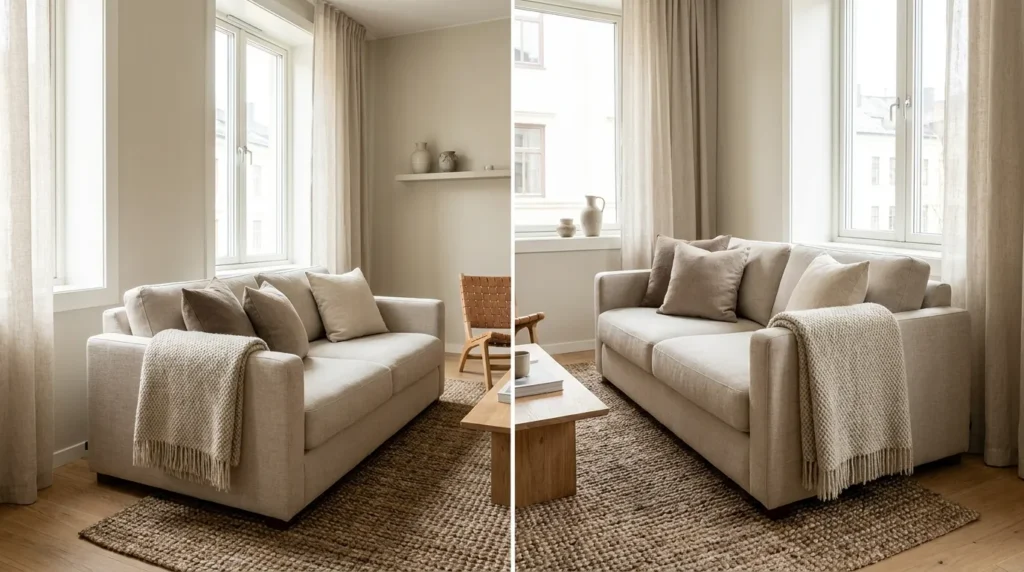
Pillows, throws, and rugs add warmth to a small living room, but it’s easy to overdo it. A sofa piled with eight mismatched pillows or multiple layered throws can quickly start to feel cluttered rather than cozy.
A simpler approach that still feels intentional:
- Two to three pillows in complementary (not identical) patterns or textures
- One throw blanket, draped rather than piled
- One well-sized area rug rather than layering multiple rugs
This keeps the room feeling curated rather than overstuffed, while still allowing for texture and warmth.
9. Rotate Decor Instead of Displaying Everything at Once
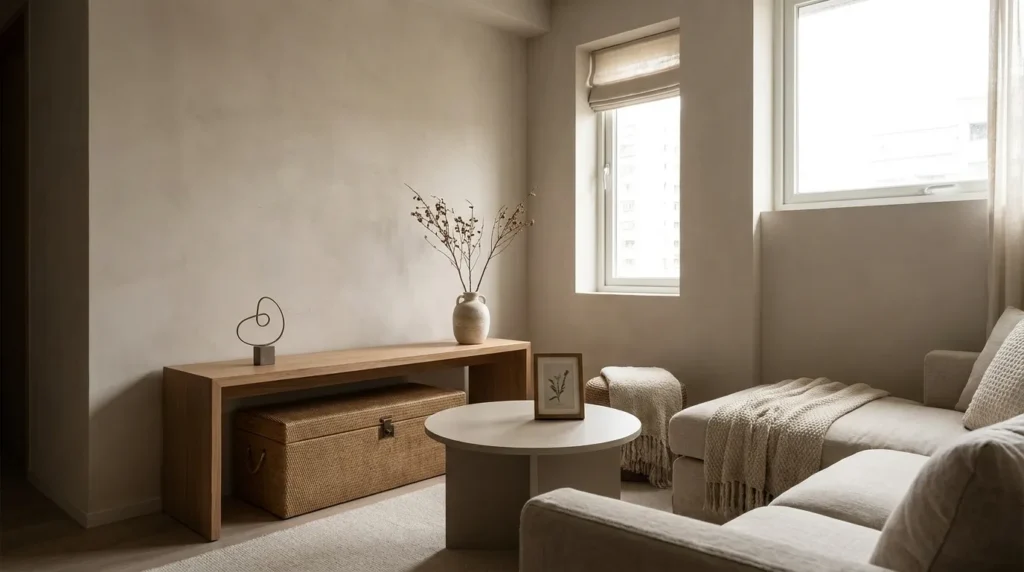
If you have a lot of decorative items you love, displaying all of them at once in a small space will almost always read as cluttered. Instead, consider rotating decor seasonally or periodically, keeping only a portion out at any given time.
This approach lets you enjoy your full collection over time without overwhelming the room, and it has the added benefit of making your space feel refreshed every few months without needing to buy anything new.
10. Use Mirrors to Add Depth Without Adding Clutter
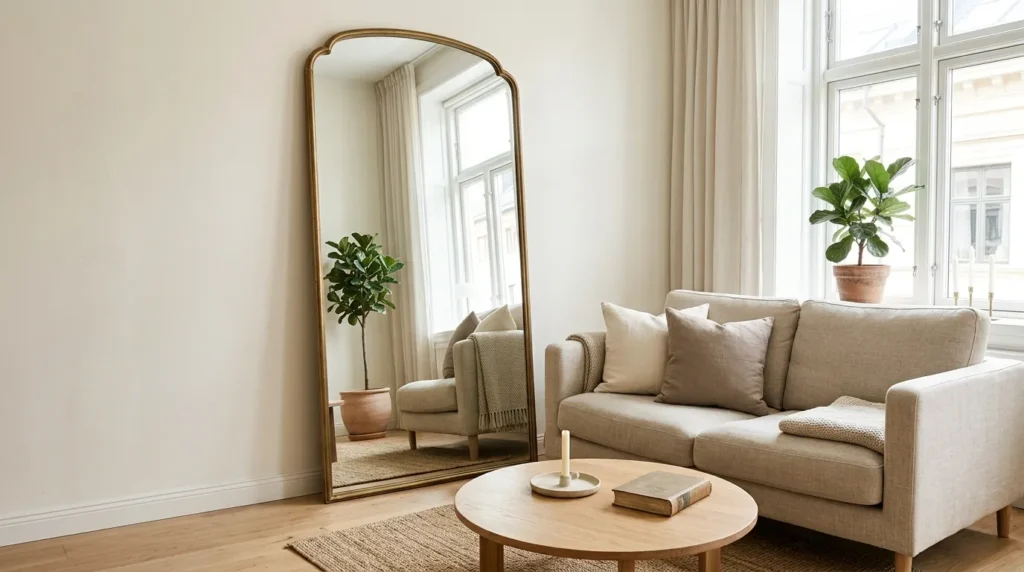
Unlike many decorative items, a well-placed mirror adds visual interest and even makes the room feel larger, without contributing to clutter. A single large mirror leaned against a wall or hung above a console table can serve as a focal point on its own, reducing the need for additional decor in that area.
This makes mirrors one of the more efficient decorating ideas for small living rooms—they add style and function at the same time, which is exactly the kind of dual-purpose choice that works best in compact spaces.
11. Regularly Edit, Not Just Organize
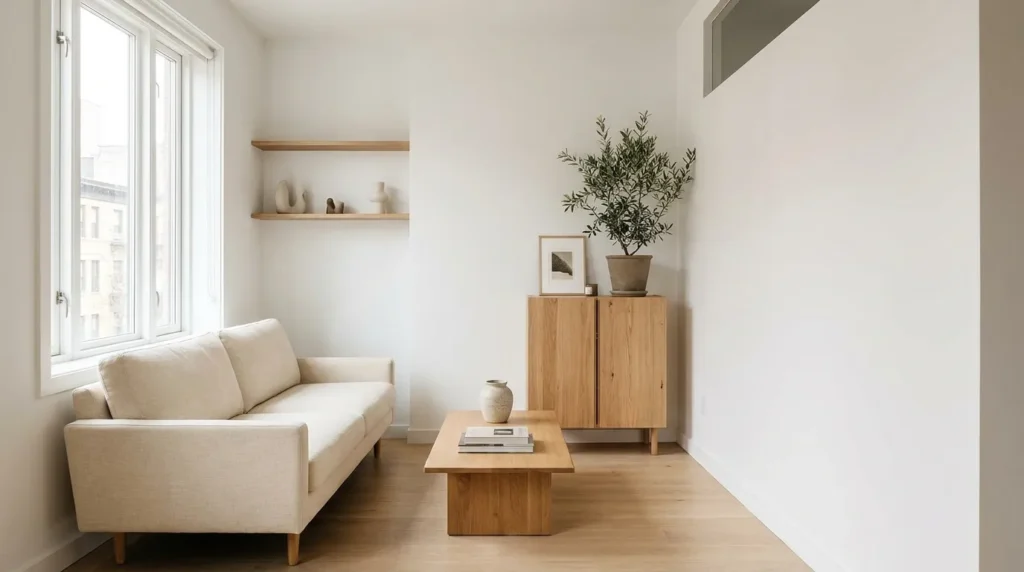
Many small living rooms don’t have a decorating problem so much as an editing problem. Organizing clutter into bins and baskets helps, but if you’re consistently accumulating more than the space can hold, no amount of organizing will fully solve the issue.
Set a habit of periodically reviewing what’s in the room and removing anything that no longer serves a purpose or adds genuine value. This ongoing editing process, done every few months, is often more effective long-term than any single decorating change.
Bringing It All Together
Creating a clutter-free small living room isn’t about being minimalist for the sake of it—it’s about being intentional. By choosing fewer, better decor pieces, relying on closed storage for everyday items, and being honest about which furniture and objects actually serve the space, you can create a room that feels calm, organized, and genuinely comfortable to spend time in.
These decorating ideas for small living rooms work because they address clutter at its source, rather than just hiding it temporarily. Start with one or two changes—maybe simplifying your textiles or adding a designated storage spot for loose items—and build from there. A small living room doesn’t need less style to feel less cluttered; it just needs a more thoughtful approach to what earns a place in the room.
Frequently Asked Questions
- What’s the biggest cause of clutter in a small living room?
Clutter usually builds up when everyday items don’t have a designated place to go, or when there’s simply too much furniture and decor for the available space. Addressing both storage and the sheer quantity of items is key to solving the problem long-term. - Should I avoid decorating a small living room to keep it looking clean?
Not at all. The goal isn’t to avoid decorating, but to be selective. A few well-chosen statement pieces and a cohesive color palette can make a small room feel styled and complete without contributing to visual clutter. - Is open shelving a bad idea for a small living room?
Open shelving isn’t inherently bad, but it requires more discipline to keep tidy, since everything on it is visible. If clutter is a recurring issue, closed storage options like cabinets or ottomans are generally more practical for keeping the room looking clean day to day.