

9 Small Warm and Cozy Living Room Ideas for Dark Rooms
If your living room barely sees the sun, you already know the struggle. Dark rooms can feel cold, cramped, and uninviting—no matter how nice your furniture is. But here’s the good news: a lack of natural light doesn’t mean you’re stuck with a gloomy space. With the right approach, you can turn even the dimmest corner into one of the most inviting rooms in your home.
This guide walks you through small warm and cozy living room ideas designed specifically for rooms that don’t get much sunlight. Whether you’re dealing with a north-facing apartment, a basement-level living area, or a room with small windows, these tips will help you create a space that feels warm, welcoming, and full of personality—without needing to knock down walls or install skylights.
Let’s get into it.
Why Dark Rooms Feel Cold (and How to Fix It)
Before jumping into specific ideas, it helps to understand why dark rooms often feel unwelcoming in the first place. It’s usually not just about the lack of light—it’s about how that lack of light interacts with color, texture, and layout choices.
Common issues include:
- Cool-toned paint colors that make the room feel even dimmer
- Heavy, dark furniture that absorbs what little light exists
- Poor lighting layered incorrectly (too much overhead, not enough ambient)
- Cluttered layouts that block natural light from circulating
- A lack of texture, which can make a room feel flat and sterile
Once you understand these root causes, creating small warm and cozy living room ideas becomes much easier. It’s less about fighting the darkness and more about working with it intentionally.
1. Choose Warm, Muted Paint Colors Instead of Stark White
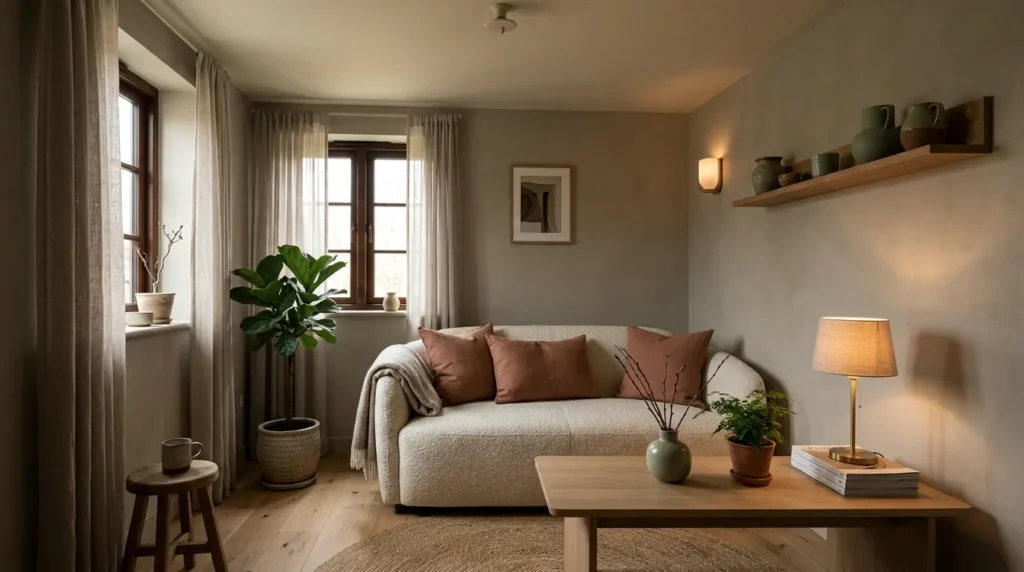
Many people assume white paint is the automatic fix for a dark room. In reality, stark white can sometimes emphasize the lack of natural light, making the room feel flat or even a little clinical.
Instead, opt for warm, muted tones that create depth and coziness:
- Soft terracotta or clay
- Warm taupe or greige
- Muted olive or sage green
- Warm off-white with a yellow or beige undertone
These colors reflect light gently while adding warmth, which is exactly what you want when working with small warm and cozy living room ideas for dark spaces. Darker rooms often look better with color that embraces the mood rather than colors that try (and fail) to fake brightness.
If you’re nervous about commitment, test a large sample swatch on the wall and observe it at different times of day before deciding.
2. Layer Your Lighting Strategically
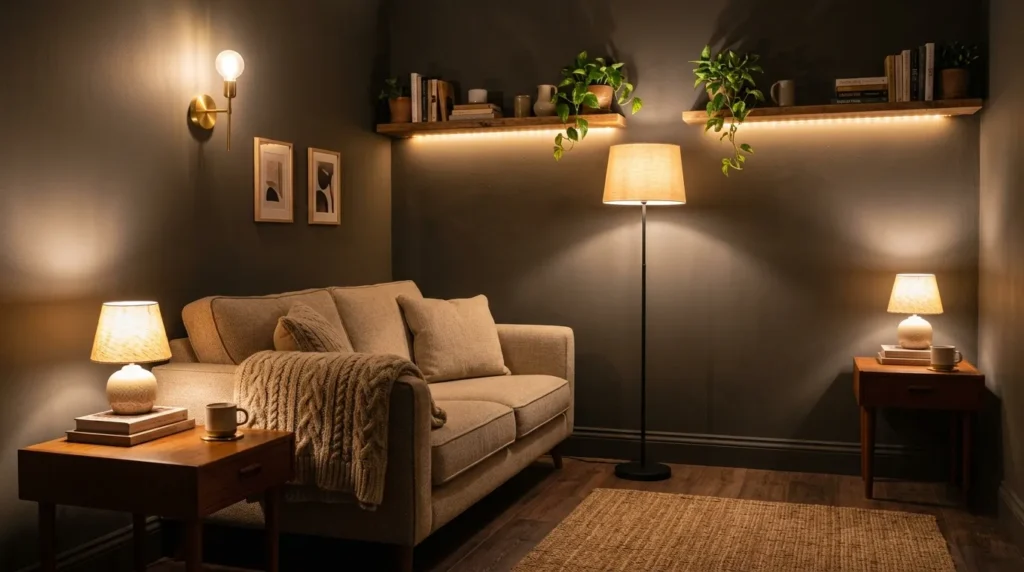
Relying on a single overhead light is one of the biggest reasons dark rooms feel harsh or gloomy. Good lighting design uses multiple layers to create warmth and depth.
Aim for a mix of:
- Ambient lighting – general room lighting, ideally warm white (2700K–3000K)
- Task lighting – reading lamps, floor lamps near seating areas
- Accent lighting – wall sconces, LED strips behind shelves, or uplighting for plants
Warm-toned bulbs make a significant difference. Cool white or daylight bulbs can make a dim room feel even more sterile, while warm bulbs instantly add coziness.
For small rooms, floor lamps with fabric shades diffuse light beautifully and avoid the harshness of exposed bulbs. Table lamps placed at varying heights also help create a layered, inviting glow instead of one flat wash of light.
3. Use Mirrors to Bounce Light Around the Room
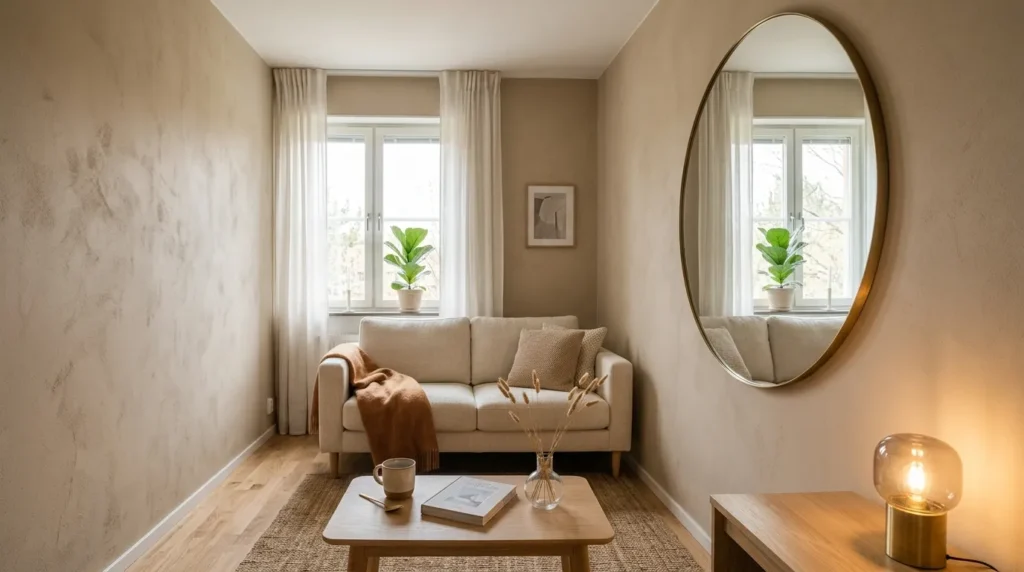
Mirrors are one of the most effective tools for brightening dark spaces without adding clutter. Positioned correctly, they reflect both natural and artificial light, making the room feel larger and airier.
Tips for using mirrors effectively:
- Place a large mirror opposite or near a window to reflect natural light
- Use mirrored trays or decor pieces on coffee tables to bounce ambient light
- Avoid placing mirrors directly across from something you don’t want reflected, like a cluttered shelf
This is a simple but often overlooked step. Many small warm and cozy living room ideas start with maximizing whatever light already exists in the room before adding anything else.
4. Add Texture Through Textiles
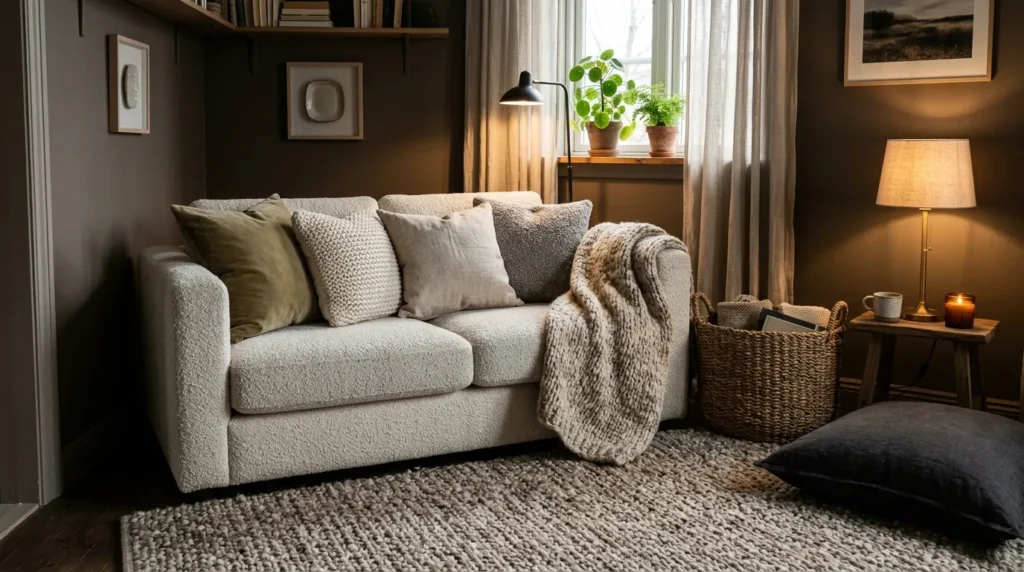
Texture is one of the fastest ways to make a dark living room feel warm rather than empty. Smooth, hard surfaces can feel cold in low light, while soft, layered textures instantly add comfort.
Consider incorporating:
- A chunky knit throw blanket draped over the sofa
- Textured floor cushions or an oversized area rug
- Velvet or boucle accent pillows
- Woven baskets for storage that double as decor
Not only does texture add visual warmth, but it also makes the room more inviting to touch and sit in. This tactile comfort is a key part of what makes small warm and cozy living room ideas actually feel cozy, not just look cozy in photos.
5. Incorporate Wood Tones for Natural Warmth
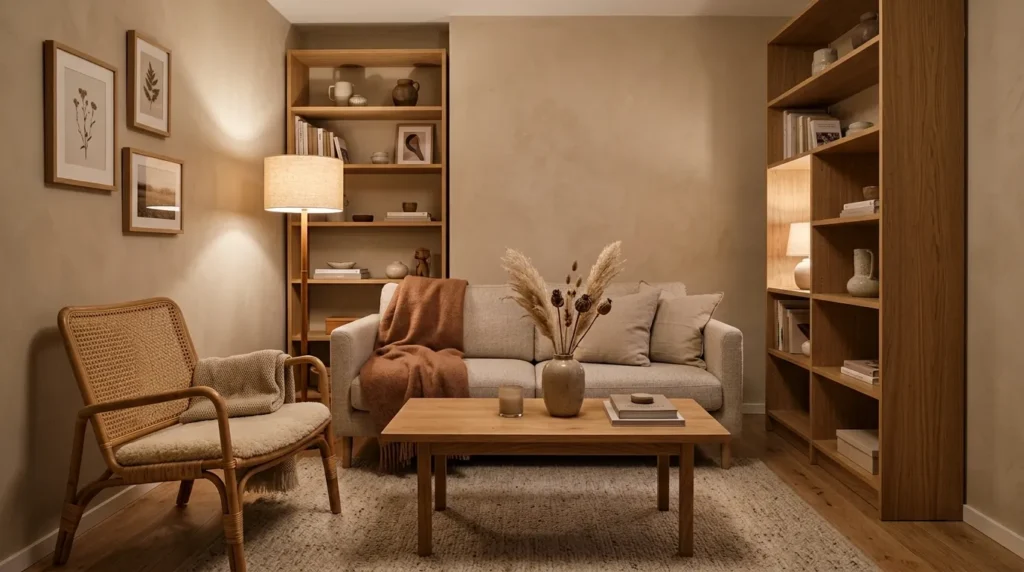
Wood has a unique ability to add warmth to a space, even without direct sunlight. Its natural grain and tone bring a grounded, organic feel that works especially well in small or dim rooms.
Ways to incorporate wood:
- A wooden coffee table or side table
- Open wood shelving instead of closed cabinets
- Wooden picture frames or decor accents
- A rattan or wicker accent chair
If your existing furniture is dark, consider mixing in lighter wood tones like oak or ash to balance things out. Contrast is key—too much dark wood in an already dim room can feel heavy, while a mix of tones feels intentional and warm.
6. Keep Furniture Light and Airy Where Possible
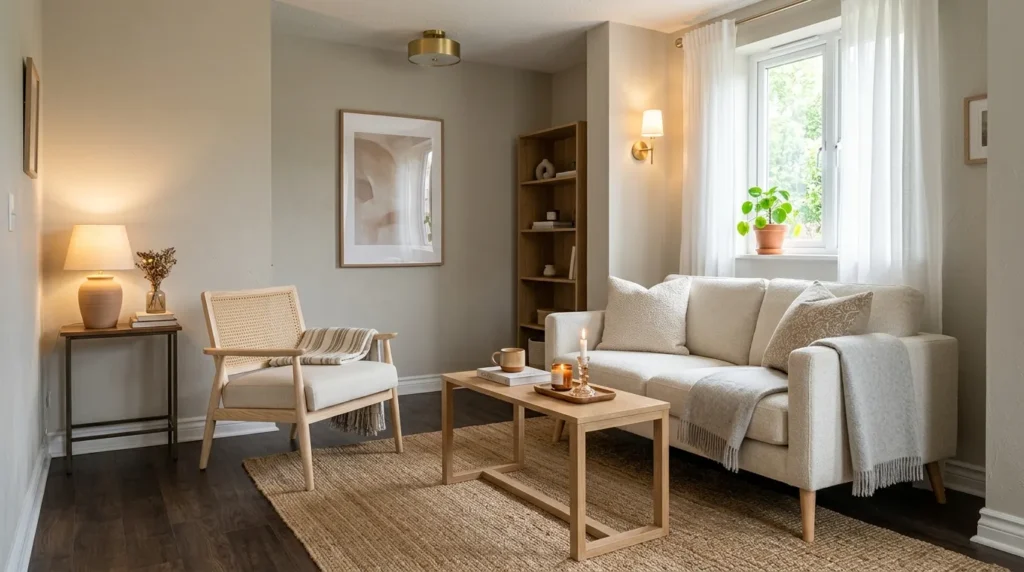
In small, dark rooms, oversized or bulky furniture can make the space feel even more cramped. Opting for furniture with visible legs, lighter upholstery, or slimmer profiles helps the room breathe.
Consider:
- A loveseat or compact sofa instead of an oversized sectional
- Furniture with exposed wooden or metal legs to create a sense of openness
- Light-colored upholstery in linen, boucle, or cotton blends
This doesn’t mean you have to sacrifice comfort. Cozy doesn’t have to mean cluttered. In fact, one of the most effective small warm and cozy living room ideas is choosing fewer, better pieces rather than filling every corner with furniture.
7. Add Warmth Through Curated Accents
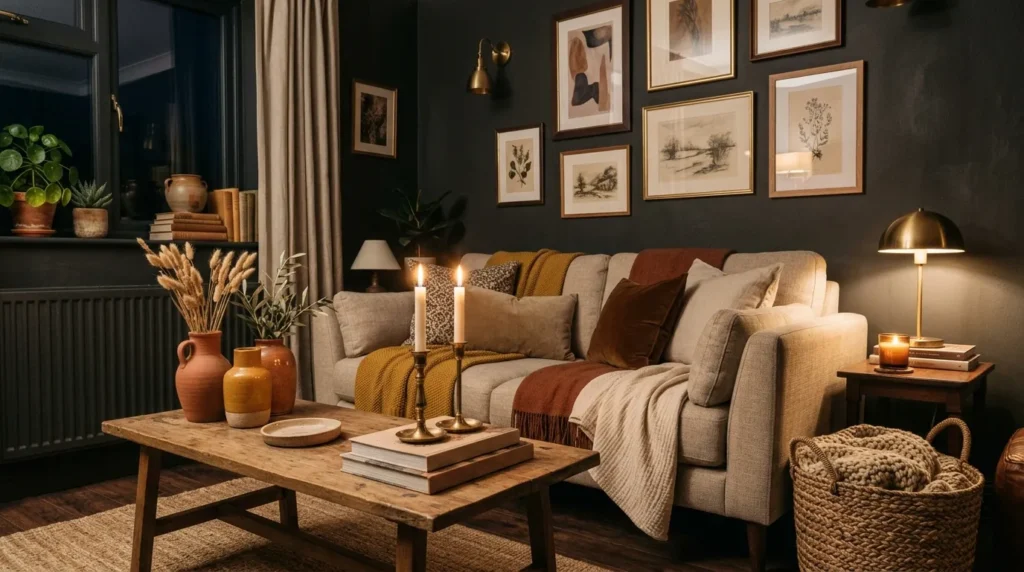
Small decorative touches often make the biggest emotional impact in a room. In a dark living room, thoughtful accents can add personality and warmth without requiring major renovations.
Try incorporating:
- Warm-toned candles (soy or beeswax) for a soft flicker of light
- A gallery wall with warm-toned artwork or photography
- Ceramic vases in earthy, warm colors
- Books displayed on open shelves for texture and visual interest
These small details layer together to create a room that feels lived-in and welcoming, rather than sparse or overly styled.
8. Bring in Greenery That Thrives in Low Light
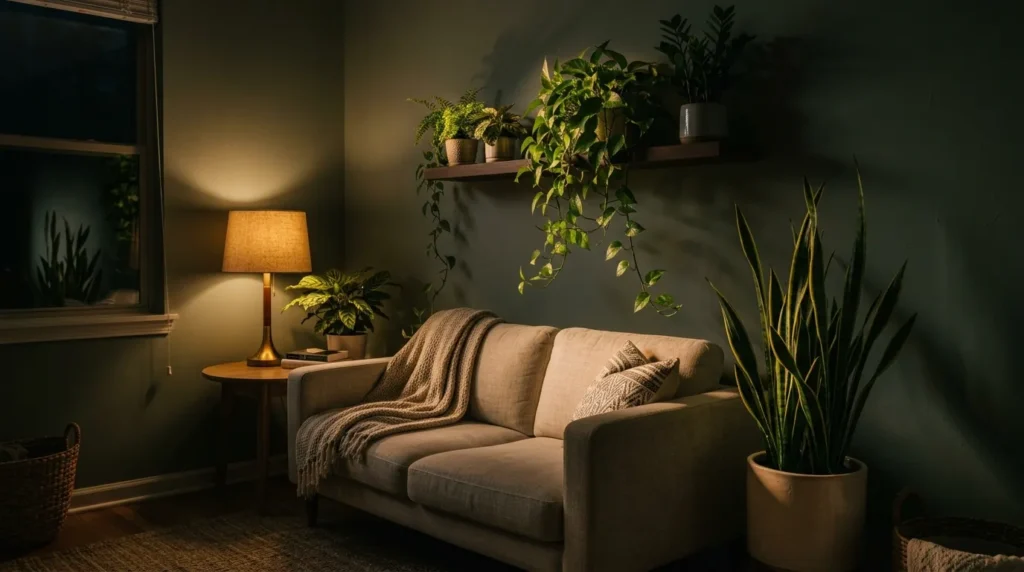
Plants add life, color, and softness to any room, but not all plants do well in low-light conditions. Choosing the right greenery ensures your plants thrive rather than struggle.
Low-light-friendly options include:
- Snake plant
- Pothos
- ZZ plant
- Peace lily
- Cast iron plant
Beyond their visual appeal, plants also improve the overall atmosphere of a room, making it feel more alive and less static. Grouping a few plants of varying heights near a window or shelf adds depth and organic warmth, reinforcing the cozy feel you’re going for.
9. Define the Space with a Rug
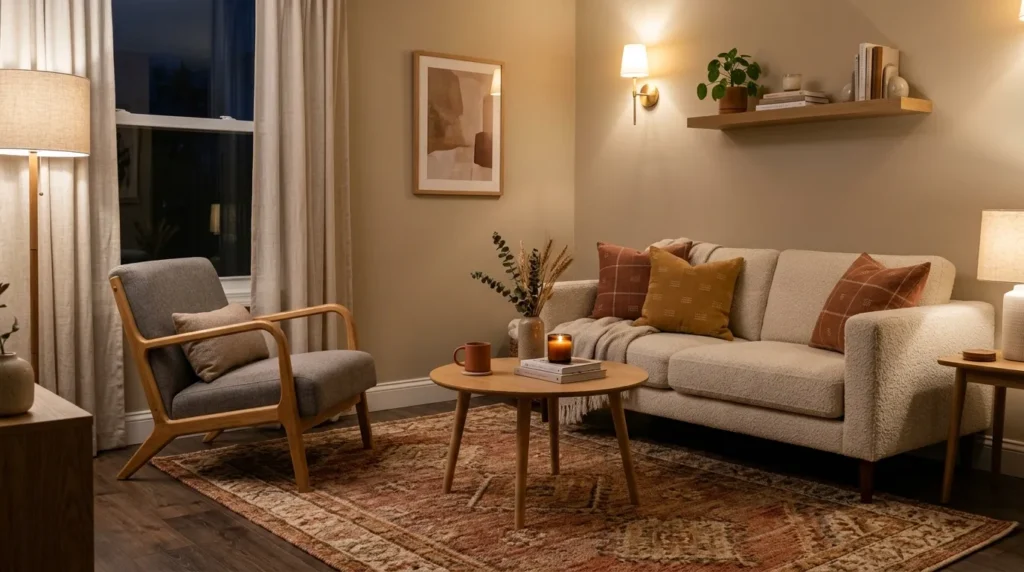
In small living rooms, a well-chosen rug does more than protect the floor—it visually grounds the space and adds an immediate layer of warmth underfoot.
For dark rooms, consider:
- Rugs with warm, earthy tones like rust, mustard, or terracotta
- Textured weaves like jute or wool blends for added coziness
- Patterns that add visual interest without overwhelming a small space
A rug that’s too small can make a room feel disjointed, so make sure it’s appropriately sized to anchor your seating area. This small styling choice ties together many of the other small warm and cozy living room ideas mentioned above, creating a cohesive, intentional look.
Bringing It All Together
Designing a small warm and cozy living room in a dark space isn’t about fighting against the lack of natural light—it’s about working with it. By choosing warm paint tones, layering lighting thoughtfully, incorporating texture and wood accents, and adding personal touches like plants and curated decor, you can transform even the dimmest room into a space that feels genuinely comfortable and welcoming.
The key takeaway is balance. You don’t need to overhaul your entire room to make it feel cozy—small, intentional changes often make the biggest difference. Start with one or two ideas from this list, see how they transform the space, and build from there.
A dark room doesn’t have to mean a cold or uninviting one. With the right combination of color, light, texture, and thoughtful styling, your small living room can become the coziest spot in your home, regardless of how much sunlight it gets.
Frequently Asked Questions
- What is the best paint color for a small, dark living room?
Warm, muted tones like terracotta, warm taupe, or soft olive tend to work better than stark white. These colors add depth and warmth rather than emphasizing the lack of natural light, making the room feel more inviting overall. - How can I make a small living room feel cozy without making it feel cluttered?
Focus on quality over quantity. Choose a few well-placed textured items—like a throw blanket, a textured rug, and warm lighting—rather than filling the room with decor. Furniture with visible legs also helps the space feel more open while still feeling warm. - What type of lighting works best for a room with little natural light?
Warm white bulbs (around 2700K–3000K) layered across ambient, task, and accent lighting create the coziest effect. Avoid relying solely on overhead lighting, and consider floor or table lamps with fabric shades to soften the light throughout the room.
