
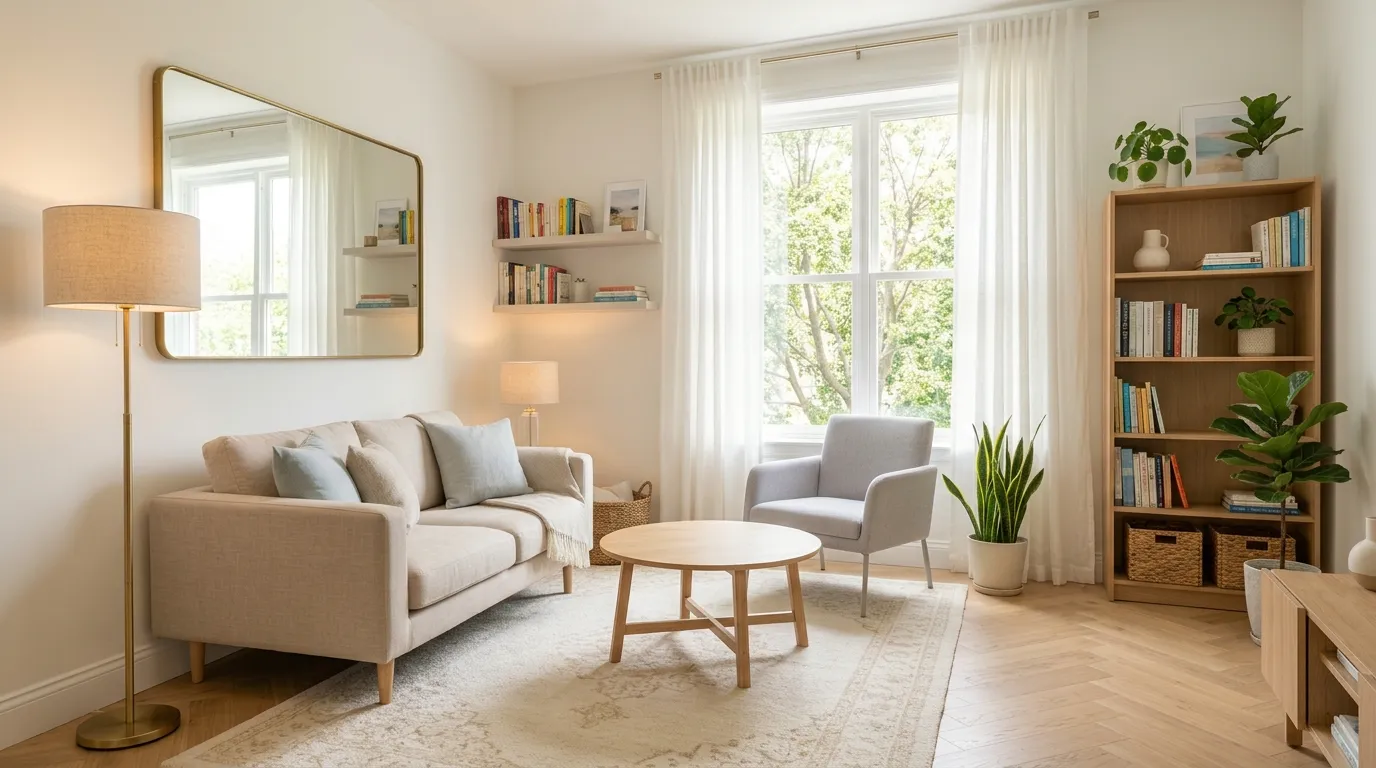
7 Small Sitting Room Ideas That Feel More Spacious
If your living room feels cramped no matter how you rearrange the furniture, you’re not alone. Many homeowners and renters struggle with the same challenge: how do you make a compact space feel open, airy, and welcoming without knocking down walls? The good news is that with the right approach, small sitting room ideas can transform even the tightest layout into a comfortable, visually spacious retreat.
This article walks through seven practical design strategies that create the illusion of more space, along with real, actionable tips you can start using today. Whether you’re working with a studio apartment, a narrow flat, or a modest family home, these ideas will help your living room breathe.
1. Choose a Light, Cohesive Color Palette
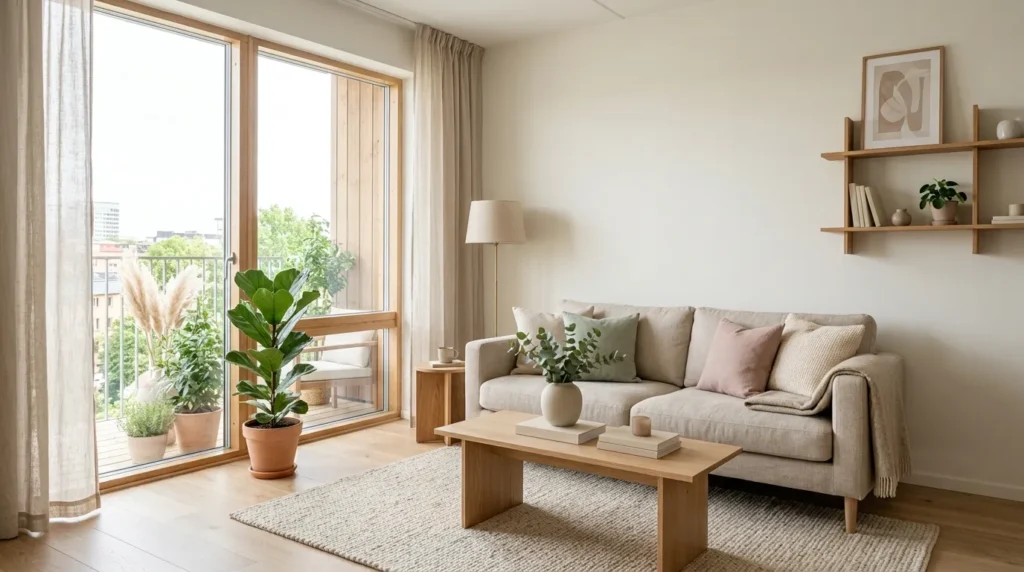
Color has a bigger impact on perceived room size than most people realize. Dark, saturated walls can make a small sitting room feel enclosed, while light, neutral tones reflect natural light and push walls visually outward.
- Stick to soft whites, warm beiges, light greys, or pastel shades for walls and large furniture pieces.
- Keep the color palette consistent throughout the room to avoid visual clutter.
- Use one or two accent colors sparingly through cushions, throws, or artwork rather than multiple competing tones.
- If you love darker shades, apply them to just one accent wall instead of the entire room.
A cohesive palette creates a seamless flow that tricks the eye into perceiving more square footage than actually exists.
2. Use Multi-Functional Furniture
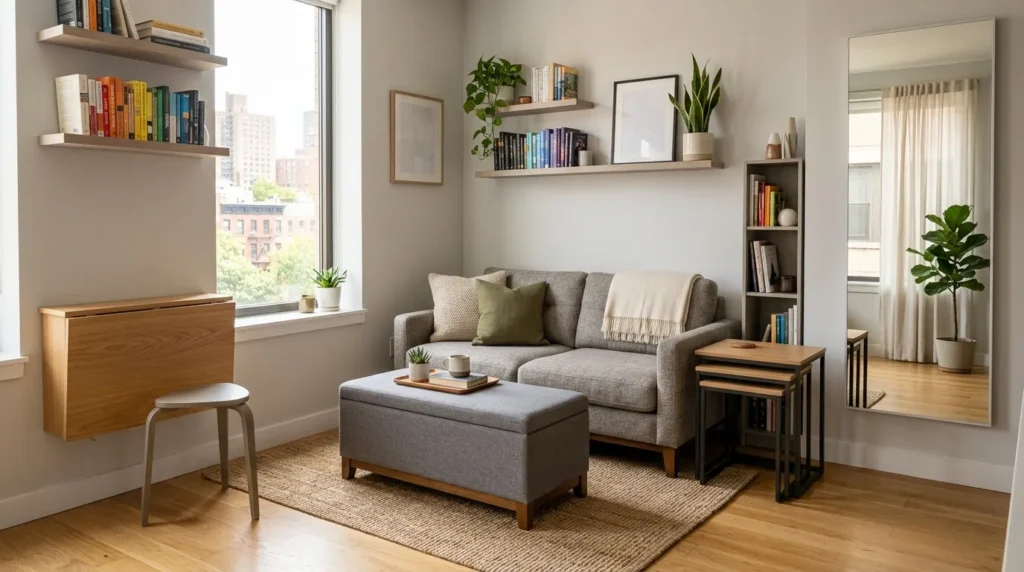
One of the most effective small sitting room ideas is investing in furniture that does more than one job. Bulky, single-purpose pieces eat up valuable floor space, while multi-functional items reduce clutter and maximize usability.
Consider these options:
- Storage ottomans that double as coffee tables and hidden storage for blankets or magazines.
- Nesting tables that tuck away when not in use and pull out for extra surface space when guests arrive.
- Sofa beds or daybeds if the living room occasionally doubles as a guest room.
- Wall-mounted desks or drop-leaf tables that fold flat against the wall when not needed.
Every piece of furniture should earn its place. If something serves only one purpose and takes up significant floor space, it’s worth reconsidering.
3. Prioritize Vertical Storage
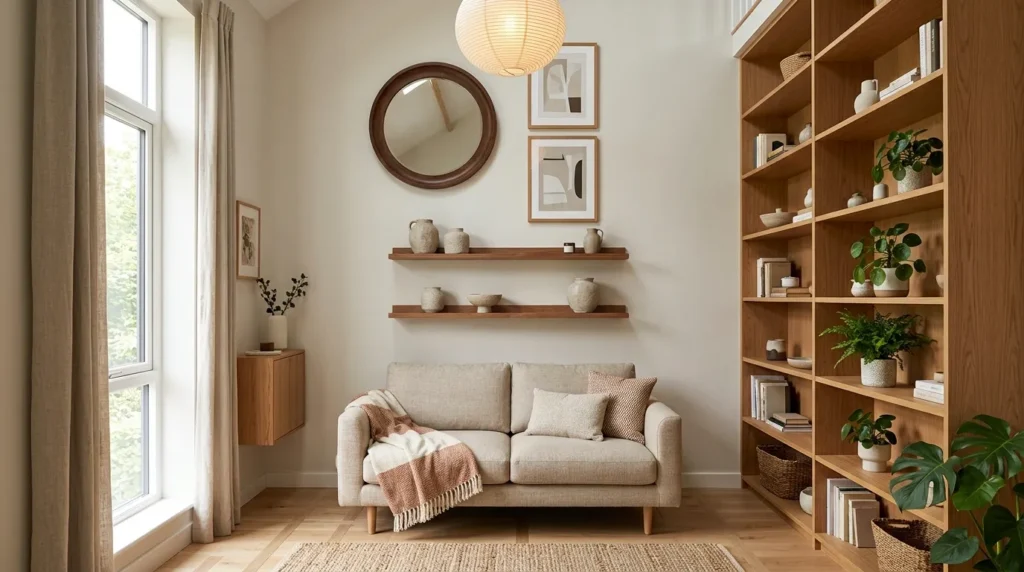
When floor space is limited, the walls become your best ally. Vertical storage solutions draw the eye upward, making ceilings feel higher and rooms feel larger, while also keeping clutter off the floor.
- Install floating shelves above sofas or in awkward corners.
- Use tall, narrow bookcases instead of wide, short units.
- Add wall-mounted cabinets for media equipment instead of bulky TV units.
- Hang artwork or mirrors higher on the wall to elongate the visual line of the room.
This approach is particularly useful for small sitting room ideas where floor space is at a premium but wall space remains underutilized.
4. Let Natural Light Do the Heavy Lifting
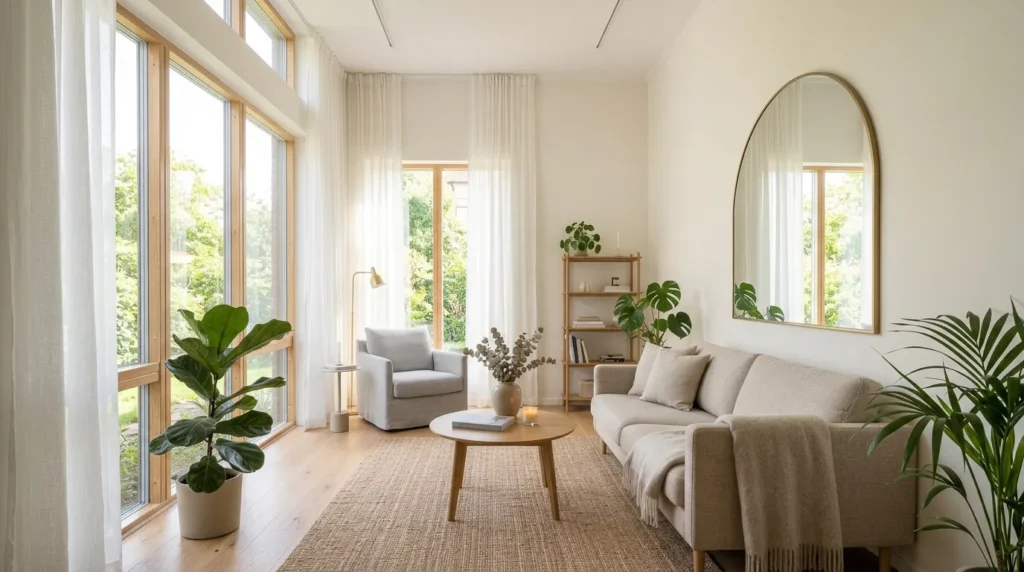
Nothing shrinks a room faster than poor lighting. Natural light is one of the simplest, most cost-effective ways to make a small living room feel open and inviting.
- Keep windows unobstructed by heavy drapes; opt for sheer or light-colored curtains instead.
- Position mirrors opposite windows to bounce light around the room and create a sense of depth.
- Avoid placing tall furniture directly in front of windows.
- If natural light is limited, layer in warm, ambient lighting through floor lamps, wall sconces, and dimmable overhead fixtures.
Good lighting doesn’t just make a room look bigger; it also makes the space feel warmer and more comfortable to spend time in.
5. Scale Furniture to Fit the Room
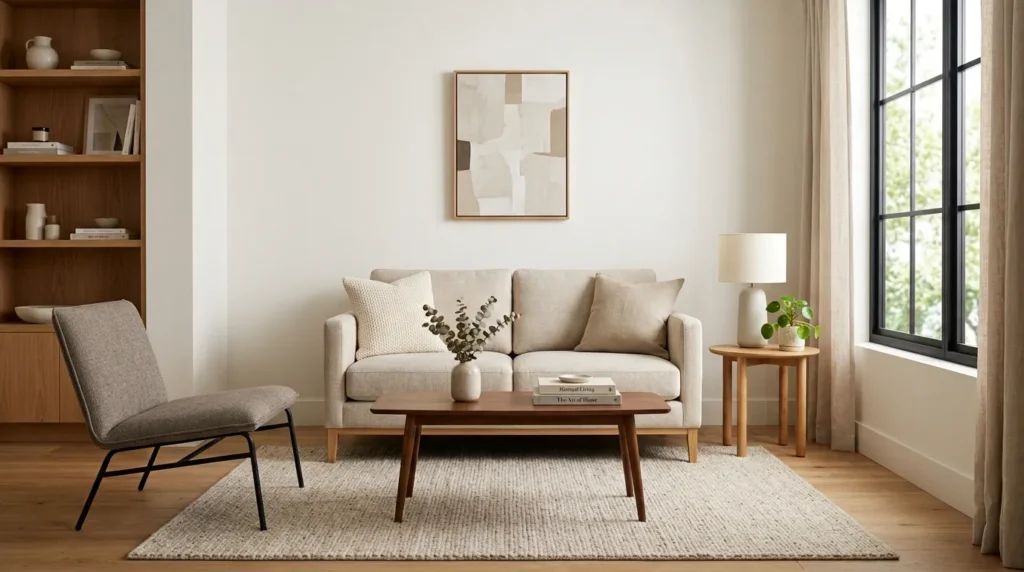
A common mistake in small living rooms is choosing furniture that’s simply too large for the space. Oversized sofas, thick armchairs, and heavy coffee tables can overwhelm a compact sitting room and make it feel cramped, even if the room is tastefully decorated.
Instead, focus on furniture that’s proportionate:
- Choose a two-seater or loveseat instead of a large sectional if seating needs are modest.
- Opt for armless or slim-profile chairs to reduce visual bulk.
- Select a coffee table with exposed legs rather than a solid, boxy base, as this allows light and sightlines to pass underneath.
- Measure your space before buying, and always leave enough walking room between pieces.
Right-sized furniture is one of the most underrated small sitting room ideas because it directly affects both comfort and the sense of openness in daily use.
6. Create Clear Sightlines and Open Pathways
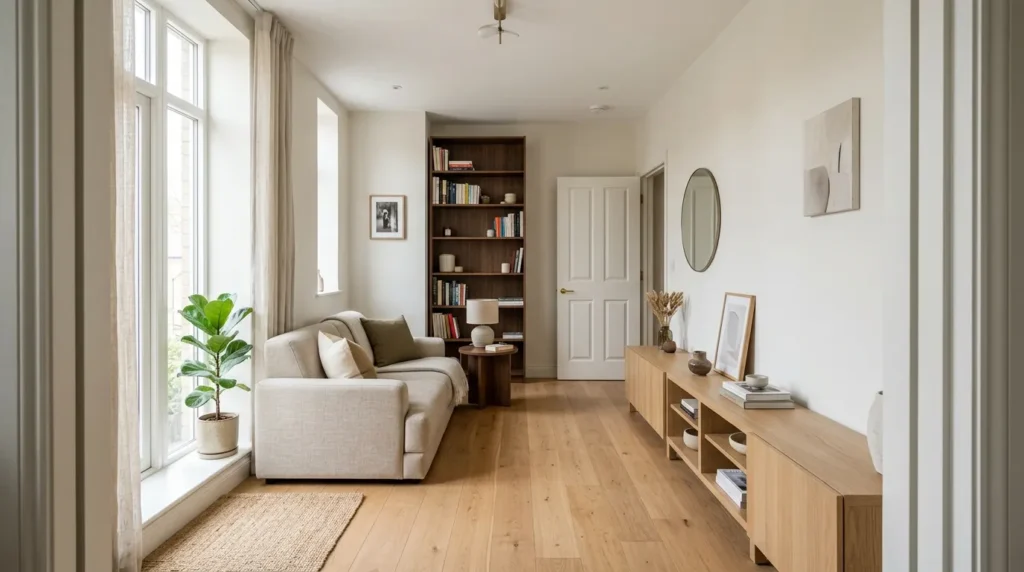
Spacious-feeling rooms usually share one trait: an uninterrupted line of sight from the entrance to the far wall. When furniture blocks natural pathways or clutters the center of the room, the space feels smaller and harder to navigate.
To improve flow:
- Arrange furniture along the walls where possible, rather than floating pieces awkwardly in the middle.
- Keep at least 30 inches of clearance for walkways between furniture.
- Avoid placing large pieces directly in the doorway’s line of sight.
- Use low-profile furniture near windows and taller pieces along back walls to maintain an open sightline.
This layout principle is especially helpful in narrow or oddly shaped rooms, where clever furniture placement can make a significant visual difference.
7. Use Rugs and Patterns Strategically
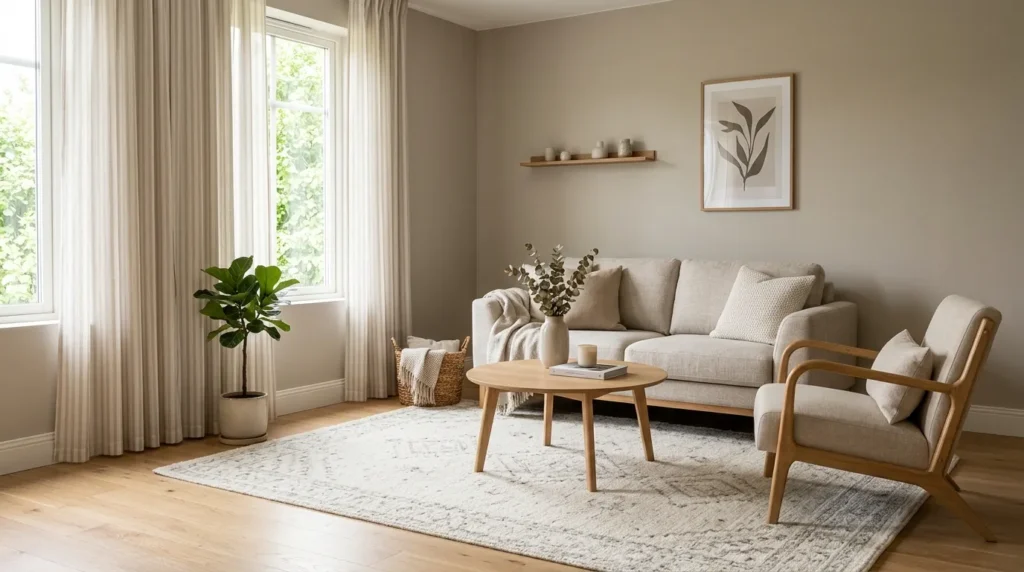
Rugs and patterns can either enhance or undermine a small living room’s sense of space, depending on how they’re used. A rug that’s too small will make the room look choppy and disconnected, while an appropriately sized one can visually anchor and expand the space.
- Choose a rug large enough for at least the front legs of your furniture to rest on it.
- Stick to one or two patterns maximum to avoid visual overload.
- Opt for rugs with lighter backgrounds and subtle patterns rather than bold, dark designs that dominate the floor.
- Use vertical stripes on curtains or wallpaper to draw the eye upward and create the illusion of height.
When used thoughtfully, rugs and patterns tie a room together without adding visual weight, reinforcing many of the small sitting room ideas mentioned above.
Conclusion
Designing a small living room doesn’t mean sacrificing style or comfort. By focusing on a light color palette, multi-functional furniture, vertical storage, natural light, properly scaled pieces, clear sightlines, and strategic use of rugs and patterns, you can transform even the most compact space into one that feels open and welcoming.
The key is intentionality. Every small sitting room ideas in this list works because it removes visual clutter, improves flow, or maximizes light. You don’t need a bigger room to enjoy a spacious-feeling living room. You simply need smarter design choices tailored to the space you already have.
Frequently Asked Questions
- What is the best furniture layout for a small living room?
Arranging furniture along the walls rather than in the center of the room typically works best. This keeps pathways clear and creates an open sightline from the entrance to the far wall, which makes the space feel larger. - Do mirrors really make a small living room look bigger?
Yes. Mirrors reflect both natural and artificial light, creating a sense of depth and openness. Placing a mirror opposite a window is especially effective, as it doubles the perceived light source in the room. - Should I avoid dark colors entirely in a small sitting room?
Not necessarily. Dark colors can still work well as accents, such as on a single feature wall or through decor pieces. The key is balance, pairing darker tones with plenty of light, neutral surfaces to prevent the room from feeling enclosed. - What size rug works best in a small living room?
Choose a rug large enough that at least the front legs of your main furniture pieces sit on it. A rug that’s too small will make the room feel fragmented, while a properly sized one helps unify the space and make it appear larger.

