Tiny Living Room Design: Making a Small Space Work Hard
A tiny living room comes with a specific set of challenges that a larger space simply doesn’t face. Every piece of furniture has to earn its place, every inch of floor matters, and a single wrong-sized sofa can make the whole room feel unusable. Yet a small footprint doesn’t have to mean a cramped or awkward space. With the right layout choices, furniture proportions, and a few visual tricks, a tiny living room can feel just as functional and welcoming as a much bigger one.
The key difference between a tiny living room that feels charming and one that feels claustrophobic usually comes down to planning rather than square footage. Homeowners who treat the limited space as a design constraint to work within, rather than a problem to apologize for, tend to end up with rooms that feel intentional, organized, and surprisingly spacious given their actual dimensions.
Understanding What Makes a Small Room Feel Small
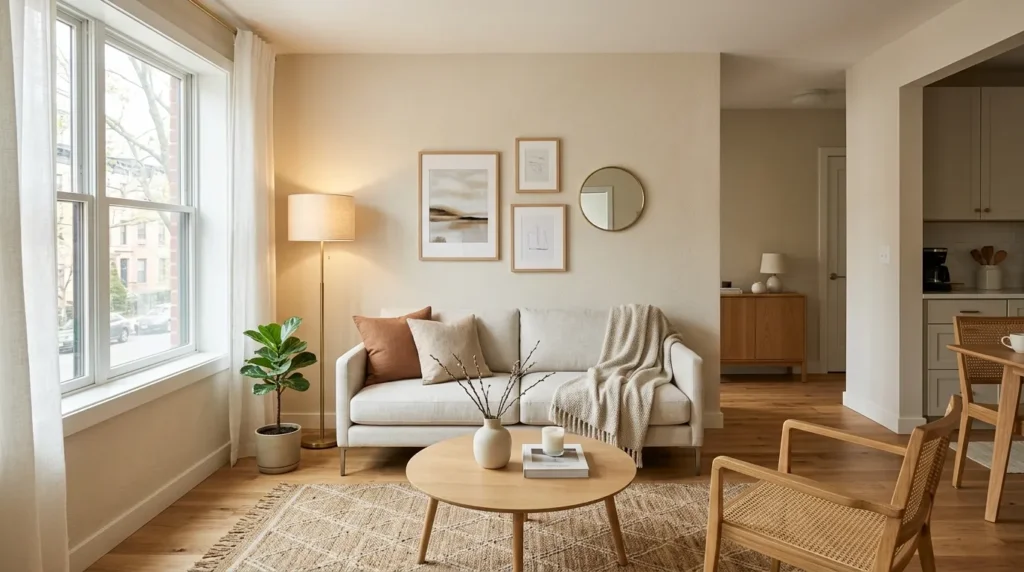
Before choosing furniture or paint colors, it helps to understand exactly what causes a compact room to feel cramped in the first place. It’s rarely just the square footage. Clutter, oversized furniture, poor traffic flow, and heavy window treatments all contribute far more to a feeling of tightness than the actual dimensions of the walls.
A room measuring ten feet by twelve feet can feel airy and open, or tight and closed in, depending entirely on how the space is used. Two rooms with identical measurements can produce completely different impressions on a visitor simply based on furniture scale and how much open floor is left visible.
Lighting also plays a bigger role than expected. A room lit only by a single overhead fixture tends to feel flatter than one layered with a floor lamp and some daylight, since varied lighting softens shadows that make corners feel cramped.
1. Choose Furniture Scaled to the Room
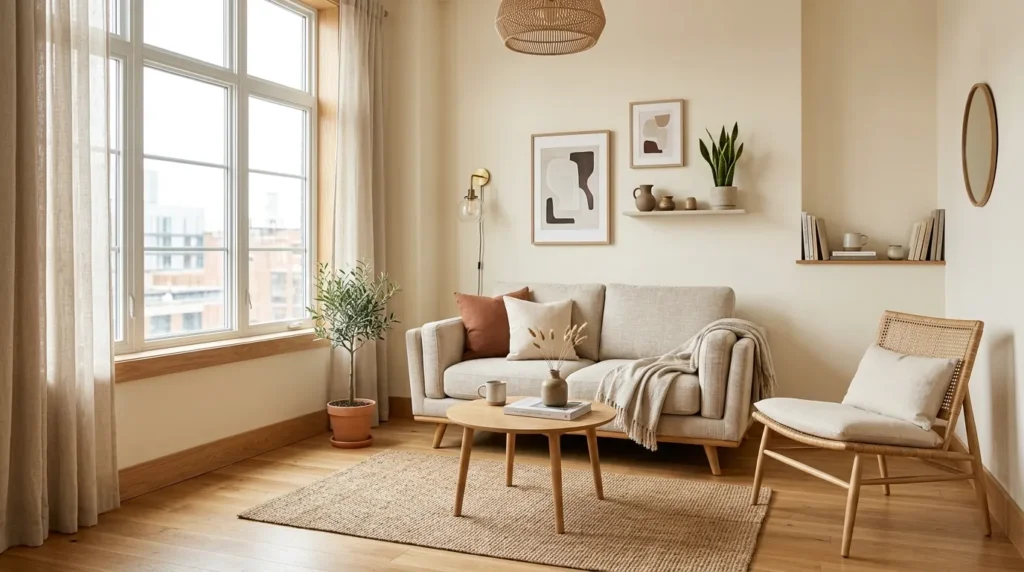
The single biggest factor in how a tiny living room feels is furniture scale. A deep, oversized sectional might look inviting in a showroom, but in a small room it overwhelms the space and blocks natural walking paths. Choosing a sofa, chairs, and tables sized appropriately for the actual square footage keeps the room feeling proportional rather than stuffed.
Measuring the room carefully before shopping, and taping out the footprint of a potential piece directly on the floor, helps avoid the common mistake of buying furniture that looks reasonable in a store but consumes far too much of a small room once it’s delivered home.
It also helps to pay attention to leg style and arm width, not just overall dimensions. A sofa with slim, exposed legs and narrow arms visually takes up less space than a boxy, skirted design of the same footprint, since more floor is visible underneath and around it. These small proportional details add up quickly in a room where every few inches genuinely matters.
2. Rely on Multi-Purpose Furniture
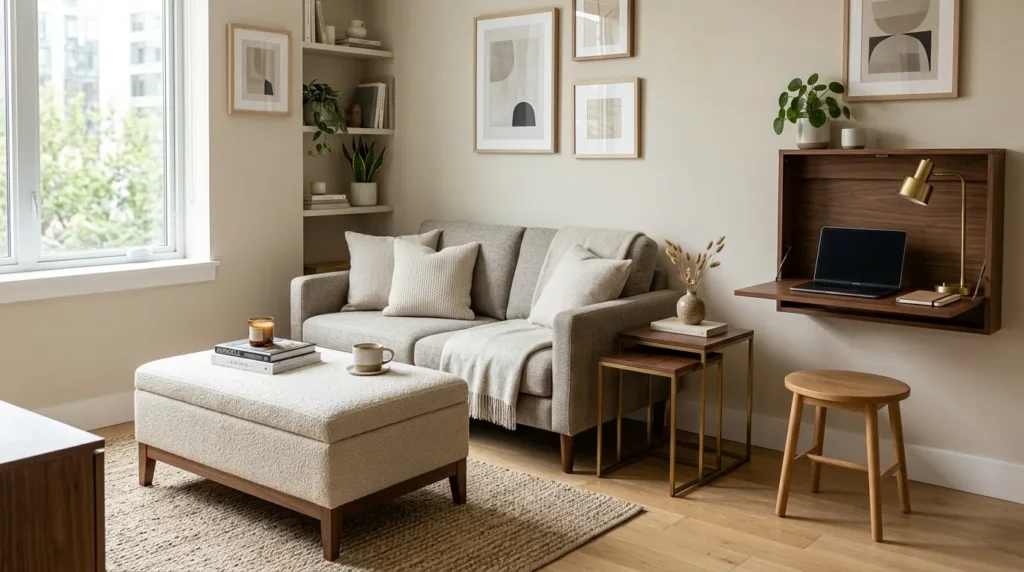
Because floor space is limited, furniture that serves more than one function becomes especially valuable in a tiny living room. A coffee table with hidden storage, a sofa that folds out into a bed, or an ottoman that doubles as extra seating all reduce the total number of pieces needed in the room without sacrificing usefulness.
| Furniture Piece | Space-Saving Feature | Best For |
| Sleeper sofa | Doubles as a guest bed | Studios and one-room layouts |
| Nesting tables | Stack together when not needed | Rooms needing flexible surface space |
| Wall-mounted shelving | Frees up floor space entirely | Storing books, decor, or media |
| Storage ottoman | Seating plus hidden storage | Extra seating and blanket storage |
| Fold-down desk | Tucks flat against the wall | Rooms doubling as a workspace |
Picking even two or three of these dual-purpose pieces can noticeably reduce the visual clutter in a small room, since each item is doing the work that might otherwise require two or three separate pieces of furniture.
Before buying a multi-purpose piece, it’s worth thinking through how often each function will actually get used. A sleeper sofa that hosts guests once a year is a reasonable trade-off in a tiny living room, while a fold-out desk that’s needed daily might be worth prioritizing over other features when space and budget only allow for a couple of these flexible pieces.
3. Use Vertical Space Instead of Floor Space
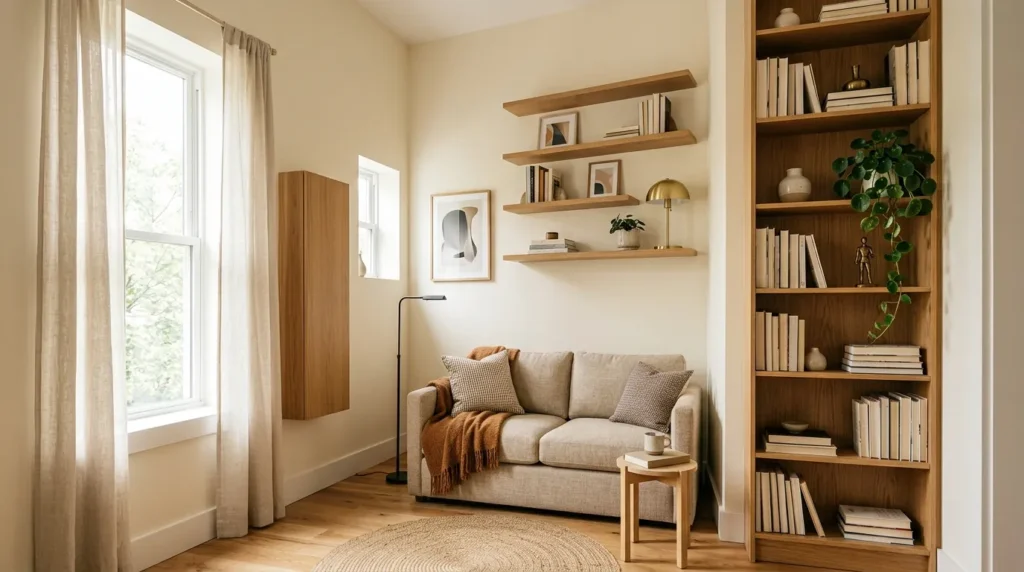
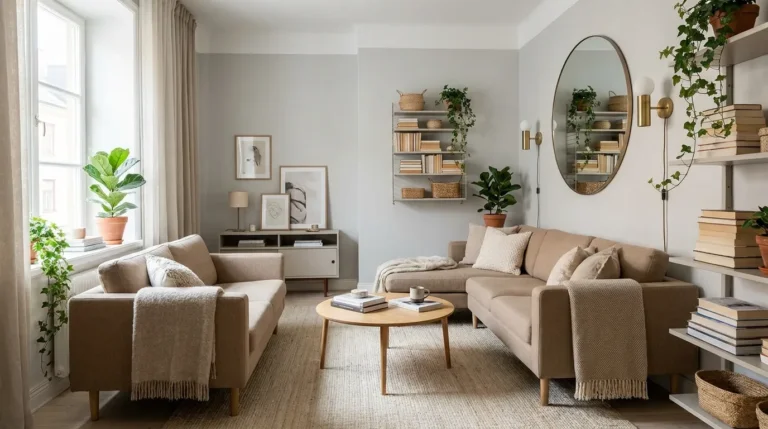
When floor space runs out, the walls become the next best place to store and display things. Tall, narrow bookshelves, wall-mounted cabinets, and floating shelves all take advantage of vertical space that would otherwise go unused, keeping the floor clear for movement while still providing storage and display room.
Drawing the eye upward with taller furniture or shelving also has the side effect of making the ceiling feel higher, which contributes to an overall sense of the room being larger than its actual footprint suggests.
Corner spaces are especially worth targeting for vertical storage, since they’re often left completely empty in small rooms despite being some of the least disruptive spots to add a tall shelf or narrow cabinet. A well-placed corner unit can hold books, media equipment, or display items without interfering with walking paths at all.
4. Keep a Light, Cohesive Color Scheme
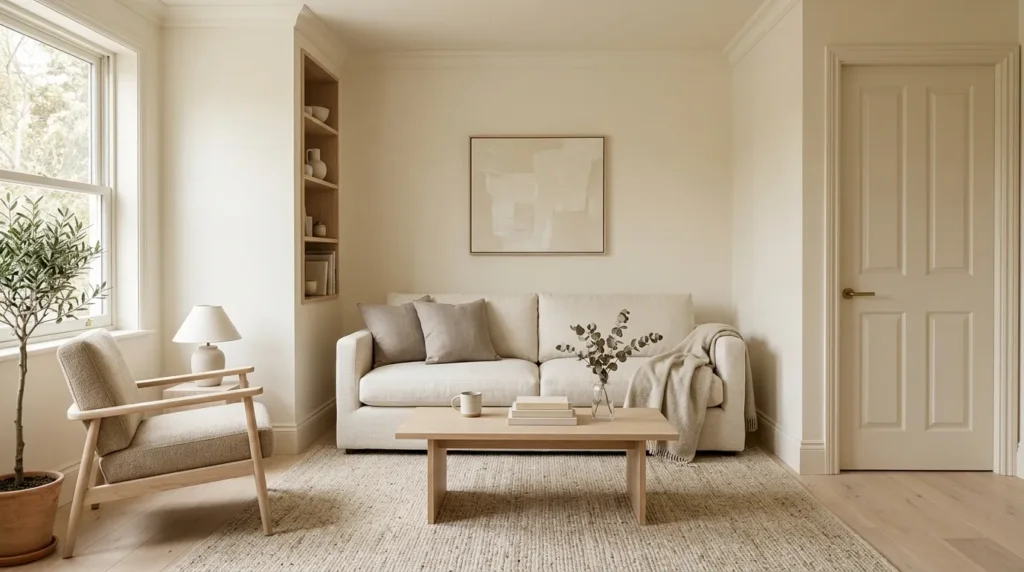
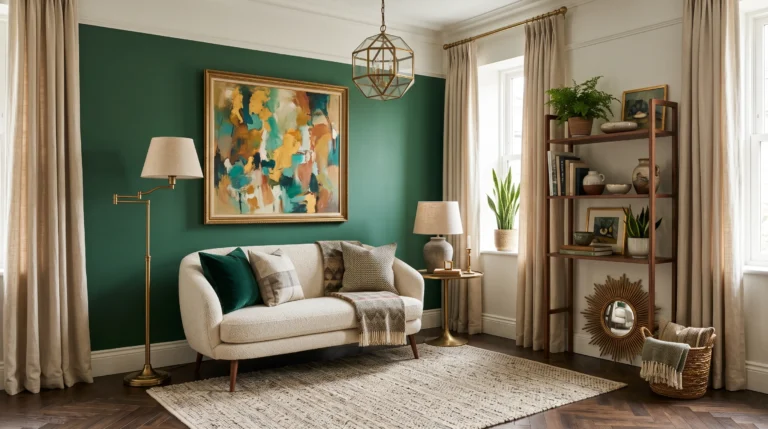
Dark, heavy colors tend to absorb light and visually shrink a room, while lighter, more cohesive color schemes help a tiny living room feel more open. Sticking to a consistent palette across the walls, furniture, and textiles reduces visual clutter, since the eye doesn’t have to process a lot of competing colors and patterns in a small area.
This doesn’t mean every tiny living room needs to be painted white. A soft, warm neutral or a pale accent color can still feel expansive as long as it’s applied consistently and paired with furniture that doesn’t introduce too many additional colors into the mix.
Extending the same wall color onto trim and even nearby doors can also help, since it removes the visual line where one surface stops and another begins. Without that contrast break, walls and ceilings blend together more smoothly, and the room reads as one continuous space rather than a series of small, separated surfaces.
5. Let Natural Light Do the Heavy Lifting
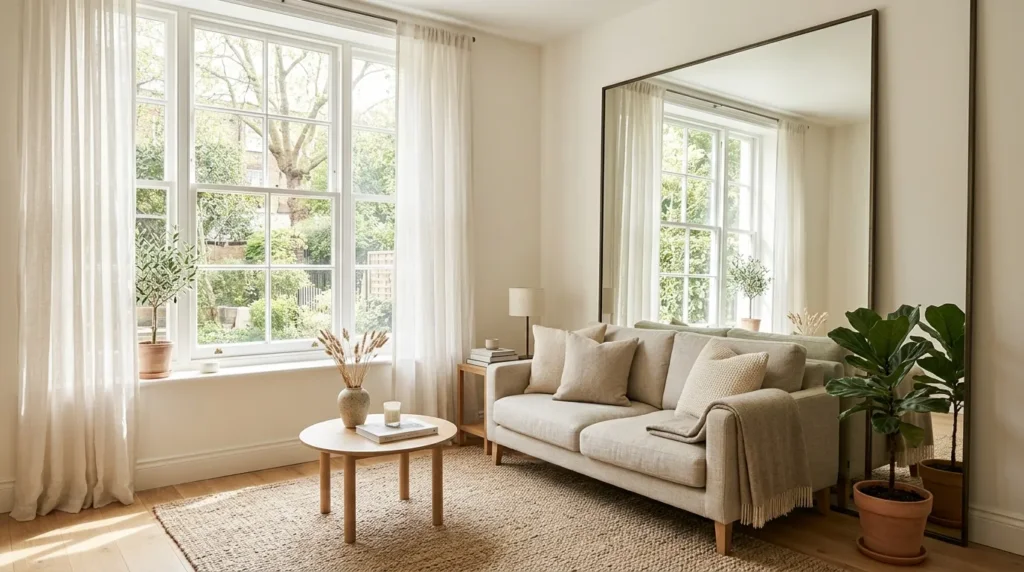
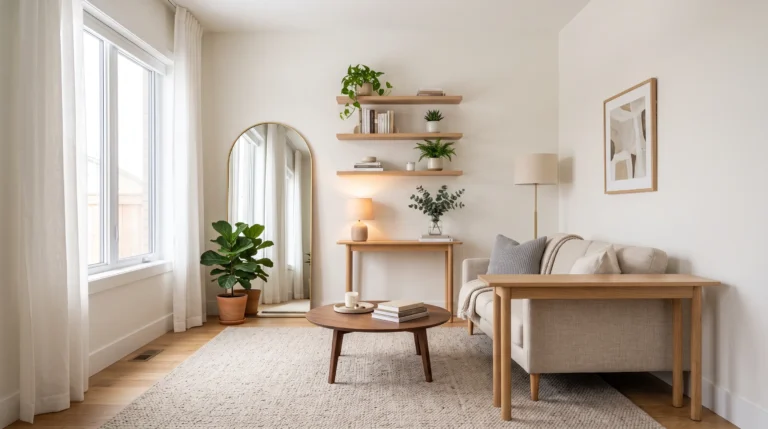
Natural light makes any room feel larger, and this effect is especially noticeable in a small living room. Keeping window treatments minimal, using sheer curtains instead of heavy drapes, and avoiding furniture that blocks windows all help maximize the amount of daylight reaching the room.
Adding a well-placed mirror across from a window can also amplify this effect, bouncing additional light around the space and creating the illusion of depth where a wall would otherwise feel flat and close.
Choosing lighter, sheer fabrics also allows a room to stay bright even with the curtains closed for privacy, which matters in living rooms that face a street or a close neighbor. A heavy blackout curtain might be necessary in a bedroom, but in a small living room it often does more to shrink the perceived size of the space than the added privacy is worth.
6. Create Clear, Unobstructed Pathways
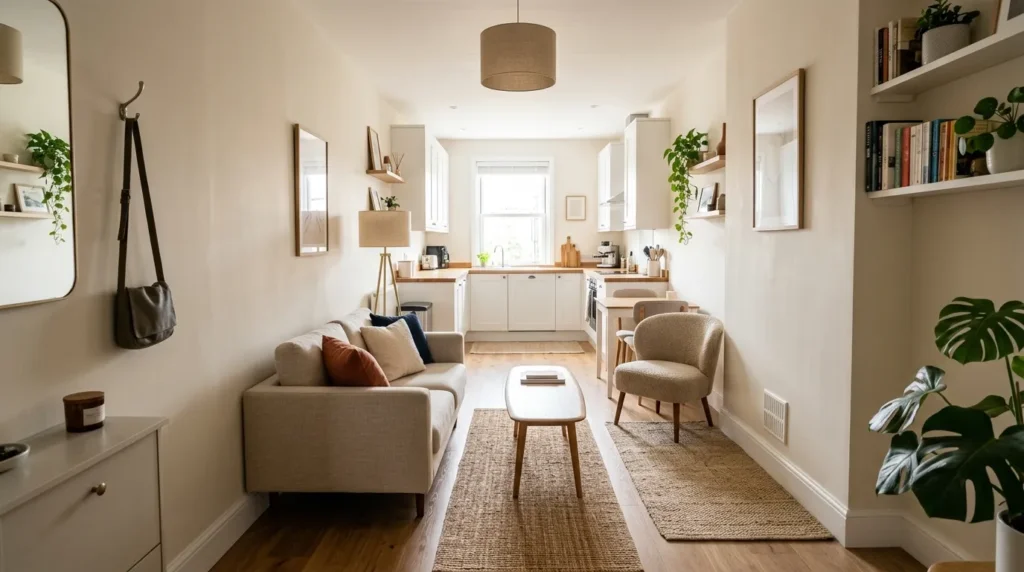
A room can be small and still feel spacious if the pathways through it are clear and logical. Furniture arranged so that a person can walk from the doorway to the seating area without squeezing past a table or chair makes the entire room feel more comfortable, even if the total square footage hasn’t changed at all.
Floating furniture slightly away from walls, rather than pushing every piece flush against the perimeter, can sometimes create better flow than expected, since it opens up a more natural walking path through the center of the room.
It also helps to think about the main route someone takes most often, such as from the front door to the kitchen, and make sure that specific path stays completely clear. Even if other areas of the room are a little tighter, keeping this one main route open makes the entire space feel more livable day to day.
7. Edit Ruthlessly and Avoid Overfurnishing
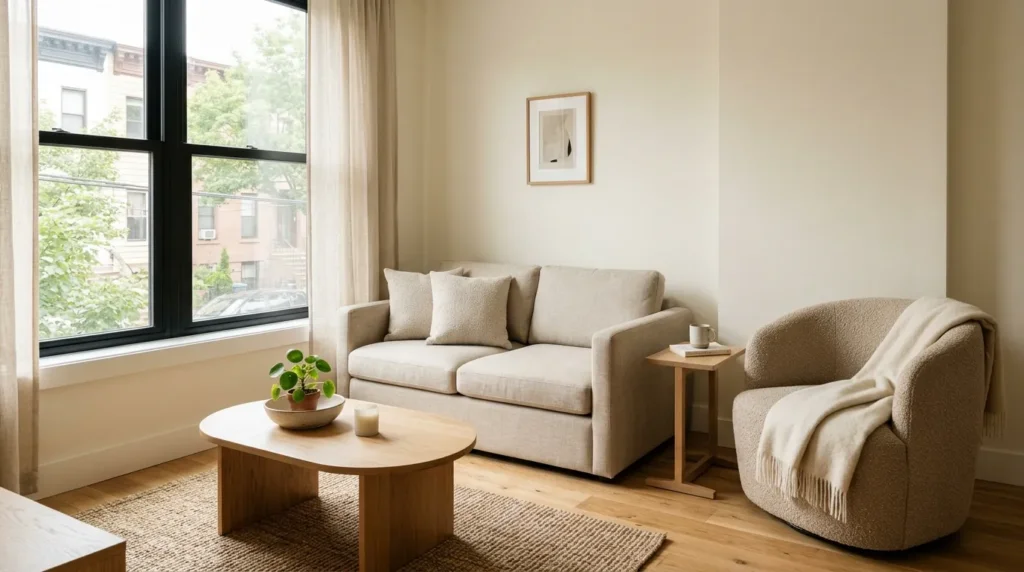
It’s tempting to fill every open corner of a small room, but restraint is one of the most effective tools available. A tiny living room with three or four well-chosen pieces almost always feels calmer and more functional than one crammed with five or six items competing for the same limited floor space.
Regularly reassessing what’s actually being used, and removing pieces that have become more clutter than function, keeps a small room from slowly filling back up after an initial round of decluttering.
A useful test is to ask whether a piece would be missed after two weeks of living without it. Items that pass this test, like a favorite reading chair or a reliable side table, are worth keeping, while decorative extras that simply took up space are usually easier to part with than expected.
8. Use Rugs to Define, Not Divide, the Space
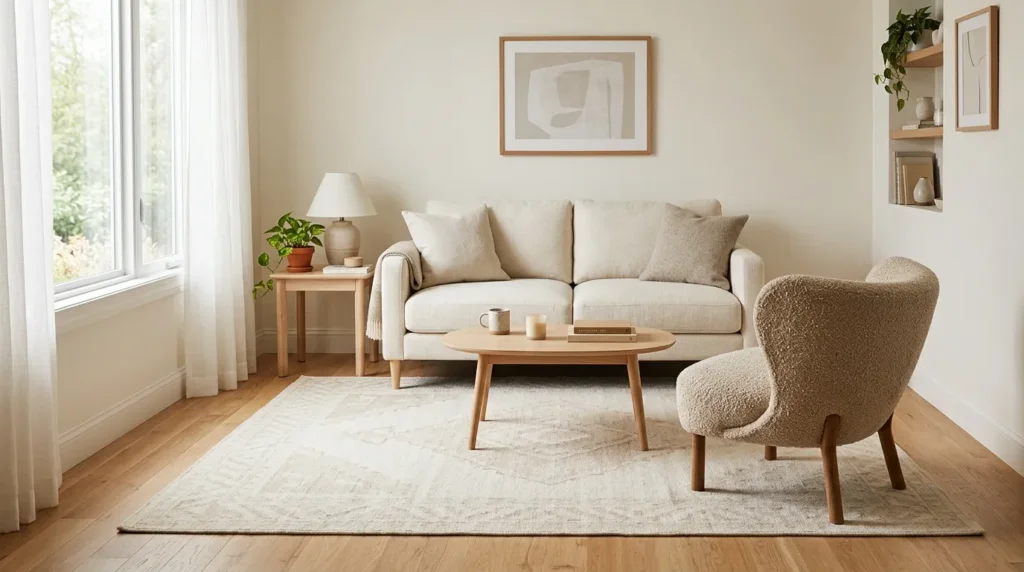
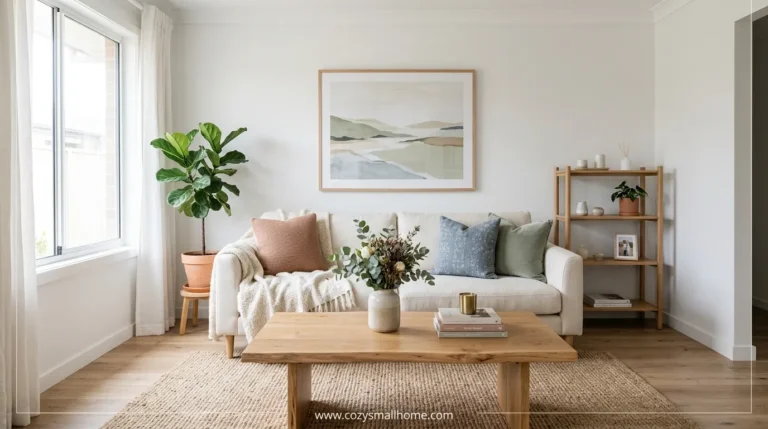
A rug that’s too small can make a tiny living room feel choppy and disconnected, while one sized appropriately for the seating area helps ground the furniture and make the room feel intentional. As a general guideline, at least the front legs of each seating piece should rest on the rug so the layout reads as one cohesive area rather than floating furniture scattered around a small square of fabric.
Lighter rug colors and simpler patterns tend to work better in small spaces than busy, high-contrast designs, since they contribute less visual noise to a room that’s already working with limited square footage.
Rug shape matters too. A rectangular rug suits a traditional sofa-and-chairs layout, while a round rug can soften a room full of straight-edged furniture without using any extra floor space.
A Few Closing Thoughts on Small-Space Living
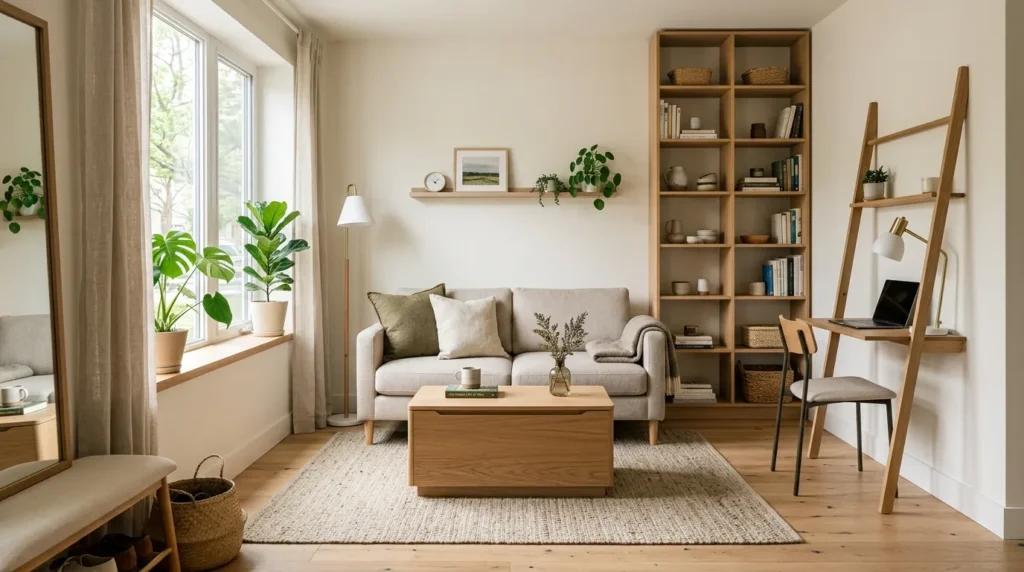
A tiny living room doesn’t need to feel like a compromise. With furniture scaled to the space, smart use of vertical storage, a cohesive color palette, and a willingness to edit down to only what’s truly needed, a small room can feel just as comfortable and well designed as a much larger one. The most successful small living rooms tend to be the ones where every single item earns its spot, rather than the ones simply trying to fit in as much as possible.
Small-space design ultimately rewards patience and restraint over quick fixes. Testing furniture placement, living with a layout for a week or two before making it permanent, and staying open to rearranging as needs change all help a tiny living room continue to work well over time rather than just on moving day.
Frequently Asked Questions
1. What’s the best sofa size for a tiny living room?
A loveseat or a compact two-seater, generally under 70 inches wide, usually fits best without overwhelming the space.
2. Do dark walls always make a small room feel smaller?
Not always, but light, cohesive colors are the safer choice for maximizing openness in most small rooms.
3. Are rugs necessary in a small living room?
Yes, a properly sized rug helps ground the furniture and makes the layout feel intentional rather than scattered.
4. What’s the biggest mistake people make in tiny living rooms?
Buying oversized furniture that blocks pathways and makes the room feel cramped, no matter how nice it looks.
5. Can a small living room still have a workspace?
Yes, a fold-down desk or a narrow console table can add a workspace without permanently taking up floor space.