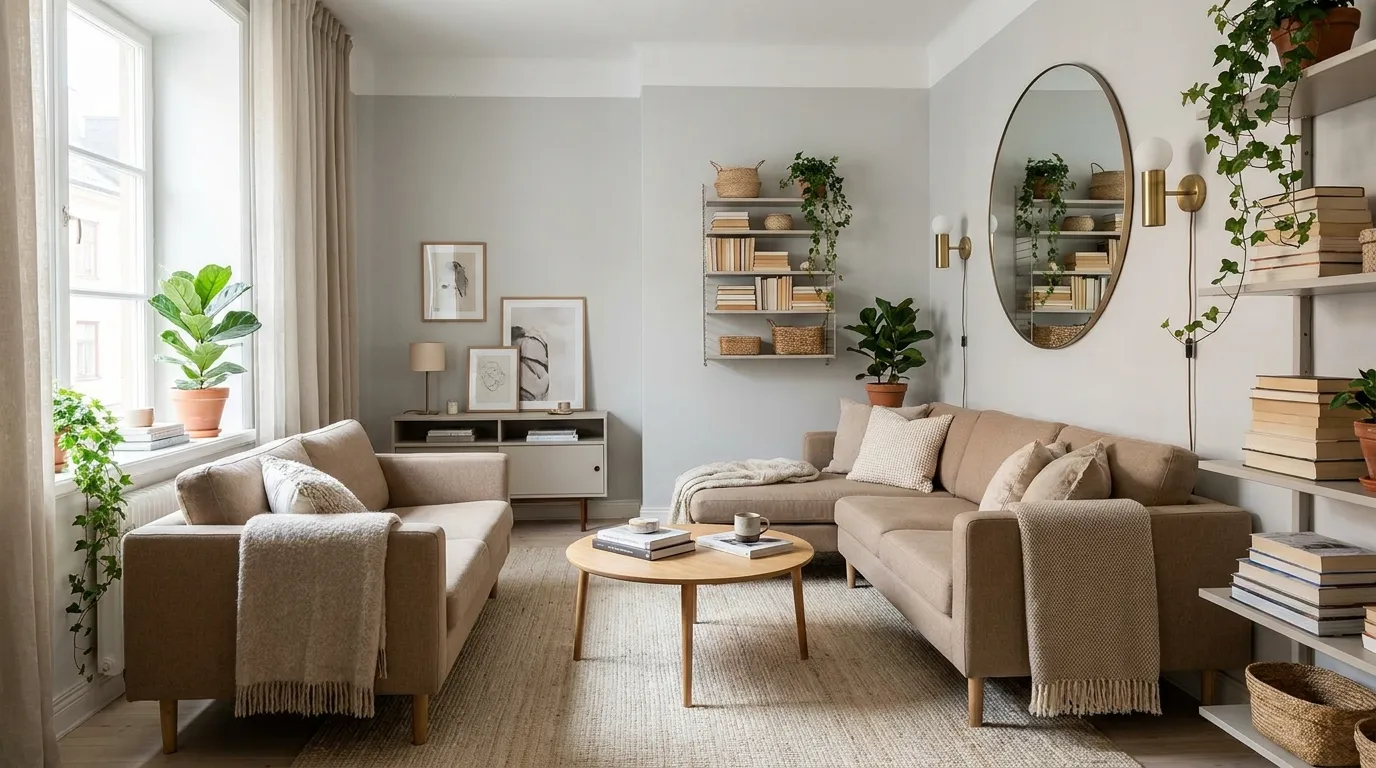
Cozy Small Living Room Ideas for Compact Spaces
A small living room can still feel warm, put together, and completely functional without feeling cramped or overcrowded. The trick isn’t about owning less furniture or living with an empty room. It comes down to choosing pieces that fit the scale of the space, using color and light the right way, and organizing the layout so every corner earns its spot. These small living room ideas cover everything from furniture choices to lighting tricks that make a compact room feel warm and open at the same time, without needing a full renovation or a big budget. This applies to a studio apartment, a small condo, or just one oddly shaped room in a bigger house, since the same core principles hold up across all of them, and small changes tend to add up to a noticeably different feeling space.
Why Small Living Rooms Feel Cramped in the First Place
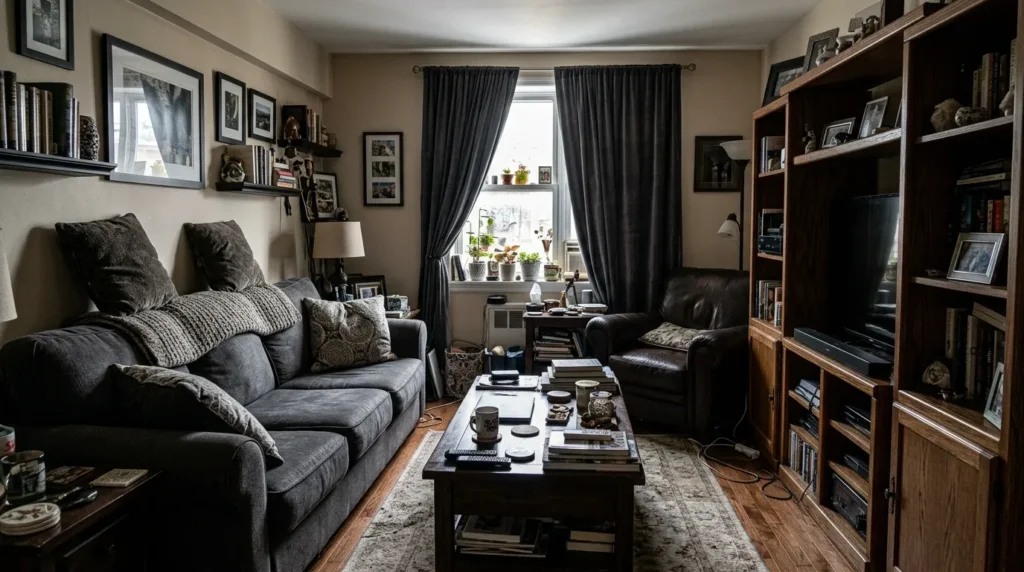
Most small living rooms don’t feel tight because of the square footage alone. They feel tight because of oversized furniture, poor traffic flow, heavy curtains blocking light, and a lack of visual breathing room between pieces. A room that’s actually quite small can feel surprisingly open once these issues are addressed, while a slightly bigger room stuffed with the wrong furniture can feel just as cramped, sometimes even more so.
A few common culprits behind a cramped feeling include:
- Furniture that’s too large or too tall for the room’s proportions
- Dark, heavy fabrics and rugs that visually shrink the space
- Poor lighting that leaves corners dim and closed off
- Too many small decorative pieces cluttering surfaces and shelves
- A layout that forces awkward walking paths around furniture
Once you know what’s working against the room, fixing it becomes a lot more straightforward, and that’s exactly what these small living room ideas are built to do. Most of the fixes below don’t require new construction or a big purchase, just a shift in how the existing space is used.
1. Choose a Sofa That Fits the Room’s Scale

A sofa that’s too deep or too long for the room will dominate the space and block natural walking paths. Look for a sofa with slim arms and a shallower seat depth, since these details free up several inches without sacrificing comfort. Measuring your walking paths before buying anything new is one of the most overlooked steps in furnishing a small room, and it can save you from returning an expensive piece that simply doesn’t fit once it’s in place.
2. Use Light, Neutral Wall Colors
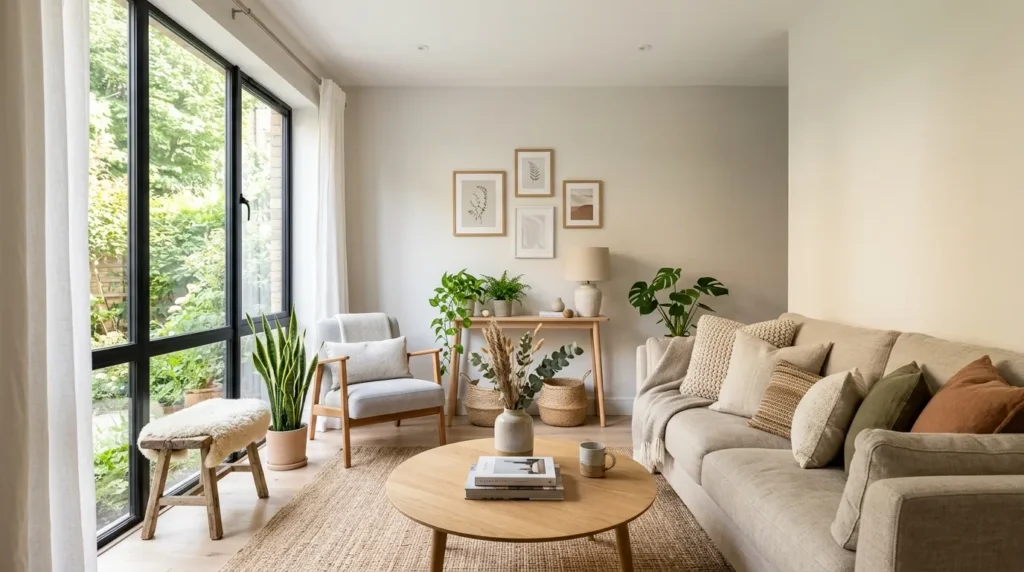
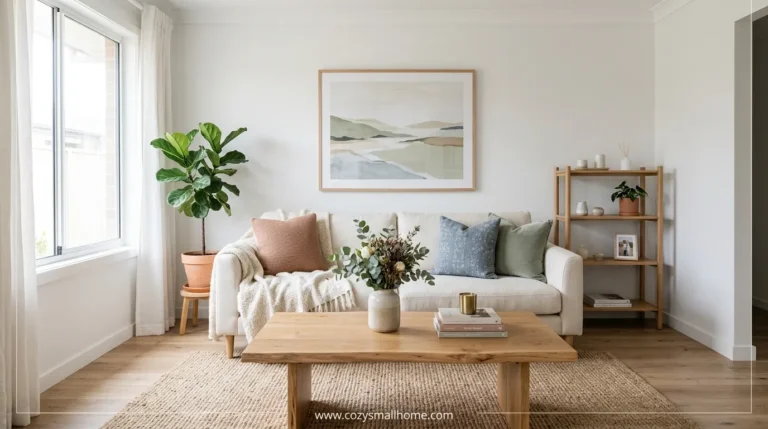
Soft white, warm beige, and light gray all reflect more light than darker shades, which helps the walls visually recede instead of closing in around the furniture. If you want warmth, layer it in through textiles and accessories rather than the wall color itself. A neutral base also gives you the freedom to change accent colors seasonally through pillows, throws, and art without repainting the entire room.
3. Add a Large Mirror on One Wall
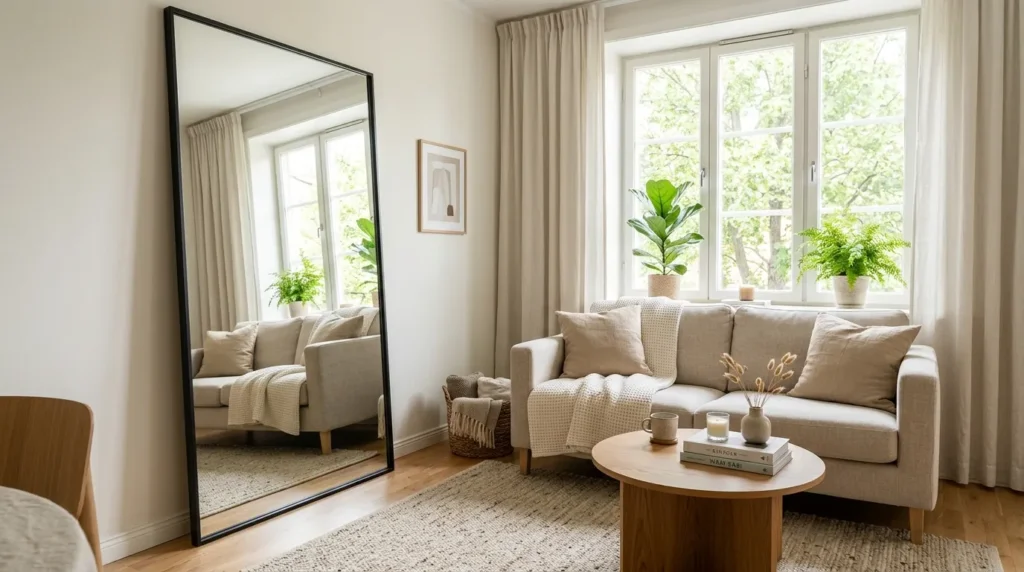
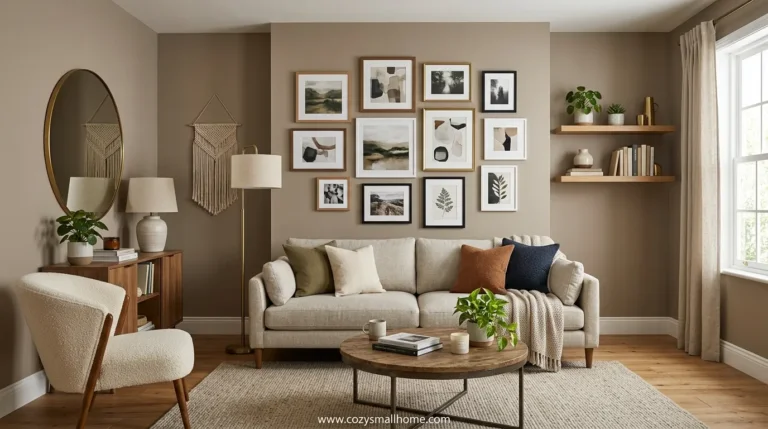
A large mirror placed across from a window reflects natural light deeper into the room and creates the illusion of an additional window or doorway. This is one of the simplest, most affordable upgrades for a compact living room, and it works in almost any style of decor, from modern to traditional. Leaning a floor mirror against the wall instead of hanging one also adds a relaxed, styled look while achieving the same effect.
4. Choose Furniture With Visible Legs
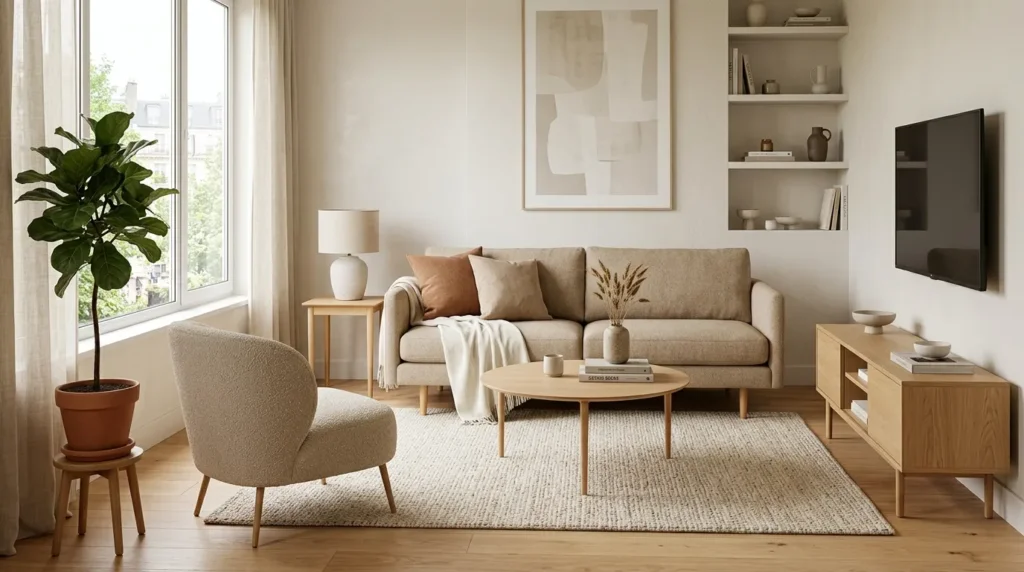
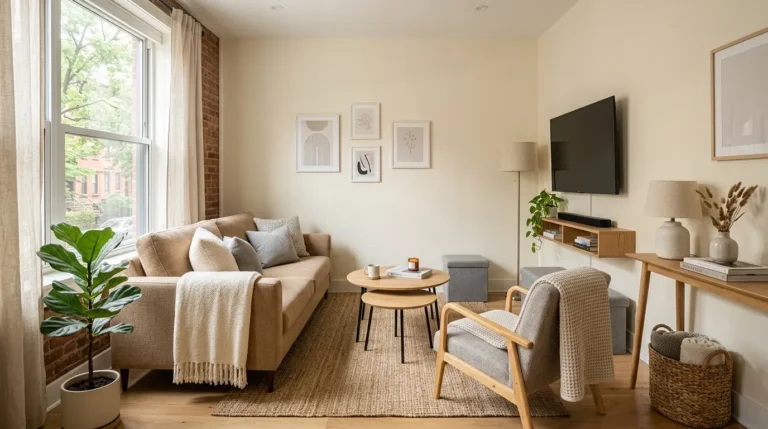
Furniture that sits flush to the floor blocks sightlines and makes a room feel heavier. Sofas, chairs, and cabinets with slim, visible legs let light and floor space show through underneath, which keeps the whole room feeling lighter. This small detail is easy to miss while shopping, but standing back and looking at a piece from across the room usually makes the difference obvious right away.
5. Use a Round Coffee Table Instead of a Rectangular One
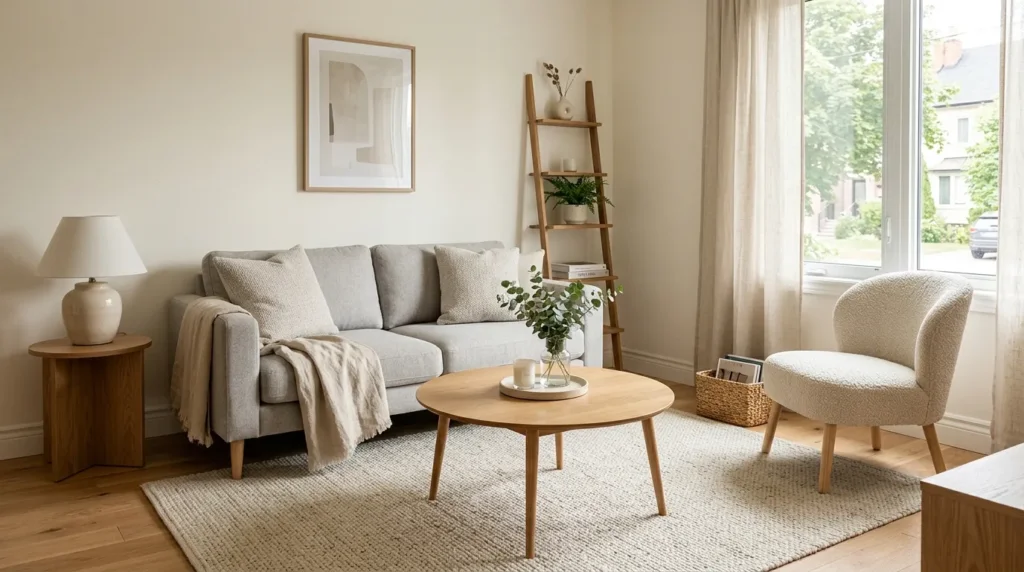
Sharp corners on a rectangular coffee table can make walking around a small room feel tighter than it needs to be. A round or oval table softens the layout and makes it easier to move through the space without bumping into edges. This is especially helpful in homes with kids or pets, where soft edges reduce both bumps and the visual weight of the furniture.
6. Add Multi Functional Furniture
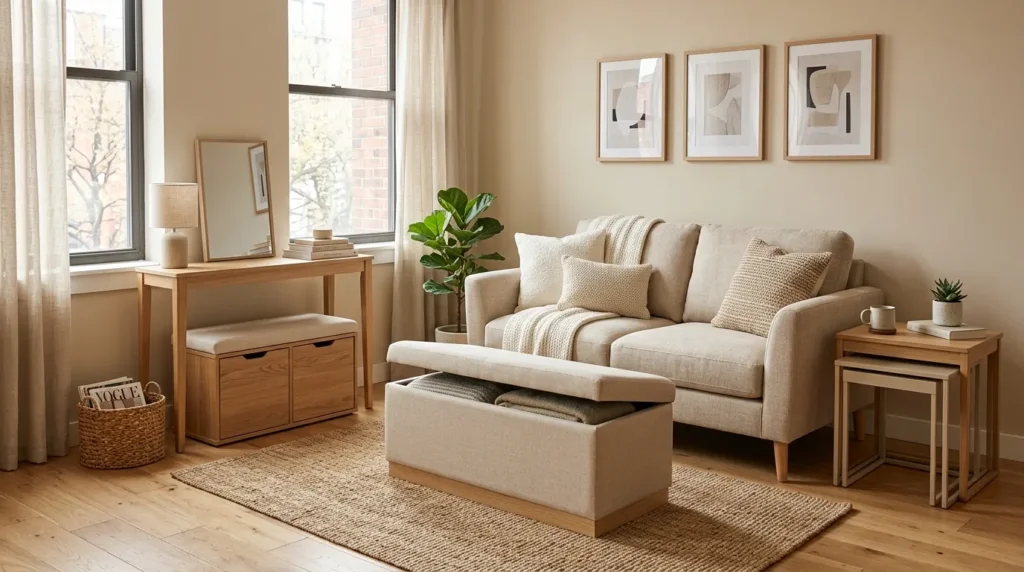
Furniture that does more than one job saves both floor space and money. A few pieces worth considering:
- An ottoman with hidden storage inside for blankets or remotes
- A console table that also works as a slim entryway catch all
- A daybed that functions as both seating and an extra sleeping spot
- Nesting tables that stack away when not in use
- A storage bench that doubles as extra seating during gatherings
Each of these lets you skip buying separate pieces for separate purposes, which also means less furniture crowding the room overall.
7. Hang Curtains Close to the Ceiling
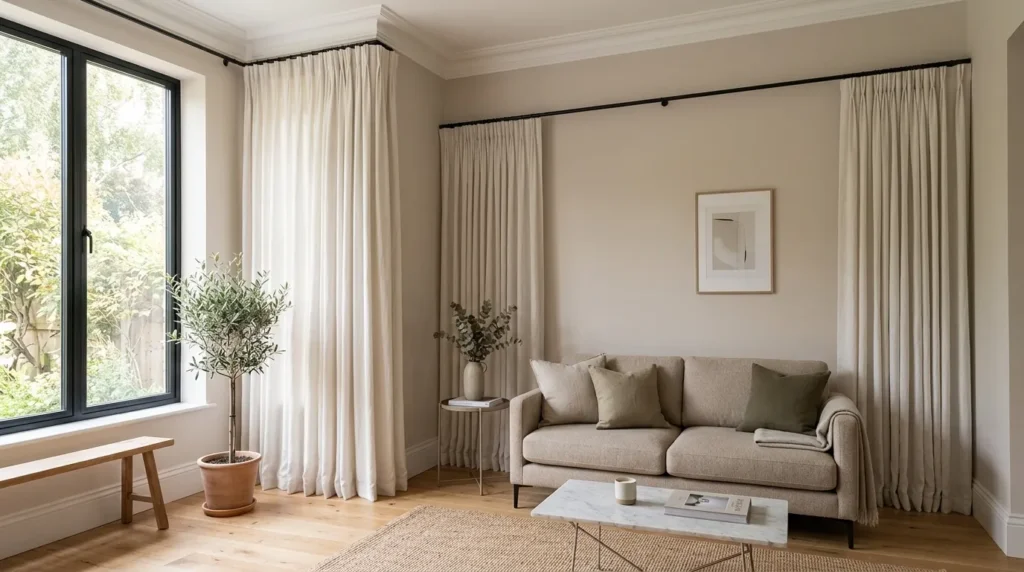
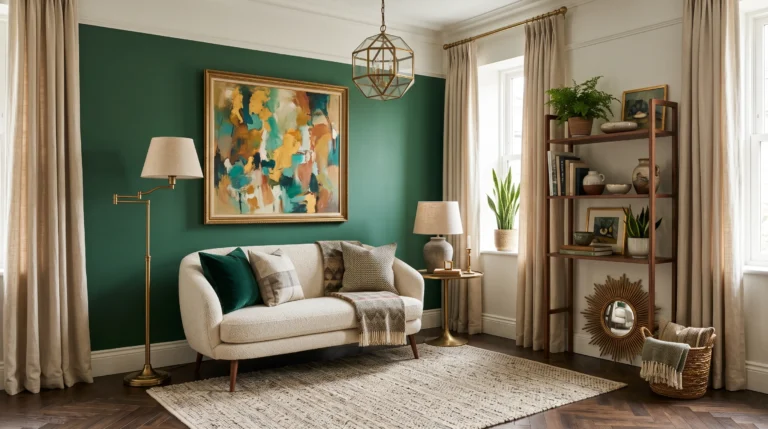
Mounting curtain rods a few inches below the ceiling instead of directly above the window frame draws the eye upward and makes the ceiling feel taller than it actually is. This simple trick works in almost any room regardless of the actual window size, and it costs nothing beyond the curtain rod itself. Pairing this with floor length curtains adds even more height to the illusion.
8. Use Vertical Shelving
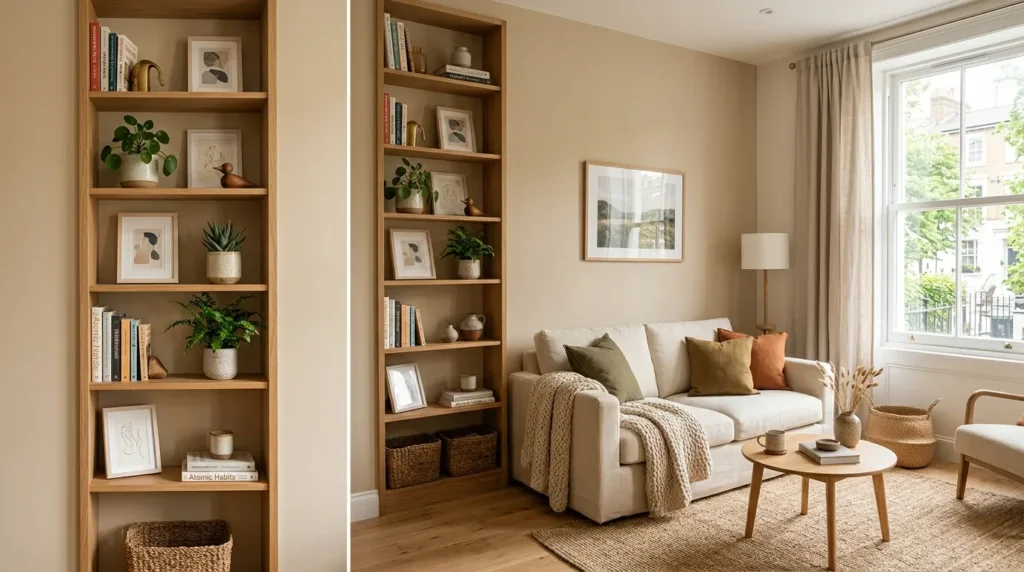
When floor space is limited, tall and narrow shelving units make better use of the room than wide, low ones. Vertical shelves store just as much while taking up a smaller footprint on the floor, and they draw the eye upward in the same way tall curtains do, adding to the sense of height in the room.
9. Keep a Consistent Color Palette
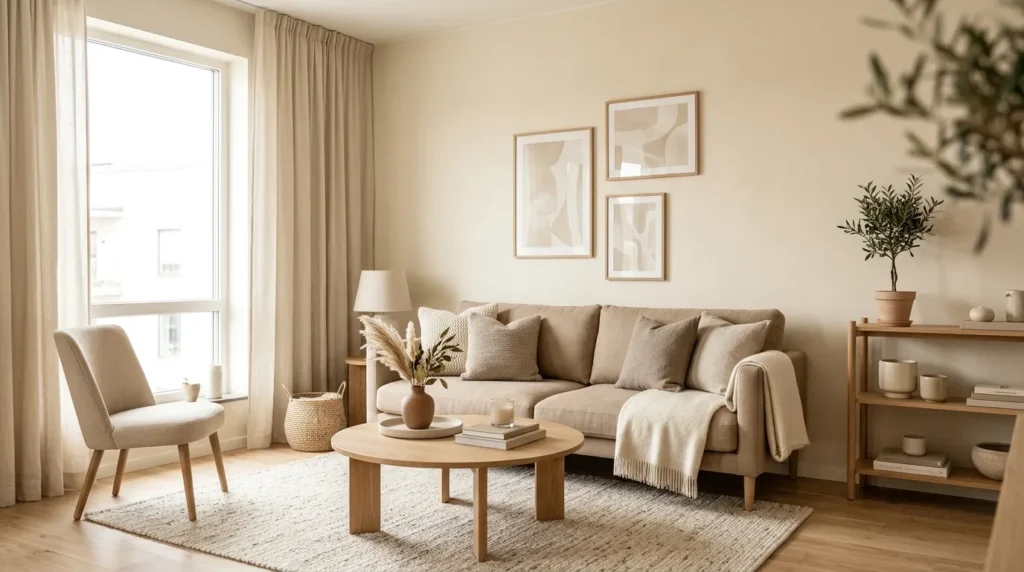
When your sofa, rug, curtains, and walls share a similar tone family, the eye moves smoothly across the room instead of stopping at contrasting blocks of color. This creates a calmer, more cohesive look that also happens to make the room feel larger than it is. A helpful rule of thumb is picking two or three main colors and repeating them throughout the room in different textures and materials.
10. Add a Statement Rug in a Lighter Tone
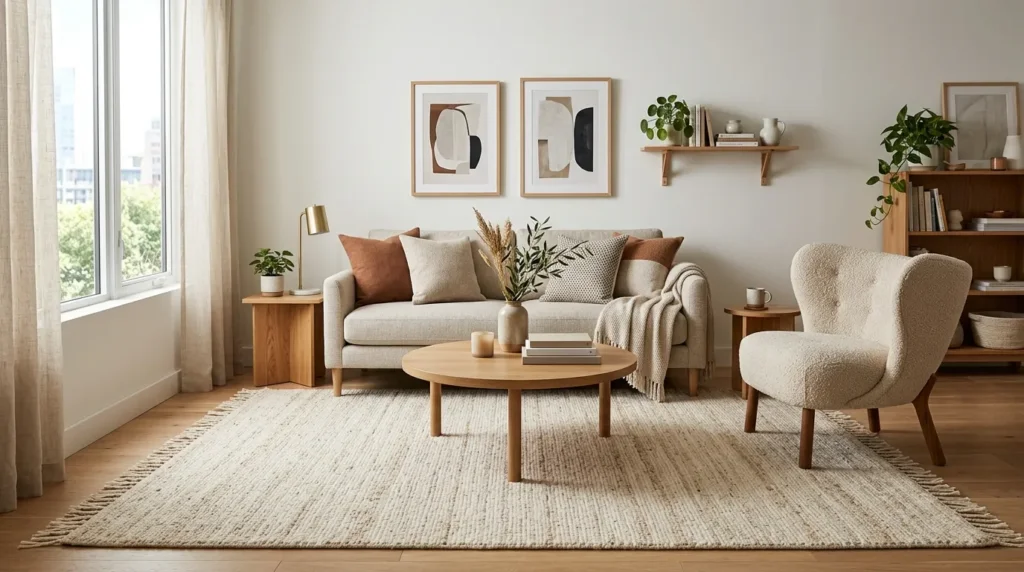
A large, light colored rug that extends under the front legs of your furniture ties the room together and adds a sense of scale. A rug that’s too small, floating in the middle of the room, actually makes the space look more disjointed and smaller by comparison. When in doubt, size up rather than down, since an undersized rug is one of the most common styling mistakes in small rooms.
11. Use Wall Mounted Lighting Instead of Floor Lamps
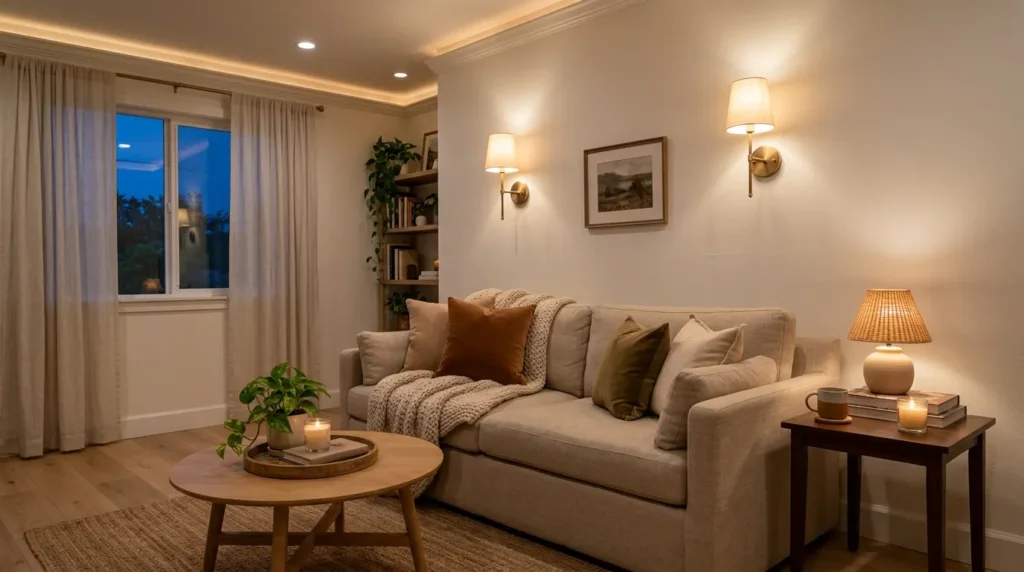
Floor lamps take up valuable square footage and add visual clutter at eye level. Wall sconces or plug in wall lights free up the floor while still giving you layered lighting throughout the room. Layered lighting, meaning a mix of overhead, wall, and accent lighting, tends to make a small room feel more finished than relying on one single ceiling fixture.
12. Choose a Media Console With Storage
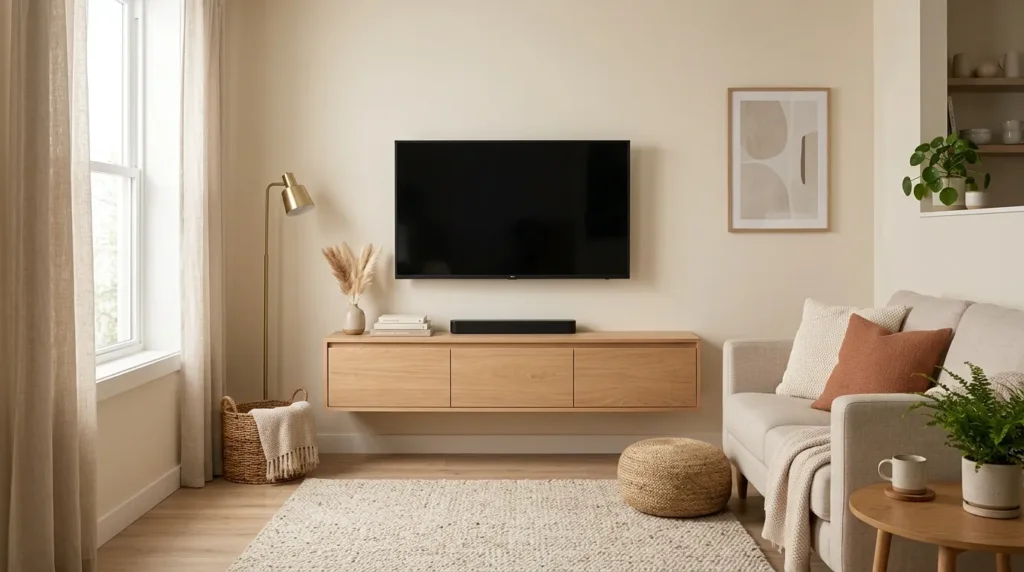
A slim media console with a couple of drawers or cabinet doors keeps remotes, cables, and media accessories out of sight. Here’s a quick comparison of console sizes and what they work best for:
| Console Width | Best For | Storage Style |
| Under 40 inches | Apartments, narrow walls | One or two small drawers |
| 40 to 55 inches | Standard small living rooms | Mixed drawers and open shelving |
| 55 inches and up | Larger compact rooms | Full cabinet doors and drawers |
Picking the right size keeps the console from overwhelming the wall while still giving you enough room to hide clutter, and closed storage in particular helps keep cables and remotes from creating visual noise in an already tight space.
13. Float Furniture Away From the Walls
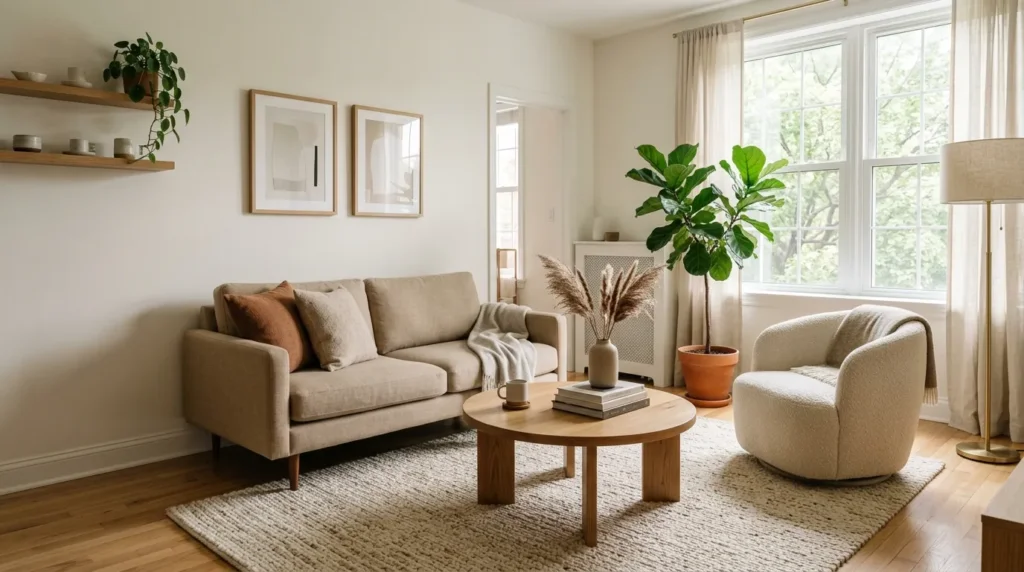
Pushing every piece of furniture against the wall might seem like it saves space, but it often leaves an awkward, empty void in the middle of the room. Floating the sofa a few inches off the wall and arranging seating to face each other creates a more intentional, conversational layout, and it tends to make better use of the room’s actual usable space than lining everything up along the perimeter.
14. Add Plants in Varying Heights
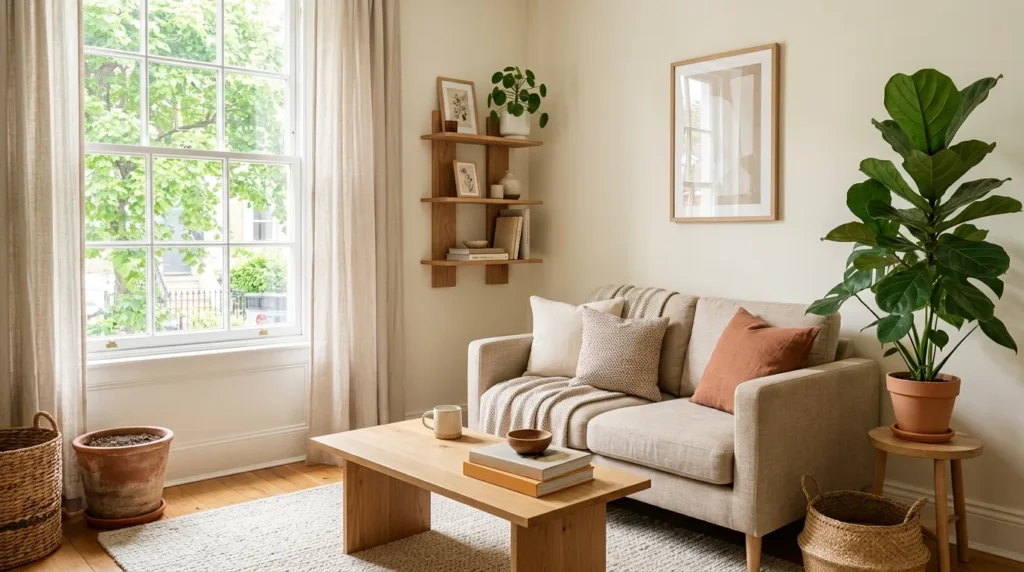
A few plants at different heights, such as a tall floor plant in a corner and a small potted plant on a shelf, add life to the room without taking up much space. Plants also soften hard edges from furniture and shelving, giving the room a warmer feel overall, and they bring a bit of natural texture that’s hard to replicate with decor alone.
15. Declutter Surfaces Regularly
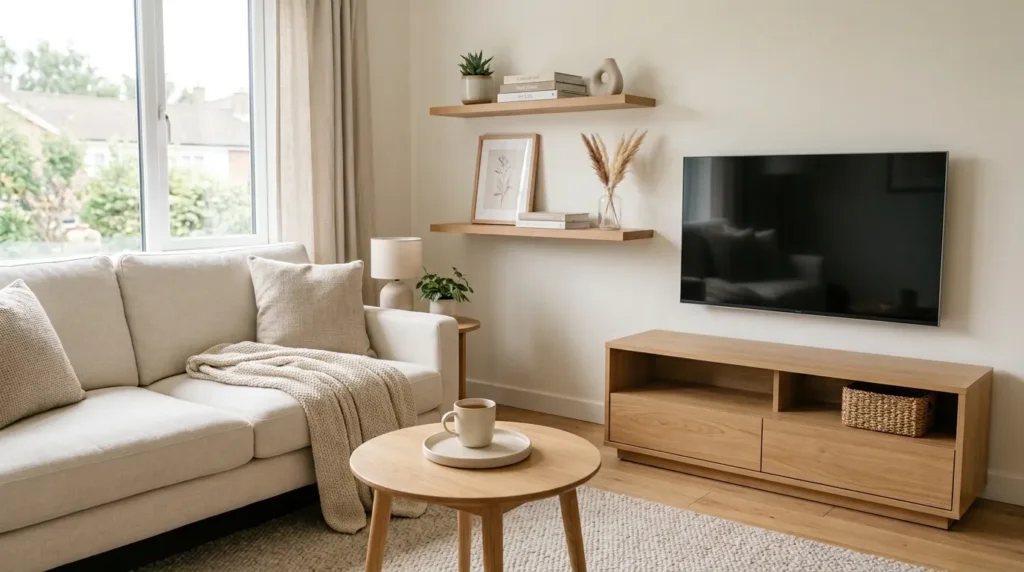
Coffee tables, shelves, and console tops can quickly fill up with mail, remotes, and random items that make the room feel messier than it is. A quick daily reset, along with a designated spot for everyday clutter, keeps the room looking calm and put together, and it takes only a few minutes once it becomes part of a regular routine.
Final Thoughts
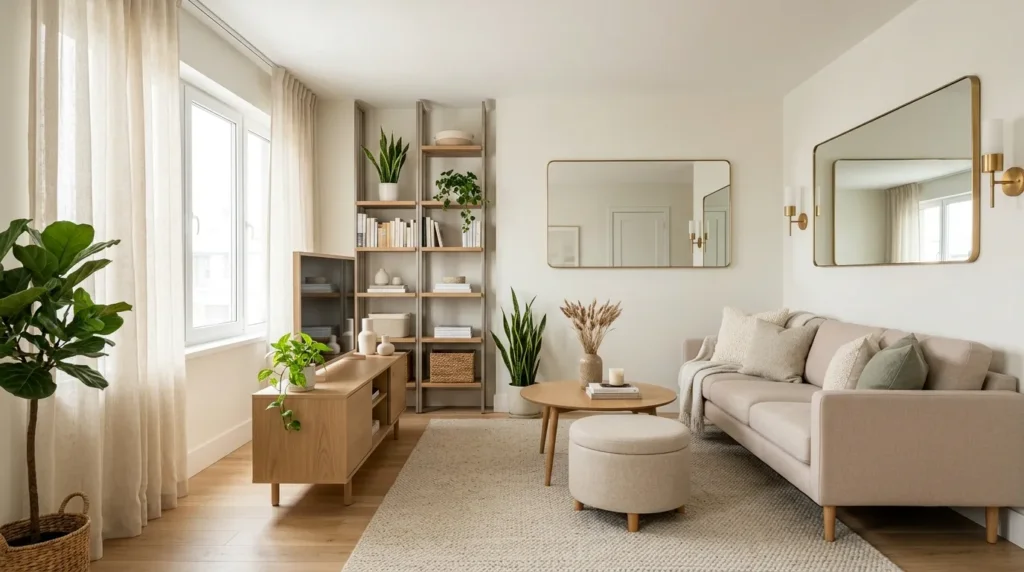
A small living room can absolutely feel cozy, stylish, and functional without feeling boxed in. These small living room ideas all come down to the same core principles, choosing furniture that fits the scale of the room, using light and color intentionally, and keeping the layout open enough for easy movement. Pick a few ideas from this list that match your space and budget, and the room will start to feel noticeably bigger without changing its actual size. Small, consistent changes tend to matter more than one big overhaul, so there’s no need to tackle everything on this list at once to see a real difference.
Frequently Asked Questions
- What is the biggest mistake people make in a small living room? Buying furniture that’s too large for the room. It blocks walking paths and makes the space feel more cramped.
- What color makes a small living room look bigger? Light, neutral colors like soft white, warm beige, and light gray reflect more light and open up the room.
- Should I avoid rugs in a small living room? No. Just size up rather than down, since a rug that’s too small makes the layout feel disconnected.
- Is it better to push furniture against the walls in a small room? Not always. Floating the sofa a few inches off the wall often creates a more natural, conversational layout.
- How can I add storage without making a small living room feel cluttered? Choose multi functional pieces like an ottoman with hidden storage or a media console with doors.