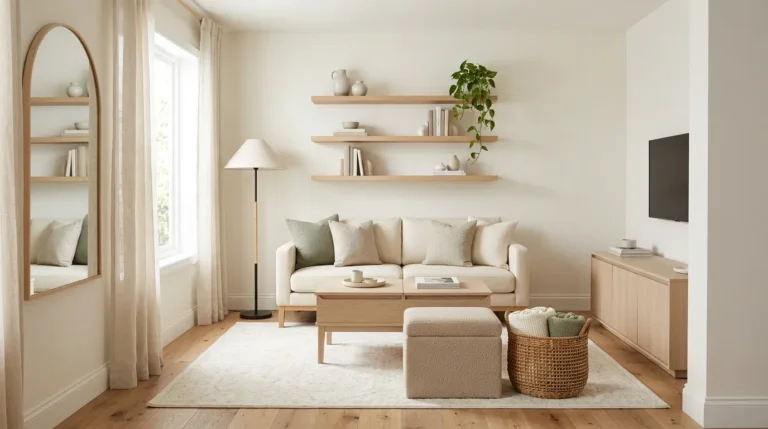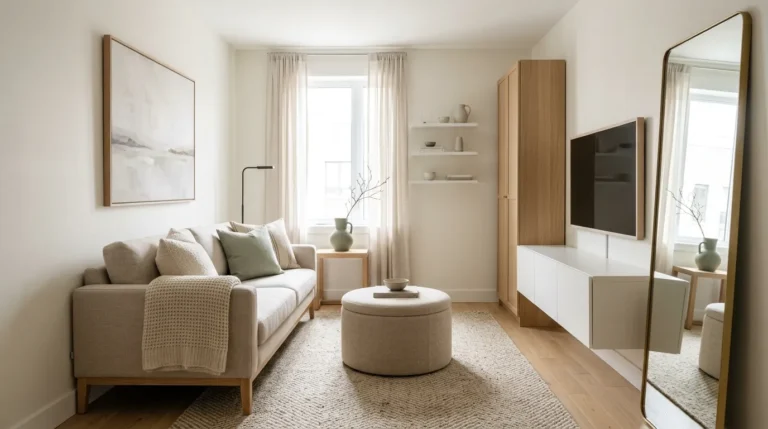
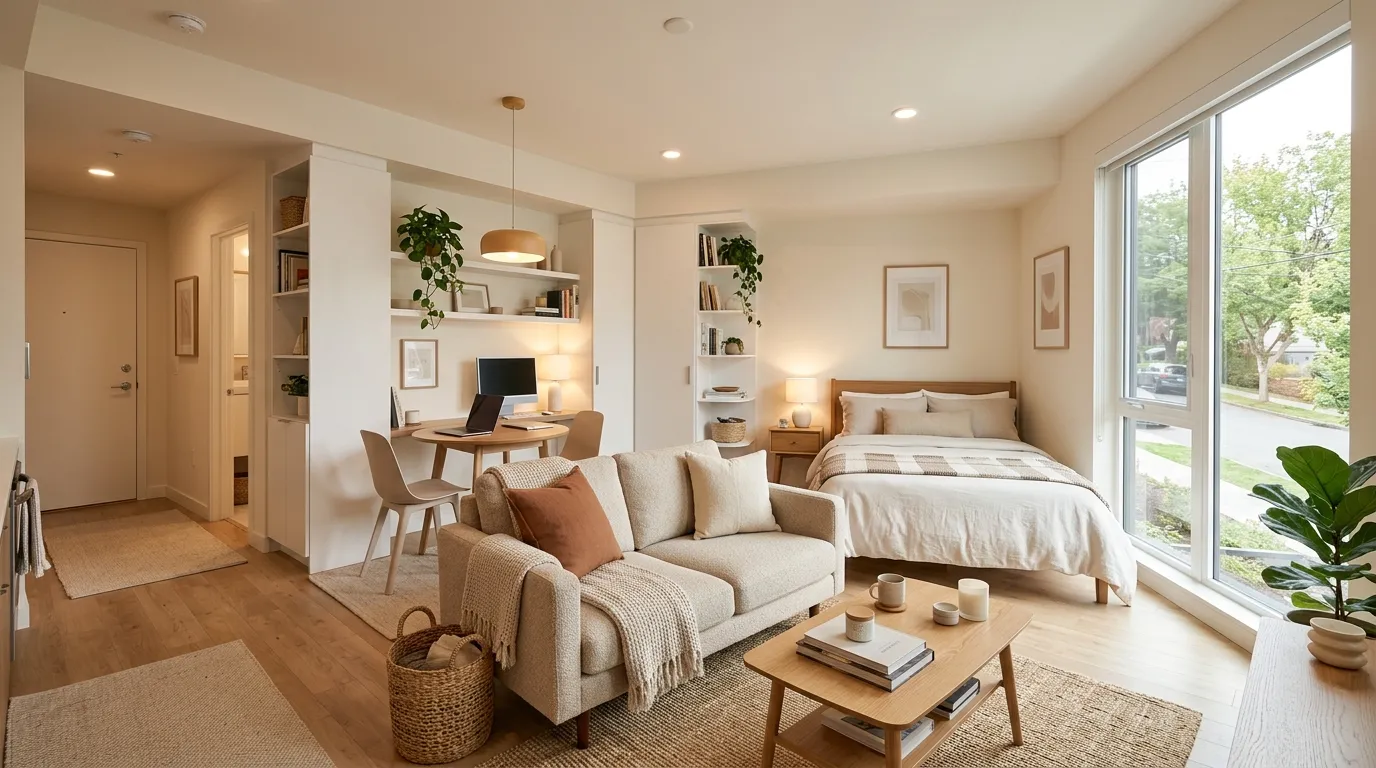
How to Decorate a Studio Apartment for a Cozy and Functional Home
Introduction
Decorating a studio apartment can be challenging because one open room often has to serve as a bedroom, living room, dining area, workspace, and storage zone. The goal is not simply to fit everything inside the apartment. A successful layout should make each area feel intentional while keeping the overall space open and comfortable. The right furniture, lighting, colors, and storage solutions can make a small apartment feel much larger than its floor plan suggests. If you are wondering how to decorate a studio apartment without making it feel crowded, start by treating the room as a collection of flexible zones rather than one large space. The following ideas can help you create a home that feels organized, welcoming, and practical.
- Start With a Clear Studio Apartment Layout
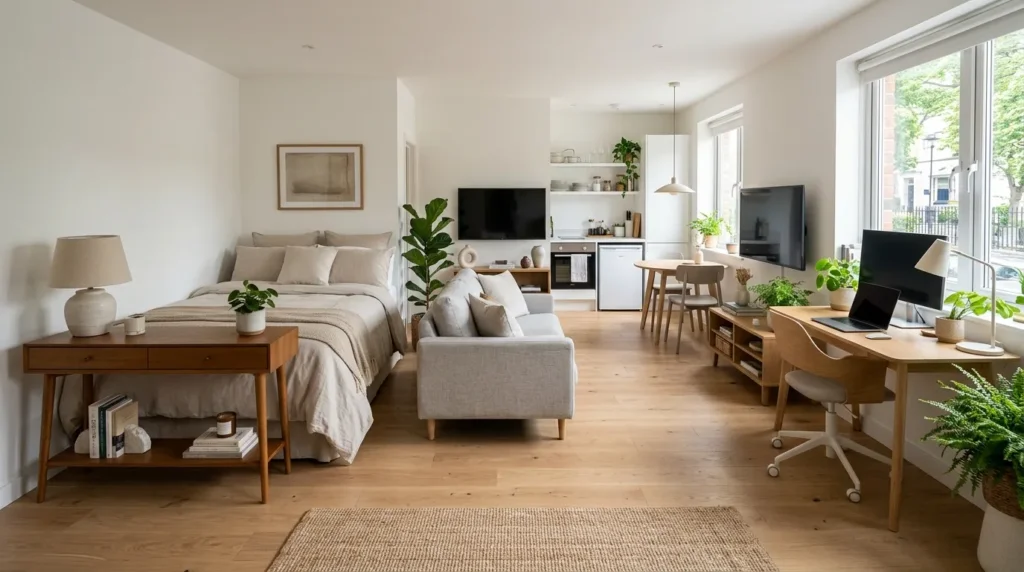
Before buying décor or furniture, measure the room and identify the areas you need most. A studio apartment usually benefits from clearly defined zones for sleeping, relaxing, eating, working, and storing everyday items. Begin with the largest pieces, such as the bed and sofa, because their positions will determine how people move through the room.
Avoid pushing every piece against a wall simply because the apartment is small. Sometimes a sofa, open bookshelf, or narrow console can create a subtle boundary between areas without closing the room off. Keep the main walking path clear and avoid placing bulky furniture where it blocks windows or natural light. A simple floor plan drawn on paper can help you test different arrangements before moving heavy furniture.
Think about how you use the apartment during a normal day. If you work from home, the desk should have a practical relationship with lighting and power outlets. If you rarely eat at a table, a compact dining surface may be more useful than a full dining set. Good studio design starts with your actual routine.
- Choose Furniture That Works Twice
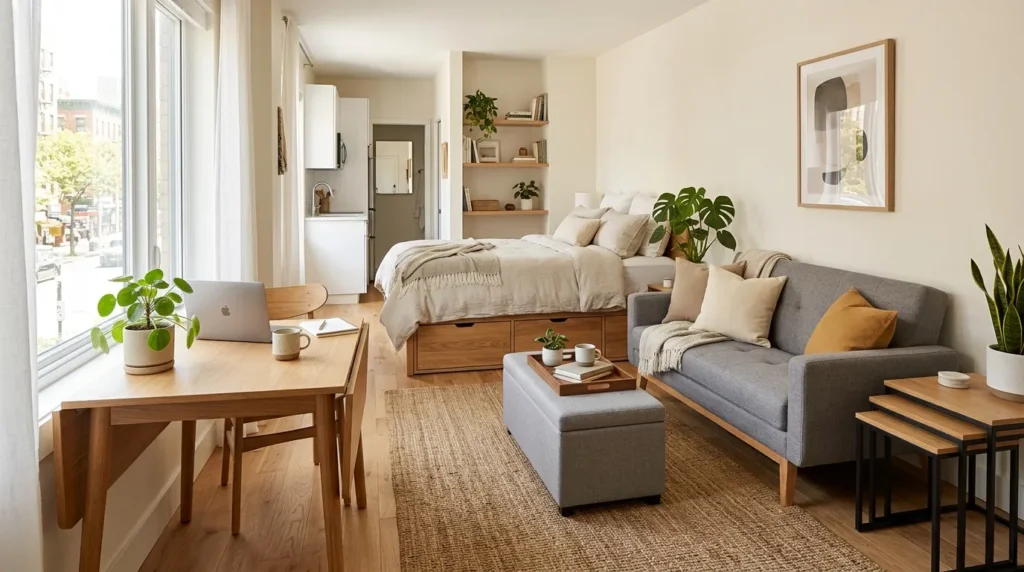
Multifunctional furniture is one of the most useful answers to how to decorate a studio apartment. When every square foot matters, a single item that performs two jobs can reduce clutter and free up valuable floor space. Consider a storage ottoman that works as seating and hidden storage, a sofa bed for occasional guests, or a bed frame with drawers underneath.
A drop-leaf table can function as a desk during the day and a dining table when needed. Nesting tables can be separated when guests arrive and stacked when floor space is needed. Even a slim console can provide a surface for keys, a small workspace, or a media setup.
Scale matters just as much as functionality. A huge sectional may technically fit, but it can dominate a studio and make movement difficult. Choose pieces with proportions that leave breathing room around them. Furniture with exposed legs can also create a lighter visual effect because more of the floor remains visible.
- Divide the Room Into Comfortable Zones
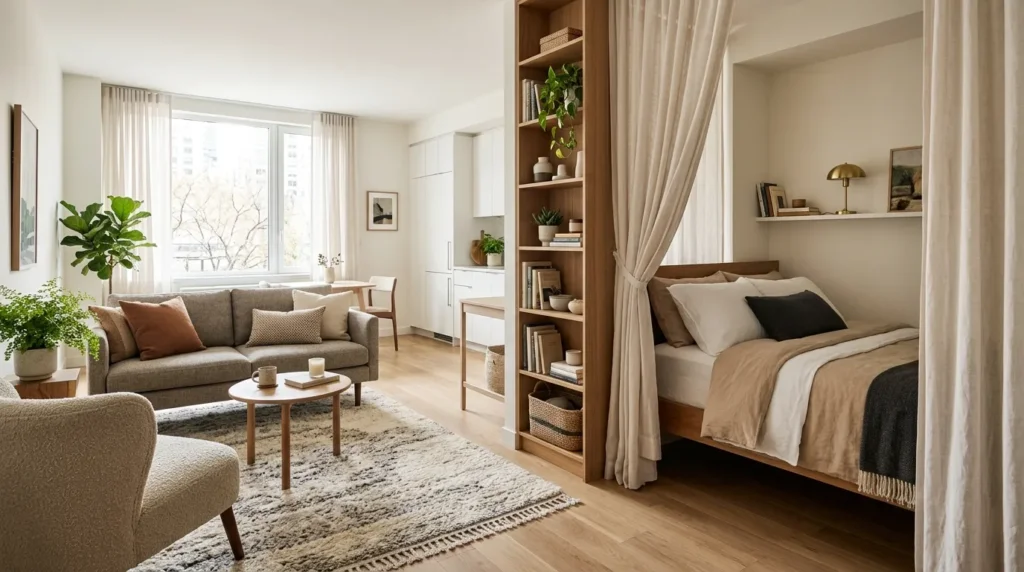
A studio does not need permanent walls to have separate areas. Visual zoning can make the apartment feel organized while preserving its open character. A rug beneath the sofa can establish the living area, while a different light fixture or wall treatment can help distinguish the sleeping zone.
For the bed, consider a narrow open shelving unit, curtain panel, slatted divider, or low bookcase. These options provide some separation without creating the heaviness of a solid wall. If privacy is important, ceiling-mounted curtains can be closed when needed and pulled back when you want the apartment to feel more spacious.
Keep the divisions functional rather than decorative only. A shelf that separates the bedroom from the living area should also provide useful storage. A rug should define a seating area without becoming an obstacle in the main walkway. The best zones solve more than one problem.
- Use a Light and Consistent Color Palette
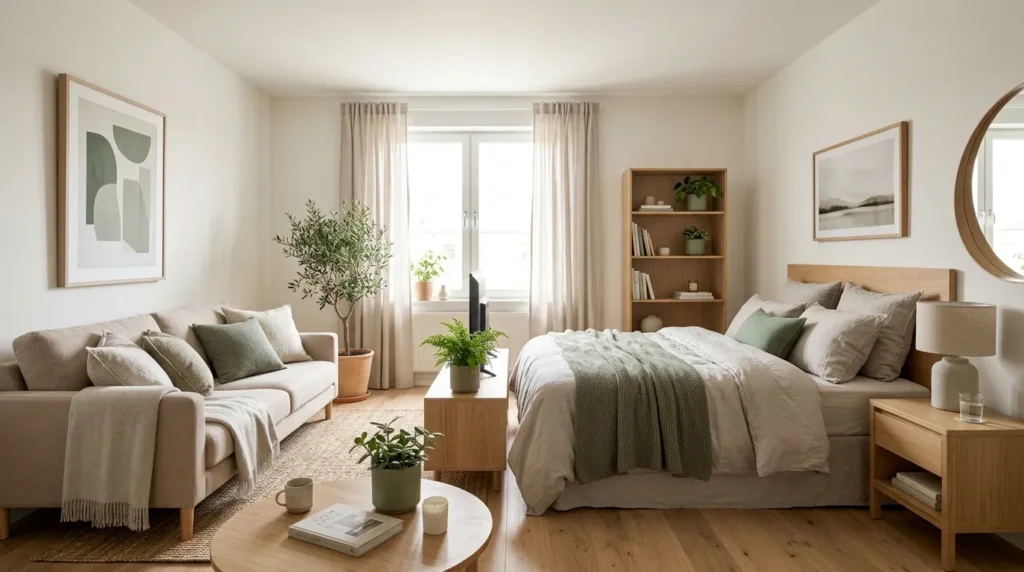
Color can strongly influence how a studio apartment feels. Light neutrals such as warm white, soft beige, pale gray, and muted greige can reflect light and create visual continuity between different zones. This does not mean every surface needs to be the same color. Instead, use a small group of related shades throughout the apartment.
You can introduce personality through artwork, cushions, bedding, curtains, and smaller accessories. If you want stronger color, choose one or two accent shades and repeat them in different areas. For example, muted green can appear in a cushion, artwork, plant pot, and small textile.
Painting every zone a dramatically different color can make an already compact apartment feel fragmented. A consistent base color usually creates a calmer backdrop, allowing furniture and accessories to provide contrast.
- Make Storage Part of the Decor
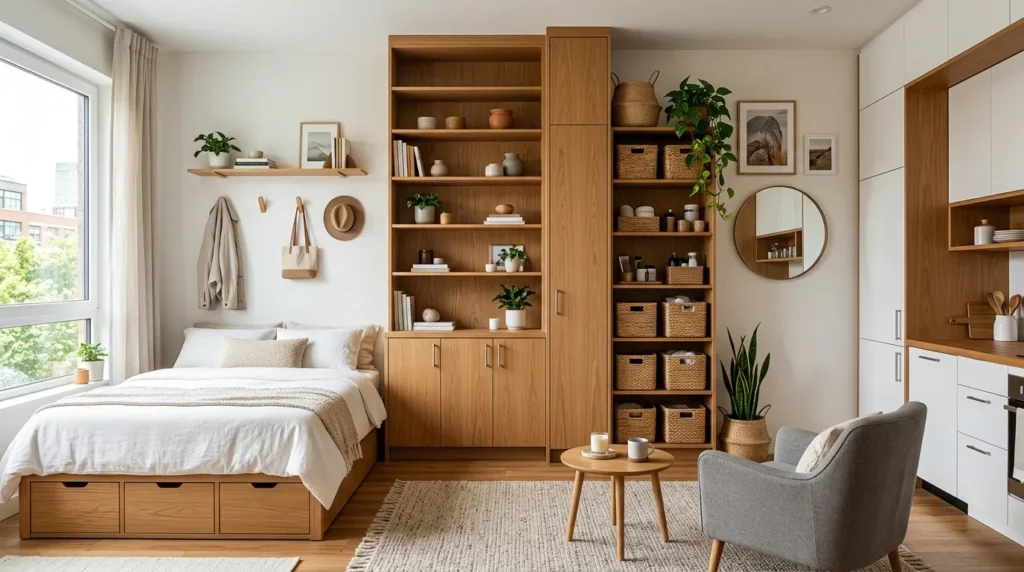
Storage is essential in a studio apartment because visible clutter can quickly make the entire room feel smaller. Instead of treating storage as an afterthought, choose pieces that contribute to the visual design. Closed cabinets can hide everyday items, while attractive baskets and boxes can organize things that need to remain accessible.
Use vertical space whenever possible. Tall shelving can provide more storage without taking much floor area. Wall-mounted shelves, hooks, pegboards, and narrow cabinets can turn unused wall space into functional storage. Under-bed containers are useful for seasonal clothing, extra bedding, and items you do not need every day.
Keep frequently used surfaces relatively clear. A small tray near the entrance can collect keys and wallets, while drawer organizers can prevent small items from spreading across the room. The less visual noise you have, the more spacious the apartment will appear.
- Improve Lighting at Different Levels
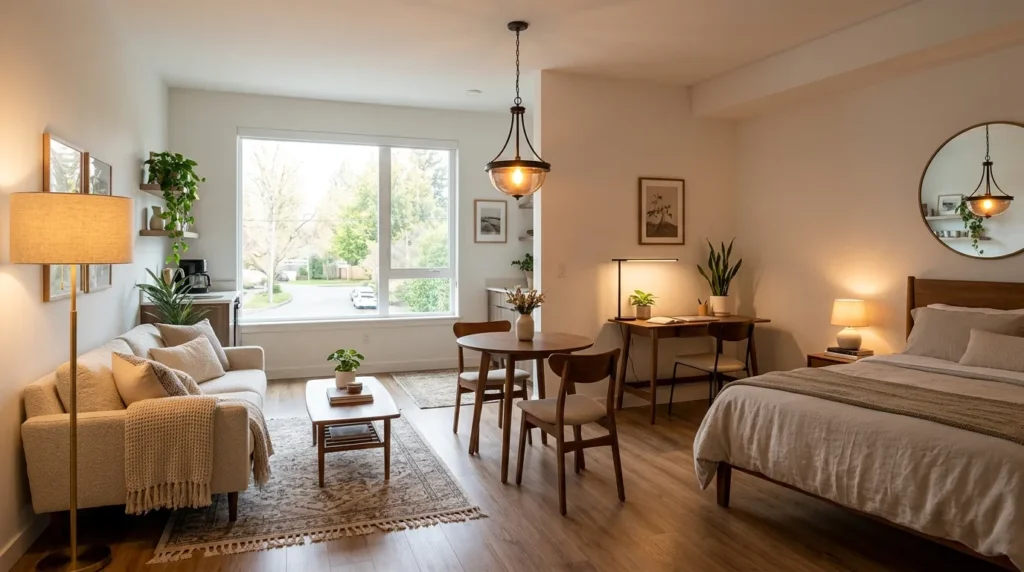
Good lighting can make a studio feel larger, warmer, and more comfortable. Instead of depending on one ceiling fixture, create layers of light at different heights. A floor lamp can brighten the living area, a bedside lamp can make the sleeping zone feel comfortable, and a small desk lamp can provide focused task lighting.
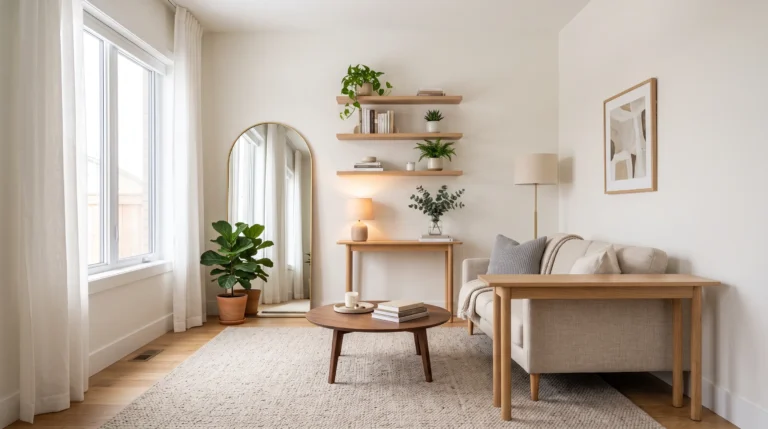
Use daylight as much as possible. Keep windows relatively unobstructed and choose curtains that can open fully during the day. A mirror placed where it can reflect natural or artificial light can also increase the sense of brightness.
Lighting is especially useful for zoning. A pendant above a dining surface, a lamp beside the sofa, or a wall light near the bed can visually establish each area without requiring physical partitions. Choose warm, comfortable lighting for relaxing spaces and brighter task lighting where you work.
- Add Personality Without Overcrowding
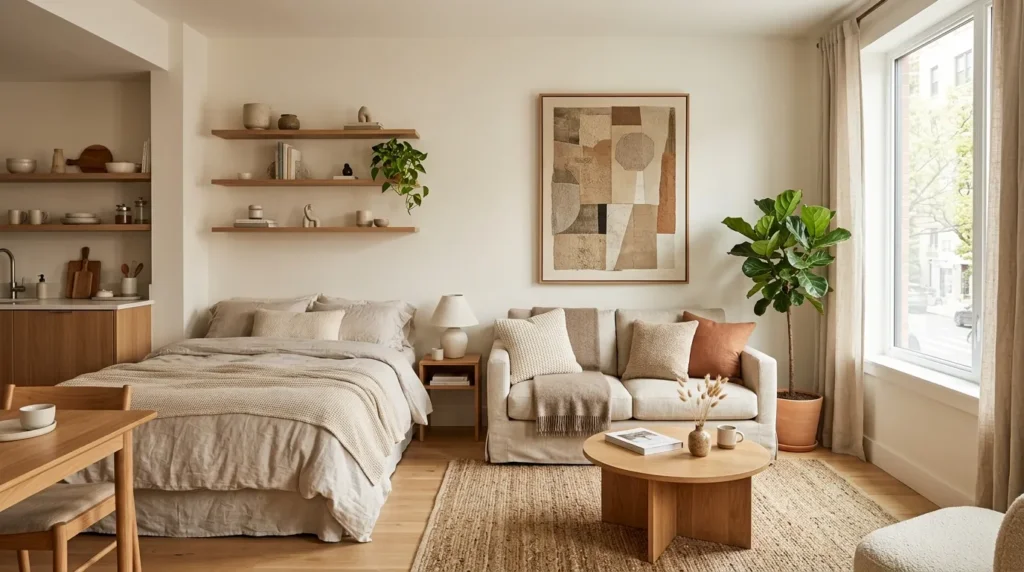
A functional studio should still feel like your home. The easiest way to add personality is to be selective. Rather than filling every empty wall or shelf, choose a few pieces that have meaning or contribute to the room’s overall style. A large piece of artwork can sometimes have more impact than a collection of small decorations.
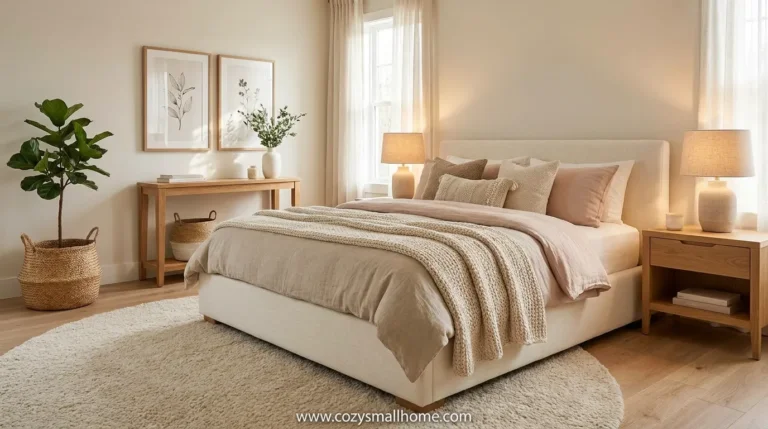
Textiles are another effective way to make a studio feel cozy. Layer a rug, cushions, curtains, and bedding in complementary textures rather than using too many unrelated patterns. Plants can introduce natural color and soften hard surfaces, but choose sizes that suit the room and do not interfere with walkways.
Use negative space intentionally. Empty areas are not necessarily wasted space; they allow important furniture and decorative pieces to stand out. When deciding whether to add another accessory, consider whether it improves the room or simply fills a surface.
- Studio Apartment Decorating FAQs
How do I make a studio apartment look bigger?
Keep the layout open, use appropriately scaled furniture, maintain a consistent light color palette, maximize natural light, and reduce visible clutter.
How should I separate a bedroom in a studio apartment?
Use curtains, open shelving, a low bookcase, a rug, or a narrow room divider to create visual separation without permanently closing the space.
What furniture is best for a studio apartment?
Multifunctional and compact furniture works well, including storage beds, sofa beds, nesting tables, drop-leaf desks, and storage ottomans.
How can I add storage without making my studio feel crowded?
Use vertical shelving, under-bed storage, wall-mounted organizers, and closed cabinets. Choose storage pieces that match the room’s overall design.
What colors work well in a studio apartment?
Warm white, beige, pale gray, greige, and other soft neutrals can help create visual continuity. Add stronger colors through smaller decorative accents.
Make Your Studio Feel Intentional
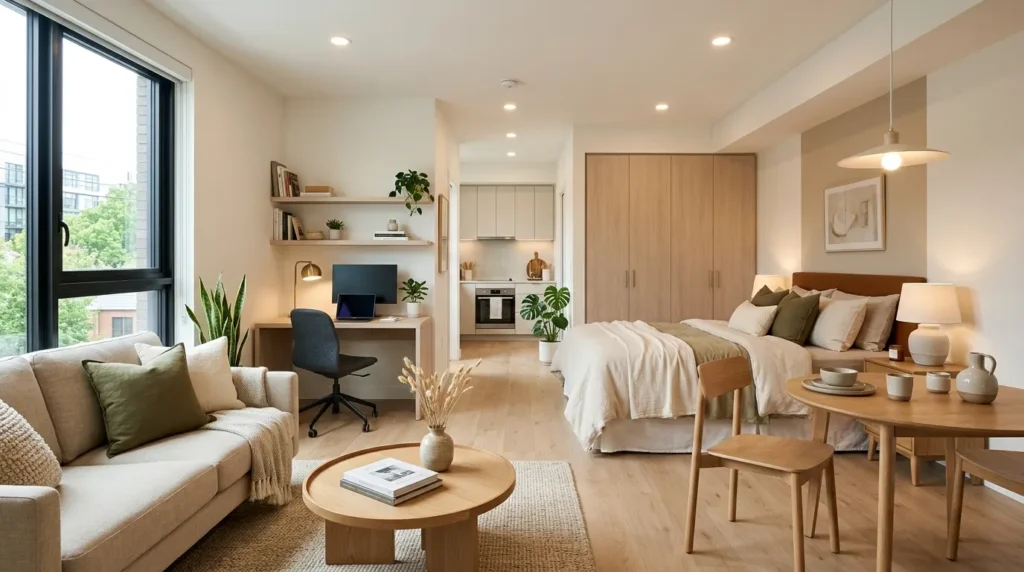
The most effective way to decorate a studio apartment is to balance function with visual simplicity. Start with a layout that supports your daily routine, choose furniture that can perform more than one job, and create subtle zones for sleeping, relaxing, working, and storage. From there, use a consistent color palette, layered lighting, and carefully selected décor to give the space character.
You do not need to fill every corner to make a studio feel complete. A few well-sized pieces, useful storage solutions, and clear pathways can make a compact home feel comfortable and organized. When every item has a purpose and the overall design leaves enough breathing room, even a small studio can feel like a thoughtfully designed home.