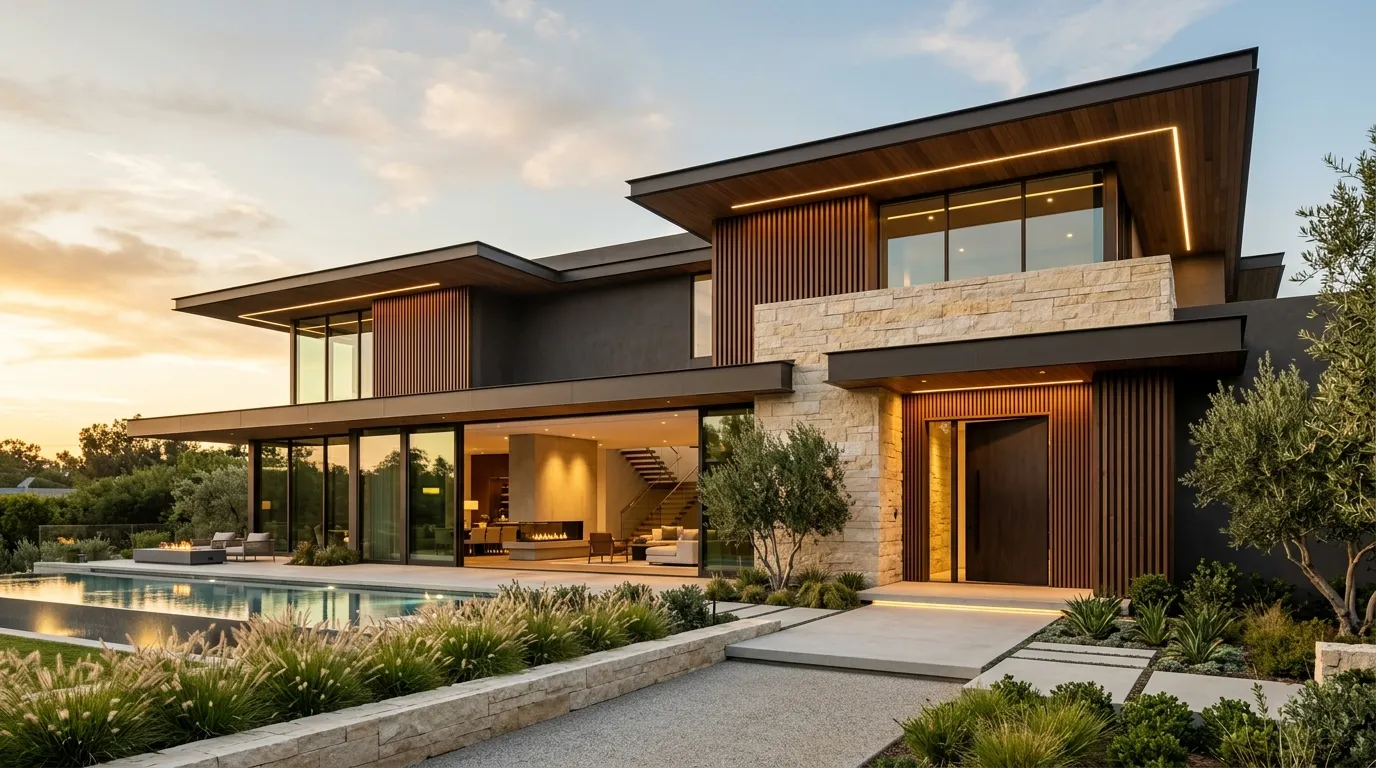
12 Modern House Exteriors Inspired by Luxury Architecture
First impressions happen before anyone steps through the front door. The exterior of a home sets expectations long before a guest, buyer, or passerby sees a single interior room, which is exactly why modern house exteriors have become such a popular area of focus for homeowners, architects, and renovators alike. A well-designed exterior doesn’t just look impressive — it signals intention, quality, and a level of design consistency that carries through the entire property.
Luxury architecture has always understood this. High-end homes rarely rely on ornamentation or excess to make an impression; instead, they use clean lines, quality materials, and deliberate proportions to create exteriors that feel effortlessly sophisticated. The good news is that these same principles can be applied at almost any scale and budget, whether you’re building new, planning a full renovation, or simply updating the facade of an existing home.
If you’re researching modern house exteriors and want ideas that actually draw from real architectural principles rather than passing trends, these twelve approaches offer a practical, design-informed starting point.
What Makes an Exterior Feel Like Luxury Architecture
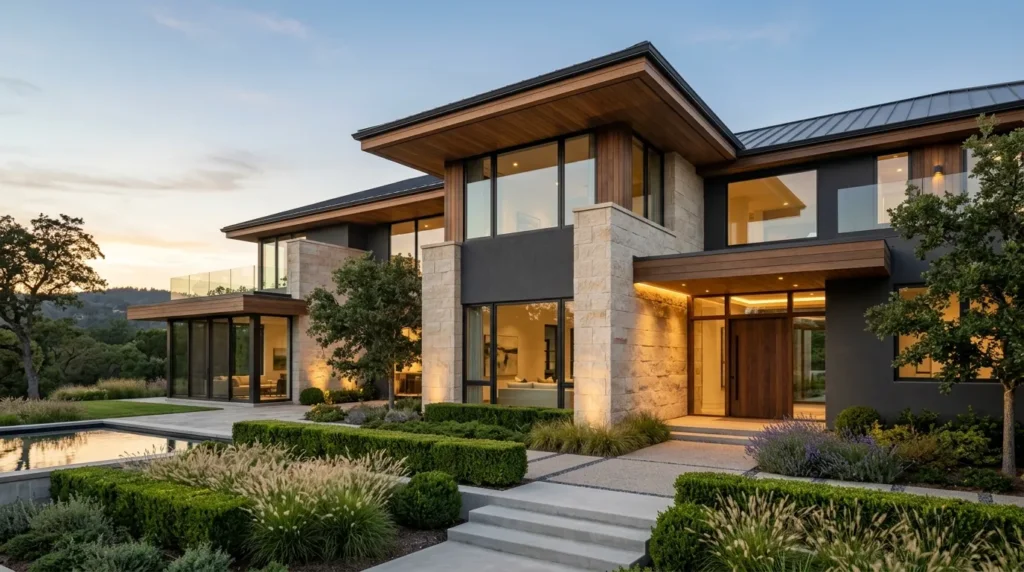
Before diving into specific ideas, it’s worth understanding what separates a genuinely well-designed modern exterior from one that simply looks “new.” Luxury architecture tends to share a few consistent characteristics, regardless of style or region:
- A restrained, cohesive material palette rather than many competing finishes
- Strong horizontal or vertical lines that create a sense of intentional proportion
- A balance of solid and transparent surfaces — large windows paired with substantial walls
- Landscaping and lighting treated as extensions of the architecture, not afterthoughts
Keeping these principles in mind, here are twelve modern house exteriors ideas that bring genuine architectural polish to a home’s facade.
1. Combine Two or Three Complementary Materials Maximum
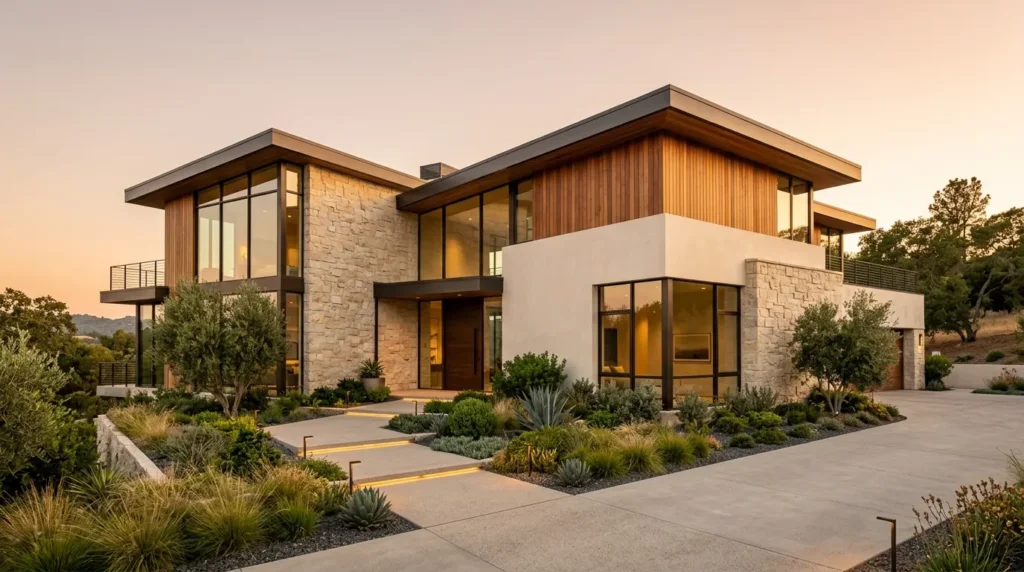
One of the clearest signals of high-end architecture is material discipline. Luxury homes rarely use more than two or three exterior materials, applied generously and consistently, rather than mixing many different finishes in small doses.
- Common high-end combinations include stucco with wood accents, natural stone with metal detailing, or board-formed concrete with warm wood siding.
- Apply each material in large, deliberate sections — a full wall or facade plane — rather than scattering small patches throughout.
- Choose materials that age well and require reasonable maintenance for your climate, since a beautiful facade only stays impressive if it holds up over time.
This restraint is often the single biggest difference between a home that looks professionally designed and one that feels visually busy or unplanned.
2. Emphasize Strong Horizontal Lines
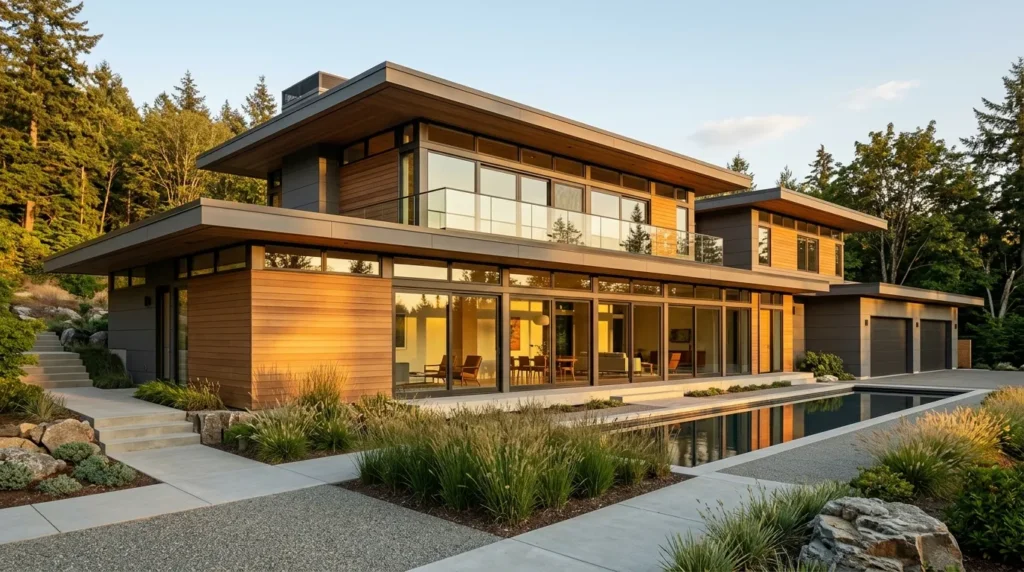
Many of the most recognizable modern house exteriors share a common architectural trait: strong horizontal lines that create a low, grounded, and expansive feeling, even on a modestly sized lot. This look is closely associated with mid-century modern and contemporary luxury architecture alike.
- Long, low rooflines with minimal overhang detailing reinforce horizontal emphasis.
- Horizontal siding, whether wood, fiber cement, or metal panel, strengthens this line visually.
- Continuous window bands, rather than individually placed windows, extend the horizontal feel across the facade.
3. Use Large-Format Windows for Transparency and Light
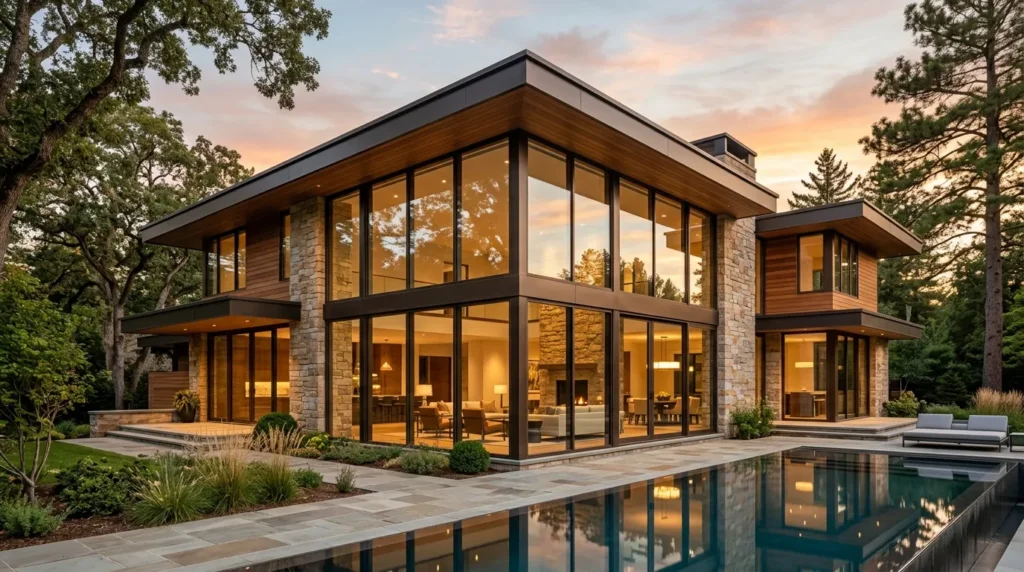
Expansive glazing is a hallmark of luxury architecture, both for the natural light it brings indoors and for the sleek, modern appearance it creates from the exterior. Large-format windows — floor-to-ceiling where possible — replace smaller, individually framed windows with continuous glass planes.
- Black or dark bronze window frames create strong contrast against lighter exterior materials, a popular choice in modern house exteriors.
- Corner windows, where glass wraps around an edge without a visible support post, add a distinctly high-end architectural detail.
- Pair large windows with deep overhangs or landscaping for shade and privacy, balancing openness with practicality.
4. Add Architectural Overhangs and Deep Eaves
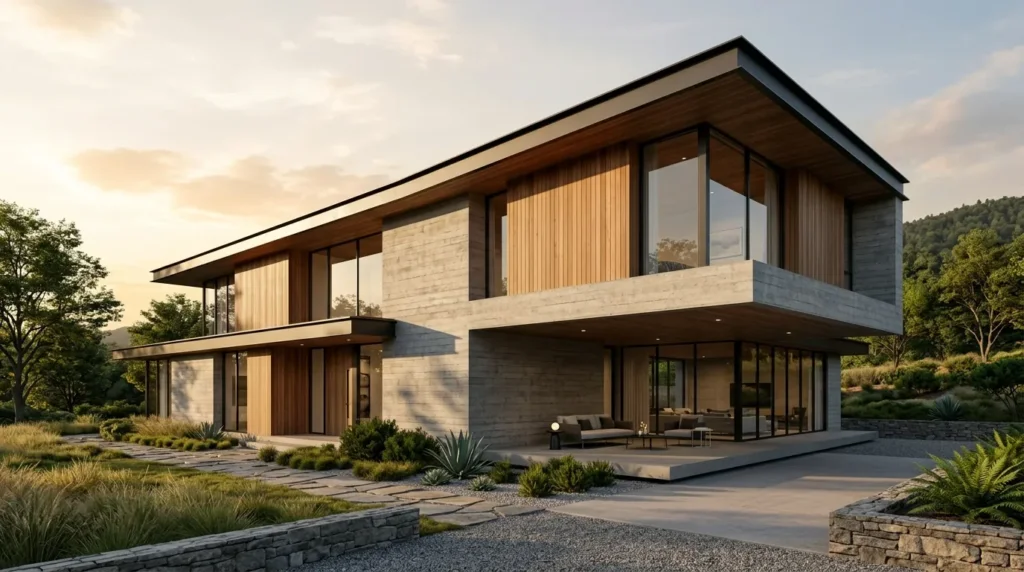
Deep roof overhangs do more than provide shade — they add visual depth and a strong sense of architectural intention to a facade. Flat or low-slope roofs with extended eaves are especially common in contemporary luxury homes, creating dramatic shadow lines that shift throughout the day.
- Overhangs help protect large window areas from direct sun and rain, improving both comfort and material longevity.
- A cantilevered overhang, extending beyond its visible support, adds a striking, modern silhouette.
- Consistent overhang depth throughout the facade reinforces a cohesive, intentional design rather than a piecemeal one.
5. Introduce a Dramatic Entry Feature
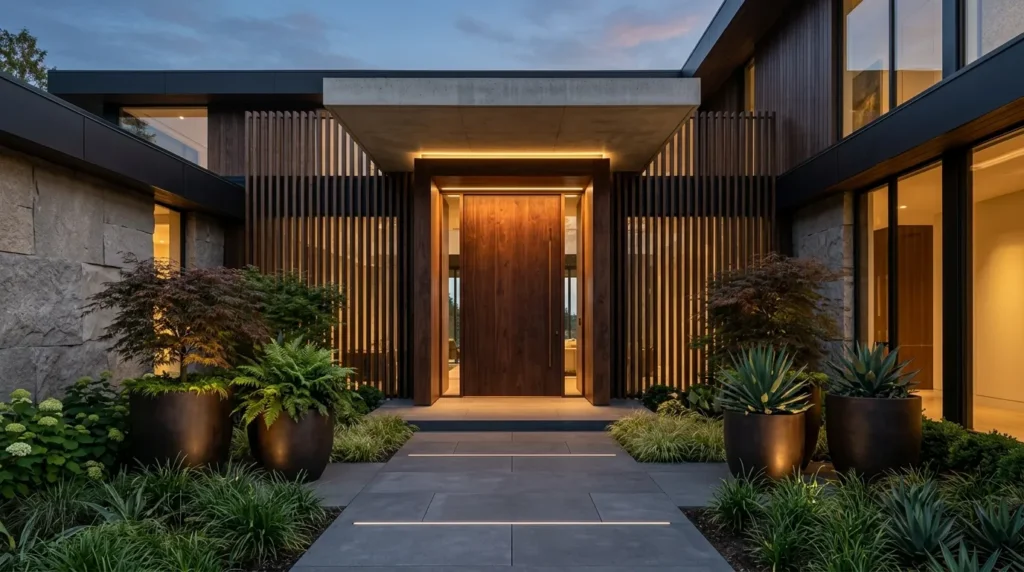
The front entry is one of the most important focal points in any exterior design, and luxury architecture treats it accordingly. Rather than a standard door tucked into the facade, high-end homes often create a clear architectural moment at the entrance.
- Oversized pivot doors, often in dark wood or matte black metal, are a signature feature of many modern luxury entrances.
- A recessed entry, set back from the main facade plane, adds depth and a sense of arrival.
- Vertical wood slat screening near the entry adds warmth and texture while providing partial privacy from the street.
6. Balance Solid Mass With Open Glazing
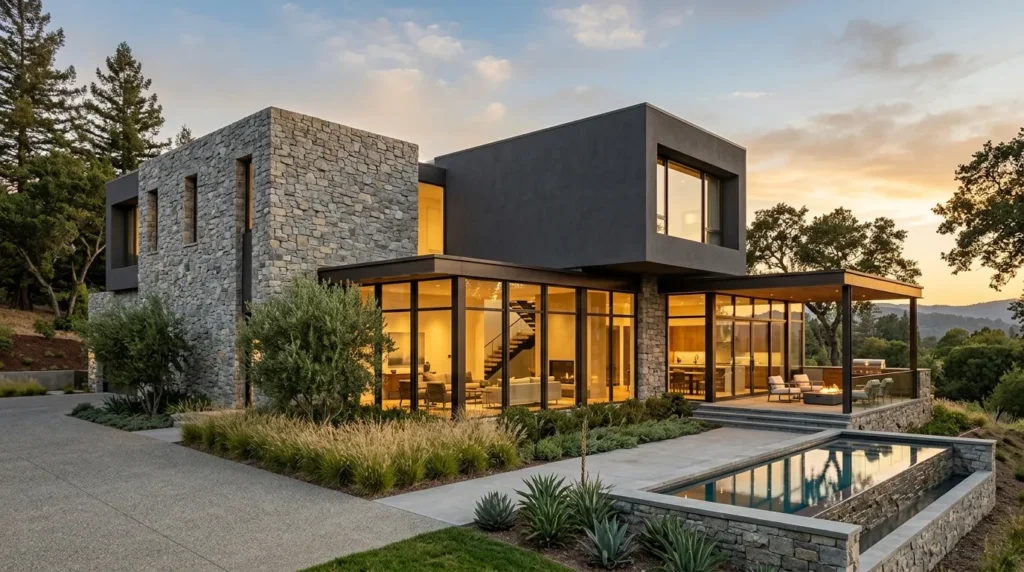
A common technique in modern house exteriors is the deliberate contrast between solid, opaque wall sections and open, transparent glazing. This balance creates visual tension and prevents a facade from feeling either too closed off or too exposed.
- Position solid material — stone, stucco, or concrete — around more private areas like bedrooms or bathrooms.
- Reserve larger glazing for communal spaces like the living room or kitchen, which also benefits from the added natural light.
- This balance often naturally creates an interesting, asymmetrical composition on the facade, which reads as more architecturally considered than a fully symmetrical, evenly glazed design.
7. Use a Monochromatic or Near-Monochromatic Color Scheme
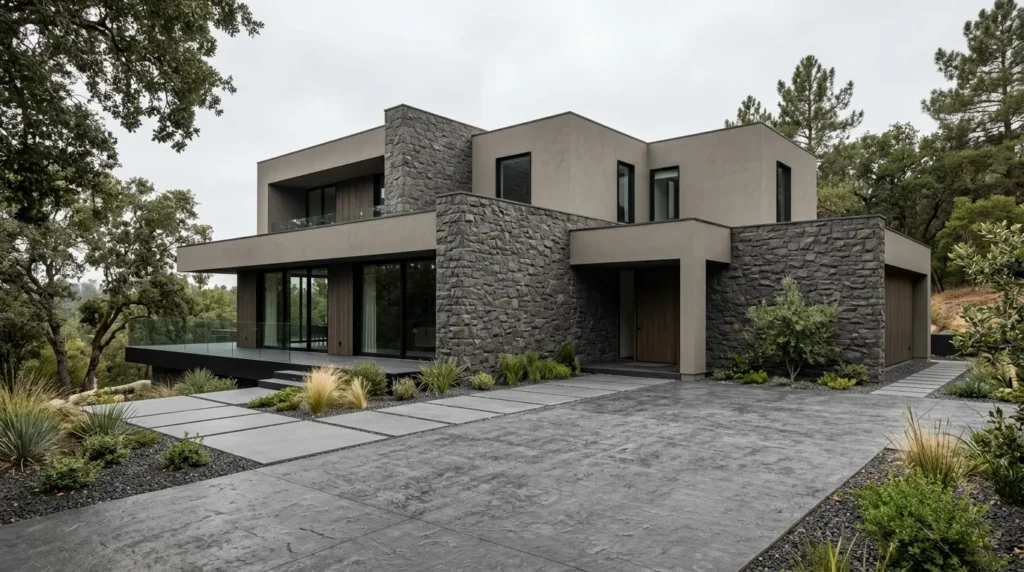
Color plays a significant role in how sophisticated a modern exterior feels. Luxury architecture tends to favor a monochromatic or very tightly related color palette — various shades and textures within the same tonal family — rather than strong color contrast.
- Popular modern palettes include warm charcoal with wood accents, soft white with black trim, or deep earth tones paired with natural stone.
- Using the same color across trim, siding, and even the roofline (where possible) creates a more unified, sculptural appearance.
- Reserve contrast for material texture rather than color, letting stone, wood, and metal finishes provide visual interest within a cohesive palette.
8. Add Vertical Wood Slat Accents
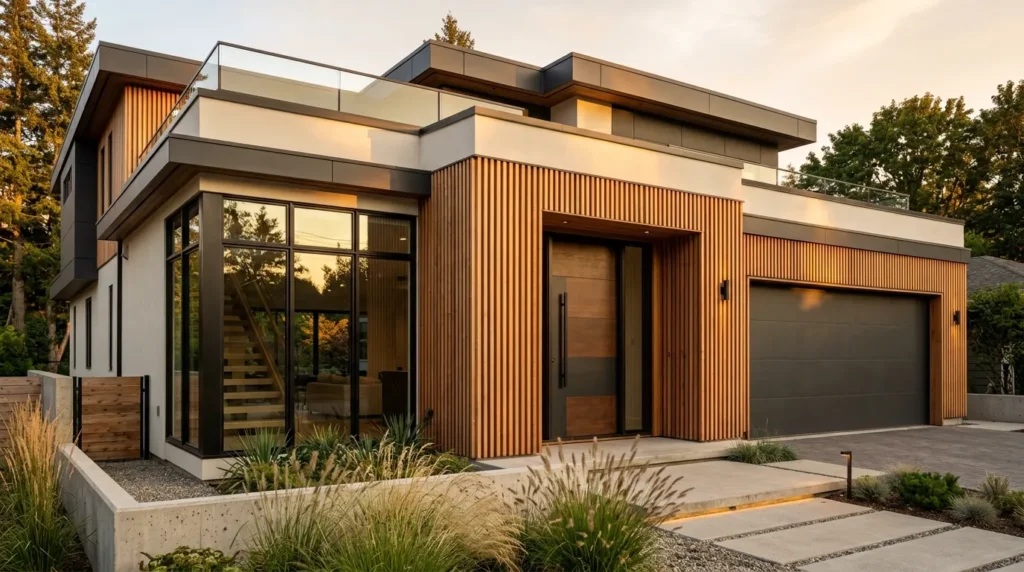
Vertical wood slats have become one of the most recognizable details in contemporary luxury architecture, adding warmth, texture, and a sense of craftsmanship to otherwise minimal facades. This detail works particularly well against stucco, concrete, or metal panel backgrounds.
- Use slat accents around entryways, garage doors, or as a full accent wall section on the facade.
- Choose weather-resistant wood species (cedar, ipe, thermally modified wood) or a quality composite for long-term durability.
- Keep spacing between slats consistent for a clean, deliberate look rather than an irregular, rustic feel.
9. Incorporate Structural Elements Like Cantilevers
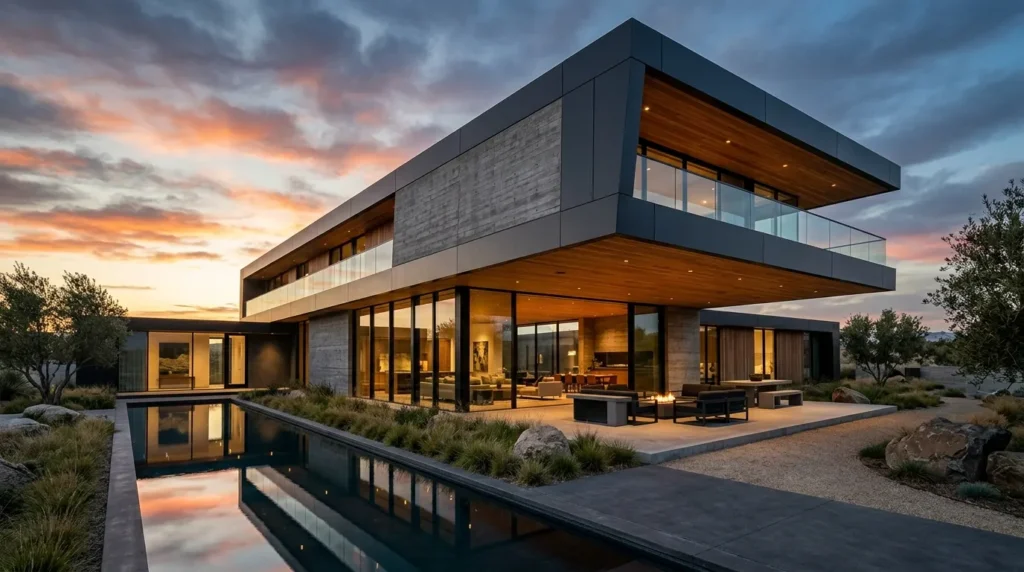
Cantilevered sections — parts of the home that extend beyond their supporting structure below — are a signature feature in high-end modern architecture. Beyond their striking visual impact, cantilevers often serve a practical purpose, such as creating covered outdoor space below or extending a room’s footprint without additional foundation work.
While this is typically a larger structural investment best suited for new builds or significant renovations, even a smaller-scale cantilevered overhang or covered entry can bring some of this same dramatic, architectural quality to an existing home.
10. Integrate Landscaping as Part of the Architecture
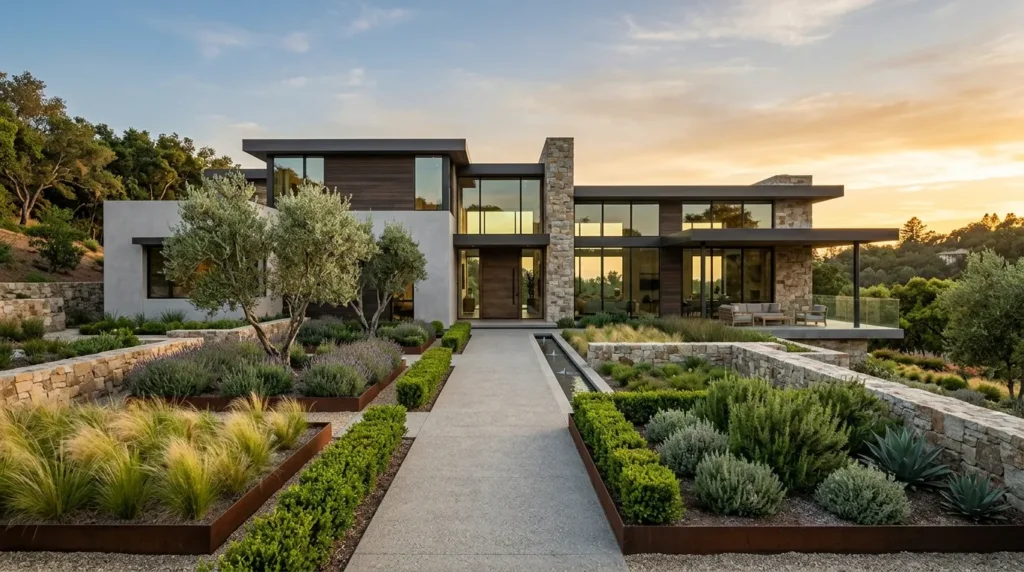
In luxury architecture, landscaping isn’t treated as decoration added after construction — it’s planned alongside the building itself, often used to reinforce clean lines and frame architectural features.
- Structured, geometric hedges or low walls echo the clean lines of a modern facade.
- Ornamental grasses and minimal, drought-tolerant plantings suit the restrained aesthetic of most modern house exteriors better than dense, traditional garden beds.
- Strategic tree placement can provide natural shade for large glazing areas while softening the hard lines of the architecture.
11. Add Exterior Lighting as a Design Element, Not Just a Function
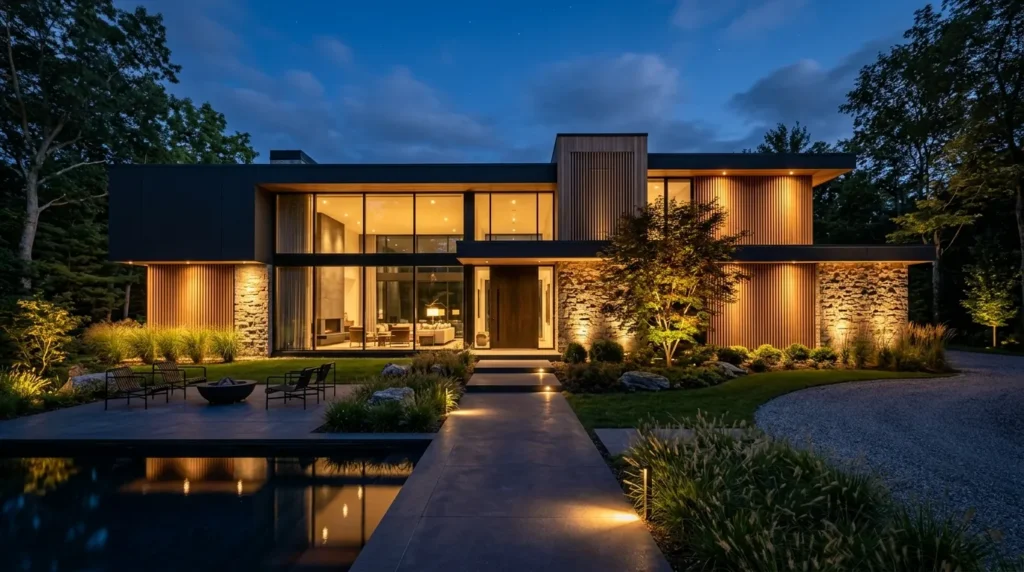
Exterior lighting plays a significant role in how a modern home reads after dark, and luxury architecture treats it with the same intentionality as interior lighting design.
- Uplighting along architectural features — stone walls, wood slat accents, tree canopies — creates dramatic shadow and texture at night.
- Recessed step and path lighting adds a clean, integrated look without visible fixtures during the day.
- Warm-toned exterior bulbs (rather than cool white) keep the overall feel inviting rather than stark, echoing the same lighting principles used indoors.
12. Choose a Flat or Low-Slope Roofline
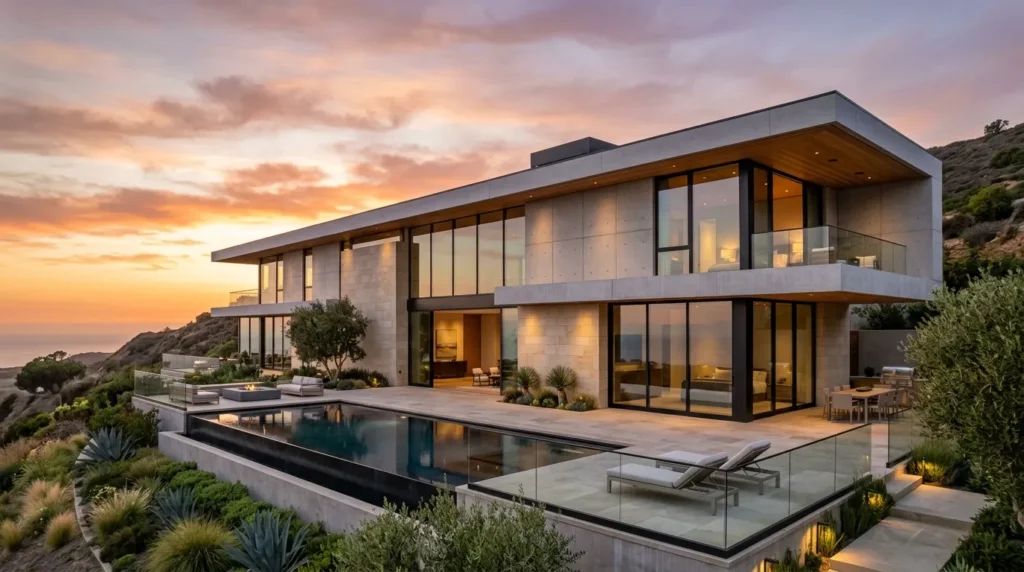
While not every home is suited to a flat roof structurally or climate-wise, the low-slope, minimal-profile roofline remains one of the most defining features associated with modern luxury architecture. Where a full flat roof isn’t practical, a low-pitch roof with minimal visible roofline detailing can achieve a similar aesthetic effect.
- A clean, unbroken roofline reinforces the horizontal emphasis common throughout modern house exteriors.
- Parapet walls can conceal mechanical equipment while maintaining a crisp, minimal silhouette.
- If a flat roof isn’t feasible for your climate, a simple gable or shed roof with clean detailing and minimal overhang ornamentation can still achieve a contemporary look.
How to Approach an Exterior Update in Phases
Not every homeowner is starting from scratch, and a full architectural overhaul isn’t always realistic. If you’re working with an existing home, consider approaching these modern house exteriors ideas in stages:
- Start with color and material simplification. Repainting trim, siding, or masonry in a cohesive, limited palette can dramatically change the perceived sophistication of a facade without structural changes.
- Add texture through accents. Vertical wood slats, a stone veneer feature, or an updated entry door are relatively contained projects with outsized visual impact.
- Upgrade lighting. Exterior lighting is one of the most affordable ways to add a high-end architectural feel, particularly after dark.
- Consider structural changes last. Larger changes like extended overhangs, cantilevers, or window replacements typically require more investment and planning, making them logical later-stage projects once the foundational elements are in place.
Common Mistakes to Avoid
Even well-intentioned exterior updates can fall short of that polished, architectural look if a few common pitfalls aren’t addressed:
- Using too many materials – Combining more than two or three exterior materials often reads as busy rather than luxurious, regardless of the quality of each individual finish.
- Inconsistent trim and window colors – Mismatched or overly varied trim colors can undercut an otherwise clean, modern facade.
- Ignoring proportion – Oversized windows on a small facade, or an entry door that’s out of scale with the rest of the home, disrupts the sense of intentional design that defines luxury architecture.
- Neglecting landscaping – A beautifully designed facade surrounded by unplanned, inconsistent landscaping loses much of its visual impact.
- Skipping exterior lighting – A striking daytime facade can lose its impact entirely after dark without a thoughtful lighting plan.
Conclusion
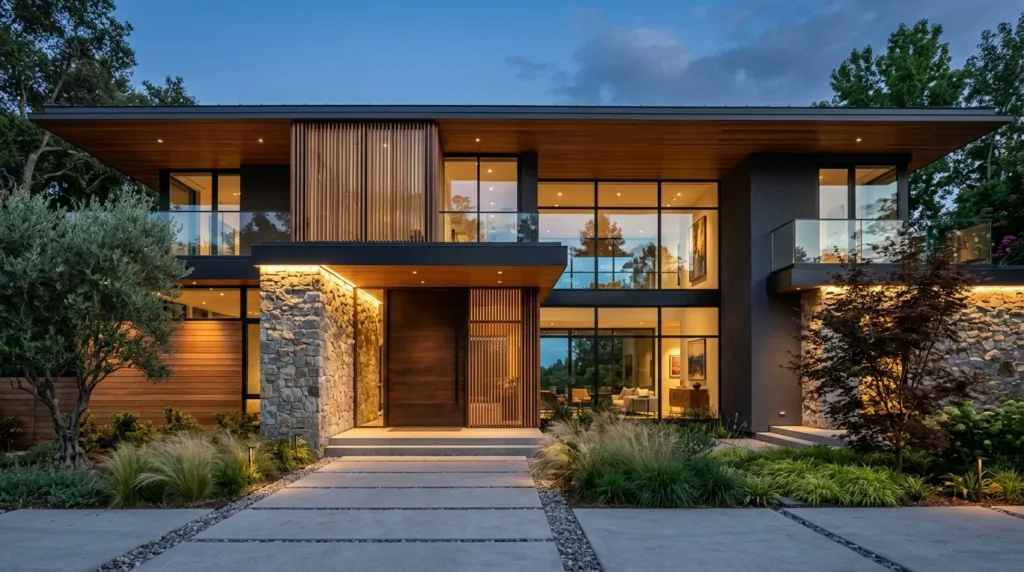
Modern house exteriors inspired by luxury architecture don’t rely on excess or ornamentation — they rely on discipline. A limited, high-quality material palette, strong architectural lines, generous glazing, and thoughtful lighting and landscaping all work together to create a facade that feels intentional and sophisticated, whether you’re designing a new build or updating an existing home.
You don’t need to implement every idea at once, and larger structural changes can be phased in over time. Start with color, material consistency, and lighting, then build toward bigger architectural moments like a dramatic entry or added overhangs as budget and planning allow. The result is a home that makes a strong, lasting first impression, long before anyone reaches the front door.
Frequently Asked Questions
What materials are most commonly used in modern house exteriors? Stucco, natural wood siding, metal panel, and natural stone are among the most common materials in modern luxury architecture, typically limited to two or three per facade for a cohesive, high-end look. Board-formed concrete is also popular in more contemporary or minimalist designs.
Can an existing home be updated to look more like modern luxury architecture without a full renovation? Yes. Simplifying the color palette, adding textural accents like vertical wood slats or a stone feature wall, updating the entry door, and improving exterior lighting can significantly elevate an existing facade without requiring structural changes.
Why do modern luxury homes often use flat or low-slope roofs? Flat and low-slope rooflines reinforce the clean, horizontal lines associated with contemporary architecture and help create a minimal, unbroken silhouette. That said, a flat roof isn’t practical in every climate, and a low-pitch roof with simple detailing can achieve a similar aesthetic where a fully flat design isn’t feasible.