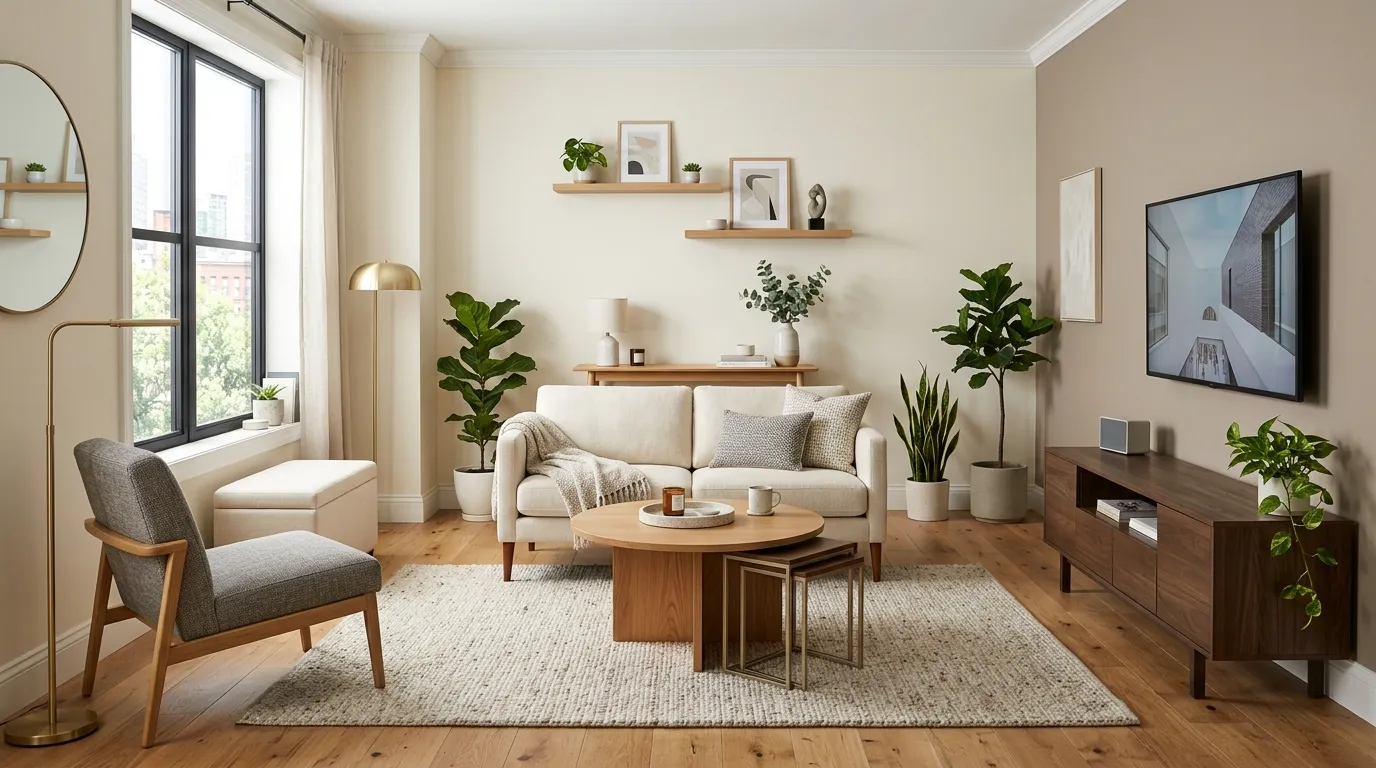
14 Modern Furniture Ideas for Small Living Rooms With Big Style
Small living rooms come with a built-in design challenge: every piece of furniture has to earn its place. There’s no room to hide a bulky sofa that doesn’t quite fit or a coffee table that blocks the main walking path. But that constraint isn’t necessarily a bad thing. In fact, some of the most stylish, well-designed living rooms are small ones, simply because there’s less room for clutter and more pressure to choose furniture with real intention.
That’s exactly where the right modern furniture ideas make the biggest difference. The goal isn’t just to find smaller versions of standard furniture — it’s to choose pieces that are proportioned correctly, serve more than one function where possible, and work together to make the room feel open rather than cramped. A well-furnished small living room can feel just as impactful as a much larger one, sometimes more so, because every choice has clearly been made on purpose.
If you’re working with a compact living room and want furniture that adds genuine style without sacrificing function, these fourteen modern furniture ideas will help you get there.
Why Furniture Choice Matters More in Small Spaces
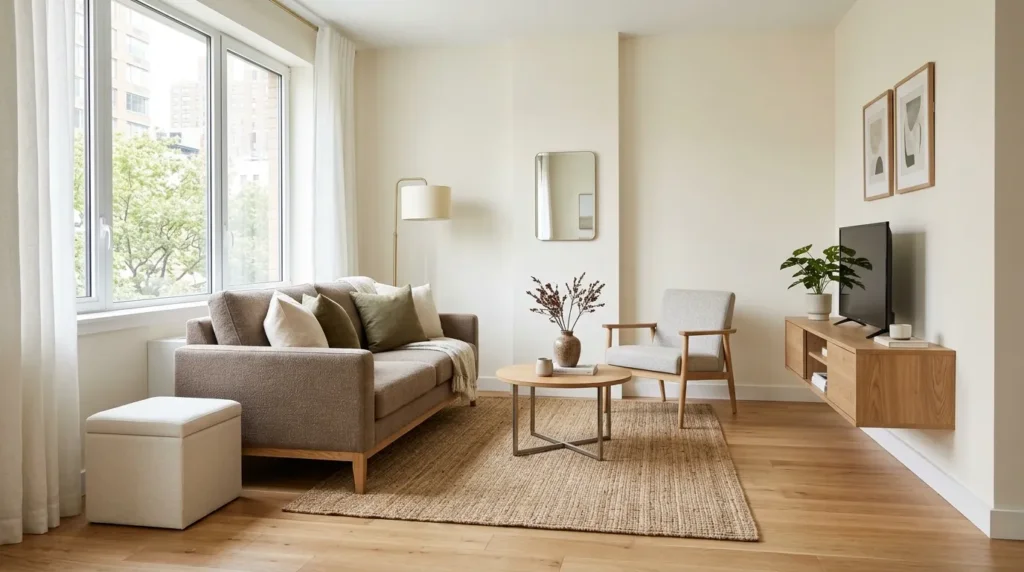
In a large living room, an oversized sofa or an awkwardly placed side table gets absorbed into the extra square footage. In a small room, the same choices have an outsized visual and functional impact. That’s why modern furniture ideas for compact spaces tend to follow a few consistent principles:
- Scale matters more than style — even the most beautiful piece will overwhelm a small room if it’s the wrong size.
- Multi-functional furniture reduces the total number of pieces needed, which keeps the room feeling open.
- Visual weight (how heavy or bulky a piece looks) matters as much as its actual footprint.
Keeping those principles in mind, here are fourteen specific furniture ideas that consistently work well in small living rooms.
1. Choose a Sofa With Exposed Legs
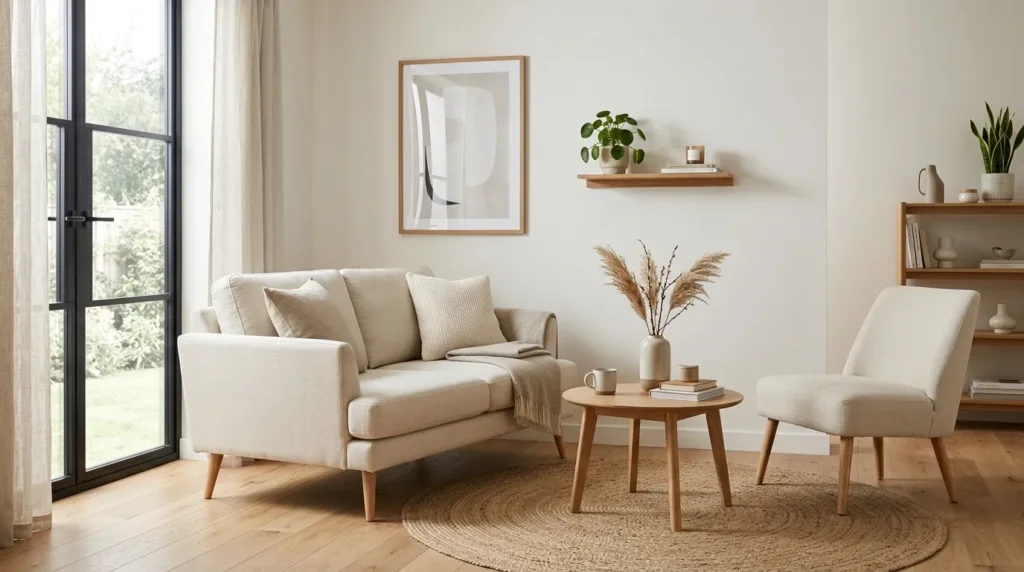
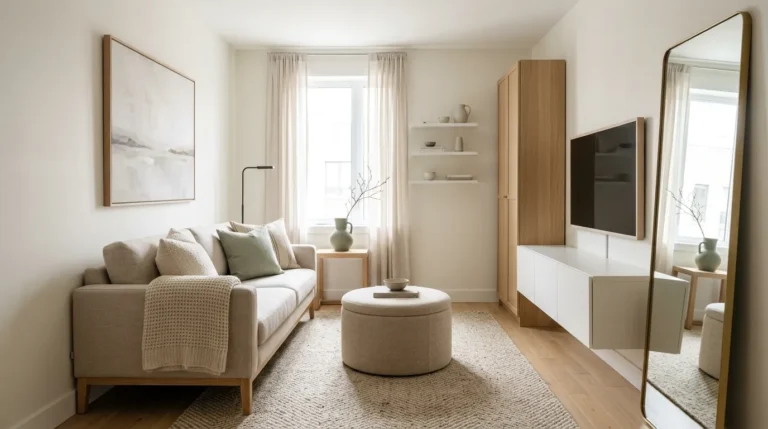
A sofa with visible legs, rather than one with a fully upholstered base that touches the floor, allows light to pass underneath it. This small detail makes a noticeable difference in how open a small living room feels, since the eye can see floor space continuing beneath the furniture rather than stopping at a solid block.
- Slim, tapered wood or metal legs read as more modern than bulky, upholstered bases.
- Light-colored flooring visible beneath the sofa reinforces the sense of continuous space.
- This same principle applies to accent chairs and media consoles for a consistent, airy look throughout the room.
2. Opt for a Loveseat Instead of a Full Sofa
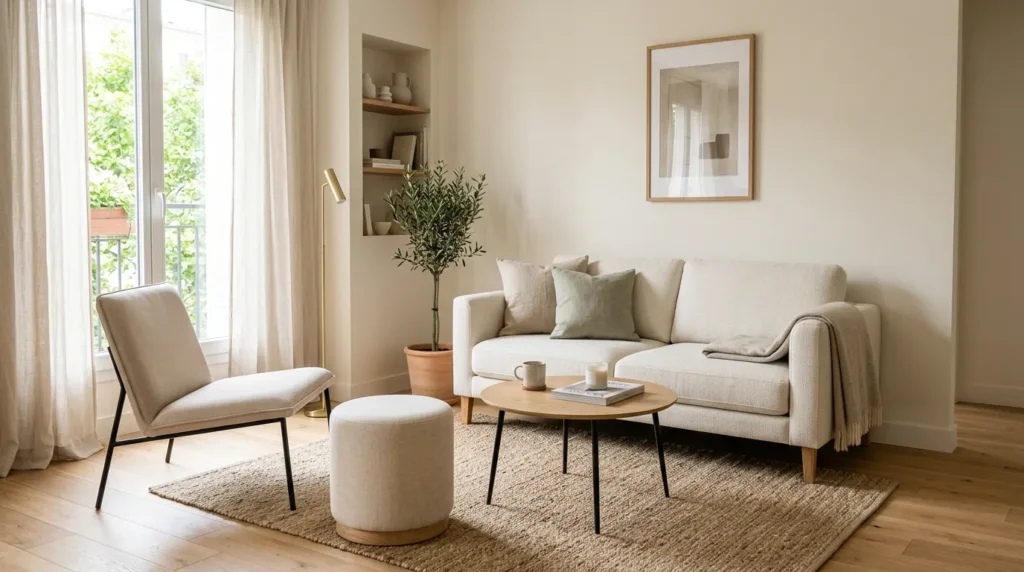
In genuinely small living rooms, a full three-seat sofa can dominate the space and leave little room for anything else. A loveseat or a compact two-seat sofa often provides enough seating for everyday use while leaving room for additional furniture, like a chair or a small ottoman.
- Pair a loveseat with a single accent chair to maintain flexible seating without the bulk of a larger sofa.
- Choose a loveseat with clean, simple lines to keep the overall look cohesive with the rest of the room.
3. Use a Round Coffee Table for Easier Movement
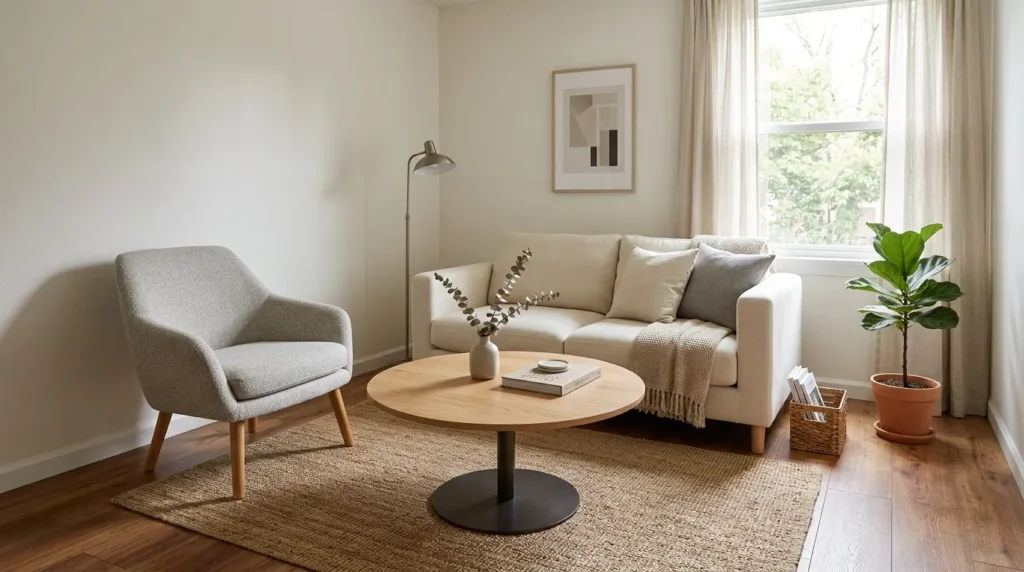
Rectangular coffee tables with sharp corners can make navigating a small living room feel tight, especially in high-traffic layouts. A round or oval coffee table softens the room’s edges and makes it easier to move around without bumping into corners.
- Round tables also tend to look lighter visually, since they take up less perceived space than a rectangular table of similar surface area.
- A pedestal-style base (rather than four legs) further reduces visual clutter underneath the table.
4. Choose Nesting Tables for Flexible Surface Space
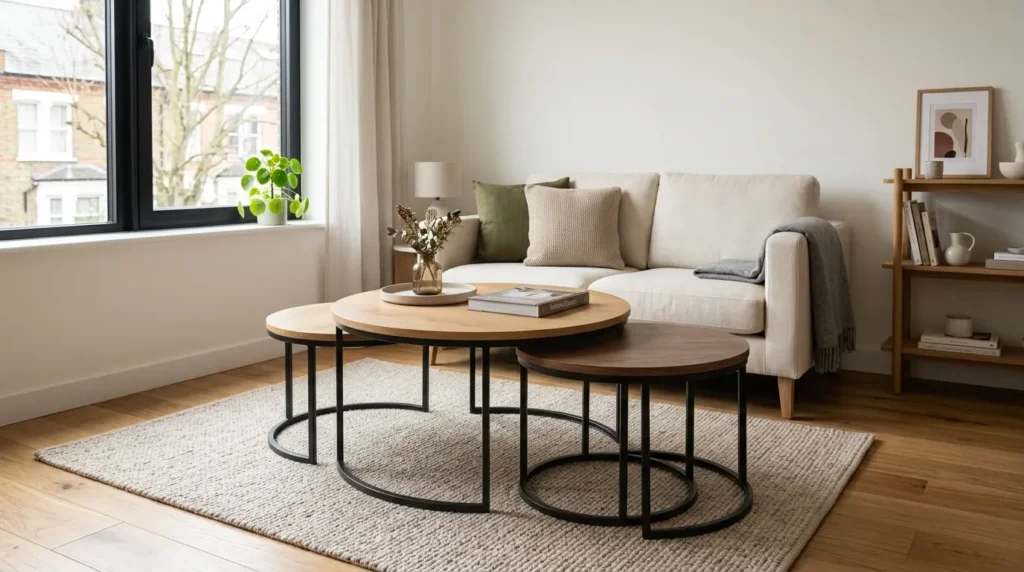
Nesting tables — a set of two or three tables of graduated sizes that tuck beneath one another — are one of the most practical modern furniture ideas for small living rooms. They provide flexible surface space when needed (extra seating for guests, additional table space) while taking up minimal footprint the rest of the time.
- Use the largest table as your primary coffee table, pulling out smaller ones only when extra surface space is needed.
- Mixed-material nesting sets (wood and metal, or stone and brass) add visual interest without requiring additional decor.
5. Add a Media Console With Closed Storage
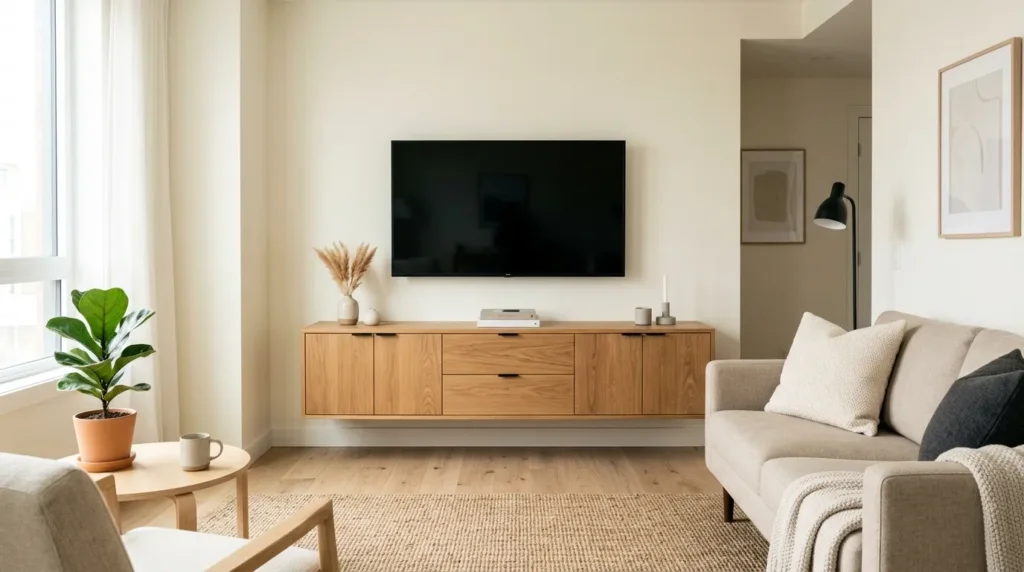
An open media stand can quickly become a source of visual clutter in a small living room, since cords, remotes, and electronics are all left in plain view. A media console with closed cabinet doors or drawers keeps this clutter contained while still providing a stylish surface for a television or decor.
- Choose a console with cord management features, such as a cutout in the back panel, to keep cables tidy.
- A slim-profile console (18 inches deep or less) works well in rooms where floor space is especially limited.
6. Choose an Armless or Slipper Chair for Extra Seating
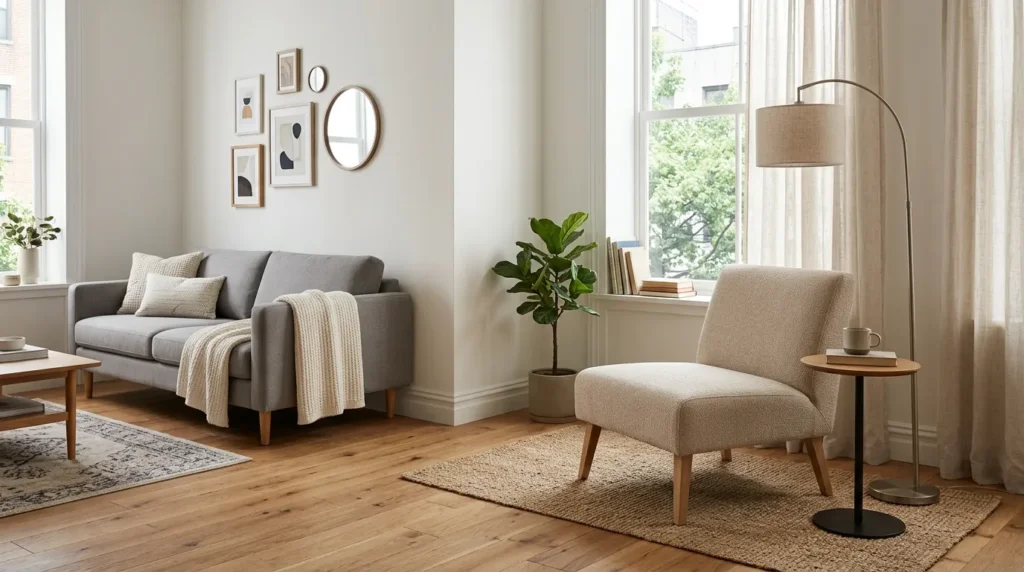
Traditional armchairs, while comfortable, often take up more visual and physical space than necessary in a small living room. An armless or slipper-style chair provides comfortable seating with a smaller footprint, making it a smart addition when extra seating is needed without overwhelming the room.
- Position an armless chair at an angle in a corner to make the most of an otherwise underused space.
- Choose a slightly smaller scale than a standard armchair to keep proportions balanced with the rest of the furniture.
7. Use a Slim Console Table Behind the Sofa
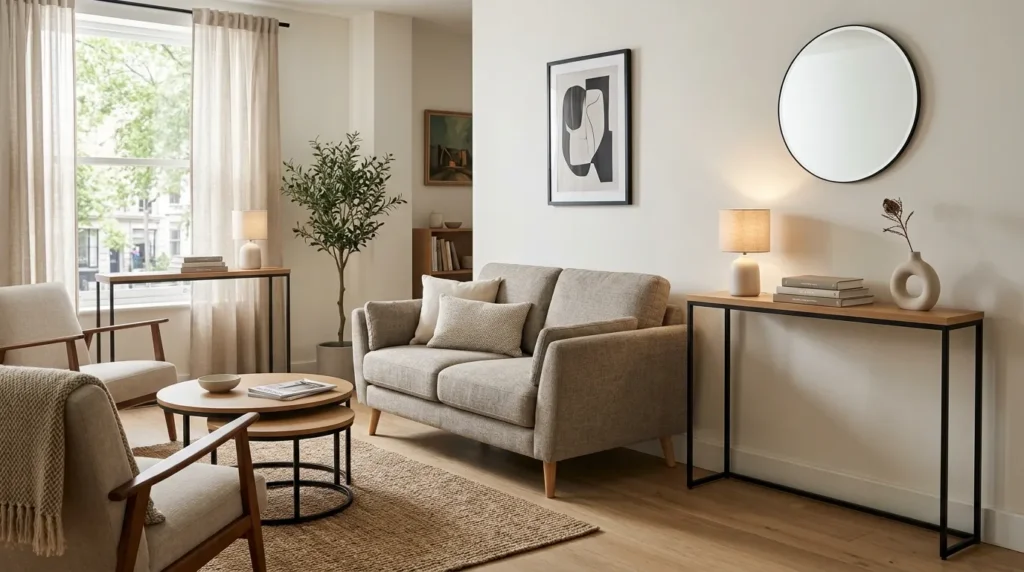
If a sofa floats in the middle of a small living room rather than sitting against a wall, a slim console table placed behind it adds functional surface space without requiring additional floor area elsewhere in the room.
- Keep the console narrow (12 to 14 inches deep) to avoid protruding too far into walking paths.
- Use the surface for a lamp, a small stack of books, or a single decorative object rather than overcrowding it.
8. Choose a Storage Ottoman Instead of a Second Coffee Table
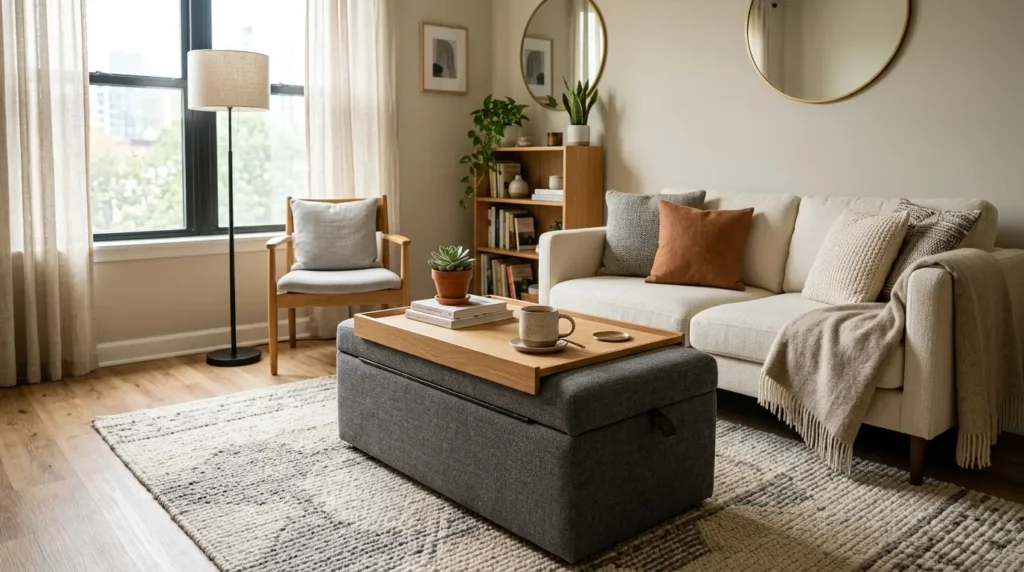
A storage ottoman is one of the most versatile modern furniture ideas available for small living rooms, since it can function as a coffee table, extra seating, or a footrest, all while providing hidden storage for blankets, remotes, or other living room clutter.
- Choose an ottoman with a removable tray top to switch easily between seating and a functional table surface.
- A slightly oversized ottoman can serve as the room’s primary coffee table, especially in more casual, lounge-style living rooms.
9. Add Floating Shelves Instead of a Bulky Bookcase
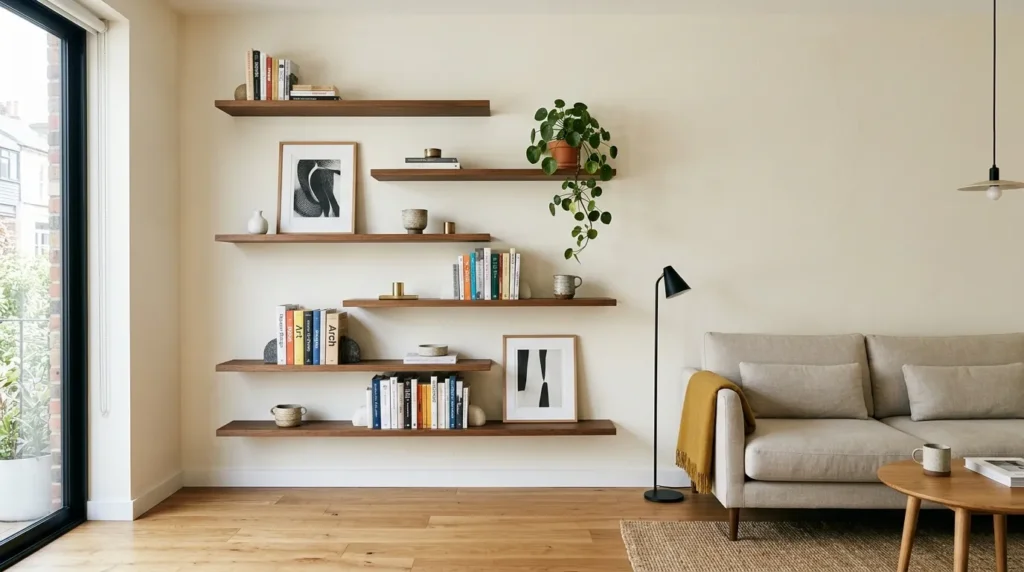
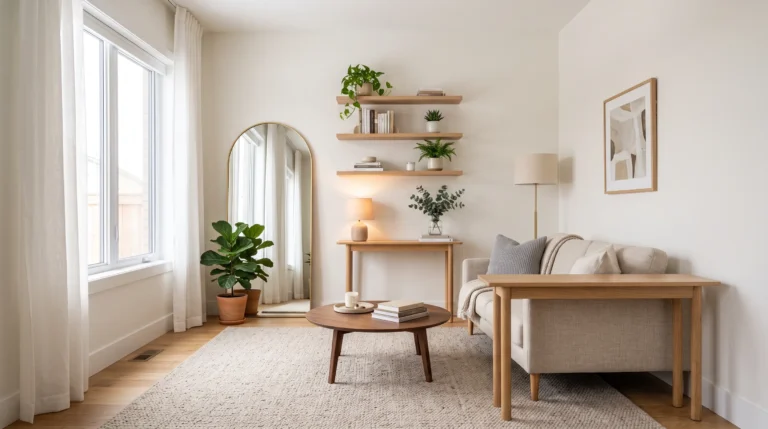
A traditional freestanding bookcase can take up significant floor space and visually dominate a small room. Floating wall-mounted shelves provide similar storage and display space without the footprint, keeping the floor area open.
- Stagger shelf heights slightly for visual interest rather than installing them in a single uniform row.
- Keep styling on floating shelves relatively minimal, since a small room shows clutter more readily than a larger one.
10. Choose a Swivel Chair for Flexible Seating Orientation
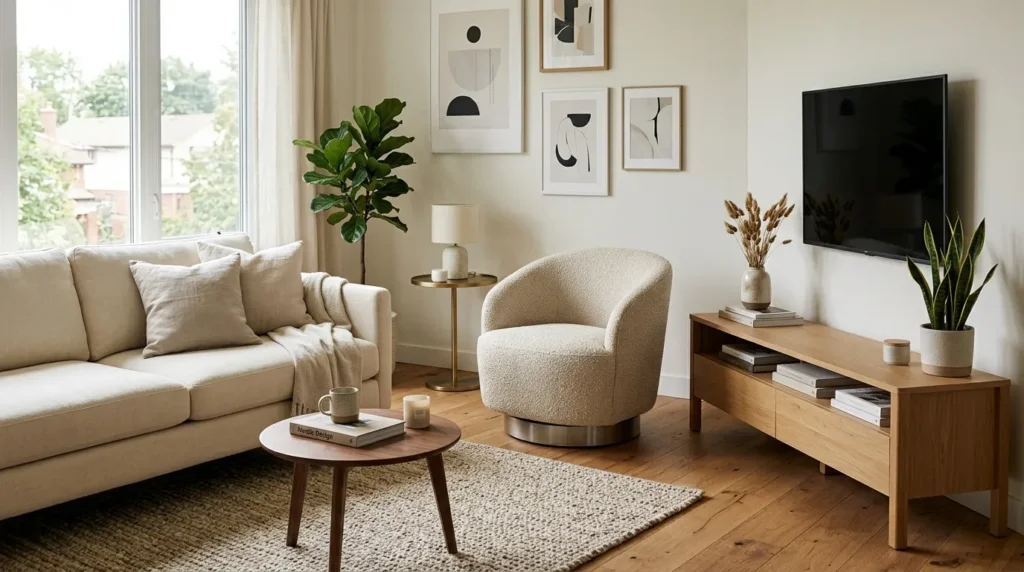
A swivel chair adds a practical, modern solution to small living rooms that need to serve multiple purposes throughout the day, such as facing a television at one point and pivoting toward the kitchen or a conversation area at another.
- This flexibility can reduce the total number of seating pieces needed in the room, since a single swivel chair can adapt to different uses.
- Choose a slim-profile swivel base rather than a bulky mechanism to keep the piece feeling light and modern.
11. Use a Wall-Mounted Drop-Leaf Table for Multi-Purpose Space
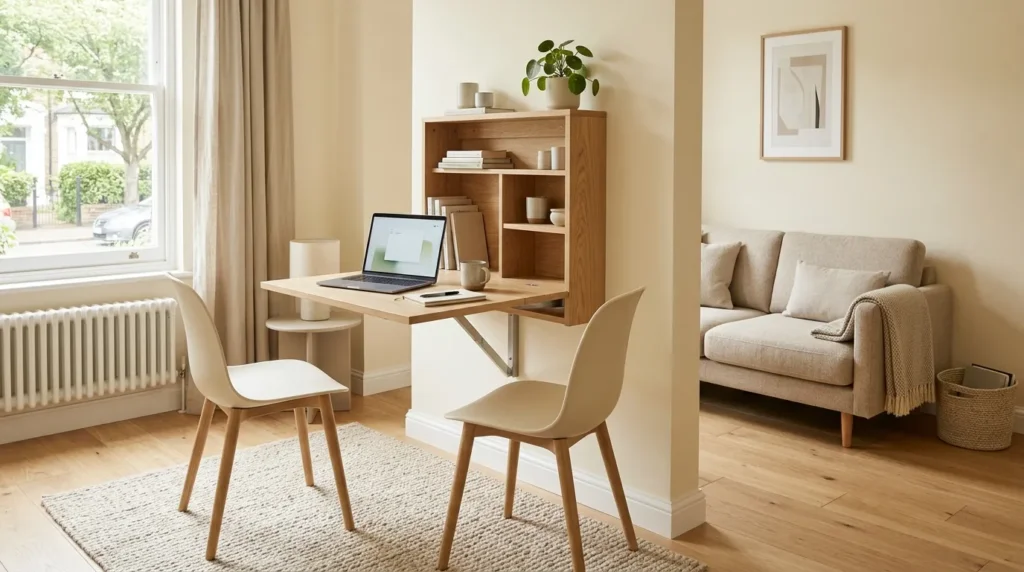
For small living rooms that also need to accommodate occasional dining, working, or hobby space, a wall-mounted drop-leaf table offers a smart, space-saving solution. When folded down, it takes up minimal space; when needed, it extends outward to provide a full functional surface.
- Choose a table with a sturdy folding mechanism and simple, modern hardware to keep the look clean when in use.
- Pair with lightweight, stackable chairs that can be stored elsewhere when the table isn’t in use.
12. Choose Furniture With Reflective or Glass Surfaces
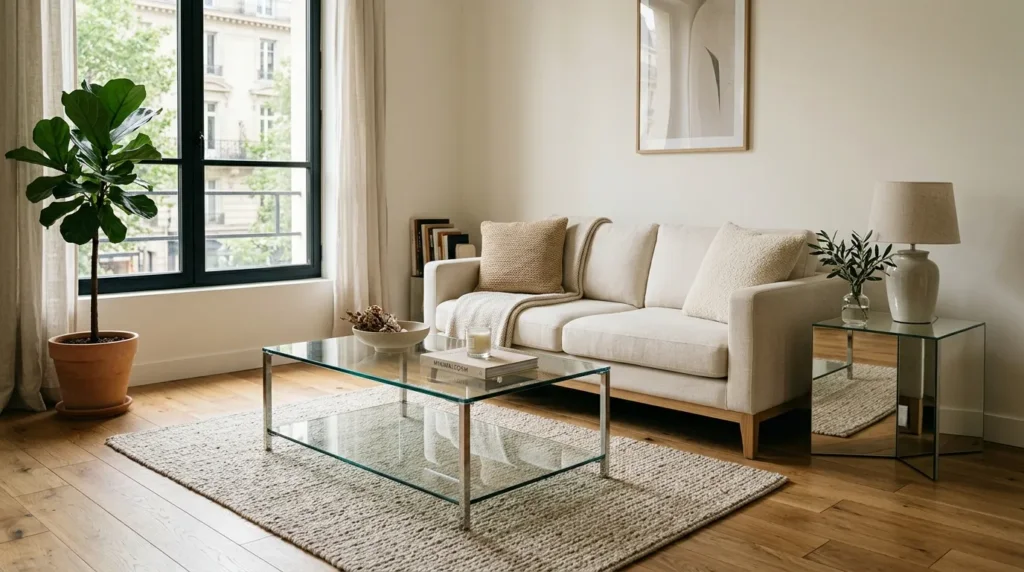
Glass or mirrored furniture surfaces — a glass-top coffee table, a mirrored side table — add functional surface area without adding visual bulk, since light passes through or reflects off these materials rather than being absorbed by them.
- A glass coffee table pairs particularly well with a sofa that has exposed legs, reinforcing the airy, open feeling throughout the seating area.
- Balance reflective surfaces with at least one or two warmer, textured materials (wood, woven fabric) to avoid the room feeling cold or overly clinical.
13. Add a Corner Shelving Unit to Use Overlooked Space
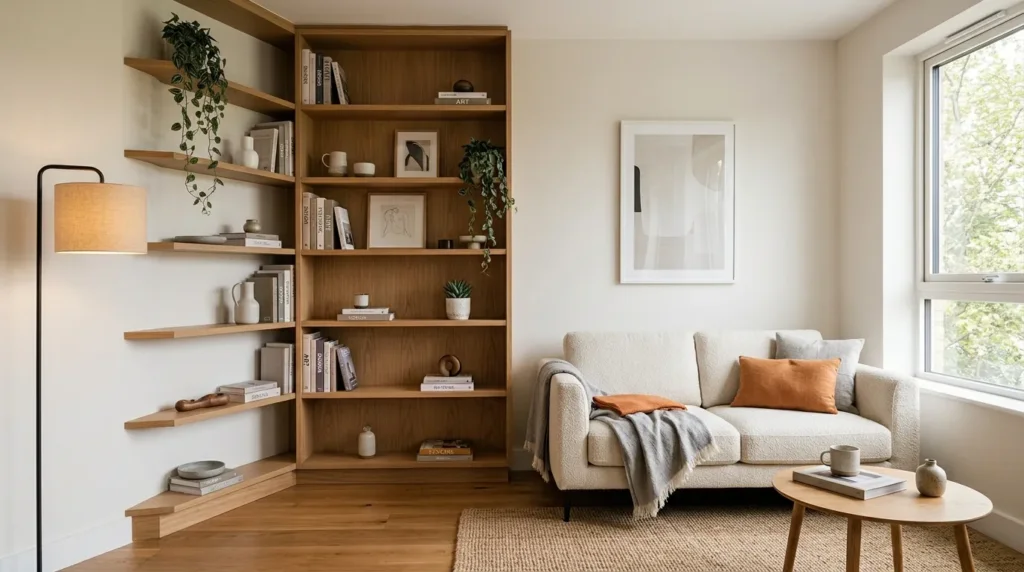
Corners are some of the most underused areas in small living rooms, often left empty simply because standard furniture doesn’t fit the angle well. A corner shelving unit, built specifically to fit this space, adds valuable storage and display area without interfering with the room’s main layout.
- Use corner shelving for books, decor, or a small plant to fill the space without overwhelming it.
- This is also a practical spot for a slim floor lamp, combining lighting and storage in an otherwise wasted corner.
14. Choose a Bench Instead of Additional Chairs
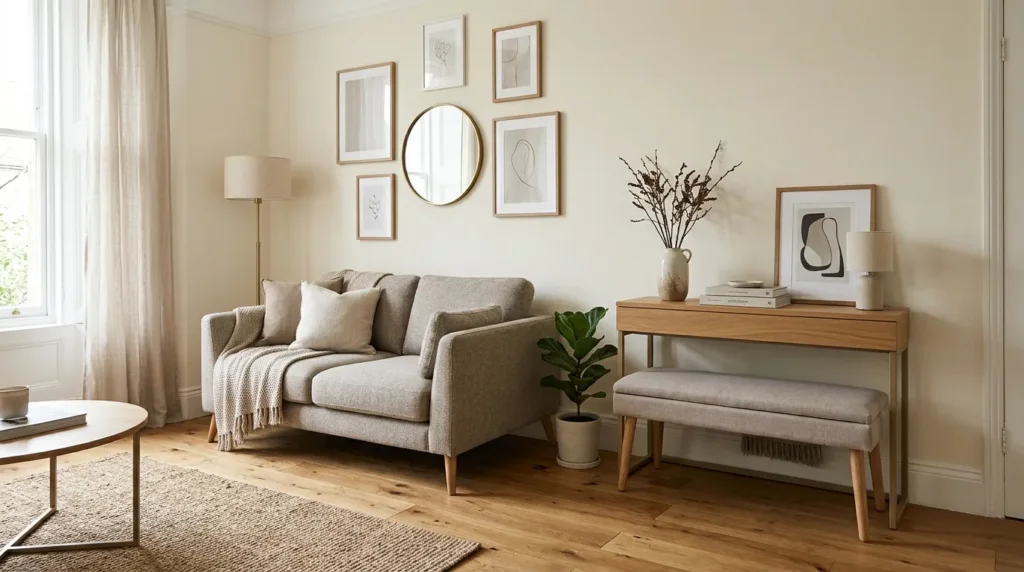
A slim bench, whether upholstered or made from natural wood, offers flexible seating that can be tucked against a wall or repositioned as needed, unlike bulkier individual chairs. This makes it one of the more adaptable modern furniture ideas for small living rooms that need to accommodate varying numbers of guests.
- A bench can slide under a console table when not in use, further reducing its visual footprint.
- Choose a bench with a slim profile and exposed legs to maintain the same airy feeling as the rest of the room’s furniture.
Tips for Arranging Furniture in a Small Living Room
Choosing the right pieces is only part of the equation — how furniture is arranged has just as much impact on how spacious a small living room feels.
- Float furniture slightly away from walls when possible, rather than pushing every piece flush against them, which can paradoxically make a room feel more intentional and less boxy.
- Leave at least 30 inches of walking space around major furniture pieces to avoid a cramped, obstacle-course feeling.
- Angle furniture in corners rather than leaving them empty or forcing pieces into awkward straight lines.
- Limit the room to one or two focal points — a sofa and a media console, for example — rather than competing statement pieces throughout.
Conclusion
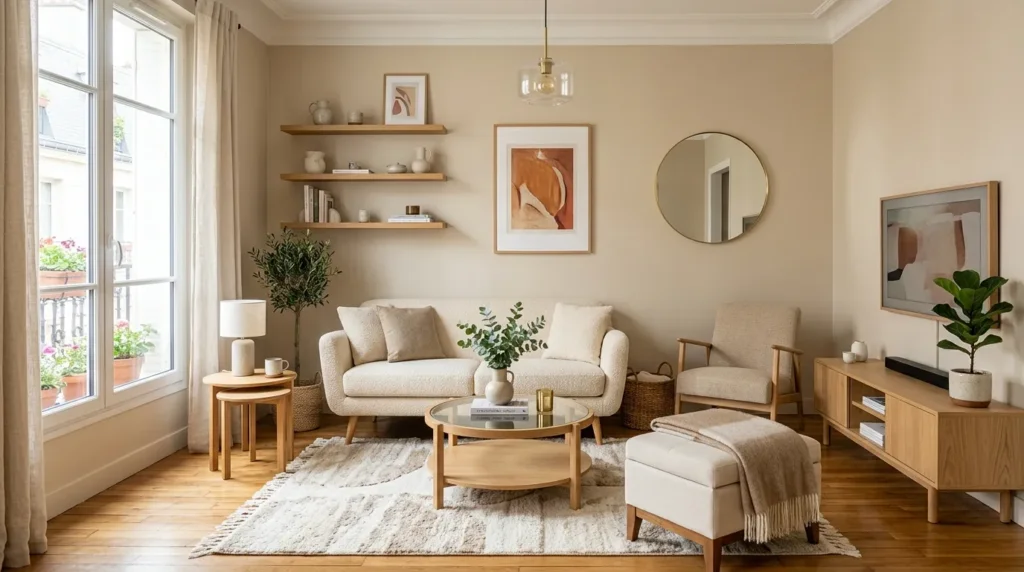
Furnishing a small living room doesn’t mean settling for less style — it means being more deliberate about every choice. These fourteen modern furniture ideas, from sofas with exposed legs and nesting tables to storage ottomans and corner shelving, all share a common goal: maximizing function and visual openness without sacrificing the polished, contemporary look you’re after.
Start with the largest pieces first — your sofa and coffee table — since these set the tone and scale for everything else in the room, then layer in multi-functional and space-saving pieces as needed. With the right combination of modern furniture ideas, even the smallest living room can feel genuinely spacious, comfortable, and stylish.
Frequently Asked Questions
What size sofa works best in a small living room? A loveseat or compact two-seat sofa, generally under 70 inches wide, tends to work best in smaller spaces, leaving room for an additional chair or storage piece without overwhelming the room’s overall proportions.
Does furniture with exposed legs really make a small room look bigger? Yes. Furniture with visible legs allows sightlines and light to continue beneath the piece rather than stopping at a solid base, which creates a visual sense of more open floor space, even though the actual footprint hasn’t changed.
What’s the most space-efficient furniture piece for a small living room? A storage ottoman is one of the most versatile options, since it can function as a coffee table, extra seating, and hidden storage all in one piece, reducing the total number of furniture items needed in the room.