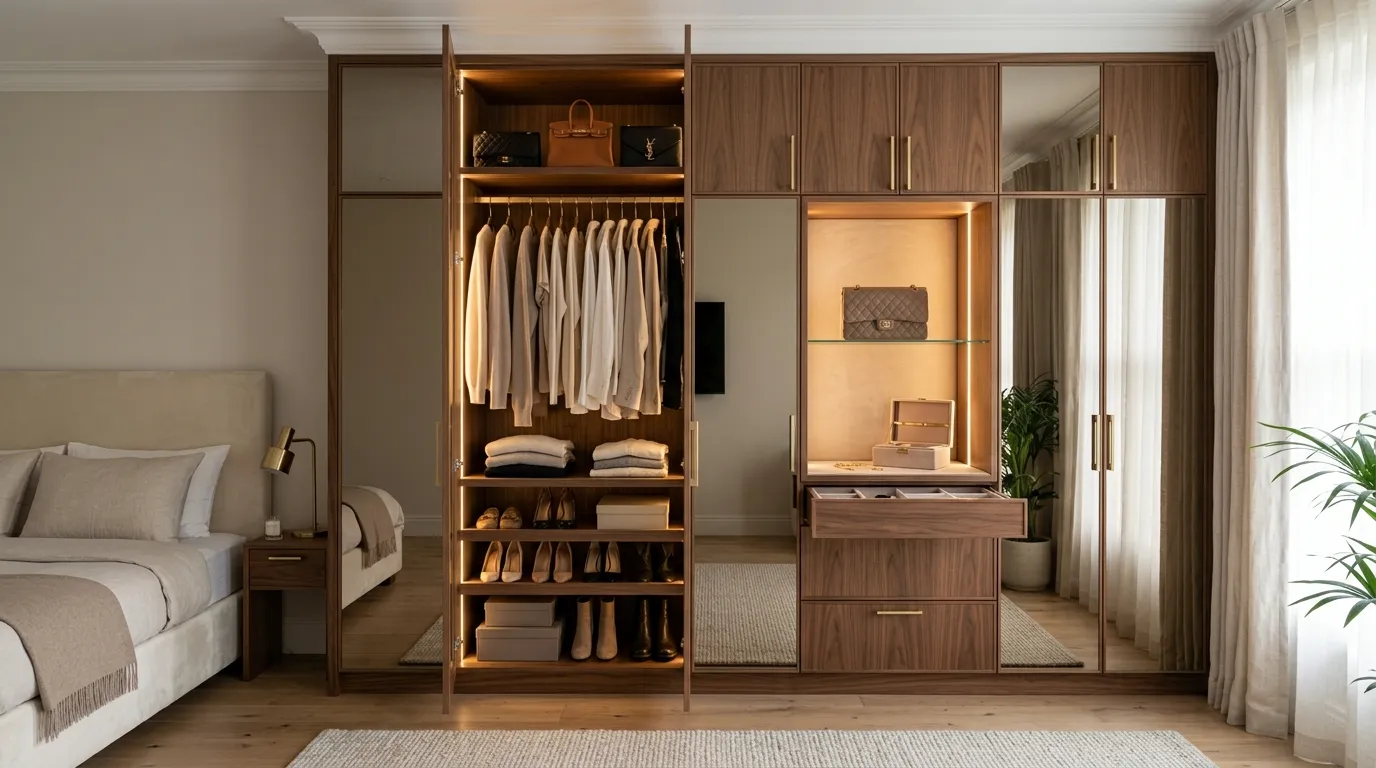
9 Wardrobe Design Ideas for Small Rooms With a Luxury Look
A small bedroom shouldn’t mean settling for a wardrobe that looks like an afterthought. In fact, some of the most striking, high-end-looking wardrobes exist in compact spaces, precisely because limited square footage forces smarter, more intentional design decisions. When every inch counts, there’s less room for wasted space or generic, builder-grade solutions — which often leads to a more polished result than a larger, less carefully planned closet.
The challenge most people run into is assuming that luxury and small spaces are inherently at odds. In reality, the right wardrobe design ideas can make a compact room feel considered and elevated, using strategic material choices, lighting, and layout rather than sheer square footage to create that high-end impression.
If you’re working with limited space and want your wardrobe to feel genuinely luxurious rather than purely functional, these nine wardrobe design ideas will help you get there.
Why Small Wardrobes Can Still Feel Luxurious
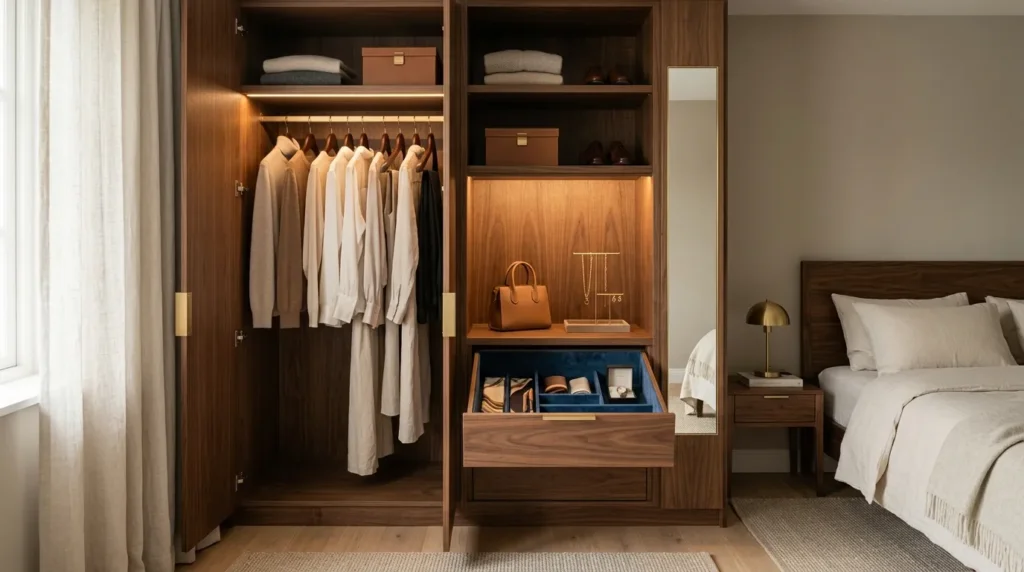
Luxury design, at its core, has never been about size alone. High-end hotels, boutiques, and custom closets all rely on the same underlying principles regardless of square footage: quality materials, thoughtful lighting, and a sense of intentional organization. A small wardrobe that applies these same principles can feel just as impressive as a sprawling walk-in closet, sometimes more so, because the compact scale allows for a more cohesive, curated look.
A few core principles carry through every idea on this list:
- Material quality matters more than quantity of storage
- Lighting transforms even the simplest wardrobe into something that feels designed
- Visual restraint — avoiding overcrowded, mismatched storage — reads as more luxurious than maximum capacity alone
With those principles established, here are nine specific wardrobe design ideas that bring a genuine sense of luxury into a small space.
1. Choose Rich, Warm Wood Finishes
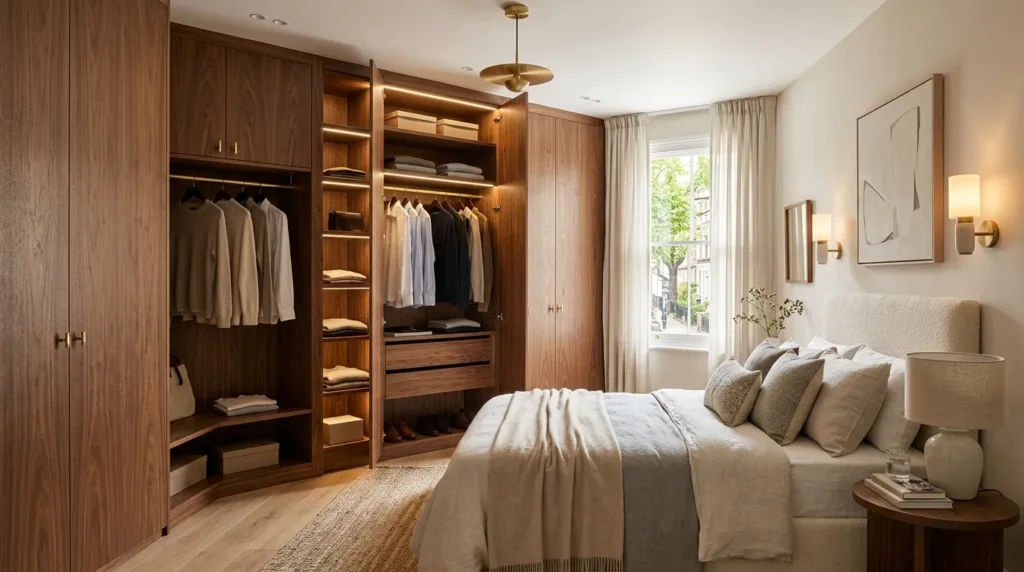
Nothing signals quality quite like real or high-quality wood-finish cabinetry. In a small wardrobe, a rich wood tone — walnut, warm oak, or a deep mahogany — adds an immediate sense of craftsmanship and warmth that laminate or plain white finishes simply can’t replicate.
- Choose a wood veneer or solid wood front over painted MDF wherever your budget allows, since the texture and grain read as noticeably higher quality.
- Darker wood tones tend to feel especially luxurious but should be balanced with adequate lighting to avoid making a small space feel closed in.
- Consistent wood tone throughout the wardrobe, rather than mixing several different finishes, creates a more cohesive, high-end appearance.
2. Add Interior Lighting as a Design Feature
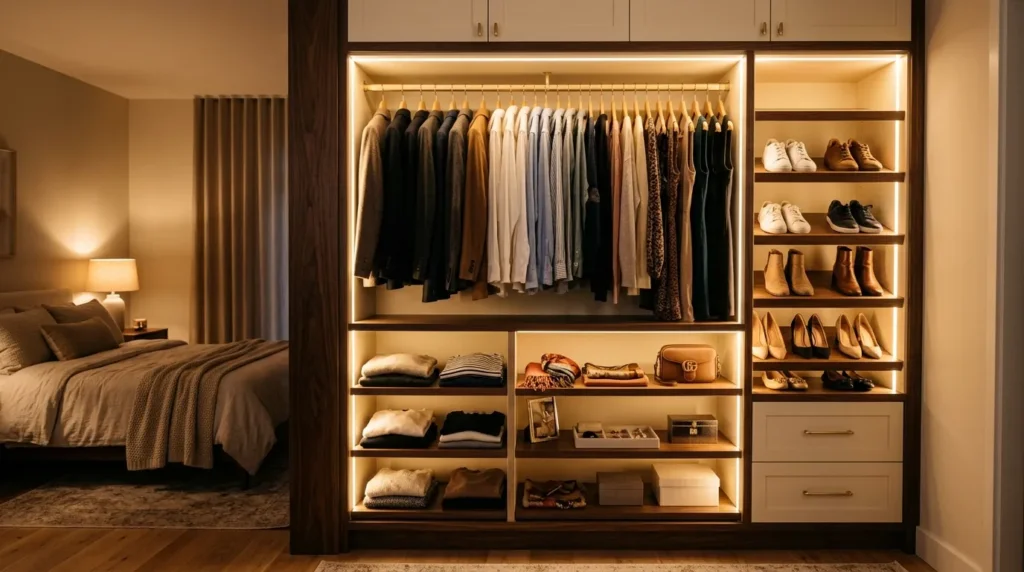
Interior lighting is one of the most transformative wardrobe design ideas available, and it matters even more in a small space where natural light is often limited. Beyond improving visibility, well-placed lighting adds a boutique, showroom-like quality to even a compact wardrobe.
- LED strip lighting along shelves or beneath hanging rods creates a soft, even glow that highlights clothing and accessories.
- Motion-activated lighting that turns on automatically when doors open adds a subtle, high-end touch without requiring manual switches.
- Warm-toned lighting (around 2700K) is essential — cool white lighting can make even the most beautifully finished wardrobe feel clinical rather than luxurious.
3. Use Mirrored or Glass Panel Doors
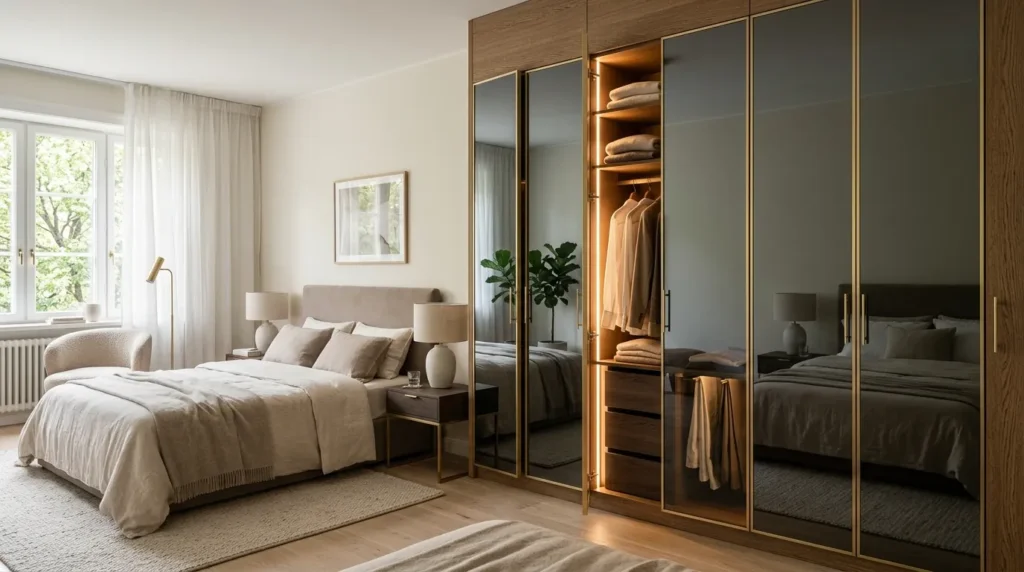
Mirrored wardrobe doors serve two purposes in a small room: they provide a full-length mirror without requiring separate wall space, and they visually expand the room by reflecting light and the surrounding space. This dual function makes mirrored doors one of the most practical wardrobe design ideas for compact bedrooms specifically.
- Full-length mirrored panels create the most dramatic light-reflecting effect, particularly useful in rooms with limited windows.
- Antique or slightly smoked mirror finishes add a more sophisticated, less stark look compared to standard clear mirror.
- Pair mirrored doors with warm interior lighting so the reflection feels inviting rather than cold.
4. Invest in Soft-Close Hardware
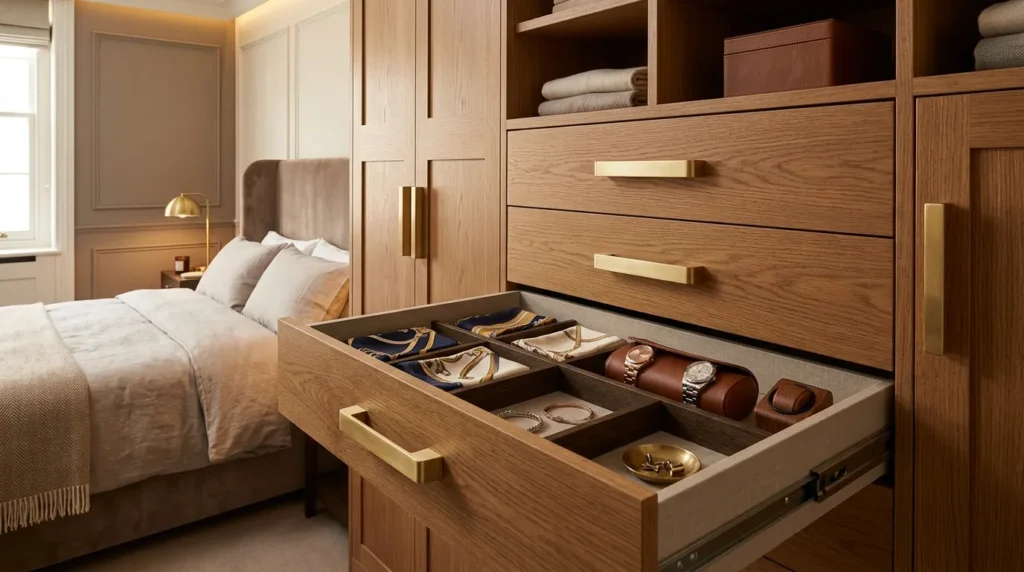
Small, tactile details often make the biggest difference in how luxurious a space feels, and hardware is no exception. Soft-close drawers and doors — which glide shut quietly and smoothly rather than slamming — are a hallmark of higher-end cabinetry and immediately elevate the perceived quality of a wardrobe.
- Soft-close mechanisms reduce wear and tear over time, which also protects your investment in a smaller, more heavily used wardrobe.
- Choose substantial, well-weighted door and drawer pulls in a finish that complements the rest of your room’s hardware.
- This upgrade often costs relatively little compared to the overall wardrobe design but has an outsized impact on how premium the finished product feels.
5. Create a Dedicated Display Niche
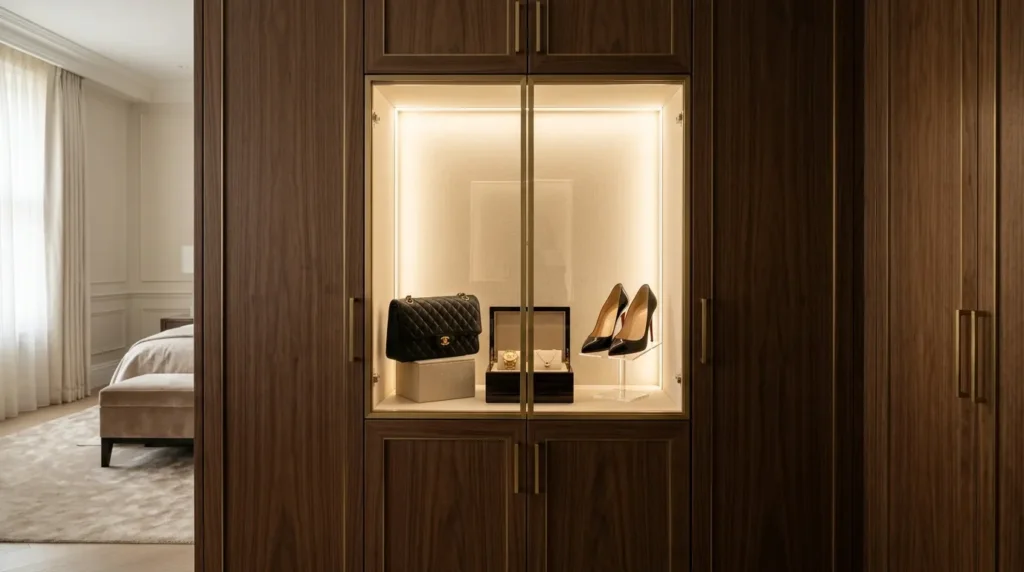
A small, glass-fronted or open display niche within an otherwise closed wardrobe design adds a boutique retail quality, giving a few special items — a favorite bag, a piece of jewelry, a special pair of shoes — a moment to shine rather than being hidden away with everything else.
- Add a small interior light specifically for this niche to create a spotlighted, gallery-like effect.
- Limit the display area to just a few curated items, since overcrowding this space undermines its intended effect.
- This detail works particularly well positioned at eye level, where it naturally draws attention each time the wardrobe is opened.
6. Choose a Monochromatic, Tonal Color Scheme
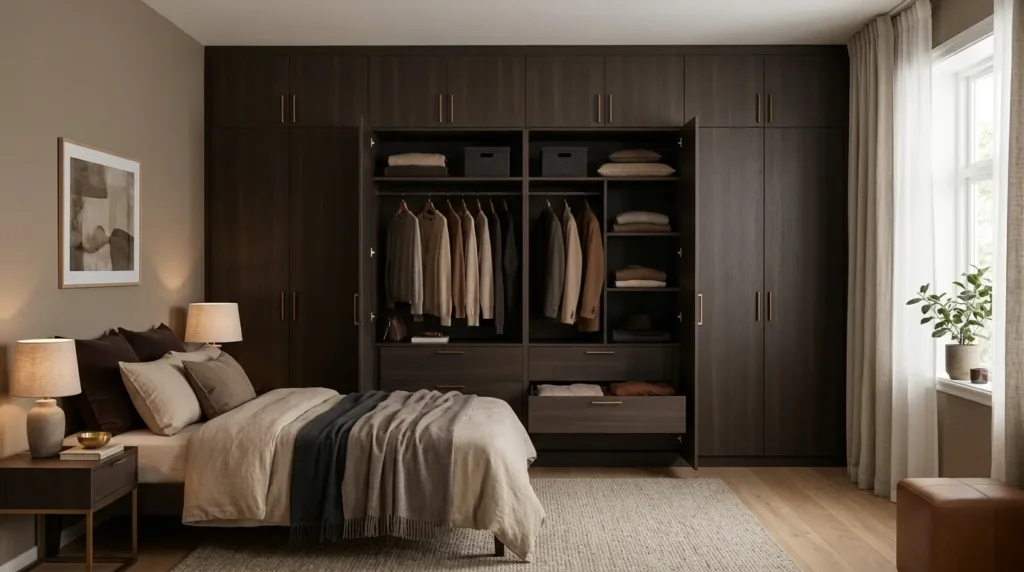
Luxury wardrobe design ideas tend to favor a cohesive, tonal color palette rather than a mix of contrasting finishes. In a small wardrobe especially, sticking to one or two closely related tones throughout — cabinetry, hardware, and even interior lining — creates a calm, sophisticated look rather than a visually busy one.
- Pair a warm wood tone with matching or complementary brass or bronze hardware for a cohesive, high-end palette.
- If using a painted finish, choose deep, rich colors (charcoal, deep green, espresso brown) over stark white for a more luxurious feel.
- Extend the palette to interior linings or drawer fronts, rather than leaving these areas in a mismatched, unfinished-looking material.
7. Add Velvet or Fabric-Lined Drawers
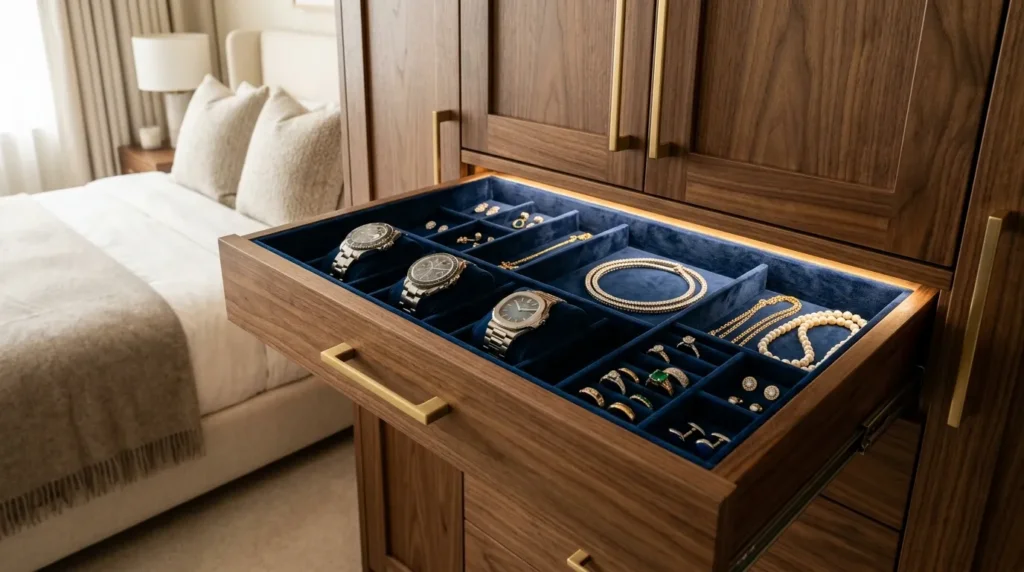
Fabric-lined interiors, particularly velvet, are a classic luxury detail borrowed from high-end jewelry boxes and custom closet systems. Applying this same treatment to a small wardrobe’s drawers — especially those used for jewelry or accessories — adds a noticeably elevated, tactile quality.
- Velvet-lined drawer inserts work particularly well for jewelry, watches, and other small accessories.
- This detail doesn’t need to extend throughout the entire wardrobe; even one or two lined drawers can create a meaningful sense of luxury.
- Choose a lining color that complements your overall palette rather than a stark contrast, keeping the look cohesive.
8. Maximize Vertical Space With Custom-Fit Shelving
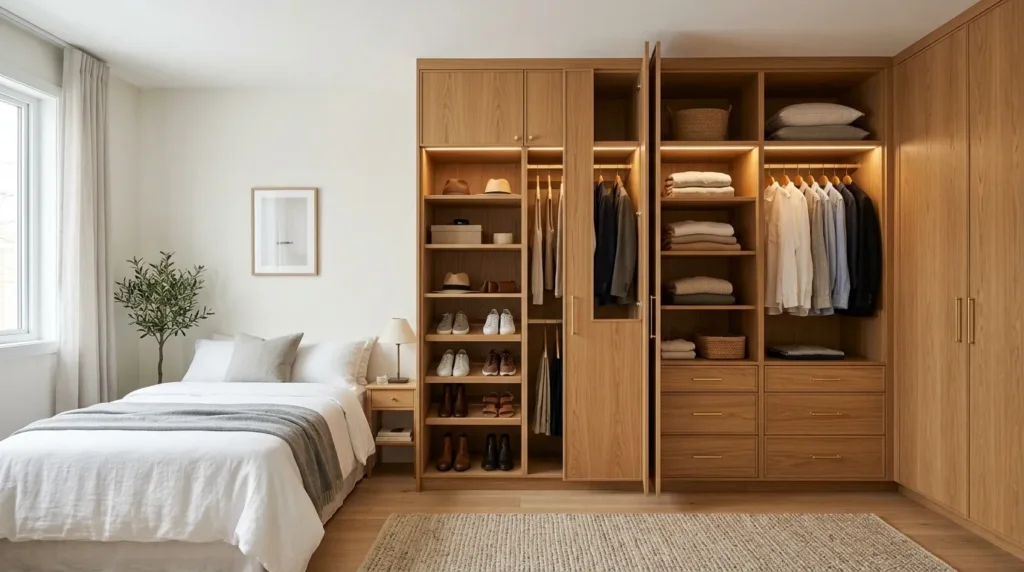
In a small wardrobe, generic, one-size-fits-all shelving often wastes valuable space. Custom-fit shelving, designed specifically around the dimensions of your room and your clothing collection, is one of the most functionally important wardrobe design ideas for achieving both a luxury look and genuine storage efficiency.
- Precisely measured shelving eliminates awkward gaps that make a wardrobe look unfinished or improvised.
- Floor-to-ceiling shelving makes full use of available height, an especially valuable strategy in small rooms where floor space is limited.
- Custom shelving also allows for tailored sections — a designated shoe area, a jewelry drawer, a double-hang clothing zone — rather than generic, one-size shelving throughout.
9. Keep the Overall Design Restrained and Curated
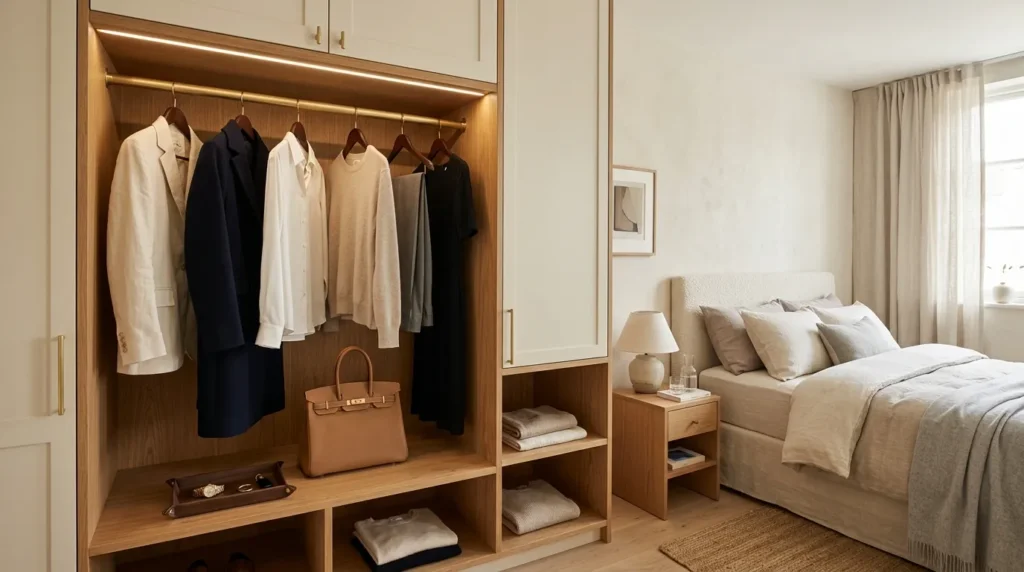
Perhaps the most important of all wardrobe design ideas for a small space is restraint. Luxury rarely comes from packing a space with as much storage or decoration as possible; it comes from thoughtful curation and leaving some visual breathing room, even within a compact footprint.
- Avoid overcrowding shelves and hanging space; a wardrobe that’s slightly under capacity often looks and functions better than one stuffed to its limit.
- Choose fewer, higher-quality storage accessories (a single elegant valet tray, one well-made jewelry drawer) rather than many mismatched organizational bins.
- Regularly edit your wardrobe’s contents, since a curated collection of clothing and accessories will always look more luxurious than a maximized but cluttered one.
How to Prioritize These Ideas on a Budget
Not every one of these wardrobe design ideas requires the same investment, and it’s entirely possible to achieve a luxury look in stages. If you’re working with a limited budget, consider this general order of impact relative to cost:
- High impact, lower cost: interior lighting, soft-close hardware upgrades, a tonal color scheme, a small display niche
- Moderate investment: mirrored doors, velvet-lined drawer inserts, custom shelving reconfiguration
- Larger investment: full cabinetry replacement in a rich wood finish, a complete custom-built wardrobe system
Starting with lighting and hardware upgrades often delivers the most noticeable transformation for the lowest cost, making it a smart starting point before committing to larger structural changes.
Common Mistakes to Avoid
Even with good intentions, a few missteps can prevent a small wardrobe from achieving that luxury feel:
- Overcrowding the space – Maximizing every inch for storage capacity often comes at the expense of the calm, curated look that defines luxury design.
- Skipping lighting – A beautifully finished wardrobe still feels flat and utilitarian without proper interior lighting.
- Mixing too many finishes – Combining several wood tones, metal finishes, and colors within a small space can look chaotic rather than intentional.
- Choosing cheap hardware – Even the best cabinetry can feel undercut by flimsy, poorly finished hardware and knobs.
- Ignoring vertical space – Failing to use full ceiling height in a small wardrobe wastes valuable storage potential and can make the design feel incomplete.
Conclusion
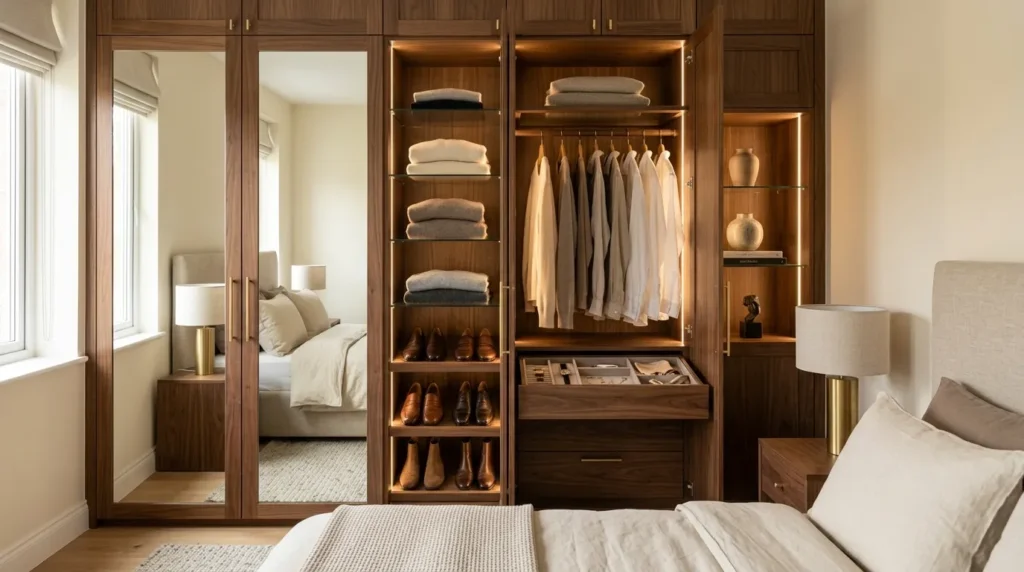
A small room doesn’t have to limit how luxurious a wardrobe can look or feel. Rich wood finishes, thoughtful interior lighting, mirrored doors, and small tactile details like soft-close hardware and velvet-lined drawers all contribute to a genuinely high-end result, regardless of square footage. The key across every one of these wardrobe design ideas is intention — choosing quality materials and a curated, cohesive design over simply maximizing storage capacity.
Start with the details that offer the most impact for the least investment, like lighting and hardware, then build toward larger upgrades such as custom shelving or a full material overhaul as your budget allows. Done well, a small wardrobe can feel every bit as polished and luxurious as one in a much larger space.
Frequently Asked Questions
Can a small wardrobe really look luxurious without a full renovation? Yes. Upgrades like interior lighting, soft-close hardware, and a cohesive color palette can significantly elevate the look of an existing wardrobe without requiring a complete cabinetry replacement, making a luxury look achievable even on a moderate budget.
What materials give a wardrobe the most high-end appearance? Rich wood veneers or solid wood finishes, paired with quality metal hardware in brass, bronze, or matte black, tend to create the most immediate sense of luxury. Fabric or velvet-lined drawer interiors add an additional tactile, high-end touch for a relatively small investment.
Is mirrored wardrobe design a good choice for small rooms specifically? Yes, mirrored doors are particularly effective in small spaces, since they provide a full-length mirror without taking up separate wall space and help the room feel larger by reflecting available light. Pairing them with warm interior lighting keeps the effect feeling inviting rather than stark.