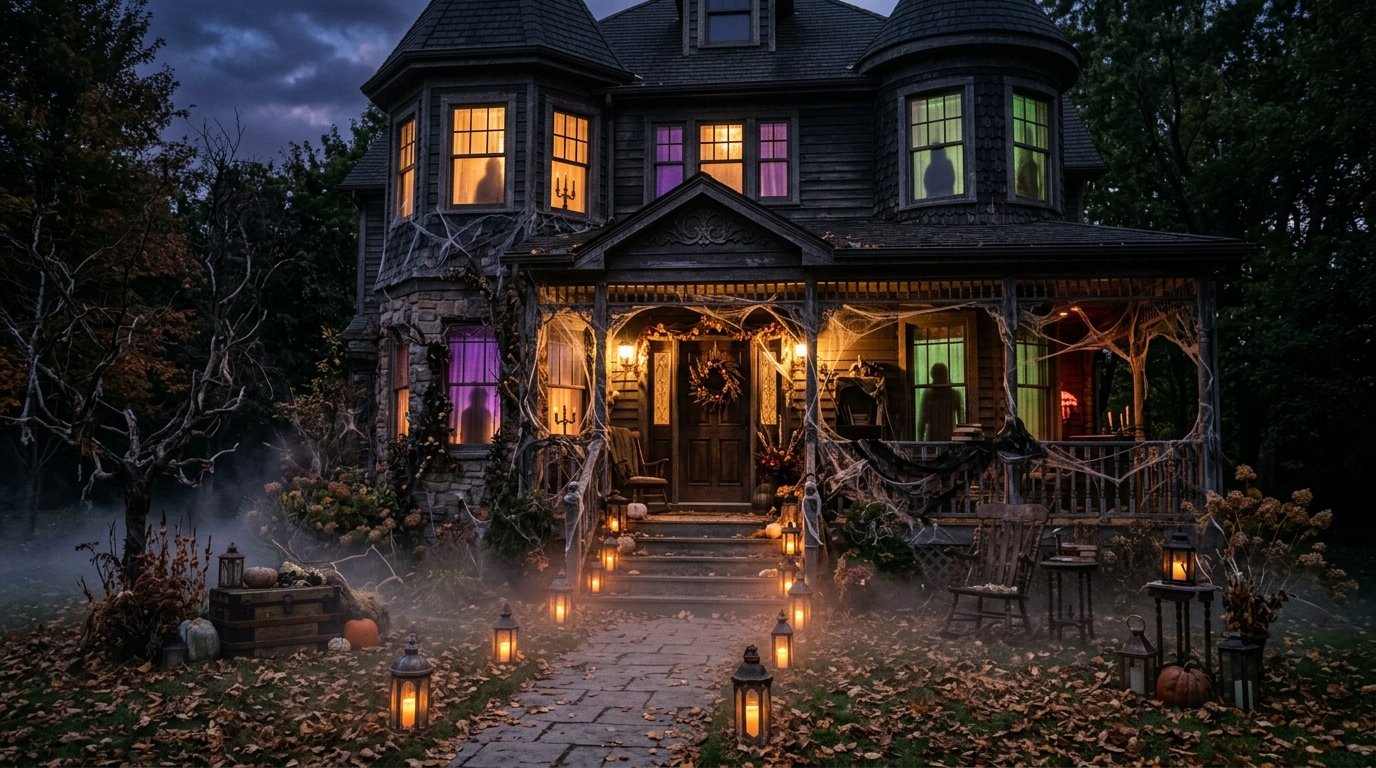
15 Halloween Decor Ideas That Create a Haunted House Feel
Every October, the same thing happens. You pull out a box of plastic pumpkins and a few string lights, hang them up, and wonder why the result looks cheerful instead of chilling. A haunted house feel doesn’t come from buying more stuff. It comes from atmosphere: lighting, texture, sound, scent, and the sense that something is slightly wrong in the room.
The good news is that creating a spooky, immersive setting is easier than most people think. With a handful of smart choices and some inexpensive materials, you can turn an ordinary home into a place that makes visitors lower their voices and glance over their shoulders. This guide walks through 15 Halloween decor ideas that build that eerie mood, along with practical tips on budgeting, safety, and layering so your setup feels cohesive rather than cluttered.
What Makes a Space Feel Haunted?
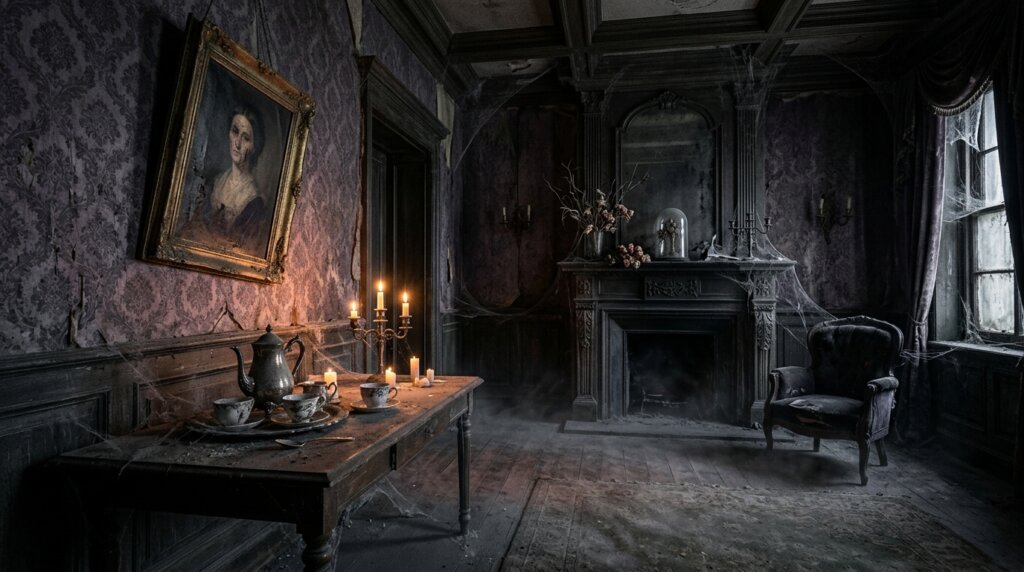
Before jumping into the list, it helps to understand what actually triggers that uneasy feeling. Haunted spaces share a few traits:
- Low, unreliable light. Shadows hide details, and imagination fills the gaps.
- Signs of age and neglect. Dust, decay, and cobwebs suggest nobody has lived there for a long time.
- Hints of a story. An abandoned tea set or a portrait with scratched-out faces implies something happened here.
- Sensory layers. Sound, smell, and touch make a scene feel real in a way visuals alone cannot.
- Restraint. A few well-placed scares work better than every surface covered in decorations.
Keep these principles in mind as you read. Each idea below taps into at least one of them.
1. Build a Foggy, Flickering Entrance
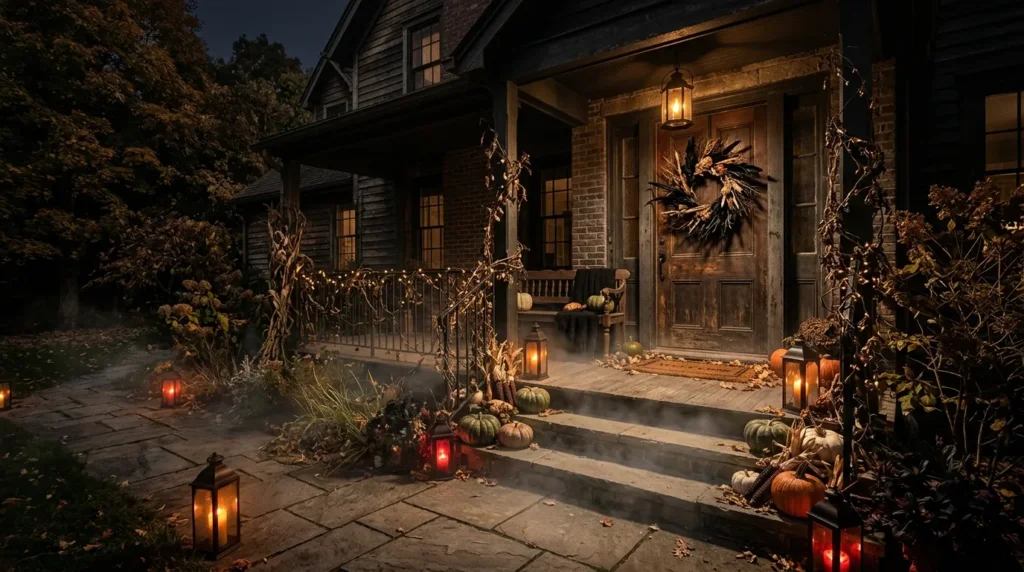
First impressions set the tone for everything that follows. Your front door, porch, or entry hallway is where guests decide whether your home is merely decorated or truly haunted.
Start with lighting. Swap bright white bulbs for dim amber, deep red, or sickly green ones. Flickering flameless candles in lanterns along the steps create a soft, unstable glow that mimics real fire without the risk. If you have a covered porch, a small fog machine placed low to the ground sends mist rolling across the floor, which is far more atmospheric than fog drifting at eye level.
Add a few finishing touches:
- A weathered welcome mat with a message like “Enter at your own risk”
- A dead wreath made from dried branches, black feathers, or faux dead flowers
- A single creaky sound loop, such as a slow door hinge, playing from a hidden speaker
Keep the entrance slightly understated. The goal is to create anticipation, not give everything away at the door.
2. Use Cobwebs the Right Way
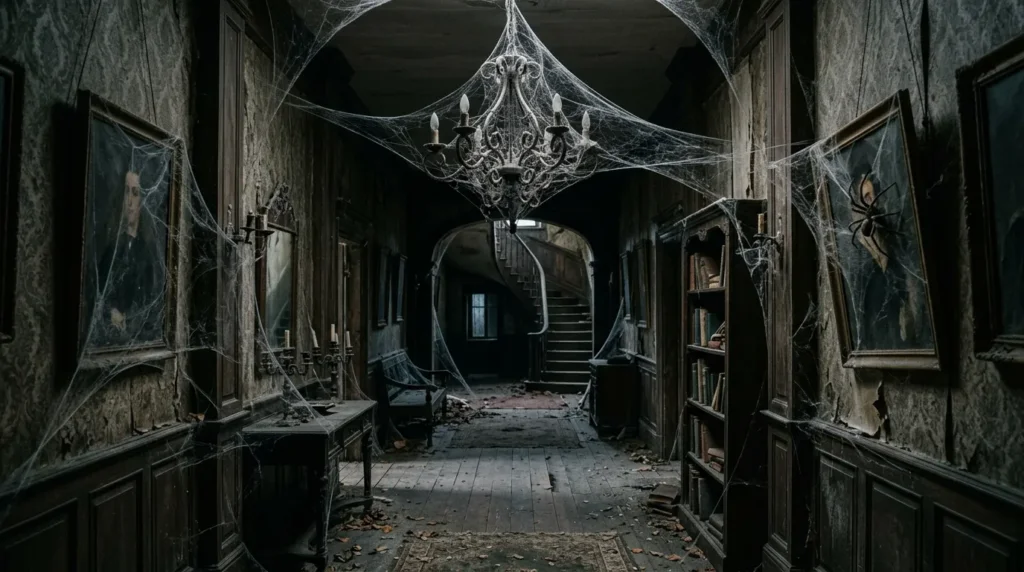
Cobwebs are the most recognizable symbol of a neglected, haunted space, yet they are often applied badly. Thick, uniform clumps stretched across a doorway look like cotton candy. Real webs are wispy, uneven, and stretch into corners.
For a realistic effect:
- Pull the stretchy webbing apart into thin, translucent strands rather than using it straight from the bag.
- Drape it unevenly across corners, chandeliers, bookshelves, and the tops of picture frames.
- Tuck it behind furniture so it appears to have been growing for years.
- Add a few plastic spiders, but sparingly. One large spider in an unexpected spot is scarier than fifty tiny ones.
If you want extra realism, lightly dust the webbing with gray or silver craft powder or even a little baby powder to suggest decades of dust. This one technique can instantly upgrade your Halloween decor from store-bought to convincing.
3. Create an Abandoned Dining Room

Few scenes tell a story as effectively as a dining table set for guests who never arrived. This idea works because it hints at a narrative and lets the viewer imagine what went wrong.
Set a long table with old plates, tarnished goblets, and tall candlesticks. Cover everything in a layer of faux dust and cobwebs. Tip over a chair or two. Leave a dried-out centerpiece of wilted flowers in the middle. For a darker twist, add a stained tablecloth made from tea-dyed cheesecloth, or scatter a few dead leaves across the plates.
You don’t need antique pieces. Thrift stores are full of mismatched dishes and cutlery that work perfectly once you age them with a little brown or gray paint, applied with a sponge.
4. Turn Windows Into Spooky Silhouettes
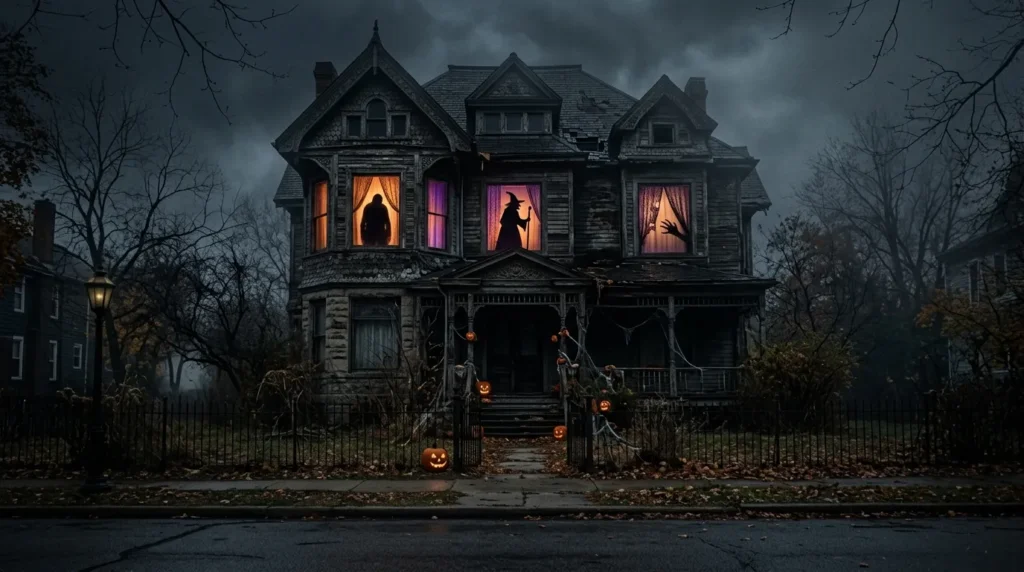
From the street, your windows are the first thing people see after dark, so use them. Silhouettes of shadowy figures are one of the easiest ways to suggest that something is moving inside.
Cut shapes from black cardstock or poster board, such as a hunched figure, a witch at a cauldron, or a creeping hand, and tape them to the inside of the glass. Place a light behind them, ideally an orange or purple bulb, so they glow against the curtain. For added effect, position a small fan or a slowly rotating lamp so the shadows appear to shift.
You can also use sheer, dark curtains with tears cut into the edges. Pair them with a dim light behind and the house will look like it hasn’t been occupied in a century.
5. Hang Floating Candles for an Eerie Glow
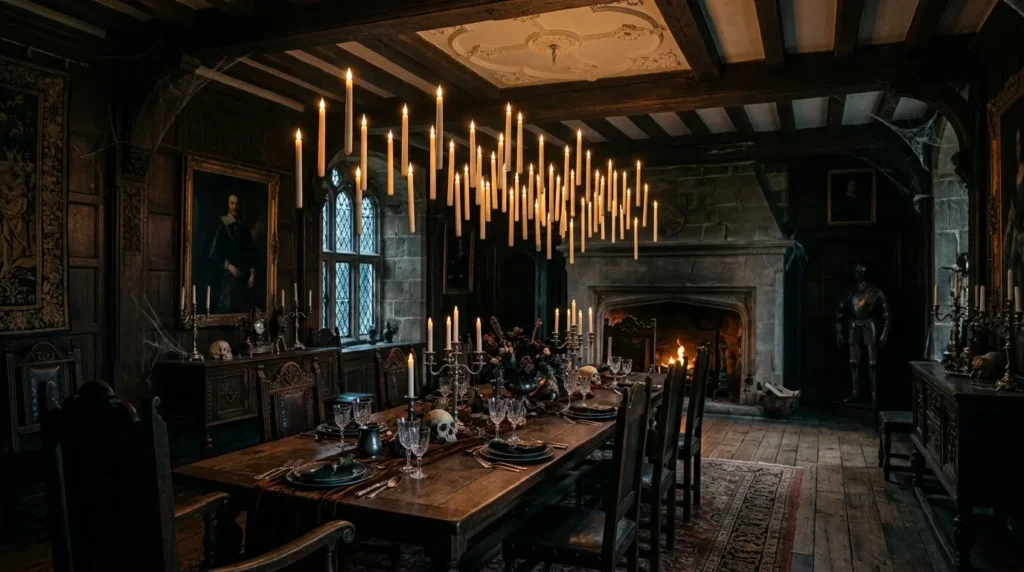
Floating candles suspended from the ceiling bring a gothic, supernatural feel that’s hard to achieve any other way. They’re especially effective in dining rooms, stairwells, and covered patios.
Use battery-operated taper candles and attach each one to clear fishing line at varying heights. Hang them from the ceiling, a beam, or a sturdy curtain rod. Vary the lengths so the candles appear to hover at different levels, and cluster them rather than spacing them evenly.
Warm-white flameless candles produce the most believable effect. Because they don’t use real flames, this is a safe option around guests, kids, and pets, which matters when you’re layering several Halloween decor elements in the same room.
6. Make Creepy Portraits That Seem to Watch You
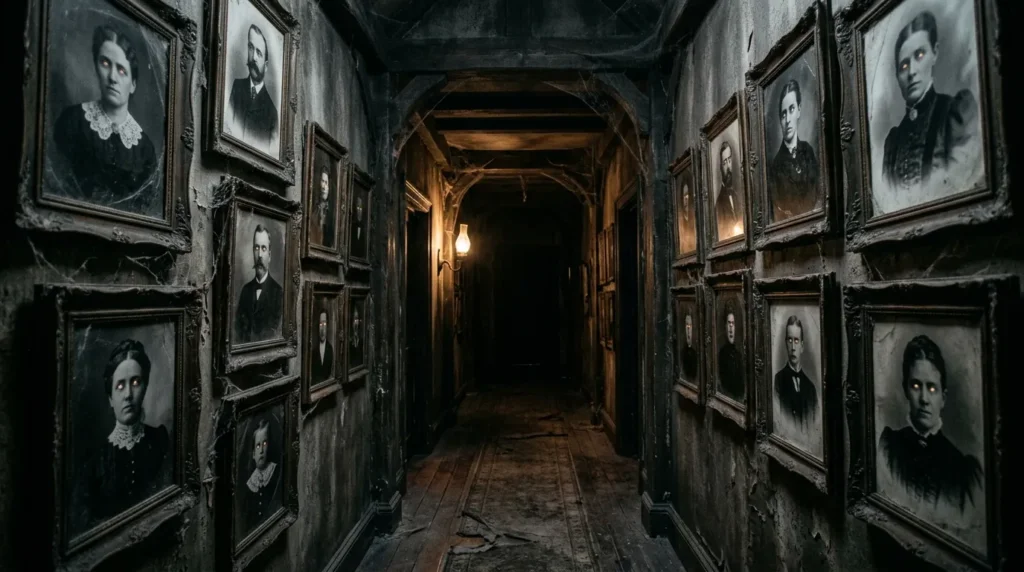
Haunted mansions in films nearly always have portraits whose eyes follow you around the room. You can recreate this with minimal effort.
Print old-fashioned portraits or vintage photographs in black and white, then place them in dark, ornate frames. Cut out the eyes and place a dim light behind the frame so the eyes seem to glow, or simply tilt a few frames slightly off-center for an unsettling look.
For a more subtle approach, choose portraits of stern-looking figures and age the surface with tea staining, scratches, or a dusting of sandpaper. Hang them in hallways and staircases where guests will pass them in dim light. A small flickering bulb nearby will add movement to the scene.
7. Add Dead Plants and Overgrowth
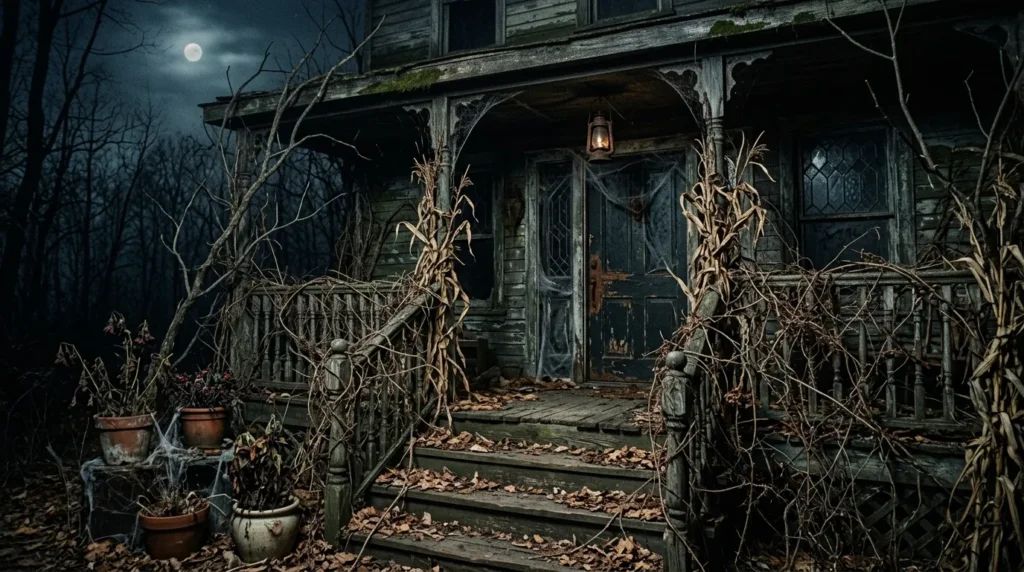
Nature reclaiming a structure is a classic sign of abandonment. Bringing dead or overgrown plants into your decor suggests a space that has been forgotten for years.
Gather bare branches, dried vines, and wilted flowers. You can find many of these outdoors for free. Drape vines over mantels, wrap branches around staircase railings, and fill old vases with dried stems. Spray artificial ivy with dark brown or gray paint to give it a dead, brittle look.
Outdoors, let the overgrowth extend to the porch. Tangle dried cornstalks along the railing, scatter dead leaves across the steps, and prop bare branches against the wall. Keep in mind that dry plant material is flammable, so keep it well away from candles, heaters, and heat-producing light fixtures.
8. Create Atmosphere With Sound
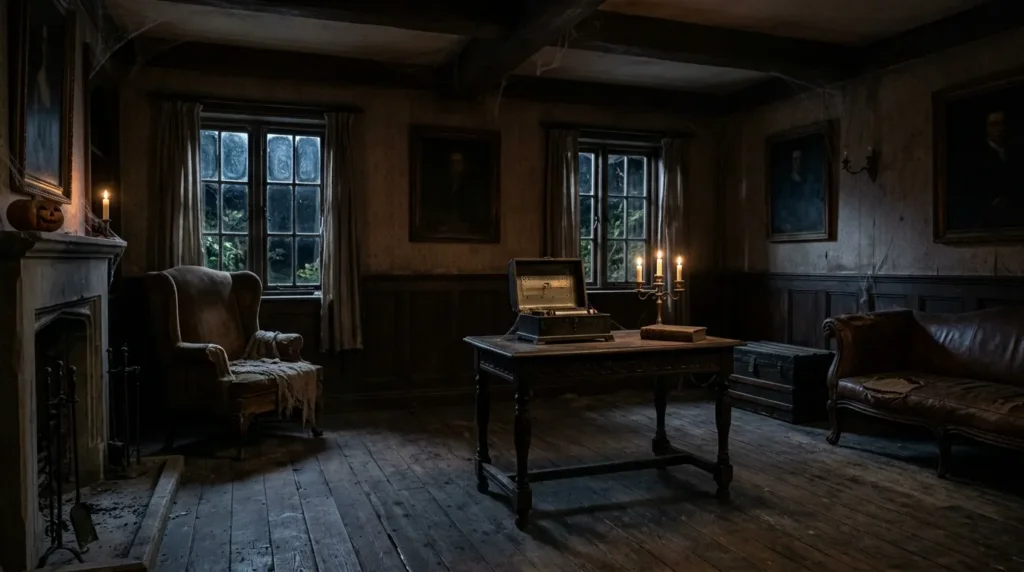
Sound is the most overlooked part of any haunted setup, and it may be the most powerful. A silent room with excellent visuals can still feel flat, while a mediocre setup with the right audio can feel genuinely unsettling.
Build a simple playlist or loop of ambient sounds:
- Distant whispers
- Wind rattling through old windows
- Slow footsteps on creaky floorboards
- Faint music-box melodies
- An occasional thud or knock from another room
Place small speakers in hidden locations, such as behind furniture, inside a closet, or beneath a table. Keep volume low. Guests should strain slightly to hear it, which makes their brains work harder and heightens tension. Avoid constant screaming or loud jump-scare noises, since they quickly become tiresome and can overwhelm younger visitors.
9. Craft a Witch’s Apothecary Corner
Dark, mysterious laboratories are fun to look at and easy to build with items you already own. A corner shelf or small table can become a witch’s workspace in under an hour.
Collect old glass jars, bottles, and vials. Fill them with colored water, dried herbs, or small objects such as buttons, feathers, and twigs. Make handwritten labels with names like “Raven’s Tears,” “Graveyard Dust,” or “Bat Wing Essence.” Add a mortar and pestle, a few antique-looking books, and a pair of dripping candles.
To age the labels, dab them with a damp tea bag and let them dry. Then crumple the paper gently and flatten it again. Group the jars at different heights and place a single flickering light nearby. The detail is what sells this scene, so spend your effort on small touches rather than size.
10. Add Texture With Torn Fabric and Gauze
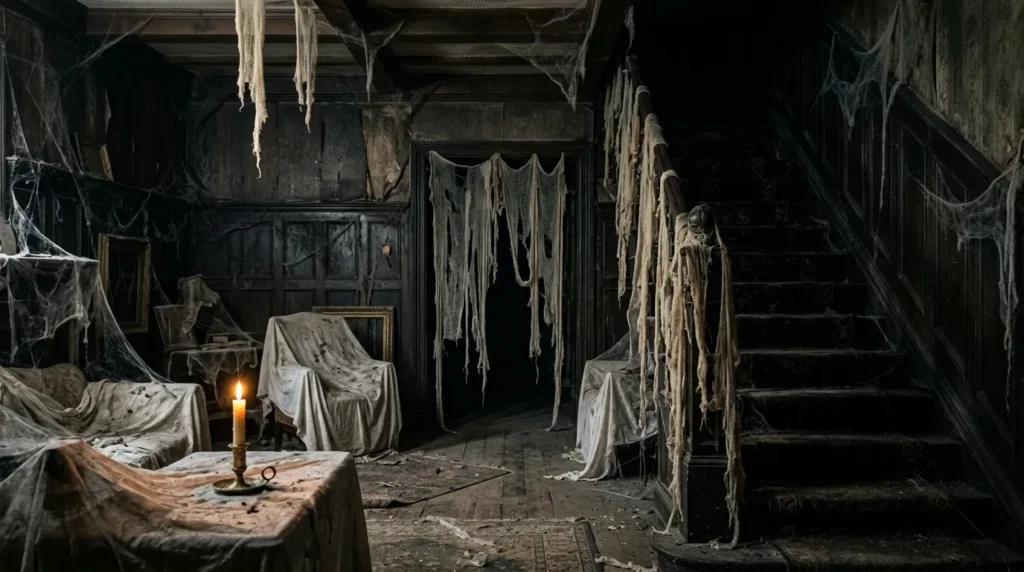
Fabric adds movement, softness, and a ghostly quality that rigid decorations can’t match. Cheesecloth, gauze, and old sheets are inexpensive and surprisingly versatile.
Soak cheesecloth in a mix of watered-down black or brown paint, or simply tea, then let it dry for an aged, stained look. Hang long strips from doorways, banisters, and ceilings so they sway when someone walks by. A ceiling fan on low or a small oscillating fan will keep them gently moving.
You can also drape old sheets over furniture to suggest a house that has been closed up for years. Add a thin layer of faux dust and a few cobwebs, and a living room instantly becomes a forgotten parlor. This approach is especially effective if your budget for Halloween decor is limited, since fabric covers a lot of space for very little money.
11. Create a Graveyard in Your Yard
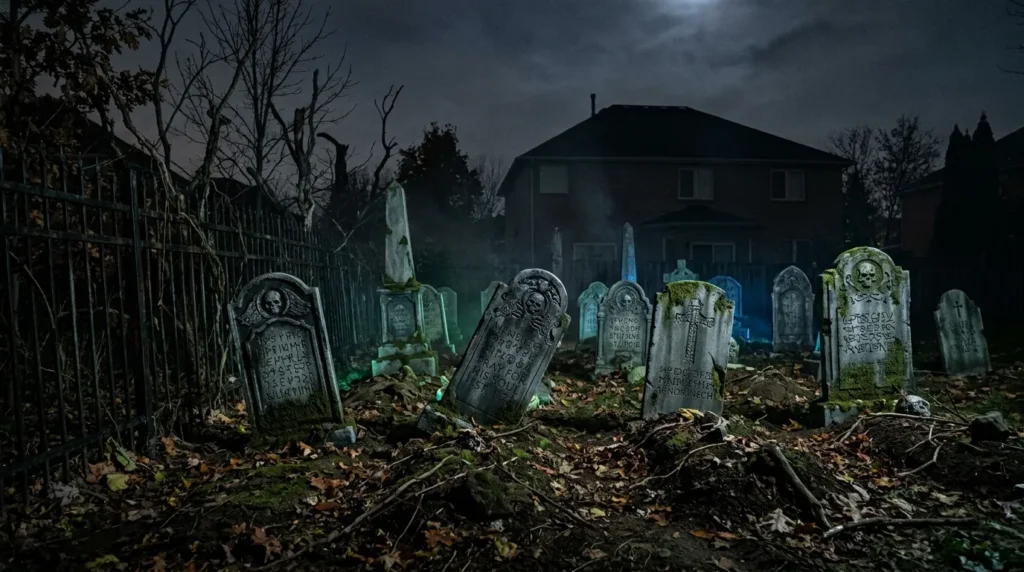
A graveyard is a staple of haunted decor, and it translates well to both small and large outdoor spaces. The trick is to make it look old rather than new.
Cut headstones from foam insulation board, which is lightweight and easy to carve. Paint them in layers of gray, black, and green to mimic moss and weathering, and use a sponge to create uneven texture. Give them personalized epitaphs with humorous or eerie names, and angle some of them slightly so they appear to have sunk into the soil over time.
Add:
- Low ground lighting in green or blue
- A tilted iron fence made from black-painted wood or PVC
- A few bare branches planted in the ground
- Loose soil and leaves scattered around the base
Secure the headstones with stakes to keep them stable in the wind. Pay attention to the area at night and ensure walkways are visible so no one trips.
12. Use Creepy Lighting Effects
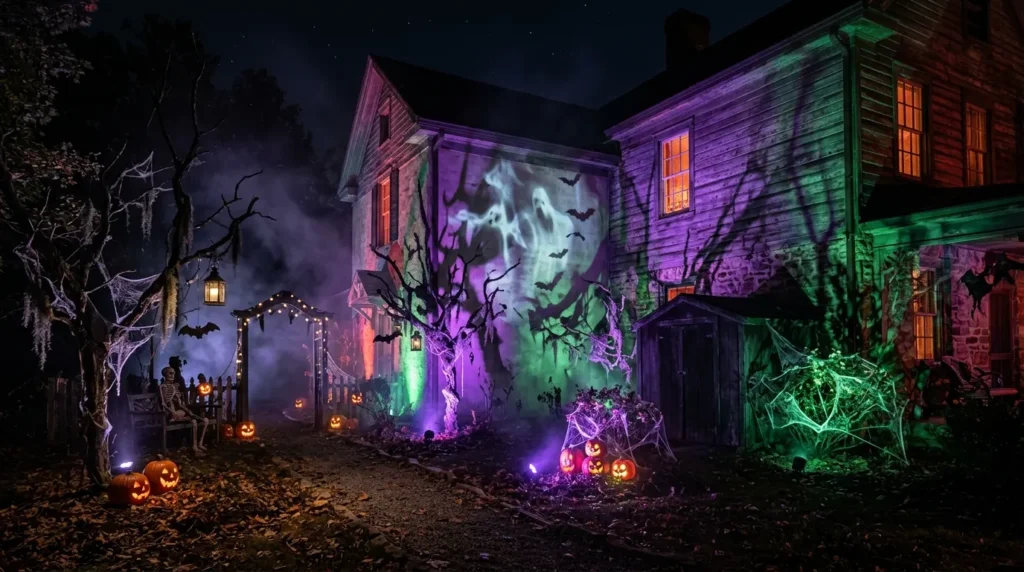
Lighting can transform even basic decorations into something that feels haunted. You don’t need professional equipment to make an impact.
Try these approaches:
- Colored bulbs. Purple, green, and red tones create instantly eerie moods.
- Uplighting. Place small lights on the ground and aim them upward at walls, trees, or decorations to cast long, distorted shadows.
- Strobe or flicker effects. Use these sparingly, as they can be uncomfortable or unsafe for people sensitive to flashing lights.
- Projectors. Inexpensive Halloween projectors can cast moving ghosts, bats, or fog onto walls and windows.
Switch off bright overhead lights in the areas you’re decorating. A haunted room should be mostly dark, with small pockets of light drawing attention to specific details. When you commit to dim lighting, even modest Halloween decor starts to look dramatically more convincing.
13. Stage a Haunted Nursery or Playroom

Few things unsettle people like old toys that seem out of place. A neglected nursery or playroom is a favorite theme because it combines innocence with decay.
Set up a rocking chair that moves slightly on its own (a small fan can nudge it), a dusty crib, and a shelf of worn dolls or stuffed animals. Add a music box playing a faint tune. Cover the toys in gray dust and cobwebs, and arrange some in slightly wrong positions, such as dolls facing the wall or a toy sitting alone in the middle of the floor.
Keep this one subtle. A few carefully placed items work better than a room filled with dolls, and it’s best kept away from very young children who might find it genuinely distressing.
14. Add Scent for a Full Sensory Experience

Smell is closely linked to memory and emotion, which makes it a quiet but powerful tool. Most haunted houses are remembered as much for their smell as for their appearance.
You don’t need anything artificial or overpowering. Consider:
- Earthy scents like damp wood, moss, or leaf mold
- Smoky aromas from incense or cedar
- Spiced notes like clove and cinnamon in a hidden simmer pot
- A faintly musty smell achieved with dried herbs and old books
Place scent sources discreetly in a few rooms and avoid combining too many aromas, which can become confusing or give guests headaches. If anyone in your household has allergies or asthma, test lightly first or skip strongly scented products altogether.
15. Incorporate a Few Well-Timed Surprises
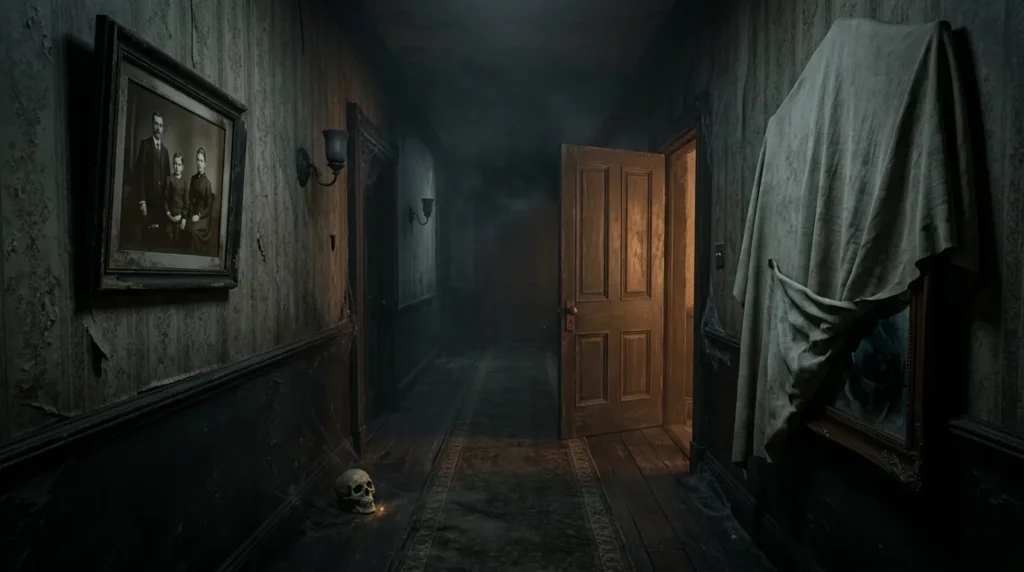
The final touch is a small number of surprises that reward guests who explore. These don’t need to be elaborate. The best ones are quiet, unexpected, and slightly strange.
Ideas include:
- A hand reaching from beneath a bed or sofa
- A mirror covered in a sheet that is partially pulled aside
- A door left ajar with a soft light and a faint whisper behind it
- A motion-activated skull, light, or sound tucked in a hallway
- A framed photo that has been changed in some subtle way
Space these moments out so they feel like discoveries rather than a constant barrage. Pacing is what separates a haunted house from a room full of decorations.
Planning Tips for a Cohesive Haunted Look
With so many options, it’s easy to overdo it. A few guidelines will keep your design polished.
Choose a theme. Decide whether you’re going for a Victorian mansion, an abandoned asylum, a witch’s cottage, or a forgotten cabin. A single theme helps every element feel connected.
Start with lighting and layers. Establish your light levels first, then add large items, then smaller details. Textures and fabrics should come before accessories.
Work in zones. Focus on three or four areas instead of decorating every room. A well-done entryway, living room, and porch will leave a stronger impression than a scattered effort across the whole house.
Prioritize safety. Use flameless candles, keep walkways clear, secure cords and extension leads, and avoid blocking exits. Keep flammable materials away from heat sources.
Think about your audience. If trick-or-treaters or small children will visit, balance spooky and scary. You can create a moody setup without including anything too graphic.
Budget wisely. Thrift stores, dollar shops, and your own recycling bin are full of material. Cardboard, old sheets, glass jars, and dried branches cost very little, yet they often look more authentic than mass-produced decorations.
Common Mistakes to Avoid
Even creative decorators run into the same pitfalls:
- Too much brightness. Bright light washes out atmosphere and exposes every flaw.
- Overcrowding. Cluttered scenes lose their impact. Leave empty space so details stand out.
- Mixing too many styles. Cartoon pumpkins beside realistic gravestones can break the spell.
- Ignoring the ceiling and floor. Hanging elements and ground-level fog add depth that wall-only decorations lack.
- Skipping the details. Aging, staining, and dusting are small steps that make a major difference.
Conclusion

Creating a haunted house feel is less about spending money and more about thinking like a storyteller. By combining low lighting, aged textures, sound, scent, and a few thoughtful surprises, you can transform an ordinary home into something genuinely atmospheric. Whether you start with a foggy entrance, an abandoned dining room, or a quiet graveyard in the yard, the key is to layer details and let guests discover them at their own pace.
The best Halloween decor builds mood first and decorations second. Pick a theme, focus on a few zones, prioritize safety, and add your own personal touches. With a little planning and creativity, your home will become the talk of the neighborhood this season.
Frequently Asked Questions (FAQs)
- How can I make my house look haunted on a small budget?
Focus on lighting, fabric, and found materials. Cheesecloth, old sheets, tea-stained paper, thrifted jars, and dried branches are inexpensive and look authentic when aged. Swapping bright bulbs for dim colored ones costs little and makes a big difference.
- What colors work best for a haunted house look?
Dark, muted tones create the strongest effect. Black, gray, deep purple, and dull green suit a gothic feel, while touches of blood red or aged ivory add contrast. Orange works best as an accent rather than the dominant color.
- How do I make decorations look old and worn?
Techniques include tea staining paper and fabric, sponging on gray or brown paint, lightly sanding edges, and adding faux dust or cobwebs. Layering these effects makes items look genuinely neglected rather than newly purchased.
- Are there safe options for spooky lighting around kids and pets?
Yes. Battery-powered flameless candles, LED string lights, and low-heat projectors are good choices. Keep cords tucked away, avoid placing decorations in walkways, and skip strobe effects if anyone in the household is sensitive to flashing lights.
- When should I start setting up my haunted decorations?
Many people begin in early to mid-October, working on the exterior first and then moving indoors. Starting early gives you time to test lighting, adjust placement, and fix problems. If you plan to build larger projects, such as headstones or a prop-filled room, begin even earlier so you can work at an unhurried pace.