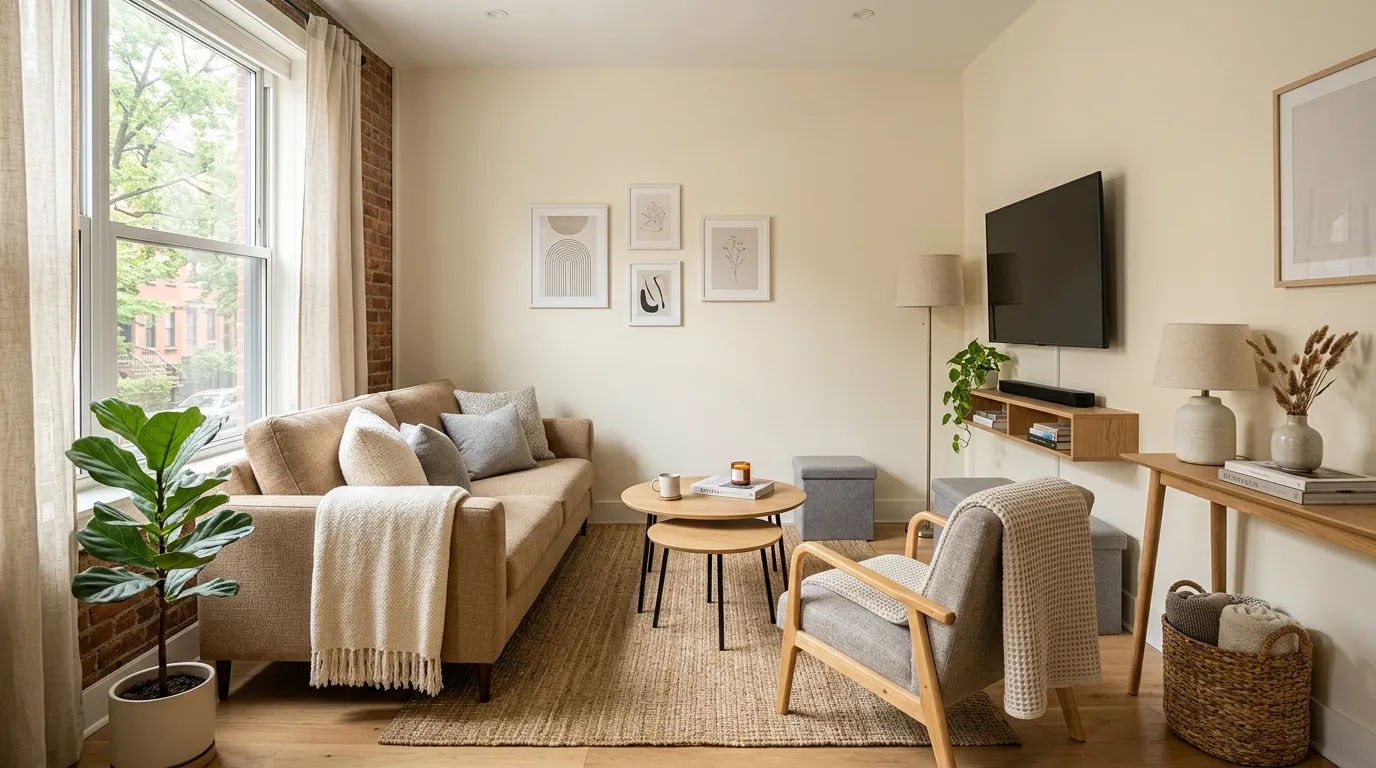
Smart Living Room Furniture Ideas That Fit Small Spaces Now
Finding the right living room furniture ideas for small spaces can feel harder than it should, especially when most showroom pieces are built with larger rooms in mind. The good news is that a compact living room doesn’t need to feel bare or cramped. With a handful of smart furniture choices, even a tight layout can feel comfortable, functional, and genuinely stylish.
This guide covers practical, real-world living room furniture ideas for small spaces, including which pieces to prioritize, which shapes tend to work best, and how to combine function with style without overcrowding the room.
Whether the goal is furnishing a first apartment, downsizing after years in a larger home, or simply making better use of an oddly shaped living room, the same core principles apply. Focus on scale, multi-purpose function, and visual openness, and the specific furniture choices tend to follow naturally from there.
Why Furniture Choice Matters More in Small Living Rooms
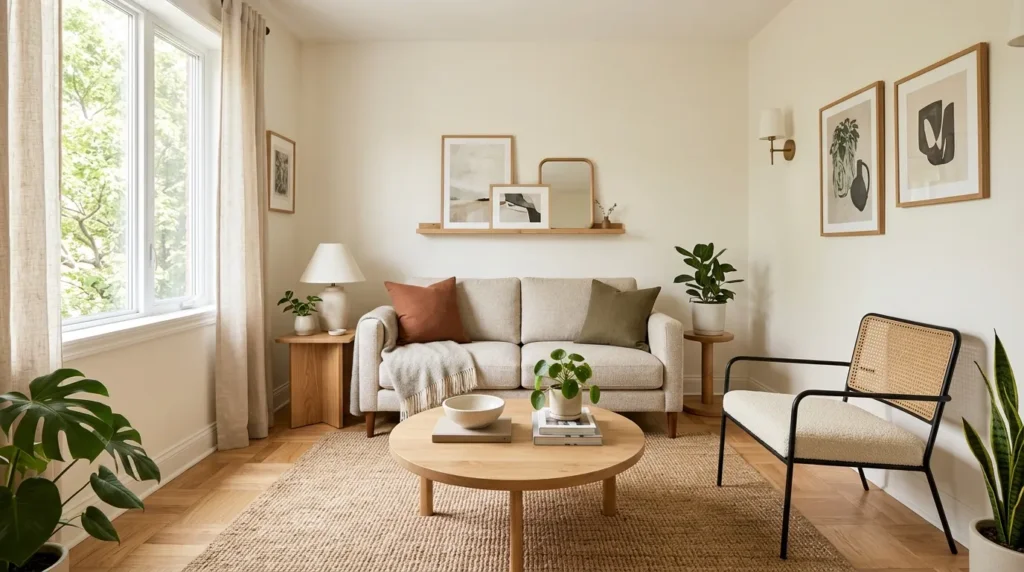
In a larger living room, a slightly oversized sofa or an extra side table rarely causes a problem. In a small space, however, every furniture decision has a ripple effect on how the whole room feels and functions. The wrong scale or shape can block walking paths, overwhelm the eye, or make an otherwise well-designed room feel disorganized.
Choosing furniture specifically suited to small living rooms, rather than simply picking smaller versions of standard pieces, tends to produce far better results. Scale, proportion, and flexibility all matter more here than they would in a room with square footage to spare.
It also helps to think about furniture in terms of its total impact on the room, not just its price tag or style. Two smaller, well-placed pieces often work better together than one large piece that technically fits but leaves little room for anything else, including the people using the space day to day.
1. Choose a Compact Sofa Built for Small Rooms
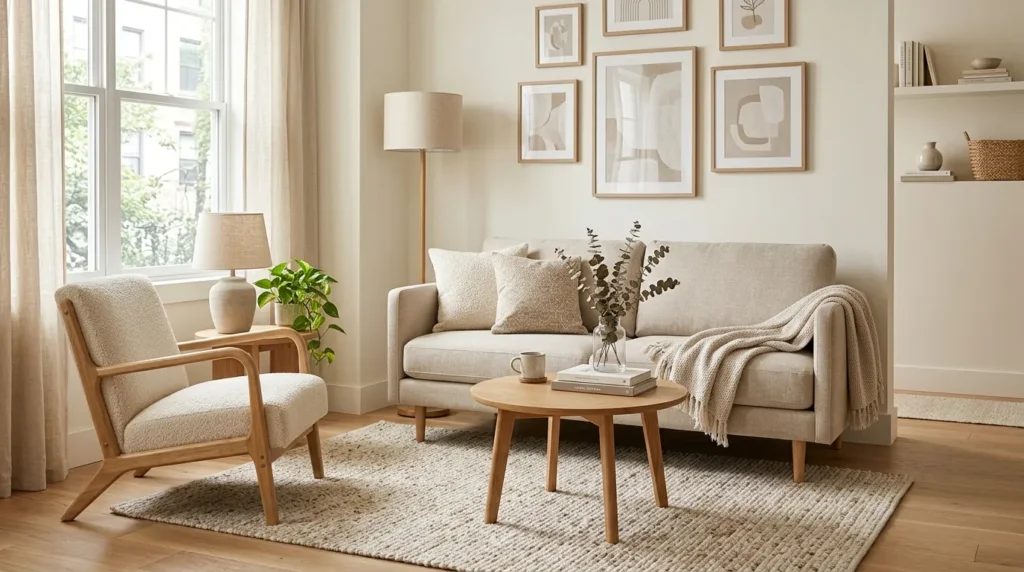
A loveseat or an apartment-sized sofa is one of the most effective living room furniture ideas for small spaces, since it typically offers a shorter depth and width than a standard three-seat sofa while still providing comfortable seating for two or three people.
Look for sofas with slim arms and exposed legs rather than bulky, skirted designs, since these details reduce the visual weight of the piece even when the actual dimensions are similar. A lighter fabric color can also help the sofa blend into the room rather than dominate it.
It’s also worth measuring the doorway and hallway leading into the room before choosing a sofa, since apartment-sized pieces are sometimes still too large to maneuver into a tight entryway. Many smaller sofas now come with removable or reversible cushions, which can make delivery and placement considerably easier in buildings with narrow staircases or tight turns.
2. Use Nesting and Stackable Tables Instead of One Large Table
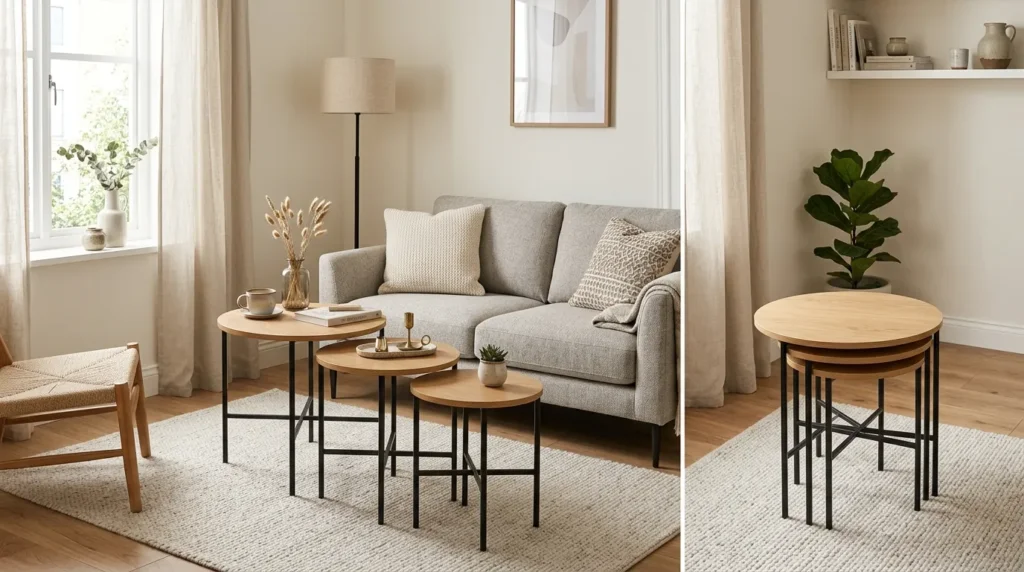
Nesting tables are a flexible alternative to a single oversized coffee table, since they can be pulled apart when extra surface space is needed and tucked back together when it isn’t. This flexibility makes them one of the more practical small living room furniture ideas for anyone who frequently hosts guests or works from the living room.
Stackable stools serve a similar purpose and can double as extra seating, a footrest, or a side table depending on the moment, which adds functional value without requiring any additional floor space when they’re not in use.
When shopping for nesting tables, choosing a set with slightly varied heights and finishes, rather than identical stacked tiers, can also add a bit of visual interest to the room while still keeping the overall footprint compact when the tables are pushed together.
3. Mount the Media Unit on the Wall
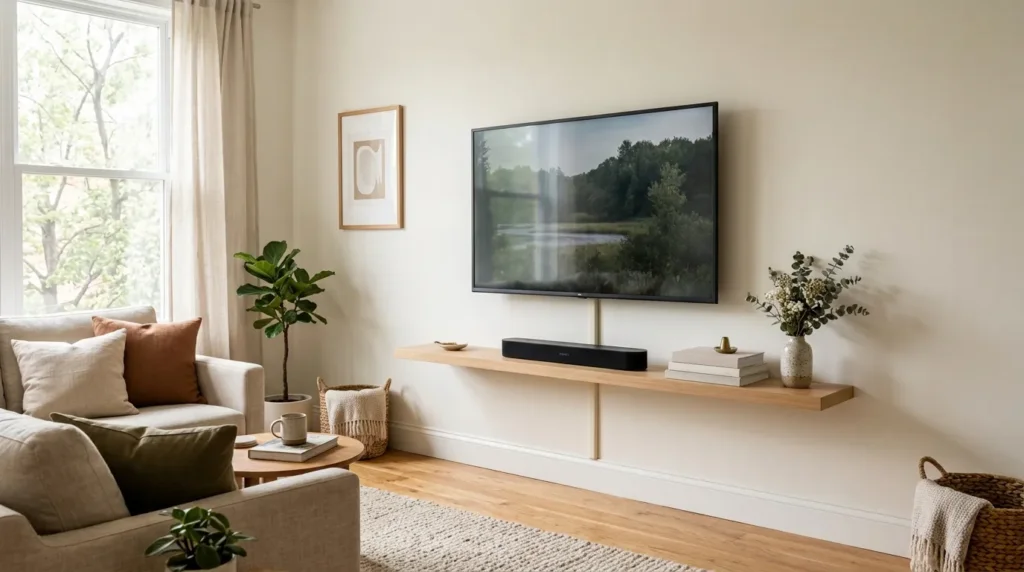
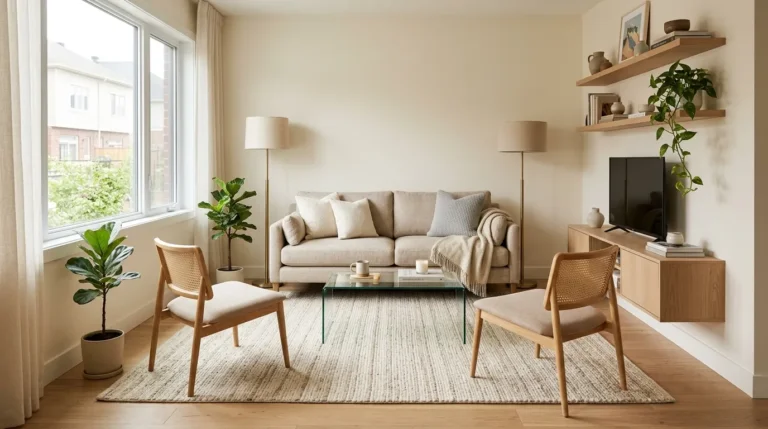
A wall-mounted television and a slim floating shelf underneath eliminate the need for a bulky media console, freeing up valuable floor space in a small living room. This single change often has one of the biggest visual impacts of any furniture decision, since a floor-standing media unit tends to be one of the largest pieces in the entire room.
Cord management kits, which route cables behind the wall or along a discreet channel, help keep this setup looking clean rather than cluttered, which matters even more in a compact space where every visible detail is more noticeable.
A floating shelf placed just below the television can also hold a soundbar, a small collection of books, or a few decorative objects, giving the wall some function beyond the screen itself without adding any additional furniture to the room.
4. Add a Storage Ottoman for Multi-Purpose Function
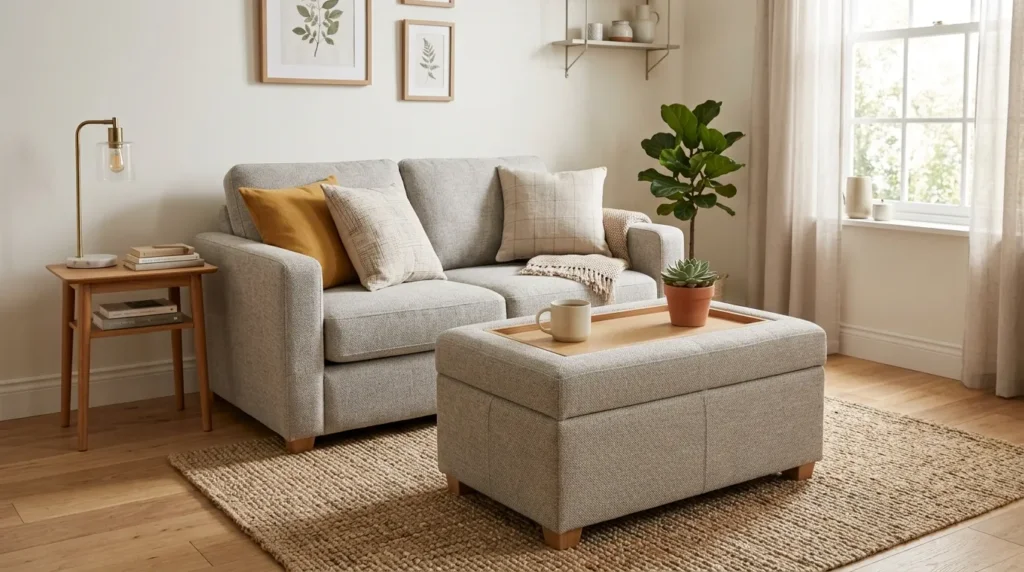
A storage ottoman is one of the most versatile living room furniture ideas for small spaces, since it works as a coffee table, an extra seat, a footrest, and hidden storage all in one compact piece. This kind of multi-functional furniture reduces the total number of items needed in the room without reducing its usefulness.
Choosing an ottoman with a removable tray top adds even more flexibility, allowing it to function as a solid surface for drinks or a laptop when needed, then switch back to soft seating the rest of the time.
Ottomans upholstered in a durable, easy-to-clean fabric tend to hold up better under this kind of frequent, multi-purpose use than more delicate materials, which is worth keeping in mind given how often a single ottoman in a small living room ends up serving several different roles in the same day.
5. Compare the Top Space-Saving Furniture Options
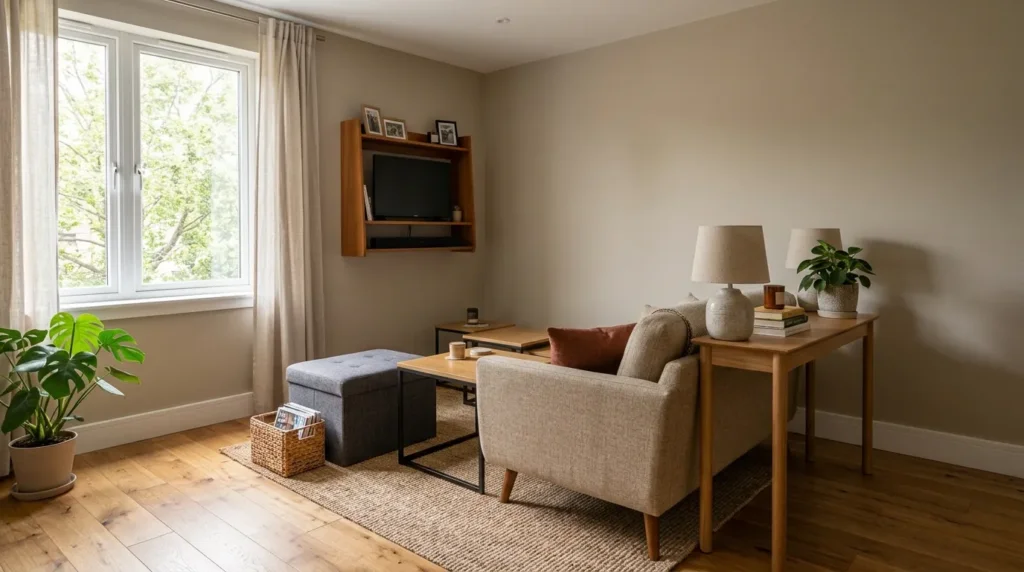
With so many small-space furniture options available, it helps to compare them directly based on the specific problem each one solves. The table below breaks down some of the most useful pieces and where they fit best.
| Furniture Piece | Space-Saving Benefit | Ideal Room Type |
| Loveseat or apartment sofa | Shorter depth and width than a standard sofa | Studios and narrow living rooms |
| Nesting side tables | Tuck together into one footprint | Rooms needing flexible surfaces |
| Wall-mounted media unit | Removes the need for a floor console | Small rooms centered on a TV |
| Storage ottoman | Combines seating, table, and storage | Multi-use living rooms |
| Slim console table | Fits behind a sofa without blocking paths | Rooms doubling as an entryway |
Rather than trying to fit every item on this list into one room, it’s usually more effective to pick two or three pieces that solve the most pressing space challenges in that particular living room.
It also helps to think about how these pieces will interact with each other once combined. A wall-mounted media unit paired with a storage ottoman, for example, tends to work better together than two floor-standing pieces competing for the same wall or corner, since they naturally divide the room’s function without overlapping in footprint.
6. Use a Slim Console Table for Extra Function
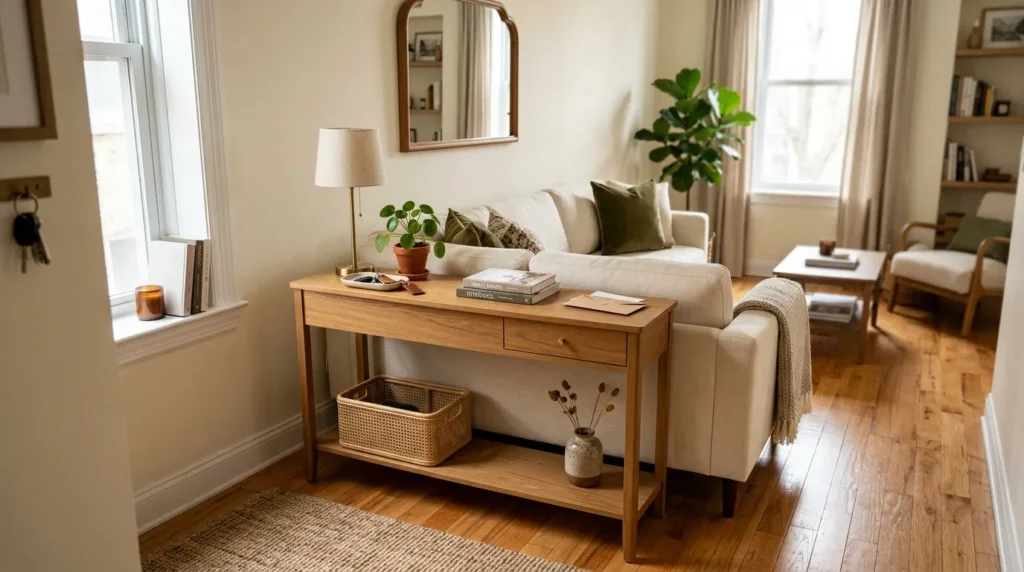
A narrow console table placed behind a sofa, or along an otherwise unused wall, adds valuable surface space without extending far into the room. This makes it one of the more underrated living room furniture ideas for small spaces, particularly for anyone who needs a spot to drop keys, mail, or a bag near the entrance.
Choosing a console table with a shelf or drawer underneath adds a bit of hidden storage as well, which is useful in a small living room where dedicated storage furniture may not otherwise fit.
Because a console table often sits along a main walking path, keeping its depth to around twelve inches or less helps preserve enough clearance for comfortable movement, even in a room where every inch of floor space is already accounted for.
7. Prioritize Furniture With Exposed Legs
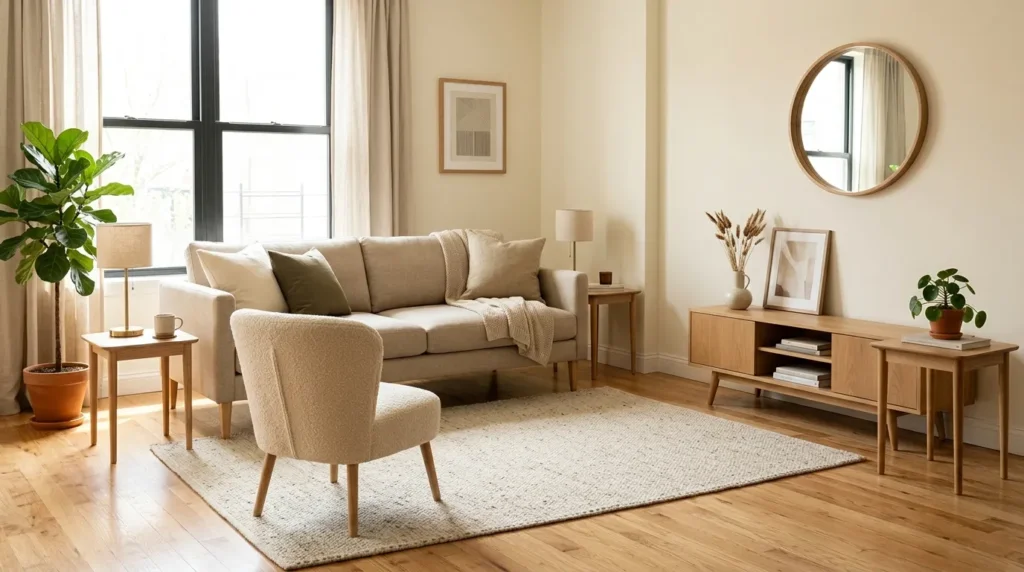
Furniture with visible legs, rather than a skirted base that touches the floor, allows more of the floor to remain visible throughout the room. This visual trick makes a small living room feel more open, even when the actual furniture dimensions haven’t changed at all.
This principle applies across almost every furniture category, from sofas and chairs to media consoles and side tables, making it one of the easiest small living room furniture ideas to apply consistently throughout a single room.
Even swapping just one or two heavier, floor-touching pieces for versions with visible legs can shift how open the entire room feels, without requiring a full furniture overhaul or a significant increase in budget.
Bringing the Right Pieces Together
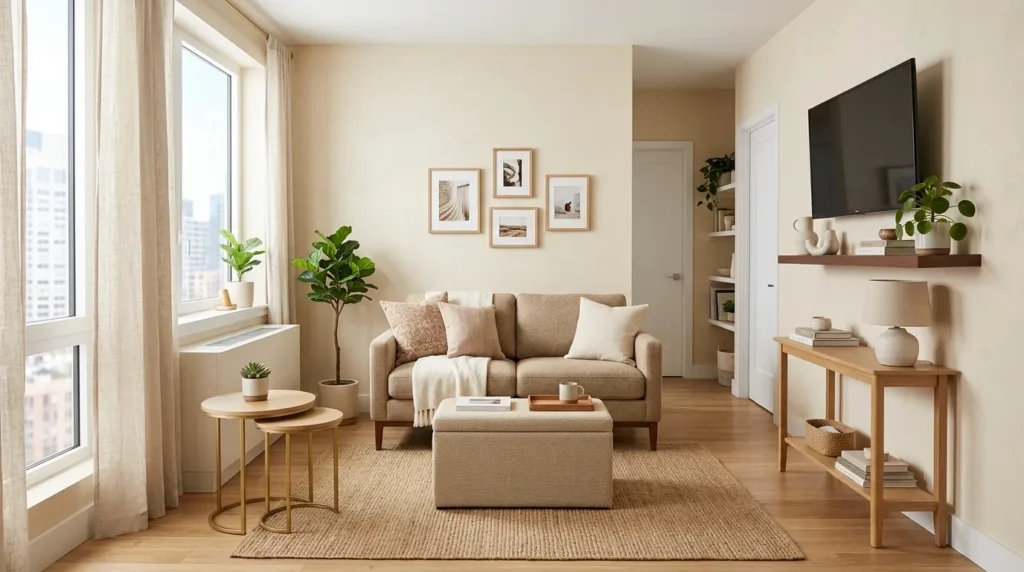
The most effective living room furniture ideas for small spaces share a few common traits: appropriate scale, multiple functions, and a lighter visual footprint. Choosing pieces with these qualities in mind, rather than simply buying smaller versions of standard furniture, makes it much easier to build a small living room that feels comfortable and complete.
A small living room furnished thoughtfully, with each piece chosen for a specific purpose, will almost always feel more functional and more finished than one filled with mismatched furniture that happened to be available or on sale.
Taking the time to plan furniture choices around the room’s actual shape and daily use, rather than reacting to whatever’s on sale at the moment, tends to produce a living room that holds up well over the years rather than needing another overhaul in just a season or two.
Frequently Searched Questions
What is the best sofa size for a small living room?
A loveseat under about six feet wide typically fits best in most small living rooms.
Is a wall-mounted TV good for small spaces?
Yes, it frees up floor space that a media console would otherwise take up.
What furniture doubles as storage in a living room?
Storage ottomans and console tables with drawers are the most common choices.
Should small living rooms avoid large furniture entirely?
Not entirely, but one larger piece should be balanced with smaller supporting items.
Do exposed furniture legs really make a room look bigger?
Yes, visible legs let more floor show through, which opens up the room visually.