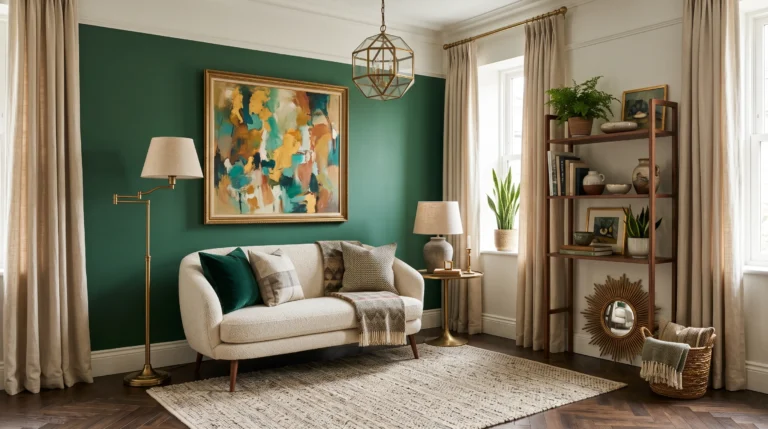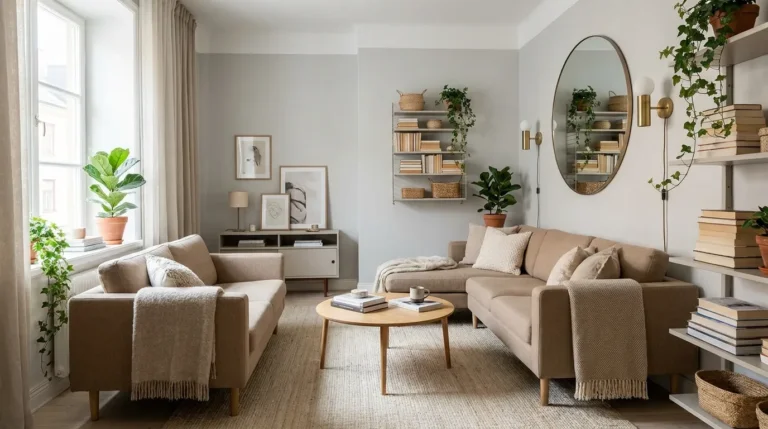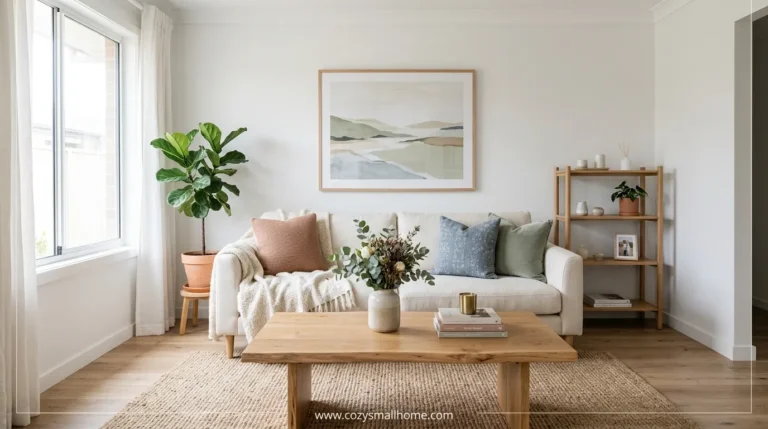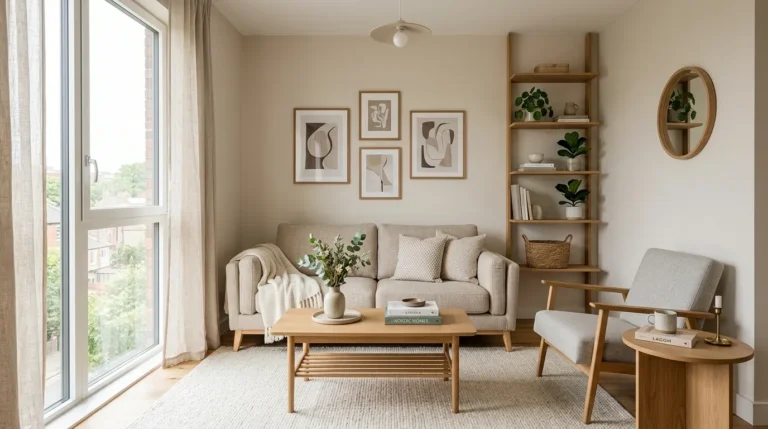
Small Living Room Ideas With Fireplace (Cozy Layouts)
A fireplace can be the best feature in a small living room or the reason the whole layout feels off, depending on how the rest of the furniture works around it. Since a fireplace usually can’t be moved, the real challenge is designing everything else in the room to work with it instead of fighting against it. These small living room ideas with fireplace focus on layout, furniture placement, and styling choices that let the fireplace shine as a focal point without eating up the limited space around it. With a few smart decisions early on, a fireplace can end up being the easiest part of the room to design around rather than the hardest.
Why a Fireplace Changes the Whole Layout Equation
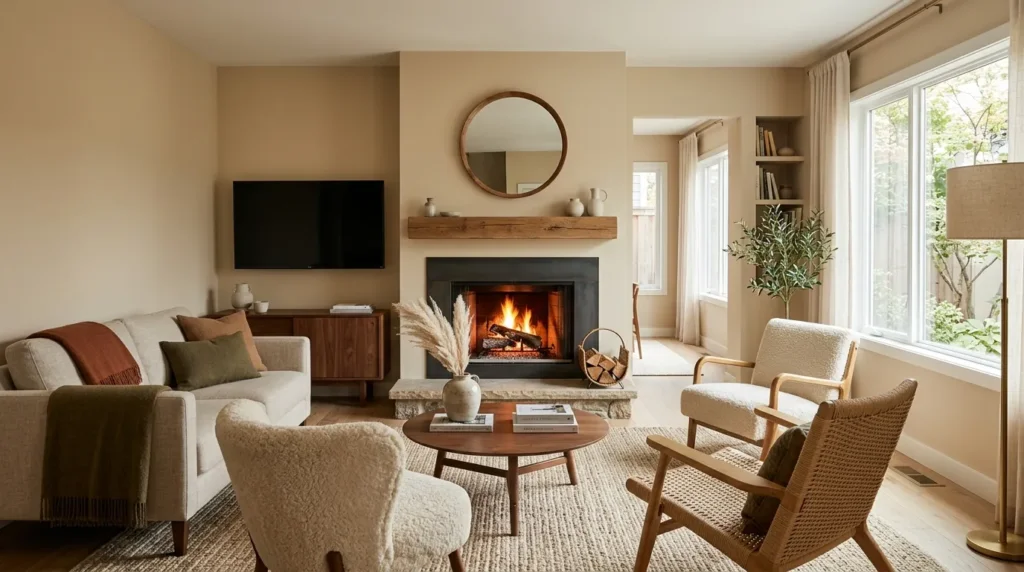
In most living rooms, furniture gets arranged around a television or an open floor plan. A fireplace changes that logic completely, since it’s a fixed, non moveable anchor that usually needs its own clearance space for safety and comfort. In a small room, that clearance eats into an already limited footprint, which means every other piece of furniture has to work a little harder to justify its spot. Understanding this early on saves a lot of trial and error once furniture is already in the room, and it also helps set realistic expectations before shopping for new pieces.
A few things that make fireplace layouts uniquely tricky in small rooms:
- Furniture often can’t be placed directly in front of the fireplace for safety and heat clearance
- The fireplace naturally becomes the visual focal point, competing with a television for attention
- Mantels and surrounds take up wall space that could otherwise hold shelving or storage
- Traffic flow has to route around the hearth instead of a straight path across the room
- Existing outlets and vents near the fireplace can limit where certain furniture pieces can go
Once you accept the fireplace as the anchor rather than an obstacle, the rest of the layout tends to fall into place more easily, and decisions about seating and storage become much simpler to make.
1. Angle the Seating Instead of Facing It Head On
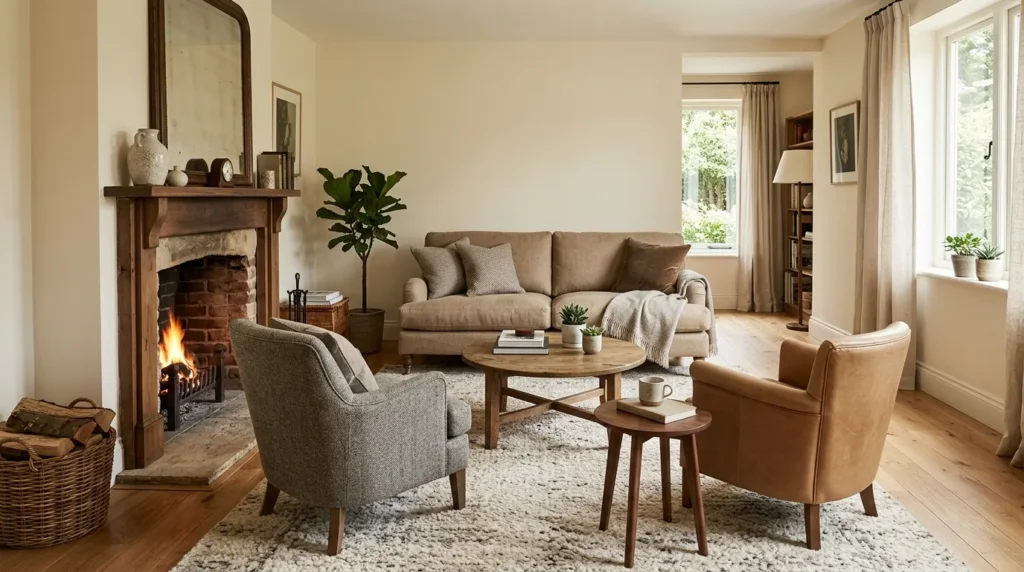
Placing a sofa and chairs at a slight angle toward the fireplace, rather than lined up perfectly straight across from it, often fits better in an oddly shaped small room. This angled layout also creates a more natural conversation area that doesn’t feel like it’s staring directly at the mantel, and it tends to make better use of corner space that would otherwise go unused. Trying a few different angles with painter’s tape on the floor before committing to a final arrangement can help visualize how the flow will actually feel.
2. Choose a Smaller Scale Sofa
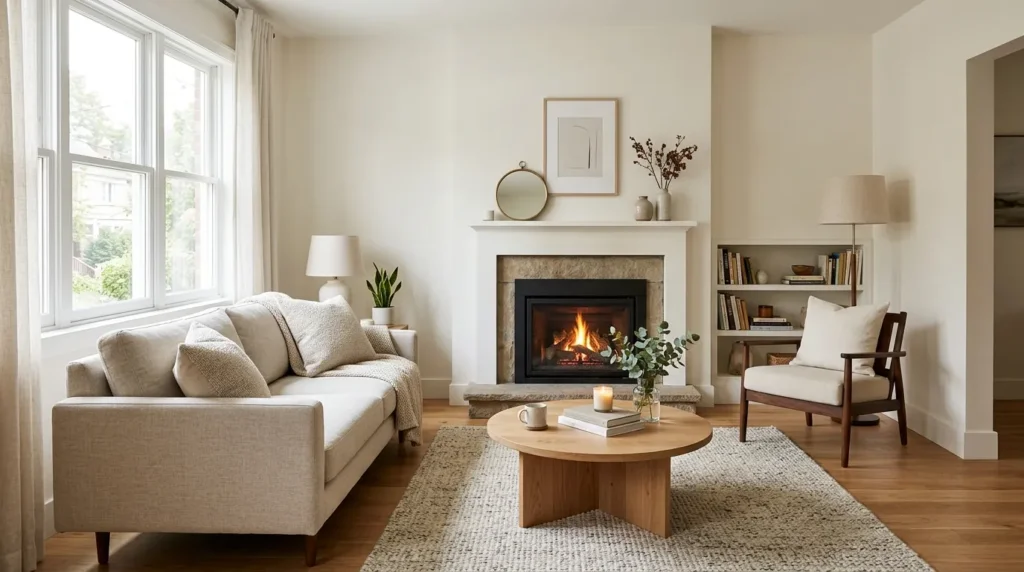
A deep, oversized sofa can eat up the clearance space a fireplace needs to stay functional and safe. A slimmer profile sofa with a shallower seat depth keeps enough breathing room near the hearth while still giving you comfortable seating. Loveseats or apartment sized sofas, which are usually a few inches shorter than standard models, are worth considering if the room is on the tighter side.
3. Use the Mantel as Focal Styling
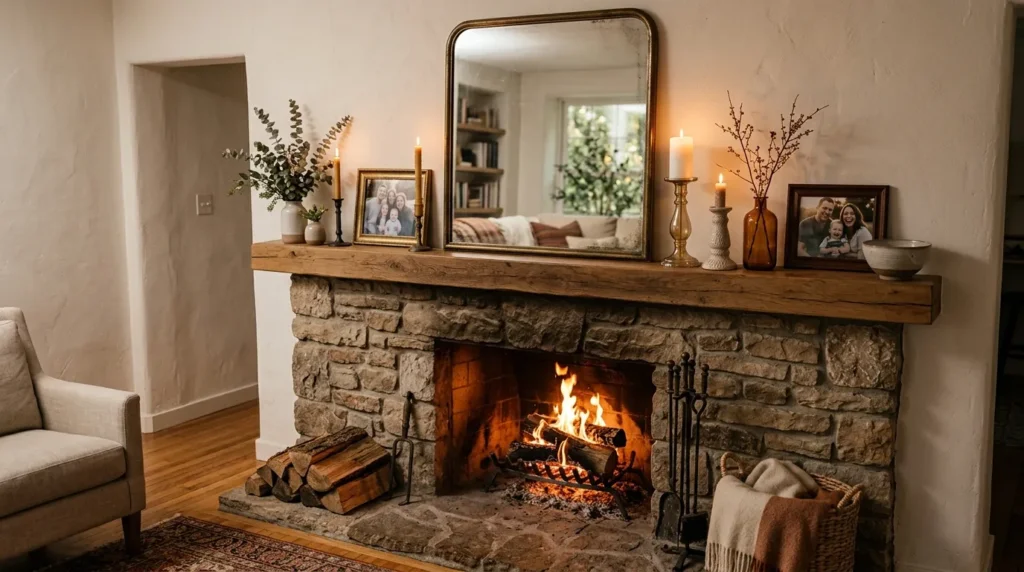
Since the mantel naturally draws the eye, it’s worth treating it like the room’s main styling moment rather than an afterthought. A few ways to style it well:
- A large mirror or a single piece of art leaned against the wall above it
- A small collection of candles or vases in varying heights
- A mix of framed photos and one or two plants for texture
- Seasonal greenery or branches for a simple, changeable accent
Keeping the arrangement asymmetrical rather than perfectly matched tends to look more intentional and less staged, and it gives you an easy way to refresh the room’s look without touching any furniture.
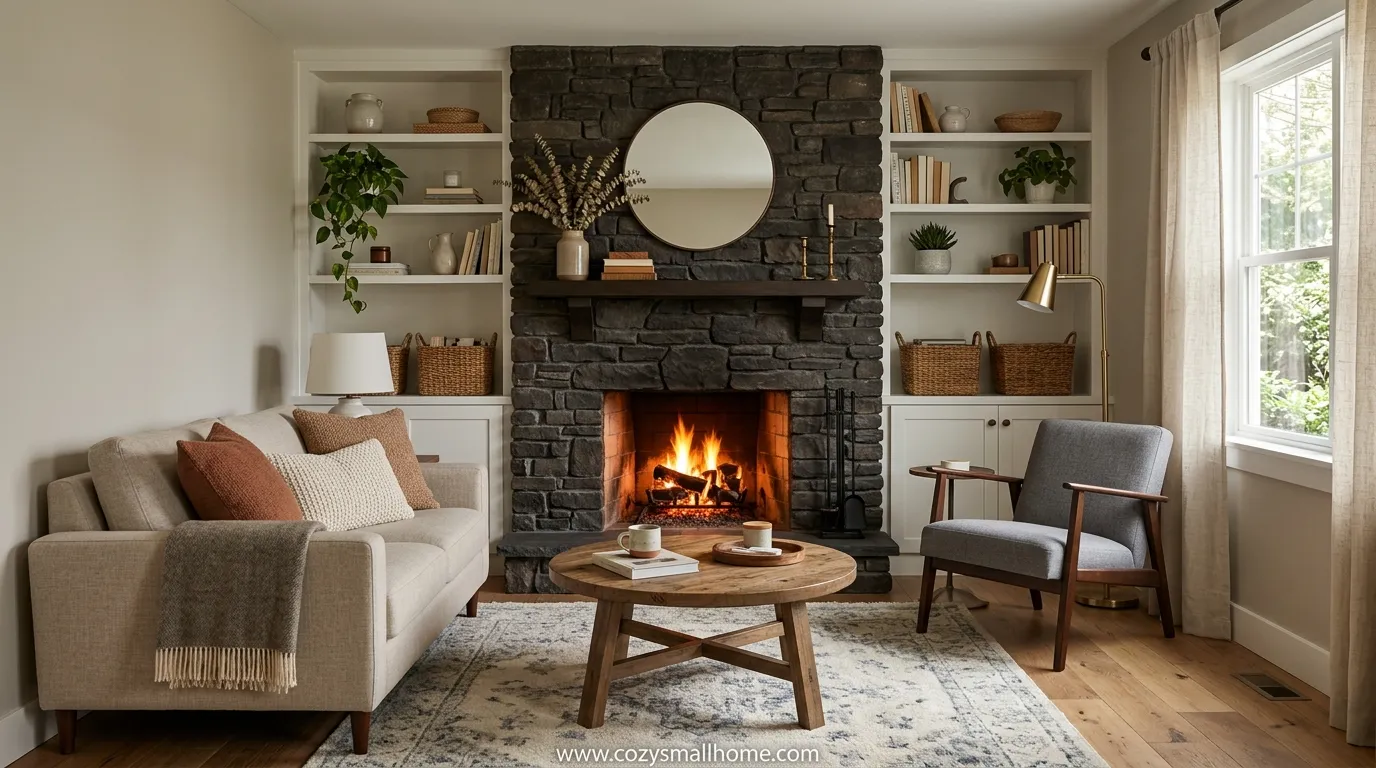
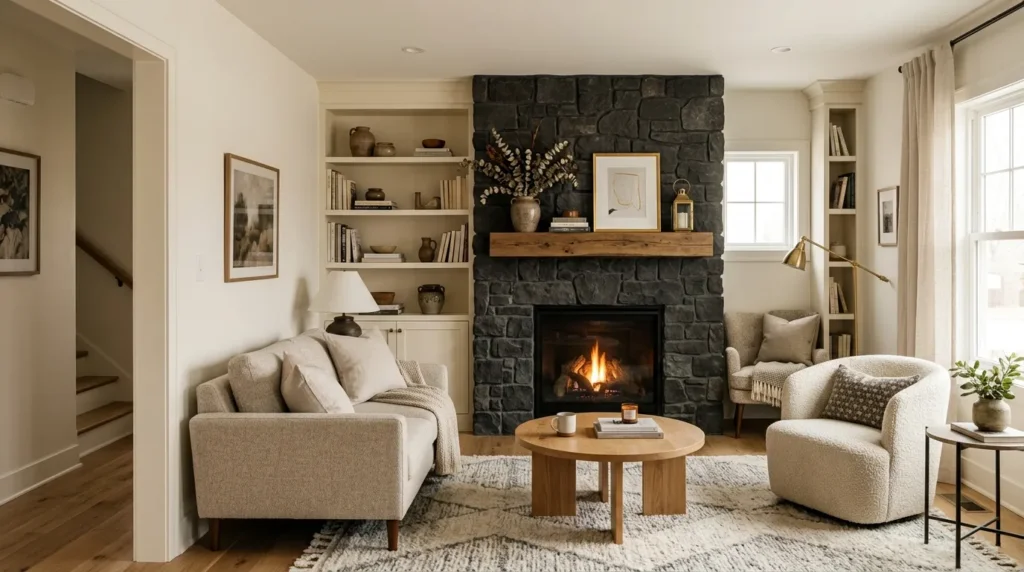
4. Add Built In Shelving Around the Fireplace
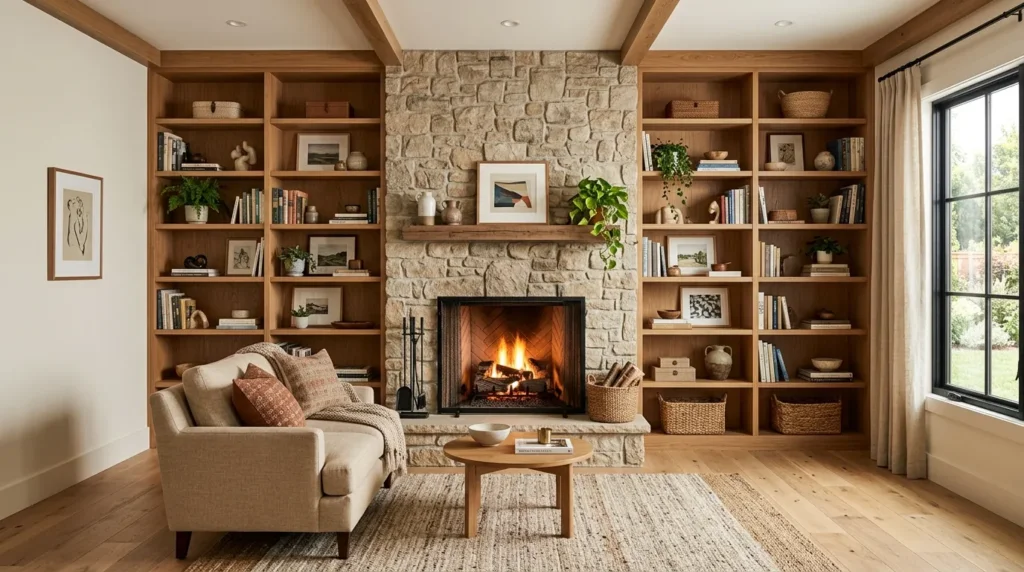
The vertical space on either side of a fireplace is often wasted in small rooms. Built in or freestanding shelving units in that space add valuable storage and display room without stealing any floor space from the rest of the layout. This is especially useful in a small living room, where every inch of unused wall space represents a missed storage opportunity. Open shelves also give you a spot to rotate books, framed art, and small decor pieces without cluttering the mantel itself.
5. Skip the Television Above the Fireplace

Mounting a television above the fireplace is common, but it forces an awkward neck angle for anyone seated nearby and splits the room’s focus between two competing features. Placing the television to the side, or skipping it in that room altogether, lets the fireplace stay the clear focal point. If a television is a must have in the room, mounting it on an adjacent wall usually creates a more comfortable viewing angle from the main seating area.
6. Use a Round or Oval Coffee Table
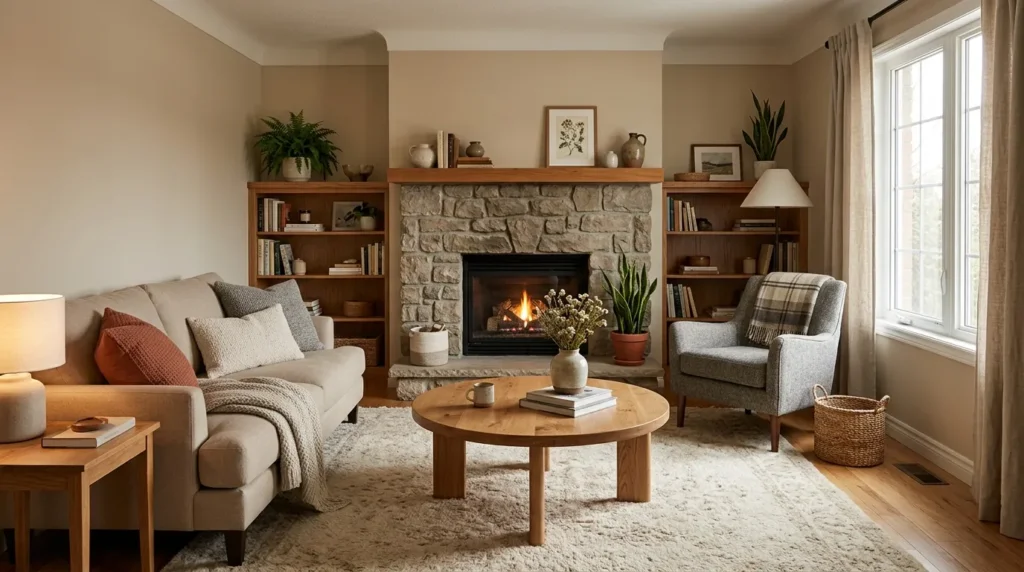
Sharp corners on a rectangular coffee table become a bigger hazard in a room where people are already navigating around a hearth. A round or oval table softens the layout and makes movement through the tighter space feel easier, particularly in homes with young children who spend time playing on the floor near the fireplace.
7. Choose Furniture With Legs, Not Skirts

Furniture that sits flush to the floor visually adds weight to a room that’s already anchored by a solid fireplace structure. Pieces with slim, visible legs keep the room feeling lighter and help balance out the heaviness of the hearth, especially when the fireplace surround is made of dark stone or brick.
8. Add a Bench Instead of a Second Chair

If floor space is too tight for a full second seating piece, a slim bench placed near the fireplace adds extra seating without taking up as much room as an armchair. It also tucks in neatly when not in use, keeping the walking path clear, and many benches double as a spot to set drinks or books during a gathering.
9. Keep the Palette Light Around a Dark Fireplace
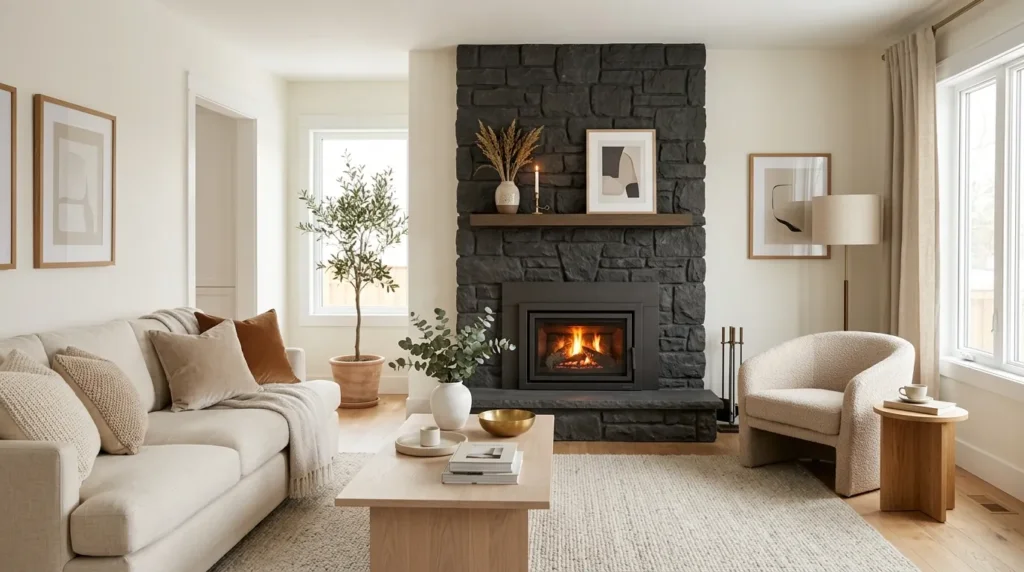
A dark stone or brick fireplace already adds visual weight to a small room. Keeping the surrounding walls and furniture in lighter, neutral tones balances that weight and keeps the whole room from feeling heavy or closed in. This contrast also naturally draws the eye toward the fireplace as the room’s intended focal point, rather than letting the darker material dominate the entire space visually.
10. Use a Fireplace Screen as a Style Element
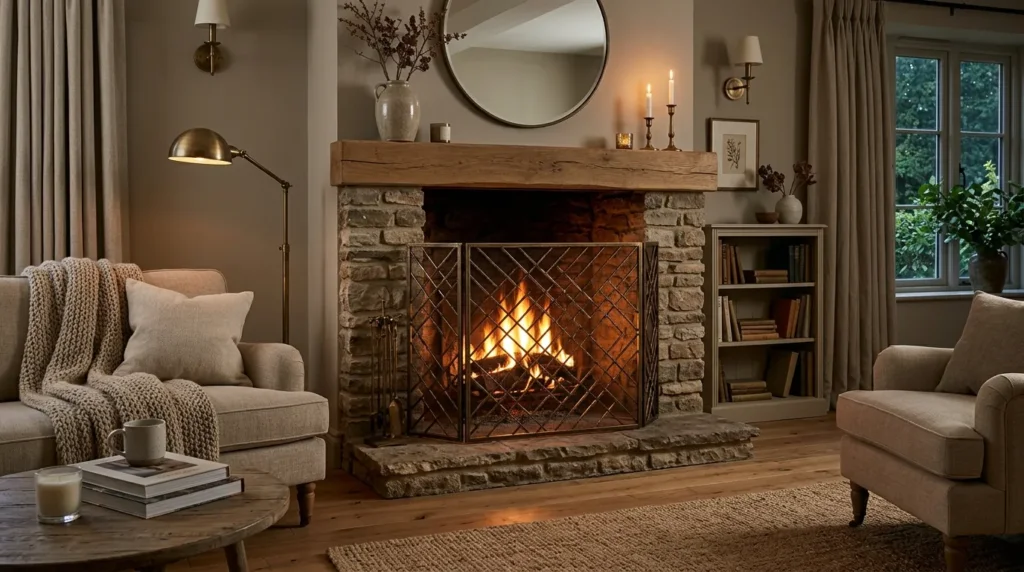
A decorative fireplace screen does double duty, adding a layer of safety while also giving you another chance to bring in pattern or metallic finishes. Choosing one that complements the room’s existing hardware ties the whole space together, and it can be swapped out fairly easily if you decide to update the room’s color palette later on. Screens with an open metal weave tend to work particularly well in small rooms, since they add detail without fully blocking the view of the fire.
11. Let the Fireplace Replace Extra Decor
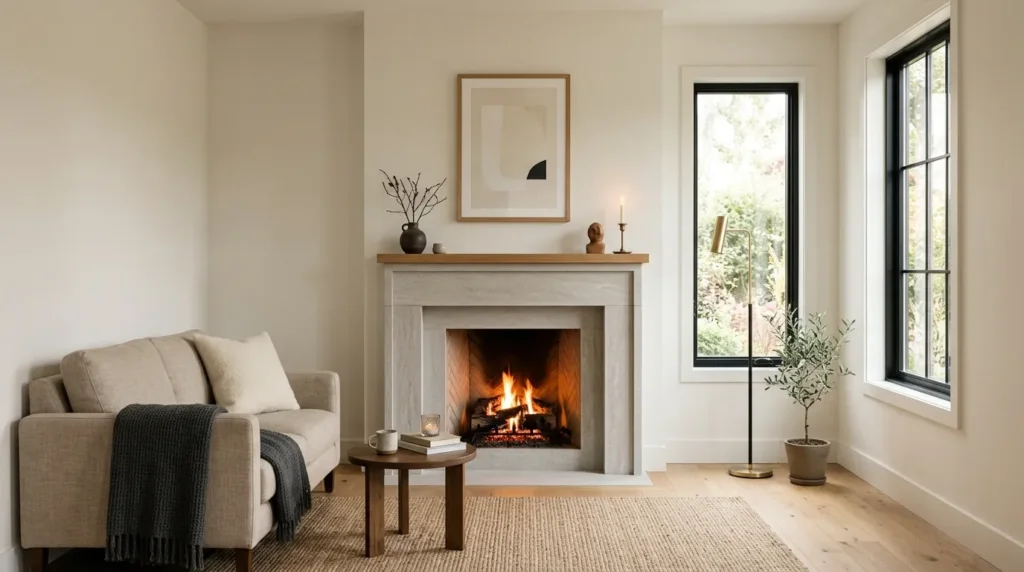
In a room with a fireplace already acting as a strong focal point, less additional decor is usually needed elsewhere. Keeping other walls and surfaces simpler lets the fireplace do the visual work instead of competing with several other statement pieces around the room, which also makes the space feel calmer overall and easier to keep tidy day to day.
12. Add a Reading Chair to One Side
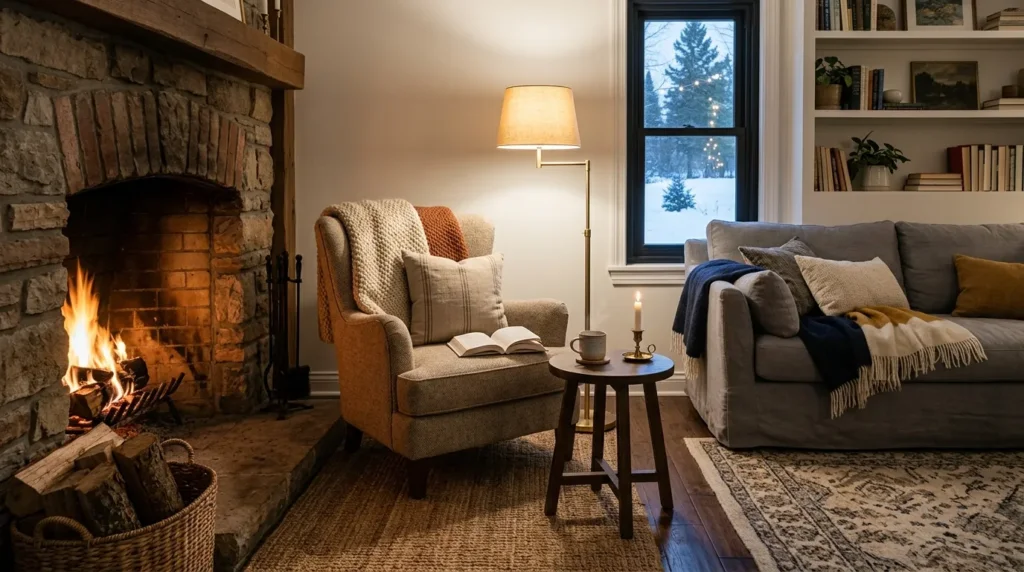
If there’s a narrow gap on one side of the fireplace, a single accent chair tucked into that space creates a cozy secondary seating spot without disrupting the main furniture arrangement. Pairing it with a small side table and a floor lamp turns an otherwise awkward corner into one of the most used spots in the room, especially during colder months when sitting close to the fire is the whole point. This kind of secondary seating also gives guests an option beyond the main sofa during a gathering, which helps the room feel more functional for more than one or two people at a time.
Final Thoughts
A fireplace doesn’t have to work against a small living room’s layout, as long as the furniture and styling choices are built around it rather than in spite of it. These small living room ideas with fireplace show that the hearth can act as an asset instead of an obstacle, giving the room a natural focal point that most larger spaces have to create from scratch. Start with the seating layout first, since that’s what determines how the rest of the room falls into place, and let the smaller styling details come together once the main furniture pieces feel settled.
Frequently Asked Questions
- Should furniture face the fireplace directly? Not always. Angling the seating slightly often works better in a small or oddly shaped room.
- Is it safe to put a sofa close to a fireplace? Always follow the clearance guidelines for your specific fireplace type before placing any furniture nearby.
- Should the television go above the fireplace? Not necessarily. Placing it to the side often keeps the fireplace as the clear focal point instead of splitting attention.
- What fireplace type works best in a small room? Electric and gas inserts generally need less clearance than traditional wood burning fireplaces.
- How do I add storage in a room with a fireplace? Use the vertical wall space on either side of the fireplace for shelving instead of taking up floor space.