21 Small Living Room Ideas With TV That Make Tiny Spaces Look Amazing
If your living room is on the smaller side, you already know the struggle of placing a TV without making the room feel cramped. A TV is often the biggest object in the room, and if it is not placed with a little thought, it can eat up all your floor space and visually shrink the room even more. The good news is that a small living room and a TV setup can absolutely work together, and the room can still feel open, bright, and cozy at the same time.
In this post you will find 21 small living room ideas with TV that are practical, budget friendly, and easy to copy in your own home. Some ideas focus on furniture placement, some focus on wall space, and some focus on color and lighting tricks that trick the eye into seeing more room than there actually is. Grab a coffee and read through, because by the end you will have a full list of ideas ready to try this weekend.
1. Mount the TV on the Wall Instead of a Stand
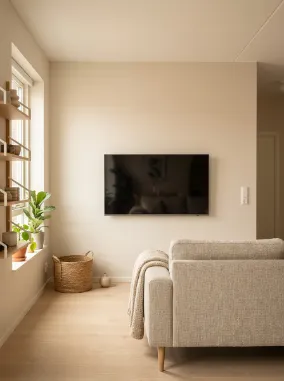
The single biggest space saver in any small living room is a wall mounted TV. A TV stand or console takes up floor space and adds visual clutter below the screen. When you mount the TV directly on the wall, you free up that whole area for storage baskets, a small bench, or simply open floor. This one change alone can make a tiny room feel noticeably bigger.
2. Pick a TV Size That Matches the Room
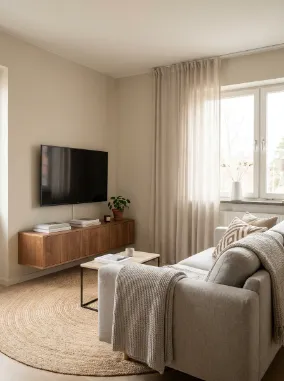
A giant screen in a small room looks out of place and pulls attention away from everything else. Measure your seating distance and pick a size that fits proportionally. As a rough guide, sit about 1.5 to 2.5 times the screen size away from the TV. A well sized screen blends into the room instead of dominating it.
3. Use a Corner for the TV Setup
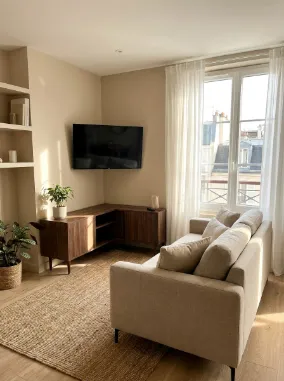
Corners are often wasted space in small rooms. Placing the TV in a corner, either on a slim corner stand or a corner wall mount, frees up the main wall for a sofa or a window. This layout works especially well in square shaped rooms where a straight wall placement would block too much space.
4. Choose Furniture With Slim Legs
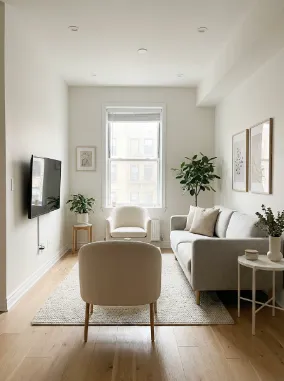
Bulky sofas and chairs with solid bases visually block the floor and make a room feel heavier. Furniture with slim, raised legs lets light pass underneath and gives the eye a sense of open floor, even in a tight layout. This small detail makes a real difference in how airy the room feels.
5. Float the Sofa Away From the Wall
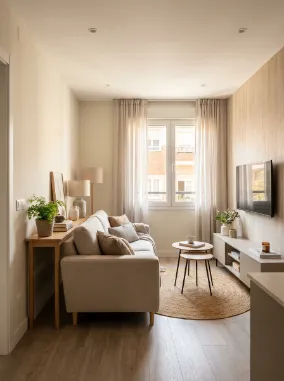
It sounds backward, but pulling the sofa a few inches away from the wall and adding a slim console table behind it can actually make a small room feel more intentional and less like everything was pushed against the walls out of necessity. Just leave enough walking space around it.
6. Add a Media Console With Hidden Storage
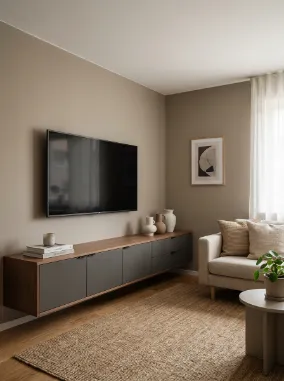
Instead of open shelving that collects clutter, pick a media console with closed cabinets or drawers. Remote controls, gaming consoles, cables, and stray items can be tucked away out of sight. A clean surface under the TV keeps the whole wall looking calm and organized.
7. Hide the Cables
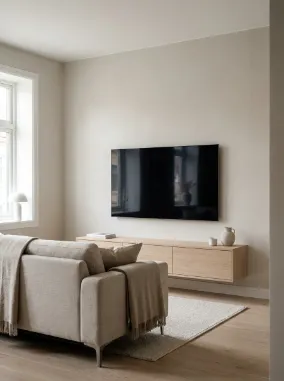
Nothing ruins a neat small living room like a tangle of cables hanging from the wall to the outlet. Use a cable cover channel painted the same color as your wall, or run cables through the wall with a low voltage cable kit. This one fix instantly makes a mounted TV look like it came from a magazine.
8. Use Light Colors on the Walls
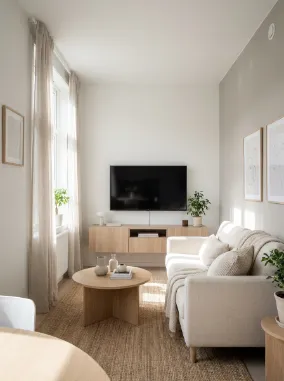
Dark walls absorb light and can make a small room feel boxed in, especially with a large dark TV screen sitting against it. Soft whites, light greys, and warm neutrals bounce light around the room and create a sense of openness. If you love dark colors, save them for an accent wall instead of the whole room.
9. Add a Statement Rug to Anchor the Space
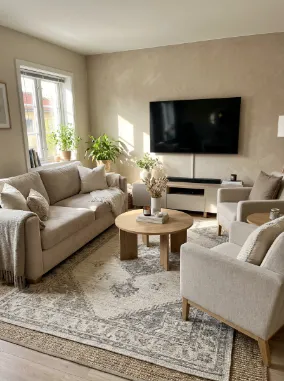
A rug placed under the seating area, including at least the front legs of the sofa, pulls the whole layout together and gives the room a defined boundary. Without a rug, furniture can look like it is floating randomly in the space, which makes a small room feel messier than it is.
10. Use a Media Wall Instead of a Single Console
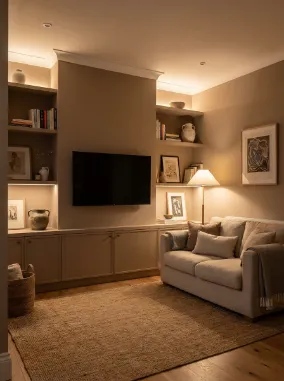
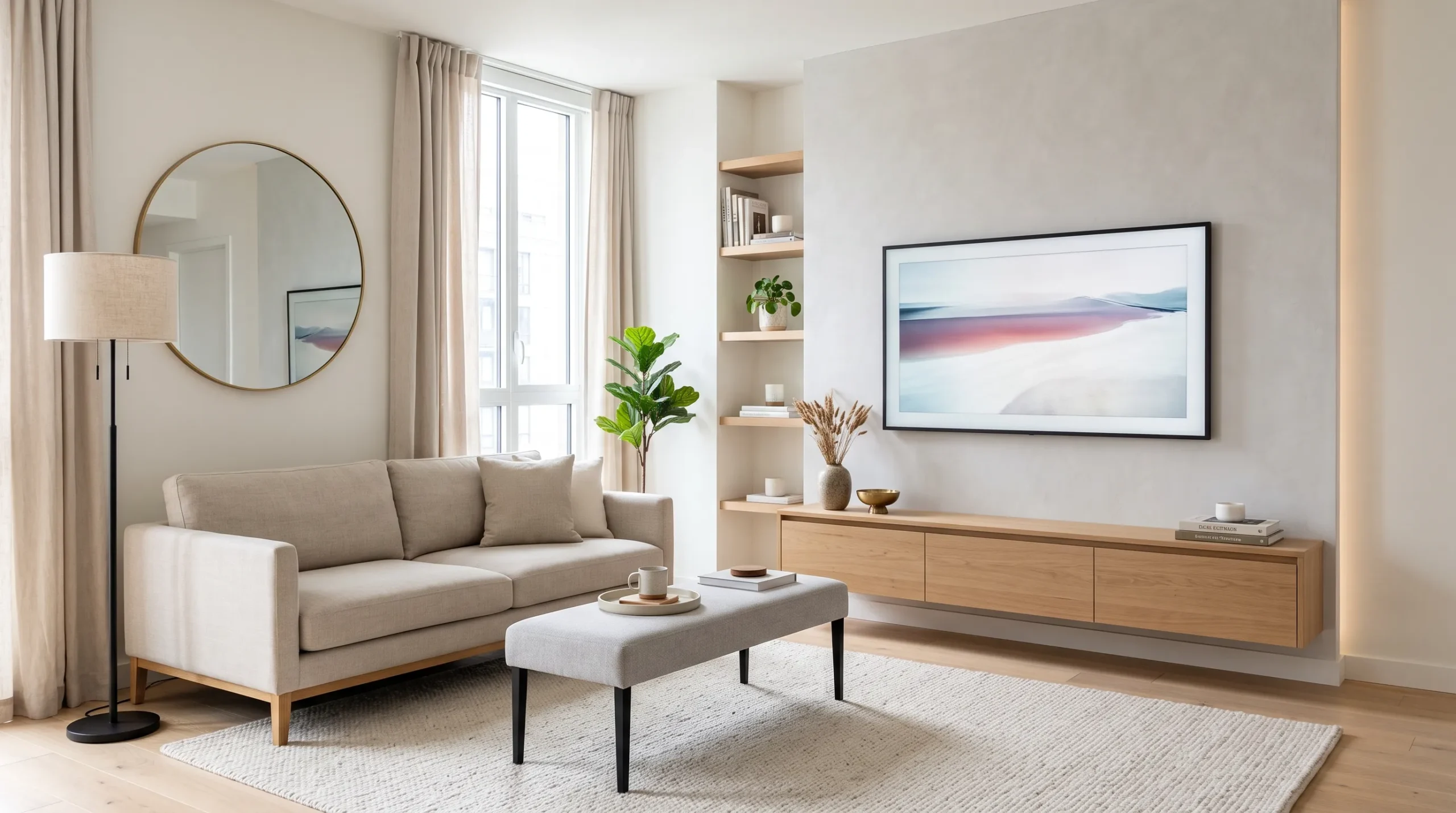
A media wall combines the TV, shelving, and storage into one built out feature instead of a stand out box in the middle of the room. Floating shelves on either side of the TV, painted the same color as the wall, create a built in look that feels custom made even in a rented apartment.
11. Try a Swivel TV Mount
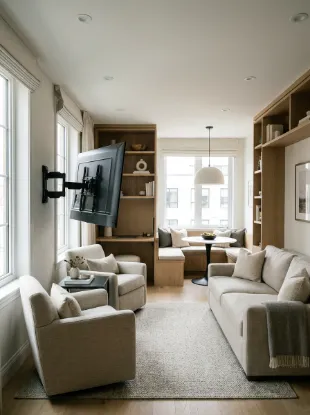
Small living rooms often double as multipurpose spaces, maybe part living room and part dining nook. A swivel mount lets you turn the TV toward different seating areas depending on the moment, so you do not need extra furniture just to get a good viewing angle from every corner.
12. Keep the Color Palette Simple
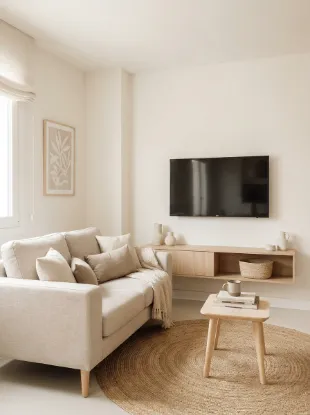
Too many colors and patterns in a small room create visual noise, and a busy TV wall makes the room feel even more crowded. Stick to two or three main colors throughout the space, with the TV wall kept fairly neutral so the screen does not compete with a loud print behind it.
13. Add Vertical Storage Instead of Wide Furniture
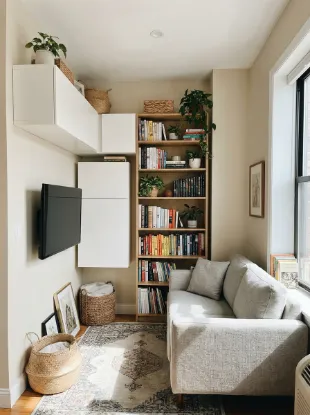
Floor space is precious in a small room, so look up instead of out. Tall, narrow bookshelves or wall mounted cabinets use vertical space without eating into your walking area. This gives you the storage of a big piece of furniture in a fraction of the footprint.
14. Use a Fold Down or Extendable TV Console
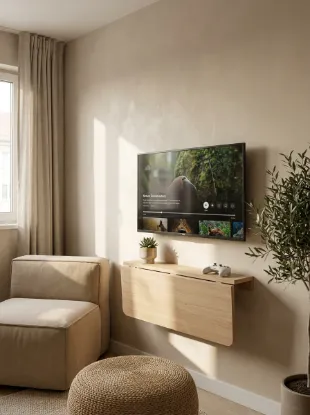
Some modern consoles come with fold down flaps or pull out surfaces that give you extra placement space for a game console, a candle, or a plant when needed, and fold flat against the wall the rest of the time. Great for rooms that need to stay flexible.
15. Let Natural Light Lead the Layout
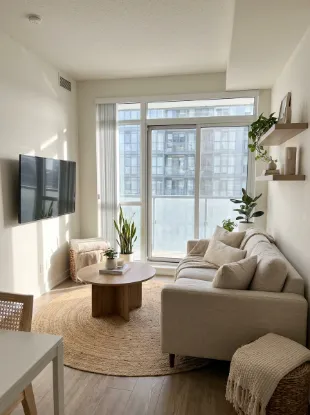
Position seating so it does not block the main window, and keep the TV wall on the side that gets less direct light so glare is not an issue. A room filled with daylight always feels bigger than one lit only by lamps, so protect that light source when planning your furniture layout.
16. Use Mirrors to Bounce Light Around
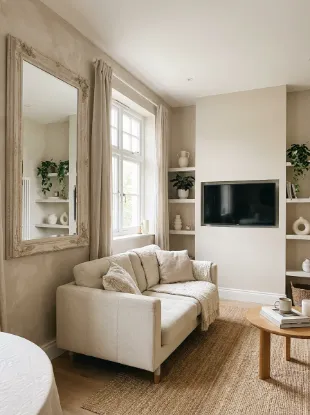
A mirror placed across from a window or opposite the TV wall reflects light and creates the illusion of extra depth. Just avoid placing a mirror directly across from the TV screen itself, since glare can make the picture harder to see.
17. Choose a Slim Profile Soundbar
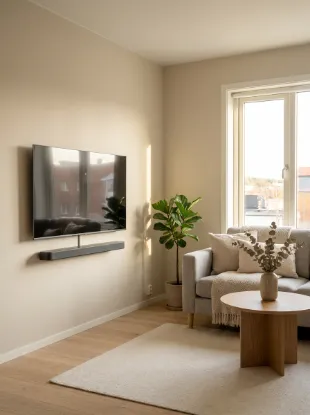
A bulky speaker system under the TV adds clutter fast. A slim soundbar mounted just below the screen or tucked on a shelf gives you great sound without taking up much space at all, and it keeps the wall looking streamlined.
18. Add a Bench Instead of a Coffee Table
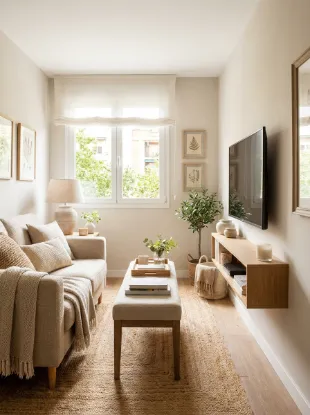
A traditional coffee table can feel bulky in a tight seating arrangement. A slim upholstered bench works as a coffee table, extra seating, and footrest all at once, and it can be tucked closer to the sofa without blocking the walking path to the TV.
19. Frame the TV With Curtains or Wallpaper
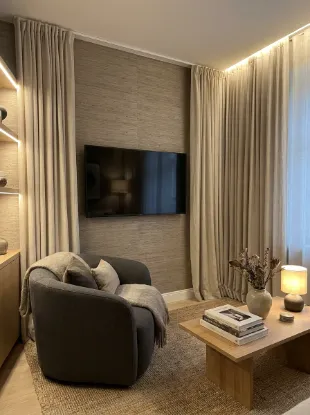
If a plain mounted TV feels a little bare, framing it with soft curtains on either side, or a section of textured wallpaper behind it, gives the whole wall a finished, designed look instead of feeling like an afterthought. This works especially well in rental homes where you want a custom look without permanent changes.
20. Zone the Room With a Rug and Lighting
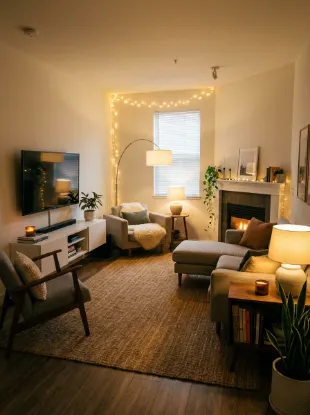
Even a tiny living room can feel like it has separate zones for watching TV and relaxing with a book. A floor lamp near a reading chair and a different lighting setup near the TV wall, combined with a rug that defines the seating cluster, gives the room a layered, intentional feel instead of one flat block of furniture.
21. Keep Only What You Actually Use
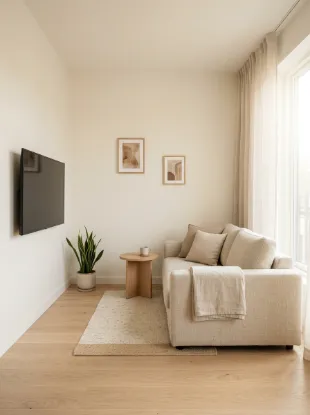
The simplest small living room idea is often the most overlooked one. Go through the room and remove anything that is not actually used weekly, from extra side tables to decorative pieces that just take up surface space. A room with fewer, better chosen pieces almost always looks bigger and calmer than one packed with things.
Final Thoughts on Small Living Rooms With a TV
A small living room does not have to feel like a compromise. With a wall mounted TV, the right furniture proportions, smart storage, and a light color palette, your space can look open, styled, and completely functional at the same time. Try picking three or four ideas from this list that fit your current setup and budget, and build from there. Small changes, done with intention, add up to a room that feels much bigger than its actual square footage.
Frequently Asked Questions
What is the best TV size for a small living room? A screen between 32 and 50 inches usually works best for most small living rooms, depending on your seating distance. Measure the distance from the TV wall to your main seating spot and pick a size proportional to that distance rather than going with the biggest screen you can afford.
Should I mount the TV or use a stand in a small room? Mounting the TV is almost always the better choice in a small space since it frees up floor area that a stand would otherwise take up. A stand only makes sense if you need the extra storage it provides and your room has enough space to spare.
How do I hide TV wires in a small living room? A paintable cable cover channel is the easiest and cheapest fix, and it can be painted to match your wall color. For a more permanent option, a low voltage cable kit lets you run the wires inside the wall for a completely clean look.
What colors make a small living room look bigger? Soft whites, light greys, and warm neutral tones make a small room feel more open because they reflect light instead of absorbing it. Save darker, richer colors for a single accent wall rather than painting the entire room in them.