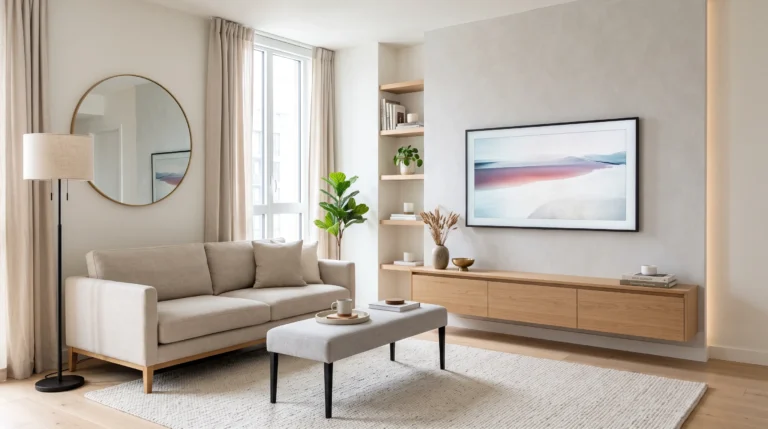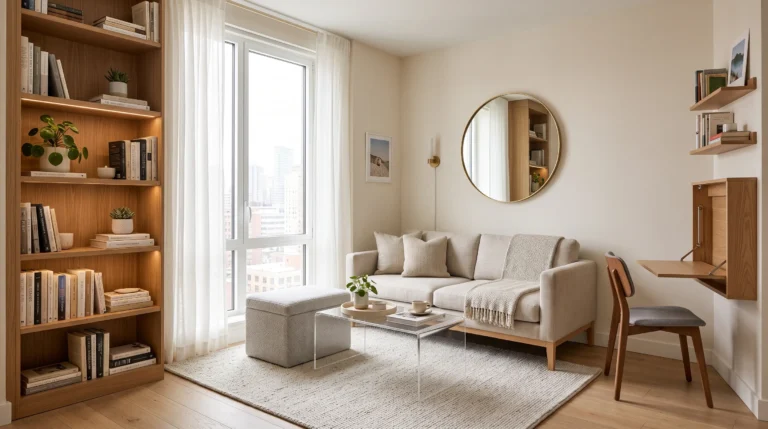
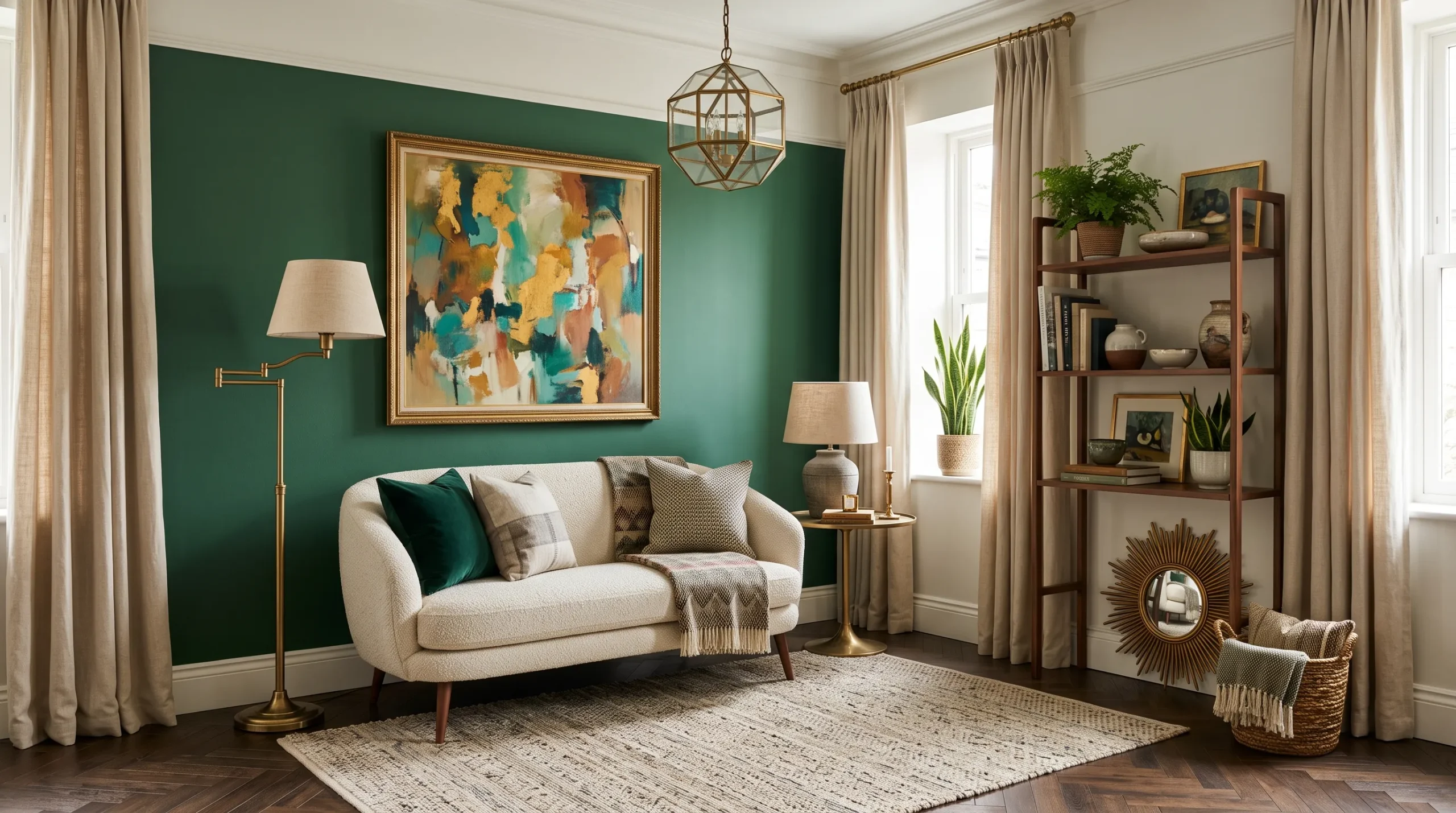
13 Living Room Ideas for Small Rooms With Big Style
Small living rooms often get treated as a limitation, a space to work around rather than design for. But some of the most striking interiors come from compact rooms where every choice has to earn its place. If you’re searching for living room ideas that deliver real style without requiring extra square footage, the good news is that scale and personality aren’t mutually exclusive.
This guide covers thirteen practical, design-forward living room ideas specifically suited to smaller spaces. Each one balances visual impact with the everyday reality of limited floor space, so your living room feels intentional, characterful, and comfortable, not squeezed.
1. Commit to a Bold Color Moment
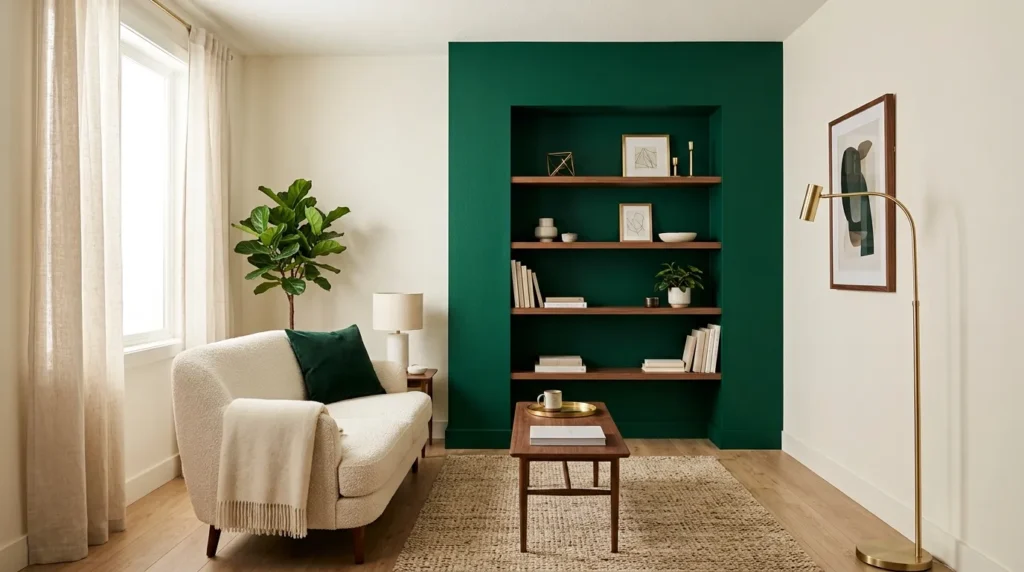
One of the most effective living room ideas for small spaces is choosing one area to make a bold statement, rather than spreading color evenly and cautiously across the whole room. A deep emerald accent wall, a richly painted alcove, or a saturated color on built-in shelving can add serious personality without overwhelming the space.
The trick is containment. Bold color works best in small rooms when it’s confined to one wall, one nook, or one piece of furniture, while the rest of the room stays relatively calm. This creates drama without visual chaos.
2. Use Furniture Scale as a Design Tool, Not Just a Constraint
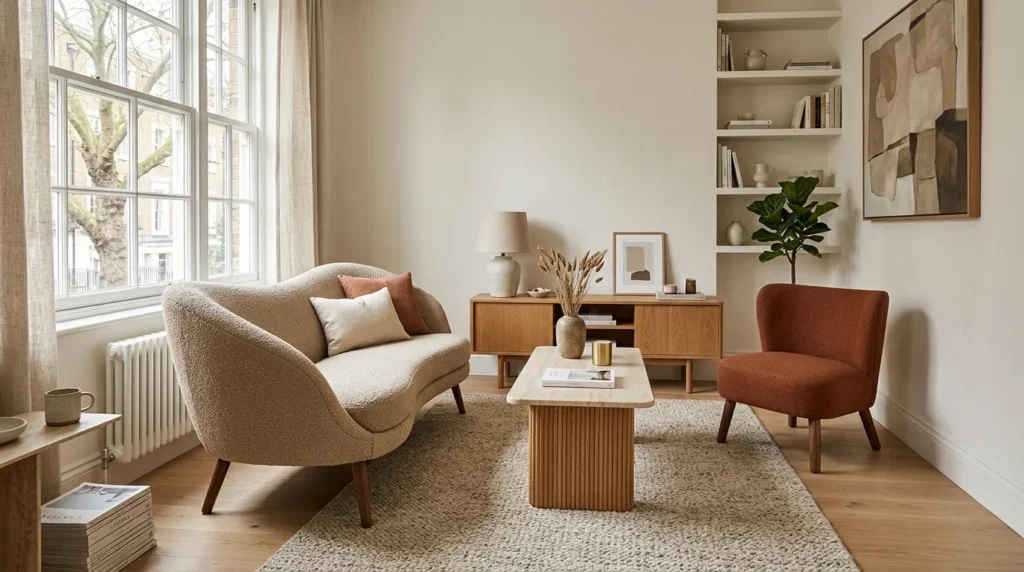
In small rooms, furniture scale is often treated purely as a practical concern, but it’s also a major style lever. Choosing pieces with slim profiles, tapered legs, and lower backs doesn’t just save space, it also tends to look more current and considered than bulky, oversized furniture.
- A loveseat with a sculptural silhouette can feel more stylish than a generic three-seater sofa that barely fits.
- Armless accent chairs add visual lightness while still offering comfortable seating.
- A low-profile console table can replace a bulky media unit while adding a more curated look.
Thinking of scale as an aesthetic choice, not just a spatial one, opens up far more interesting living room ideas than defaulting to “the smallest version of a big room.”
3. Layer Textures Instead of Adding More Objects
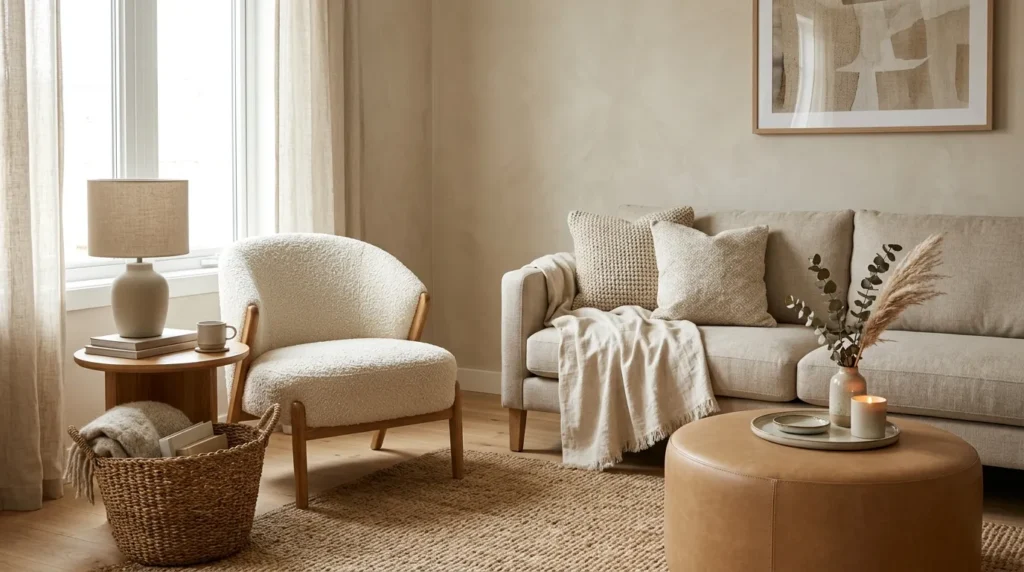
When floor space is limited, it’s tempting to add character through more furniture or more decor. A better approach is layering textures, which adds richness and depth without requiring additional pieces or square footage.
Think of a boucle armchair paired with a linen throw, a jute rug beneath a smooth leather ottoman, or a woven basket next to a polished wood side table. These textural contrasts create visual interest and warmth, making the room feel styled rather than sparse, without adding clutter.
4. Choose One Statement Piece Instead of Many Small Ones
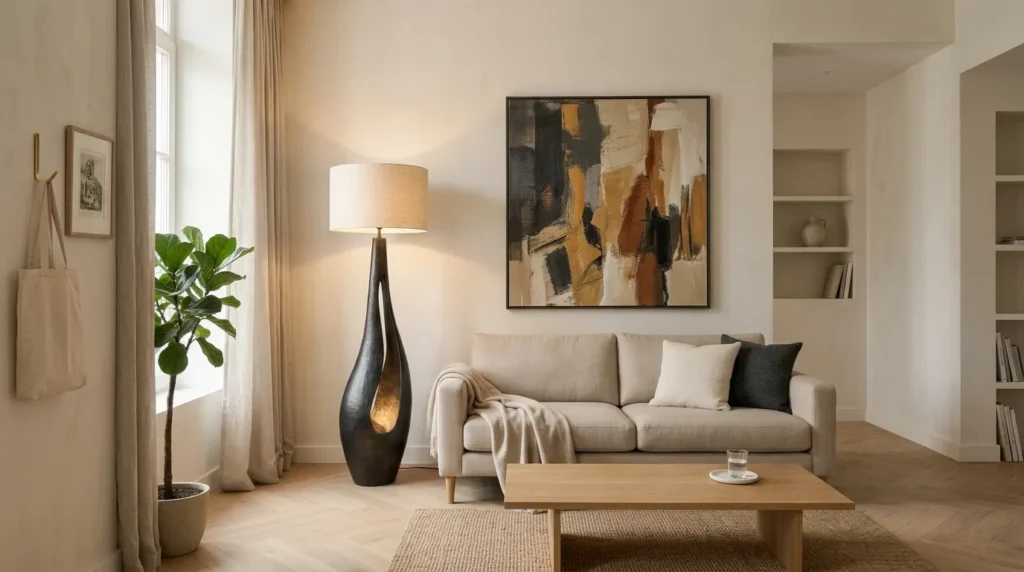
Small rooms often suffer from too many small, competing decor items: a handful of picture frames, a few candles, a couple of trinkets, all adding visual noise without much impact. A more effective strategy is investing in one statement piece that anchors the room’s personality.
This could be a striking piece of art, a sculptural floor lamp, or a uniquely shaped coffee table. One well-chosen statement item tends to read as more sophisticated and intentional than a collection of smaller accessories, and it takes up considerably less visual and physical space.
5. Use Wallpaper Strategically
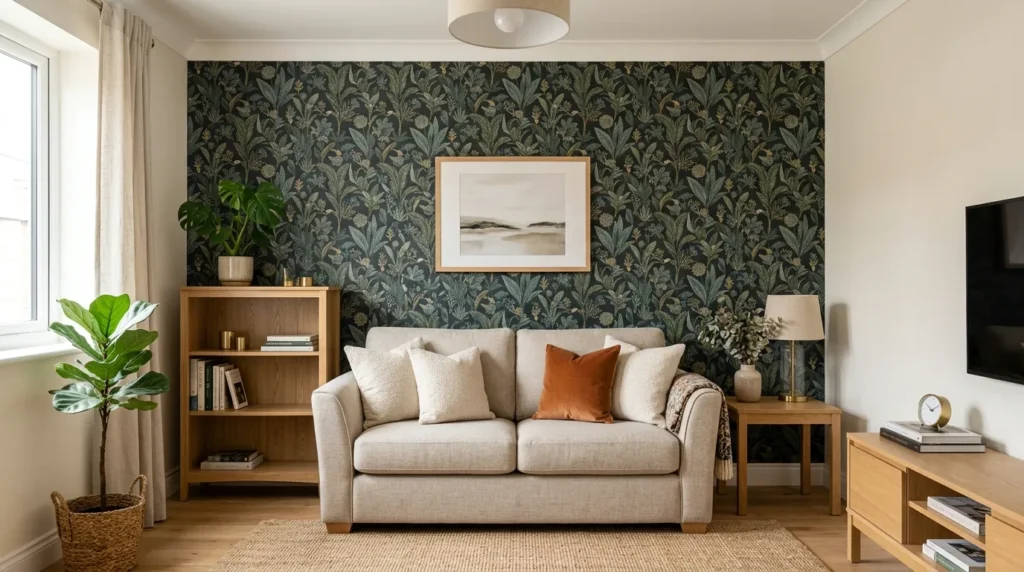
Wallpaper has made a strong comeback in recent years, and it remains one of the more underused living room ideas for small spaces. Rather than wallpapering an entire room, which can feel overwhelming in a compact footprint, consider applying it to a single accent wall, a stair alcove, or even the back of a bookshelf.
A bold pattern in a contained area adds personality and depth without visually shrinking the room the way an all-over pattern might. Textured or subtly metallic wallpapers also catch light beautifully, adding another layer of visual interest.
6. Prioritize Lighting Layers Over a Single Overhead Fixture
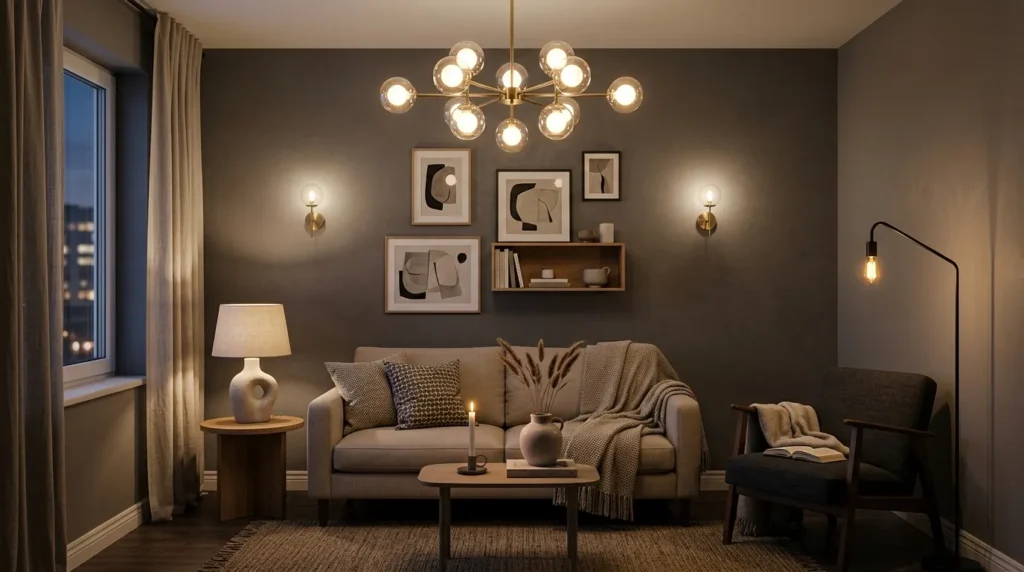
Good lighting design does more for a small living room’s style and atmosphere than almost any other single choice, yet it’s often reduced to a single ceiling fixture. Layering different light sources creates a warmer, more dynamic space.
- A statement pendant or flush-mount fixture for ambient light.
- A floor lamp positioned near a reading chair for task lighting.
- A table lamp with an interesting base to add personality to a side table.
- Wall sconces to free up surface space while adding a soft glow.
Multiple light sources, especially at varying heights, create depth and warmth that a single bright overhead light simply can’t replicate.
7. Add Reflective Surfaces Without Overdoing It
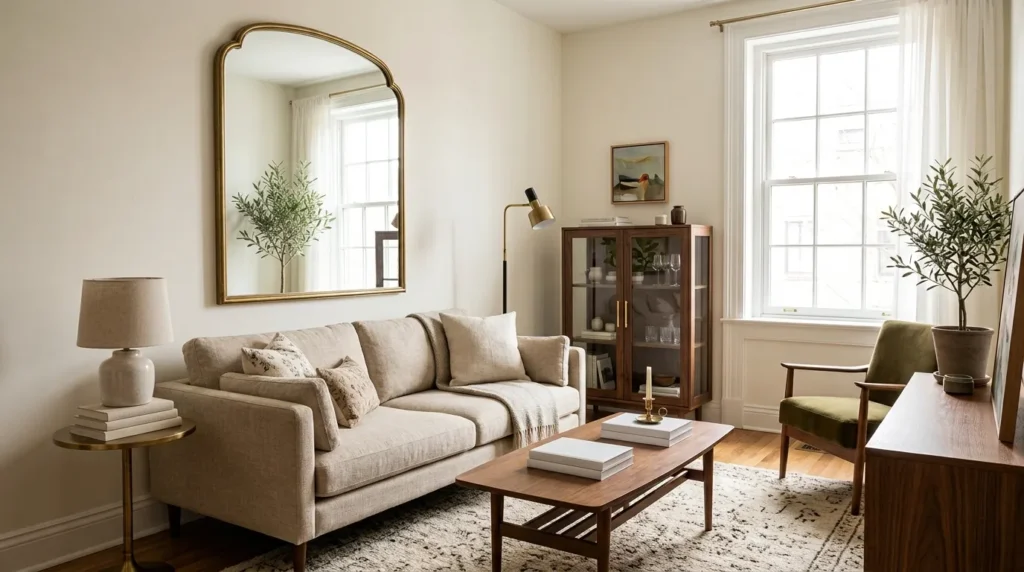
Mirrors and reflective finishes remain some of the most reliable living room ideas for making small spaces feel bigger and brighter, but they can also contribute meaningfully to style when chosen well. A vintage mirror with an ornate frame, a brass-finished side table, or glass-fronted cabinetry can all introduce shine and reflected light while still feeling curated rather than purely functional.
The goal is balance. A few well-placed reflective elements elevate a room, while too many can feel cold or showy.
8. Build a Gallery Wall With Intention
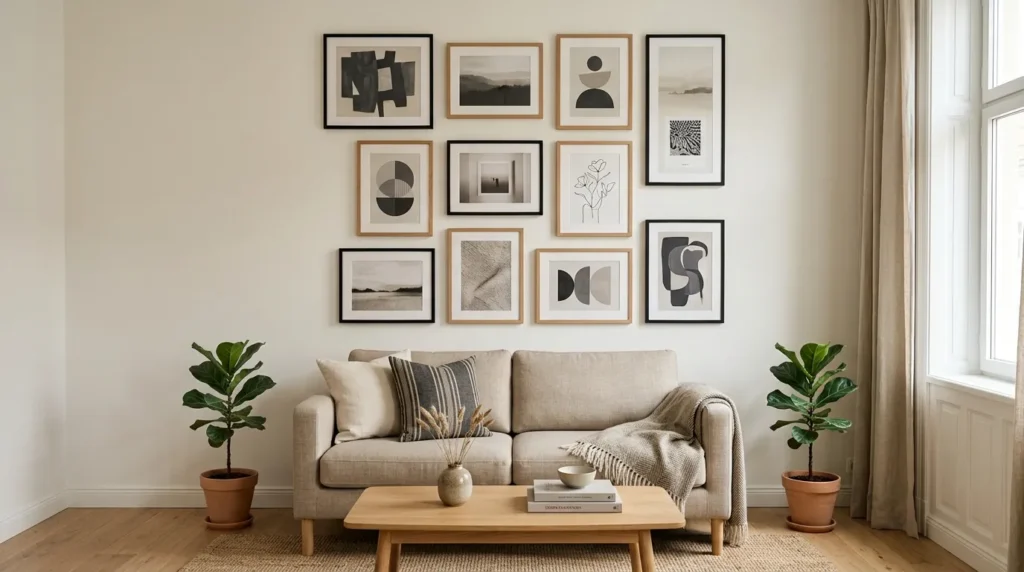
A well-composed gallery wall can add enormous personality to a small living room, but it needs to be done thoughtfully to avoid visual clutter. Rather than randomly grouping frames, plan the layout in advance using consistent spacing and a cohesive color or frame style.
Sticking to a limited color palette across the artwork, and leaving breathing room around the edges of the arrangement, keeps the gallery wall feeling curated rather than chaotic. This is one of those living room ideas that works particularly well on a single accent wall, allowing the rest of the room to stay visually calm.
9. Choose a Rug That Grounds the Room
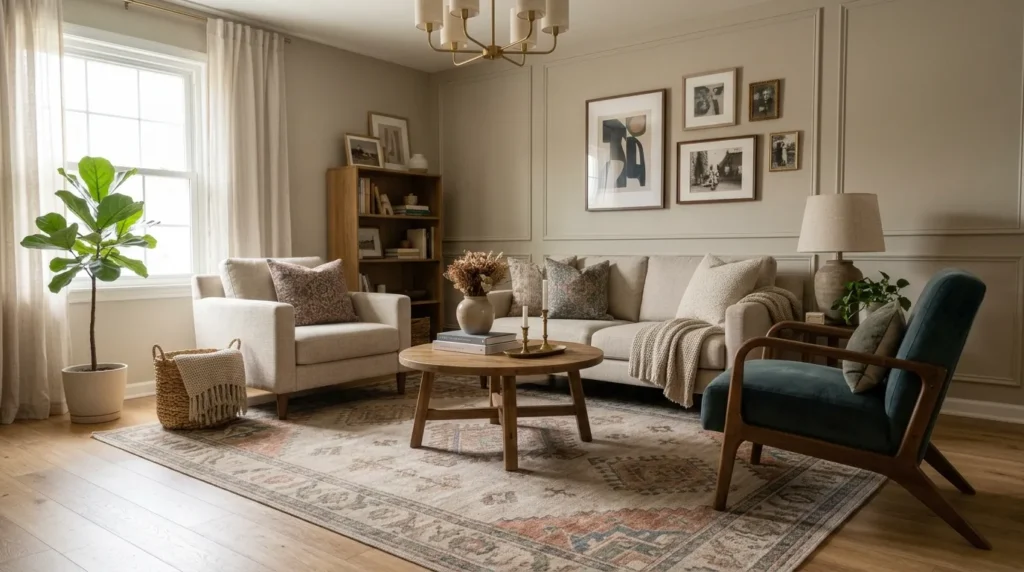
Rugs play a bigger role in a room’s perceived style than many people realize. In small living rooms specifically, an undersized rug can make the space look unfinished, while the right rug ties the whole room together.
- Choose a rug large enough for at least the front legs of your main seating to rest on.
- Opt for pattern or texture over plain color if you want to add personality without introducing more furniture.
- Layer a smaller patterned rug over a larger neutral one for added depth, a technique that works particularly well in eclectic or bohemian-styled rooms.
A well-chosen rug can single-handedly elevate the look of a small living room more than almost any other single element.
10. Incorporate Vintage or One-of-a-Kind Pieces
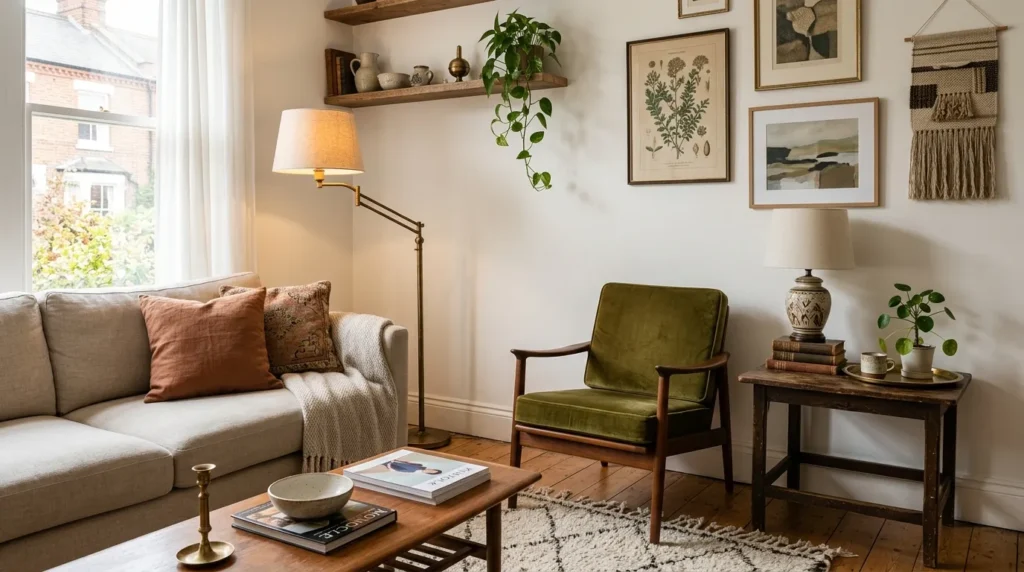
Small living rooms benefit enormously from character, and few things add character faster than a vintage or unique piece of furniture. A secondhand brass floor lamp, an antique side table, or a reupholstered armchair introduces history and personality that new, mass-produced furniture often lacks.
Because small rooms typically contain fewer pieces overall, each item carries more visual weight, which makes this an ideal opportunity to invest in something distinctive rather than purely functional.
11. Use Curtains to Add Height and Drama
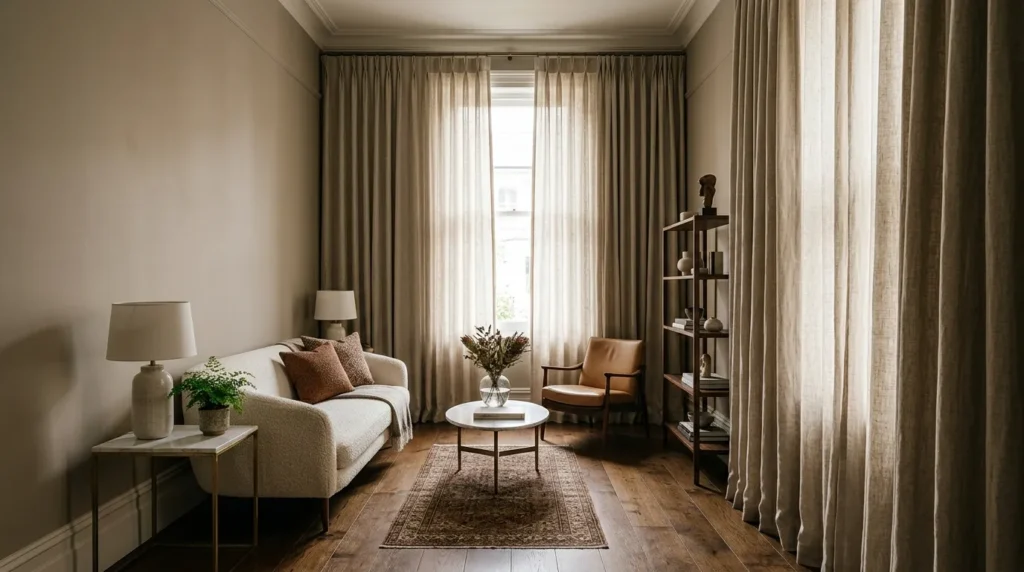
Curtains are frequently overlooked in small living room design, yet they can dramatically affect both style and the perceived proportions of a room. Hanging curtains close to the ceiling, rather than directly above the window frame, draws the eye upward and creates the illusion of higher ceilings.
Floor-length curtains in a rich fabric, like velvet or heavy linen, also add a sense of luxury that smaller rooms often lack. This is one of the simplest living room ideas to execute, since it typically just requires repositioning the curtain rod.
12. Treat Storage as a Design Feature
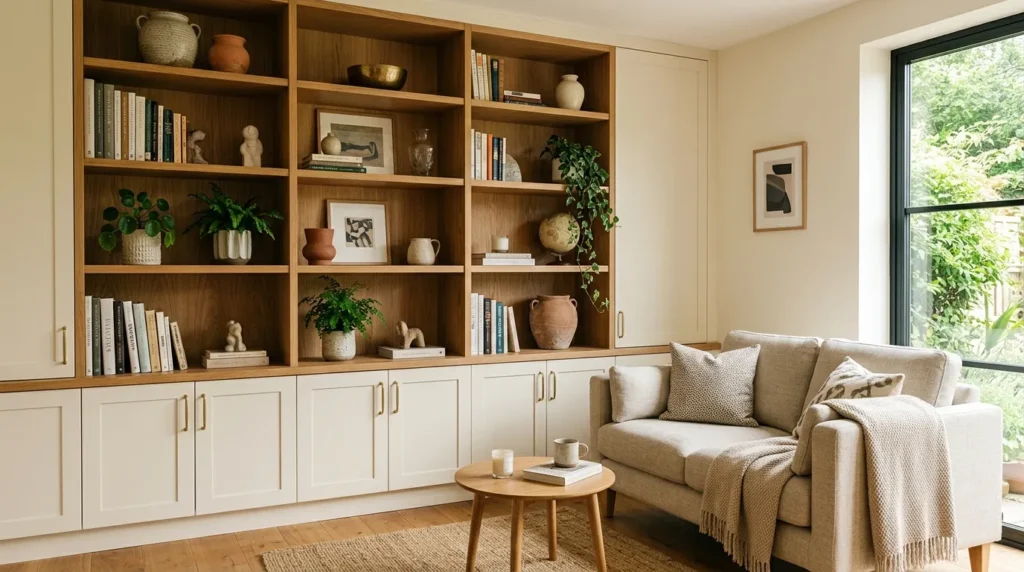
In small living rooms, storage often gets treated purely as a practical necessity, but it can also be a meaningful style opportunity. Open shelving styled with a mix of books, ceramics, and plants can double as both storage and display, adding personality to the room while keeping surfaces clear elsewhere.
Built-in cabinetry with interesting hardware, or a vintage cabinet used for storage, can also serve as a focal point rather than simply hiding clutter. When storage is designed thoughtfully, it stops being an afterthought and becomes part of the room’s overall style.
13. Don’t Be Afraid of Pattern Mixing
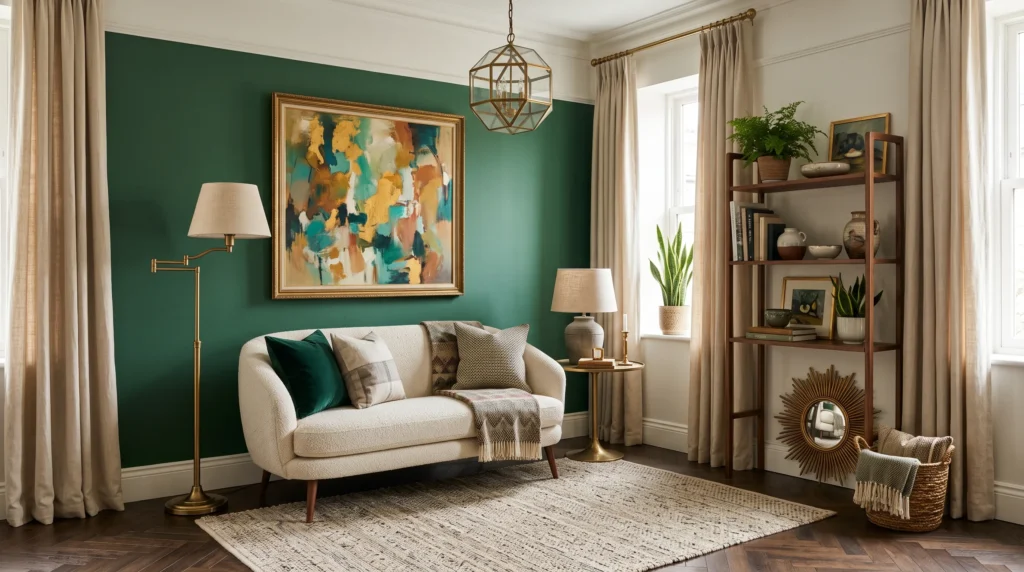
Many people avoid pattern mixing in small rooms out of fear it will feel too busy, but done well, it can add tremendous personality. The key is variation in scale: pairing a large-scale pattern, like a bold striped cushion, with a smaller, more delicate print, such as a subtle floral throw, keeps the combination feeling intentional rather than chaotic.
Sticking to a cohesive color family across the mixed patterns helps maintain visual harmony, even as the prints themselves vary. This is one of the more advanced living room ideas on this list, but it can add a distinctly stylish, collected-over-time feel to an otherwise simple room.
Conclusion
Designing a small living room doesn’t mean choosing between style and practicality. As these thirteen living room ideas show, the most striking small spaces often come from intentional choices: a bold color moment, a well-chosen statement piece, layered lighting, or thoughtful pattern mixing.
The common thread across all of these approaches is restraint paired with confidence. Rather than filling a small room with many safe, forgettable choices, focusing on fewer, more considered decisions tends to create a space with far more personality and visual impact. With the right combination of these ideas, a small living room can feel every bit as stylish and memorable as a much larger one.
Frequently Asked Questions
- How can I make a small living room feel stylish without spending a lot of money?
Focus on a few impactful changes rather than an entire overhaul. Repositioning curtains higher, adding a well-chosen rug, or introducing one vintage or statement piece can transform the look of a room without a large budget. - Is it better to use light colors or bold colors in a small living room?
Both can work, depending on execution. Light, neutral tones create an airy, open feel, while bold colors add personality when contained to one wall, alcove, or furniture piece. The key is avoiding an overwhelming amount of contrast across the entire room. - Can pattern mixing work in a small living room, or will it look too busy?
Pattern mixing can work well if you vary the scale of the patterns and keep them within a cohesive color palette. Pairing one bold pattern with a subtler print, rather than combining multiple large-scale patterns, keeps the look balanced. - What’s the easiest way to add personality to a small living room without adding clutter?
Layering textures, such as pairing a woven rug with a smooth leather chair, or investing in one statement piece like a striking lamp or art piece, adds visual interest without requiring more furniture or decor items.