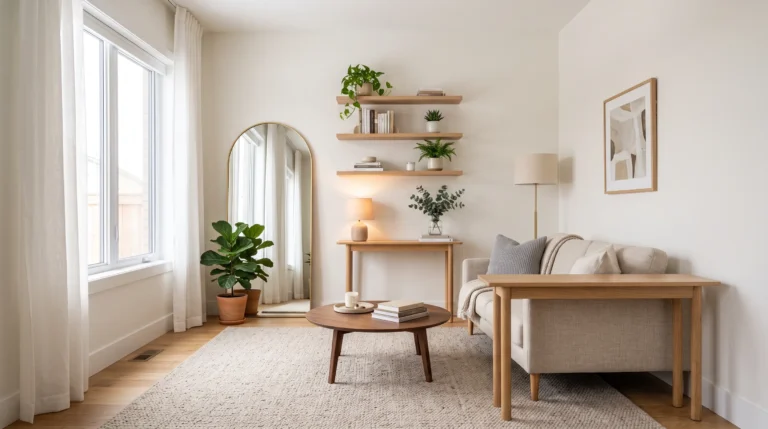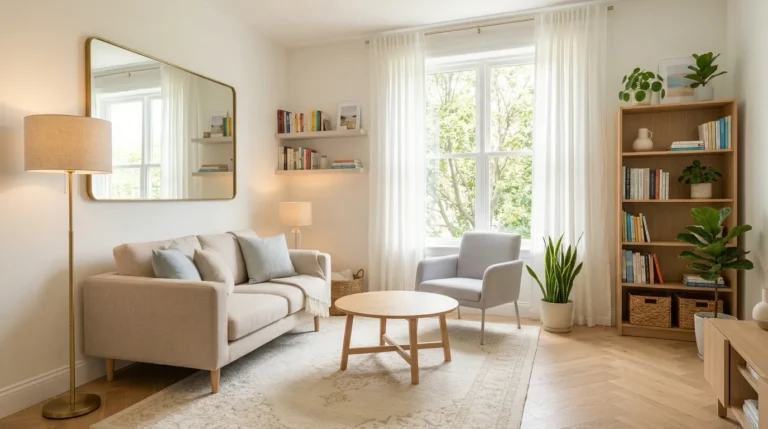
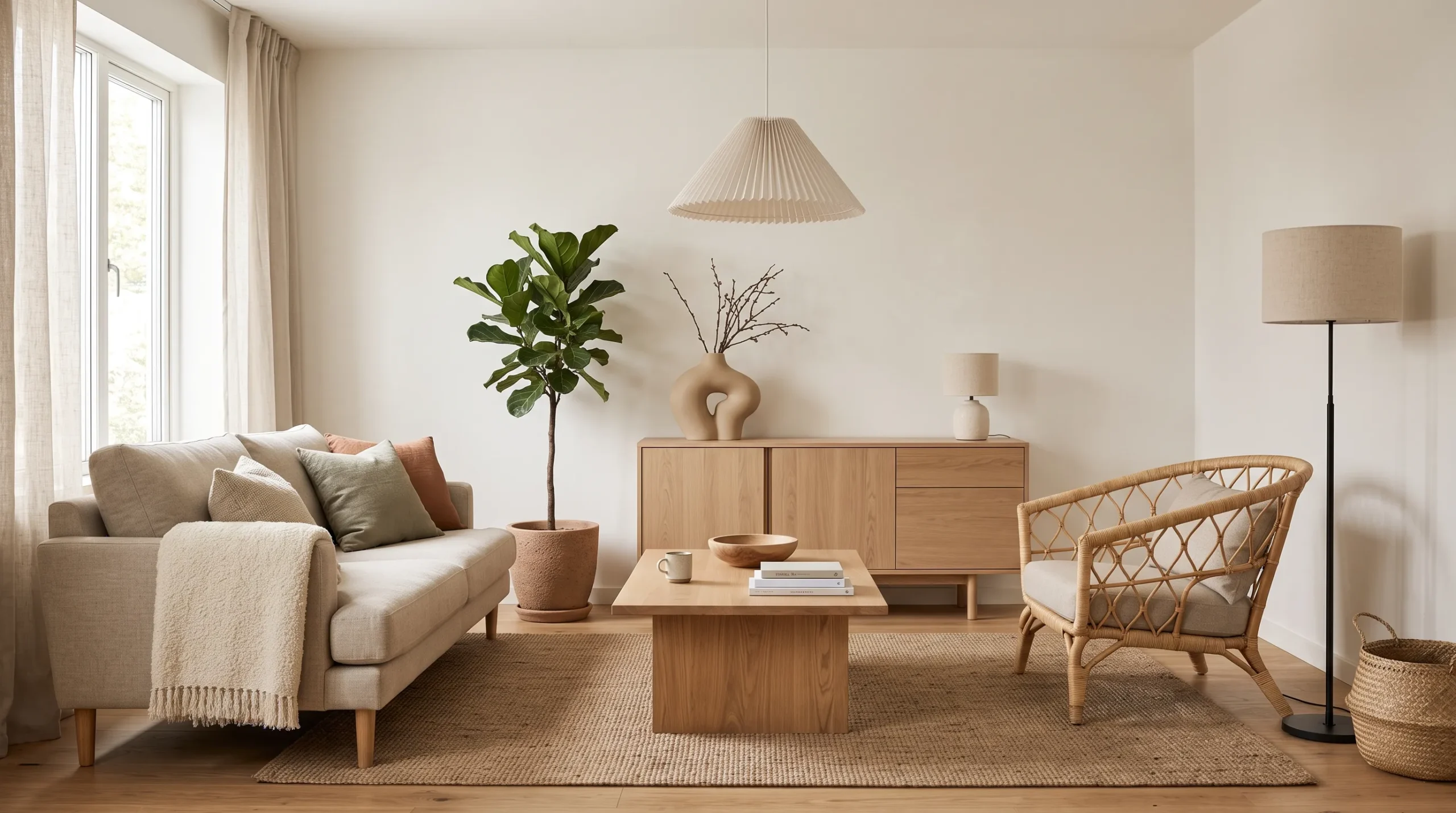
10 Small Space Sitting Room Ideas Inspired by Japandi
There’s something quietly appealing about a sitting room that feels calm the moment you walk into it, even when the square footage is limited. That’s the promise of Japandi design: a style built on restraint, natural materials, and intentional simplicity. For anyone searching for small space sitting room ideas that actually work in real homes, not just in styled photographs, Japandi offers a practical starting point rather than just an aesthetic trend.
This article walks through ten specific ways to bring Japandi influence into a compact sitting room, focusing on choices that genuinely improve how the space feels and functions, not just how it photographs.
Why Japandi Suits Small Sitting Rooms So Well
Japandi combines Japanese minimalism’s discipline with Scandinavian design’s warmth. The result is a style that avoids visual clutter without feeling cold or empty. That balance matters enormously in small rooms, where too much minimalism can feel stark, and too much decor can feel suffocating.
Because Japandi prioritizes fewer, better-chosen elements over abundance, it naturally lends itself to compact spaces. Every idea below builds on that core principle: less visual noise, more intentional design.
1. Start With a Low, Grounded Seating Arrangement
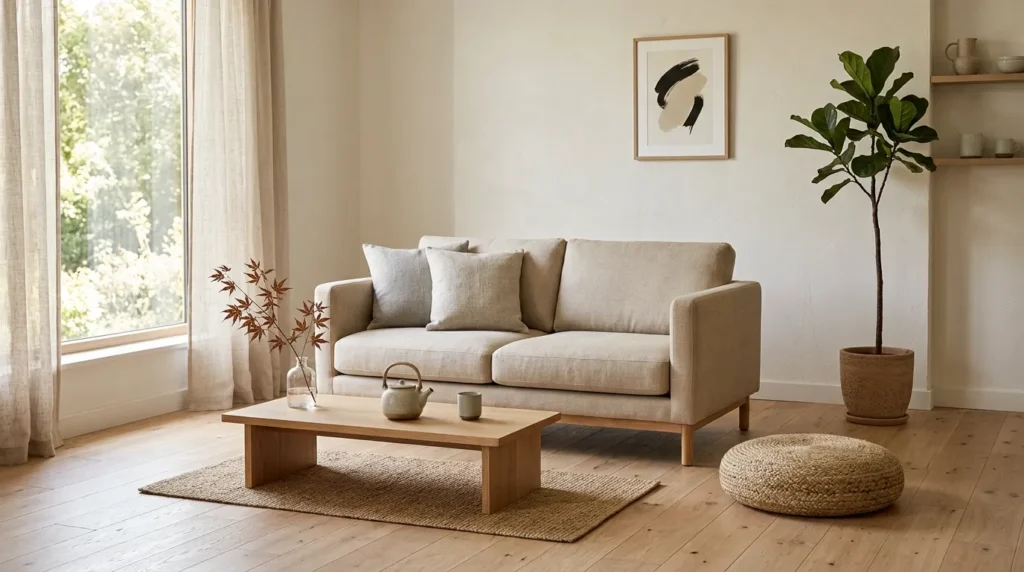
Japandi sitting rooms typically favor low furniture, and this is one of the most impactful small space sitting room ideas you can apply. A sofa or armchair with a lower profile and visible wooden legs allows more of the floor and wall to remain visible, which keeps the room from feeling boxed in.
If you’re working with an especially tight footprint, consider a loveseat paired with a single floor cushion rather than a full three-seater and armchair combination. This keeps the seating area flexible without overwhelming the room.
2. Keep the Color Story Simple
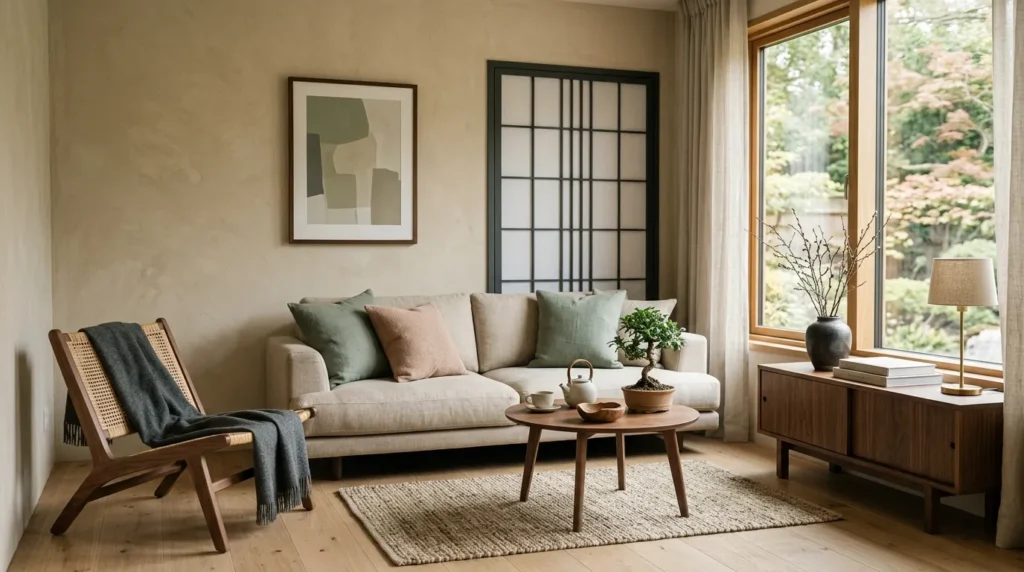
A limited, nature-inspired color palette is central to Japandi design, and it’s especially useful in small rooms where too many colors can quickly feel chaotic. Think warm neutrals: oatmeal, soft clay, muted sage, and charcoal, used consistently across walls, furniture, and textiles.
- Choose one dominant neutral for large surfaces like walls and sofas.
- Add one deeper tone, such as walnut or charcoal, for grounding.
- Use no more than one accent color, applied sparingly through cushions or a single decorative object.
This restraint doesn’t just look intentional; it genuinely helps a small room feel calmer and more spacious.
3. Choose Furniture for Its Material, Not Just Its Shape
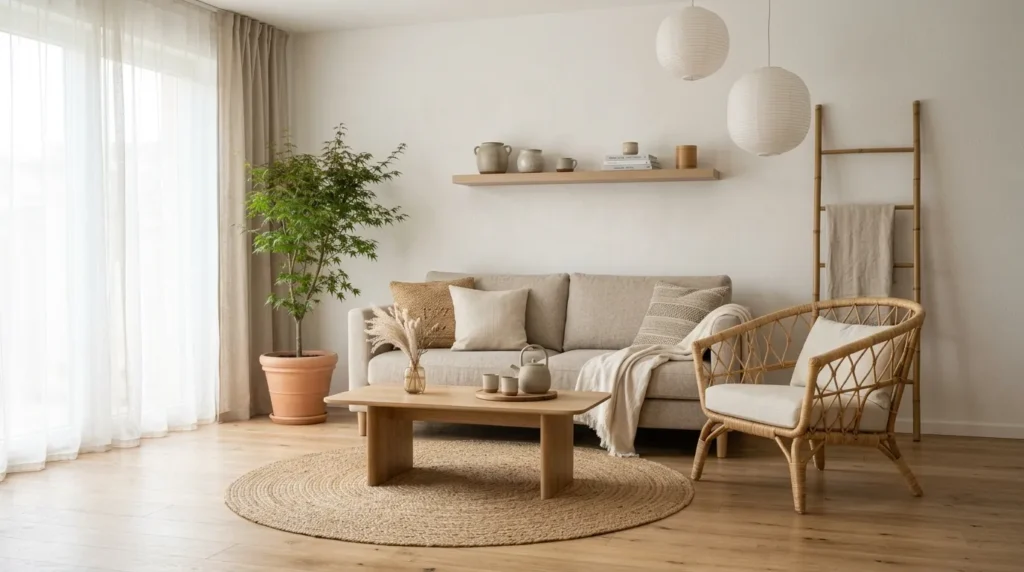
In Japandi interiors, material choice carries as much weight as furniture shape. Light woods like oak and ash, natural fiber weaves like rattan and jute, and soft textiles like linen all contribute to the style’s signature warmth while remaining visually light.
A rattan accent chair, for example, brings texture and interest without the visual bulk of a fully upholstered piece. This matters more in small rooms than large ones, since every item has more visual “weight” relative to the size of the space.
4. Let Storage Disappear Into the Design
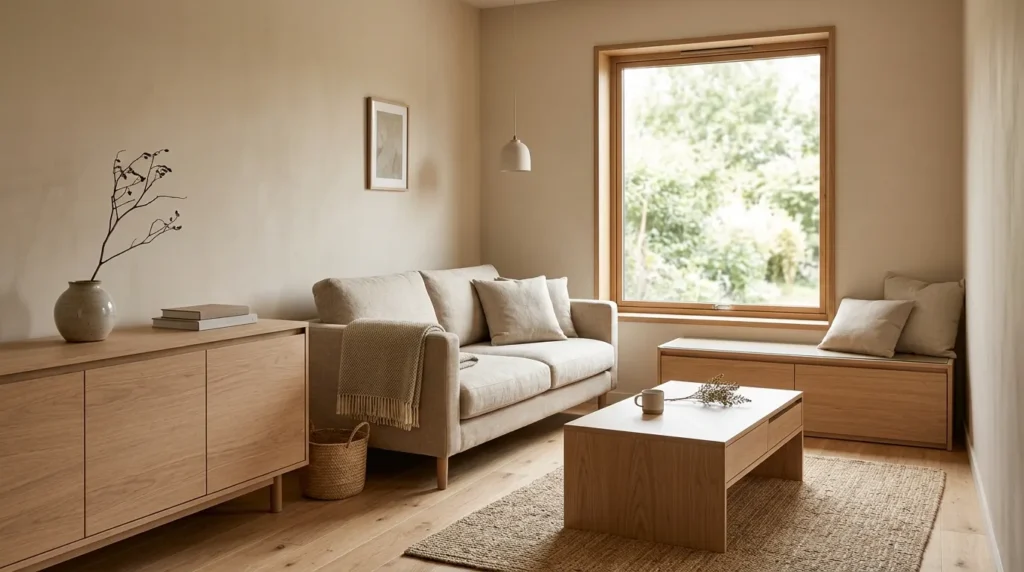
Visible clutter undermines Japandi’s calm aesthetic faster than almost anything else, which makes smart storage essential in a small sitting room. Rather than open shelving stacked with miscellaneous items, look for furniture that hides everyday clutter while still contributing to the room’s style.
A low sideboard with closed doors, a coffee table with an integrated drawer, or a storage bench along one wall can all keep surfaces clear without sacrificing function. The goal isn’t to hide everything, it’s to make sure what’s visible is there by choice.
5. Treat Empty Space as Part of the Design
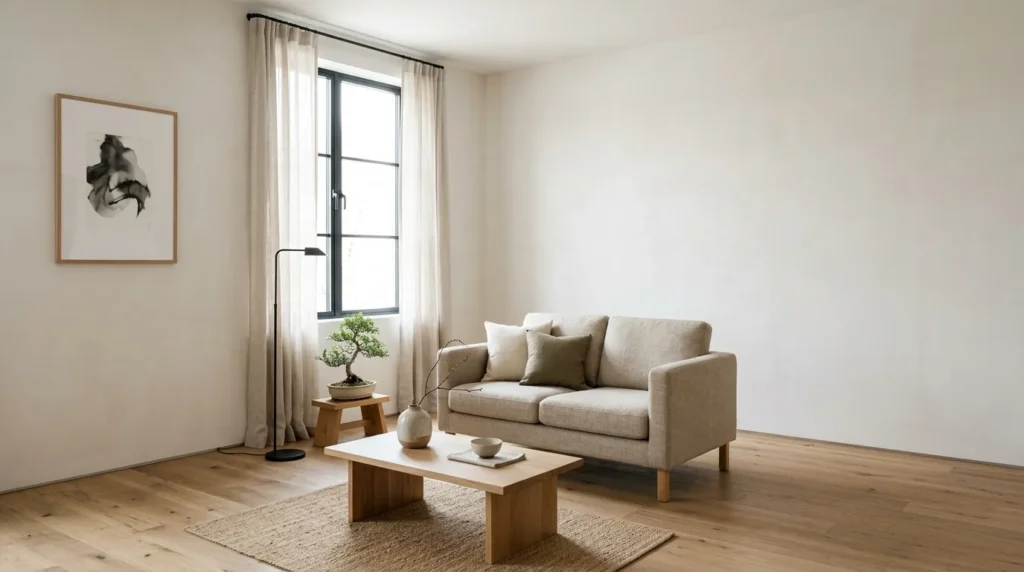
One of the more counterintuitive small space sitting room ideas borrowed from Japandi is the deliberate use of empty space. In Japanese design, this concept, known as “ma,” treats negative space as an active design element rather than a gap that needs filling.
In a small sitting room, this might mean leaving one wall bare, keeping a corner intentionally empty, or resisting the urge to fill every shelf. It feels counterintuitive when space is already limited, but empty space actually makes a small room read as calmer and, paradoxically, larger.
6. Layer Soft, Warm Lighting
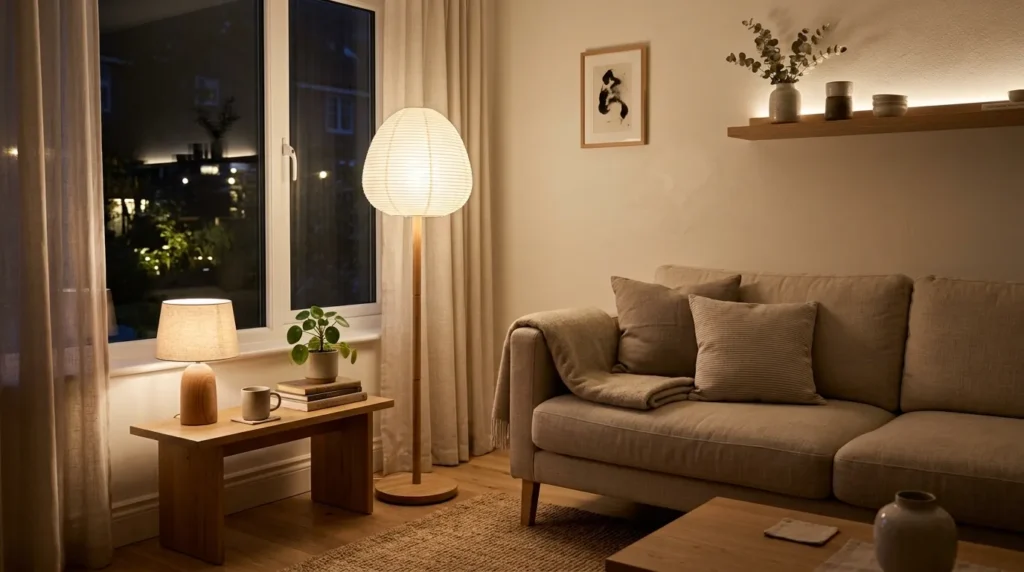
Harsh, single-source overhead lighting tends to flatten a room and expose every boundary, which is particularly unflattering in a small space. Japandi interiors favor soft, layered lighting that creates depth and warmth instead.
A few adjustments make a noticeable difference:
- Swap cool white bulbs for warm-toned ones, ideally in the 2700K–3000K range.
- Add a floor lamp with a linen or paper shade near the seating area.
- Use a table lamp with a ceramic or wood base to reinforce natural materials.
- Avoid relying on one bright ceiling fixture as the only light source.
Layered lighting doesn’t just look better; it makes a small sitting room feel genuinely more comfortable to spend time in.
7. Select One Meaningful Statement Piece
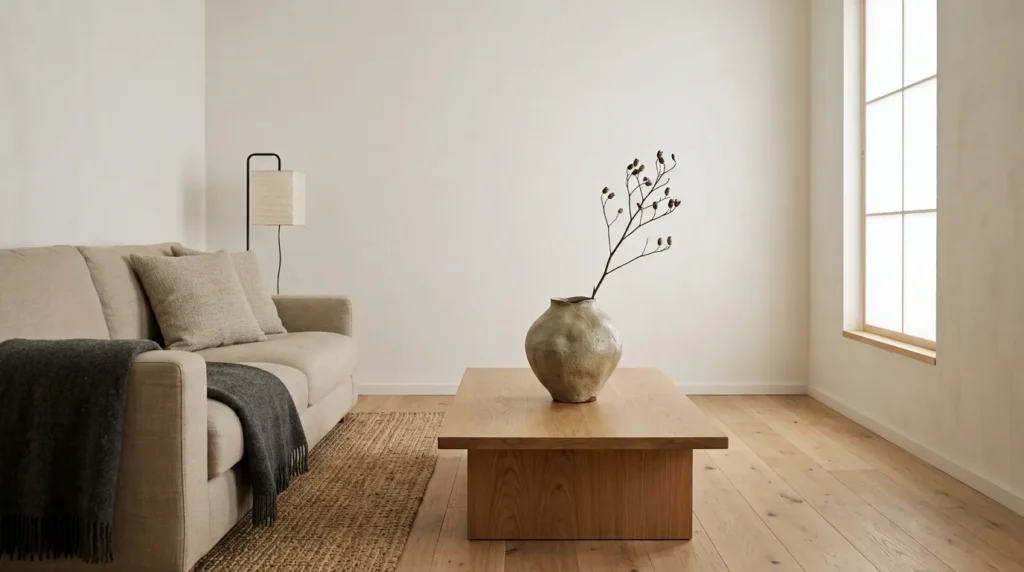
Rather than decorating with many small objects, Japandi design favors a single, well-chosen statement piece: a striking ceramic vase, a sculptural floor lamp, or one piece of art with real presence. This is one of the more elegant small space sitting room ideas because it delivers personality without clutter.
Choosing one piece also forces a kind of editing discipline that naturally suits small rooms. Instead of asking “what else can I add,” the question becomes “what’s the one thing this room actually needs.”
8. Use Natural Textures to Add Depth Without Bulk
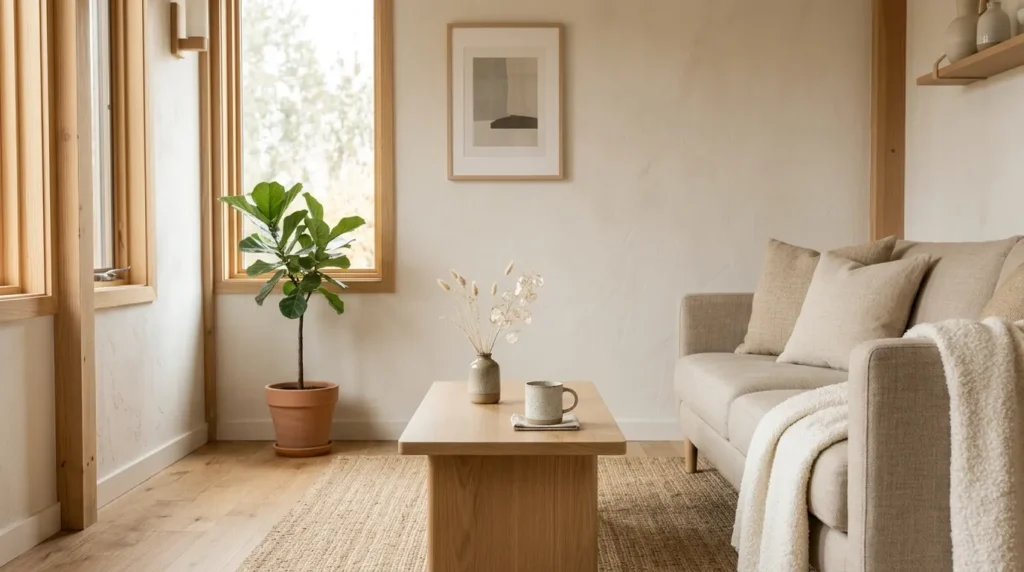
Because Japandi rooms rely on a limited color palette, texture becomes the primary tool for adding visual interest. A boucle throw over a linen sofa, a jute rug beneath a smooth wood coffee table, or a woven basket in the corner all introduce tactile variety without requiring more furniture.
This layering technique is particularly valuable in small rooms, where adding more objects often isn’t an option, but adding more texture almost always is.
9. Bring in a Single, Well-Placed Plant
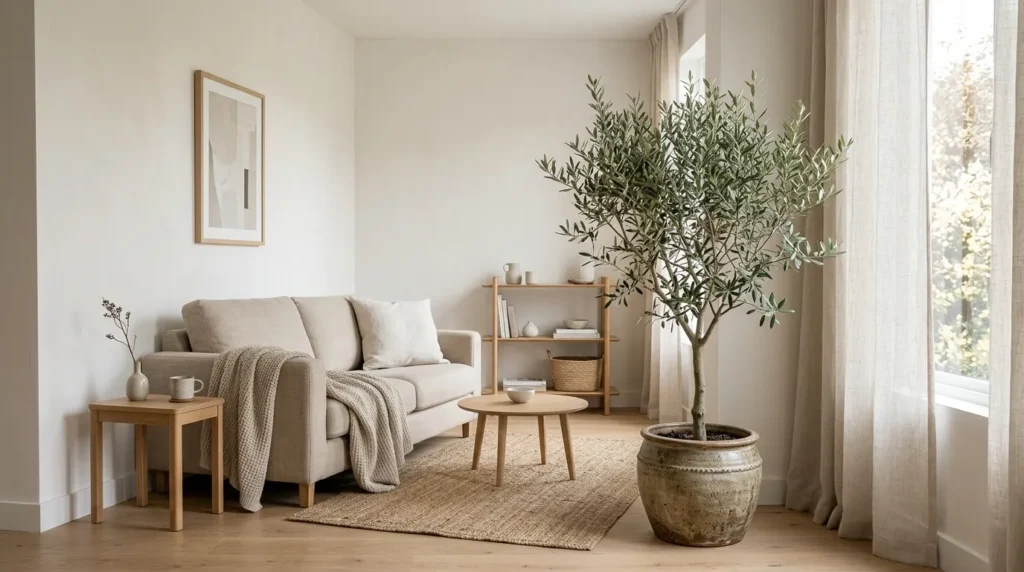
Greenery plays a meaningful role in Japandi design, softening the room’s clean lines and connecting the space to nature. In a small sitting room, one substantial plant, such as a fiddle leaf fig or an olive tree, tends to work better than several smaller potted plants scattered around.
A single larger plant creates a natural focal point and adds life to the room without contributing to visual clutter, which smaller, scattered plants can sometimes do.
10. Define the Seating Area With a Low-Pile Rug
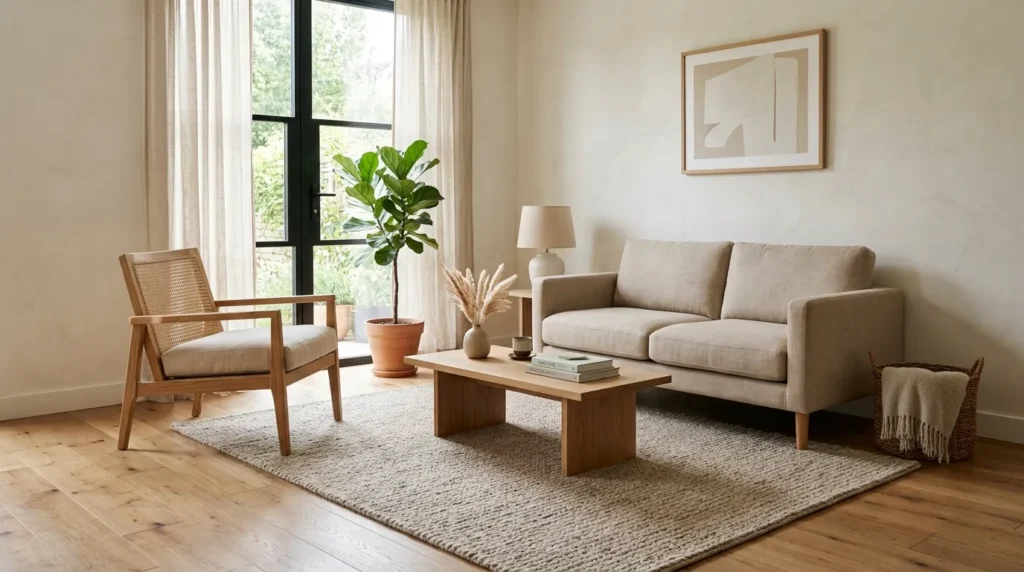
Even in an open-plan layout, a rug can help anchor the sitting area and give the room a sense of structure. A low-pile rug in a muted, natural tone keeps things visually calm while still defining where the seating zone begins and ends.
Make sure the rug is large enough for at least the front legs of your seating to rest on it. An undersized rug can make the room feel disjointed rather than pulled together, undermining the cohesive feel that Japandi design relies on.
Bringing These Ideas Together
Not every idea here needs to be applied at once. Japandi design works best when it’s introduced gradually and thoughtfully, starting with foundational choices like furniture scale and color palette, then layering in texture, lighting, and a few carefully chosen accents. The goal isn’t perfection; it’s a room that feels calm, functional, and genuinely comfortable to live in.
Conclusion
Designing a small sitting room doesn’t require more furniture or more decor to feel complete. As these small space sitting room ideas show, Japandi’s approach to simplicity, natural materials, and intentional negative space often achieves more with less. By focusing on low-profile furniture, a restrained color palette, layered lighting, and a few meaningful decor choices, even the most compact sitting room can feel open, calm, and well-designed. Sometimes the most effective design decision is simply knowing what to leave out.
Frequently Asked Questions
- What’s the easiest Japandi element to start with in a small sitting room?
Color palette is usually the simplest starting point. Shifting to warm neutrals like oatmeal, sage, or soft clay creates an immediate calming effect and sets the foundation for other Japandi elements to build on later. - Does Japandi design work in rooms with existing dark furniture?
Yes, though some adjustment may be needed. Dark wood or charcoal pieces can still fit a Japandi look if balanced with lighter walls, natural textiles, and warm lighting. The key is avoiding too many dark, heavy pieces in one small room. - How many decor items are too many in a small Japandi sitting room?
There’s no strict number, but the general principle is fewer, more meaningful pieces over multiple small accessories. If a shelf or surface starts to feel crowded, it’s usually a sign to remove an item rather than rearrange it.