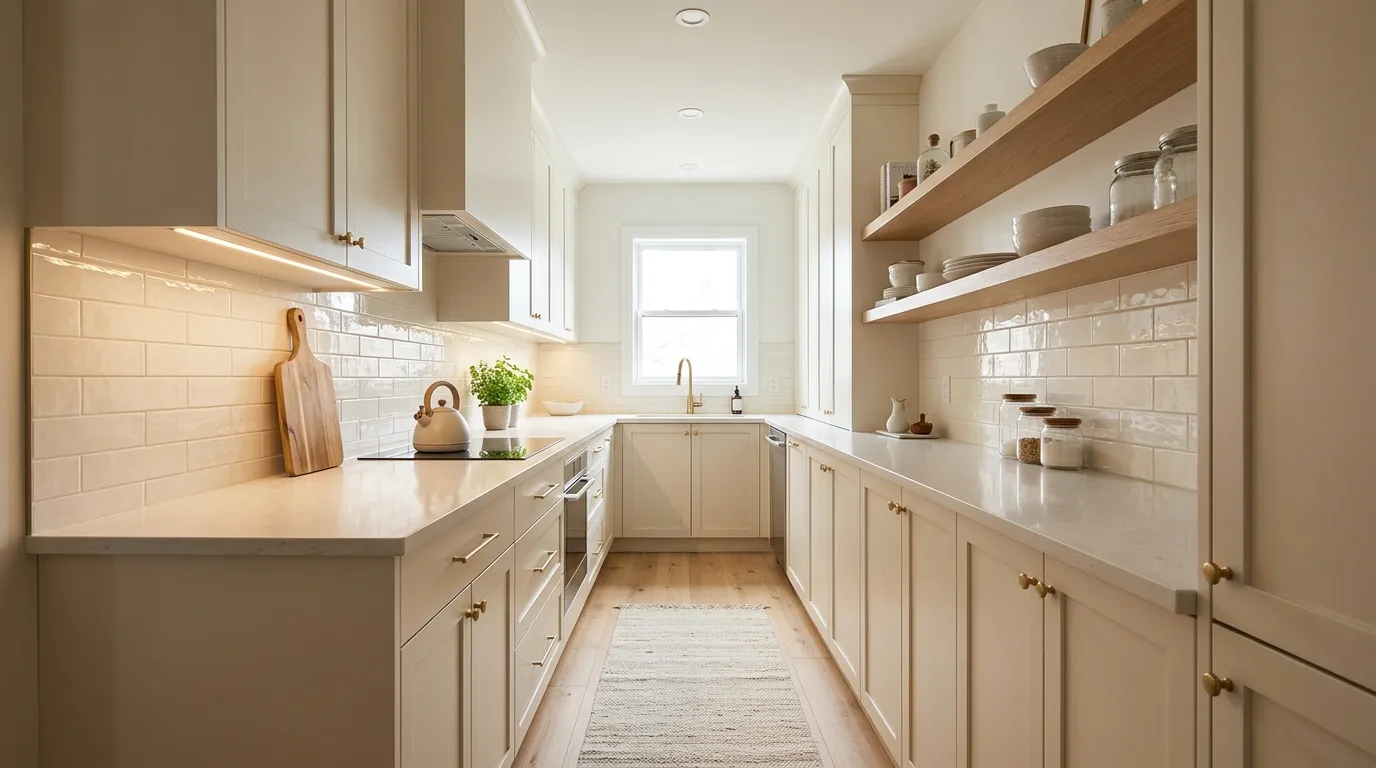
8 Kitchen Interior Ideas That Brighten Dark, Narrow Spaces
A dark, narrow kitchen can feel like a hallway with a stove. Light struggles to reach the corners, walkways feel tight, and even a clean room can look gloomy. The good news is that you don’t need to knock down walls to fix it.
The most effective kitchen interior ideas for dark, narrow spaces work by doing three things: bouncing light around, drawing the eye along the length of the room, and removing visual weight. The eight ideas below are practical and flexible. Some are renter-friendly weekend projects, and others suit a full remodel. Pick the ones that match your budget and start from there.
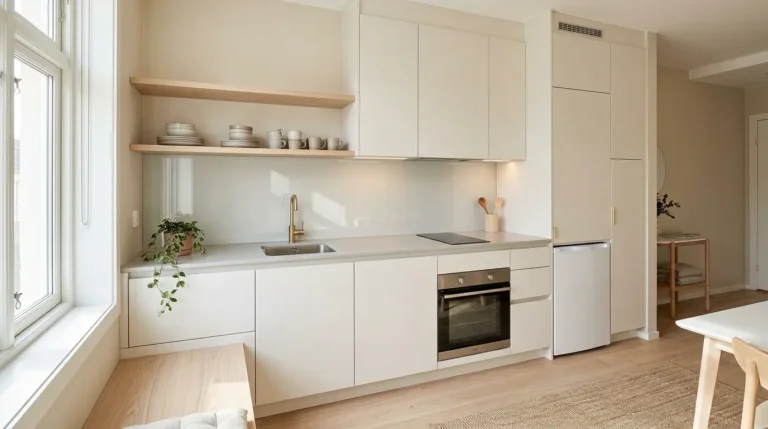
1. Paint Walls and Cabinets in Light, Warm Tones
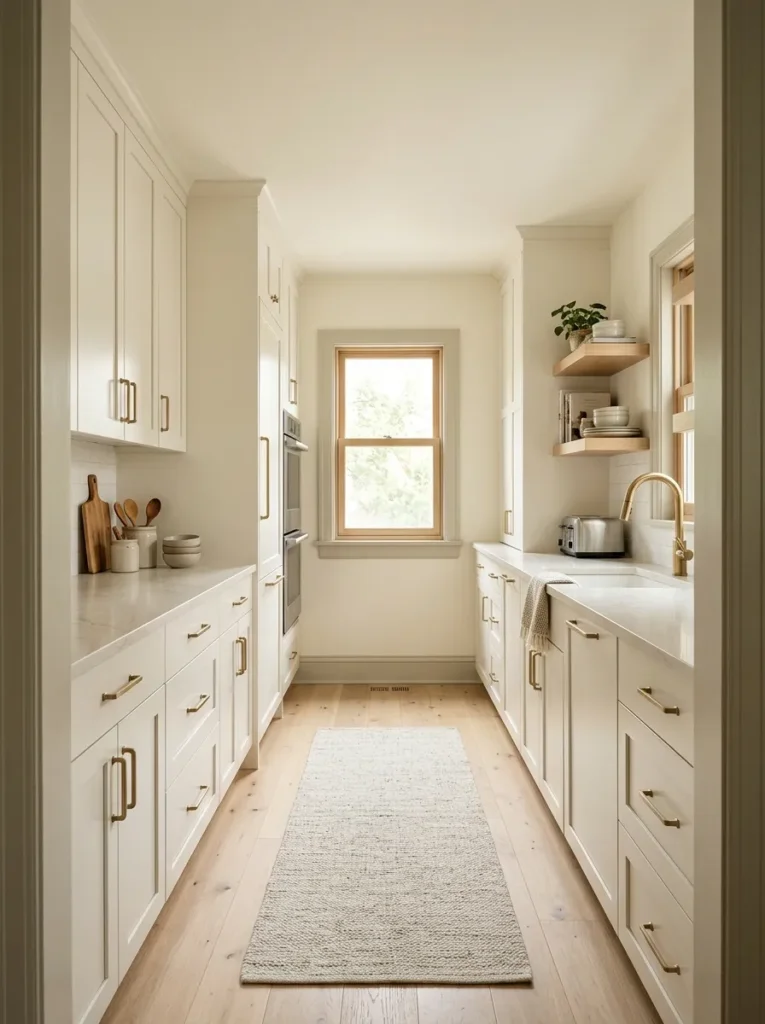
Color is the fastest way to change how a dark kitchen feels. Light shades reflect more of the available daylight and make walls feel less close together.
Good choices include:
- Warm white or soft cream, which brighten without feeling clinical
- Pale greige, a neutral that works well with both wood and metal finishes
- Light sage or powder blue, which add a hint of color while staying airy
- Soft butter yellow, which can add warmth to a north-facing kitchen
In a narrow room, painting the long walls and cabinets the same shade creates one continuous surface, so the space reads as wider and less chopped up. If you want contrast, add it through small details like hardware, stools, or a runner rug rather than large blocks of dark color.
A quick tip: choose a satin or eggshell finish. A slight sheen reflects a little more light than a flat finish and still wipes clean easily.
2. Layer Your Lighting From Three Directions
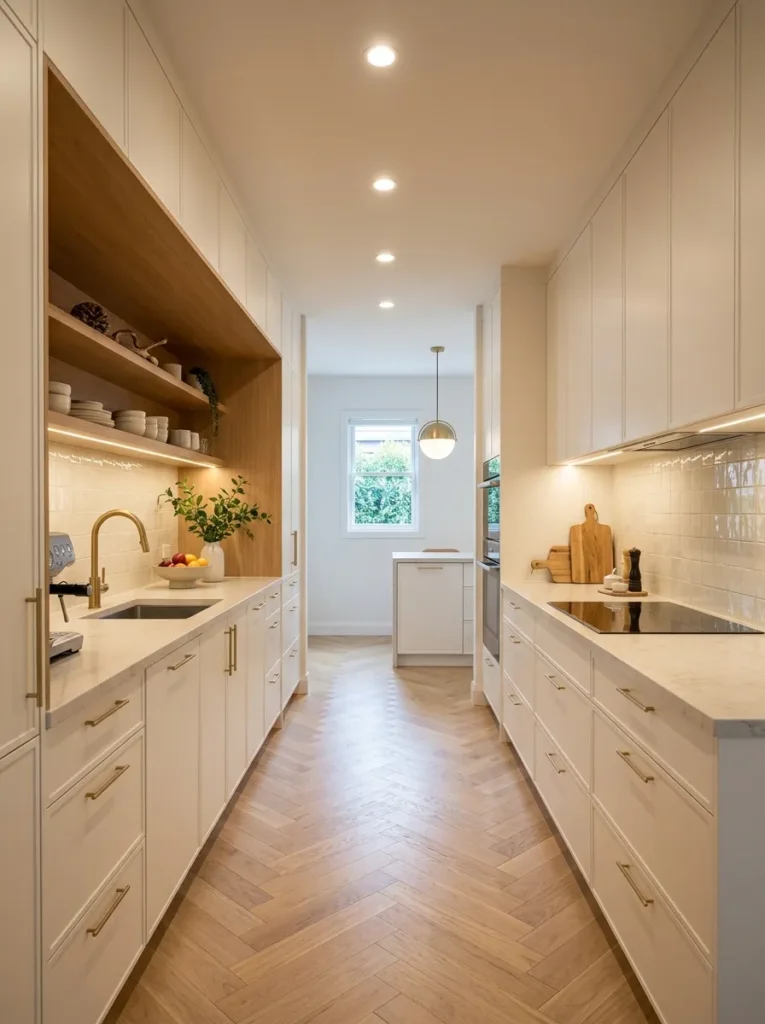
Many dark kitchens rely on a single ceiling fixture, which leaves shadows over the counters and in the corners. Layering light fixes this and makes the room feel bigger. Think in terms of three layers: ambient light for general brightness, task light for your work surfaces, and accent light for warmth and depth.
For ambient light, a flush mount, track lighting, or recessed fixtures spread evenly along the length of the room work better than one fixture in the center. For task lighting, under-cabinet LED strips or bars are the most valuable upgrade you can make in a narrow kitchen. They remove shadows exactly where you chop and prep, and plug-in or battery-powered versions are a great option for renters. Finally, a small pendant, wall sconce, or lamp on a shelf adds the softer glow that makes a kitchen feel inviting in the evening rather than purely functional.
When choosing bulbs, look for color temperatures between roughly 2700K and 3500K. Very cool bulbs can make a small kitchen feel harsh, while warm-neutral bulbs keep it bright and welcoming. If you can add a dimmer to your main fixture, you’ll be able to adjust the mood from early-morning prep to a relaxed dinner.
3. Use Reflective and Glossy Surfaces
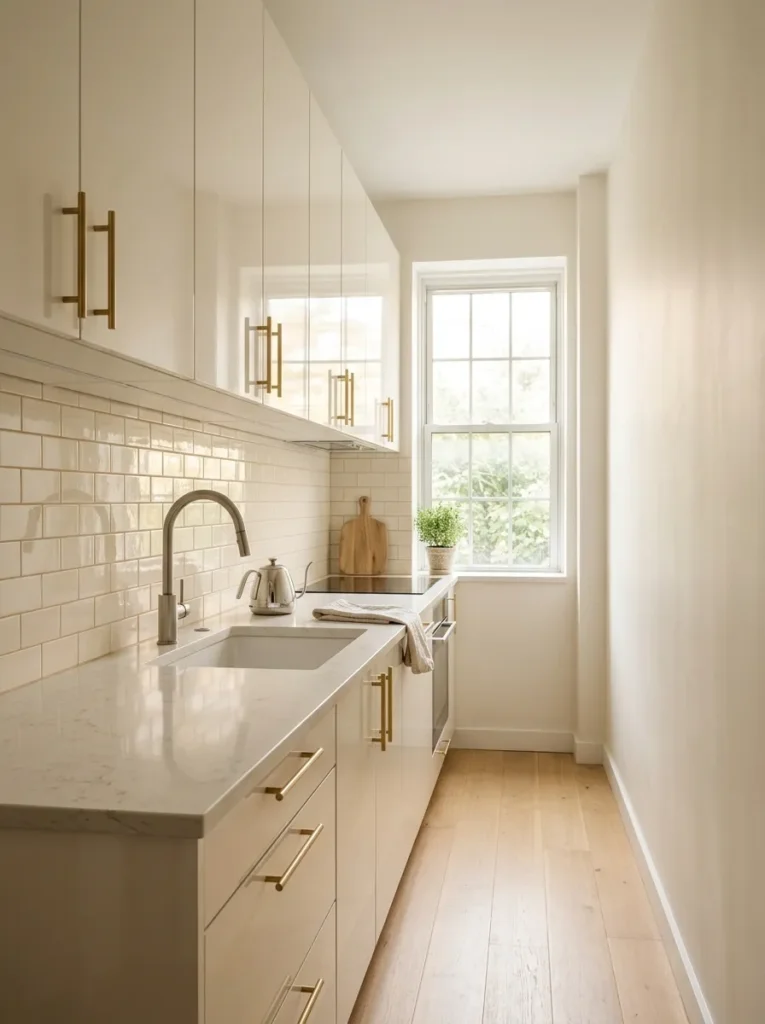
Shiny surfaces act like secondary light sources by bouncing daylight and lamp light around the room. You don’t need a mirror finish everywhere. A few strategic choices are enough.
Consider these upgrades:
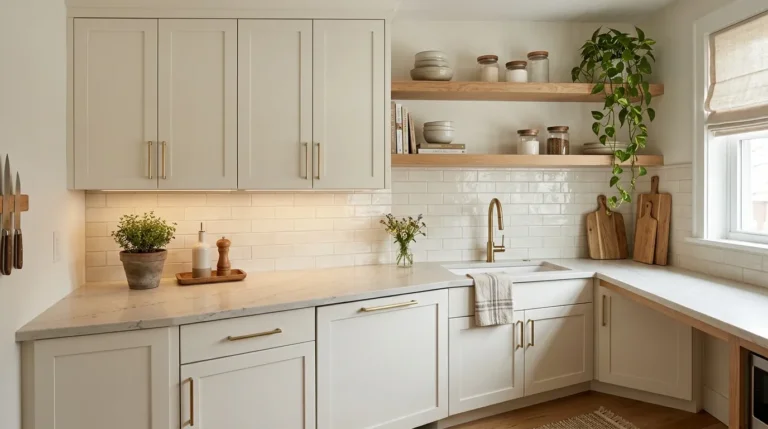
- Glossy subway or ceramic tile for the backsplash
- Lacquered or high-gloss cabinet doors in a light color
- Polished or honed stone countertops in a pale shade
- Metallic accents such as brass pulls, a steel faucet, or a mirrored tray
If you’re working with a tight budget, a glossy peel-and-stick backsplash or a coat of semi-gloss paint on cabinets can give a similar effect. Keep grout light in color so the surface stays bright and cohesive rather than looking like a grid.
4. Hang a Mirror to Borrow Light and Depth
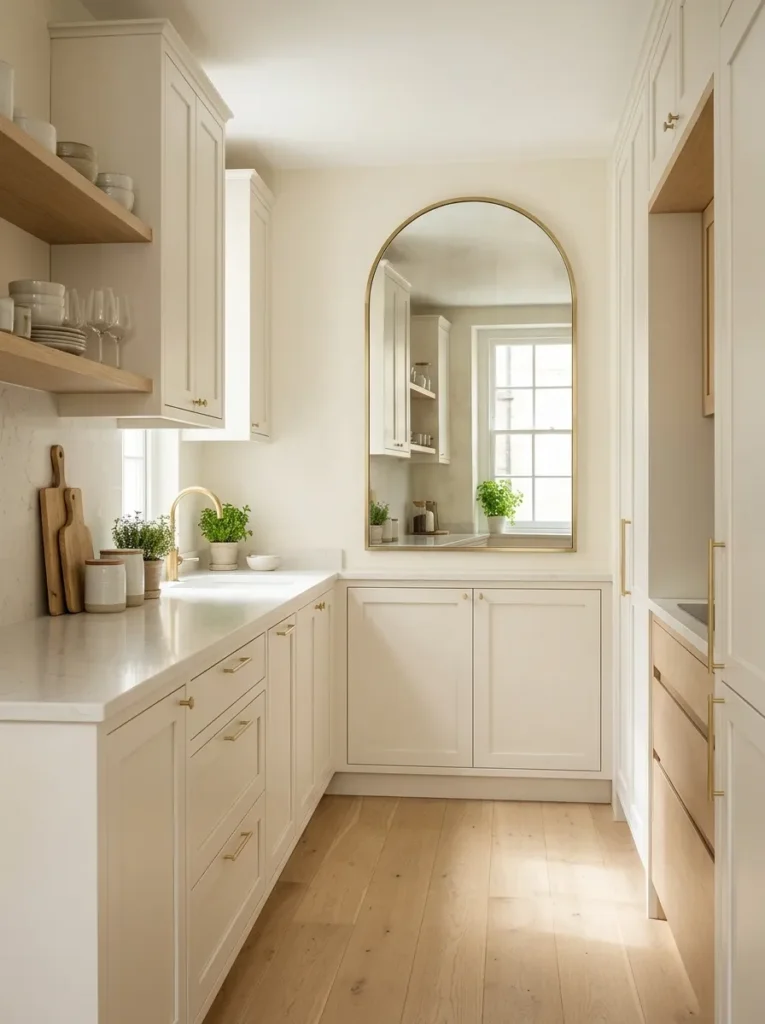
A mirror in a dark kitchen is a simple trick with a real payoff. It reflects light from windows or fixtures and gives the impression of extra depth, which is especially helpful in narrow layouts where the walls feel close.
The best placement is across from or beside a window, where the mirror can catch daylight and push it back into the room. A large rectangular or arched mirror gives a bigger reflection than several small ones, and a slim frame in a finish that matches your cabinet hardware keeps the look clean. If you want a bolder statement, a mirrored panel on a short end wall can make a galley kitchen feel noticeably longer.
Before you hang it, check what the mirror will reflect. It should show something pleasant, like a window, a plant, or a tidy shelf, rather than a stack of dishes or a busy corner. Keep it away from the stove too, since grease and steam can leave marks that dull the surface over time.
5. Swap Heavy Upper Cabinets for Open Shelving
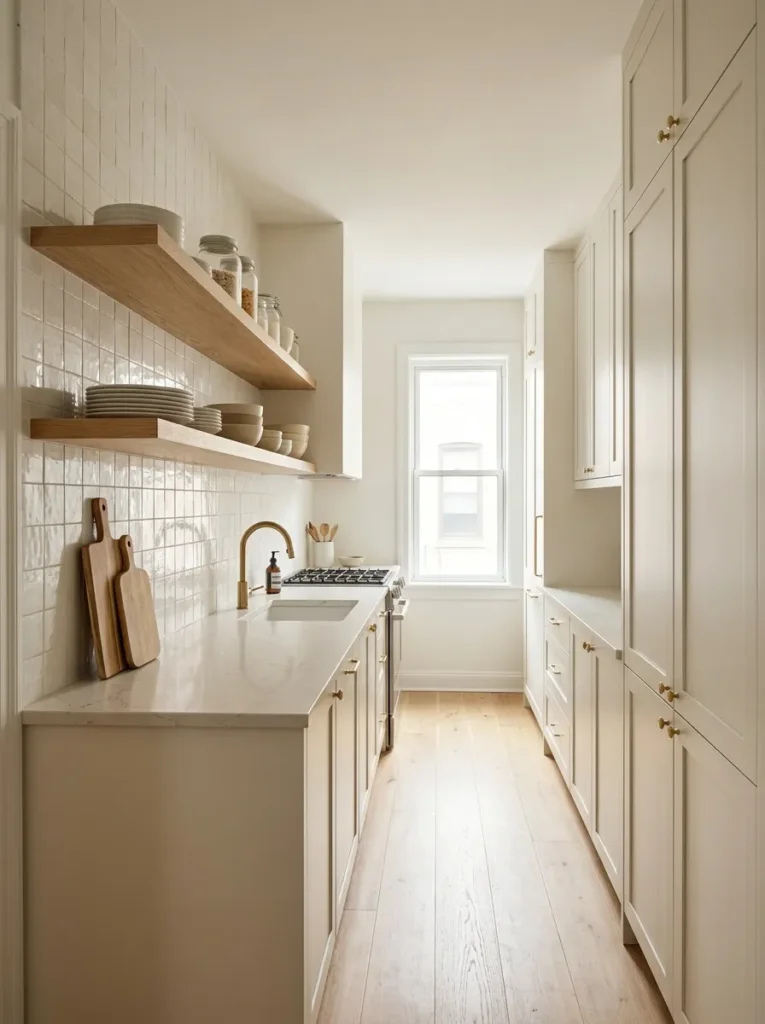
Bulky upper cabinets can close in a narrow kitchen, especially when they run along both walls. Replacing some of them with open shelves lets more light travel across the walls and makes the room feel less boxed in.
You don’t have to remove every cabinet. Try these approaches:
- Replace one section of uppers, ideally near a window
- Use slim floating shelves in light wood or white
- Choose glass-front doors if you prefer to keep some closed storage
- Skip uppers on one side entirely and keep storage on the other
Style shelves with items you use daily, like white dishes, glass jars, and cutting boards. Keep a limited color palette and leave gaps between objects. Because open shelving collects dust and grease, it works best away from the stove.
6. Maximize Natural Light at the Window
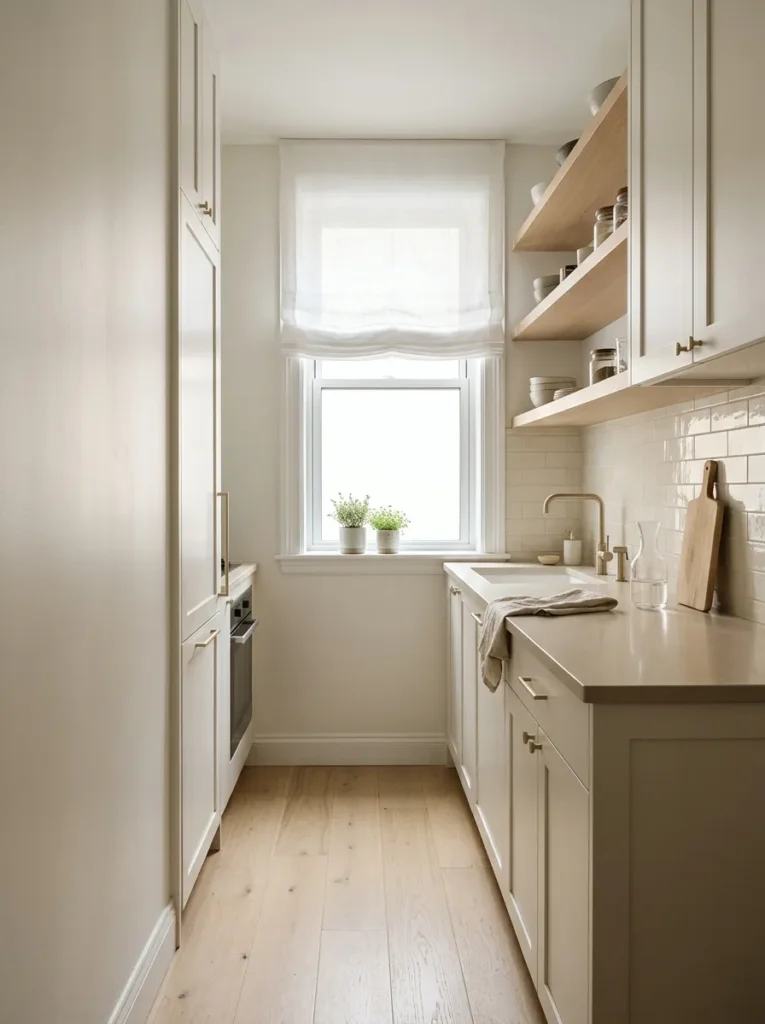
Even a small window can do more work if you stop blocking it. Heavy curtains and dark blinds can swallow daylight, so simplifying your window treatments is one of the cheapest kitchen interior ideas for a gloomy room.
Sheer curtains or light roller shades filter daylight instead of blocking it, and mounting the rod wider than the window frame lets the fabric clear the glass when it’s open. Clear the sill of clutter, keeping only a few small herbs or a single vase, and wash the glass regularly, since dirty windows noticeably reduce brightness. If privacy is a concern, frosted window film is a better choice than heavy fabric because it lets light through while keeping the view private.
If your kitchen has a door to another room, a glass-paneled or half-glass door can borrow light from neighboring spaces. This is a common upgrade in dark galley kitchens and can make a surprising difference without any structural work.
7. Draw the Eye Along the Room With Flooring and Rugs
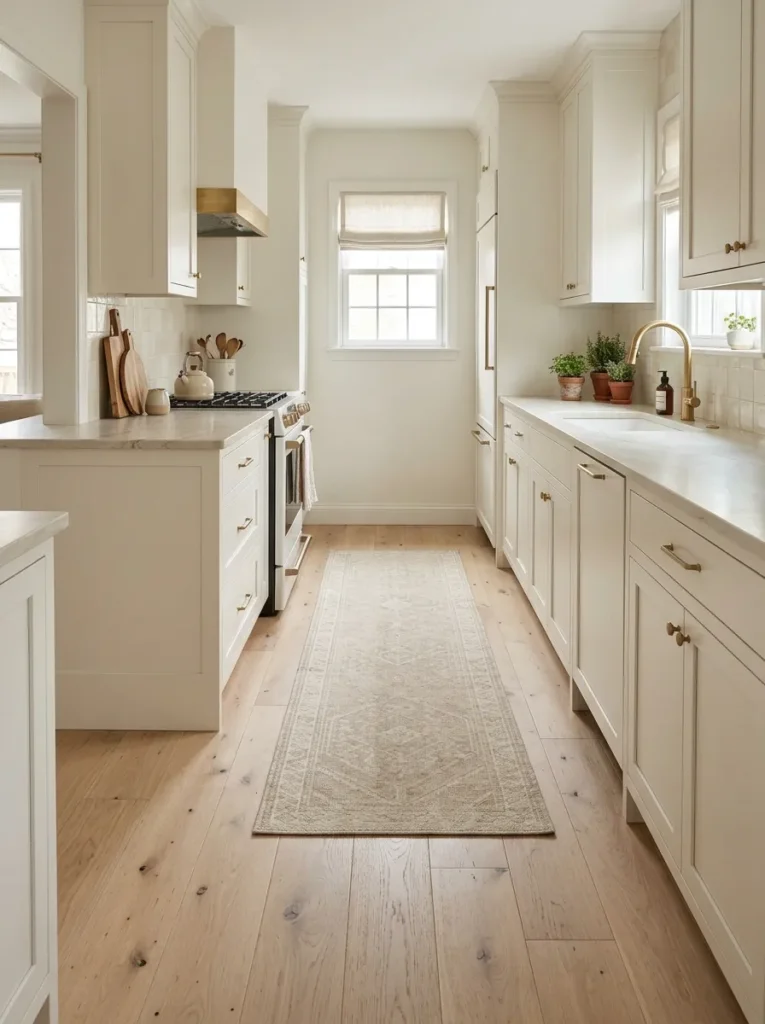
In a narrow kitchen, the floor can either emphasize the tunnel effect or soften it. The goal is to guide the eye lengthwise while keeping the room feeling light.
Smart choices include:
- Light-toned flooring such as pale wood, light porcelain tile, or light-look vinyl
- Planks or tiles laid lengthwise to stretch the room visually
- A slim runner rug in a low-contrast pattern, which adds softness and warmth
- Continuous flooring from the kitchen into the next room, if possible, to avoid visual breaks
Dark flooring can work in a bright kitchen, but in a dim, narrow one it tends to absorb light. If replacing the floor isn’t possible, a pale, washable runner or adhesive floor tiles can change the feel quickly. Choose a runner with a non-slip backing, and keep the pattern subtle so it doesn’t make the room look busier.
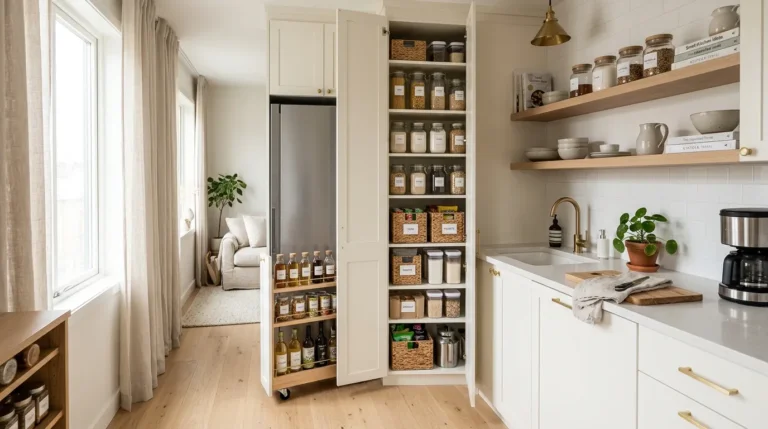
8. Keep Counters Clear and Storage Smart
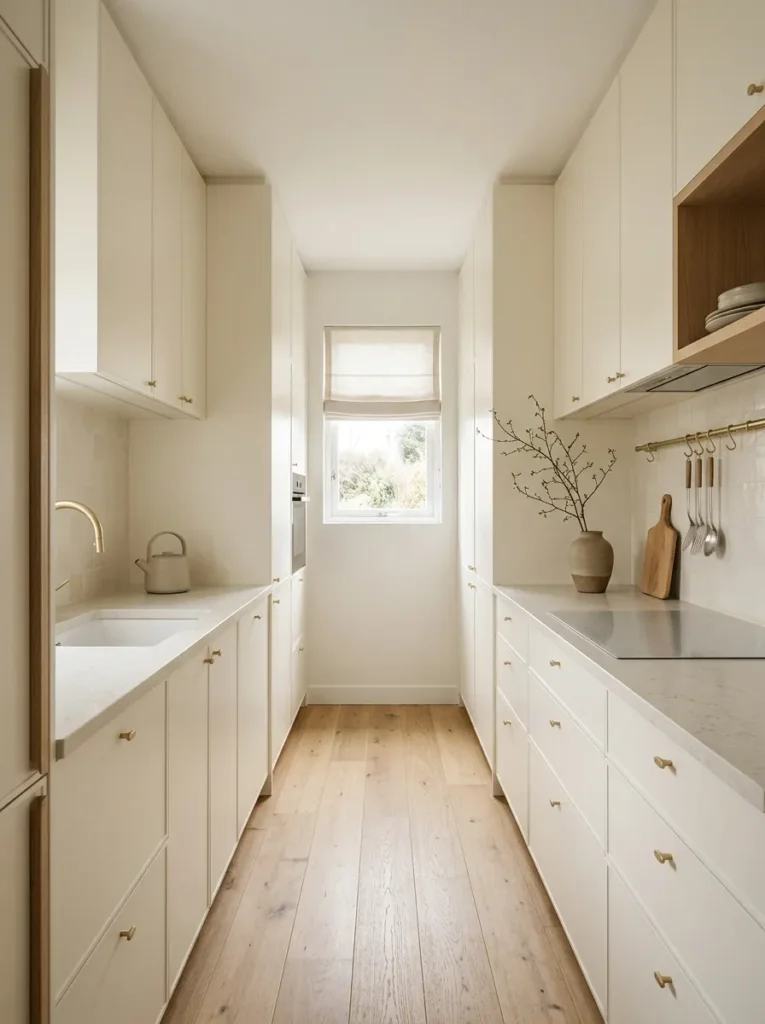
Clutter is one of the biggest reasons a narrow kitchen feels dark and cramped. Piles of items create shadows and visual noise, which make the room look smaller than it is. Treat your counter as the stage of the kitchen: only the items that earn their spot should stay out, ideally three or four daily essentials such as a kettle, a cutting board, and a single decorative piece.
To make that possible, move storage off the counters and onto other surfaces. A wall rail can hold utensils and pots, pull-out organizers inside cabinets use depth far more efficiently than a shelf you have to reach into, and hooks or a slim rack on the back of a door can take towels, lids, or cleaning tools. Appliances you use only occasionally, like a stand mixer or a slow cooker, are better in a pantry or high cabinet.
When surfaces stay open, light moves across them and the room feels more organized and calm. This is also one of the few changes that costs almost nothing and works in every kitchen.
Putting It All Together
You don’t need to use all eight ideas to see a change. If you’re not sure where to begin, start with the simple, low-cost steps: clear the counters, clean the windows, and add under-cabinet lighting. Then move on to repainting the walls or cabinets in a lighter shade, and hang a mirror while swapping heavy window coverings for sheer ones. Bigger updates like the backsplash, hardware, or flooring can follow as your budget allows.
Working in stages gives you time to see how the light changes after each step. It also helps you avoid spending on bigger updates before the simple ones have had their effect.
Conclusion
A dark, narrow kitchen can become a bright, welcoming space with a few focused changes. The best kitchen interior ideas for tight layouts combine light paint, layered lighting, reflective finishes, mirrors, open shelving, and clean, uncluttered surfaces. Each one helps light travel farther and makes the room feel wider.
Start with the upgrades that suit your budget, then build on them over time. Even small changes can make your kitchen feel lighter, more open, and more enjoyable to cook in.
Frequently Asked Questions (FAQs)
- What color is best for a dark, narrow kitchen?
Light, warm shades such as soft white, cream, pale greige, and light sage usually work best because they reflect more light. Painting the walls and cabinets in the same or similar tones reduces visual breaks and helps the room feel wider. If you want bolder color, add it through accessories or a single feature rather than large areas. - How can I brighten a kitchen with no window?
Focus on artificial light and reflective surfaces. Use layered lighting, including under-cabinet LEDs and a bright ceiling fixture, and choose glossy tile, light cabinets, and a mirror to bounce the light around. A glass-paneled door or a pass-through opening to a brighter room can also help if your layout allows it. - Should I use dark cabinets in a narrow kitchen?
Dark cabinets can look striking, but they absorb light and may make a narrow space feel tighter. If you love the look, limit them to the lower cabinets and keep the upper half light, with strong lighting and reflective finishes to balance the contrast. For most dark, narrow kitchens, lighter cabinets are the safer choice.