15 Small Kitchen Pantry Ideas Every Apartment Owner Needs
Living in an apartment usually means working with a kitchen that has little to no pantry space at all. No walk in closet for food, no extra cabinet row, sometimes not even a single shelf set aside for groceries. If that sounds familiar, you’re not alone, and the good news is that a proper pantry setup doesn’t require extra square footage. It requires smart use of the space you already have. This guide walks through 15 small kitchen pantry ideas built specifically for apartments, tiny kitchens, and anyone who wants their food storage to feel organized instead of chaotic.
Why Apartment Kitchens Struggle With Pantry Space
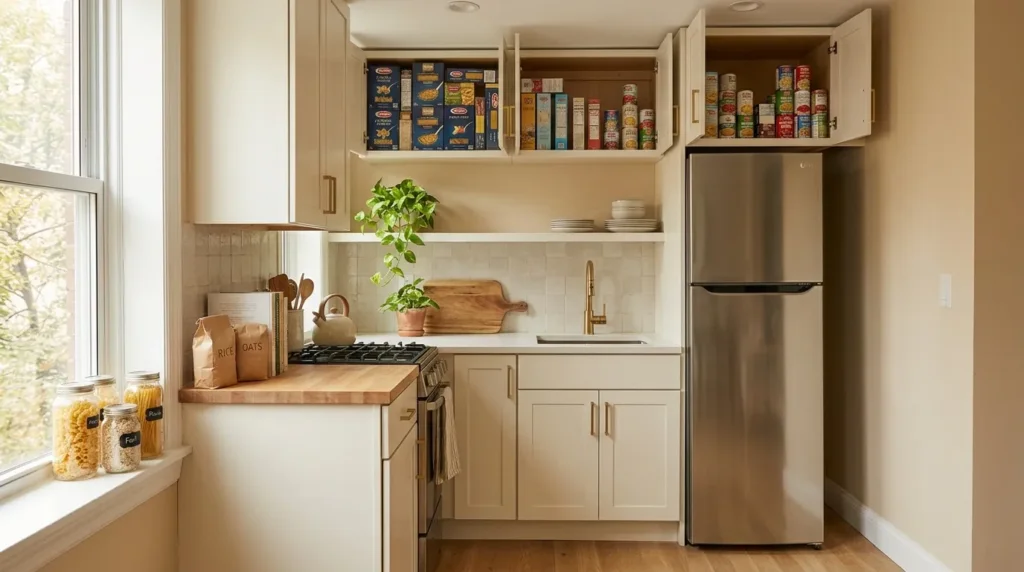
Most apartment kitchens are designed around basic cooking needs rather than long term food storage. Builders tend to prioritize counter space and appliance placement, leaving pantry storage as an afterthought or skipping it entirely. That leaves renters and owners to figure out their own solution, usually after realizing there’s nowhere left to put a bag of rice or a box of pasta.
A few common issues show up again and again in tight kitchens:
- No dedicated pantry closet or cabinet
- Deep cabinets where items get lost or forgotten at the back
- Narrow gaps between the fridge and the wall that go unused
- Counters that end up doubling as storage because cabinets run out of room
Once you know what you’re working against, it becomes much easier to plan around it, and that’s exactly what these 15 ideas are built to solve.
1. Use a Slim Rolling Cart as a Mini Pantry
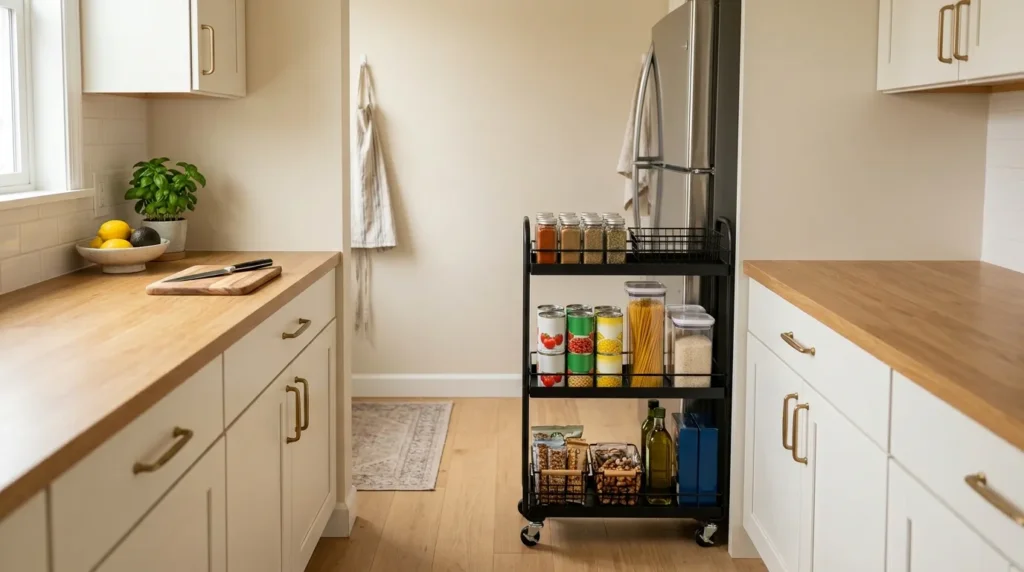
A narrow rolling cart with two or three tiers can slide into almost any gap in a kitchen, including the space beside a fridge or at the end of a counter run. Fill it with canned goods, snacks, spices, or baking supplies, and roll it out whenever you need full access.
This option works especially well for renters, since it requires no drilling, no permanent installation, and moves with you when you relocate.
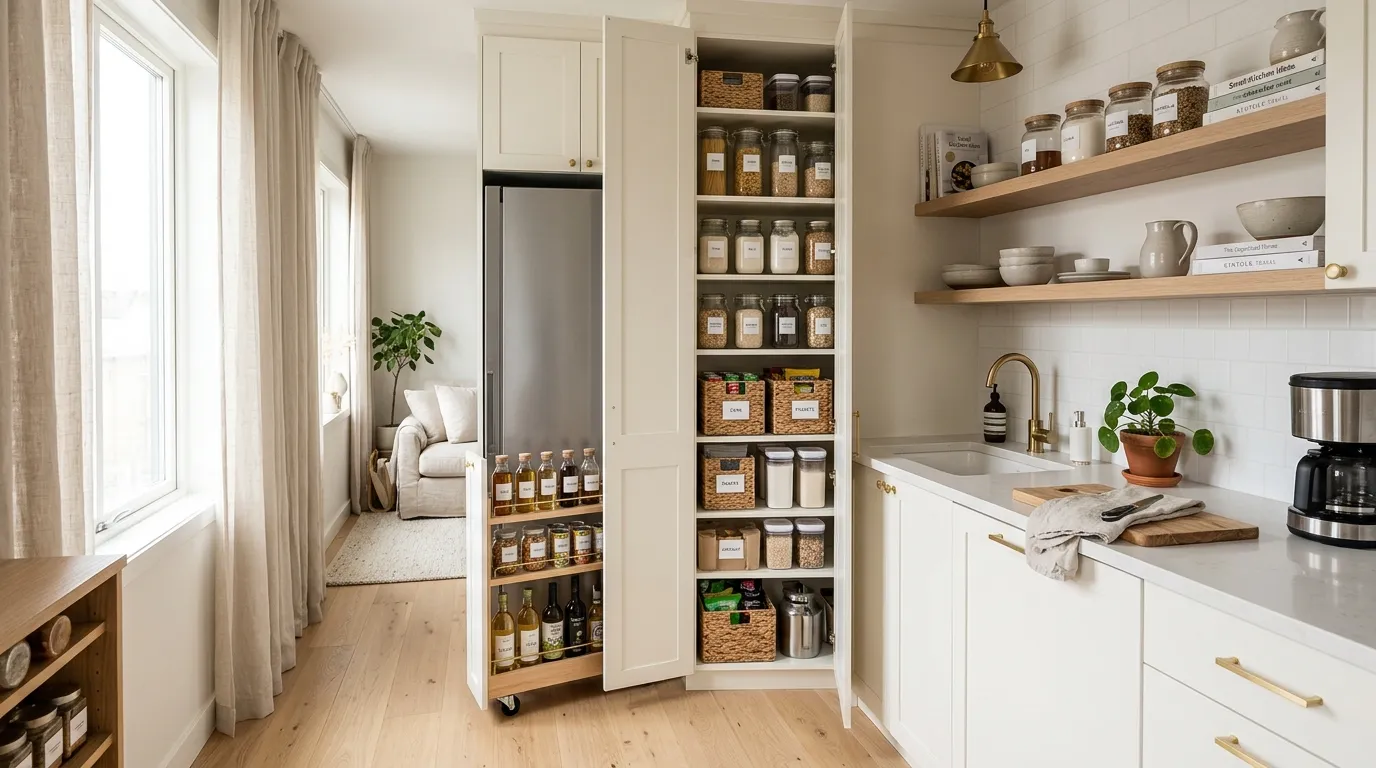
2. Add a Pull Out Pantry Cabinet
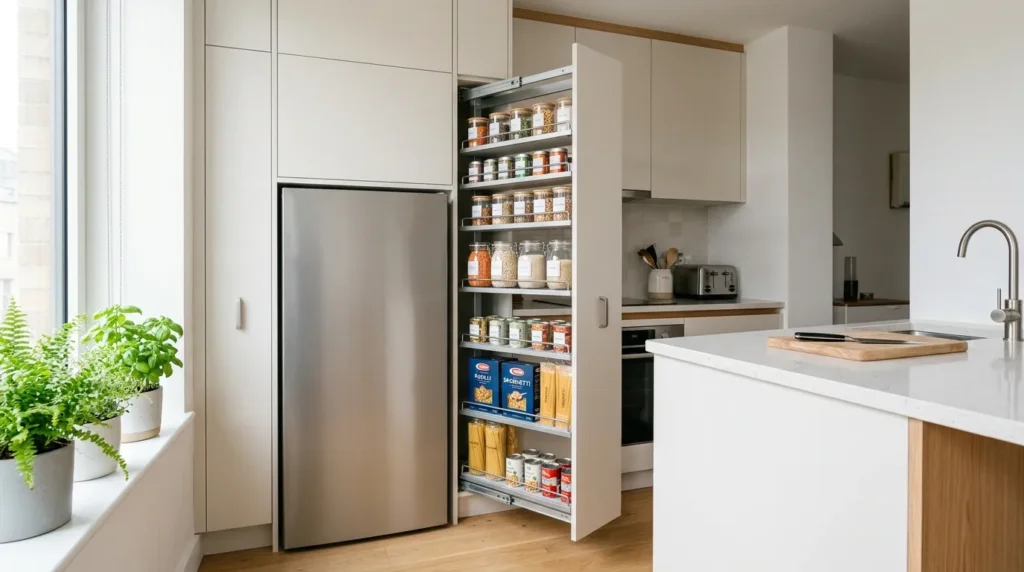
If you have even one narrow cabinet, a pull out pantry unit turns it into serious storage. These slim units come with multiple shelves that slide out completely, giving you a clear view of everything stored inside instead of digging through a dark, deep cabinet.
Many models are designed to fit spaces as narrow as six inches wide, which makes them a solid fit for the tight, leftover gaps that most small kitchens have.
3. Turn a Closet Nearby Into Pantry Storage
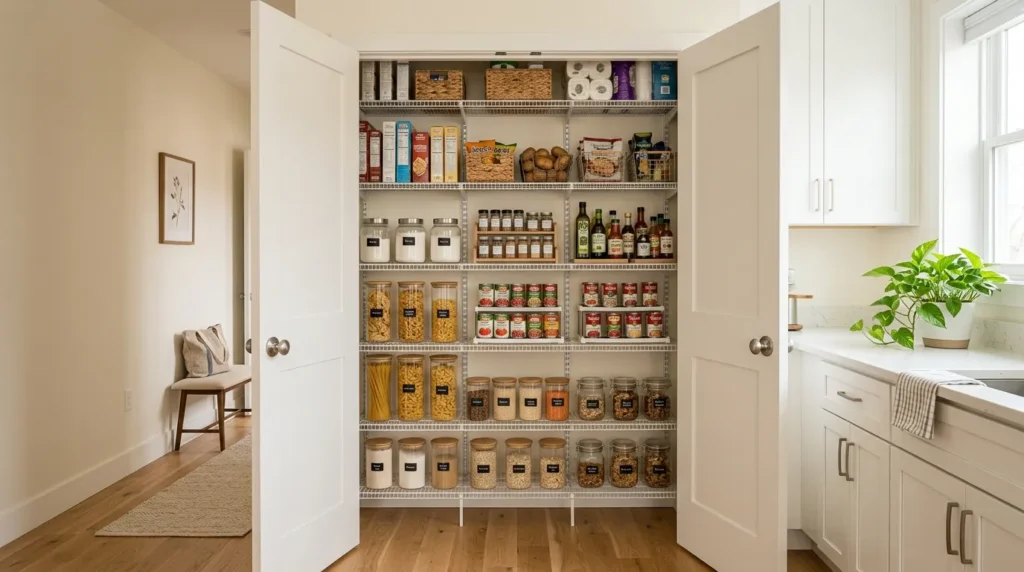
If there’s a hallway closet or a coat closet near the kitchen, it can often be repurposed into a pantry with a few wire shelves or freestanding shelving units. This works particularly well in apartments where the kitchen itself has almost no storage at all.
A few steps to make this work smoothly:
- Remove anything currently stored there that doesn’t belong near food
- Add adjustable wire shelving so you can customize the height for cans, boxes, and jars
- Keep frequently used items on the middle shelves and bulk items up top
4. Use Stackable Bins and Baskets
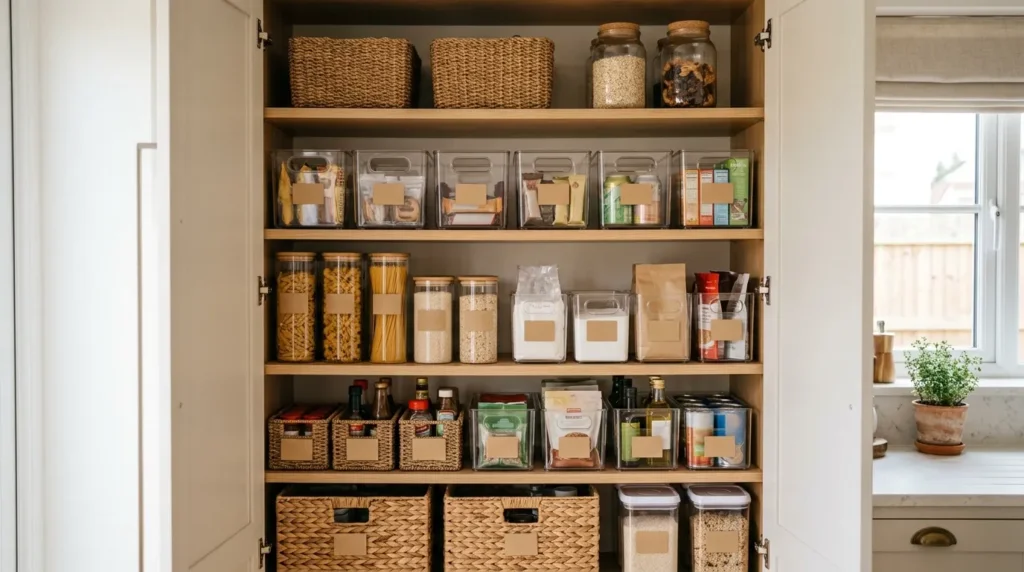
Loose bags of chips, pasta boxes, and snack packets tend to pile up and create clutter fast. Stackable bins and baskets group similar items together and make the most of both vertical and horizontal space inside a cabinet.
Clear bins work particularly well since you can see what’s inside without opening every container, which saves time during meal prep and grocery shopping.
5. Install Shelves Above the Fridge
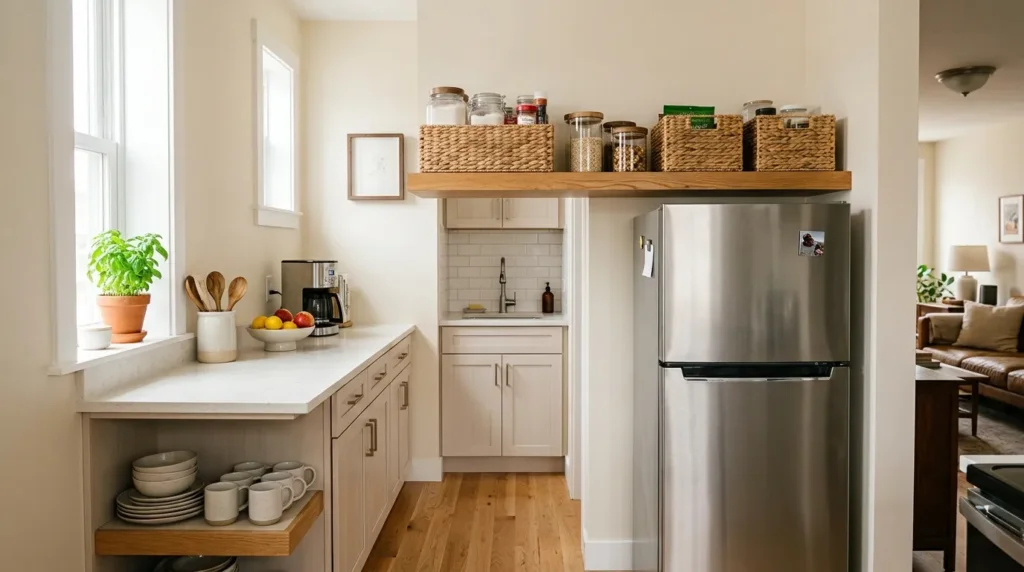
The space above a refrigerator is one of the most overlooked spots in a small kitchen. A simple floating shelf or a small cabinet installed there can hold items you don’t need daily, such as extra spices, baking supplies, or bulk purchases.
Since this space sits higher than eye level, it’s a natural spot for less frequently used items rather than everyday staples. A few things that work well up there:
- Bulk packs of snacks or paper goods
- Seasonal baking trays and holiday supplies
- Extra spice jars you restock only once in a while
- Large serving bowls or platters used a few times a year
6. Add a Door Mounted Organizer
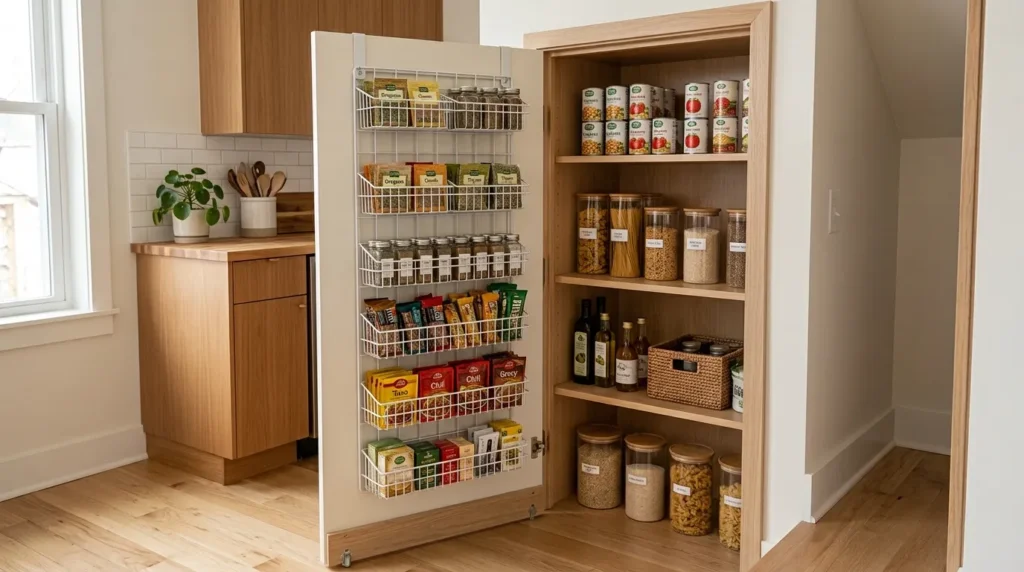
The back of a pantry door, cabinet door, or even a closet door offers flat, unused space that’s easy to turn into storage. Door mounted organizers with pockets or small bins work great for spice packets, snack bars, or small jars that would otherwise get lost on a deep shelf.
This is one of the simplest upgrades on this list, since most organizers install with hooks or adhesive strips and need no tools at all.
7. Use Clear Glass Jars for Dry Goods
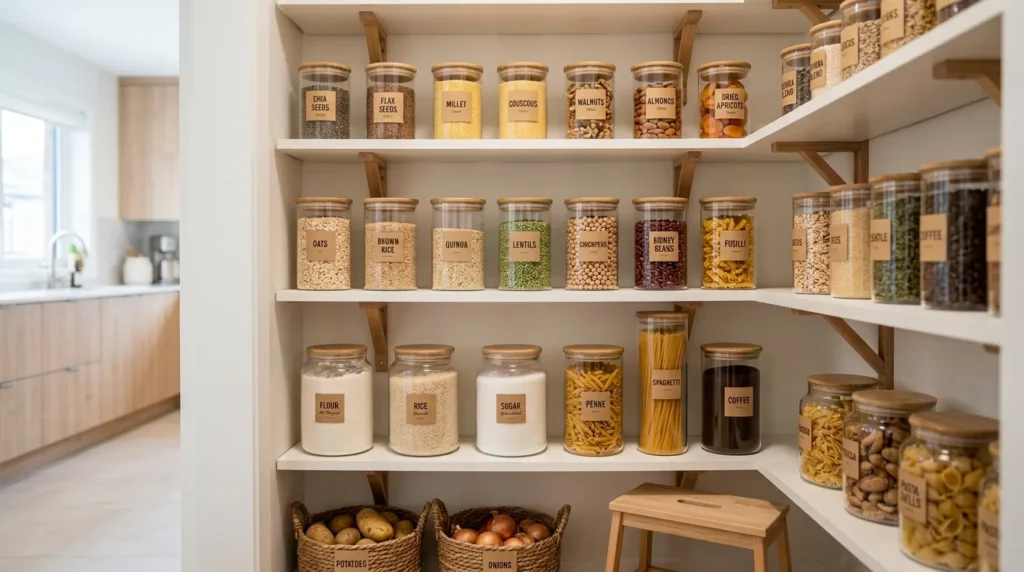
Transferring rice, flour, sugar, oats, and pasta into matching glass jars does two things at once. It keeps food fresher for longer, and it makes your shelves look organized rather than cluttered with mismatched bags and boxes.
Uniform jars also stack and line up more neatly than packaging of different shapes and sizes, which means you can fit more into the same shelf space. Here’s a quick guide on jar sizing for common pantry staples:
| Jar Size | Best For | Approx Shelf Space |
| Small (16 oz) | Spices, seeds, dried herbs | Narrow shelf or door rack |
| Medium (32 oz) | Rice, oats, sugar | Standard shelf row |
| Large (64 oz) | Flour, pasta, bulk grains | Bottom or deep shelf |
Picking the right size for each item keeps the shelf looking neat instead of overcrowded with half empty large jars or overflowing small ones.
8. Build a Pantry Inside a Kitchen Island or Cart
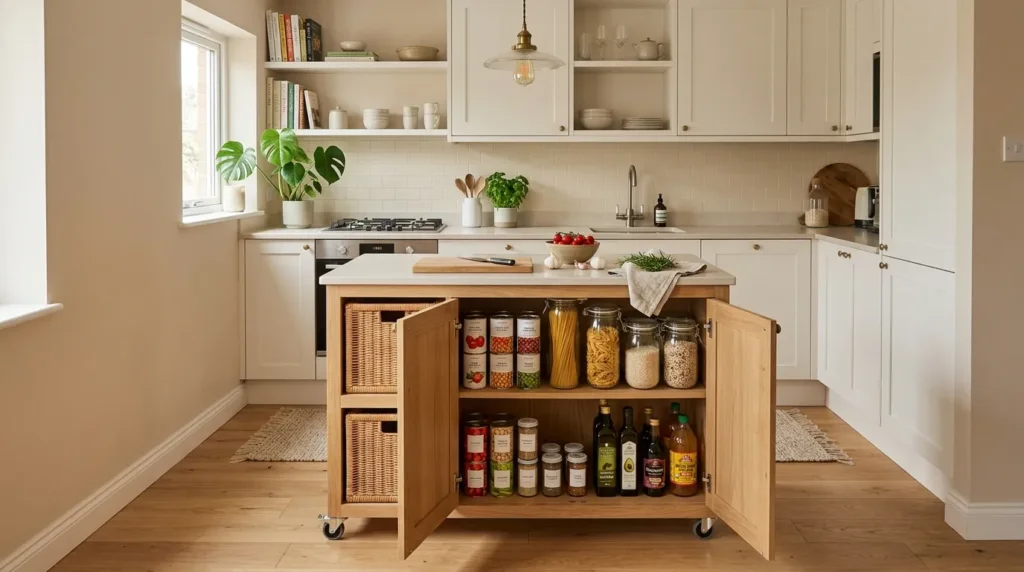
If your kitchen has a small island or a freestanding cart with cabinet space underneath, that area can double as pantry storage instead of sitting empty. Add a few bins or baskets inside to keep canned goods and boxed items organized rather than loose.
This approach works well for anyone who wants pantry storage that blends into the kitchen layout rather than standing out as a separate unit. Good items to store here include:
- Canned vegetables, beans, and soups
- Boxed pasta and grains
- Bottled oils and vinegars
- Snack items for quick grabbing during meal prep
9. Use Tiered Shelf Inserts
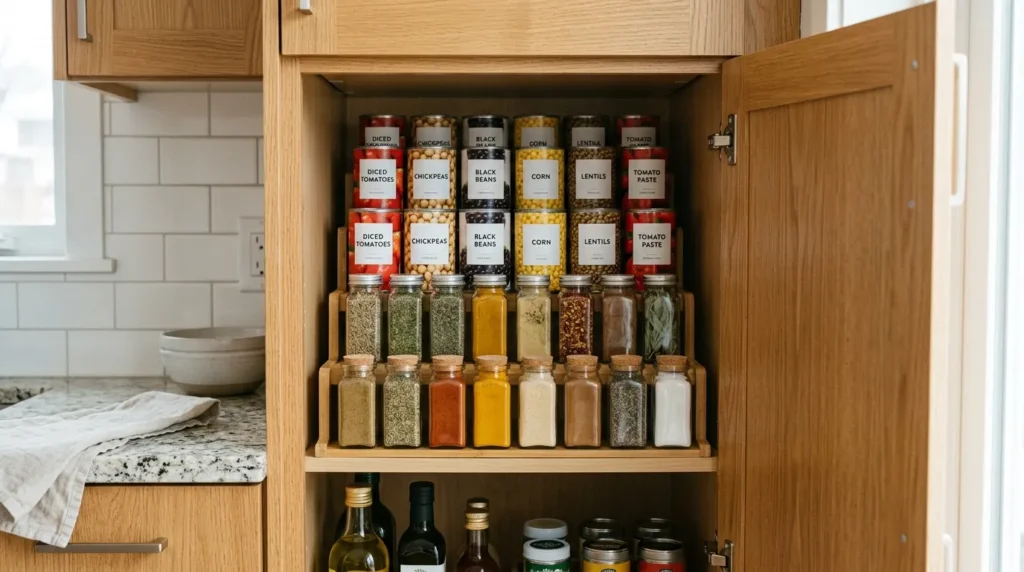
A tiered shelf insert raises the back row of items so you can see everything on a cabinet shelf at once, rather than reaching over tall cans to find something hiding behind them. These inserts are inexpensive and drop right into an existing cabinet with no installation required.
They work especially well for canned goods, spice jars, and small boxed items that tend to get lost when stacked flat.
10. Add a Freestanding Pantry Cabinet
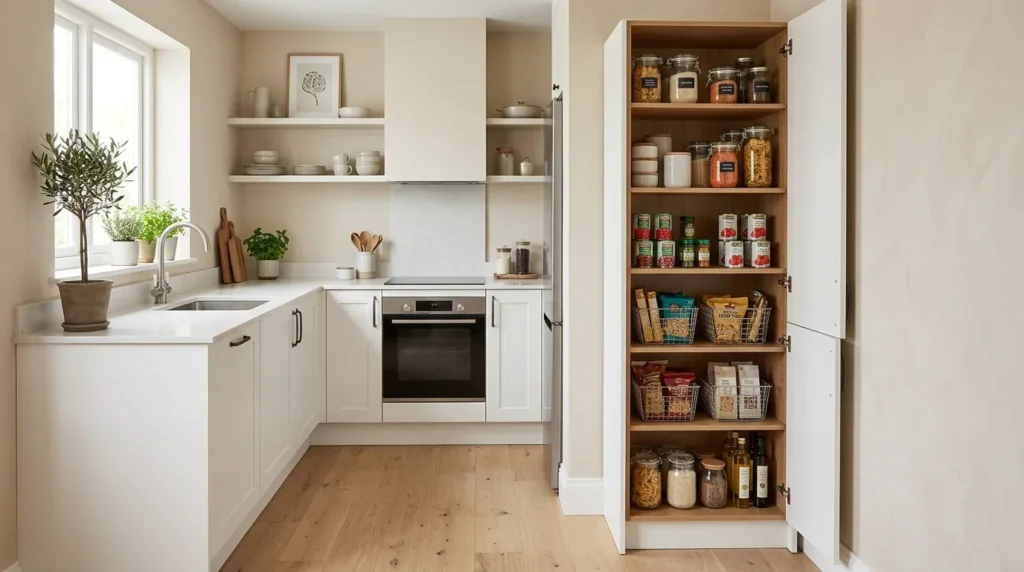
If you have even a small patch of open wall or floor space, a freestanding pantry cabinet can add a surprising amount of storage. Many modern designs are narrow, tall, and built specifically for apartments and small kitchens where a built in pantry isn’t an option.
Look for one with adjustable shelves so you can rearrange the inside as your storage needs change over time. A quick comparison of common cabinet widths:
| Width | Good For | Fits In |
| 12 to 16 inches | Small apartments, tight corners | Narrow gaps beside fridge or counter |
| 18 to 24 inches | Standard pantry needs | Most kitchen or hallway walls |
| 30 inches and up | Larger households | Dining area or open wall space |
11. Use Under Sink Storage Wisely

The area under the kitchen sink often gets filled with cleaning supplies, but there’s usually room left over for shelf risers or stackable bins that hold pantry overflow. Items that fit well down there include:
- Extra napkins and paper towels
- Aluminum foil and plastic wrap
- Snack packs and small boxed goods
- Backup cleaning supplies kept separate from food
A simple two tier organizer under the sink can double the usable space in that cabinet without any major changes.
12. Hang a Wall Mounted Wire Basket System
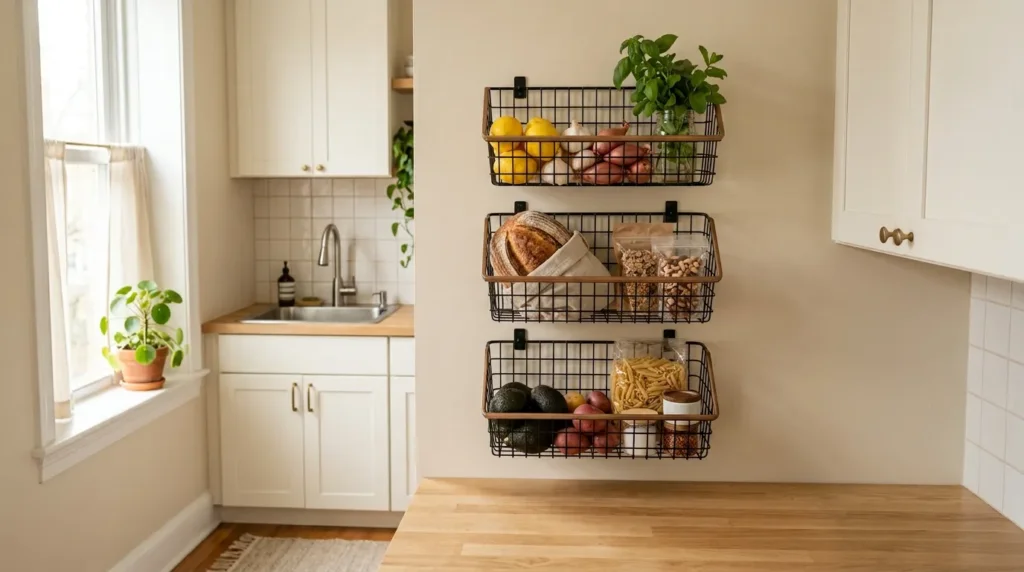
For apartments with almost no cabinet space at all, wall mounted wire baskets offer an easy way to store produce, bread, or snacks without taking up counter or cabinet room. These systems mount directly to the wall and come in stacked tiers, so you can hold a good amount of food in a small footprint.
This option also adds a bit of visual interest to a blank kitchen wall while keeping food off the counter.
13. Label Everything
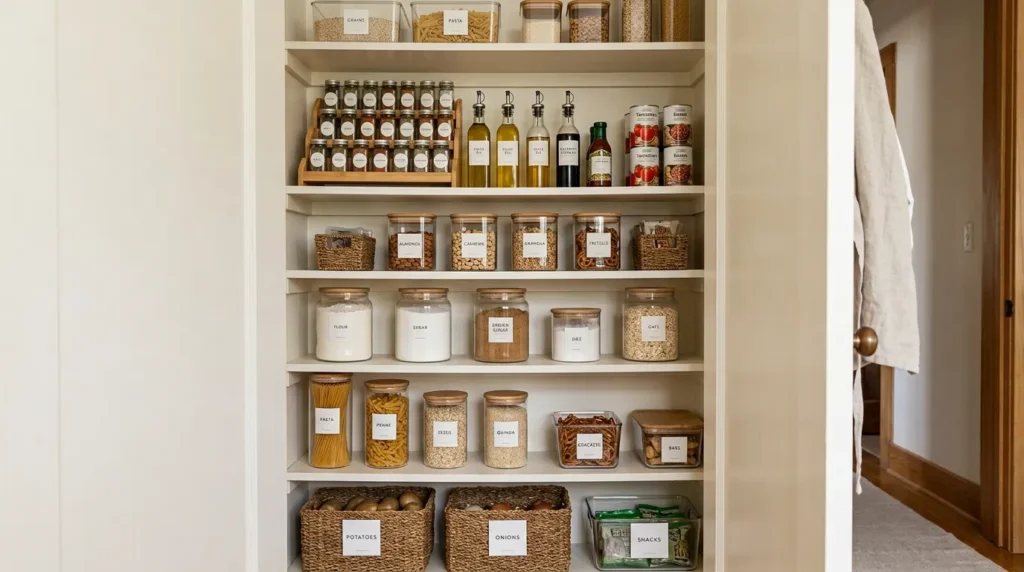
Labels might seem like a small detail, but they make a real difference in a compact pantry setup. When shelf space is tight, clear labeling helps you find what you need quickly instead of pulling out three containers before spotting the right one.
Simple label options that work well:
- Chalkboard style labels you can wipe and reuse
- Printed sticker labels for a clean, uniform look
- A basic label maker if you want something fast and consistent
This small step also helps everyone in the household put things back in the right spot.
14. Use the Space Between Cabinet and Ceiling

Many kitchens have a small gap between the top of the cabinets and the ceiling that goes completely unused. Decorative bins or baskets placed there can hold bulk items or things you only use occasionally, like holiday baking supplies or extra paper goods.
Since this space sits well above eye level, it’s best suited for items you don’t need to grab on a daily basis.
15. Rotate and Downsize Regularly

Even the best pantry system gets cluttered over time if nothing ever gets used up or cleared out. Going through your pantry every couple of months, checking expiration dates, and donating or tossing what you no longer need keeps the whole system working the way it should.
A pantry that’s edited regularly will always feel more organized than one that’s simply packed with more storage solutions and never reviewed.
Final Thoughts
A small apartment kitchen doesn’t have to mean giving up on organized food storage. With a mix of clever furniture choices, wall space, and a bit of regular upkeep, you can build a pantry system that works just as well as a full sized one. Start with one or two ideas from this list that match your space and budget, and build from there as you figure out what actually fits your daily routine.
Frequently Asked Questions
- What is the cheapest way to add pantry storage in a small kitchen?
A slim rolling cart or a few stackable bins are the most affordable options. Both cost very little, need no installation, and can be moved or resized as your storage needs change.
- Can I add a pantry without drilling into the walls?
Yes. Freestanding cabinets, rolling carts, door mounted organizers with hooks, and stackable bins all work without any permanent installation, which makes them ideal for rented apartments.
- How do I stop my pantry from feeling cluttered?
Transfer dry goods into matching jars, label everything clearly, and go through your shelves every couple of months to remove items you no longer need. Keeping similar items grouped together also helps a lot.
- Where is the best spot for pantry storage in a kitchen with no extra room?
Look above the fridge, the gap between cabinets and the ceiling, and any narrow space beside the fridge or counter. These spots are usually empty and can hold a surprising amount once fitted with shelves or bins.
- How often should I clean out my pantry?
Going through your pantry every two to three months works well for most households. This keeps expired items from piling up and gives you a clear picture of what actually needs restocking.