

17 Small Kitchen Ideas Inspired by Scandinavian Design
Scandinavian design has built its entire reputation on doing more with less, which makes it one of the best sources of inspiration if you’re working with a compact kitchen. Clean lines, functional layouts, and a calm, uncluttered look aren’t just aesthetic choices in Nordic design—they’re practical solutions born from smaller homes and long, dark winters that demand light, airy interiors.
If you’ve ever felt like your small kitchen is working against you instead of for you, Scandinavian principles offer a refreshing shift in perspective. Instead of trying to disguise a small space, this design philosophy embraces it, using smart storage, natural materials, and thoughtful lighting to make every square foot count.
This article walks through 17 small kitchen ideas rooted in Scandinavian design, covering everything from color choices to cabinetry to the small details that make a real difference. Whether you’re renovating or just looking for a few practical updates, these ideas are meant to be genuinely useful, not just visually inspiring.
Why Scandinavian Design Works So Well for Small Kitchens
Before getting into specific ideas, it’s worth understanding why this design style translates so naturally to compact spaces. Scandinavian interiors are built around a few core values: simplicity, functionality, and a strong connection to natural light and materials.
These values solve many of the exact problems small kitchens face—limited light, limited storage, and a tendency to feel cramped or cluttered. That overlap is what makes Scandinavian-inspired small kitchen ideas so effective; they weren’t designed as a trend, but as a response to real spatial limitations.
1. Start With a Light, Neutral Color Palette
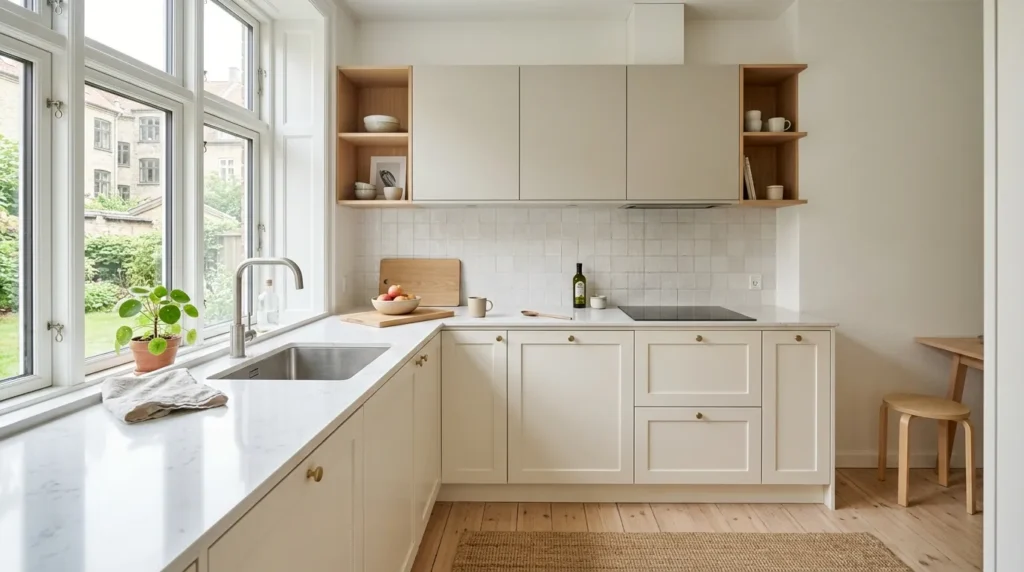
Scandinavian kitchens are known for their soft, neutral tones, and this is one of the most effective small kitchen ideas you can borrow. White, soft gray, and warm off-white tones reflect light rather than absorbing it, which makes a small kitchen feel more open.
Instead of a single flat white, look for tones with subtle warmth to avoid a cold, clinical feel. Warm whites and soft greiges tend to feel more inviting than stark, cool-toned whites, especially in kitchens without much natural light.
2. Choose Simple, Handle-Free Cabinetry
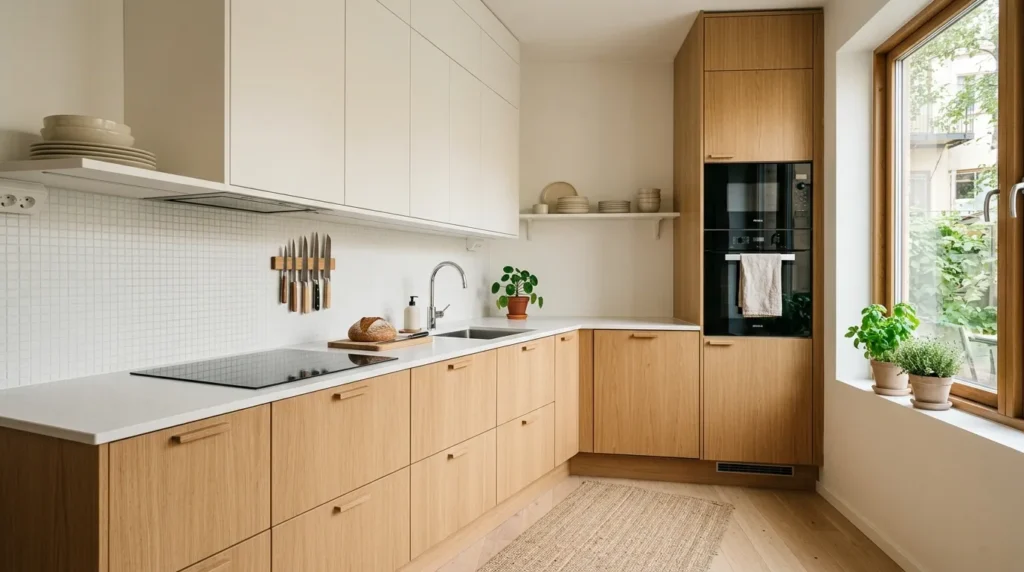
Clean lines are a hallmark of Scandinavian kitchens, and handle-free or minimal-hardware cabinetry supports this look while also reducing visual clutter. Push-to-open cabinets or slim integrated handles keep the eye moving smoothly across the space instead of catching on bulky hardware.
This approach works particularly well in small kitchens because:
- It eliminates visual “noise” created by multiple hardware pieces
- It creates a streamlined, cohesive look across cabinets
- It’s easier to keep clean, since there are fewer crevices for grime
3. Bring in Natural Wood Accents
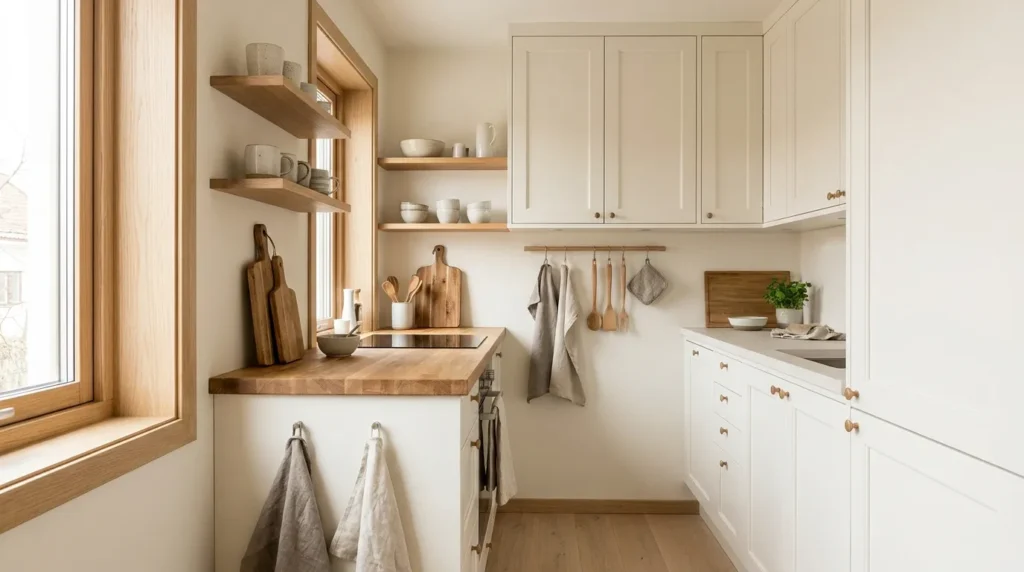
Wood is one of the defining materials of Scandinavian interiors, and it plays a key role in warming up an otherwise minimal, neutral space. Light woods like oak, birch, and ash are especially common, offering warmth without the visual weight of darker wood tones.
Consider incorporating wood through open shelving, a butcher block countertop section, or wooden cabinet fronts paired with painted upper cabinets. Even small wooden accents—cutting boards, utensil holders, or a wood-topped island—can bring in that signature Nordic warmth.
4. Maximize Natural Light Wherever Possible
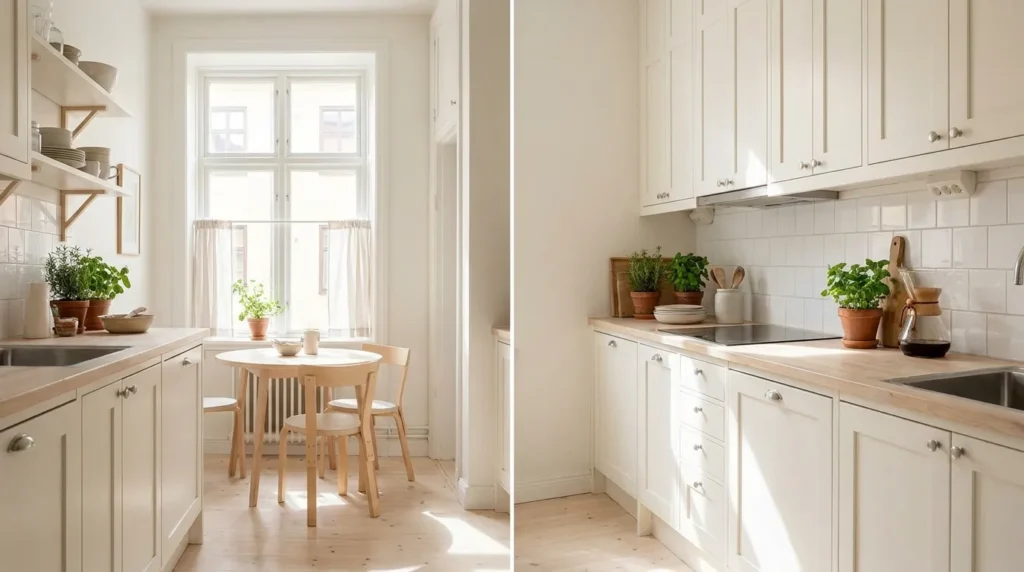
Given Scandinavia’s long winters and limited daylight hours, Nordic design places enormous emphasis on maximizing whatever natural light is available. This principle is especially valuable for small kitchens, where good lighting can make the difference between a space feeling cramped or open.
If your kitchen has a window, keep window treatments minimal or skip them entirely if privacy allows. Sheer curtains or simple roller shades let in far more light than heavy drapes, and every bit of natural light helps a small space feel larger and airier.
5. Use Open Shelving Instead of Upper Cabinets
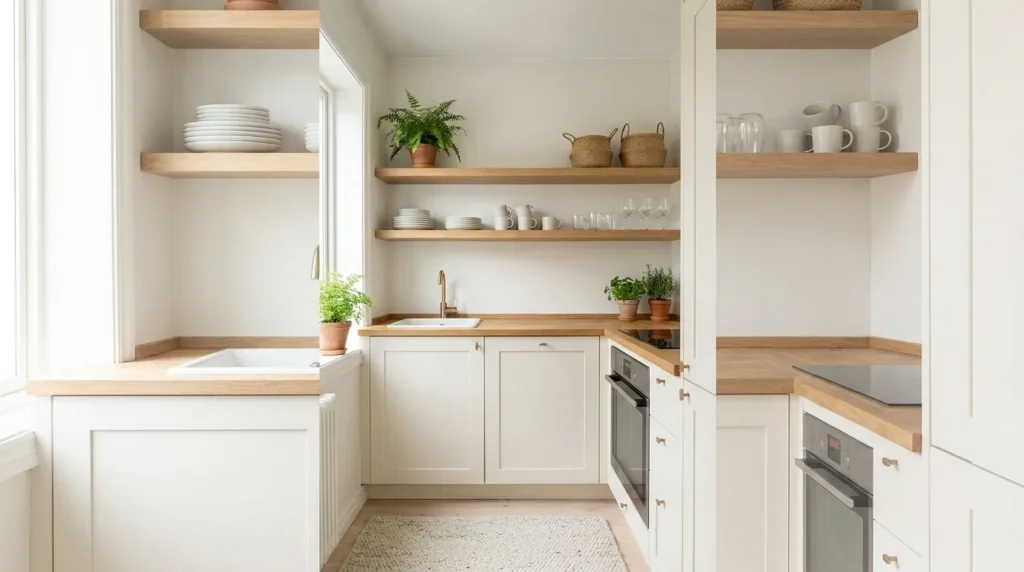
Open shelving is a signature feature of Scandinavian kitchens, and it’s one of the most practical small kitchen ideas for making a compact space feel less closed-in. Unlike bulky upper cabinets, open shelves create visual breathing room while still offering functional storage.
Benefits of open shelving in small kitchens include:
- A lighter, airier feel compared to closed cabinetry
- Easy access to everyday items like plates, glasses, and mugs
- An opportunity to display simple, curated items instead of hiding everything away
The key is restraint—Scandinavian open shelving works because it’s kept tidy and uncluttered, not overloaded with mismatched items.
6. Keep Countertops Clear and Purposeful
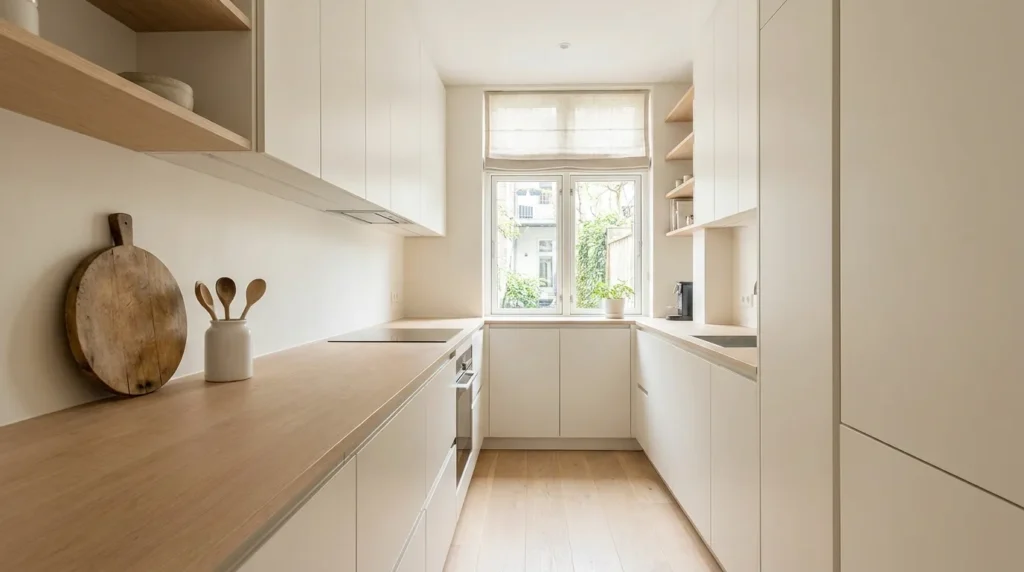
A defining trait of Nordic kitchens is minimal countertop clutter. Rather than leaving small appliances and gadgets out permanently, only the essentials stay visible—often just one or two functional or beautiful items, like a wooden cutting board or a simple ceramic utensil holder.
This habit alone can make a small kitchen feel significantly larger, since clear countertops create a sense of openness and calm. If counter space is tight, consider storing appliances you use less frequently in cabinets and reserving visible space for daily-use items only.
7. Add Warmth With Textiles
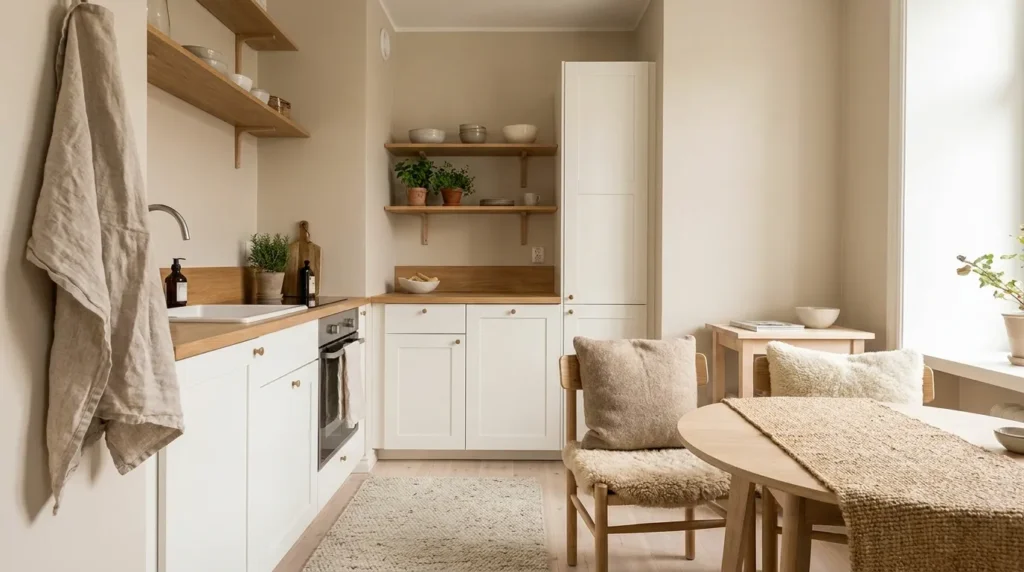
Textiles play a bigger role in Scandinavian kitchens than many people expect. Simple linen tea towels, a woven table runner, or soft cushions on kitchen chairs bring warmth and texture into an otherwise minimalist space.
In a small kitchen, textiles are an easy, low-cost way to add personality without introducing visual clutter, since they can be swapped out seasonally or as your taste evolves.
8. Choose Multi-Functional Kitchen Islands or Carts
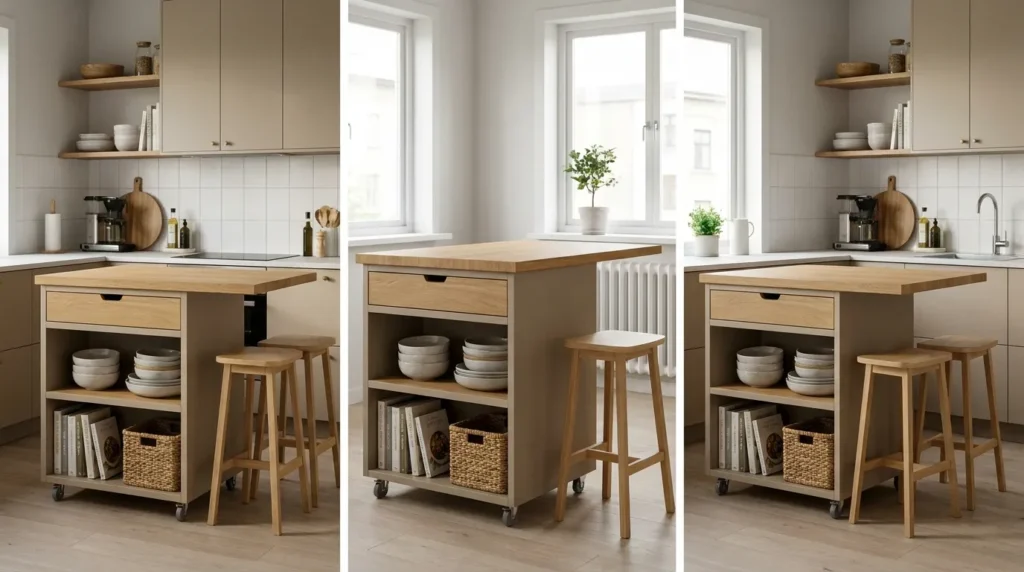
Not every small kitchen has room for a built-in island, but Scandinavian design offers a solution: compact, mobile kitchen carts or slim islands that provide extra prep space and storage without permanently commanding the room.
A well-chosen cart can serve as:
- Additional counter space for meal prep
- A spot for a small kitchen table setup, seating one or two
- A hidden storage from drawers or open shelving underneath
This flexibility is especially useful in small kitchens, since the cart can be moved or tucked away depending on your needs that day.
9. Prioritize Function Over Decoration
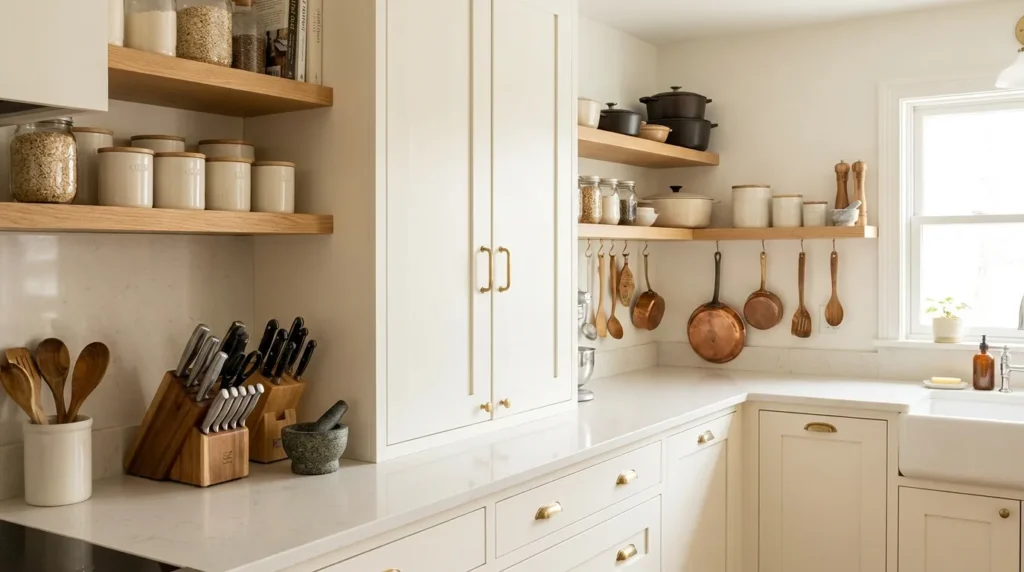
One of the core philosophies behind Scandinavian design is that beautiful things should also be useful. This mindset is incredibly practical for small kitchens, where every item competes for limited space.
Before adding any new kitchen item, ask whether it serves a genuine purpose. A well-designed knife block, a quality set of pots that can be displayed rather than hidden, or an attractive set of canisters for pantry staples all serve double duty as both function and decor.
10. Use Glass-Front Cabinets Strategically
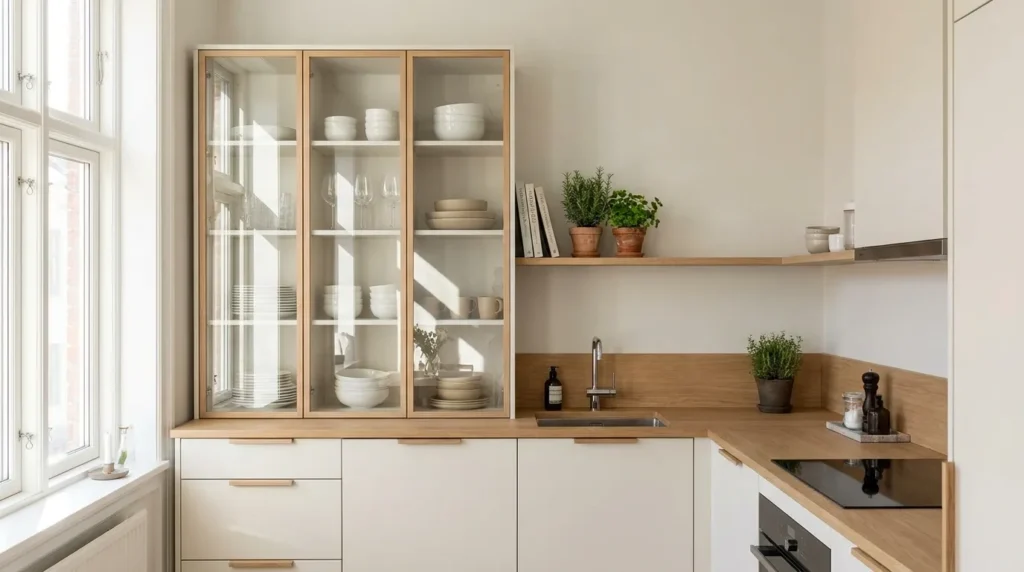
Glass-front cabinets are another common Scandinavian feature, and they offer a clever way to add visual depth to a small kitchen. Unlike solid cabinet doors, glass fronts create a sense of openness by allowing the eye to see through rather than stop at a flat surface.
This works particularly well for upper cabinets near a window or a well-lit area, where the glass can subtly reflect light and make the kitchen feel more expansive.
11. Keep Hardware and Fixtures Simple
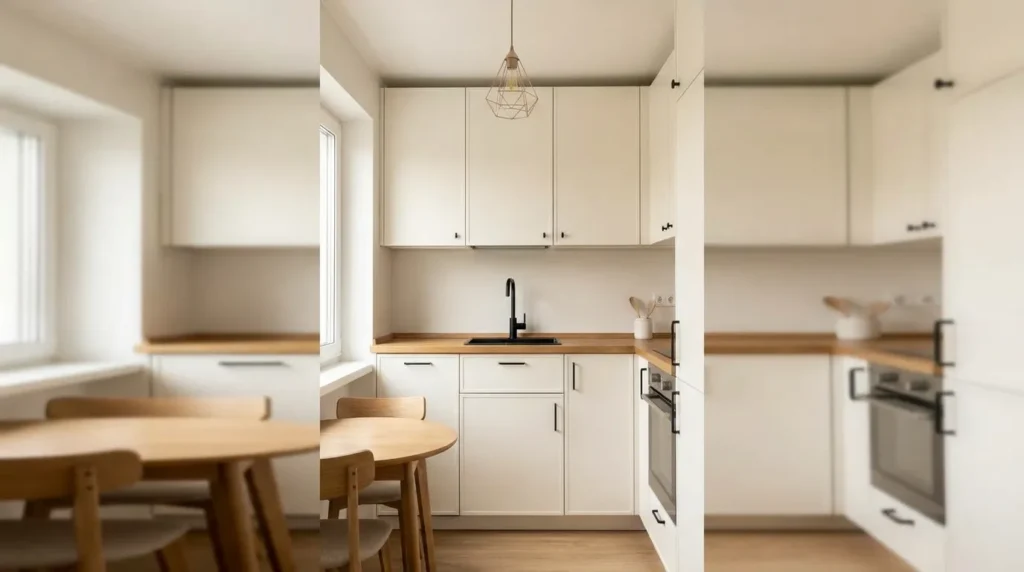
Matte black or brushed metal fixtures with clean, simple lines are common in Scandinavian kitchens, and they help maintain the understated look this design style is known for. Ornate or overly decorative fixtures can feel out of place and visually heavy in a small space.
Simple faucet designs, slim cabinet pulls, and understated lighting fixtures all contribute to the calm, cohesive look that makes Nordic-inspired small kitchen ideas so visually restful.
12. Add a Statement Pendant Light
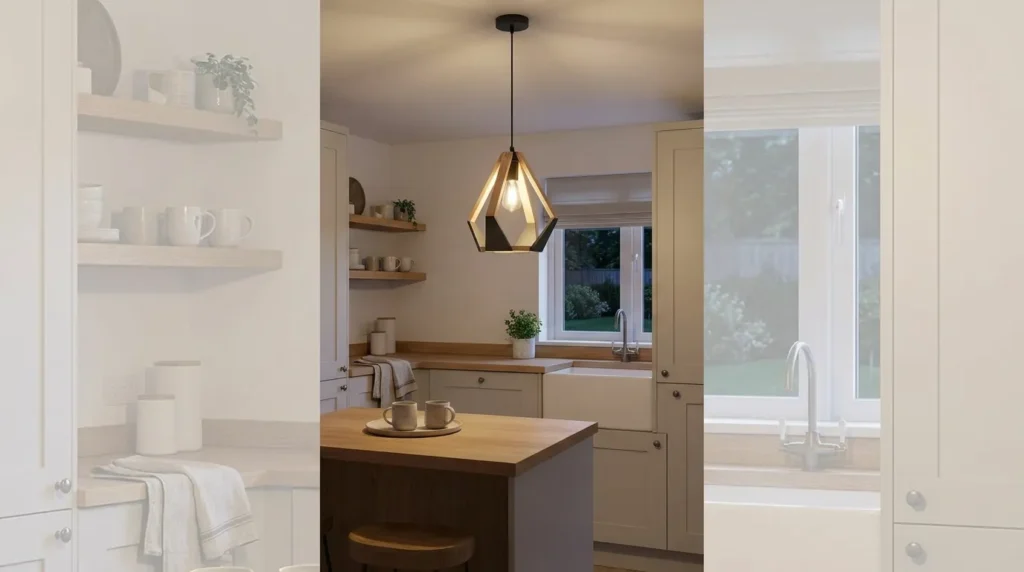
While Scandinavian design generally favors simplicity, lighting is often where a bit of personality shines through. A single, well-designed pendant light over a sink, island, or small dining area can serve as a functional focal point without overwhelming the room.
Look for pendant designs with clean geometric shapes or natural materials like wood, glass, or matte metal—these tend to align most closely with the Nordic aesthetic while still making a visual statement.
13. Incorporate Greenery for a Natural Touch
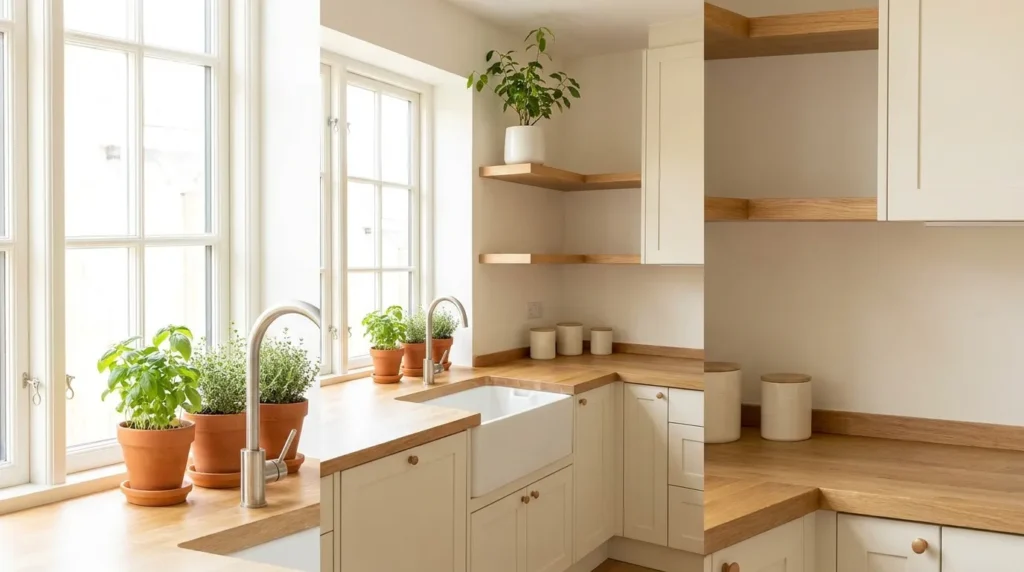
Plants are a simple but effective way to soften a minimal, small kitchen. A small herb garden on a windowsill or a single potted plant on an open shelf adds color and life without disrupting the clean, uncluttered look Scandinavian kitchens are known for.
Herbs like basil, thyme, or mint are especially practical choices, since they’re both decorative and genuinely useful for everyday cooking.
14. Use Vertical Space for Storage
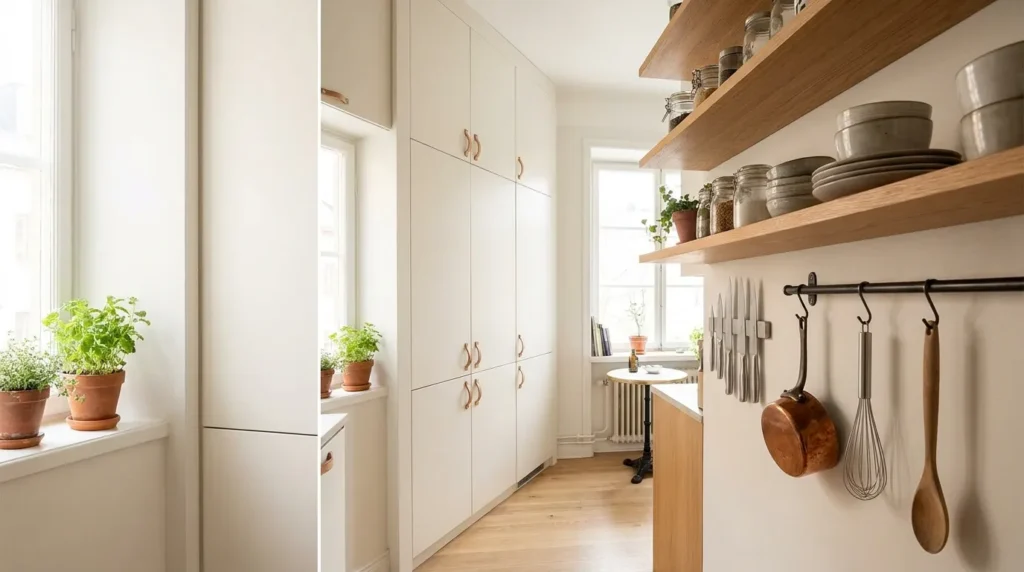
In small Scandinavian kitchens, vertical space is treated as valuable real estate rather than an afterthought. Tall, narrow cabinets, wall-mounted shelving, and hanging rails for utensils or pots all help keep the kitchen organized without requiring additional floor space.
A wall-mounted magnetic knife strip, for example, frees up drawer space while keeping knives easily accessible—an efficient, space-saving solution that’s also visually clean.
15. Let Negative Space Do Some of the Work
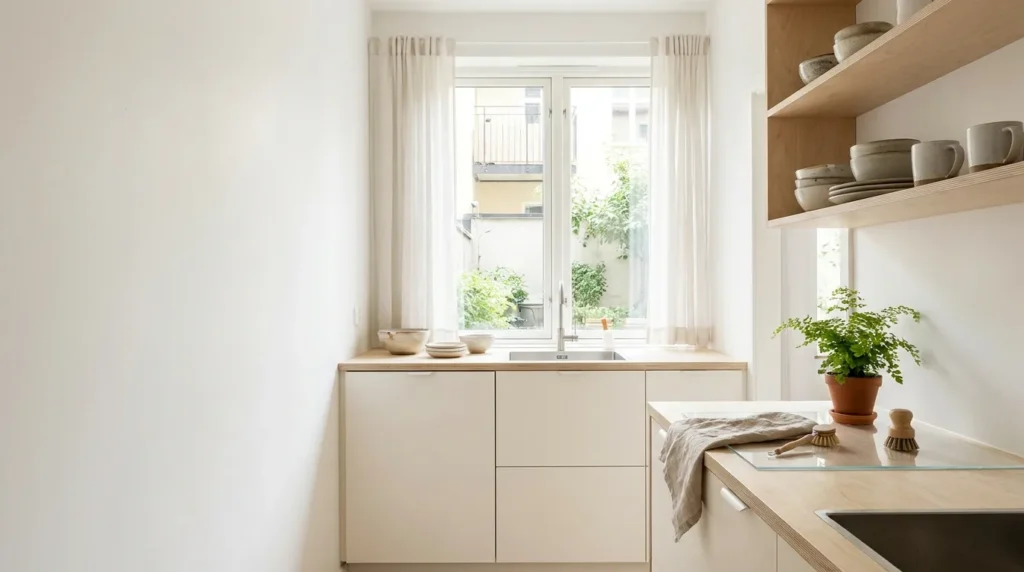
One principle that’s easy to overlook is the deliberate use of empty space. Scandinavian interiors rarely fill every available surface or wall; instead, they leave intentional breathing room between objects.
In a small kitchen, this might mean resisting the urge to fill every open shelf or hang decor on every bare wall. Leaving some areas visually “empty” actually makes the room feel calmer and more spacious, rather than making it feel underdecorated.
16. Choose a Simple, Durable Flooring Material
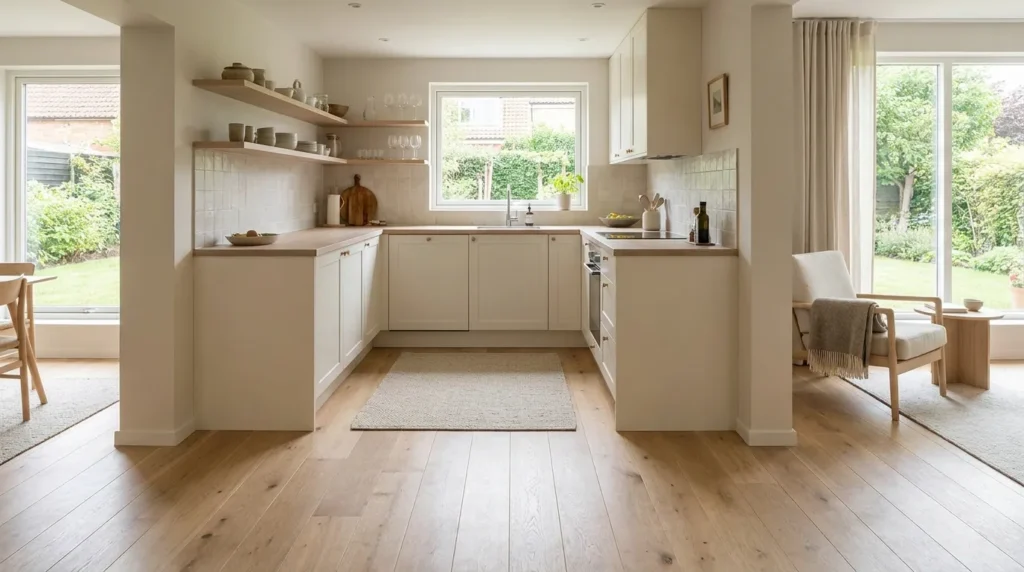
Light wood floors or simple, light-toned tile are common choices in Scandinavian kitchens, contributing to the overall bright, cohesive look. Flooring that continues seamlessly from adjoining rooms can also make a small kitchen feel like part of a larger, connected space rather than a separate, boxed-in room.
If replacing flooring isn’t in the budget, even a simple light-colored rug can visually extend the sense of openness in a small kitchen.
17. Focus on Quality Over Quantity
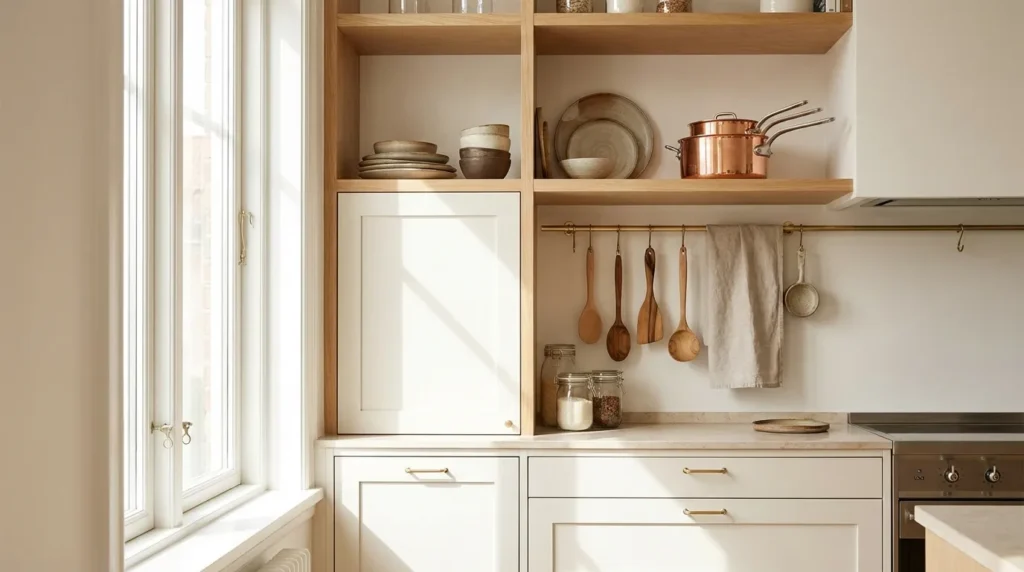
Perhaps the most important small kitchen idea inspired by Scandinavian design is a mindset shift: choose fewer, better items rather than filling every space with cookware, gadgets, and decor. Nordic design values well-made, long-lasting items over trend-driven purchases, which naturally results in less clutter and a more curated look.
This might mean investing in one high-quality set of cookware instead of several mismatched pieces, or choosing a handful of ceramic dishes you genuinely love rather than an overflowing cabinet of rarely-used items. In a small kitchen, this approach isn’t just aesthetically pleasing—it’s genuinely practical, since there’s simply less room for excess.
Bringing It All Together
Scandinavian design offers a refreshing framework for tackling the challenges of a small kitchen. Rather than working against limited space, it embraces simplicity, natural light, and functional beauty to create a room that feels calm, open, and genuinely enjoyable to use.
From light color palettes and open shelving to natural wood accents and thoughtful lighting, these small kitchen ideas aren’t about following a rigid style—they’re about making practical choices that happen to look beautiful too. Start with a few changes that fit your space and budget, whether that’s decluttering your countertops or adding a single wood accent, and build from there.
A small kitchen doesn’t have to feel restrictive. With the right approach, it can become one of the most functional and inviting rooms in your home.
Frequently Asked Questions
- What colors work best for a small Scandinavian-style kitchen?
Light, warm neutrals like soft white, warm gray, and pale beige work particularly well. These tones reflect natural light and create an airy feel, which is especially valuable in kitchens with limited daylight or square footage. - Is open shelving practical for a small kitchen, or just decorative?
Open shelving is genuinely practical for small kitchens, offering easy access to everyday items while keeping the space visually light. The key is keeping shelves tidy and not overloading them, since cluttered open shelving can have the opposite effect. - How can I add warmth to a small kitchen without making it feel cluttered?
Natural wood accents, simple textiles like tea towels or cushions, and a plant or two are effective ways to add warmth without adding visual clutter. The goal is to introduce a few intentional, natural elements rather than filling every surface with decor. - Do I need to renovate to get a Scandinavian look in my small kitchen?
Not necessarily. Many small kitchen ideas inspired by Scandinavian design—like decluttering countertops, adding open shelving, or introducing wood accents—can be done affordably without a full renovation. Larger changes like cabinetry or flooring are optional upgrades, not requirements. - What’s the biggest mistake people make when trying to achieve this look in a small kitchen?
Overcrowding is the most common issue. Scandinavian design relies heavily on restraint and negative space, so filling every shelf, counter, and wall with items—even nice ones—can undermine the calm, open feel this style is known for.

