
14 Small Apartment Living Room Ideas Designers Recommend
Furnishing a small apartment living room comes with a unique set of challenges. Every square foot matters, every piece of furniture needs to earn its place, and one wrong decision can make the whole room feel cramped instead of comfortable. If you’ve ever stood in your living room wondering how to fit a sofa, storage, and a coffee table without it looking like a furniture showroom crammed into a closet, you’re not alone.
The good news is that interior designers work with these constraints all the time, and their strategies aren’t complicated—they’re just intentional. This article breaks down 14 small apartment living room ideas that professionals actually recommend, so you can make smarter design choices without guessing what will work.
Whether you’re furnishing your first apartment or rethinking a space you’ve lived in for years, these ideas focus on function, flow, and visual balance—three things that matter far more than square footage when it comes to creating a room that feels good to live in.
Why Small Living Rooms Need a Different Design Approach
Designing a small space isn’t just about buying smaller furniture. It’s about rethinking scale, sightlines, and how each piece interacts with the room as a whole. A single oversized item can throw off an entire layout, while the right combination of smaller, well-chosen pieces can make a tiny room feel surprisingly open.
Designers typically focus on a few core principles when working with small apartment living room ideas:
- Prioritizing multi-purpose furniture
- Creating visual flow rather than visual clutter
- Using scale and proportion intentionally
- Maximizing vertical space instead of just floor space
Keeping these principles in mind will help the following ideas make more sense as a cohesive system, rather than a random list of tips.
1. Choose Furniture With Exposed Legs
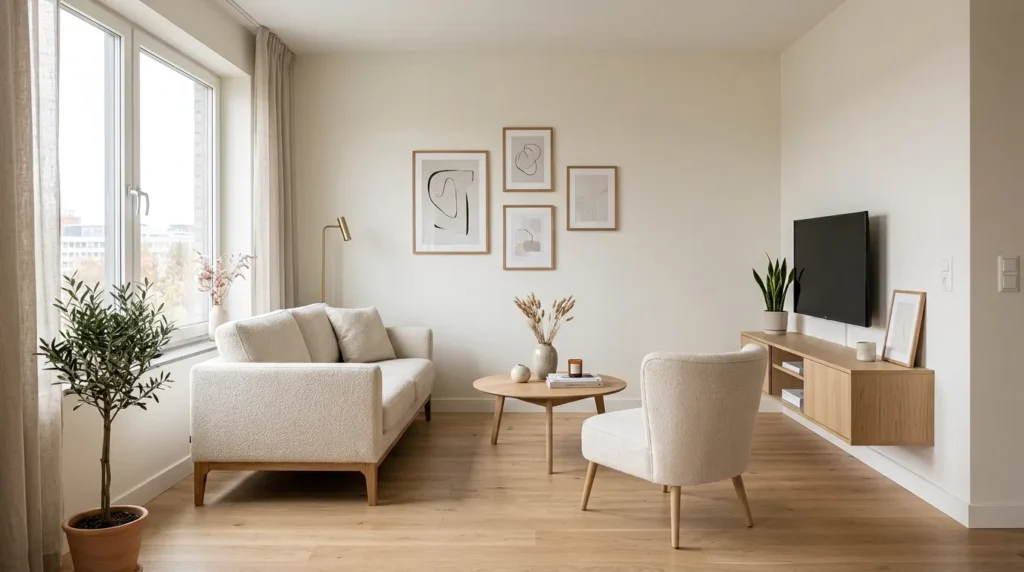
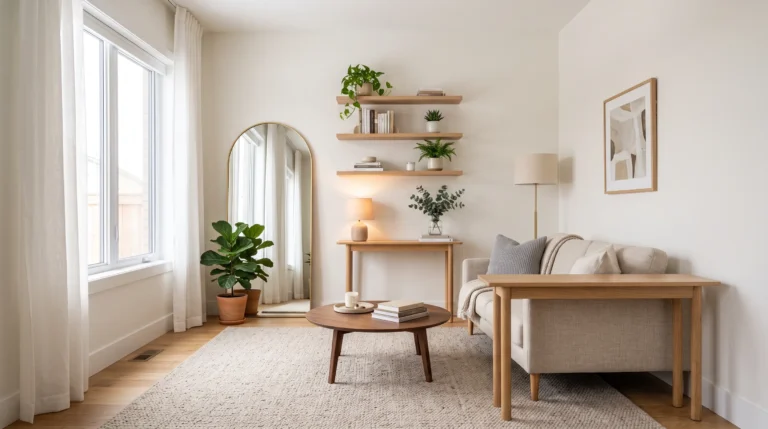
One of the simplest ways to make a small living room feel larger is choosing furniture with visible legs instead of pieces that sit flush to the floor. This creates a sense of openness because you can see the floor beneath the furniture, which visually expands the space.
Sofas, chairs, and even media consoles with slim, exposed legs feel lighter and less bulky—an easy upgrade that doesn’t require sacrificing comfort.
2. Go Vertical With Storage
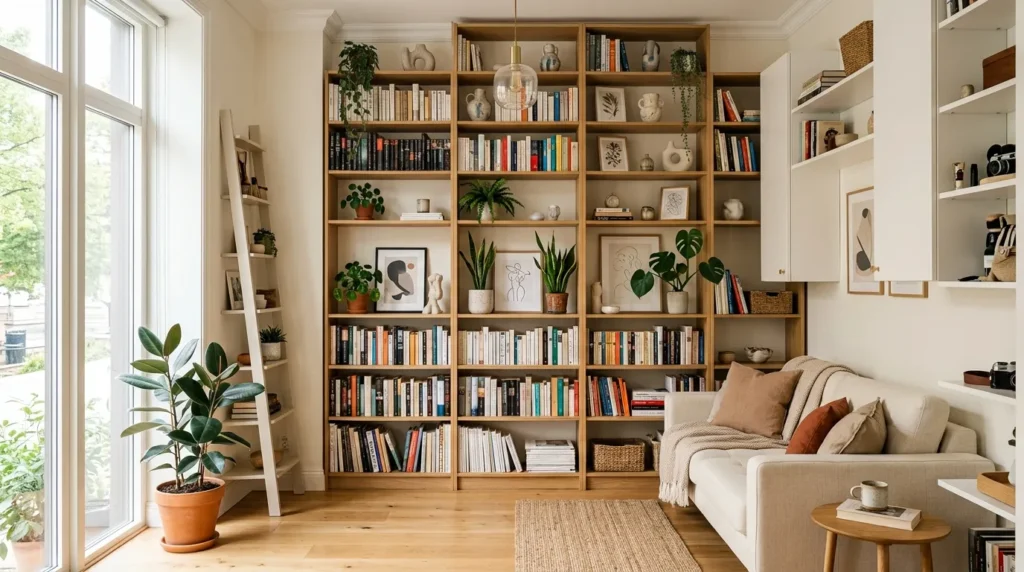
When floor space is limited, the walls become your best friend. Designers consistently recommend tall, narrow storage solutions over wide, low ones.
Good options include:
- Floor-to-ceiling bookshelves
- Wall-mounted cabinets
- Vertical ladder shelves
- Hanging wall organizers near entryways
This approach keeps clutter off the floor while drawing the eye upward, making ceilings feel higher and rooms feel more spacious.
3. Anchor the Room With a Properly Sized Rug
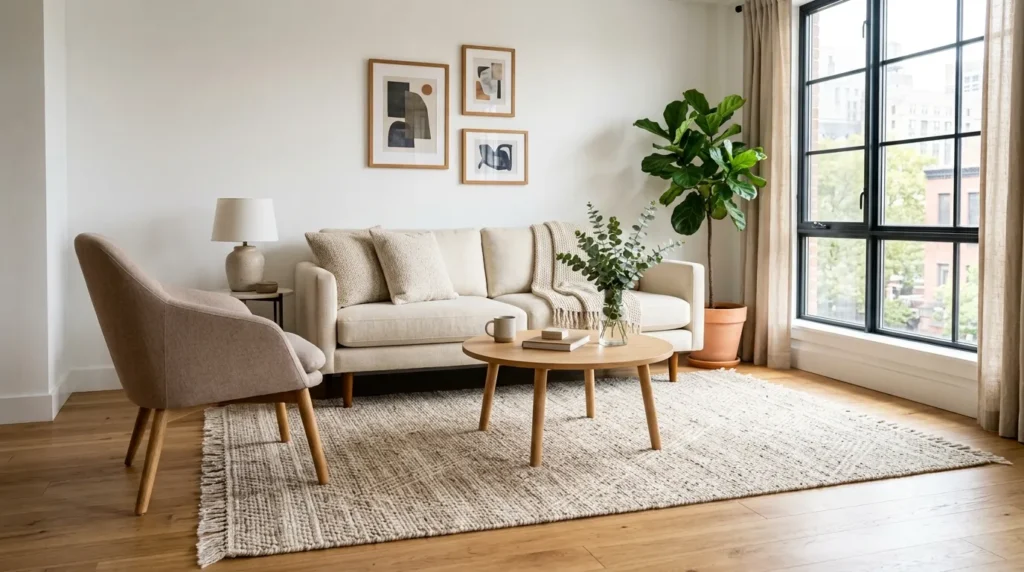
An undersized rug is one of the most common mistakes in small living rooms. When a rug is too small, it visually chops up the room and makes furniture look like it’s floating in random spots.
A good rule of thumb: at least the front legs of your seating should sit on the rug. This creates a defined, grounded seating area, which is especially important in open-concept apartments where the living room may blend into a dining or kitchen space.
4. Use Multi-Functional Furniture
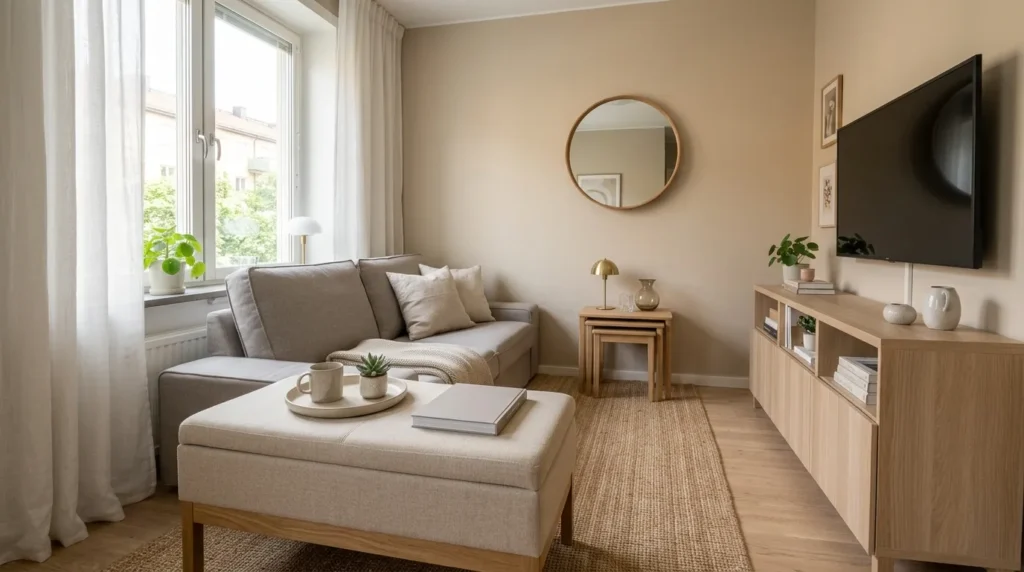
This is one of the most repeated pieces of advice among designers—and for good reason. In a small apartment, furniture that only does one job is a missed opportunity.
Smart multi-functional choices include:
- A storage ottoman that doubles as a coffee table and extra seating
- A sleeper sofa for guests
- Nesting tables that expand when needed and tuck away when not
- A console table that works as a TV stand and entryway catch-all
These pieces reduce the total number of items in the room, which naturally makes the space feel less crowded while still meeting your practical needs.
5. Float Furniture Away From the Walls (When Possible)
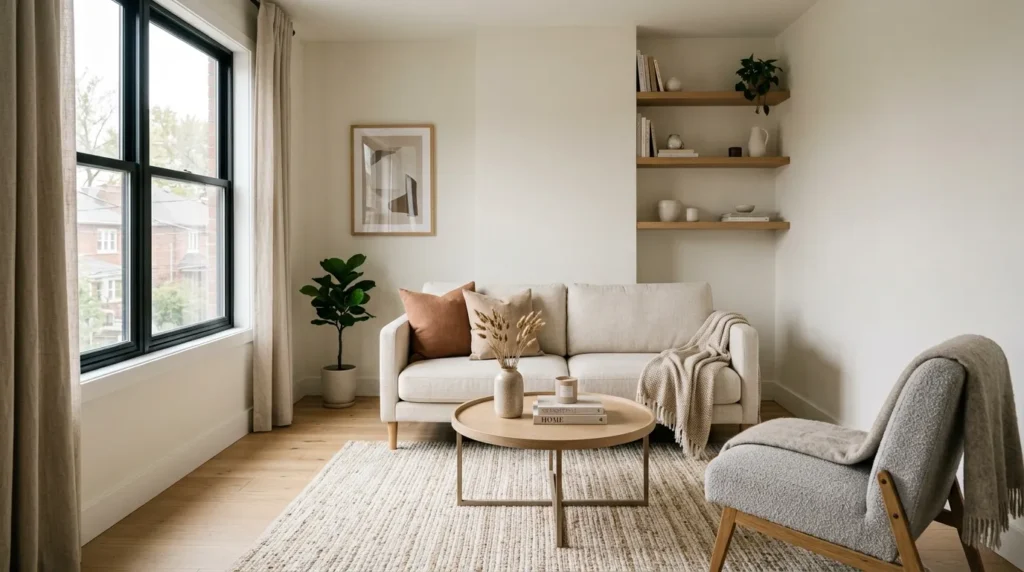
It seems counterintuitive, but pushing every piece of furniture against the wall doesn’t always make a room feel bigger—it can actually make it feel like a waiting room. Designers often recommend floating a sofa or chair slightly away from the wall to create a more intentional, lived-in layout.
Even a few inches of breathing room can make the space feel more thoughtfully arranged rather than simply pushed to the edges.
6. Stick to a Cohesive Color Palette
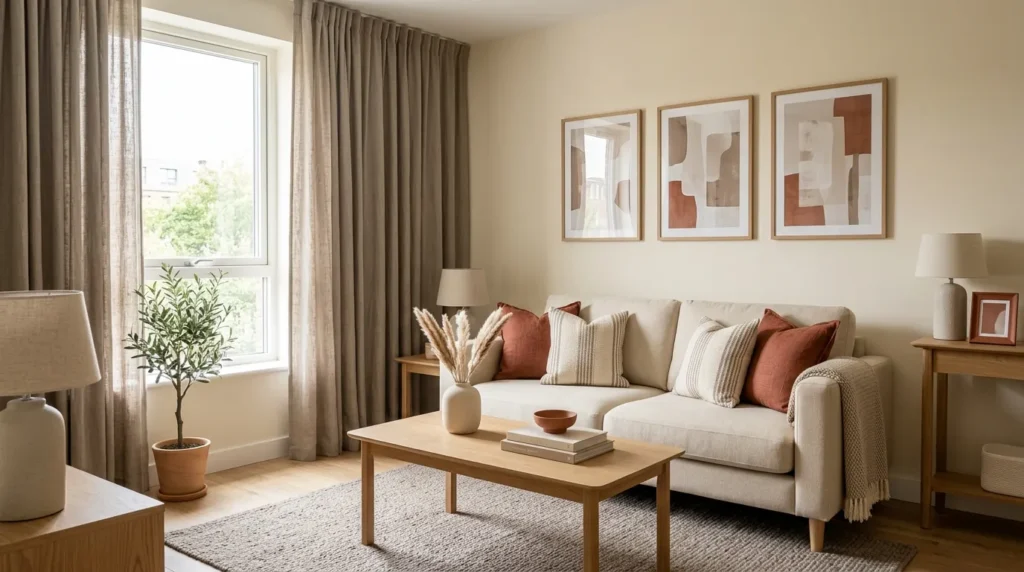
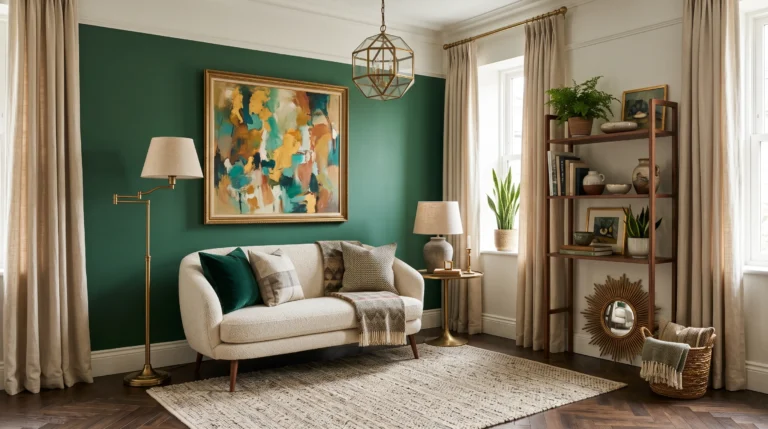
A scattered color palette can make a small room feel busy and visually smaller than it is. Designers often recommend sticking to two or three main colors, with variation coming from texture rather than competing hues.
A simple formula that works well:
- One neutral base color (walls, large furniture)
- One secondary tone (rugs, curtains)
- One accent color (pillows, art, small decor)
This creates cohesion, which helps the eye move smoothly through the room instead of stopping at every mismatched element.
7. Use Mirrors to Expand the Visual Space
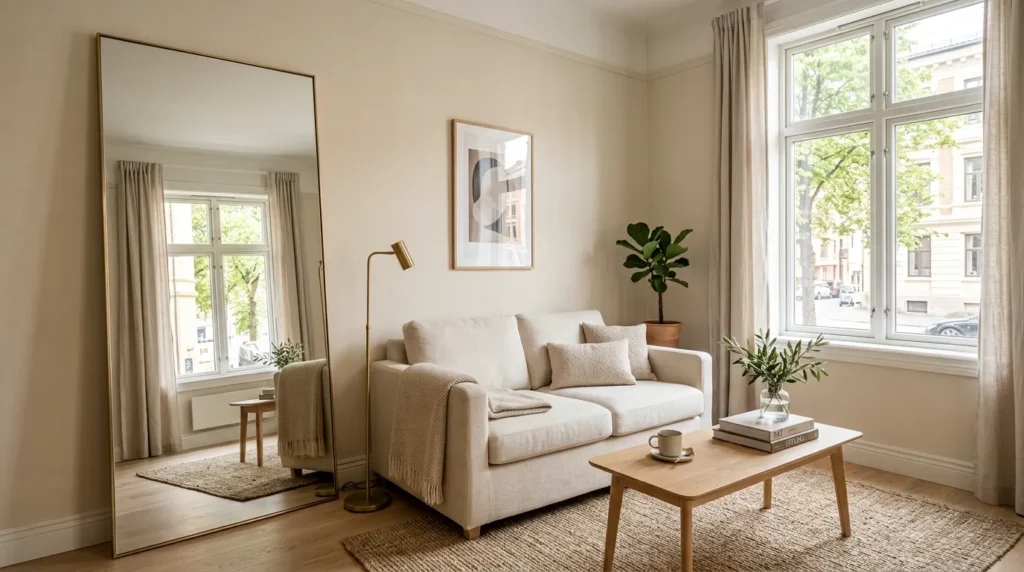
Mirrors remain one of the most effective—and affordable—tools for small apartment living room ideas. A well-placed mirror reflects light and creates the illusion of depth, making the room feel less boxed in.
Large, leaning floor mirrors work particularly well in small living rooms because they add height and visual interest without taking up much actual space.
8. Choose a Sofa That Fits the Room, Not the Showroom
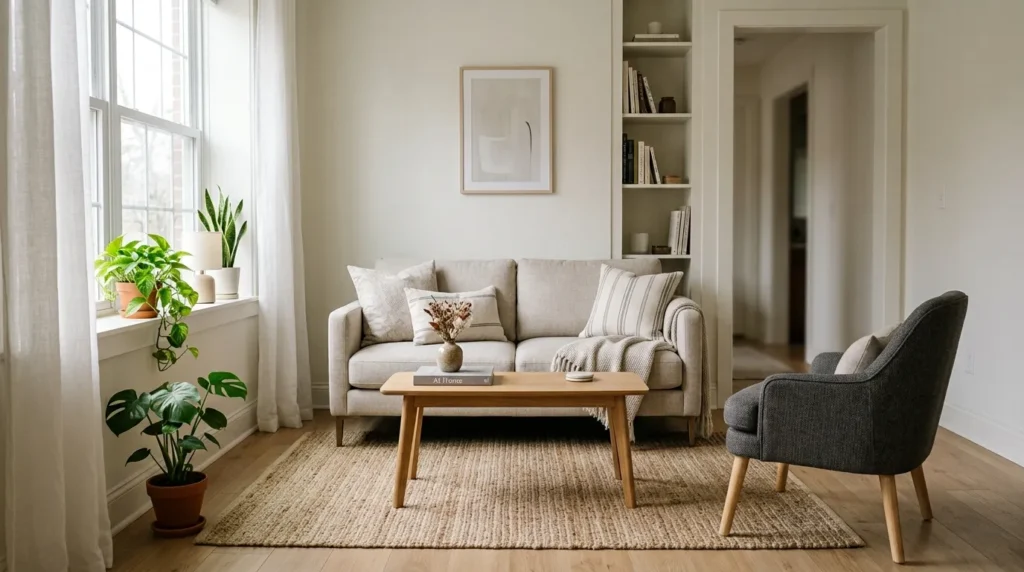
It’s tempting to buy the sofa that looks amazing in a furniture store, but showrooms are large, open spaces designed to make furniture look smaller than it actually is. Designers recommend measuring your space carefully and choosing a sofa scaled specifically for your room.
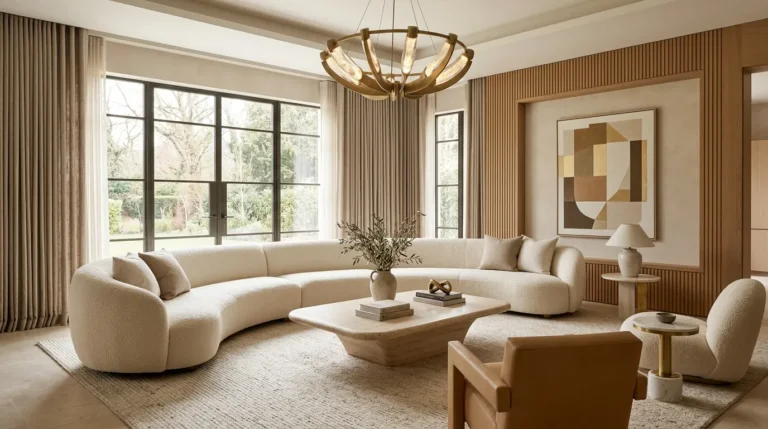
Loveseats, apartment-sized sofas, and slim-arm designs are usually better suited for small living rooms than deep, oversized sectionals.
9. Create Zones With Furniture Placement
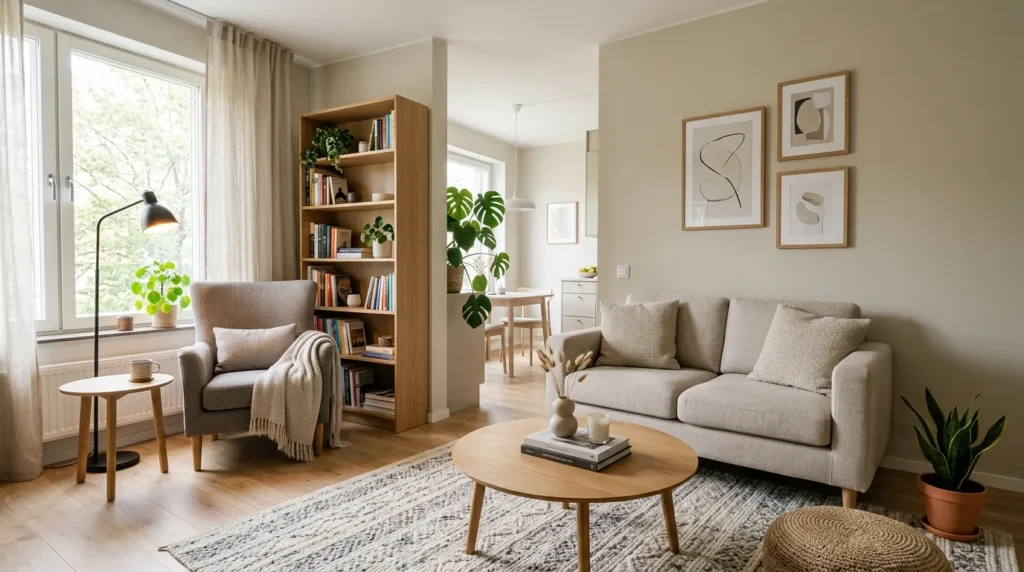
Even in a single small room, designers often create subtle “zones” using furniture arrangement rather than walls. For example, a bookshelf can separate a reading nook from the main seating area, or a rug can define a conversation space within a larger open-plan room.
This zoning technique helps a small apartment living room feel more organized and purposeful, rather than like one undefined block of furniture.
10. Keep Window Treatments Simple and High
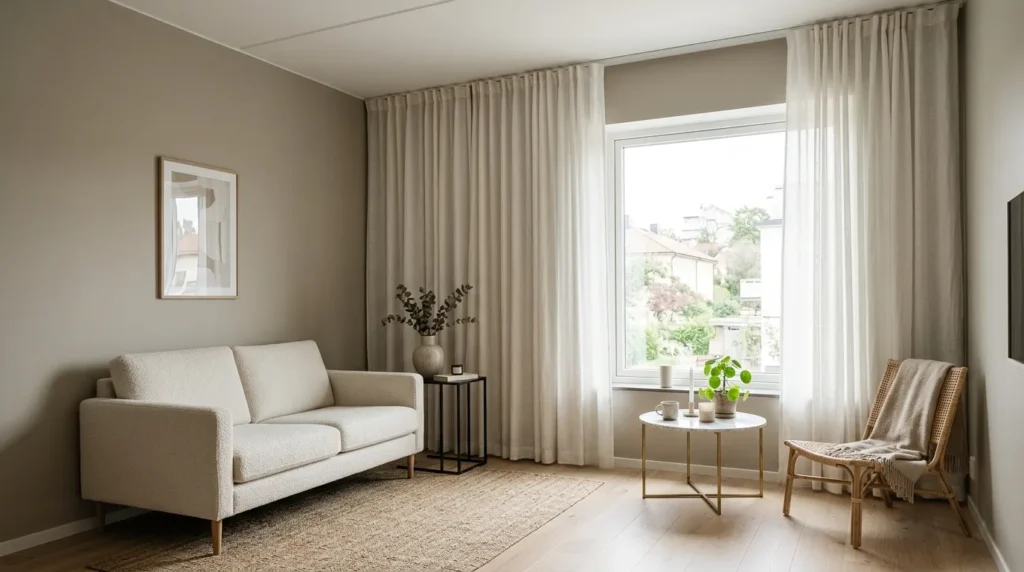
Hanging curtains closer to the ceiling—rather than directly above the window frame—creates the illusion of taller walls. Lightweight, simple fabrics also allow more natural light in, which visually expands the room.
Avoid heavy, floor-pooling drapes in small spaces unless they’re intentionally part of the design; they can visually shrink the room rather than elevate it.
11. Use Furniture With Slim Profiles
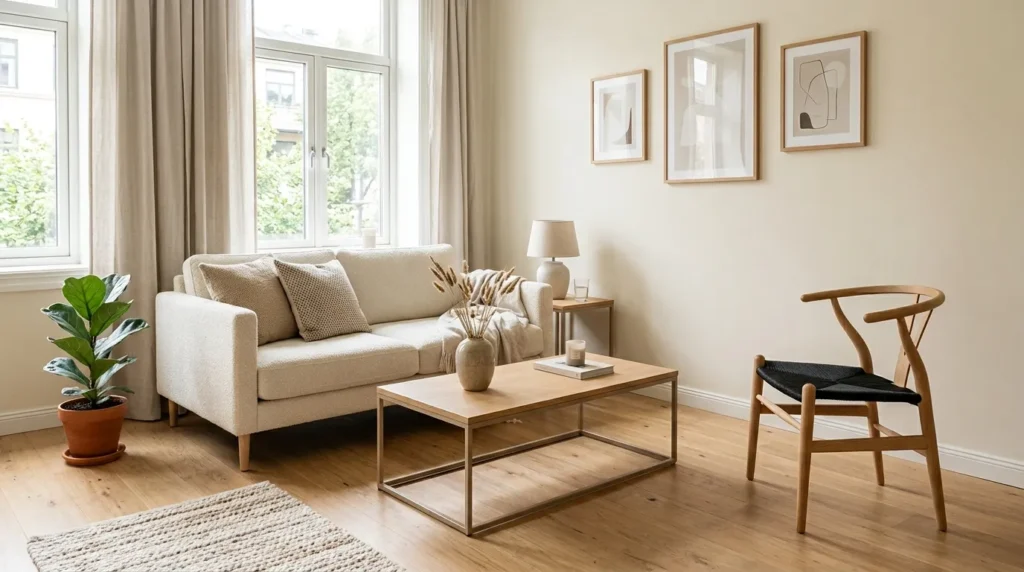
Bulky armrests, thick cushions, and oversized frames eat up visual and physical space quickly. Designers often recommend furniture with slimmer profiles—not necessarily less comfortable, just more efficiently designed.
This includes:
- Slim-arm sofas and chairs
- Streamlined coffee tables
- Chairs with open backs (like wishbone or spindle-back designs)
These choices maintain comfort while keeping the room from feeling visually heavy.
12. Add Layered Lighting Instead of One Overhead Fixture
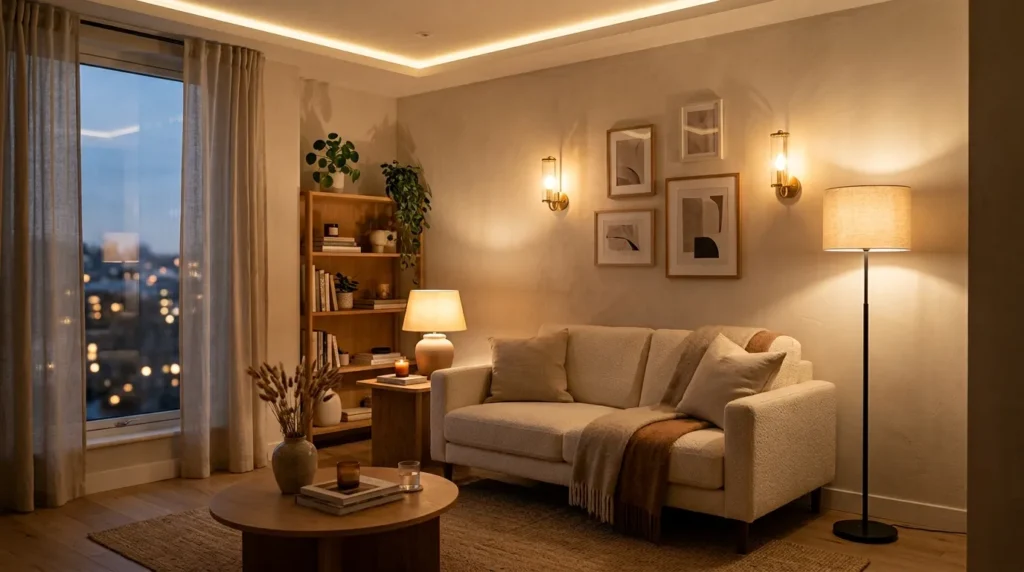
Just like in dark rooms, small apartment living rooms benefit from layered lighting rather than a single ceiling light. A mix of floor lamps, table lamps, and even wall sconces creates depth and warmth, making the room feel more dynamic.
This also allows you to adjust the mood of the room depending on the time of day or activity, which is especially valuable in apartments where the living room may serve multiple purposes.
13. Incorporate Wall-Mounted or Floating Furniture
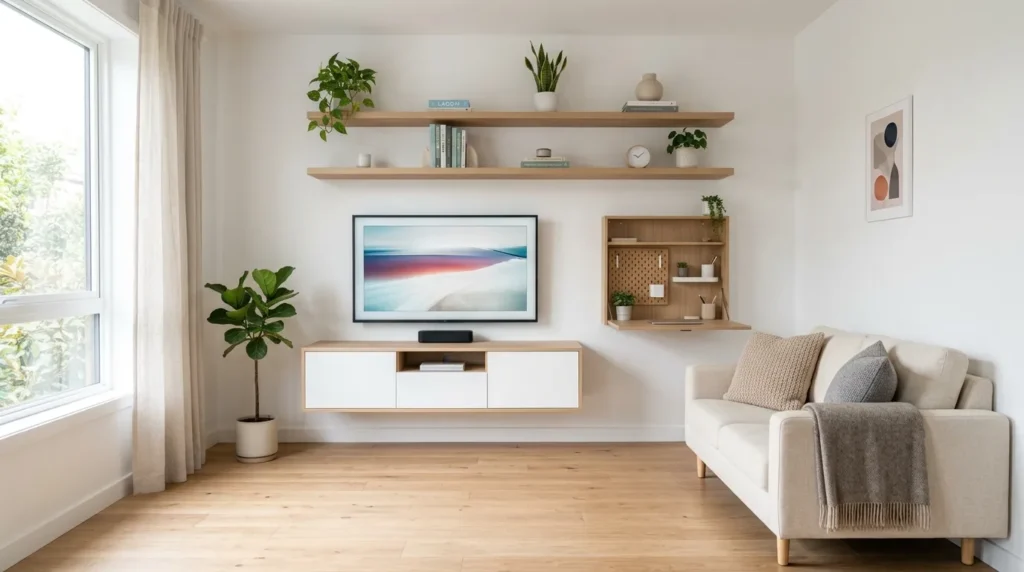
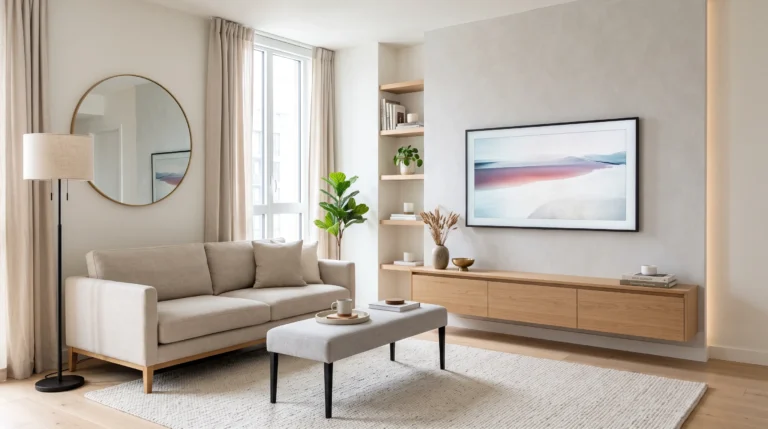
Wall-mounted TV stands, floating shelves, and fold-down desks help keep the floor visually clear, which is one of the fastest ways to make a small living room feel more open. This is a favorite technique among designers working with compact apartments, especially studio layouts where the living room may double as a workspace.
14. Don’t Overfill the Room
Perhaps the most important—and most overlooked—piece of advice: restraint matters. Designers often emphasize that not every small apartment living room needs a coffee table, an accent chair, a media console, and a bookshelf all crammed into one space.
Instead, prioritize:
- One comfortable seating arrangement
- One functional surface (coffee table or ottoman)
- One storage solution
- A few intentional decor pieces
Editing down to the essentials often makes a bigger visual impact than adding more furniture ever could.
Bringing It All Together
Designing a small apartment living room isn’t about fitting in as much as possible—it’s about choosing pieces that work harder, look intentional, and create a sense of flow. From exposed furniture legs and vertical storage to layered lighting and a cohesive color palette, these small apartment living room ideas are strategies designers rely on again and again because they consistently work, regardless of the room’s exact dimensions.
The key is thinking beyond square footage. A well-planned 200-square-foot living room can feel far more spacious and welcoming than a larger room filled with mismatched, oversized furniture. Start with one or two changes—maybe a properly sized rug or a multi-functional piece of furniture—and build from there. Small, intentional updates often lead to the biggest transformation.
Frequently Asked Questions
- What is the best furniture layout for a small apartment living room?
Most designers recommend a simple, symmetrical layout with seating arranged around a central focal point, like a TV or coffee table. Floating furniture slightly away from the walls and defining the seating area with a properly sized rug also helps create a more intentional, open feel. - How do I make a small living room feel bigger without renovating?
Focus on light, reflection, and vertical space. Adding mirrors, choosing furniture with exposed legs, using vertical storage, and sticking to a cohesive color palette are all effective, budget-friendly ways to visually expand a small room. - Should I avoid sectionals in a small apartment living room?
Not necessarily, but sectionals need to be sized appropriately. A compact or apartment-sized sectional can work well in the right layout, while an oversized sectional designed for larger homes will likely overwhelm a small space. - How much furniture is too much for a small living room?
If you’re unsure, less is usually better. A good guideline is one seating arrangement, one functional surface like a coffee table, and one storage piece. Adding too many individual items—extra side tables, multiple accent chairs, oversized decor—can quickly make a small room feel cluttered rather than cozy.