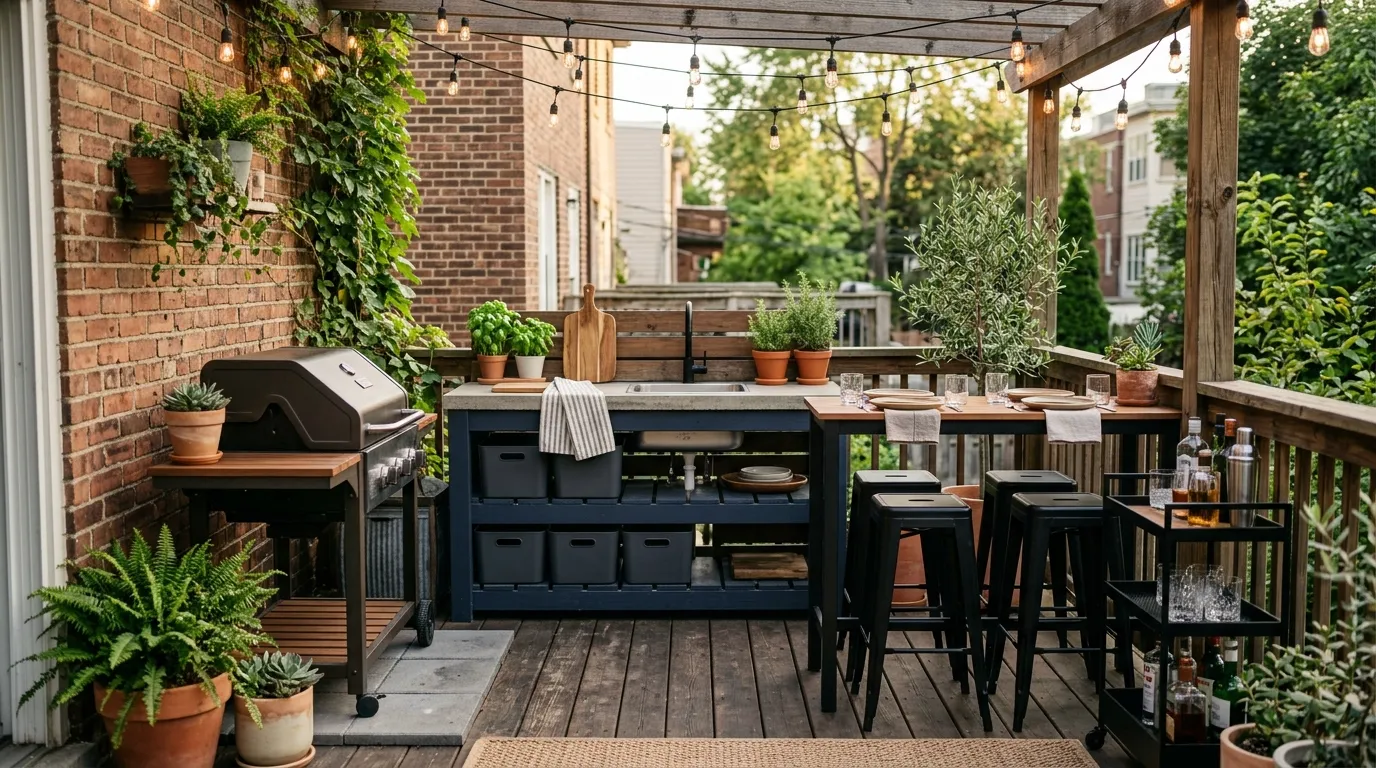
Budget Friendly Small Outdoor Kitchen Ideas That Still Look Great
An outdoor kitchen sounds like a big investment, and in many cases it can be, but that’s not the only way to get one. If you have a small patio, a narrow side yard, or a compact deck, you can still build a functional outdoor cooking space without spending a fortune. Most of the cost people run into comes from custom construction, permanent plumbing, and high end materials, none of which are actually required to enjoy cooking outside. That’s exactly why small outdoor kitchen ideas built around simple layout choices tend to work so much better for most backyards than a full custom build. This guide covers 15 budget friendly small outdoor kitchen ideas that focus on smart layout, simple materials, and a few clever shortcuts that skip the expensive parts of a full build without giving up the look.
Why Small Outdoor Kitchen Ideas Don’t Need a Big Budget
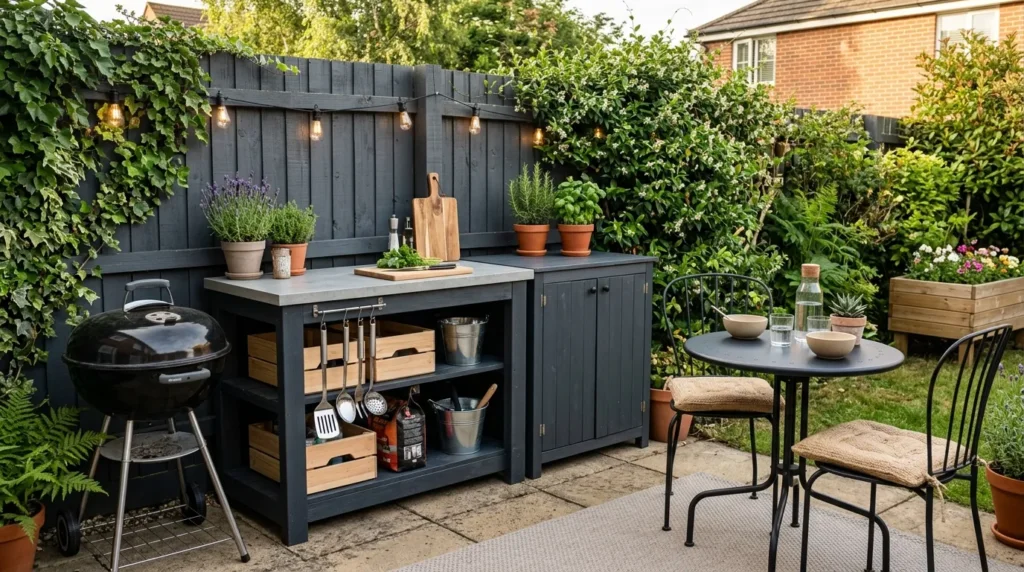
Most of the cost in a traditional outdoor kitchen comes from custom masonry, built in appliances, and plumbing runs out to the yard. A contractor built stone counter alone can cost more than an entire small setup put together with freestanding pieces. None of that heavy construction is required to have a usable, good looking cooking space outside. A small setup built around a grill, a prep counter, and a bit of storage covers almost everything most people actually use an outdoor kitchen for on a regular basis.
A few reasons small setups work so well on a budget:
- Less material is needed for counters, flooring, and structure
- Freestanding pieces avoid the cost of permanent construction
- A simple layout skips the need for extra plumbing or gas lines
- Smaller footprints let you reuse furniture or materials you already have
- Fewer built in elements mean fewer things that can break or need repair later
Once you focus on function over size, a small budget stretches a lot further than most people expect, and the finished result can still look just as intentional as a much pricier build.
1. Start With a Simple L Shaped Layout
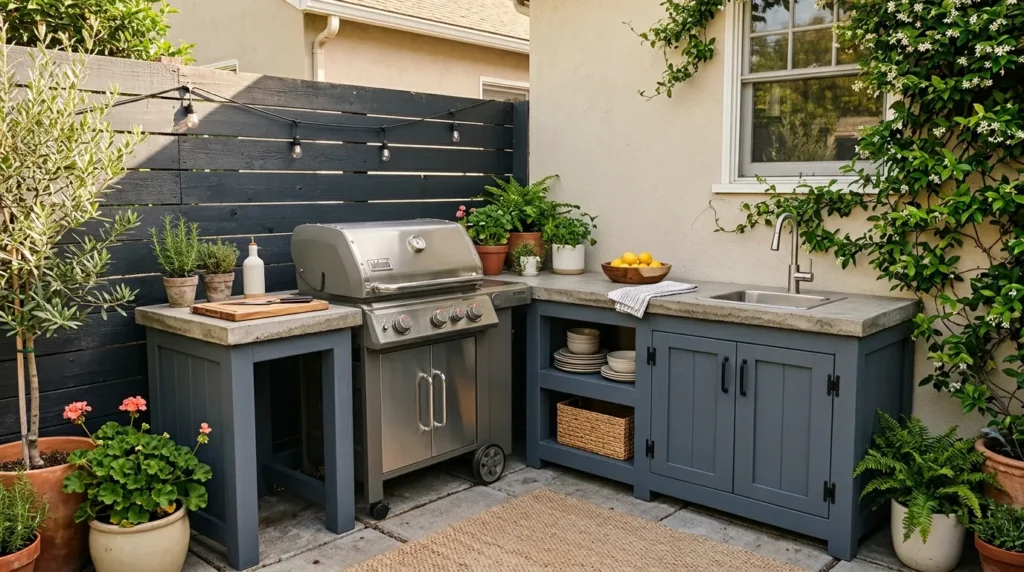
An L shaped layout tucks into a corner of a patio or deck and uses two walls of space instead of a full wraparound design. This shape gives you a grill area, a small prep counter, and a bit of storage, all without the extra material a U shaped or island layout would need.
This layout also tends to work well with existing structures like a house wall or fence line, since you can build off that edge instead of framing an entirely freestanding shape. It keeps material costs down while still giving you a clear separation between cooking and prep zones.
2. Use a Freestanding Grill Cart
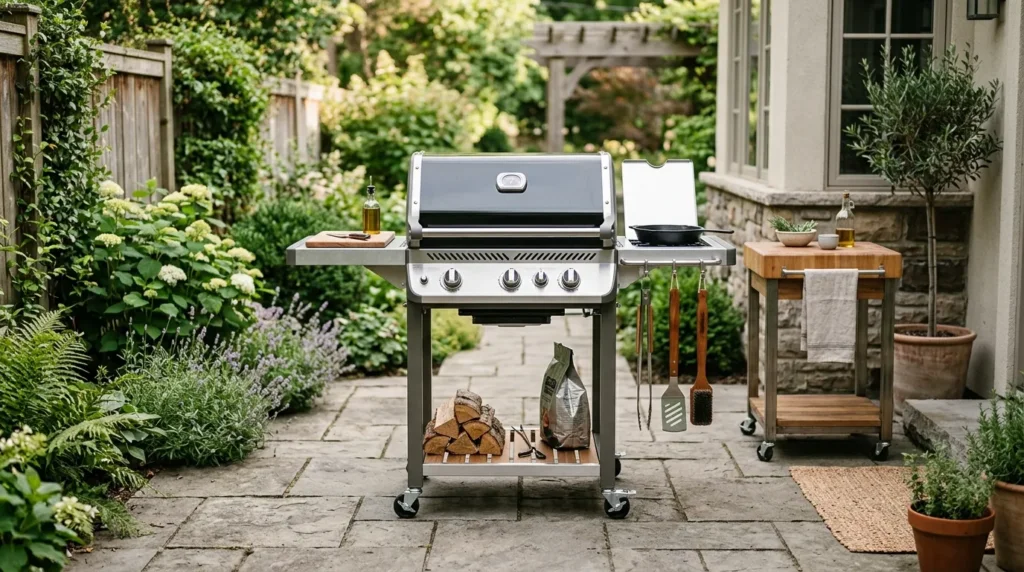
Instead of building a grill into a permanent structure, a freestanding grill cart gives you the same setup at a fraction of the cost. Many carts come with side burners, a small shelf, and wheels, so you get a full cooking station that can be moved or replaced without touching any construction.
A few things to look for when choosing one:
- A cart with at least one side burner for sauces or side dishes
- Wheels that lock in place so the cart stays steady while cooking
- A bottom shelf for propane tanks or grilling tools
- A cover option to protect it from rain and sun when not in use
Since nothing is permanently installed, upgrading or replacing the cart later is simple and doesn’t affect the rest of your setup.
3. Build Counters With Concrete Board Instead of Stone

Natural stone counters look great outdoors, but they come with a high price tag, both for the material itself and the labor to cut and install it. A concrete backer board finished with a sealed concrete topping gives a similar industrial look for a fraction of the cost and holds up well against outdoor weather, including rain and temperature swings.
This approach also allows for a DIY build, since backer board and concrete topping are both materials that don’t require specialized tools or professional installation to work with.
4. Repurpose an Old Dresser or Cabinet
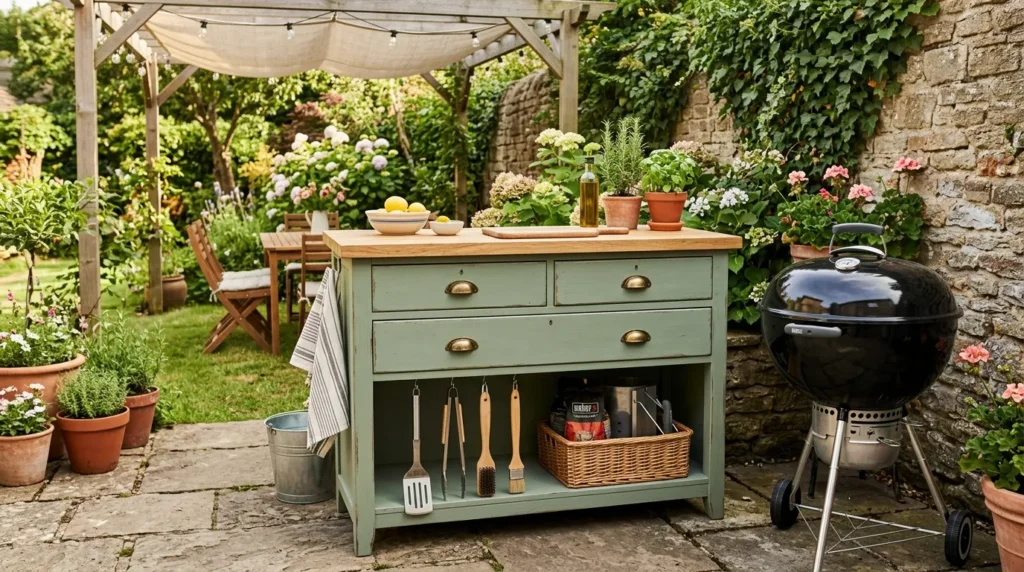
A weatherproofed dresser or cabinet, even a secondhand one, can work as an outdoor storage unit or a base for a countertop. Adding a coat of exterior paint and a sealant protects it from rain and sun, turning a piece you already own or picked up secondhand into a functional part of the kitchen.
This idea works particularly well if you’re already replacing indoor furniture, since the piece you’d otherwise donate or throw out gets a second purpose instead of costing you anything at all.
5. Use Pavers Instead of Poured Concrete

A poured concrete patio is expensive and often requires a contractor to pour and finish it properly. Interlocking pavers cost less, can be installed without professional help, and still give a clean, finished look under your outdoor kitchen setup.
Pavers also have a practical advantage over poured concrete. If one section cracks or shifts over time, you can lift and replace individual pavers instead of repairing an entire concrete slab.
6. Add a Pergola Frame Instead of a Full Roof

A full roof structure over an outdoor kitchen adds significant cost, both in materials and the labor needed to build something that can handle weather long term. A simple pergola frame, especially a kit version, gives shade and structure at a much lower price, and can always be upgraded later if you want more coverage.
Many pergola kits come with everything needed for a weekend installation, and you can add a shade cloth, retractable canopy, or climbing plants over time as your budget allows.
7. Choose a Portable Prep Cart

A rolling prep cart with a butcher block or stainless top gives you extra counter space exactly when you need it, then rolls away or gets stored when you don’t. It’s one of the cheapest ways to add functional workspace to a small outdoor setup, and it works especially well for spaces that need to serve more than one purpose, like a patio that’s also used for dining or lounging.
8. Use Outdoor Rated Plywood for a DIY Counter
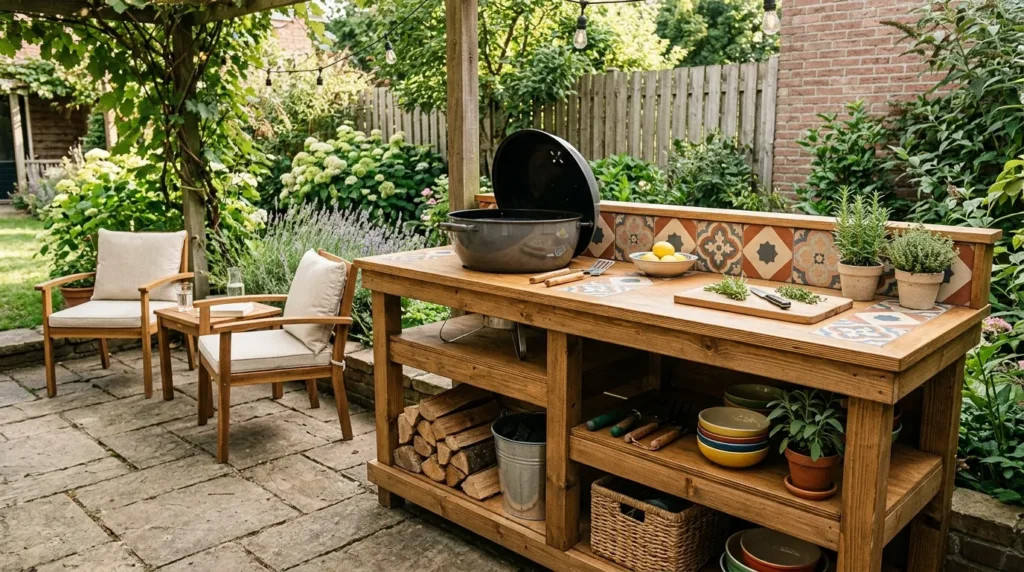
Marine grade or outdoor rated plywood, sealed properly, makes a solid and affordable countertop base. Topped with tile, laminate, or a simple sealant coat, it holds up to outdoor conditions without the cost of stone or solid surface materials.
A few finishing options to consider for the top layer:
- Ceramic or porcelain tile for a durable, easy to clean surface
- Epoxy coating for a smooth, seamless look
- Simple marine varnish if you want to keep the natural wood grain visible
Each option changes the final look and price, so it’s worth picking based on the style you want and how much maintenance you’re willing to do each season.
9. Add String Lights Instead of Built In Fixtures
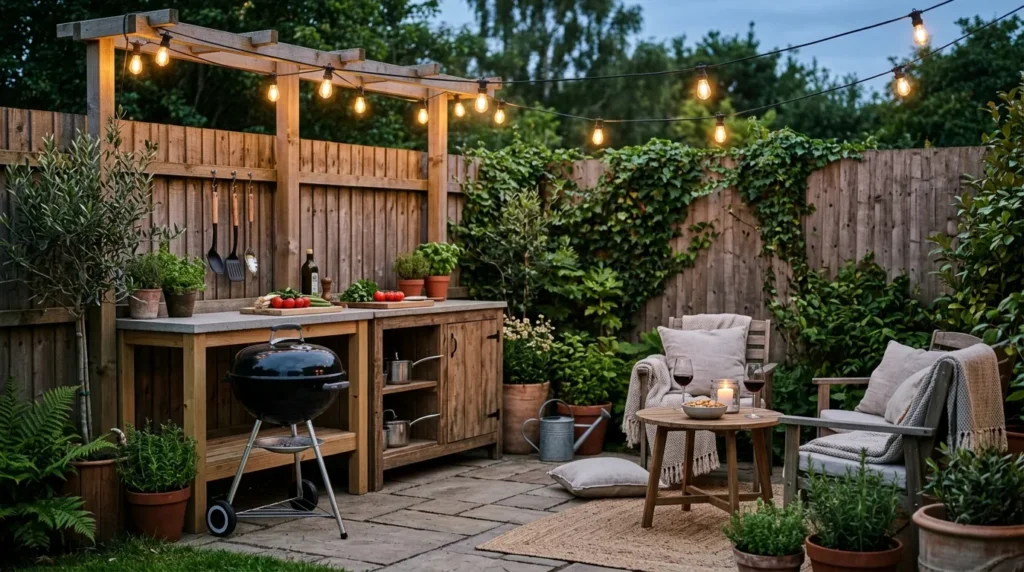
Built in lighting fixtures require wiring and often an electrician, which adds both material and labor cost fast. String lights plugged into an outdoor outlet or powered by solar give a warm, functional glow for almost no cost and can be added or removed as needed depending on the season or occasion.
10. Use a Small Bar Cart for Drinks and Extras

A bar cart on wheels keeps drinks, cups, and condiments organized without needing a built in section of the kitchen dedicated to it. It also adds flexibility, since it can move closer to the seating area during a gathering and then roll back near the cooking station afterward.
11. Skip the Sink and Use a Portable Water Station
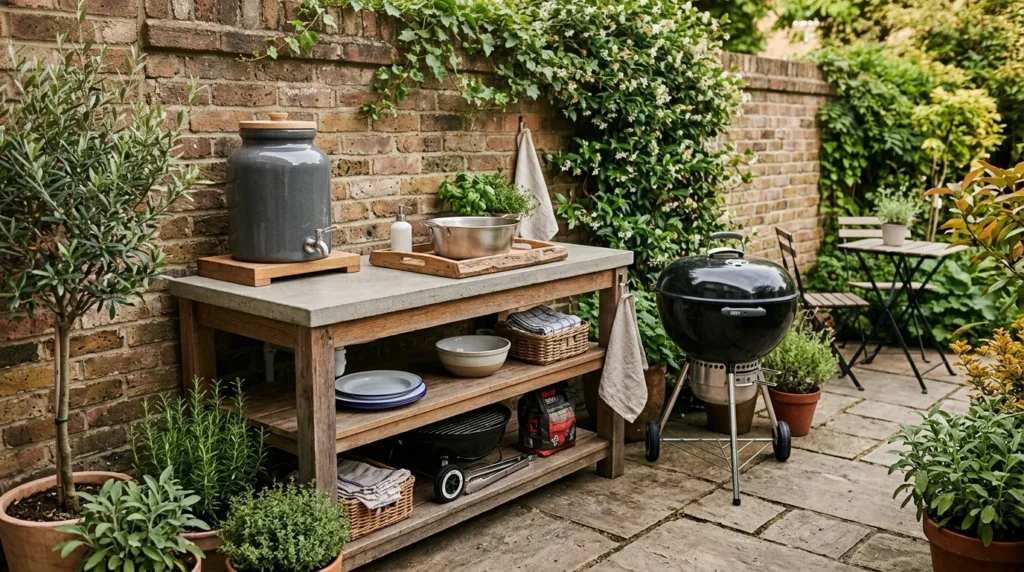
A built in sink means running plumbing to your patio, which is one of the most expensive additions to any outdoor kitchen. A portable water jug with a spigot, or a simple wash basin, covers basic cleanup needs without the expense of a permanent water line.
This works well for most casual outdoor cooking, since a full sink is rarely needed unless you’re doing heavy food prep outside on a regular basis.
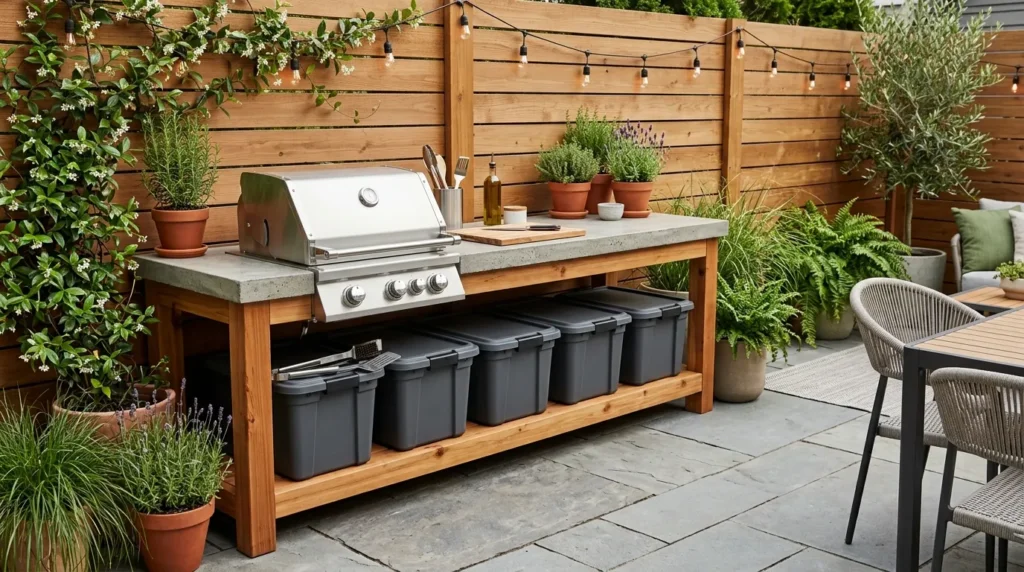
12. Build Storage With Weatherproof Bins
Instead of custom cabinetry, a few weatherproof bins or totes tucked under a counter or bench store grilling tools, extra charcoal, and outdoor dishware. They cost very little and keep everything dry and protected from rain, dust, and sun.
Good items to keep in weatherproof storage include:
- Grilling tools like tongs, spatulas, and brushes
- Extra charcoal or wood chips
- Outdoor dishware and cups
- Cleaning supplies for the grill and counters
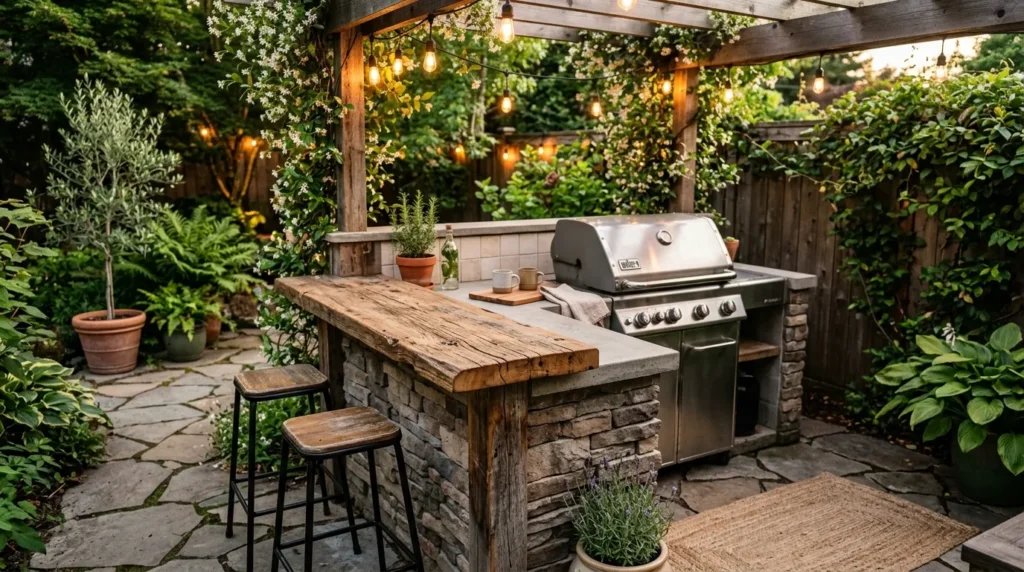
13. Add a Reclaimed Wood Bar Top
Reclaimed wood, sealed with an outdoor grade finish, adds a warm, custom look to a bar or counter section without the price of new hardwood or stone. Many hardware stores and salvage yards sell reclaimed boards at a low cost, and the natural variation in the wood grain gives the space a one of a kind look that’s hard to get from newer, uniform materials.
14. Use Planters as Natural Dividers
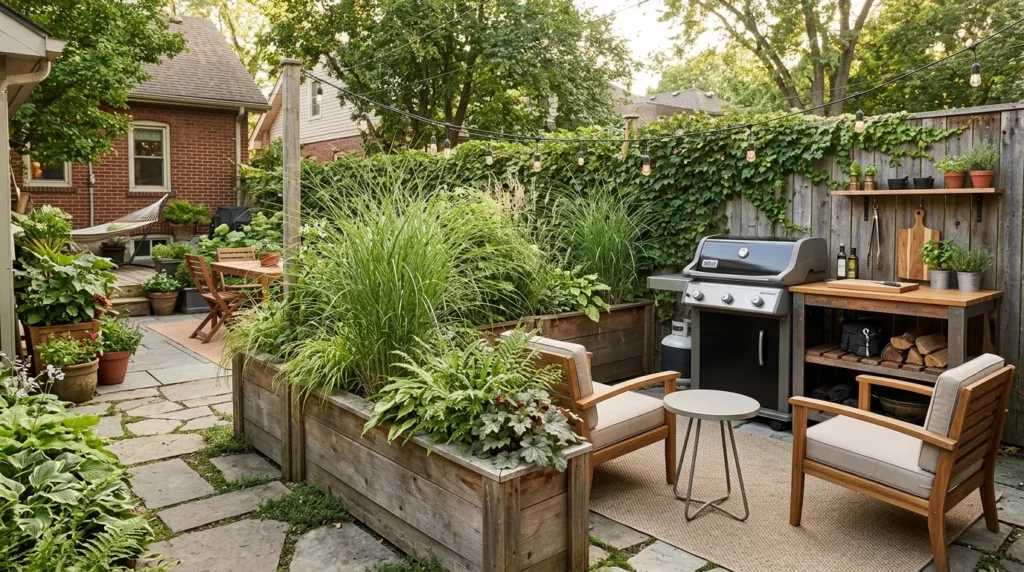
Instead of building a wall or partition to separate the cooking area from the rest of the yard, large planters with tall plants create a natural boundary. This adds greenery and structure at the same time, without any construction cost, and it can be rearranged easily if you decide to change the layout later.
15. Add a Simple Bar Height Table for Seating
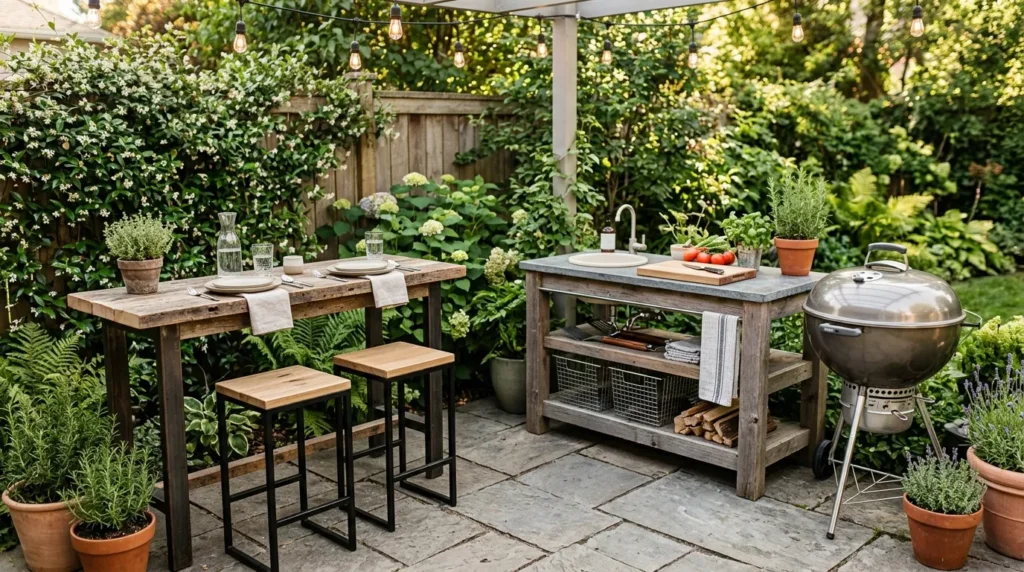
A basic bar height table with a couple of stools gives guests a spot to sit near the cooking area without needing built in seating. It’s an affordable way to make the space feel complete and social, and it can double as extra counter space when not in use for seating, which makes it a practical choice for smaller patios that need every surface to work double duty.
Final Thoughts
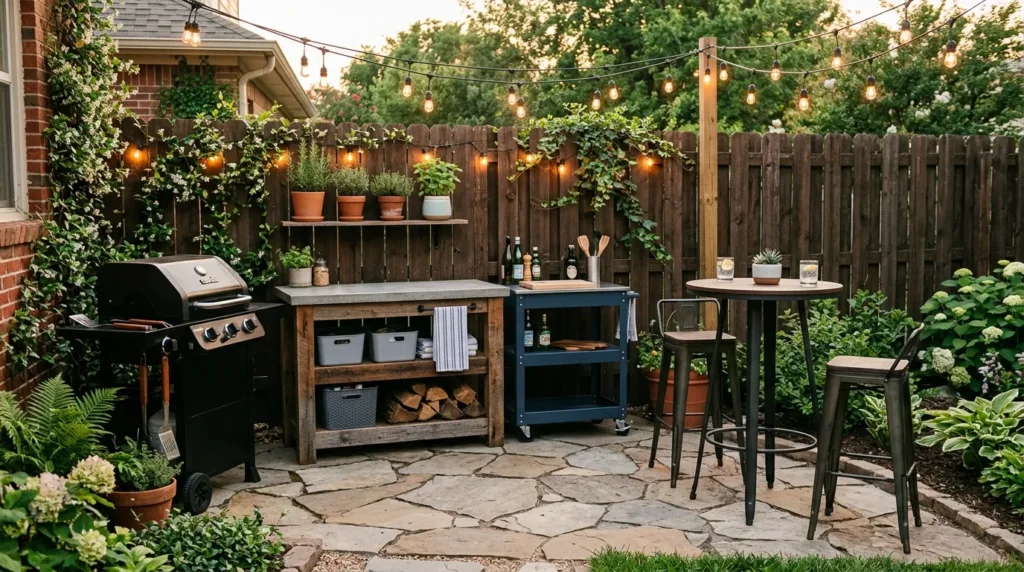
A small outdoor kitchen doesn’t need a big budget or a full construction project to look and function well. Choosing freestanding pieces over built in structures, using affordable materials that mimic higher end finishes, and focusing on layout rather than size all help you build a space that works hard without costing a lot. These small outdoor kitchen ideas prove that a tight budget and a small footprint don’t have to hold you back from a space you actually enjoy cooking in. Start with the basics like a grill and a counter, then add pieces over time as your budget allows, and the space will keep growing into exactly what you need.