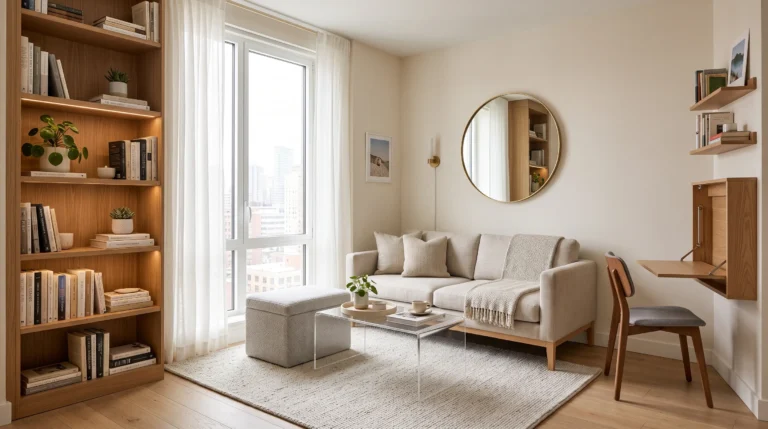

8 Interior Design Ideas for a Cozy Home Inspired by Scandi
There’s a reason Scandinavian interiors have stayed popular for well over a decade while other trends come and go: they solve a problem almost everyone has. How do you make a home feel warm, calm, and inviting without it looking cluttered or overdone? Scandinavian countries spend a large portion of the year in cold, dark winters, which means their approach to interior design has always prioritized warmth, comfort, and light — not as an aesthetic choice, but as a practical necessity.
That’s exactly why Scandi style translates so well into interior design ideas for a cozy home, regardless of where you actually live. The core principles — natural materials, soft textures, warm lighting, and uncluttered spaces — create comfort without relying on heavy, dark, or overly decorated rooms.
If you’re looking for interior design ideas for a cozy home that feel calm rather than chaotic, and personal rather than generic, these eight Scandi-inspired approaches are a great place to start.
What Makes Scandinavian Design Feel Cozy
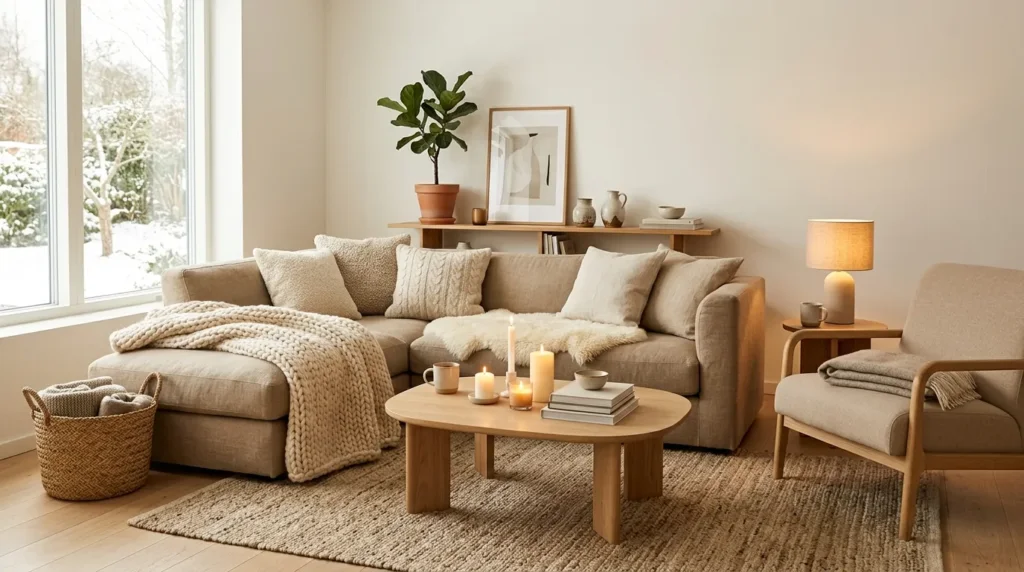
Before diving into specific ideas, it’s worth understanding why this particular style works so well for coziness. Scandinavian design is often mistaken for being cold or sparse because of its association with white walls and minimal furniture. But the actual goal of the style is the Danish concept of “hygge” — a sense of comfort, contentment, and warmth, often created through simple, tactile elements rather than heavy decoration.
In practice, this means Scandinavian-inspired coziness comes from:
- Layered textures rather than layered colors
- Natural materials like wood, wool, and linen
- Soft, warm lighting used generously, especially during darker months
- A curated, uncluttered approach to decor rather than a maximalist one
With that foundation, here are eight interior design ideas for a cozy home that draw directly from these Scandinavian principles.
1. Start With a Warm Neutral Palette
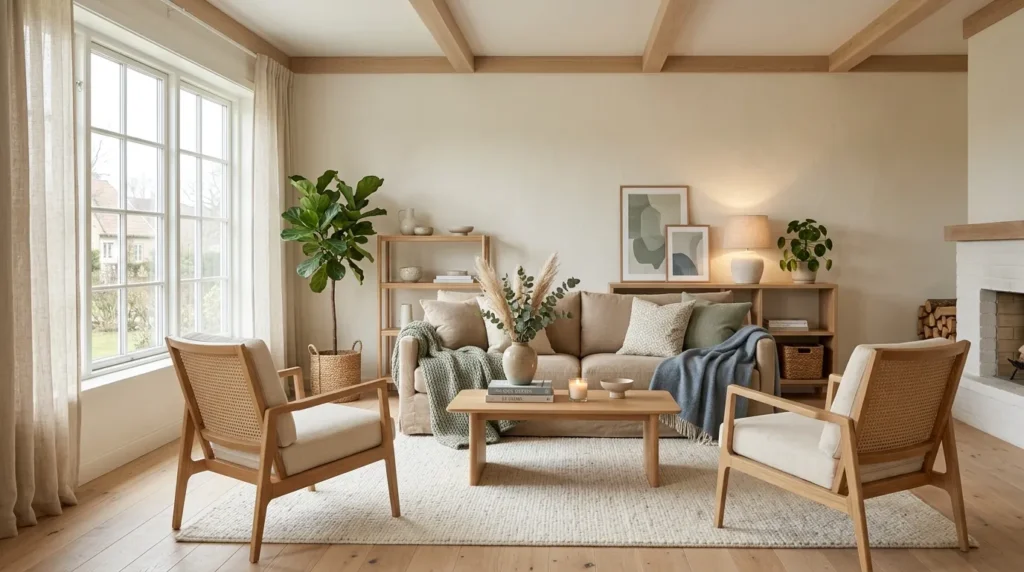
Scandi interiors are known for their light color palettes, but the key detail people often miss is that these palettes are warm, not stark. Instead of cool, blue-toned whites, Scandinavian design typically favors warmer off-whites, soft beiges, and creamy neutrals that feel inviting rather than clinical.
- Choose paint with warm undertones (yellow or red base) rather than cool undertones (blue or gray base).
- Layer in one or two muted accent colors — soft terracotta, sage green, or dusty blue — rather than introducing several competing hues.
- Keep trim and ceiling colors close in tone to the walls for a soft, cohesive look rather than stark white-on-color contrast.
This warm neutral foundation is one of the simplest interior design ideas for a cozy home, since it affects every room without requiring a full furniture overhaul.
2. Bring in Natural Wood Tones
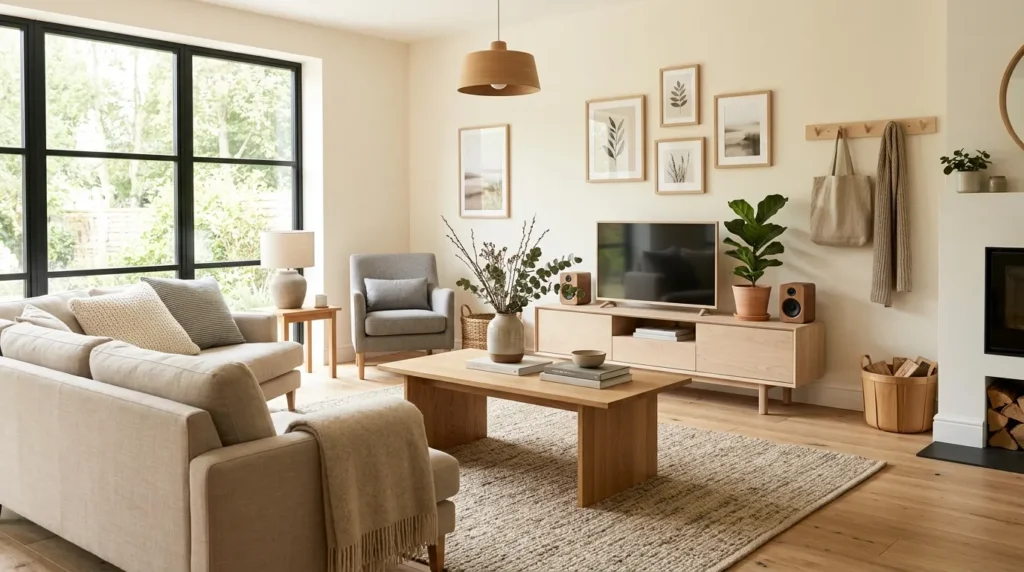
Wood is central to Scandinavian interiors, both because it’s a practical, durable material and because it adds inherent warmth to a room without any additional styling. Light, natural wood tones — oak, ash, and birch in particular — are the classic Scandi choice, though warmer walnut and mid-tone woods work well too, especially when paired with lighter walls.
Ways to incorporate wood without a major renovation:
- Add a wood coffee table, side table, or media console in a light, natural finish.
- Introduce wood accents through picture frames, a tray, or a set of wall hooks.
- If flooring allows, consider a natural wood or wood-look floor rather than a cooler-toned tile or dark stained wood, which can feel less warm underfoot.
3. Layer Textiles Generously
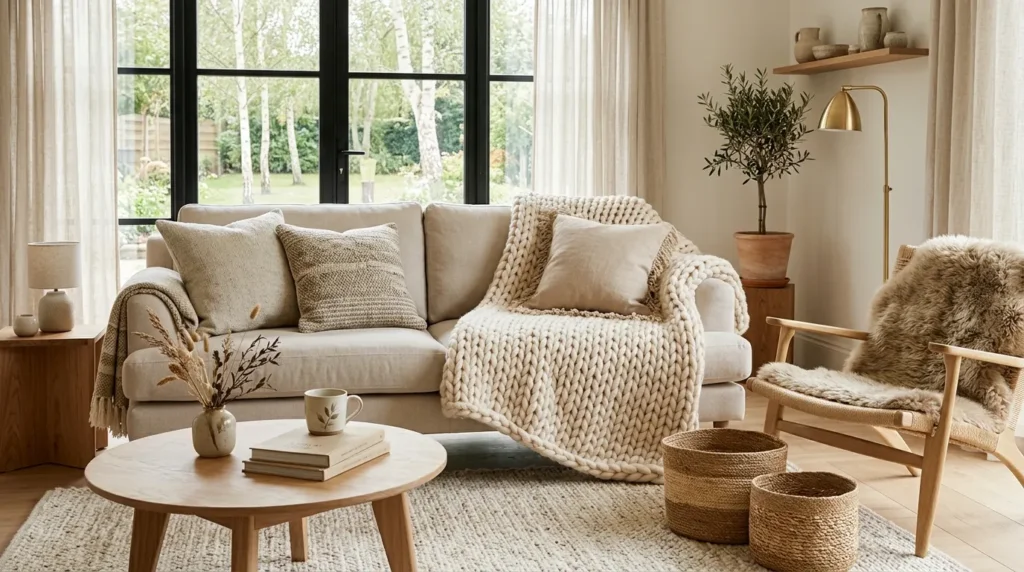
If there’s one element that defines cozy Scandinavian interiors, it’s texture. Because the style avoids heavy color and pattern, texture becomes the primary way rooms feel warm and inviting rather than sparse.
- Layer a chunky knit or wool throw blanket over a sofa or reading chair.
- Add a sheepskin or faux-fur accent on a chair, bench, or reading nook.
- Use woven baskets for storage instead of plastic bins, adding natural texture even to functional items.
- Choose linen or cotton bedding with visible texture rather than a flat, glossy finish.
This layering of texture is one of the most reliable interior design ideas for a cozy home because it works in almost any room, regardless of the existing color scheme.
4. Prioritize Warm, Layered Lighting
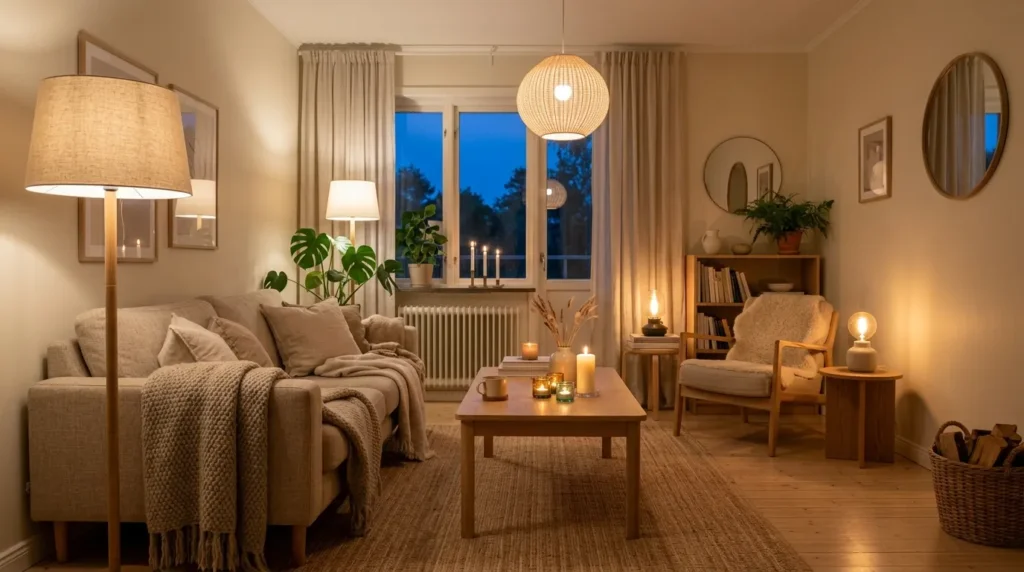
Scandinavian countries deal with long, dark winters, which has made warm, abundant lighting a non-negotiable part of the design approach. A single overhead fixture is rarely enough in a Scandi-inspired room — instead, multiple light sources at different heights work together to create a soft, glowing atmosphere.
- Use warm white bulbs (around 2700K) throughout the home rather than cool or daylight bulbs.
- Add table lamps and floor lamps in living spaces, rather than relying solely on ceiling lights.
- Incorporate candles generously — a hallmark of Scandinavian hygge — clustered on a coffee table, mantel, or windowsill.
- Consider pendant lighting with fabric or paper shades, which diffuses light more softly than exposed bulbs or metal fixtures.
5. Choose Simple, Functional Furniture
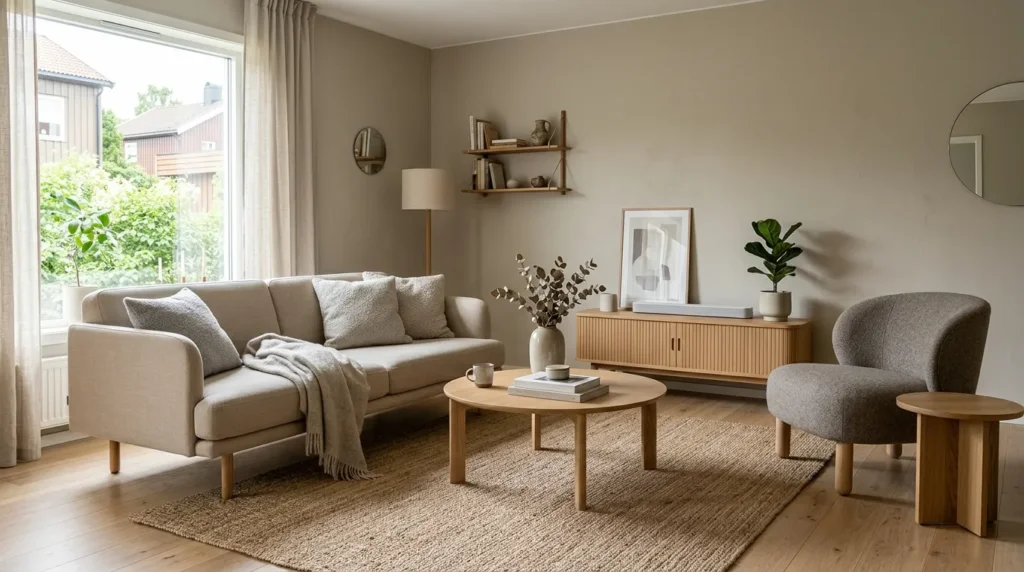
Scandinavian furniture design is known for clean lines and functional forms, avoiding ornate detailing or bulky silhouettes. This isn’t about being minimal for its own sake — it’s about choosing furniture that earns its place in the room, both visually and practically.
- Look for furniture with visible wood legs rather than fully upholstered bases, which keeps pieces feeling lighter in a room.
- Prioritize pieces with a clear function, avoiding purely decorative furniture that doesn’t serve the room.
- Choose slightly rounded or soft-edged silhouettes over sharp, angular designs for a gentler, cozier feel.
6. Keep Surfaces Curated, Not Cluttered
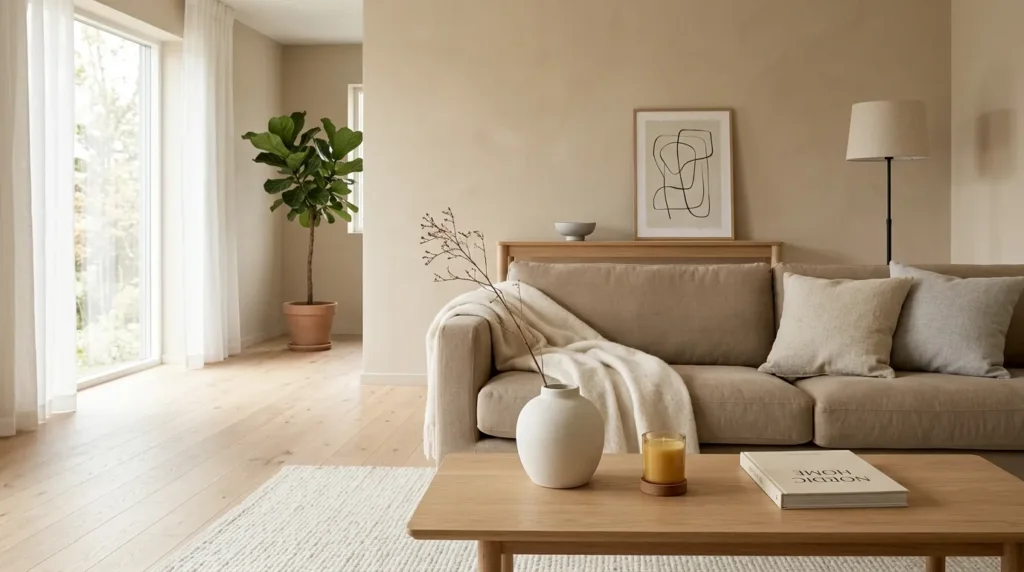
One of the most important — and often overlooked — interior design ideas for a cozy home is restraint. Scandinavian interiors feel calm largely because surfaces aren’t overloaded with decor. A coffee table with three thoughtfully chosen items feels more intentional and more relaxing than one crowded with a dozen small objects.
A simple approach to apply throughout the home:
- Limit each surface (coffee table, console, mantel) to three to five items.
- Choose a mix of heights and textures rather than several similar objects lined up in a row.
- Rotate seasonal decor rather than adding to a permanent collection, keeping the overall look fresh without becoming cluttered.
7. Add Greenery for Life and Softness
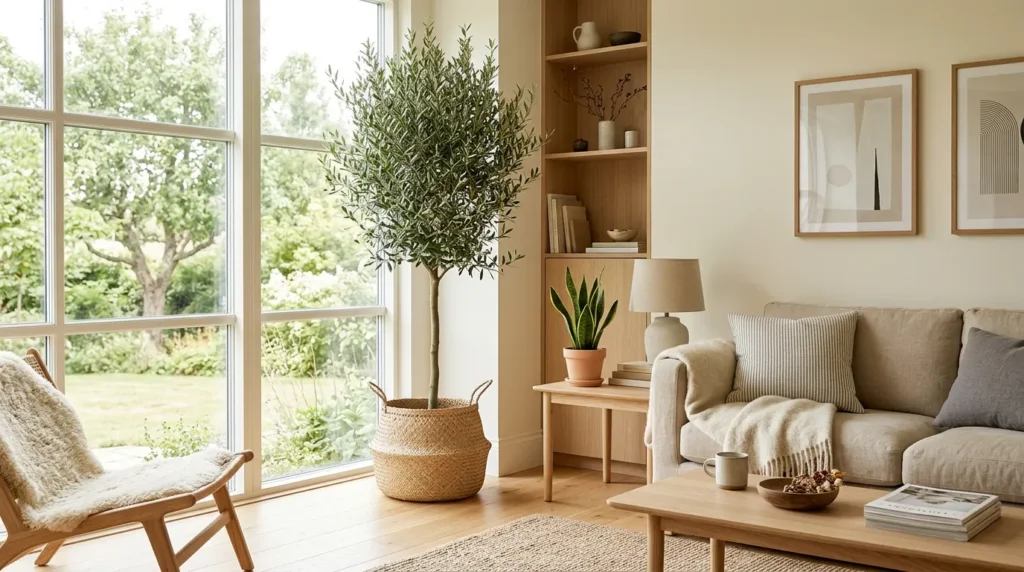
Plants play a significant role in Scandinavian interiors, softening the clean lines of furniture and adding a sense of life to a room, especially during darker months when outdoor greenery is scarce. Even a single well-placed plant can noticeably warm up a space.
- Choose plants with simple, sculptural shapes — a fiddle leaf fig, snake plant, or olive tree — rather than overly ornate or brightly colored varieties.
- Use natural materials like woven baskets or terracotta pots rather than plastic or brightly glazed planters.
- Place plants near natural light sources when possible, both for the plant’s health and to reinforce the connection between indoor and outdoor light.
8. Let Natural Light Take the Lead During the Day
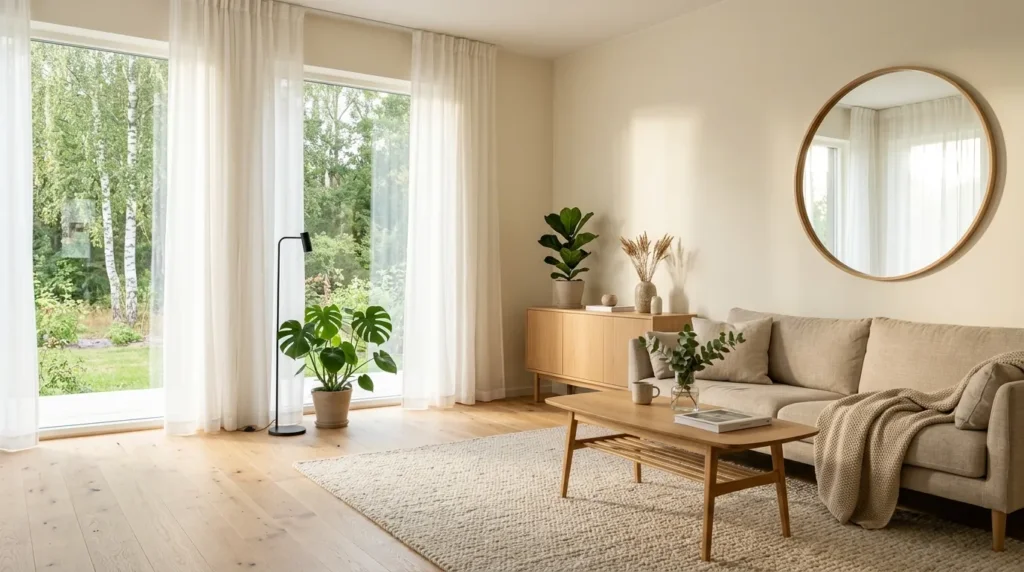
While warm artificial lighting matters in the evening, maximizing natural light during the day is equally central to Scandinavian design. Because natural daylight is limited for much of the year in Scandinavian countries, homes are typically designed to make the most of whatever light is available.
- Keep window treatments simple and light — sheer curtains or minimal hardware — rather than heavy drapes that block incoming light.
- Position mirrors to reflect natural light into darker areas of a room.
- Avoid heavy furniture or tall bookcases directly in front of windows, which can block light from reaching the rest of the room.
Bringing the Eight Ideas Together
While each of these ideas works well individually, the real cozy, Scandi-inspired effect comes from combining them. A room with warm neutral walls, natural wood furniture, layered textiles, and soft lighting will feel dramatically different from a room that only implements one or two of these elements in isolation.
A useful way to approach this if you’re starting from scratch:
- Begin with color and lighting, since these two elements affect the entire feel of a room with relatively little cost.
- Add natural materials next — wood furniture, woven baskets, a jute or wool rug.
- Layer in textiles and greenery last, since these are the easiest elements to adjust seasonally without a major investment.
This gradual approach also makes the process more manageable, since implementing all eight interior design ideas for a cozy home at once can feel overwhelming, especially in a larger space.
Common Mistakes to Avoid
Even with good intentions, a few missteps can pull a Scandi-inspired space away from cozy and toward cold or sparse instead:
- Going too monochrome – An all-white room without warm undertones or texture can feel stark rather than calm. Balance white and light tones with warm wood and soft textiles.
- Skipping lighting layers – Relying only on overhead lighting is one of the most common reasons a Scandi-style room feels flat instead of inviting.
- Over-minimizing – There’s a difference between curated and empty. A completely bare room isn’t cozy, no matter how clean the lines are.
- Choosing cold-toned materials – Glossy, cool-toned surfaces (chrome, glass, cool gray stone) can undercut the warmth that natural wood and soft textiles are meant to provide. Use them sparingly, if at all.
- Ignoring texture in favor of color – Because the palette stays fairly neutral, texture is what carries most of the visual interest. A room without varied textures can feel flat even with the right color scheme.
Conclusion
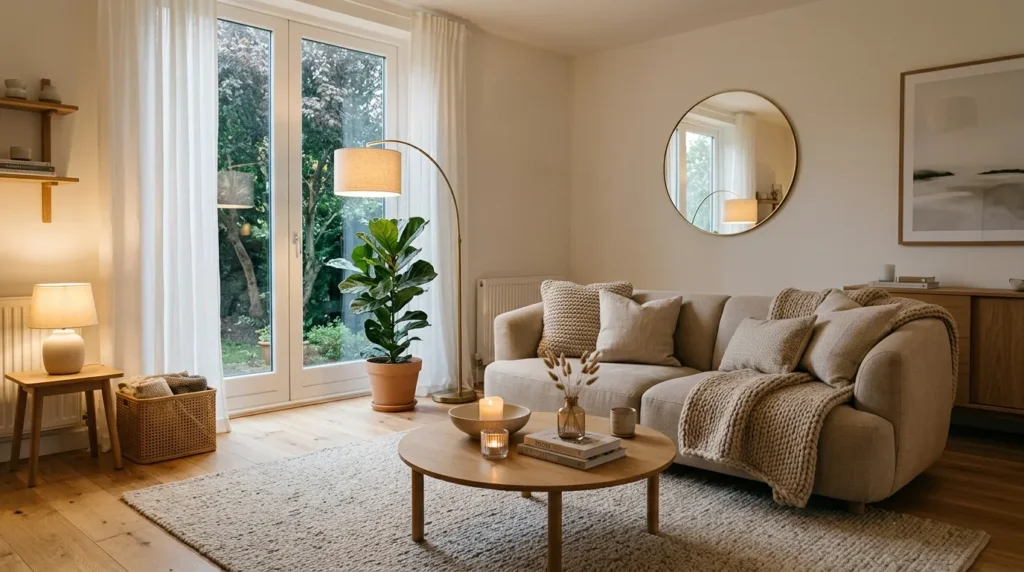
Scandinavian design has remained relevant for so long because it addresses something most people actually want from their homes: comfort without clutter, and warmth without heaviness. These eight interior design ideas for a cozy home — a warm neutral palette, natural wood tones, layered textiles, generous lighting, functional furniture, curated surfaces, thoughtful greenery, and maximized natural light — work together to create that calm, inviting feeling that Scandi style is known for.
You don’t need a full renovation to bring these principles into your own home. Start with lighting and textiles, since both are relatively inexpensive and immediately noticeable, then build outward from there. The result is a home that feels genuinely cozy, not because it’s filled with decor, but because every element has been chosen with warmth and comfort in mind.
Frequently Asked Questions
What colors are best for a cozy Scandi-inspired home? Warm neutrals work best — off-whites, soft beiges, and light creams with warm rather than cool undertones. These tones reflect light well while still feeling inviting, especially when paired with natural wood and soft textiles rather than stark white paired with cool gray accents.
Is Scandinavian design too minimal to feel cozy? Not when it’s done correctly. True Scandinavian design isn’t about having as little as possible; it’s about being intentional with what you include. The coziness comes from texture, warm lighting, and natural materials, not from filling a room with decor.
How can I make a small space feel cozy using Scandi-inspired design? Focus on warm lighting, layered textiles, and light natural wood tones, since these elements add warmth without requiring extra floor space. Keeping surfaces curated rather than cluttered also helps a small room feel calm and spacious rather than cramped, which is central to achieving a cozy Scandi look in any size home.