How to Make a Room Cozy With Simple, Budget-Friendly Ideas
Knowing how to make a room cozy comes down to a handful of sensory details that most people overlook, like lighting temperature, texture, and how sound moves through a space. A room can be perfectly furnished and still feel cold and uninviting if these smaller details are missing, while a modestly furnished room with the right warmth and texture can feel like the most comfortable spot in the entire house.
This guide breaks down exactly how to make a room cozy using practical, low-cost changes that work in almost any home, whether it’s a rented apartment, a family living room, or a small reading nook.
None of the ideas below require a full renovation or a large budget. Most of them can be done in an afternoon, using items that are either already in the home or easy to find at almost any home goods store, which makes this one of the most approachable types of room updates to actually finish rather than leave half done.
1. Start With Warmer, Softer Lighting
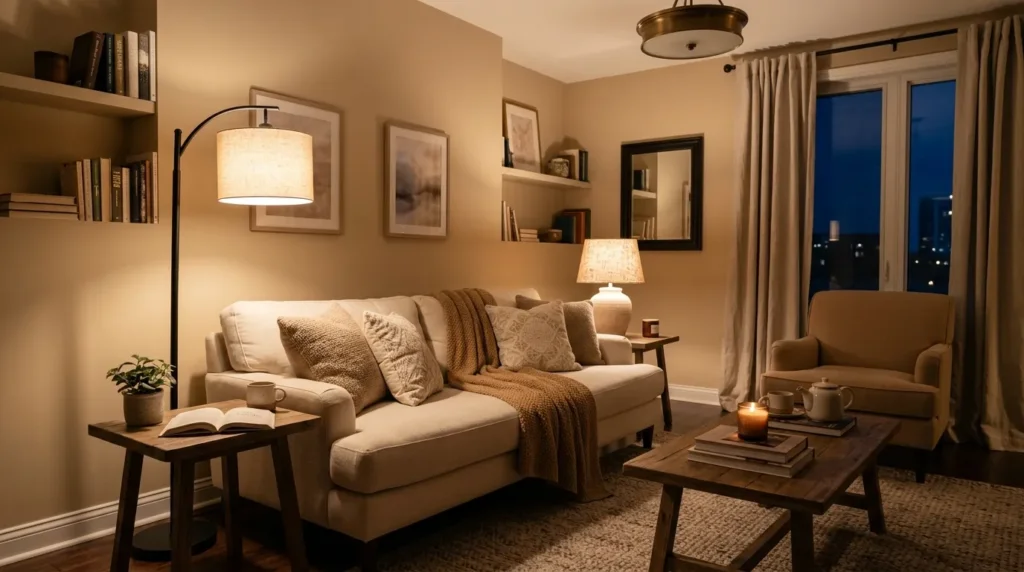
Bright, cool-toned overhead lighting is one of the biggest reasons a room feels sterile rather than cozy. Swapping standard bulbs for warmer color temperatures, generally in the 2700K to 3000K range, instantly softens the room and makes it feel more relaxed, even without changing anything else about the space.
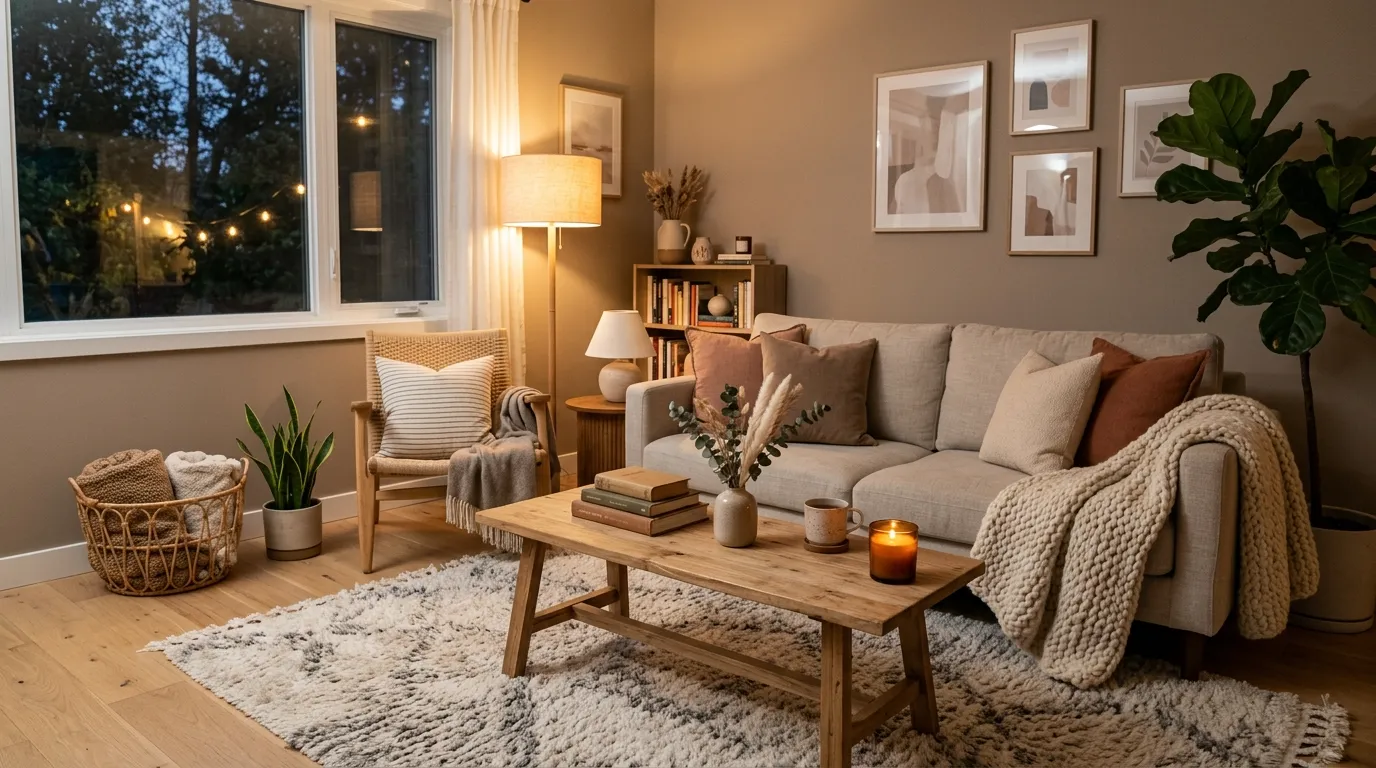
Layering a few smaller light sources, like a floor lamp and a table lamp, instead of relying on one overhead fixture also helps. This creates pools of soft light around the room rather than one flat wash of brightness, which tends to feel far more inviting once evening sets in.
Dimmer switches are another worthwhile addition, since they let the same fixtures shift from bright and functional during the day to soft and relaxed in the evening, all without needing to buy any additional lamps.
2. Add Layers of Texture Wherever You Can
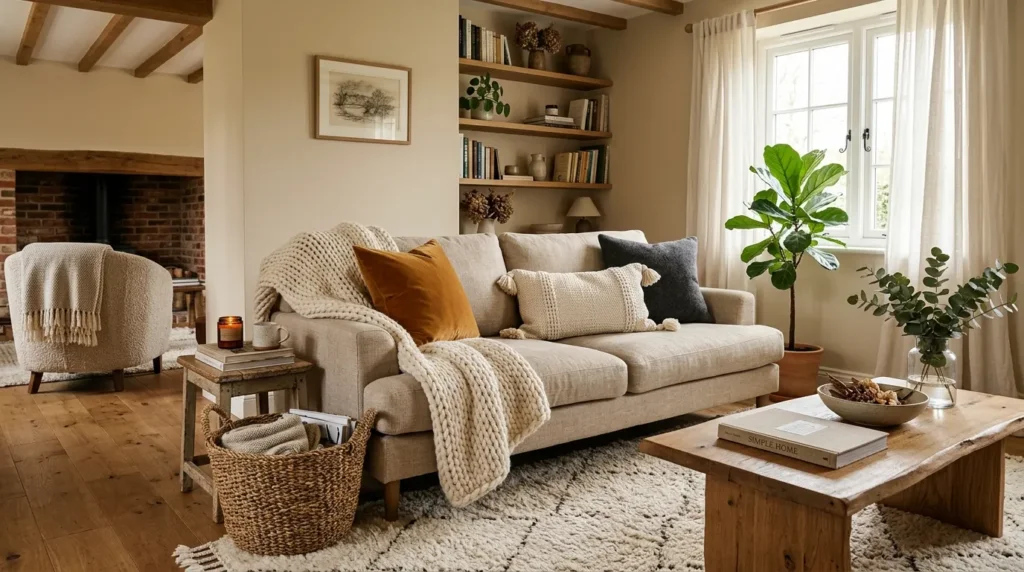
Texture is one of the fastest ways to make a room feel warmer, both visually and physically. A chunky knit throw, a textured rug, or a set of varied pillow covers all add tactile interest that a smooth, single-material room simply can’t offer on its own.
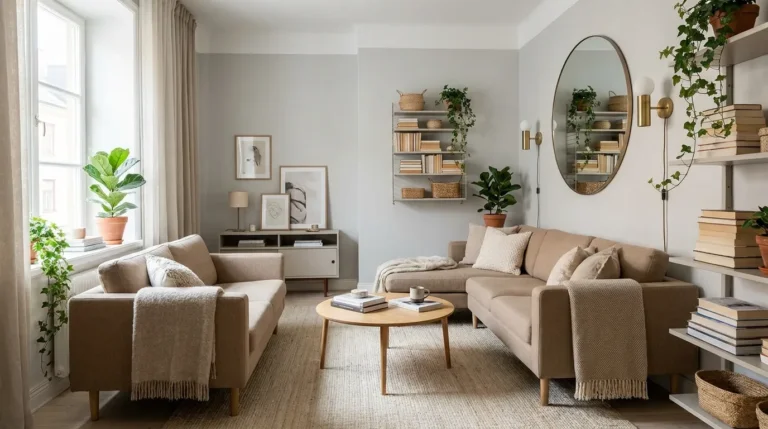
Mixing a few different textures together, such as a wool rug paired with a linen sofa and a soft velvet pillow, creates depth without needing to add more furniture or spend a large amount of money.
Even small touches, like a woven basket by the sofa or a textured throw folded over the arm of a chair, contribute to this layered feeling, since the eye picks up on variety even in details that seem minor on their own.
3. Bring In Natural, Grounding Materials
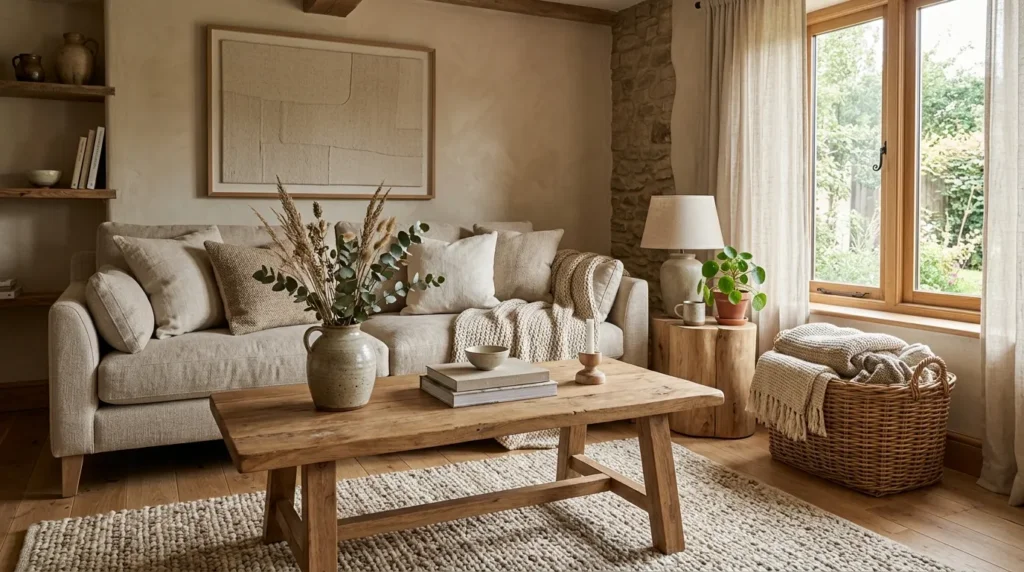
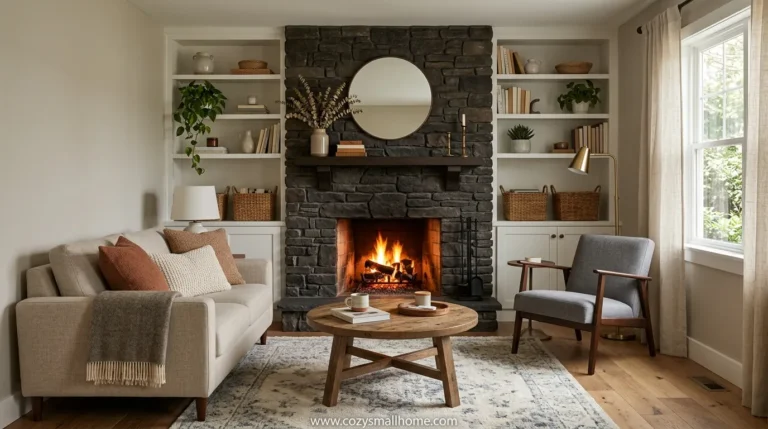
Wood, wicker, stone, and wool all bring a sense of warmth that most synthetic materials can’t quite replicate. A wooden coffee table, a woven basket for blankets, or a few stone or ceramic accents can shift a room’s entire feel from sleek and cold to warm and grounded.
These materials also tend to age well and develop character over time, which adds to the lived-in, comfortable feeling that a truly cozy room usually has, as opposed to a space that looks staged but rarely feels used.
Mixing a couple of natural materials together, rather than relying on just one, tends to work best. Pairing warm wood tones with a woven basket or a ceramic vase, for instance, creates a more layered, collected look than repeating the same material throughout the room.
4. Choose a Warm, Muted Color Palette
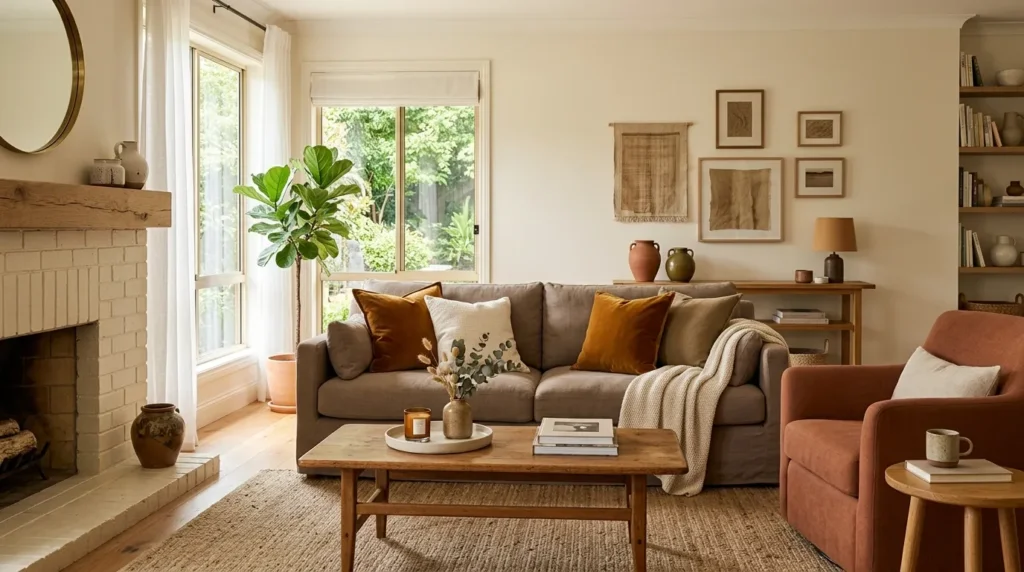
Cool, stark colors like bright white or icy gray can make a room feel clean but rarely feel cozy on their own. Warmer, muted tones such as soft terracotta, deep amber, warm taupe, or muted olive tend to create a more comforting atmosphere, even when used in fairly small doses.
A full room repaint isn’t necessary to see this effect. Adding warm-toned textiles, art, or accent pieces against an existing neutral wall can shift the overall feeling of the room without requiring any paint at all.
Testing a warm accent color on just one wall, or through a single large piece like an accent chair, is a low-risk way to see how the shift feels before committing to a larger change across the whole room.
5. Layer Rugs and Soft Flooring Underfoot
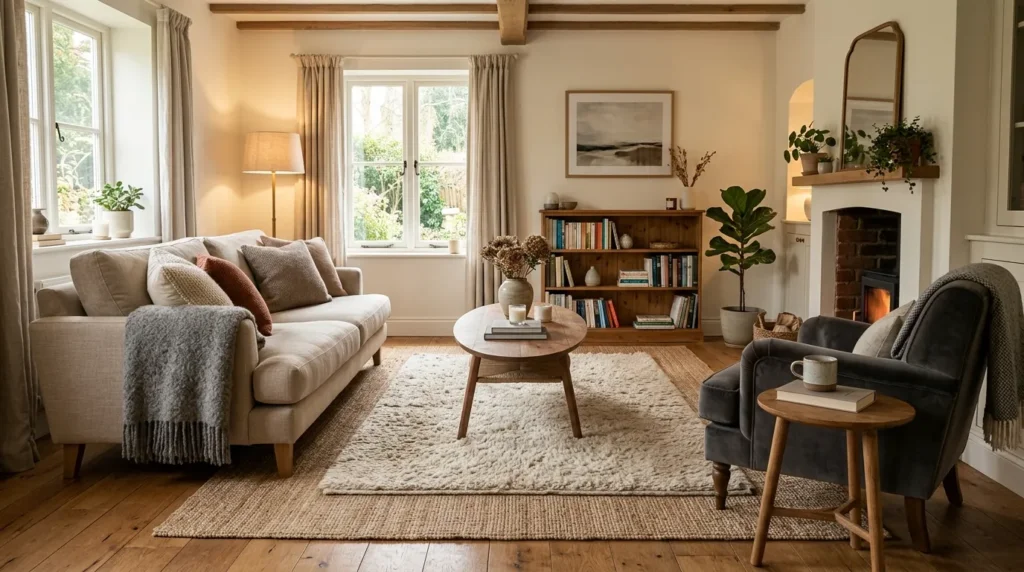
Hard flooring, while practical, can make a room feel colder both temperature-wise and visually. A plush area rug placed under the main seating area softens the look of the room and makes it more comfortable to walk across, especially during colder months.
Layering a smaller textured rug over a larger flat-weave rug is a popular technique for adding even more warmth and visual depth, particularly in a room where the flooring itself can’t easily be changed.
6. Use Scent to Add an Emotional Layer of Comfort
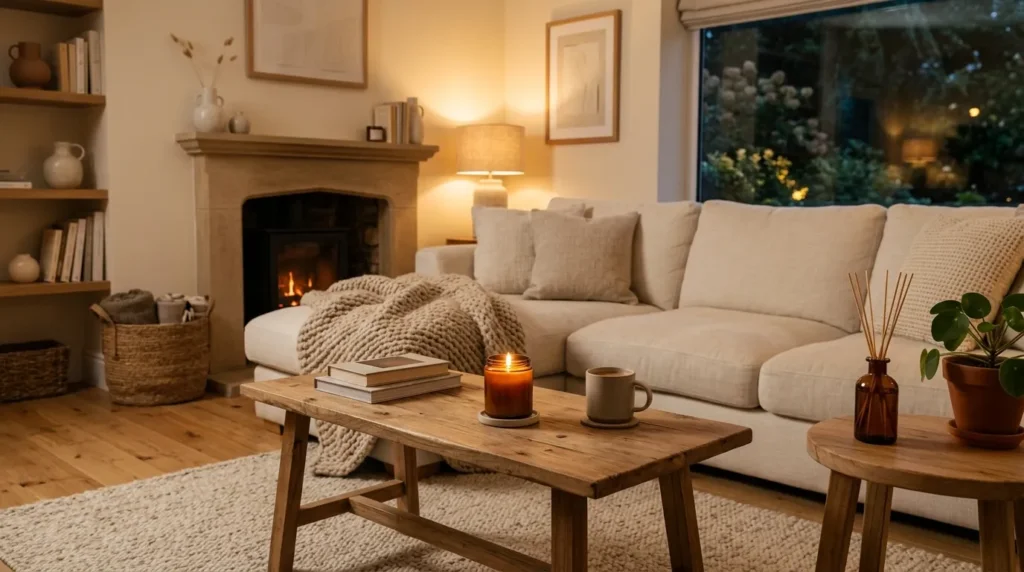
Cozy spaces often trigger a sense of comfort through scent just as much as through what’s visible in the room. A softly scented candle, a reed diffuser, or even simmering spices on the stove can add a subtle, comforting layer that makes a room feel more inviting the moment someone walks in.
Choosing warmer scent notes, like vanilla, sandalwood, or cedar, tends to reinforce the same cozy feeling created by warm lighting and natural materials, tying the whole sensory experience of the room together.
7. Compare the Easiest Cozy Upgrades at a Glance
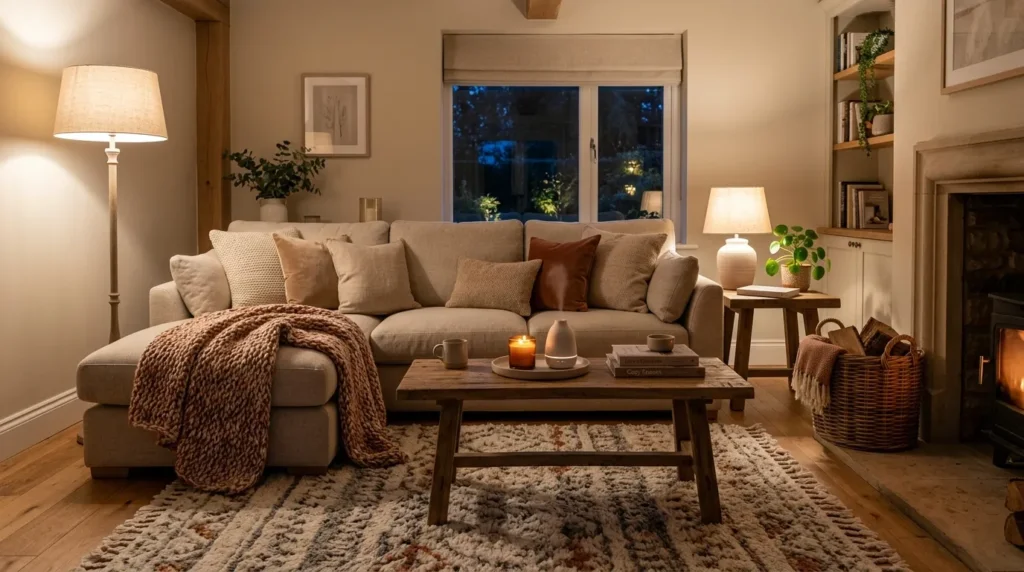
With so many small changes possible, it helps to see which elements deliver the most noticeable cozy effect for the least amount of effort. The table below breaks down some of the easiest updates to start with.
| Element | Cozy Effect | Easy Way to Add It |
| Warm lighting | Softens the room and reduces glare | Swap bulbs for a warmer color temperature |
| Layered textiles | Adds warmth and texture to touch | Add a throw blanket and extra pillows |
| Natural materials | Feels grounded and organic | Add wood, wicker, or wool accents |
| Scent | Creates an emotional sense of comfort | Light a candle or use a simple diffuser |
| Rug underfoot | Softens hard flooring and sound | Add a plush area rug near seating |
Starting with just two or three of these changes is usually enough to notice a real difference in how the room feels, without needing to tackle every item on the list at once.
8. Arrange Furniture and Add Personal Touches
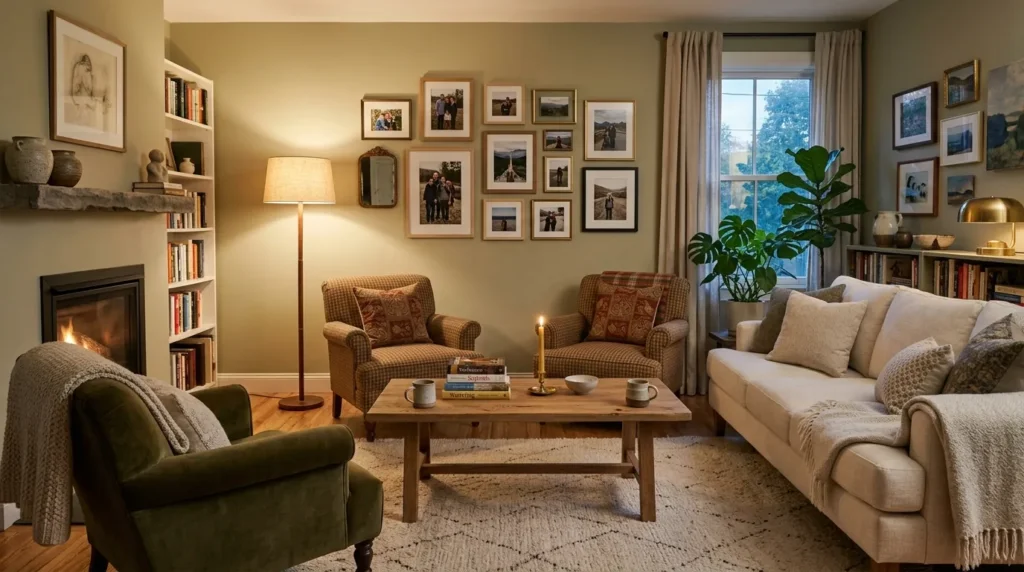
A cozy room usually has furniture arranged to bring people physically closer together, rather than spread out along opposite walls. Angling chairs slightly toward the sofa, or pulling seating in closer around a coffee table, creates a more intimate, conversational layout that feels warmer than a room where seating is scattered far apart.
Keeping the seating area anchored around a central point, like a coffee table or a rug, also gives the room a clear focal point, which tends to feel more purposeful and inviting than furniture floating without any real center.
A room that feels cozy almost always feels personal too. Framed photos, a favorite book collection, or a few handmade or sentimental objects give a space character that generic decor simply can’t replicate. These personal touches signal that the room is actually used and loved, not just decorated to look good in photos.
It’s worth resisting the urge to overdo this step, though. A handful of meaningful items, displayed with a bit of breathing room around them, tends to feel warmer than a room crowded with too many small objects competing for attention.
Rotating a few personal items seasonally, rather than displaying everything at once, can also keep the room feeling fresh while still maintaining that same sense of warmth and personal connection over time.
Bringing the Whole Feeling Together
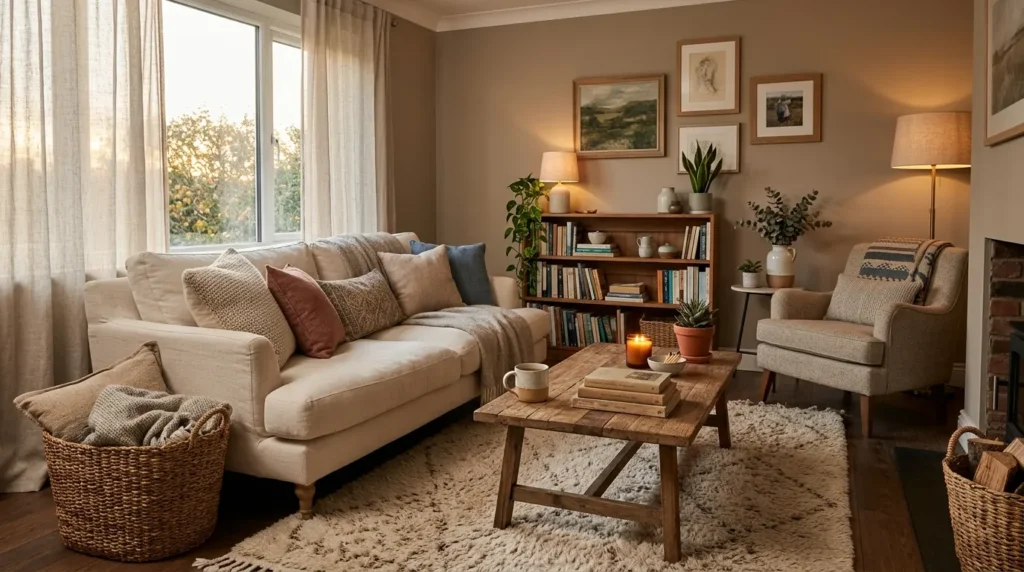
Knowing how to make a room cozy really comes down to layering warmth through lighting, texture, color, and personal touches, rather than relying on any single change to do all the work. Small, thoughtful updates like a warmer bulb, a soft throw, or a well-placed rug add up to a space that feels genuinely comfortable rather than just visually put together.
The most inviting rooms tend to be the ones built gradually, with each addition chosen because it actually adds warmth or comfort, not just because it filled an empty corner. That kind of intentional layering is what separates a truly cozy room from one that simply looks nice in passing.
Common Questions About Cozy Rooms
What lighting makes a room feel cozy?
Warm-toned bulbs around 2700K, layered across a few smaller lamps, feel cozier than one bright overhead light.
Do rugs really make a room feel warmer?
Yes, a plush rug softens hard flooring and adds both visual and physical warmth to the space.
What colors make a room feel more cozy?
Warm, muted tones like terracotta, amber, and taupe tend to feel more comforting than cool, stark colors.
Can a small room still feel cozy?
Yes, cozy comes from lighting, texture, and layout, not from square footage or the size of the room.
Does scent actually affect how cozy a room feels?
Yes, warm scents like vanilla or cedar add an emotional layer of comfort that visuals alone can’t create.