How to Organize a Bathroom Cabinet for a Clutter-Free Space
Introduction
A bathroom cabinet can quickly become one of the messiest storage areas in a home. Small bottles, skincare products, hair tools, cleaning supplies, and everyday essentials often end up mixed together, making it difficult to find what you need. Learning how to organize a bathroom cabinet can make your routine easier while helping the entire bathroom feel cleaner and more functional.
The good news is that you do not need a large cabinet or expensive storage products to create order. A simple system based on categories, containers, labels, and easy access can make a noticeable difference. The key is to give every item a practical place and avoid filling the cabinet with products you no longer use.
- Empty the Cabinet Before You Organize It
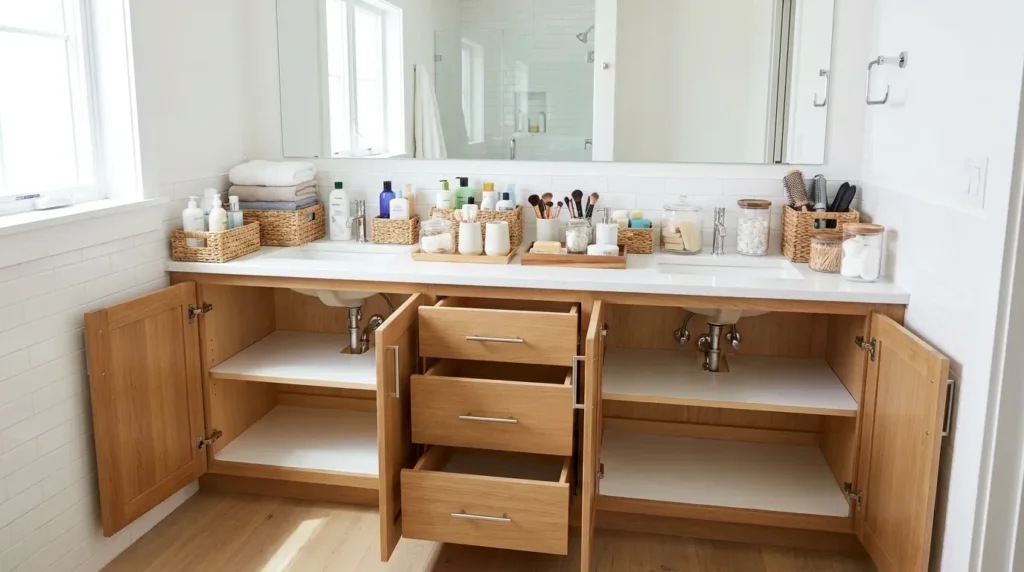
The easiest way to organize a bathroom cabinet properly is to start with a completely empty space. Trying to organize around existing clutter usually makes the process harder because you cannot see how much storage you actually have.
Remove everything from the cabinet and place the items on a clean surface. Wipe down the shelves, corners, and cabinet walls before putting anything back.
As you sort, create simple groups such as:
• Daily-use toiletries
• Skincare and haircare products
• First-aid and personal-care items
• Extra or backup products
• Cleaning supplies
• Items that belong somewhere else
This first step gives you a clear picture of what you own and helps prevent unnecessary products from taking up valuable space.
- Declutter Products You No Longer Use
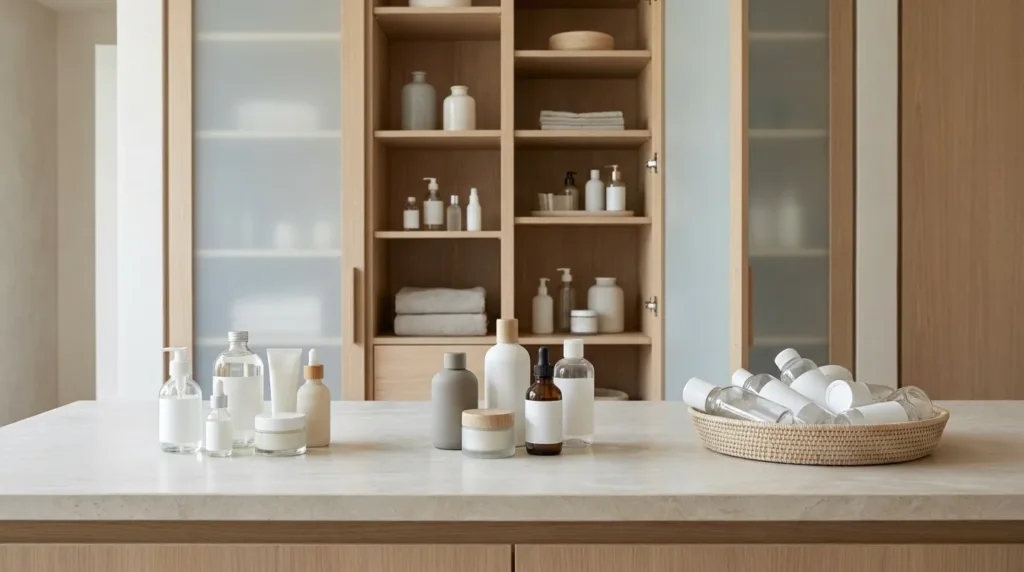
Once everything is outside the cabinet, decide what genuinely needs to go back inside. Bathrooms often collect half-used products, expired items, duplicates, and products that simply did not work for you.
Check packaging and product dates where relevant, and follow the manufacturer’s storage and expiration guidance. Dispose of products safely according to local recommendations, especially anything that should not be poured down a drain.
A useful rule is to ask yourself whether you use an item, need it, or realistically expect to use it soon. If the answer is no, it may not deserve cabinet space.
Pay special attention to duplicates. If you have several nearly identical products, keep the ones you actually prefer and move unopened extras to a designated backup area.
- Group Similar Bathroom Items Together
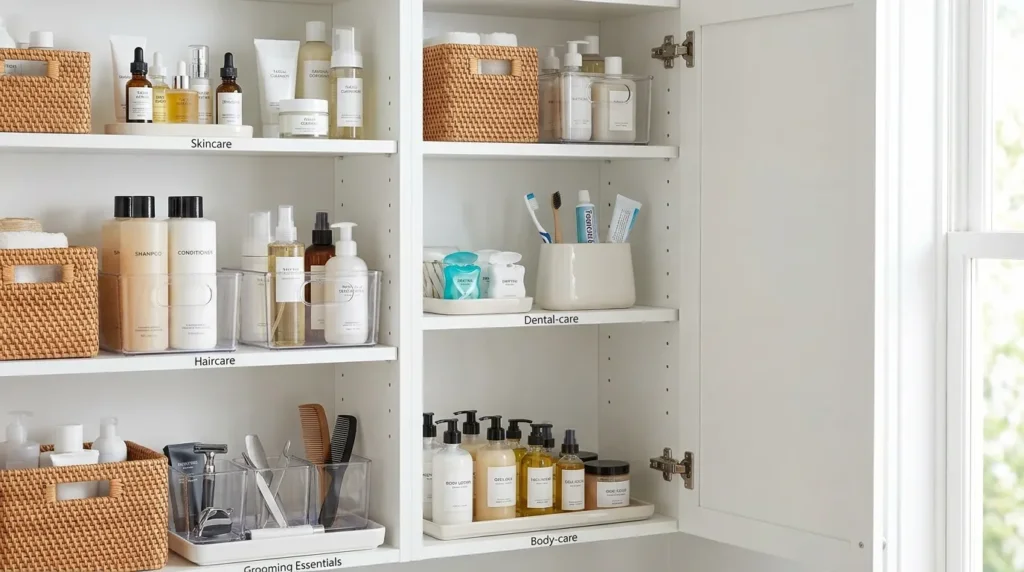
After decluttering, organize the remaining items by category instead of placing everything wherever it fits. Grouping similar products makes the cabinet easier to use because you will know where to look when you need something.
For example, you could create zones for:
• Skincare and facial products
• Haircare and styling products
• Dental-care supplies
• Body-care products
• First-aid essentials
• Makeup or grooming items
• Cleaning and household supplies
Think about how you use each category during your daily routine. Items used together should ideally be stored close together. This reduces the amount of searching and keeps the cabinet organized for longer.
You can also separate everyday products from occasional-use products. Everyday items should receive the easiest-to-reach spaces, while products used less often can go toward the back or on higher shelves.
- Use Small Bins and Containers to Create Zones
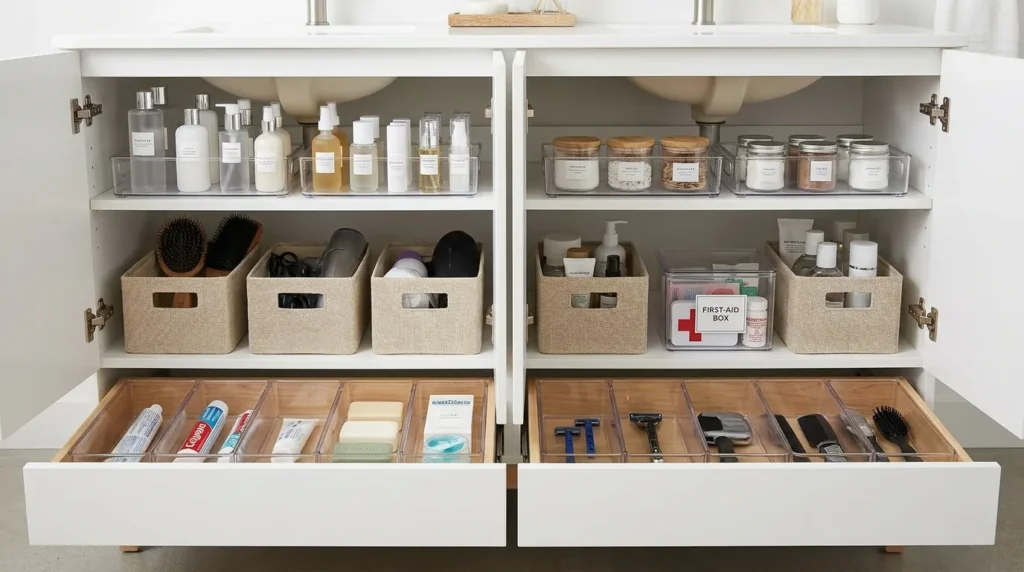
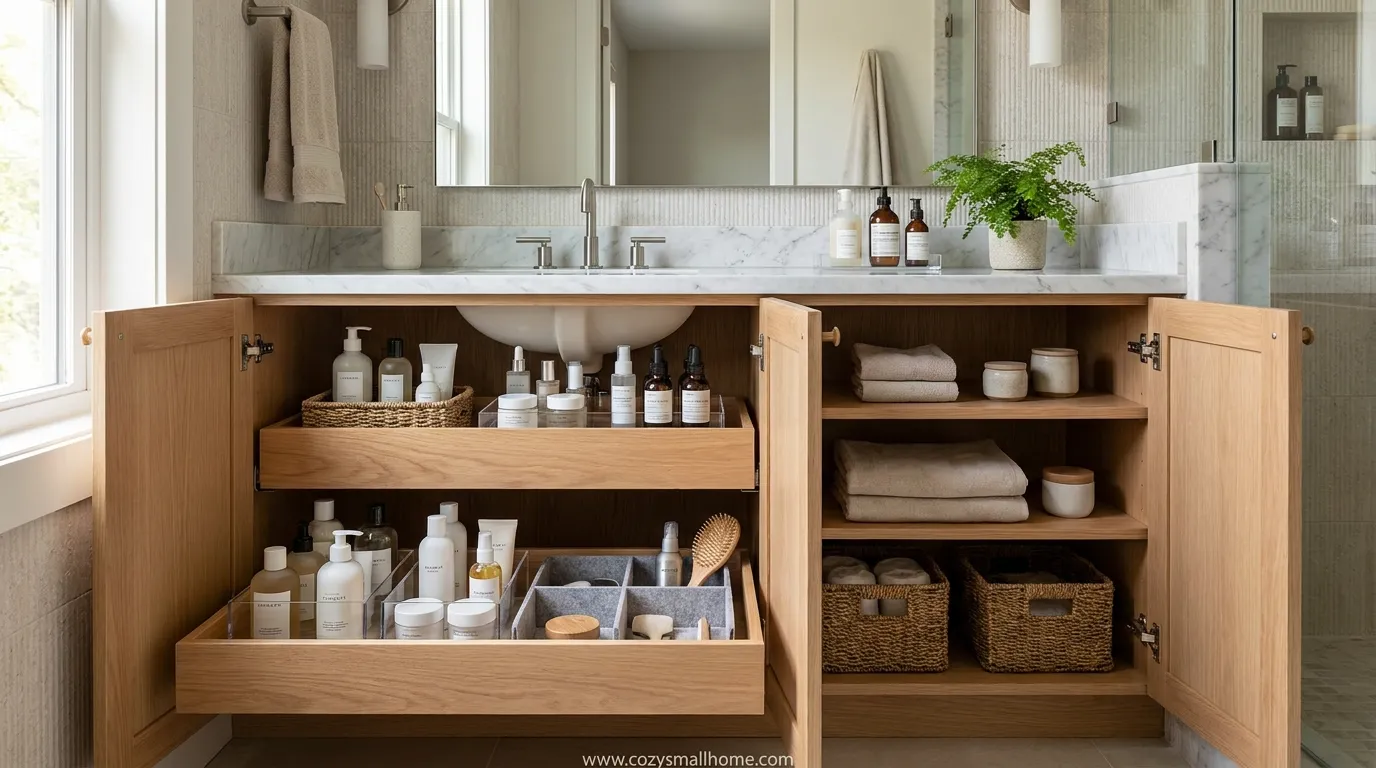
Bathroom cabinets often have deep shelves, which can make small products disappear toward the back. Small bins and containers solve this problem by turning one large storage area into several manageable zones.
Choose containers that fit the cabinet dimensions rather than buying organizers first and hoping they fit. Clear bins are useful when you want to see what is inside, while open-top baskets can make frequently used items easy to grab.
Consider giving each container a specific purpose:
• One bin for skincare
• One for hair products
• One for first-aid supplies
• One for backup toiletries
• One for grooming accessories
Avoid overfilling containers. When a bin is packed tightly, it becomes difficult to remove individual items and the cabinet can quickly return to its old state.
- Make the Most of Vertical and Door Storage
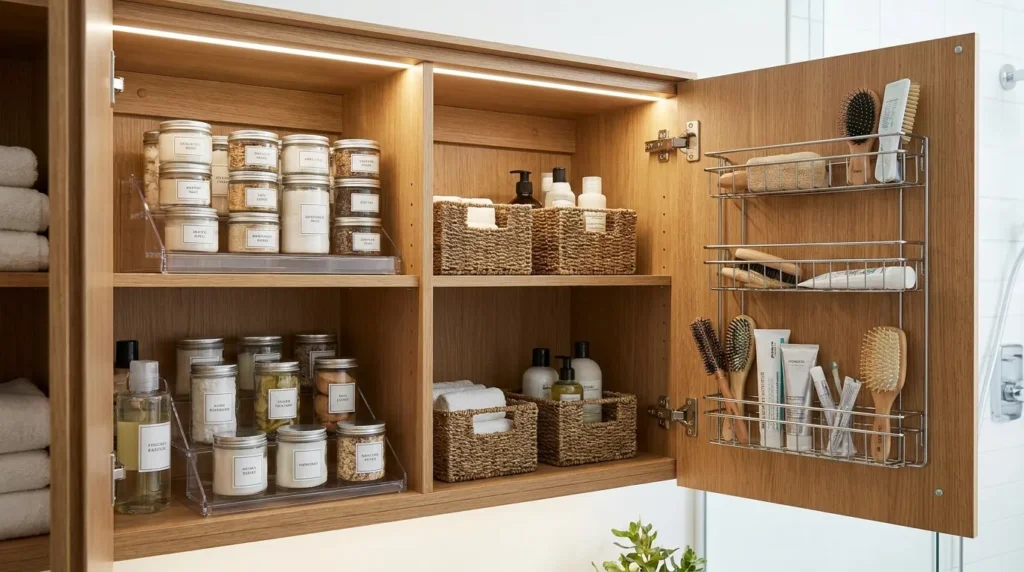
If your bathroom cabinet has adjustable shelves or unused vertical space, use that space intentionally. Short products do not always need an entire shelf, so stacking or tiered organizers can help you make better use of the available height.
Cabinet doors can also provide useful storage when the design allows it. Slim racks, small pockets, or adhesive organizers can hold lightweight items such as brushes, combs, or small accessories.
Before adding door-mounted storage, check the cabinet’s clearance. Make sure the organizer does not prevent the door from closing or cause products to hit the shelves.
Use vertical space for smaller categories rather than creating too many layers of products. You should still be able to see and reach everything without removing several items first.
- Store Everyday Essentials at Eye Level
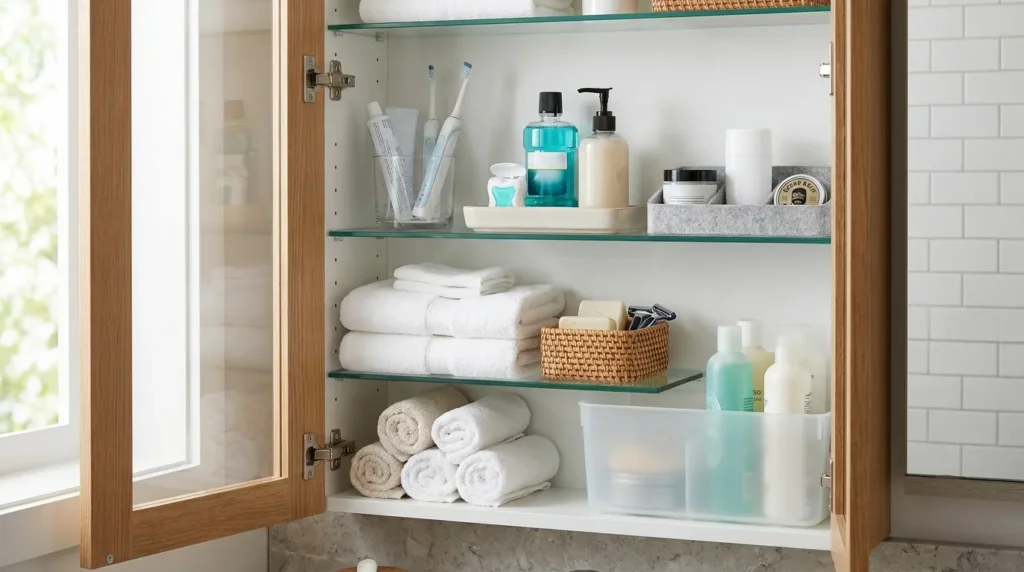
One of the simplest ways to make a bathroom cabinet more functional is to organize it according to frequency of use. The products you reach for every morning and evening should be the easiest to access.
Place daily essentials toward the front of the most convenient shelf. Less frequently used items can go behind them only if they remain easy to reach.
For example, your everyday area might include:
• Toothpaste and dental-care items
• Face wash and moisturizer
• Deodorant
• Daily hair products
• Frequently used grooming tools
Backups and seasonal products should not compete with everyday essentials for prime storage space. Keeping them separate makes it easier to notice when something needs replacing without creating visual clutter.
- Keep the Cabinet Organized With a Simple Routine
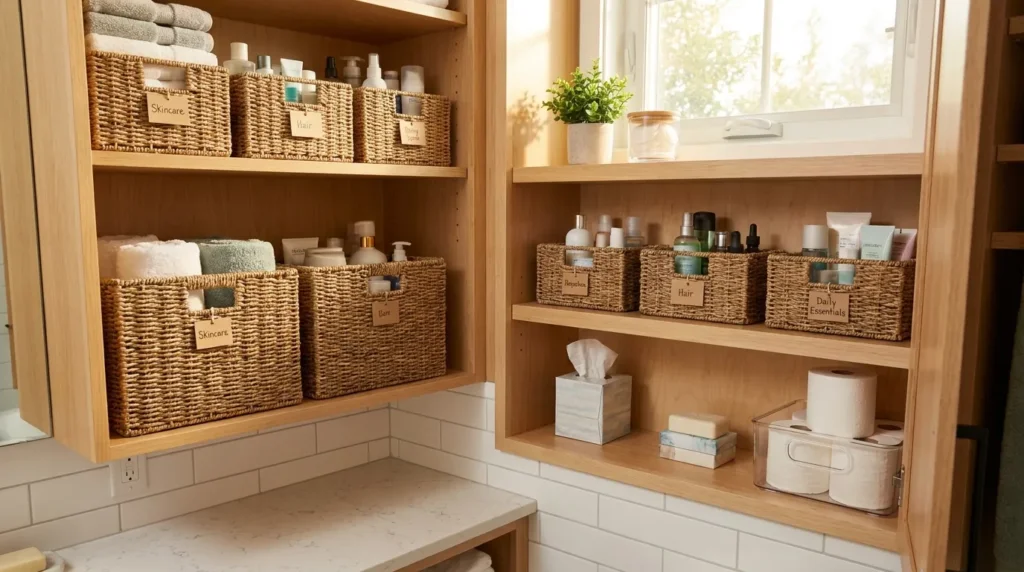
Organizing a bathroom cabinet is only half the job. The real goal is to create a system that remains easy to maintain. A complicated system can become another source of clutter, so keep your routine simple.
When you finish using a product, return it to its assigned zone instead of leaving it on the counter. When you buy a replacement, check whether you already have one before opening the new product.
A quick monthly reset can also help. During this reset:
• Remove empty containers.
• Check for products that no longer belong in the cabinet.
• Return misplaced items to their zones.
• Wipe shelves if needed.
• Move frequently used products back to the front.
• Review backup supplies before buying more.
This small habit can prevent the cabinet from becoming overcrowded again.
- FAQs About How to Organize a Bathroom Cabinet
How should I organize a small bathroom cabinet?
Start by removing unnecessary items and grouping the products you actually use. Use narrow bins, stackable organizers, and vertical storage where possible. Keep daily essentials at the front and less frequently used products farther back.
Should bathroom products be stored in containers?
Containers can be helpful for grouping small products and preventing them from spreading across a shelf. They are especially useful for categories such as skincare, hair accessories, and first-aid supplies. Choose washable or easy-to-clean organizers for a bathroom environment.
How often should I reorganize my bathroom cabinet?
A quick reset once a month is usually enough for routine maintenance. A deeper decluttering session can be done whenever the cabinet starts feeling crowded or difficult to use.
What should not be stored in a bathroom cabinet?
Storage depends on the product and its manufacturer’s instructions. Some items may be affected by heat, humidity, or temperature changes, so always follow the storage directions on the label. Keep medicines and other sensitive products according to their specific storage requirements rather than assuming the bathroom is appropriate.
How can I keep my bathroom cabinet from getting cluttered again?
Give every category a designated place and avoid buying duplicates unnecessarily. Make it a habit to return items to their zones after use and remove empty or unwanted products regularly.
A Bathroom Cabinet Is Easier to Use When Everything Has a Place
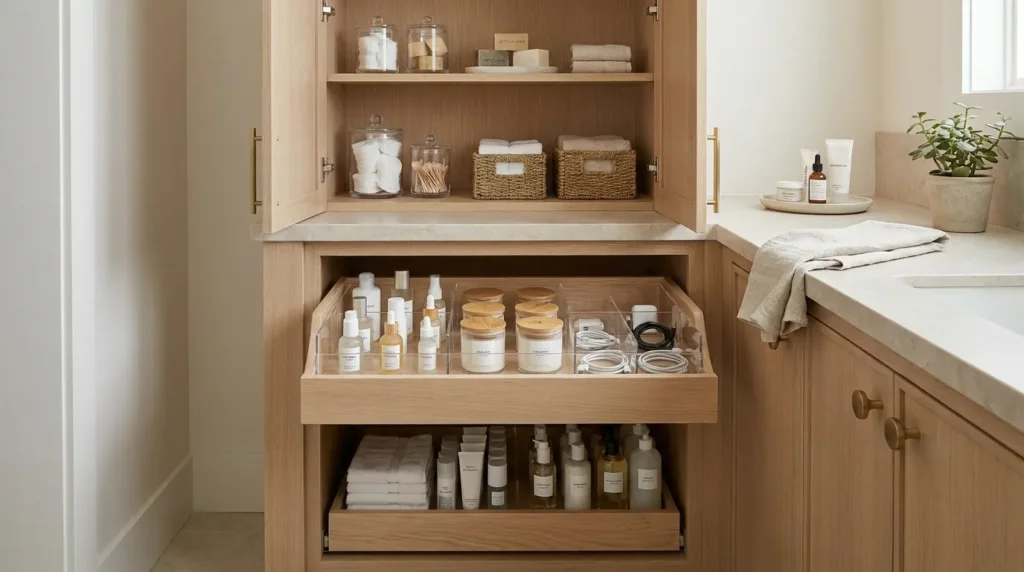
Learning how to organize a bathroom cabinet does not require a complicated storage system. The most effective approach is to declutter first, group similar products, use practical containers, take advantage of vertical space, and keep everyday essentials within easy reach.
The best organization system is one that fits your routine. When every item has a clear home, your cabinet becomes easier to maintain, your counters can stay clearer, and everyday bathroom tasks feel more convenient. Start with one shelf if the entire cabinet feels overwhelming, then build the system one category at a time.