Dining Room Ideas to Make Your Space Stylish and Cozy
Introduction
The dining room is more than a place to eat. It is where family meals, celebrations, conversations, and everyday moments come together. With the right layout, furniture, lighting, and decorative details, even a simple dining area can feel stylish, comfortable, and inviting.
If you are looking for dining room ideas that balance beauty with practicality, focus on choices that make the space easy to use while adding warmth and personality. You do not need an expensive renovation or a large room to create an attractive dining area. Thoughtful furniture placement, layered lighting, natural textures, and a few carefully selected accessories can make a noticeable difference.
Whether your style is modern, traditional, minimalist, or cozy, these ideas can help you create a dining room that feels welcoming and works well for everyday life.
- Choose a Dining Table That Fits the Space
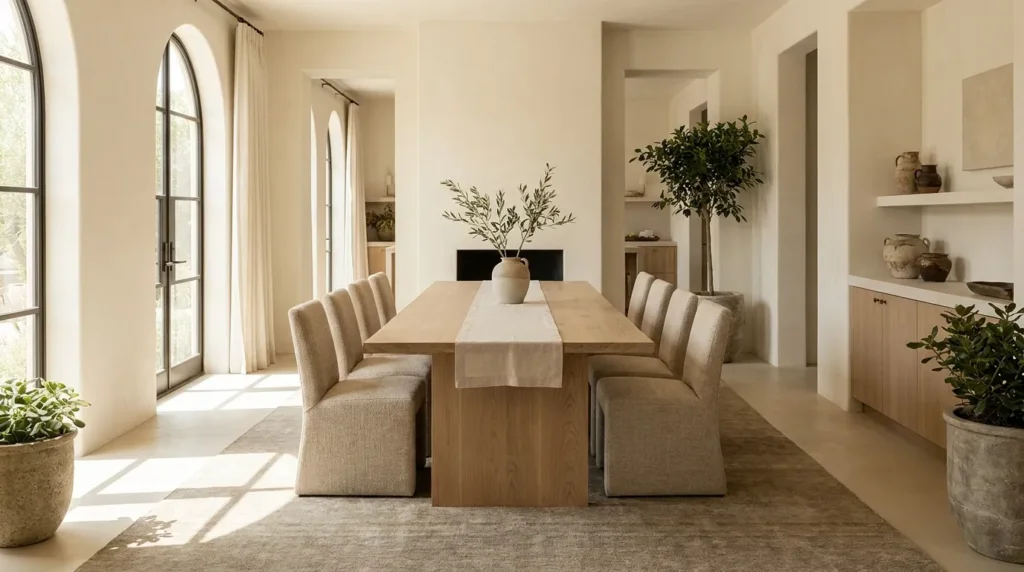
The dining table is usually the main focal point of the room, so choosing the right size and shape is one of the most important decisions. A table that is too large can make the room feel crowded, while one that is too small may leave the space looking disconnected.
Before buying a table, measure the available floor area and leave enough room around it for chairs to move comfortably. Rectangular tables work especially well in longer rooms, while round or square tables can be useful in compact dining areas.
Consider how many people regularly use the table as well as how often you host guests. An extendable table can provide flexibility without taking up extra space every day. Materials also influence the atmosphere. Wood adds warmth and character, glass can make a small room feel visually lighter, and sleek finishes can support a modern look.
- Create a Comfortable and Stylish Seating Area
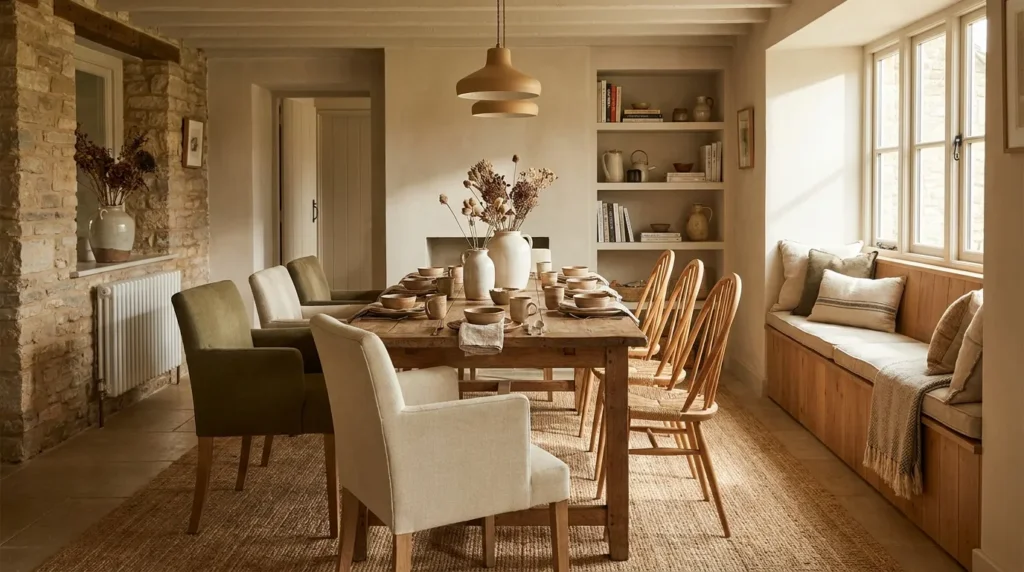
Dining chairs should look good, but comfort matters just as much. Since meals and conversations can last for a while, choose chairs with supportive backs and a comfortable seat height.
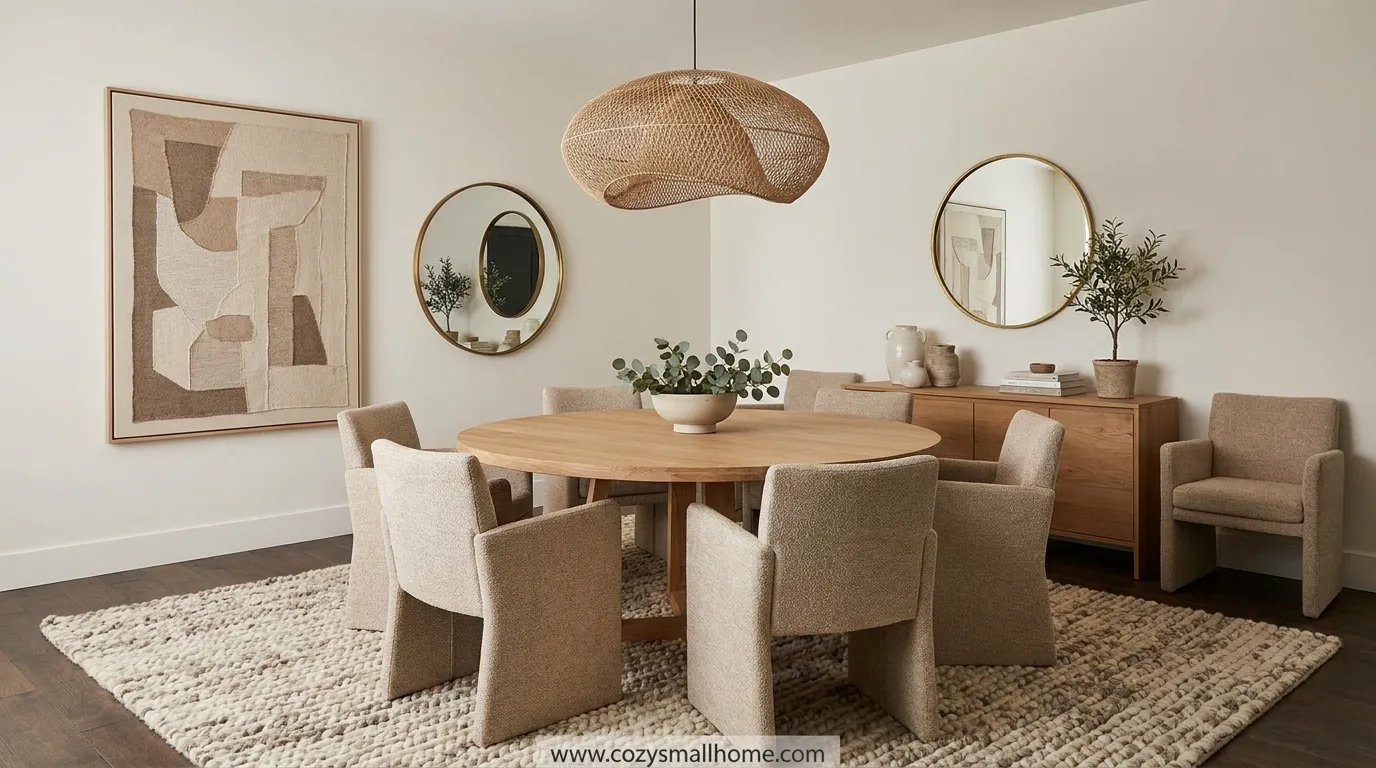
You do not necessarily have to use matching chairs. Mixing styles can give the room a more collected and personal appearance, provided there is a visual connection between the pieces. For example, different chair designs can share the same color, material, or overall shape.
Upholstered chairs can add softness and warmth, while wooden or metal chairs can create a cleaner, more contemporary feel. If you have a bench along one side of the table, it can provide flexible seating and make the room feel more relaxed.
Keep enough space between chairs and nearby walls or furniture so that people can sit down and move around without feeling restricted.
- Use Lighting to Set the Mood
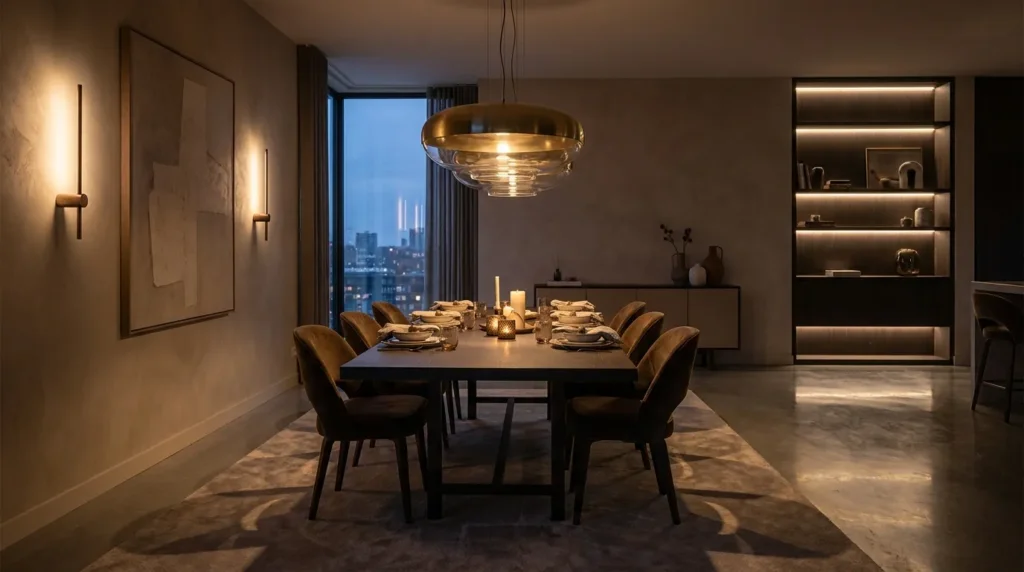
Lighting can completely change how a dining room feels. A central pendant light or chandelier above the table creates a natural focal point while providing useful illumination for meals.
The size of the light fixture should relate to the table and room. A fixture that is too small can disappear visually, while one that is too large may overwhelm the dining area. Hanging the fixture at an appropriate height is equally important so it provides light without obstructing conversation.
For a cozy atmosphere, combine overhead lighting with additional sources such as wall sconces, floor lamps, or nearby accent lighting. Warm-toned bulbs can make the room feel inviting, particularly in the evening.
If your dining room has a dimmer, it becomes easier to adjust the lighting for different occasions. Bright light can work well for everyday meals and cleaning, while softer illumination can create a more relaxed setting for dinner with guests.
- Add Warmth With Color and Texture
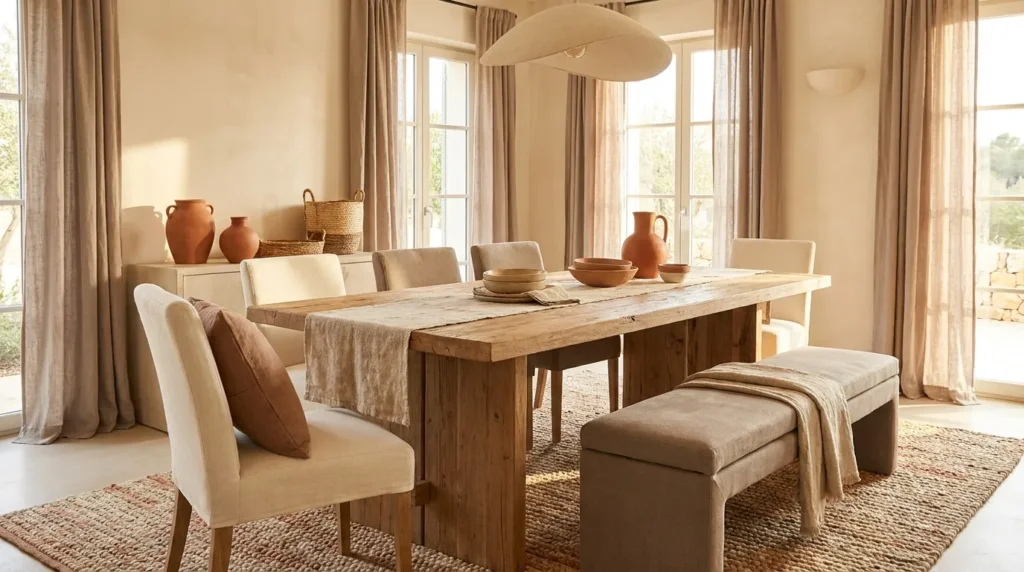
Color and texture are simple ways to make a dining room feel more comfortable and visually interesting. Neutral walls can provide a flexible background, while warm beige, cream, taupe, muted green, terracotta, or earthy tones can add character without making the room feel overwhelming.
If you prefer a more dramatic look, consider using a deeper shade on one wall or throughout the room. Wallpaper can also introduce pattern and personality while creating a strong backdrop for the dining table.
Texture is just as important as color. A woven rug, linen curtains, upholstered seating, a textured table runner, or natural wood furniture can make the space feel layered and welcoming. Try combining smooth and textured surfaces rather than using too much of one finish.
A dining room should feel connected to the rest of the home, so consider repeating one or two colors or materials from nearby rooms.
- Decorate the Walls Without Overcrowding Them
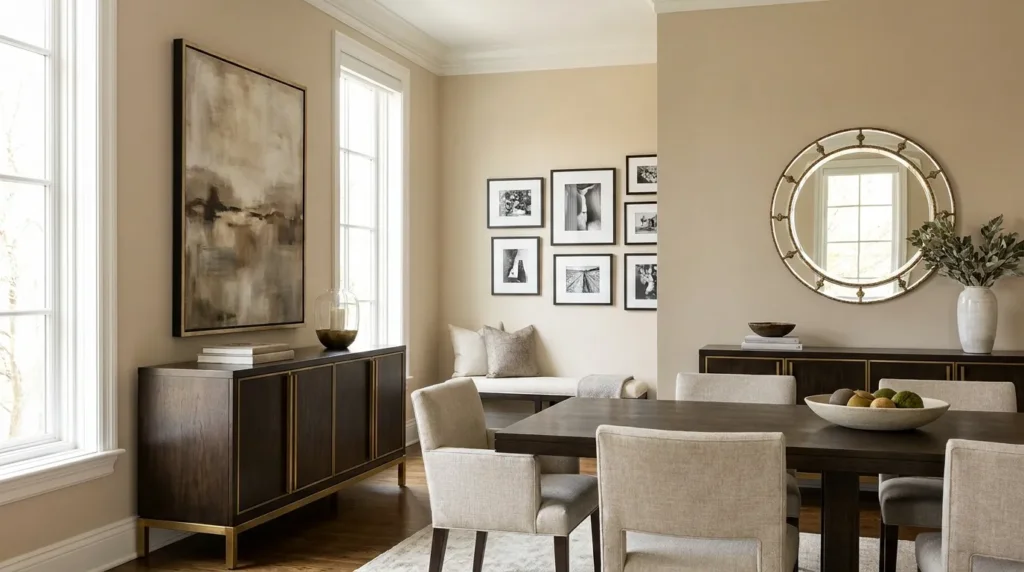
Dining room walls offer an excellent opportunity to express your style. Artwork, mirrors, shelves, wall molding, or a statement clock can add visual interest without taking up valuable floor space.
A large piece of artwork above a sideboard can create a strong focal point. Alternatively, a gallery wall can give the room a more personal and casual appearance. Keep the arrangement balanced with the size of the furniture below it.
Mirrors can be especially useful in smaller dining rooms because they reflect light and can make the room appear more open. Positioning a mirror where it reflects a window or attractive light source can increase this effect.
For a minimalist room, you may need only one carefully chosen piece. Avoid filling every wall simply because there is empty space. Leaving some areas visually quiet can help the room feel polished rather than cluttered.
- Bring in Natural Elements

Natural materials can make a dining room feel warm and grounded. Wood furniture is an easy starting point, but you can also introduce natural character through rattan chairs, woven baskets, linen fabrics, stone accessories, or ceramic pieces.
Plants are another simple addition. A medium-sized plant in an attractive pot can soften hard furniture lines and bring life into the room. If floor space is limited, a small plant can sit on a sideboard or shelf.
Fresh flowers can create an easy centerpiece for special occasions, while branches, dried stems, or a simple bowl of greenery can work for everyday decorating. Choose arrangements that do not block the view across the table.
Natural elements also pair well with modern furniture. Even a sleek dining room can feel warmer when a few organic textures are introduced.
- Keep the Dining Room Functional and Clutter-Free
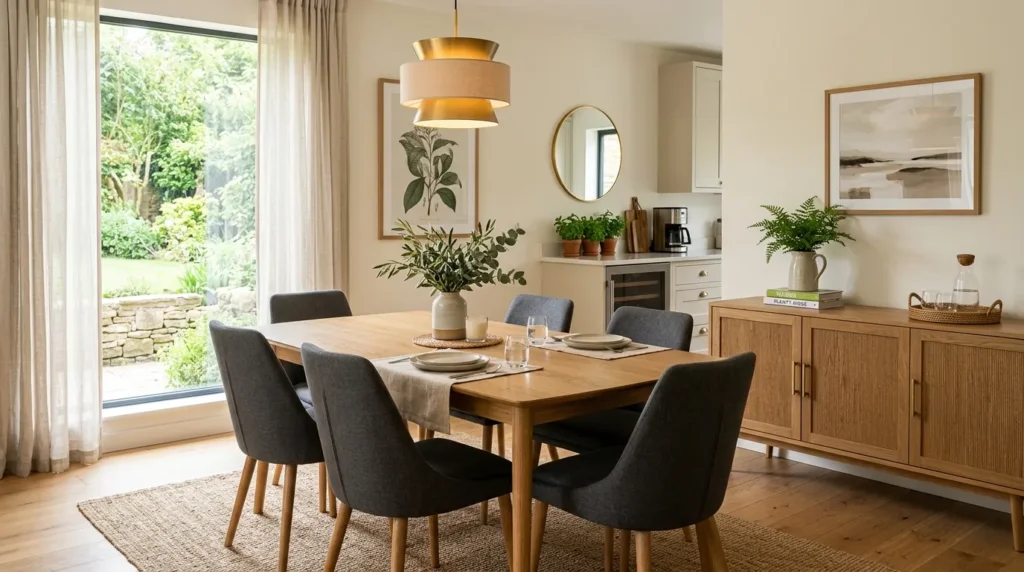
Good dining room design is not only about appearance. The space should also be practical enough for everyday use. Storage can help keep table surfaces and nearby areas organized.
A sideboard, cabinet, console, or built-in storage unit can provide room for dinnerware, table linens, serving pieces, and other essentials. If the room is small, choose furniture that offers storage without creating a heavy visual appearance.
Keep the dining table mostly clear when it is not being used. A simple centerpiece, bowl, vase, or candle arrangement can add decoration while leaving enough space for everyday activities.
Think about movement through the room as well. Doors, drawers, chairs, and walking paths should remain easy to use. When the layout works naturally, the dining room will feel more comfortable regardless of its size.
- FAQs About Dining Room Ideas
How can I make a small dining room look bigger?
Use appropriately scaled furniture, keep walking paths open, and avoid overcrowding the walls. Mirrors, light colors, and visually lighter furniture can also help create a more open appearance.
What should I put in the center of a dining table?
A vase, bowl, small plant, candle arrangement, or simple decorative object can work well. Choose something that is low enough to keep conversations comfortable and easy.
How do I make a dining room feel cozy?
Focus on warm lighting, comfortable seating, natural materials, soft textures, and a welcoming color palette. Rugs and curtains can also add warmth and reduce the feeling of a hard, empty space.
Should dining chairs match the table?
They do not have to match exactly. Coordinating colors, materials, or shapes can create a cohesive look while still allowing some variety.
What colors work well in a dining room?
Neutral and earthy shades are versatile choices, but the best color depends on the home’s overall style and the mood you want to create. Warm neutrals, muted greens, soft blues, and deeper accent shades can all work well when balanced with the rest of the room.
A Comfortable Dining Space Starts With Thoughtful Choices
A dining room does not need complicated decoration to feel beautiful and welcoming. Start with a table and seating arrangement that fit the room, then build the design around lighting, color, texture, storage, and a few meaningful decorative details.
The most successful dining room ideas combine style with everyday practicality. When furniture is comfortable, movement is easy, lighting feels pleasant, and the decor reflects your personality, the dining room becomes a space people naturally enjoy spending time in.