
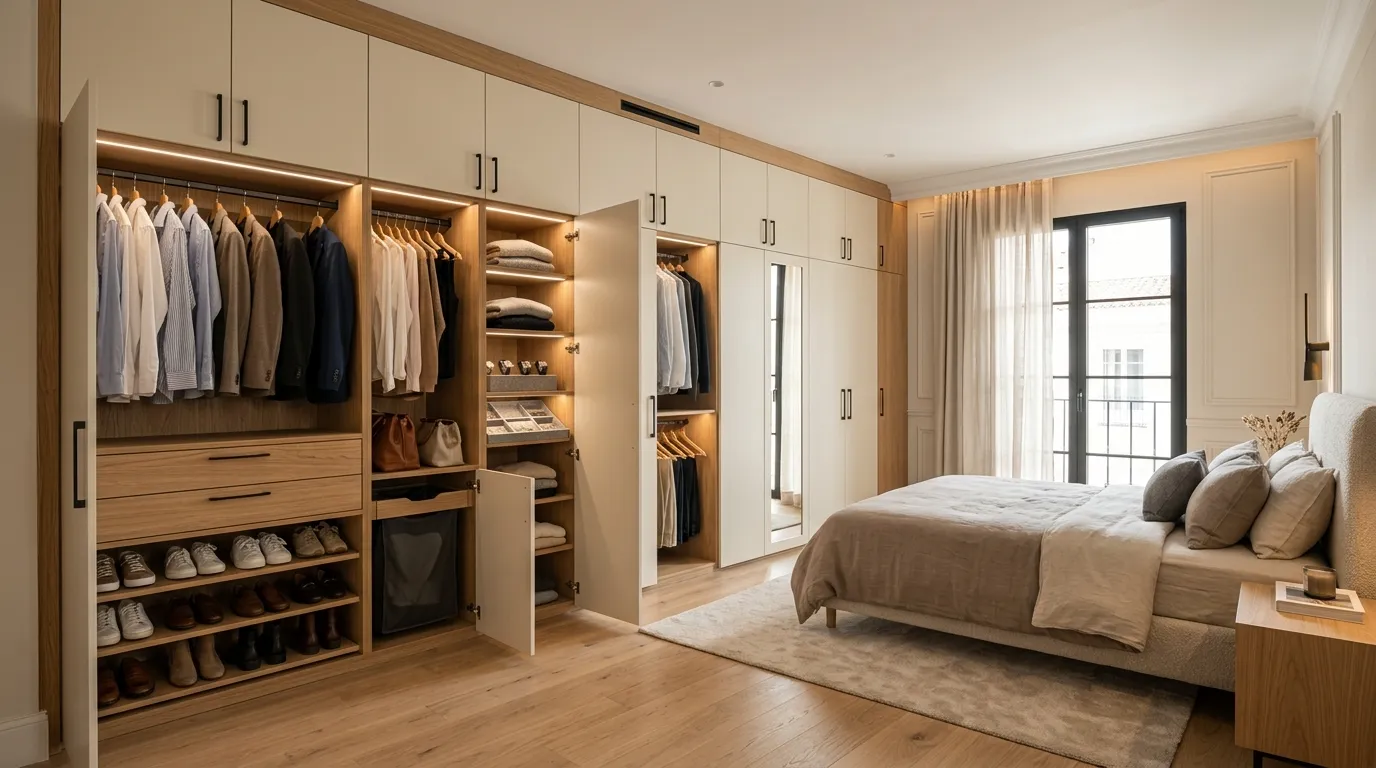
10 Wardrobe Ideas With Built-In Storage for Modern Homes
Most people don’t think about their wardrobe until it stops working. Doors that won’t close over stuffed shelves, a single rod trying to hold everything from winter coats to dress shirts, and a floor covered in shoes that never quite made it into a bin — it’s a familiar scene in a lot of bedrooms. The good news is that a wardrobe doesn’t have to be a source of daily frustration. With the right layout and built-in storage features, it can genuinely simplify how you get dressed every morning.
That’s really what good wardrobe ideas are about: not just finding a stylish cabinet or closet system, but designing storage that matches how you actually live. A wardrobe built around real habits — how many shoes you own, whether you fold or hang most of your clothes, how much space you need for accessories — will always outperform one chosen purely for looks.
Whether you’re planning a built-in closet, upgrading a freestanding wardrobe, or renovating a small bedroom with limited space, these ten wardrobe ideas focus on practical, built-in storage solutions that work in real modern homes.
Why Built-In Storage Makes Such a Difference
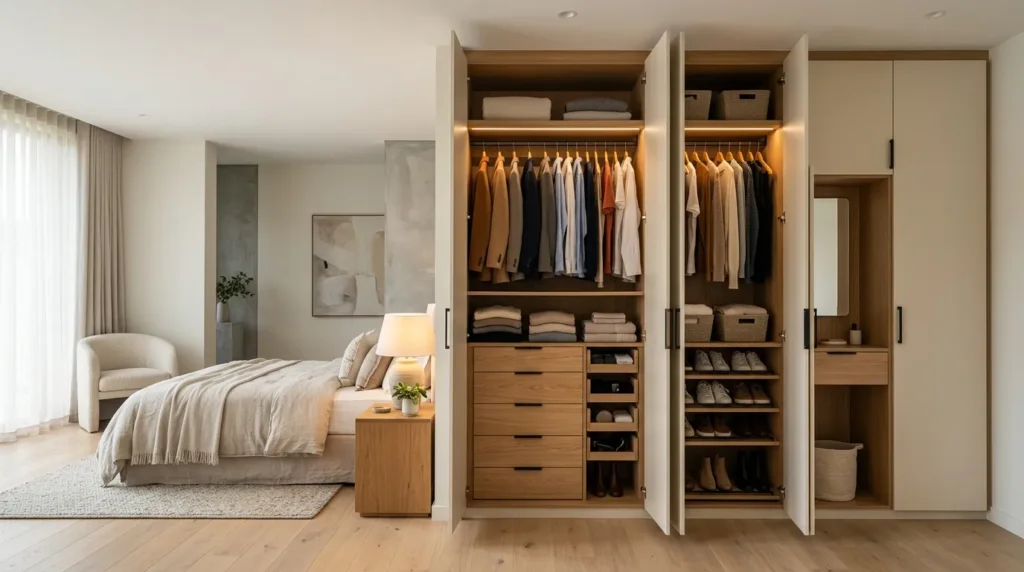
Freestanding wardrobes have their place, especially in rentals or rooms without existing closet infrastructure. But built-in storage consistently outperforms freestanding options for a few clear reasons:
- It makes full use of a room’s available height and depth, rather than leaving awkward gaps above or beside a standalone piece.
- It can be customized to your specific belongings — more hanging space for someone with a large wardrobe, more drawers for someone who folds most of their clothing.
- It tends to look more intentional and seamless, especially when built flush with surrounding walls or ceilings.
With that in mind, here are ten wardrobe ideas that make the most of built-in storage, whether you’re working with a full walk-in closet or a single bedroom wall.
1. Floor-to-Ceiling Cabinetry for Maximum Capacity
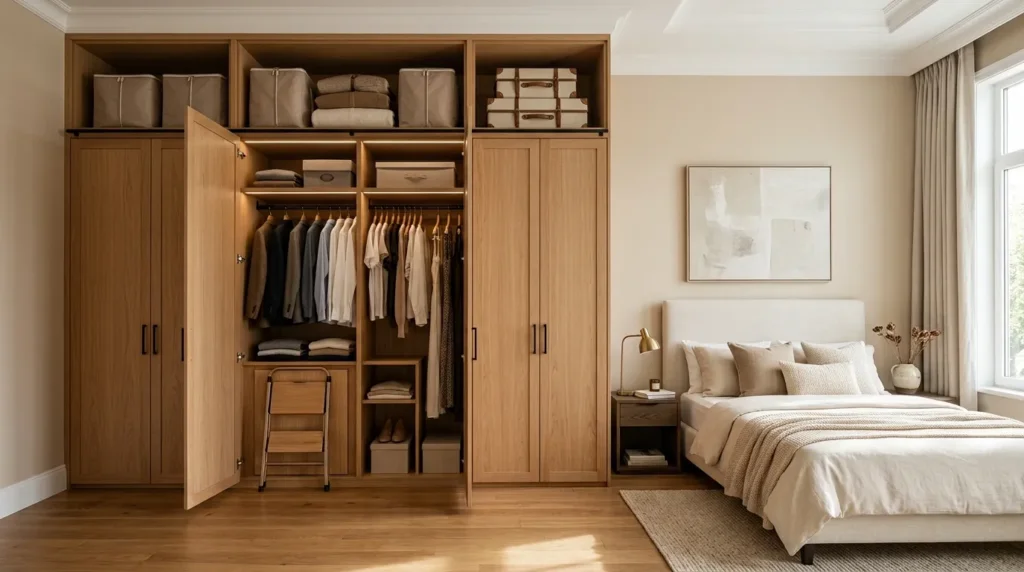
One of the simplest yet most effective wardrobe ideas is also one of the most overlooked: building storage all the way to the ceiling rather than stopping at a standard 84-inch cabinet height. That extra vertical space, even if it’s only used for out-of-season items or luggage, adds meaningful capacity without expanding the wardrobe’s footprint.
- Reserve the topmost shelves for items you access infrequently, like seasonal clothing or extra bedding.
- Use a small step stool stored inside the wardrobe itself for easy access to higher shelves.
- Floor-to-ceiling cabinetry also creates a cleaner, more built-in look compared to storage that leaves a visible gap near the ceiling.
2. Mixed Hanging Heights for Different Clothing Types
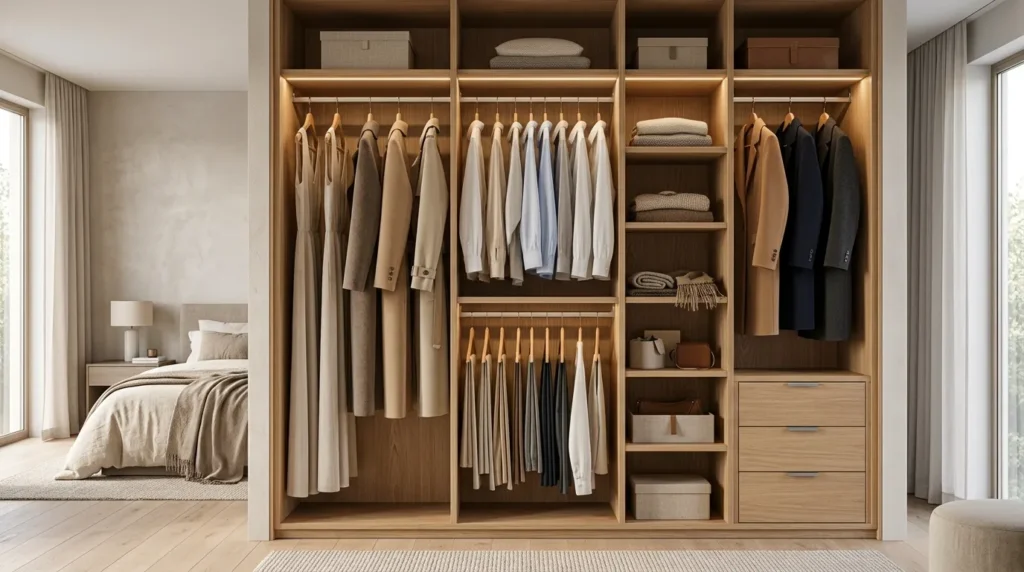
A single hanging rod at one uniform height rarely makes efficient use of space, since shirts, dresses, and coats all require different amounts of vertical clearance. Dividing hanging space into distinct zones is one of the most practical wardrobe ideas for anyone with a varied clothing collection.
- A double-hang section (two rods stacked vertically) works well for folded-length items like shirts and folded trousers, roughly doubling storage capacity in that section.
- A single long-hang section accommodates dresses, coats, and other longer garments that need full-length clearance.
- Clearly separating these zones when planning your wardrobe layout prevents wasted space above shorter hanging items.
3. Built-In Drawers Instead of Freestanding Dressers
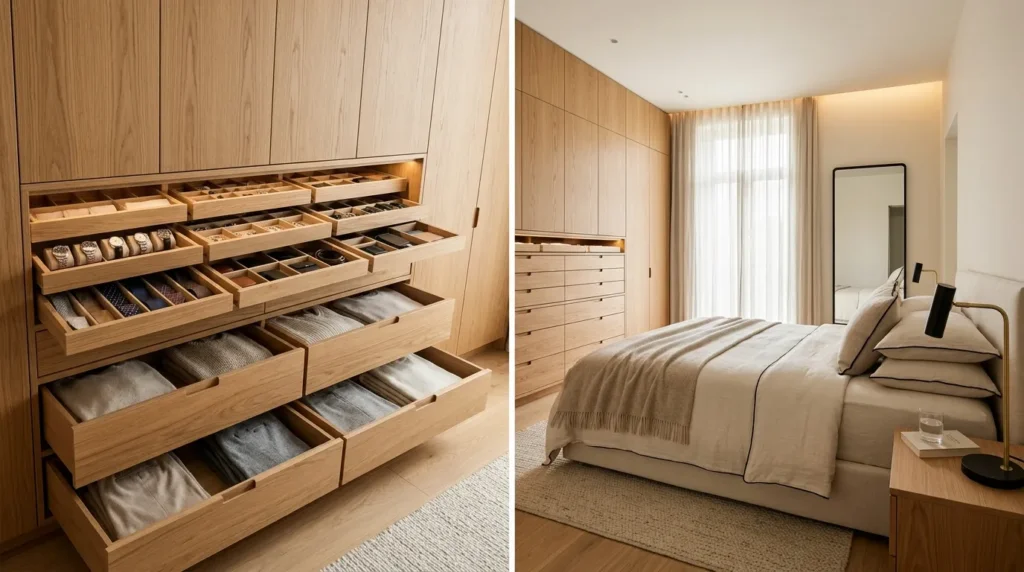
Replacing a separate dresser with built-in drawers inside the wardrobe itself is a space-saving strategy that also tends to look more polished. This approach works particularly well in smaller bedrooms where floor space for a separate dresser is limited.
- Deep drawers near the bottom of the wardrobe suit bulkier items like sweaters or workout clothes.
- Shallower drawers higher up are better suited for smaller items like socks, undergarments, or accessories.
- Soft-close drawer mechanisms add a noticeably higher-end feel and reduce wear over time.
4. Add a Dedicated Shoe Storage Section
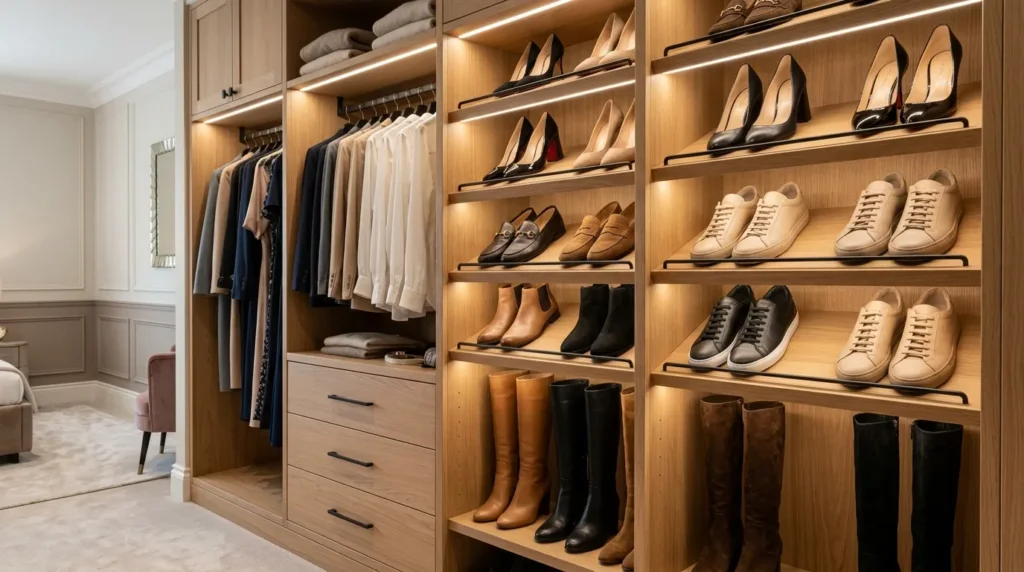
Shoes are one of the most common sources of wardrobe clutter, largely because most closets don’t allocate dedicated space for them. A wardrobe with built-in shoe storage keeps this category organized and out of the way of clothing storage entirely.
- Angled shoe shelves allow for better visibility and more efficient use of shelf depth compared to flat shelving.
- Adjustable shelving accommodates everything from flats to taller boots without wasted vertical space.
- For larger shoe collections, a dedicated shoe cabinet section with slim, closely spaced shelves maximizes capacity in a compact footprint.
5. Incorporate Pull-Out Accessory Organizers
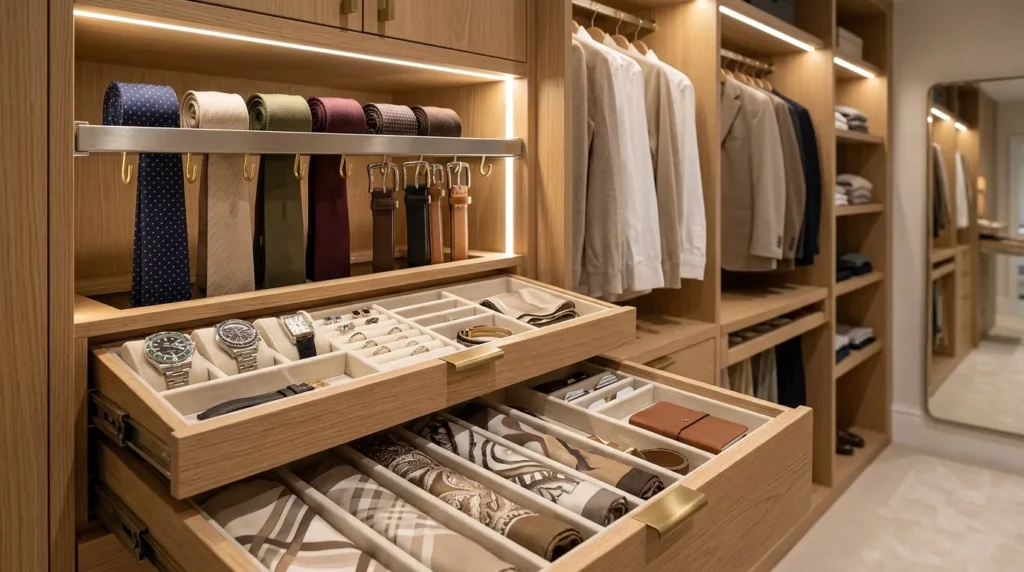
Accessories like belts, ties, scarves, and jewelry tend to become tangled or lost in general drawers. Built-in, pull-out organizers designed specifically for these items make a noticeable difference in day-to-day usability.
- Pull-out belt and tie racks keep these items visible and wrinkle-free.
- A shallow, velvet-lined drawer works well for jewelry, keeping smaller items from getting lost among clothing.
- Scarf and accessory dividers within a drawer prevent items from bunching together into a disorganized pile.
6. Use Open Shelving for Frequently Worn Items
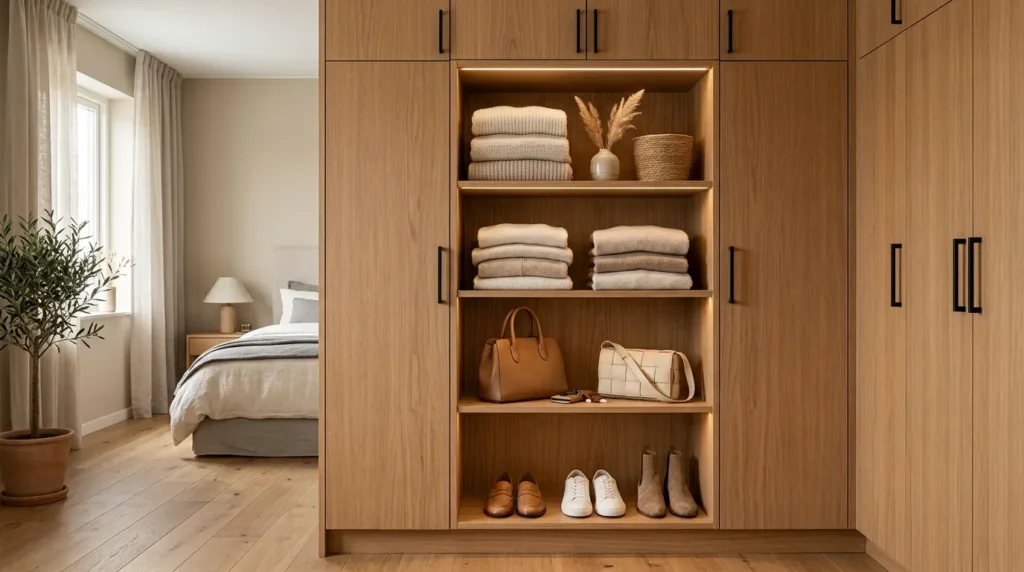
While closed cabinetry keeps a wardrobe looking tidy, a small section of open shelving can actually improve daily efficiency by keeping your most-used items in plain view. This is one of the more practical wardrobe ideas for anyone who tends to rewear a small rotation of favorite pieces.
- Reserve open shelving for folded sweaters, everyday bags, or frequently worn shoes.
- Keep this section relatively small and well-maintained, since open storage shows clutter more visibly than closed cabinetry.
- Position open shelves at eye level for the most convenient daily access.
7. Add Interior Lighting for Better Visibility
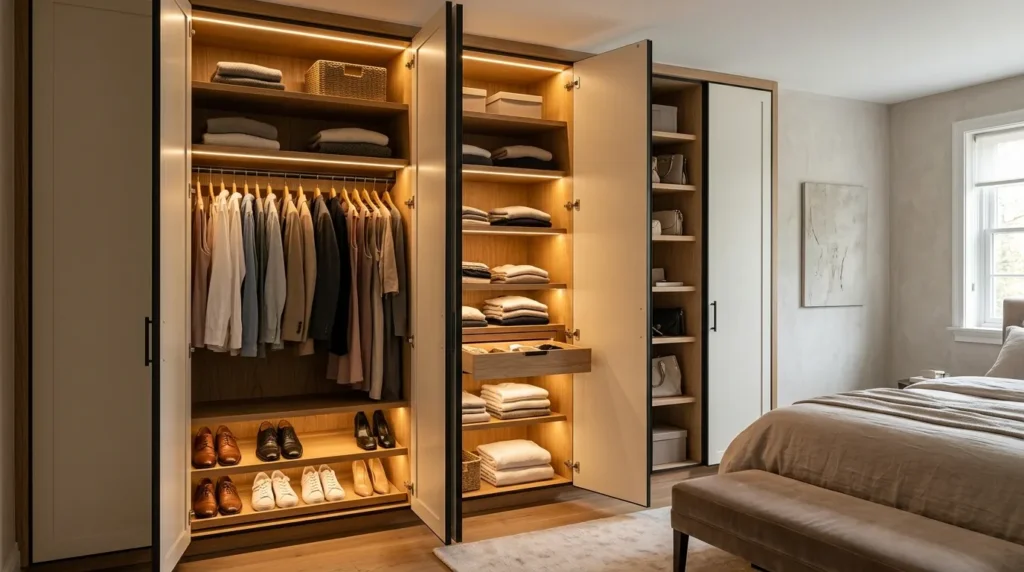
A wardrobe with built-in storage often includes deeper cabinetry and more enclosed sections than a simple closet rod, which can make it harder to see contents clearly, especially in a bedroom with limited natural light. Interior lighting solves this problem directly and adds a noticeably higher-end feel.
- Battery-operated or hardwired LED strip lighting along shelves illuminates contents without requiring an external light source.
- Motion-sensor lighting that activates when doors open adds convenience without needing to be manually switched on.
- Warm-toned lighting (rather than cool white) keeps the space feeling consistent with the rest of a well-designed bedroom.
8. Include a Full-Length Mirror Within the Design
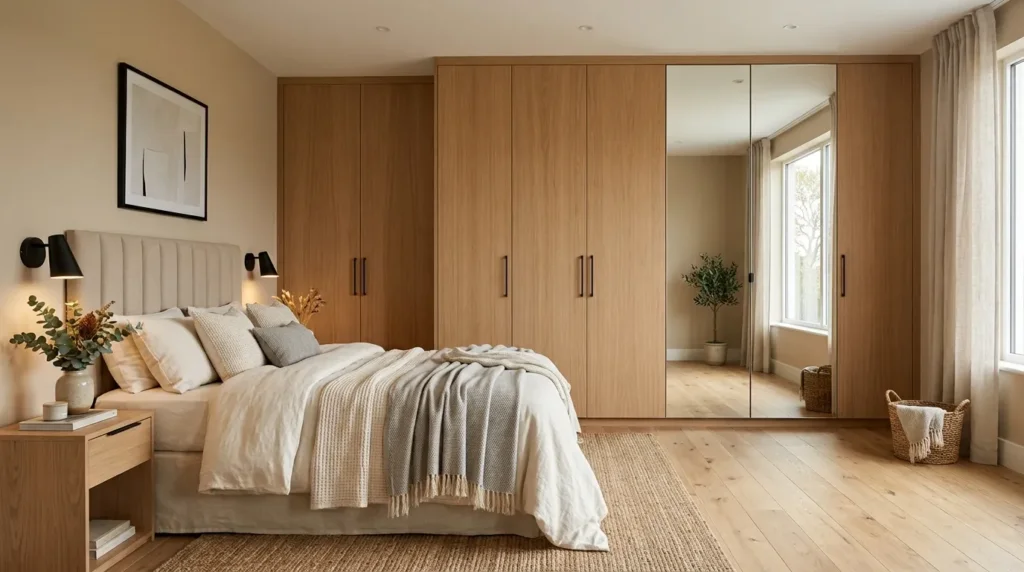
Rather than adding a separate mirror elsewhere in the room, many modern wardrobe designs build one directly into a door or interior panel. This is a space-efficient choice that also adds a more finished, cohesive look to the overall design.
- A mirrored wardrobe door doubles as a full-length mirror without requiring additional wall space.
- Mirrors on interior doors keep the exterior design more streamlined while still providing the same functional benefit.
- In smaller bedrooms, a mirrored wardrobe surface can also help the room feel more spacious by reflecting light.
9. Plan for a Laundry Hamper Within the Wardrobe
A built-in laundry hamper, tucked into a lower cabinet or drawer section, keeps dirty clothes contained and out of sight rather than piling up on the floor or in a separate freestanding hamper. This small addition is one of the easiest wardrobe ideas to implement but makes a meaningful difference in keeping a bedroom tidy.
- A pull-out fabric hamper insert is easy to remove for laundry day and simple to clean or replace over time.
- Positioning the hamper near the bottom of the wardrobe keeps it out of the main sightline when doors are open.
- Some designs include a dual-compartment hamper, useful for separating lights and darks before laundry day.
10. Choose Adjustable Shelving for Long-Term Flexibility
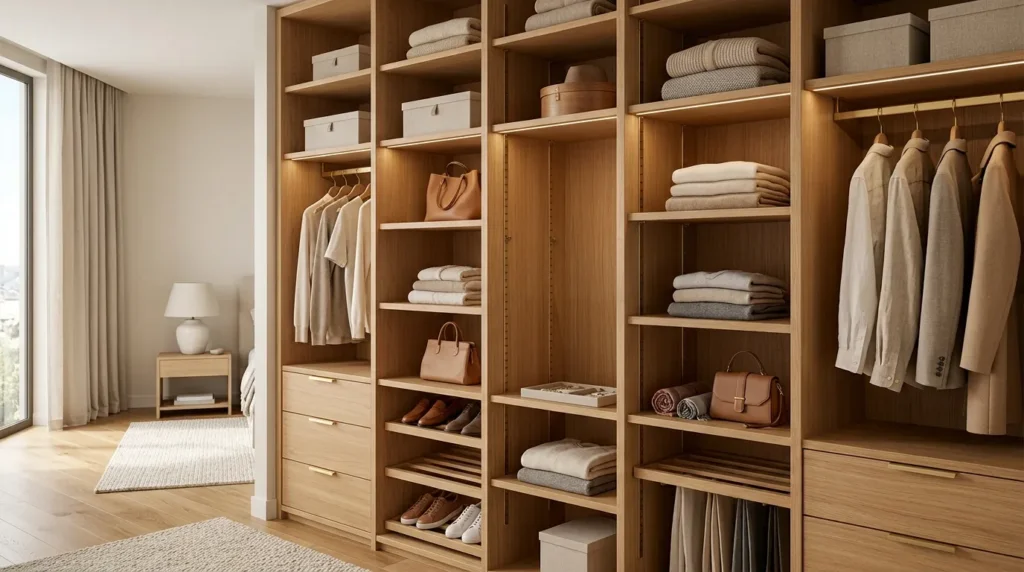
Needs change over time, and a wardrobe built with fixed, non-adjustable shelving can become less useful as your wardrobe or storage needs shift. Adjustable shelving is one of the smartest long-term wardrobe ideas, since it allows the space to be reconfigured without any renovation.
- Adjustable shelf pins or tracks let you move shelves up, down, or remove them entirely to accommodate taller items.
- This flexibility is especially useful for households that experience seasonal wardrobe shifts or growing family members with changing clothing sizes.
- Even in a built-in design, planning for adjustability from the start avoids the need for a full rebuild later.
Choosing the Right Combination for Your Space
With ten different wardrobe ideas to consider, it helps to think through your specific habits before finalizing a design. A few questions worth asking yourself:
- Do you hang or fold most of your clothing? Someone who primarily hangs clothing will benefit more from mixed-height hanging zones, while a household that folds most items may prioritize built-in drawers instead.
- How large is your shoe collection? A dedicated shoe section is worth the space investment for larger collections, while a smaller one may fit within general shelving.
- How much natural light does the room get? Interior wardrobe lighting matters more in dimly lit bedrooms or wardrobes tucked into corners away from windows.
- Is the wardrobe shared? Shared wardrobes benefit from clearly divided sections and possibly two separate mirror or accessory areas to avoid daily congestion.
There’s no single correct combination — the best wardrobe design is the one that matches your specific belongings and daily routine.
Common Mistakes to Avoid
Even well-intentioned wardrobe designs can fall short if a few common issues aren’t addressed early in the planning process:
- Uniform shelving throughout – Treating every section the same, rather than customizing zones for hanging, folding, and shoes, wastes valuable space.
- Skipping interior lighting – A beautifully designed wardrobe loses much of its usability if contents are hard to see, especially in enclosed cabinetry.
- Underestimating shoe storage needs – Shoe clutter is one of the most common complaints in poorly planned wardrobes; it deserves dedicated space from the outset.
- Ignoring future flexibility – Fixed shelving that can’t be adjusted often requires costly changes down the line as storage needs shift.
- Overlooking daily-use zones – Placing frequently worn items in hard-to-reach sections adds unnecessary friction to daily routines.
Conclusion
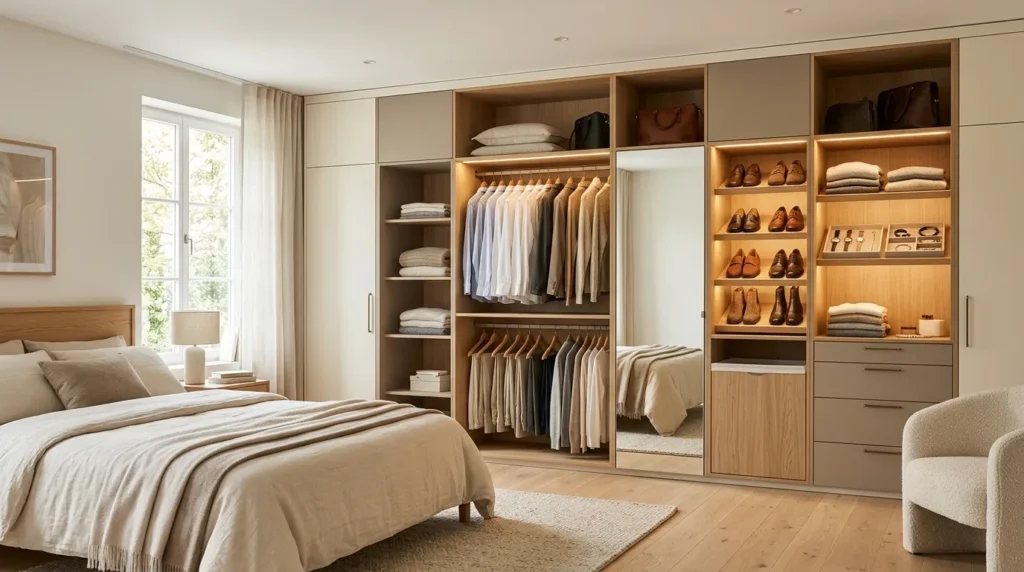
A well-designed wardrobe does more than store clothing — it simplifies your entire daily routine, from getting dressed in the morning to keeping a bedroom tidy without constant effort. These ten wardrobe ideas, from floor-to-ceiling cabinetry and mixed hanging heights to built-in lighting and adjustable shelving, all share the same underlying goal: storage that’s built around how you actually live, not just how a closet looks in a showroom.
Start by identifying your biggest daily frustrations, whether that’s shoe clutter, tangled accessories, or simply not enough hanging space, and use that as your guide for which of these ideas to prioritize. A thoughtfully planned wardrobe with genuine built-in storage pays off every single day, not just when the doors are open.
Frequently Asked Questions
What’s the most space-efficient wardrobe idea for a small bedroom? A double-hang section paired with built-in drawers tends to offer the most storage capacity in a limited footprint, since it makes full use of vertical space without requiring a separate dresser elsewhere in the room.
Should I choose open shelving or closed cabinetry for wardrobe storage? Closed cabinetry generally keeps a wardrobe looking tidier and works well for most storage needs, while a small section of open shelving is useful for frequently worn items you want to access quickly. Many well-designed wardrobes use a mix of both.
Is built-in wardrobe lighting worth the extra cost? In most cases, yes. Interior lighting significantly improves visibility in deeper cabinetry and enclosed sections, making it easier to find items quickly, especially in bedrooms with limited natural light.