Wall Decor Ideas to Brighten Dark, Compact Living Rooms
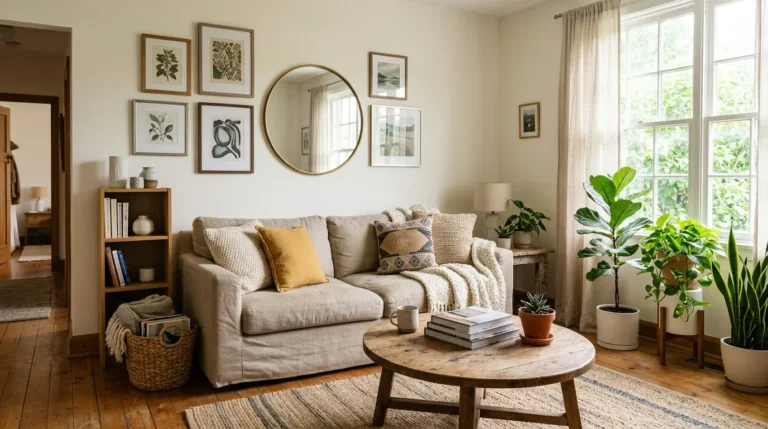
A living room with little natural light and limited square footage can feel heavy the moment you walk in. The walls seem closer, the corners look shadowy, and even a tidy space can come across as gloomy. If that sounds familiar, the walls are probably the best place to start.
The right wall decor ideas can bounce light around, create the impression of height and depth, and add personality without crowding the floor. You do not need a major renovation or a large budget. This guide covers fifteen practical approaches, from paint and mirrors to lighting and textiles, that help a dark, compact living room feel brighter, larger, and more welcoming.
Why Walls Matter So Much in Dark, Small Rooms
In a compact room, walls make up most of what you see. They absorb or reflect light, define the color mood, and give you the most flexible surface for decoration. Unlike furniture, they do not take up any floor space.
That is why wall treatments have such a strong effect in tight, dim rooms. A few smart changes can:
- Reflect more daylight and lamp light into the room.
- Draw the eye upward to make the ceiling feel taller.
- Create depth with layers, texture, and mirrors.
- Add storage and display space without crowding the floor.
- Give you a clear focal point so the room feels intentional rather than cramped.
Before choosing any of the ideas below, spend a day observing the room. Notice where light enters, which walls stay shadowed, and where the brightest and darkest areas fall. This helps you place mirrors, lighting, and artwork where they will help most.
15 Wall Decor Ideas to Brighten a Dark, Compact Living Room
1. Start With a Light-Reflecting Paint Color
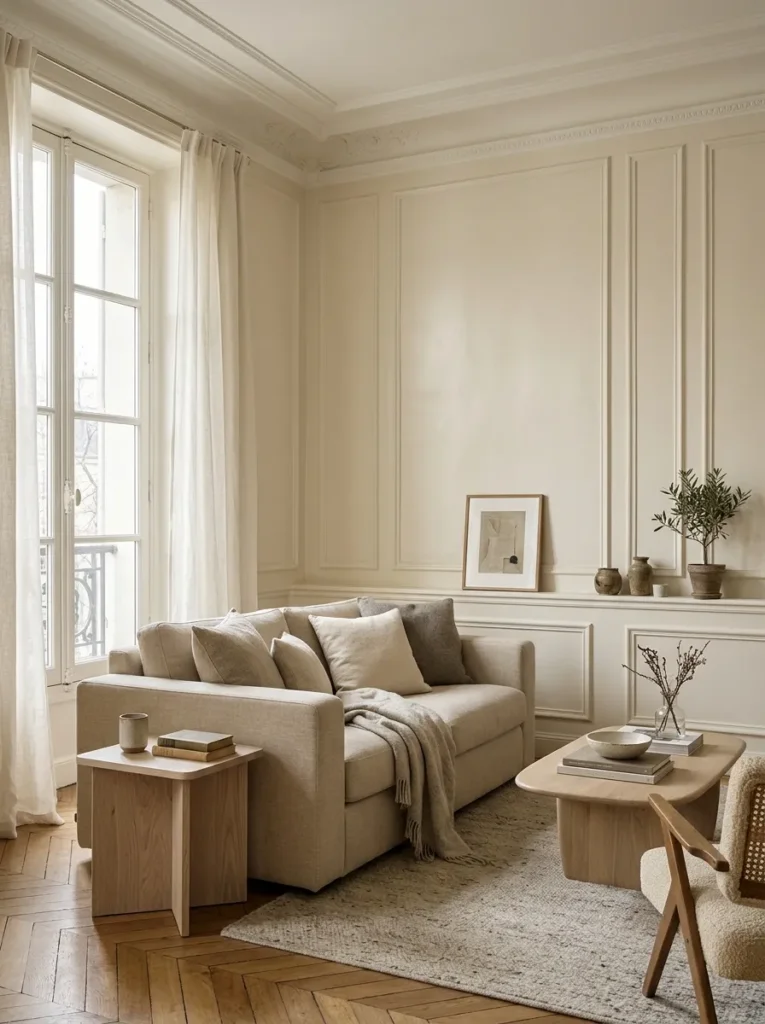
Paint is the most affordable way to change how a room feels. Warm whites, soft creams, pale greige, and gentle sand tones reflect more light than deeper shades, and they make walls visually recede.
- Choose a finish with a slight sheen, such as eggshell or satin, to bounce more light than a flat finish. Keep in mind that sheen also shows wall imperfections.
- Test samples on more than one wall and look at them in the morning, afternoon, and evening.
- Be careful with cool whites in north-facing rooms, which can look grey or stark. A warmer white often feels more inviting.
- Consider painting the ceiling the same shade or a lighter version to create a seamless effect.
If your space receives very little daylight, a creamy or buttery neutral can bring a sense of warmth that a stark white might not.
2. Hang a Large Mirror Opposite a Light Source
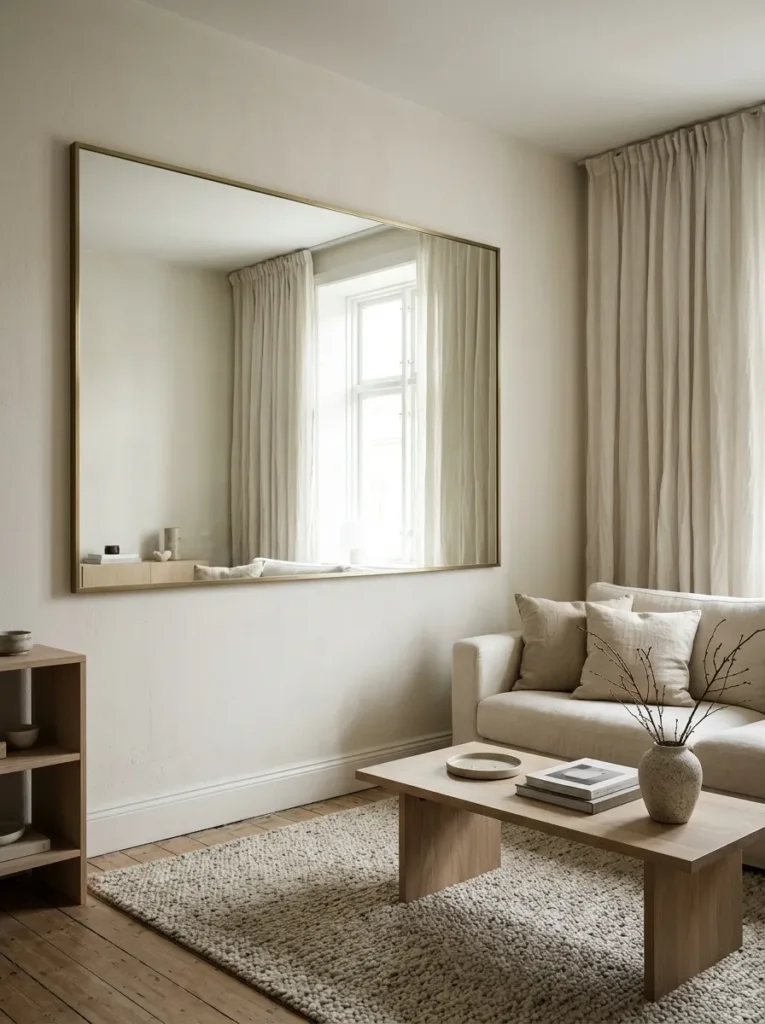
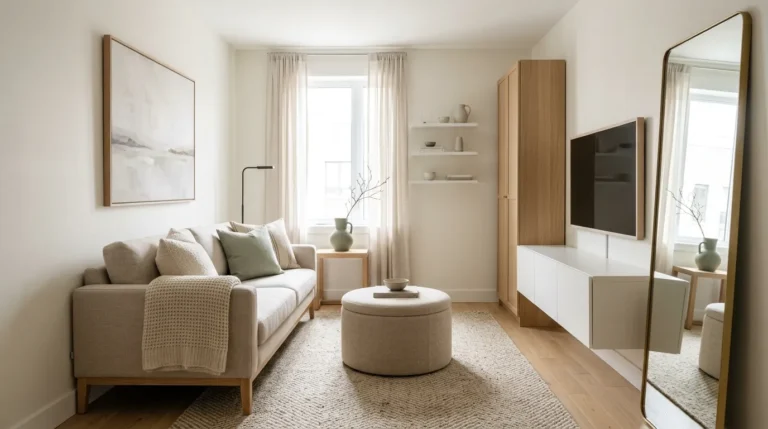
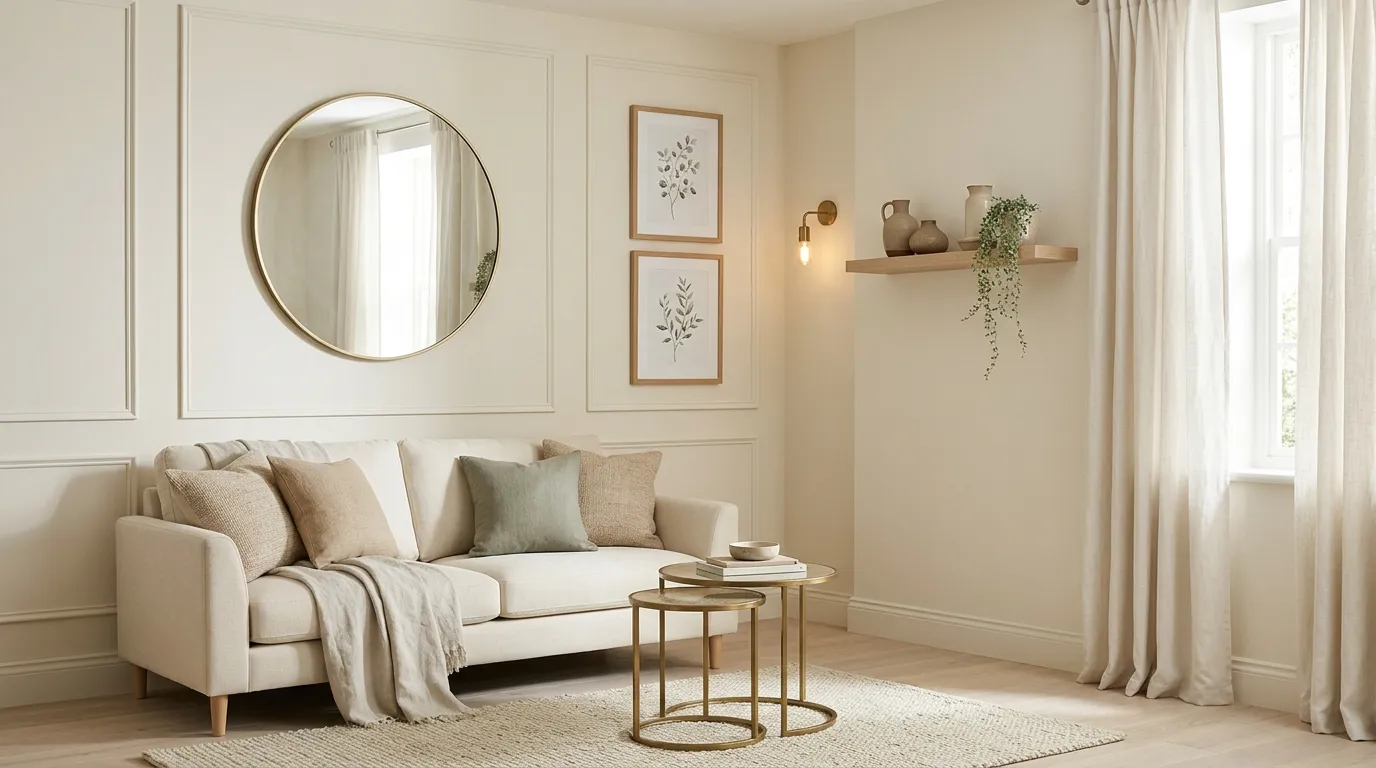
Mirrors are among the most useful wall decor ideas for dim rooms. A large mirror placed opposite or beside a window reflects daylight deeper into the room and visually doubles the view.
- Choose a mirror that is at least half the width of the furniture beneath it, if there is one.
- Lean a tall floor mirror against a wall if you prefer not to drill.
- Pick a slim frame in brass, black metal, or pale wood for a clean look.
- Avoid placing the mirror where it reflects clutter or a blank, dark corner.
If there is no window to reflect, place the mirror opposite a lamp or a lit area to still gain a brighter effect.
3. Create a Cluster of Mirrors for Added Sparkle
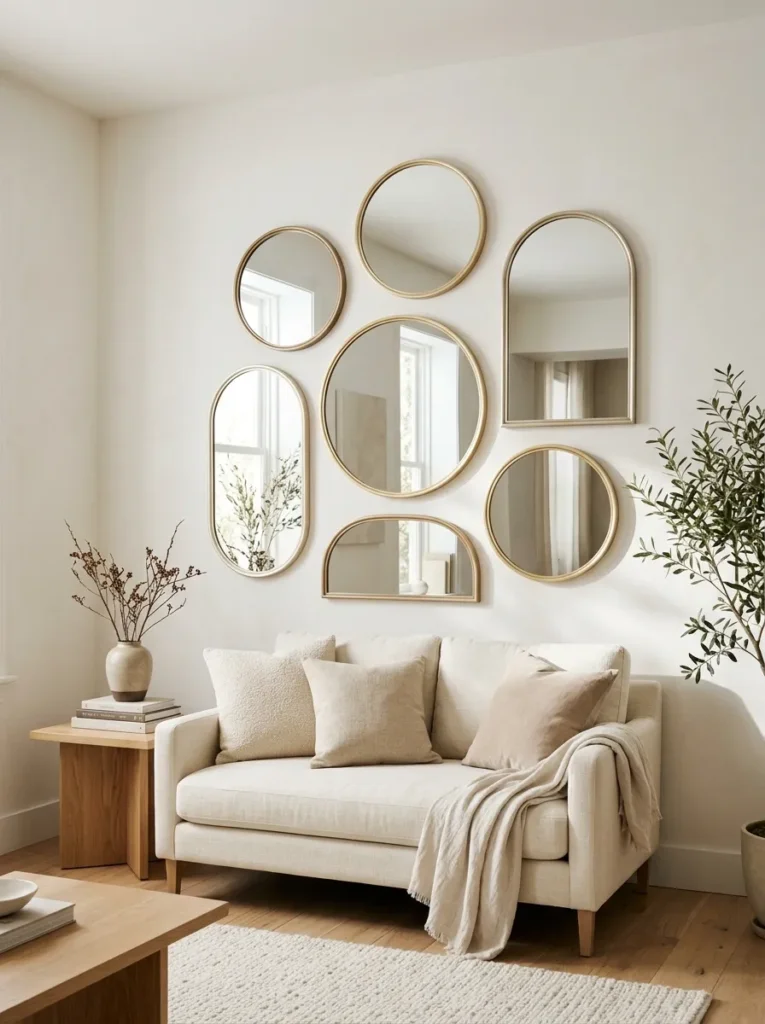
If one large mirror feels too plain, try a grouped arrangement. Several mirrors in varied shapes, such as round, arched, and oval, add rhythm and catch light from different angles.
- Keep frames in the same color family for a cohesive look.
- Mix sizes but leave a consistent gap of two to three inches between them.
- Lay the arrangement on the floor first to test spacing before hanging.
- Use lightweight acrylic mirrors in rental homes if you want to limit wall damage.
This works especially well above a sofa or console where the wall feels empty.
4. Choose One Oversized Piece of Art
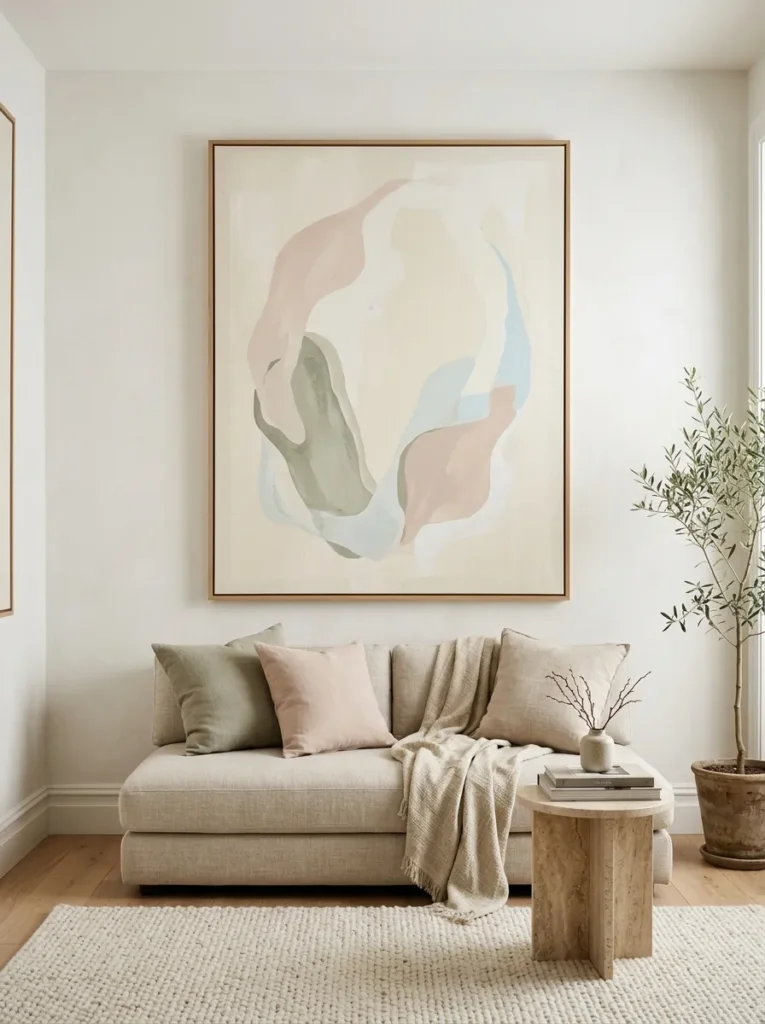
In a small room, a collection of tiny frames can appear busy and break up the wall. A single large artwork feels calm and confident, and it can become the focal point that anchors the room.
- Look for artwork with light backgrounds, soft colors, or airy compositions.
- Abstract pieces in cream, blush, sage, or pale blue make the wall feel open.
- Choose a frame in white, pale wood, or thin metal to keep the look light.
- Hang the center of the piece at roughly eye level, around 57 to 60 inches from the floor, as a common guideline.
If you want a more affordable option, print a high-resolution image at a large size and place it in a ready-made frame.
5. Build a Gallery Wall With Light Mats and Frames
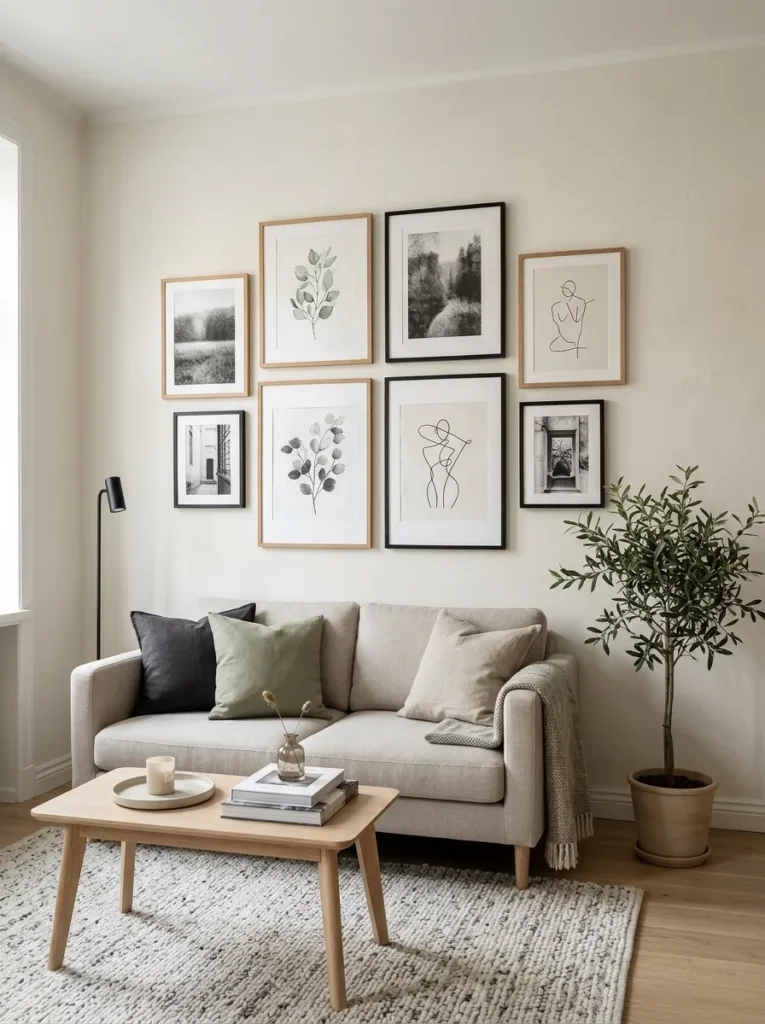
Gallery walls can work in a compact living room as long as they stay organized and light. Dark frames on a dark wall can shrink the space, while white or natural wood frames brighten it.
- Use wide white mats around prints to create breathing space.
- Stick to a limited palette of two or three colors.
- Keep a consistent spacing between frames to give the arrangement a tidy feel.
- Arrange the group in a rectangular shape rather than a scattered layout for a cleaner appearance.
Mix black-and-white photography, line drawings, and soft botanical prints for a refined, cohesive effect.
6. Install Floating Shelves in the Wall Color
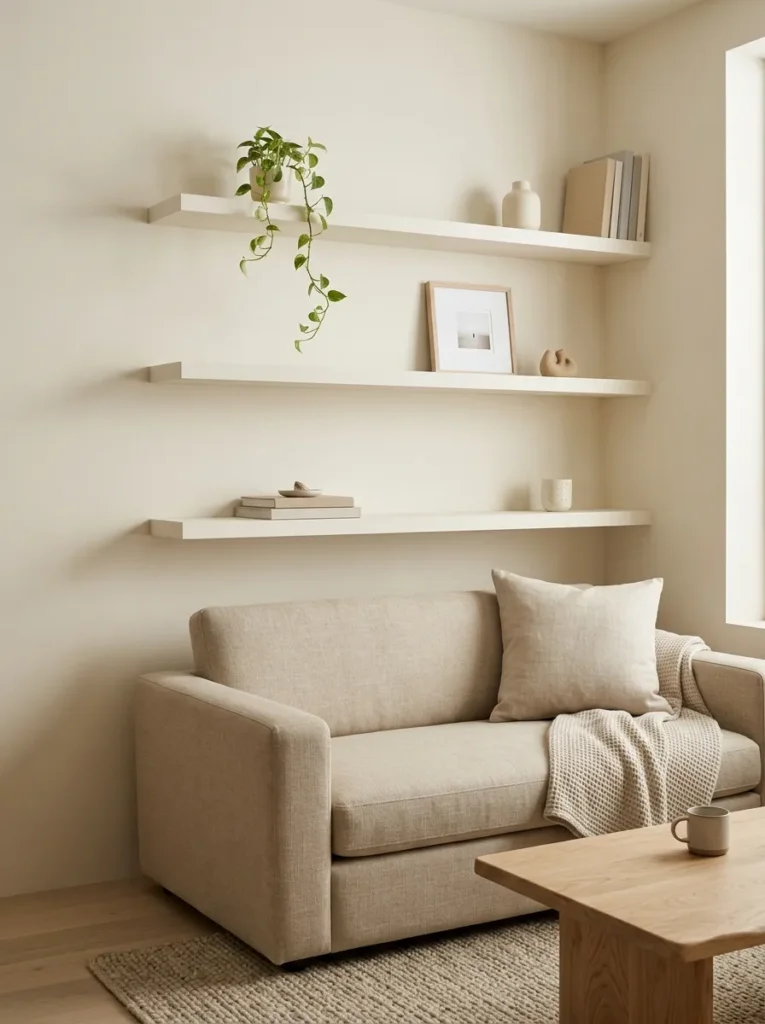
Shelves add storage and display space without using any floor area. Painting them the same color as the wall allows them to blend in, so the room looks less cluttered.
- Style shelves with a mix of books, small plants, ceramics, and a few framed photos.
- Leave some empty space on each shelf so it does not appear overloaded.
- Choose light wood, white, or glass shelves for an airy feel.
- Stagger shelves at different heights for a more dynamic arrangement.
Place a small lamp or a few light-colored objects on the shelf to reflect even more light.
7. Add Wall Sconces for Layered Lighting
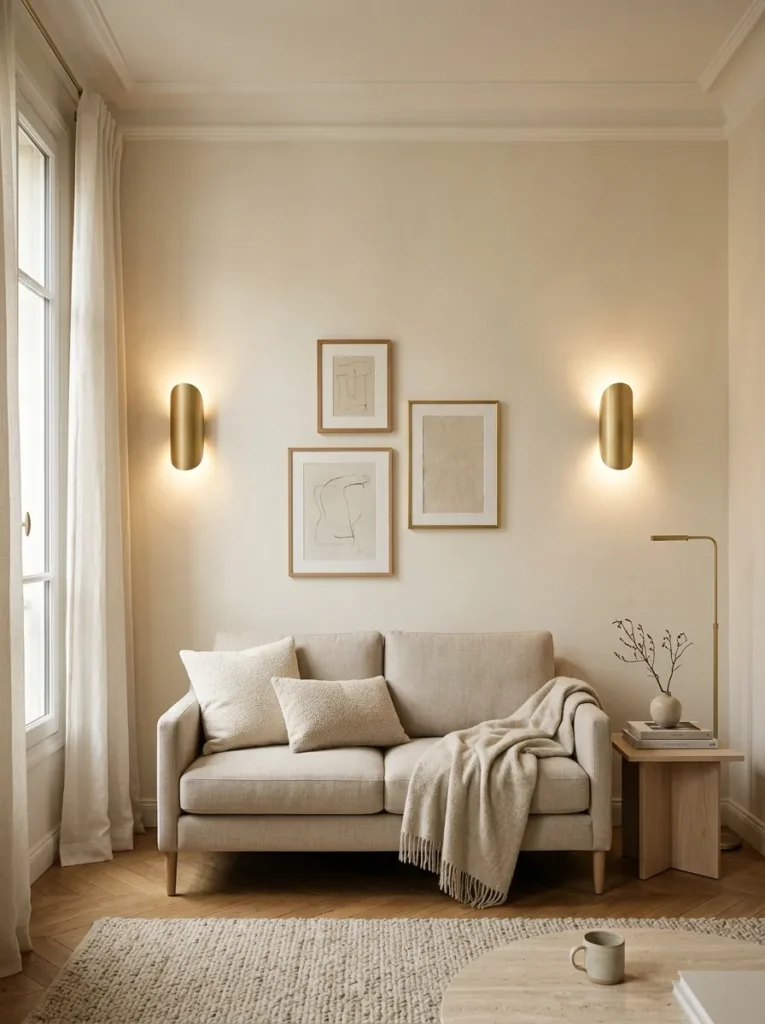
A dark room often relies on a single overhead light, which creates shadows and a flat atmosphere. Wall sconces add light at a lower height and free up space on tables and floors.
- Plug-in sconces with a cord cover work well if you cannot hardwire fixtures.
- Place them on either side of a sofa, mirror, or piece of art.
- Choose warm-toned bulbs to give the room a soft, welcoming glow.
- Consider swing-arm models that can be angled toward a reading spot.
Battery-powered or rechargeable sconces are an option for renters, though it is worth checking brightness and battery life before buying.
8. Use Picture Lights and Accent Strips
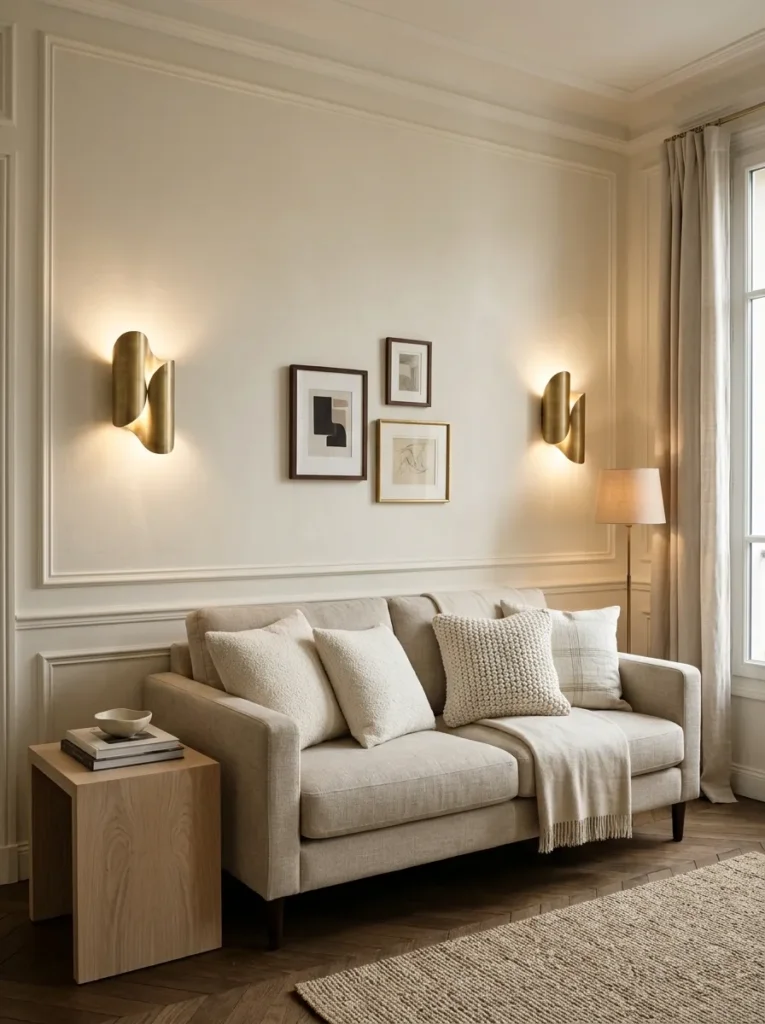
Lighting your artwork directly makes the wall feel more alive and draws attention to the details you love.
- A slim picture light above a framed print highlights texture and color.
- Low-profile LED strips along the top of a shelf or behind a mirror create a subtle glow.
- Choose a warm white color temperature, which is generally more flattering in living spaces.
- Hide cables with small clips or a cord cover painted in the wall color.
A modest amount of accent lighting often makes a bigger difference than adding another large lamp.
9. Bring In Metallic Accents
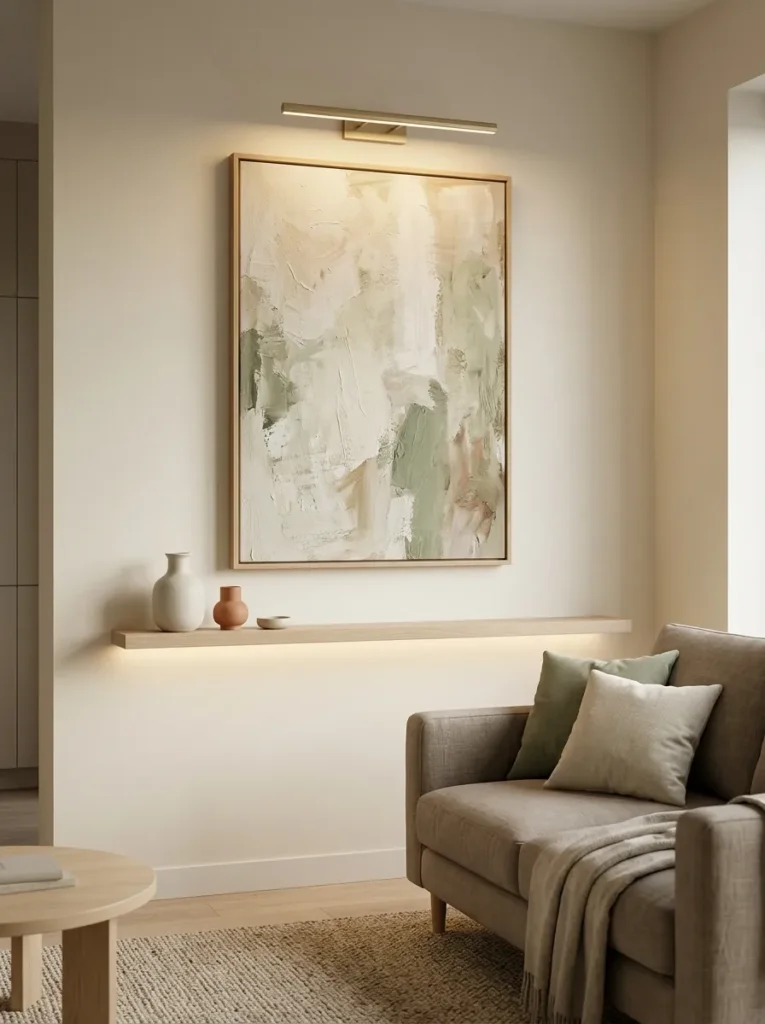
Brass, gold, copper, and brushed nickel pick up light and add warmth. A few well-placed metallic pieces can give dull walls a lift without looking flashy.
- Add thin metal frames around prints or mirrors.
- Hang a sculptural wall piece, such as a sunburst or a geometric design.
- Use small metal hooks, rails, or picture ledges for display.
- Mix finishes carefully, and limit yourself to one or two for a cleaner look.
Satin or brushed finishes can feel softer than highly polished ones, which sometimes look harsh in small rooms.
10. Try a Subtle, Light-Toned Wallpaper
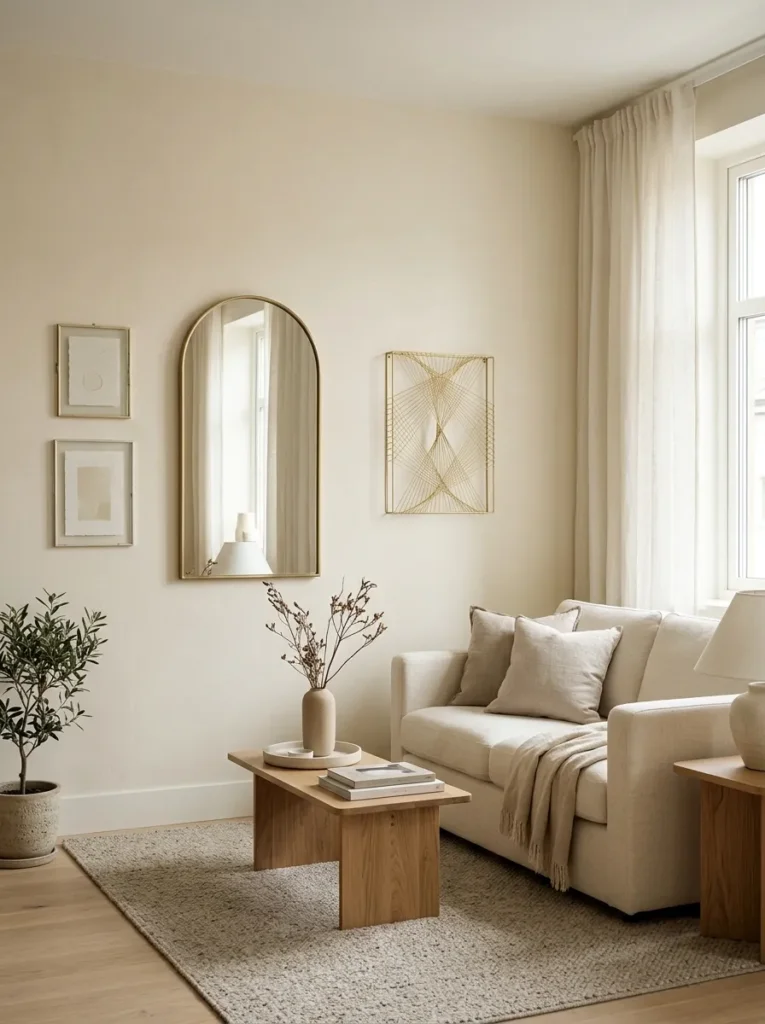
Wallpaper is not only for large rooms. A pattern with a pale background can add interest and make a dark room feel fresher, especially on one accent wall.
- Choose small, airy patterns such as soft florals, fine stripes, or delicate textures.
- Vertical stripes can emphasize height, especially in rooms with low ceilings.
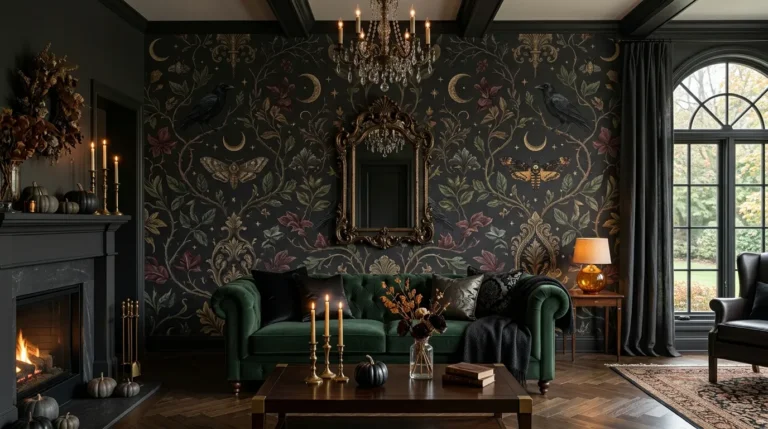
- Avoid large, heavy patterns in dark colors, which can overwhelm a compact space.
- Peel-and-stick wallpaper is a practical option for renters, though it works best on smooth, clean, painted surfaces.
Place the wallpaper behind the sofa or opposite the window, where it will catch the most light.
11. Add Texture With Woven and Fiber Pieces
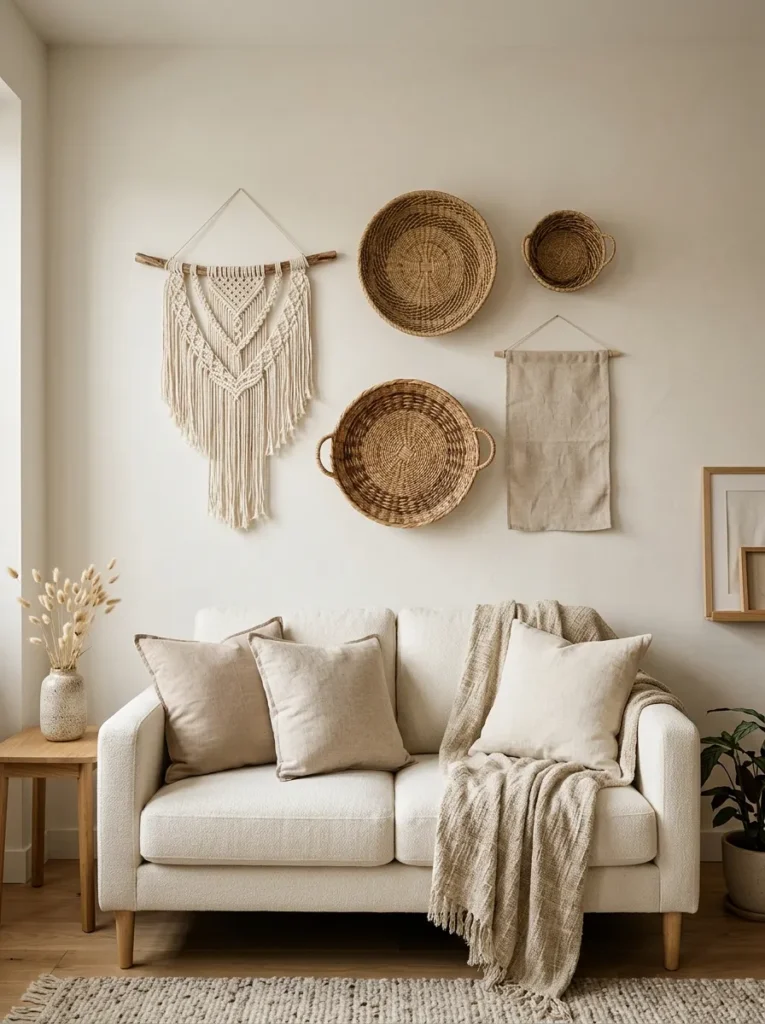
A bright room is not only about color. Texture adds depth, which helps pale walls feel warm and layered instead of flat.
- Hang a macramé piece, woven basket set, or fabric tapestry in cream or natural tones.
- Use a linen wall hanging or a framed piece of textile art for a soft, tactile effect.
- Arrange round baskets or woven trays in a grouped display above a sideboard.
- Choose natural fibers such as cotton, jute, or rattan for a relaxed look.
Keep the colors light and the scale proportionate to the room so the wall stays open.
12. Use Botanical Prints and Hanging Greenery
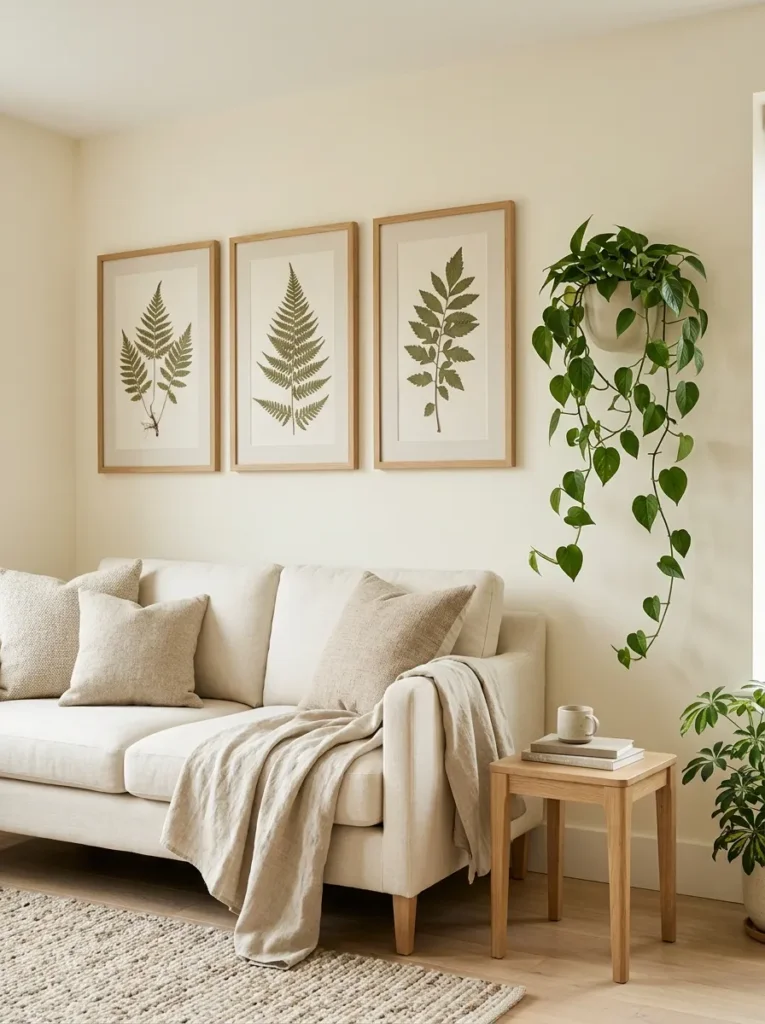
Nature-inspired decor introduces freshness and a sense of calm. Botanical prints in soft greens and neutrals help the room feel lighter, while real or faux plants add life.
- Frame pressed leaves or ferns on a pale background for a delicate display.
- Hang a small wall planter or a trailing plant from a ceiling hook near a window.
- Choose plants that tolerate low light if the room is very dim, such as pothos or snake plant.
- Consider high-quality faux plants if natural light is truly limited.
Always check light and care needs before buying, so the plants stay healthy.
13. Add Painted or Slim Wall Paneling

Paneling gives a flat wall depth and architectural character. When painted in a light shade, it adds interest without making the room feel smaller.
- Board-and-batten or simple picture-frame moulding can be painted in a soft white or warm neutral.
- Use slim vertical slats or ribbed panels in pale wood tones to draw the eye upward.
- Apply paneling to just the lower half or one accent wall to keep the effort manageable.
- Choose lightweight peel-and-stick or MDF kits if you want a simpler DIY project.
The subtle shadow lines created by paneling add dimension while keeping the palette light.
14. Hang Art and Decor Vertically
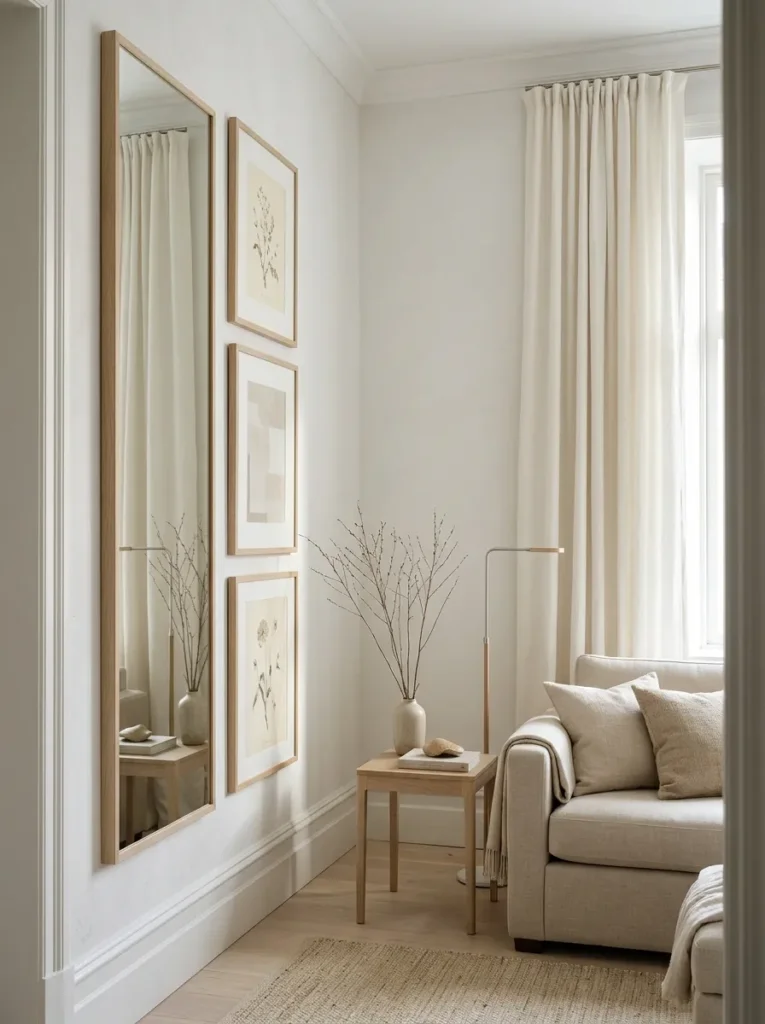
When floor space is limited, make the most of the height. Vertical arrangements guide the eye upward and make ceilings seem taller.
- Stack two or three frames in a column rather than spreading them wide.
- Use tall, narrow artwork or a long vertical mirror.
- Hang curtains from a rod placed close to the ceiling to elongate the walls.
- Add a slim ladder shelf or a tall wall-mounted rack for books and plants.
Avoid hanging everything at the same level, as a long horizontal line can make a small room feel shorter.
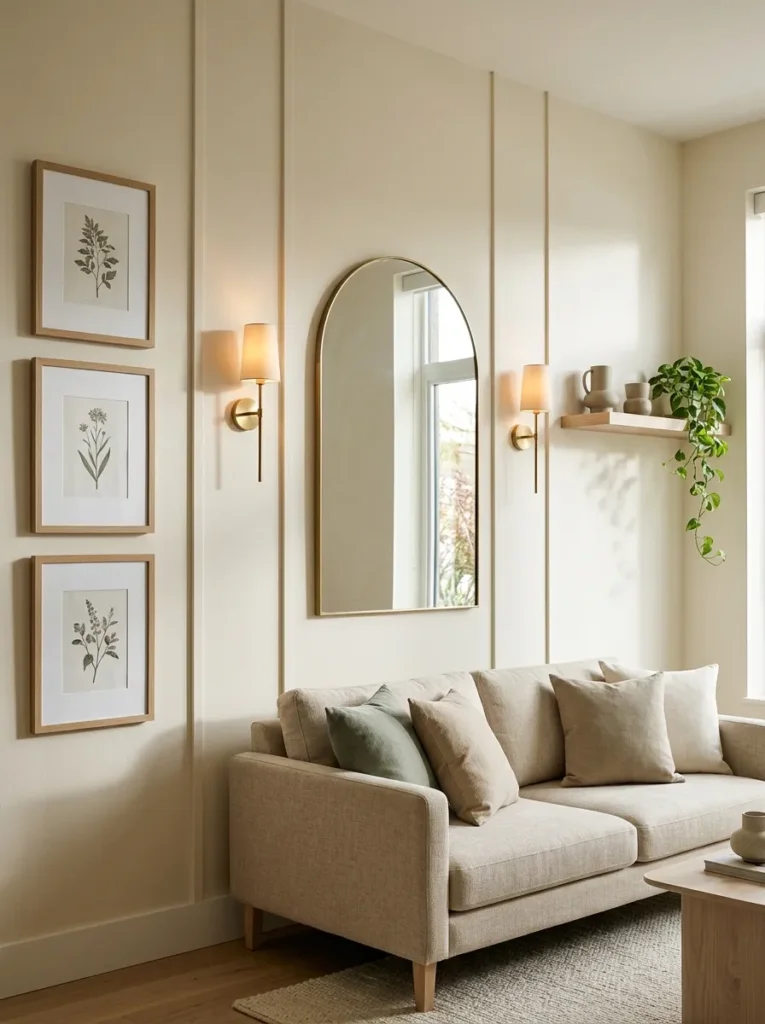
15. Create a Layered Focal Wall
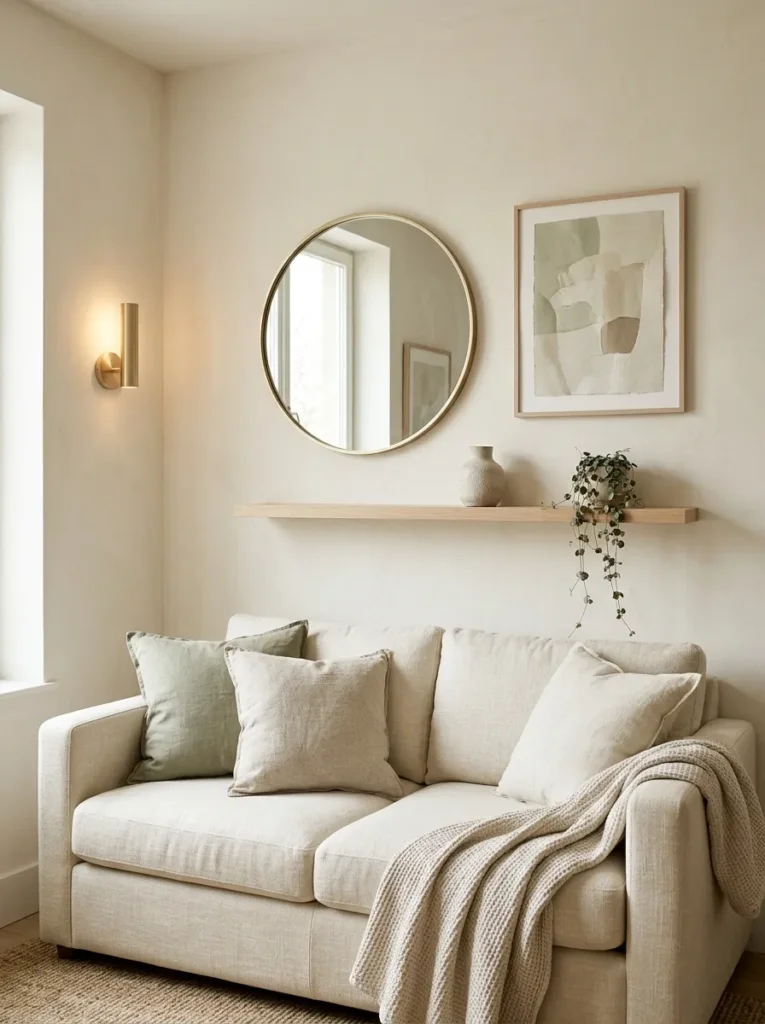
Instead of spreading decor evenly across every wall, choose one main wall and give it your best effort. This approach feels more intentional and leaves the other walls calm.
- Combine a mirror, a piece of art, and a shelf or sconce on a single wall.
- Keep the colors consistent and the scale balanced.
- Place the focal wall opposite a window or beside the seating area, where it is naturally visible.
- Leave negative space around the group so it does not look crowded.
A layered wall gives the room personality while keeping the rest of the space open and light.
Common Wall Decor Mistakes in Small, Dark Rooms
Even good ideas can go wrong if a few habits slip in. Watch out for these.
- Using too many small pieces. A scattering of tiny items can look cluttered and make walls feel busy.
- Choosing dark frames on dark walls. The contrast is minimal and the room can feel heavier.
- Hanging art too high. When pieces float near the ceiling, they feel disconnected from the furniture and the room.
- Ignoring lighting. Even beautiful decor looks dull without good light.
- Overlooking scale. Oversized art in a tiny room can overwhelm, and very small art can disappear. Aim for a balance between the wall and furniture below.
Quick Tips for Renters and Budget-Conscious Decorators
If you cannot paint or drill, you still have good options.
- Use removable hooks or adhesive strips rated for the weight of your items.
- Lean large mirrors and artwork on a console or the floor.
- Choose peel-and-stick wallpaper or wall decals for a temporary update.
- Shop secondhand stores and online marketplaces for frames, mirrors, and shelves.
- Use fabric, such as a pretty linen panel, as a wall hanging.
Small touches add up, and many of the best wall decor ideas cost very little.
Conclusion
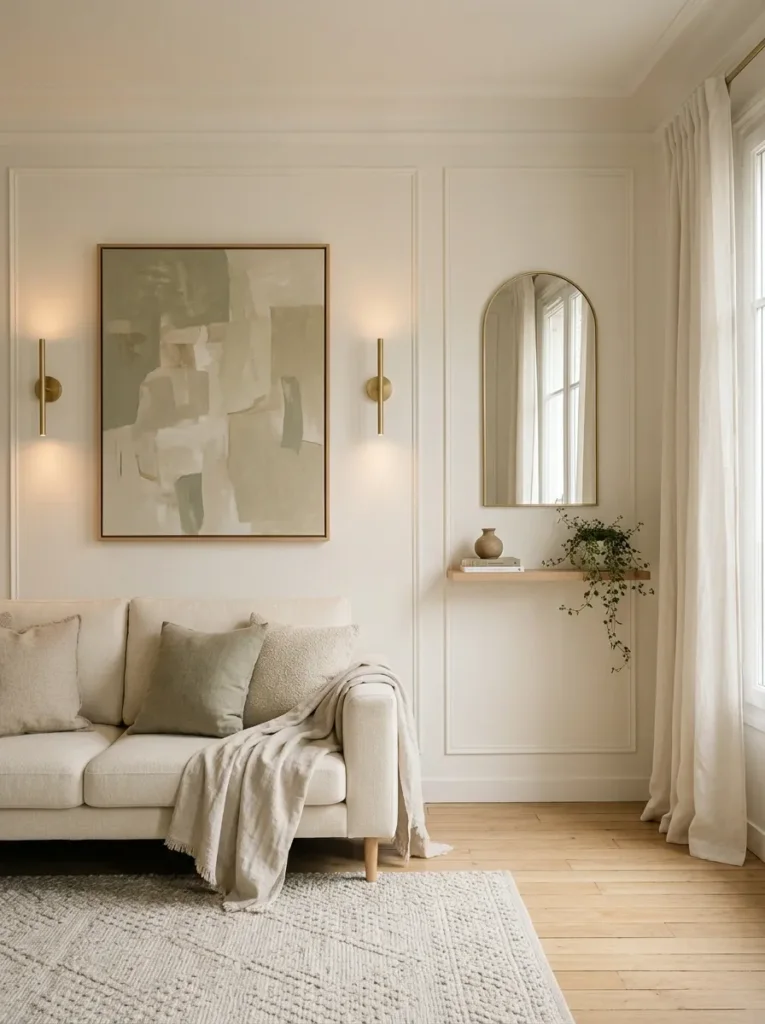
A dark, compact living room does not have to stay that way. By choosing light-reflecting paint, adding mirrors, layering lighting, and styling your walls with thoughtful art and texture, you can create a space that feels brighter, taller, and more inviting. The most effective wall decor ideas share one goal: they work with the light you have instead of fighting against it.
Start with one or two changes, such as a large mirror and a fresh coat of paint, and build from there. With a little planning, your walls can turn a dim corner of the home into a warm and comfortable room you enjoy spending time in.
Frequently Asked Questions (FAQs)
- What are the best wall decor ideas for a dark room with no windows?
Focus on artificial light and reflective surfaces. Use warm wall sconces, picture lights, and a mirror placed opposite a lamp to spread light. Choose pale paint or wallpaper, light-colored frames, and a few metallic accents. Layering several soft light sources usually works better than relying on one bright ceiling fixture.
- Should I paint a small dark living room white?
Light colors generally help a small room feel brighter, but pure white is not always the best choice. In dim spaces, a warm white, cream, or soft greige can feel more comfortable and less stark. Test samples on different walls and check them at various times of day. Some people also choose to embrace a deeper color for a cozy, intimate feel, but that is a style choice rather than a way to brighten the room.
- How many pieces of wall art are too many for a small living room?
There is no fixed number, but the arrangement should have clear structure and breathing space. If the wall looks busy or the pieces compete with each other, reduce the number or group them into a single organized layout. One large piece or a neat gallery grid with consistent spacing usually looks calmer than many unrelated items scattered around the room.