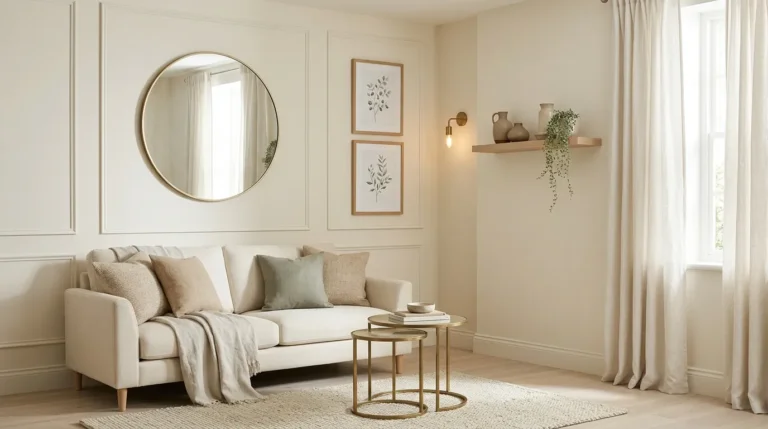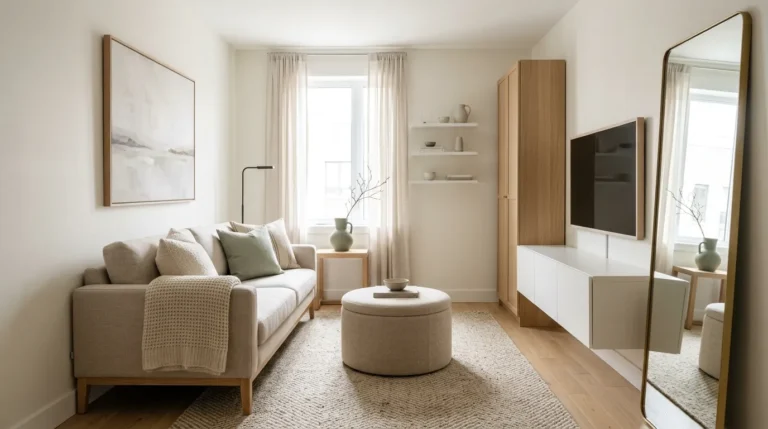
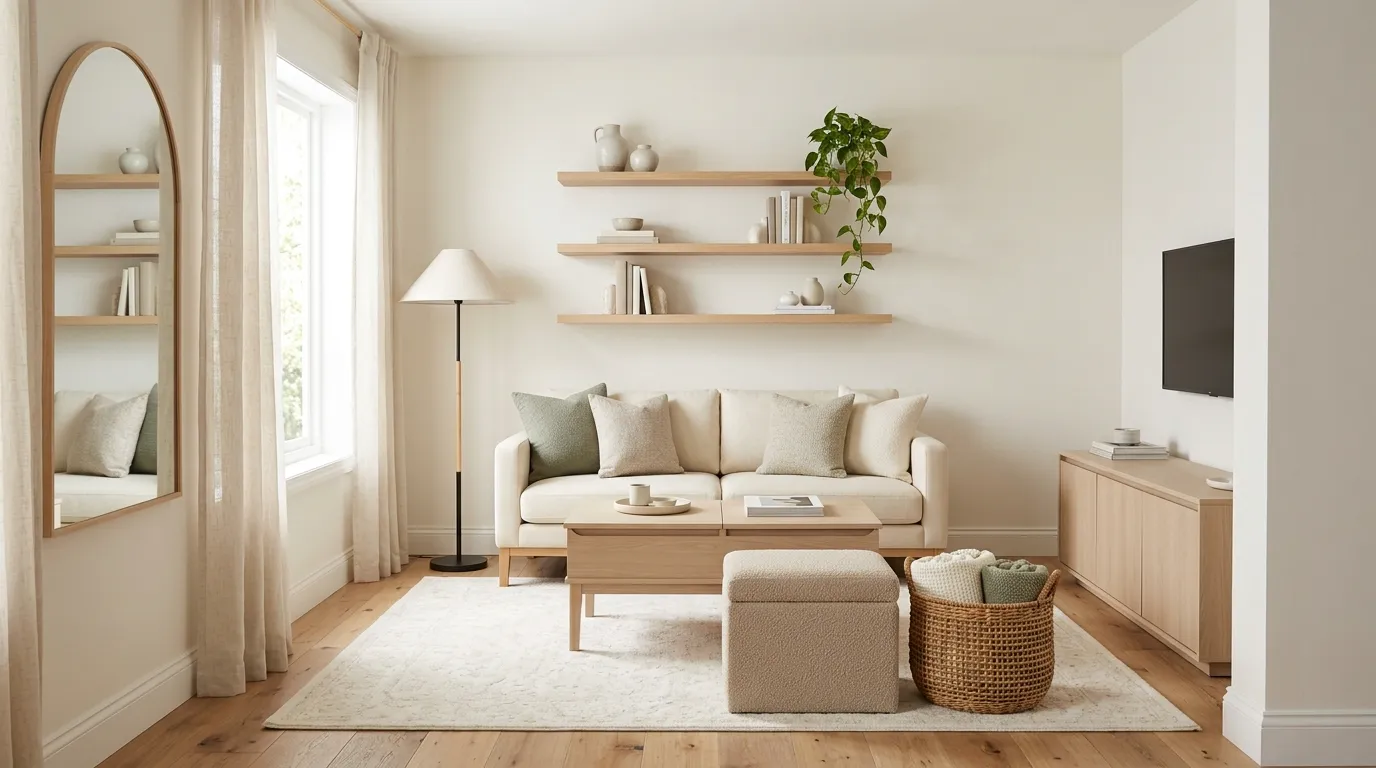
Small Living Room Decor Ideas That Balance Style and Storage
A small living room asks a lot of one space. It has to host guests, hold a television, store blankets, books, remotes, and toys, and still look like a place you want to relax in. When every square foot counts, clutter shows up fast and style can feel like a luxury you cannot afford.
The good news is that you do not have to choose between a beautiful room and a practical one. The right small living room decor ideas make storage part of the design instead of an afterthought. This guide walks through fifteen practical, renter-friendly strategies that help you organize more, display what you love, and make the room feel open and inviting.
Why Style and Storage Need to Work Together
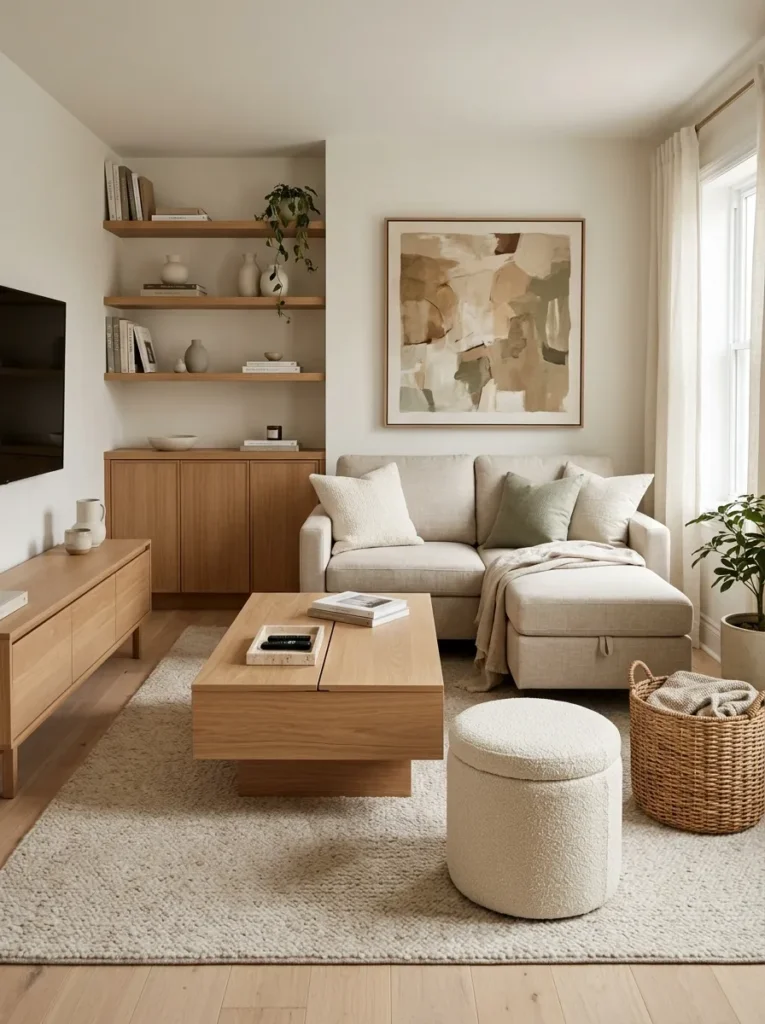
Many people treat decorating and organizing as two separate projects. They buy attractive pieces first and then scramble to find places for everything else, or they add bins and boxes that solve clutter but spoil the look of the room.
In a compact space, that approach rarely works. Every item you bring in should either look good, store something, or ideally do both. When furniture, shelves, and accessories share both jobs, you need fewer objects overall, and a room with fewer objects naturally feels larger and calmer.
Keep that principle in mind as you read through the ideas below. Each one is designed to give you a little more room without sacrificing personality.
15 Small Living Room Decor Ideas That Balance Style and Storage
1. Plan Your Layout Before You Buy Anything
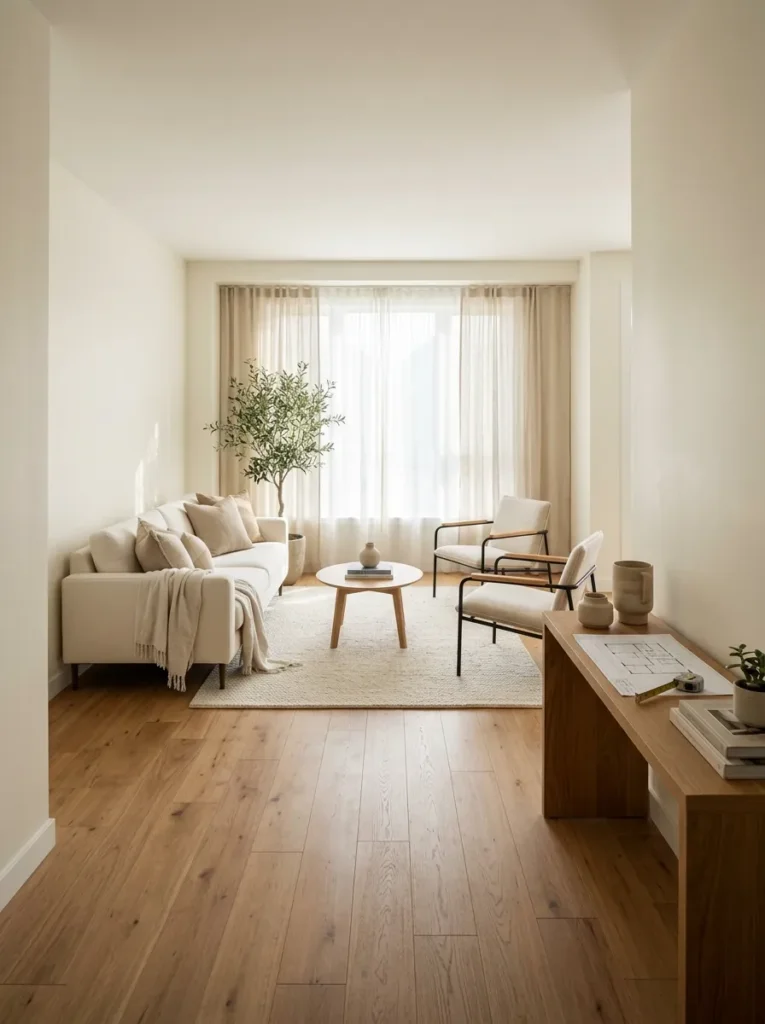
Before choosing new pieces, measure the room, the doorways, and the main walls. Sketch a simple floor plan on paper or use a free room-planning app. Mark windows, outlets, radiators, and the natural path people take when they walk in.
Then decide what the room must do. A living room that doubles as a workspace needs different furniture than one used mainly for movie nights.
- Leave a clear walkway of roughly 30 inches (about 75 cm) where possible.
- Choose one focal point, such as a window, fireplace, or media wall.
- Avoid pushing every piece against the walls, since a slightly pulled-in sofa can create a cozier arrangement.
A clear plan prevents impulse buys and helps you spend on pieces that truly fit.
2. Choose a Light, Cohesive Color Palette
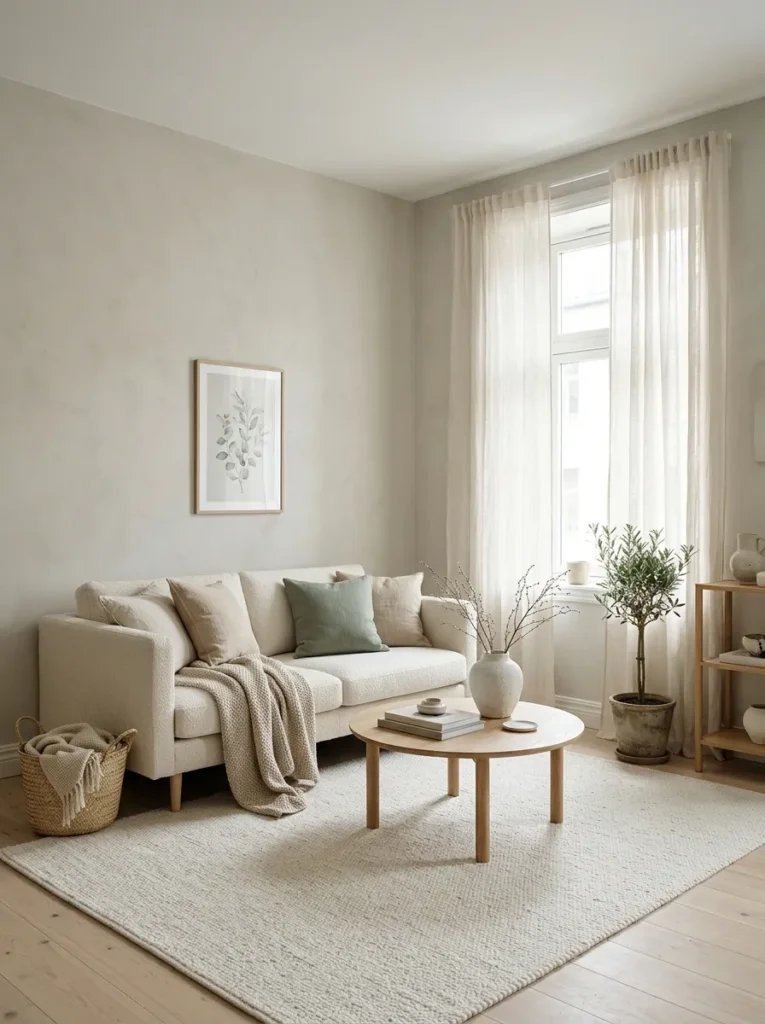
Color has a big effect on how large a room feels. Soft whites, warm creams, pale greys, and gentle neutrals reflect light and keep the space airy. You can still add depth with one or two accent colors in cushions, art, or a throw.
A few guidelines help:
- Stick to three main colors: a base, a secondary shade, and an accent.
- Paint walls, trim, and ceiling in similar tones for a seamless look.
- Use texture, such as linen, wool, or woven rattan, to add warmth so a light palette does not feel flat.
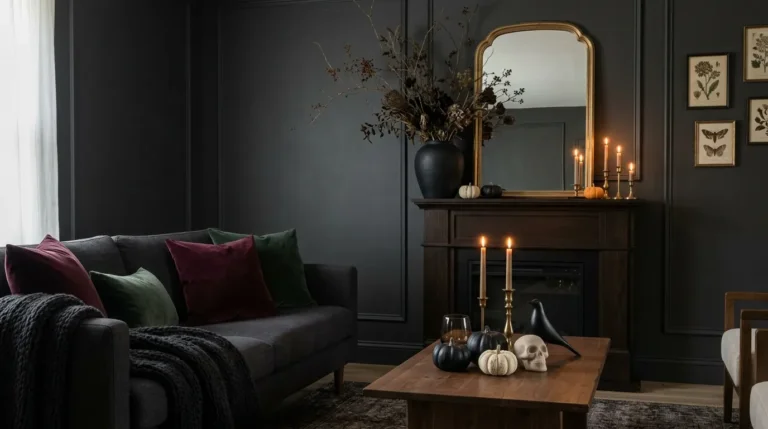
If you love dark colors, use them in smaller doses, such as a deep green armchair or a navy accent wall behind the sofa.
3. Pick a Sofa With Smart Proportions
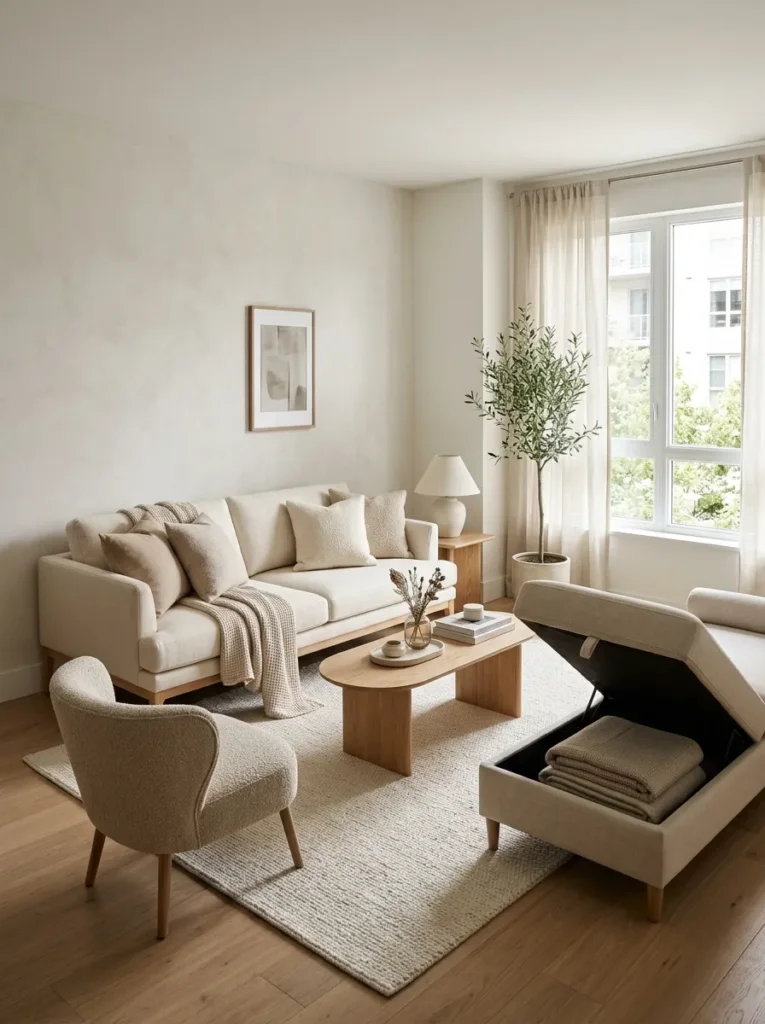
The sofa is usually the largest item in the room, so it deserves careful thought. In a small living room, a bulky sofa with wide arms can swallow valuable space.
- Look for slim or track arms, which give you more seating room in less width.
- Choose a sofa with exposed legs so you can see the floor underneath, which makes the room feel lighter.
- Consider a loveseat or apartment-sized sofa paired with a pair of chairs.
- Check whether the model offers hidden storage in the base or chaise.
A storage chaise or a sofa with lift-up seats can easily hold spare bedding, board games, or seasonal items.
4. Use Multi-Functional Furniture
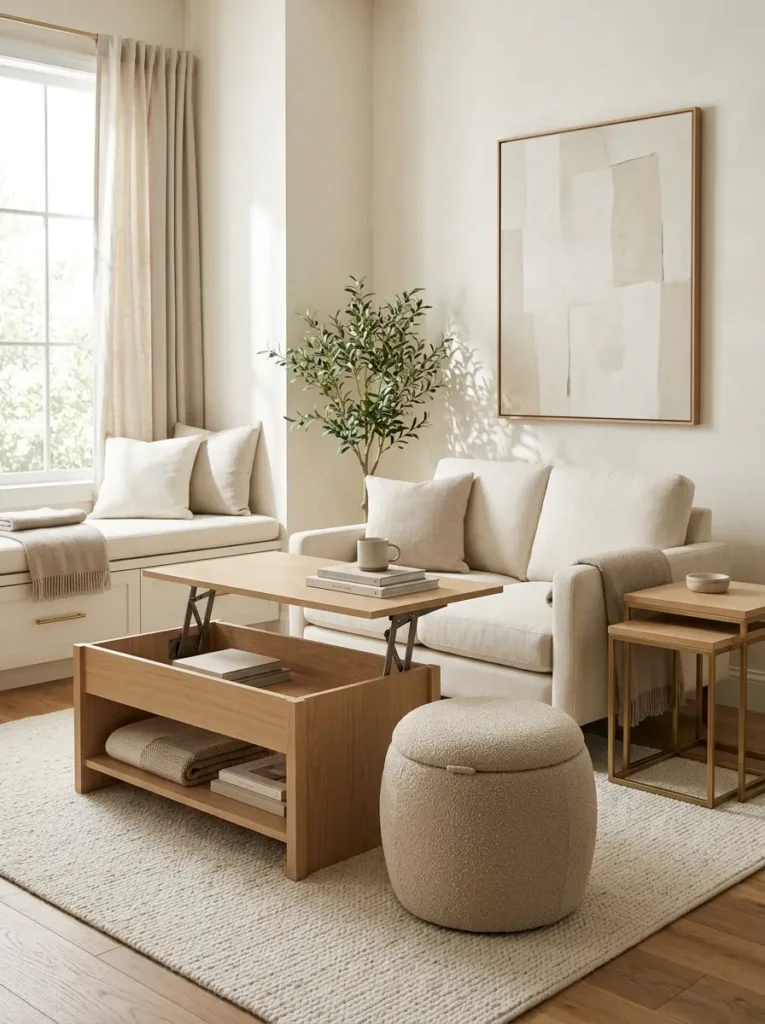
When space is limited, furniture that serves two purposes quickly proves its value. A single piece can take the place of several.
- Storage ottomans work as footrests, extra seating, and hidden containers for blankets and remotes.
- Lift-top coffee tables open up for a laptop or snacks and contain a deep compartment below.
- Nesting tables can be pulled apart for guests and tucked away afterward.
- Bench seating with storage under a window offers a cozy reading corner and a place to hide clutter.
Choose pieces with clean lines and a finish that matches the rest of the room, so storage blends into the design instead of standing out.
5. Go Vertical With Wall Shelves
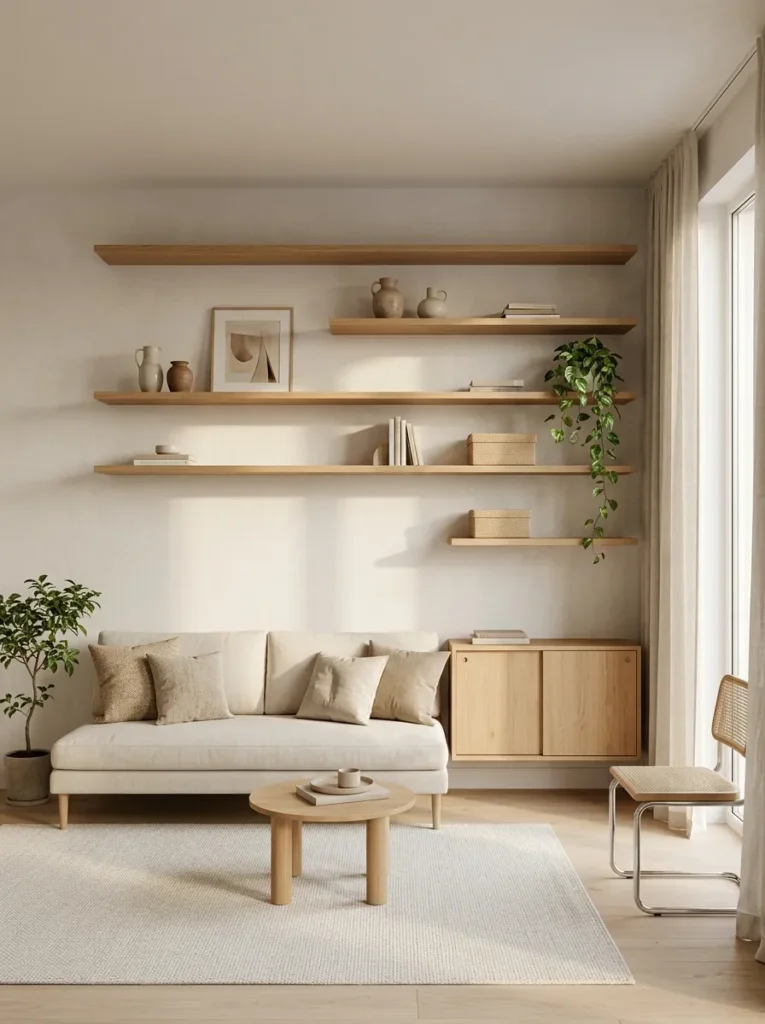
When the floor is crowded, the walls become your best resource. Shelves draw the eye upward and give you valuable storage without taking up floor space.
- Install floating shelves above the sofa, beside the television, or in an unused corner.
- Mix open shelves with a few closed cabinets to hide less attractive items.
- Use a ladder-style shelf or a tall, narrow bookcase to add height without adding width.
- Leave a little breathing room between objects to avoid a cramped look.
For renters, look for leaning shelves or freestanding units that can be moved without drilling. If you do drill, anchor shelves into studs or use appropriate wall anchors for the weight.
6. Choose a Media Unit That Hides the Mess
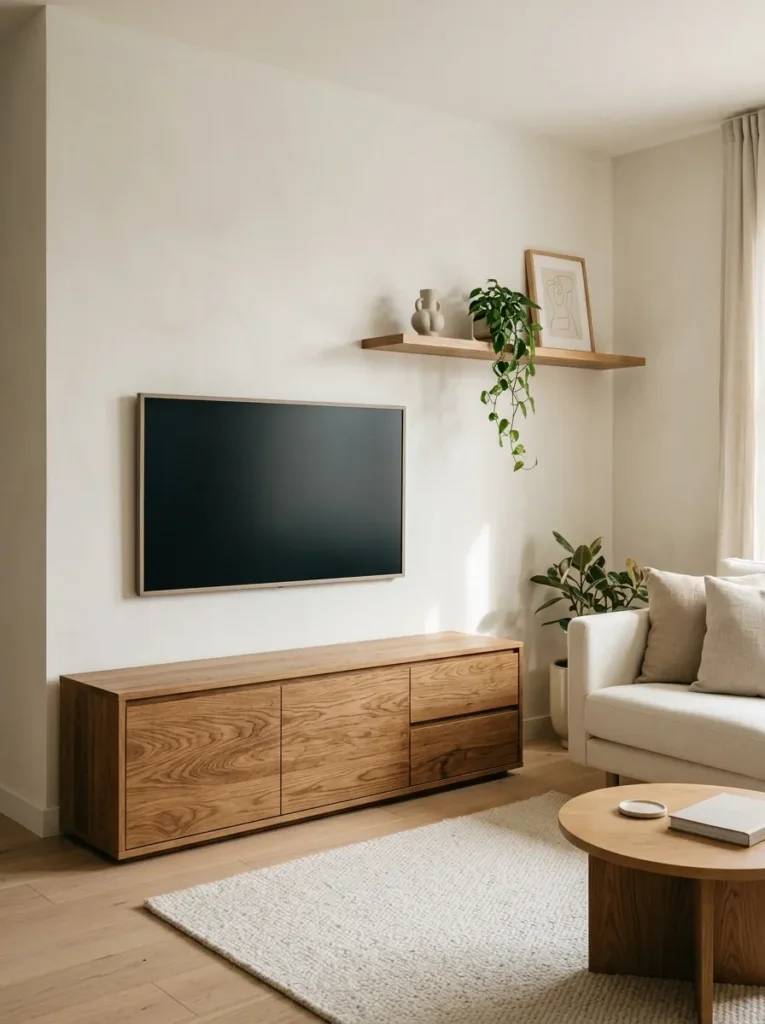
Television areas can quickly become tangled with cables, game consoles, and devices. A media unit with doors, drawers, or a mix of both keeps the area tidy.
- Select a low, slim console so the wall above remains open for art or shelving.
- Use cable clips, sleeves, or a cord cover to bring wires together neatly.
- Pick cabinet doors with a finish that matches your sofa or wall color.
- Wall-mounting the television frees up surface space, provided the wall and mount are suitable for the weight.
Leave a few inches of ventilation around electronics, especially if they are placed inside a closed cabinet.
7. Make Baskets and Bins Part of the Decor
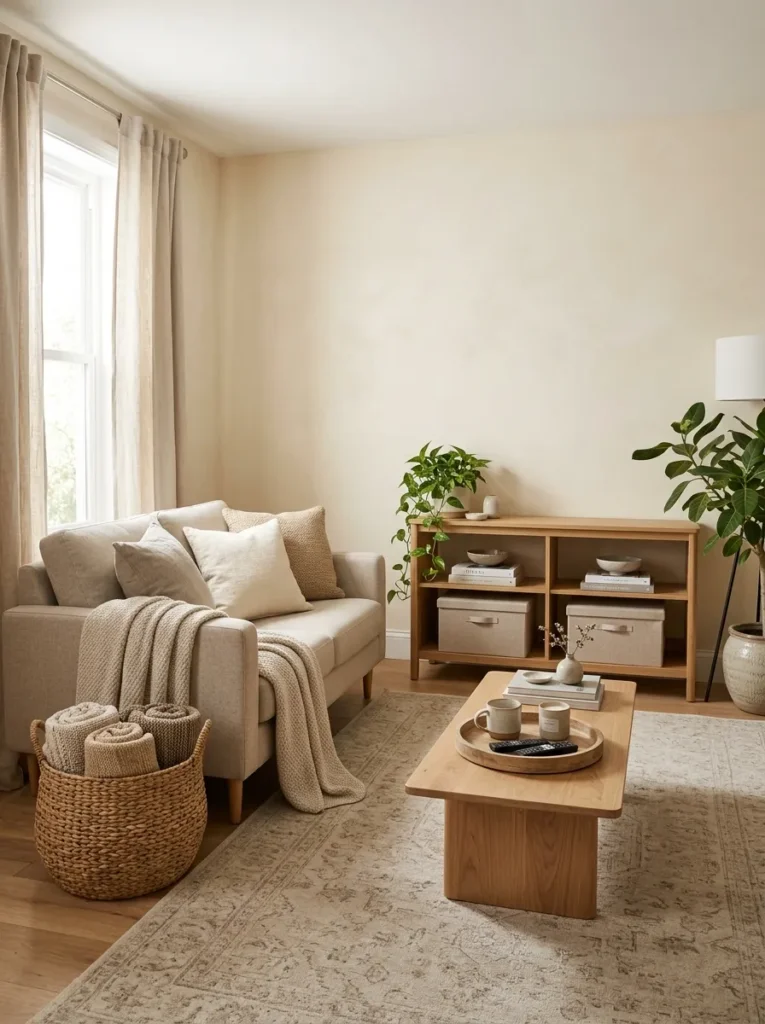
Containers are the quiet heroes of small-space organization. The trick is to choose ones you do not mind seeing.
- Woven baskets add warmth and texture while holding throws, magazines, or toys.
- Lidded fabric boxes are ideal for items you want to keep out of sight.
- Matching storage in similar materials creates a calm, intentional look.
- Label the inside or underside so everyone in the household knows where things go.
Place a large basket beside the sofa for blankets and a smaller tray on the coffee table for remotes and coasters. Everything has a home, and the room still looks styled.
8. Use Mirrors to Brighten and Expand

Mirrors reflect both natural and artificial light, which can make a small room feel brighter and more open. Placement matters more than size.
- Hang a large mirror opposite or beside a window to bounce daylight into the room.
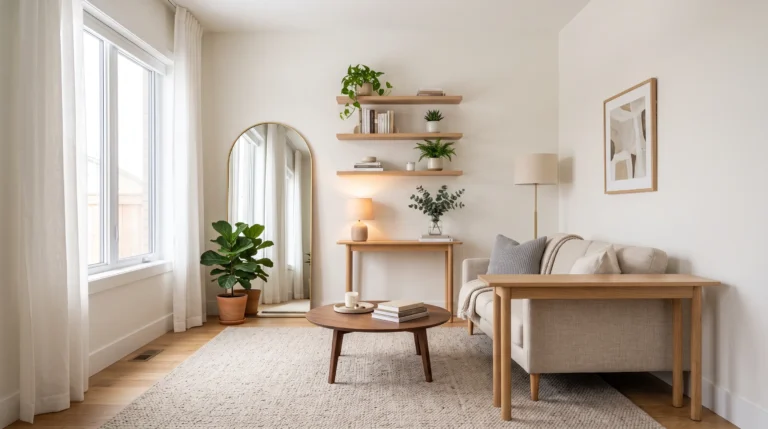
- Lean a tall floor mirror against a wall for an easy, relaxed look.
- Use a group of smaller mirrors to create a gallery-style display.
- Choose a frame that matches your style, such as slim black metal for a modern look or carved wood for a traditional one.
Avoid placing mirrors where they reflect clutter, such as an untidy shelf or a crowded corner.
9. Layer Your Lighting
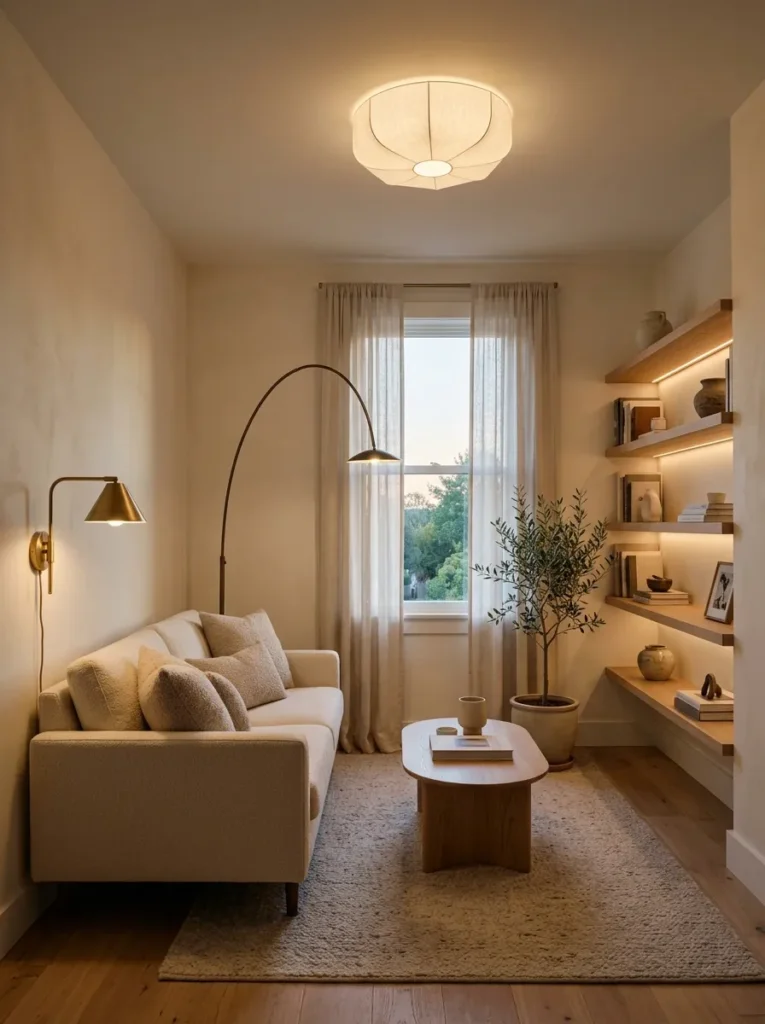
A single ceiling light can flatten a room and cast harsh shadows. Layering lamps at different heights adds depth and makes the space feel larger and more comfortable.
- Ambient lighting comes from ceiling fixtures or wall sconces.
- Task lighting includes reading lamps and adjustable arm lamps.
- Accent lighting highlights art or shelves with small lamps or LED strips.
Wall-mounted sconces and arc floor lamps are especially useful because they save table space. Choose warm-toned bulbs for a cozy atmosphere, and add dimmers if you can.
10. Hang Curtains High and Keep Them Light
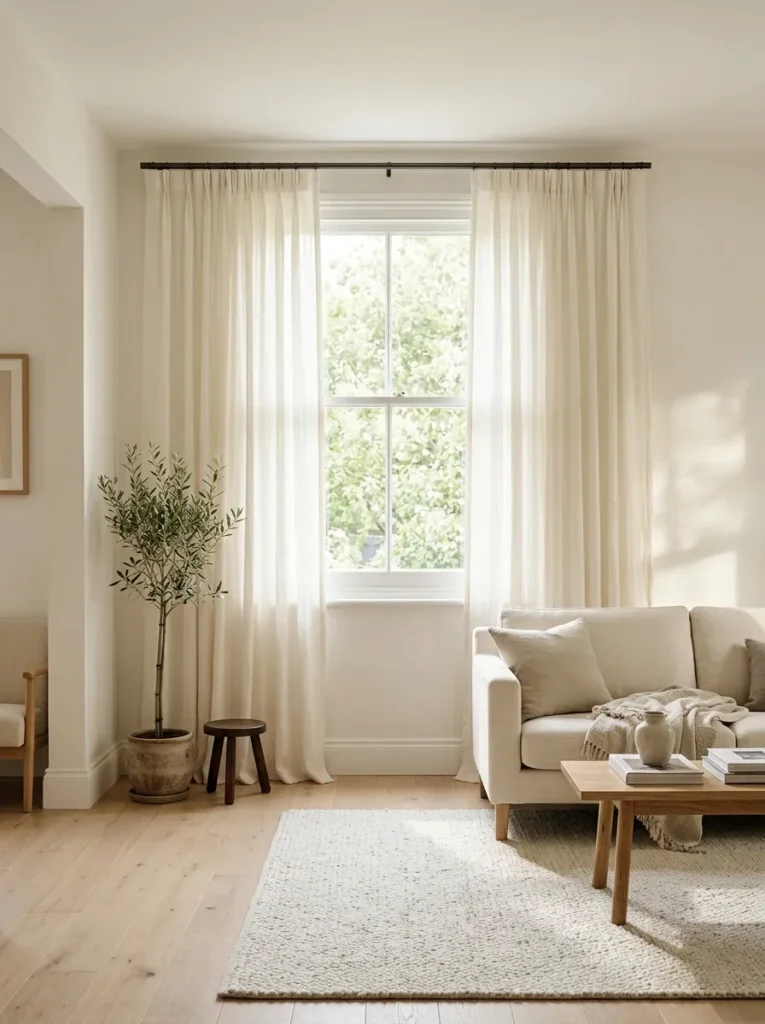
Curtains can change the proportions of a room. Mounting the rod higher than the window frame makes the ceiling look taller, and extending the rod slightly wider than the frame lets more light in.
- Many designers suggest placing the rod several inches above the window frame, though the right height depends on your ceiling.
- Choose sheer or lightweight fabrics in white, cream, or soft neutrals.
- Let curtains fall close to the floor for a longer, cleaner line.
- Avoid heavy patterns, which can visually shrink a room.
If you need privacy or light control, pair sheers with a thin blind or a second curtain layer.
11. Pick the Right Rug Size
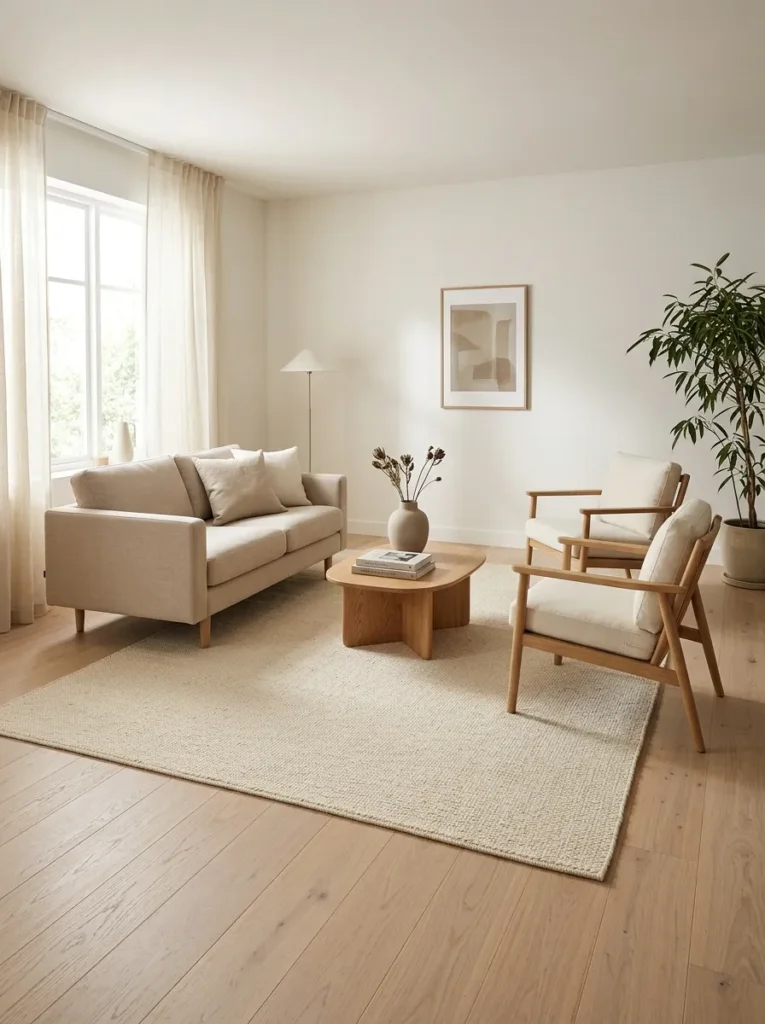
A rug that is too small can make the space look disjointed. A properly sized rug ties furniture together and defines the seating area.
- Aim for a rug large enough for at least the front legs of the sofa and chairs to rest on it.
- Choose a low-pile or flat-weave rug for easier cleaning and a tidier look.
- Pick a subtle pattern or a neutral tone to avoid overwhelming the room.
- Consider a rug with a pattern that hides everyday wear if you have pets or children.
If you rent and want to protect floors, a non-slip rug pad keeps the rug in place and adds comfort.
12. Tap Into Hidden and Under-Furniture Storage
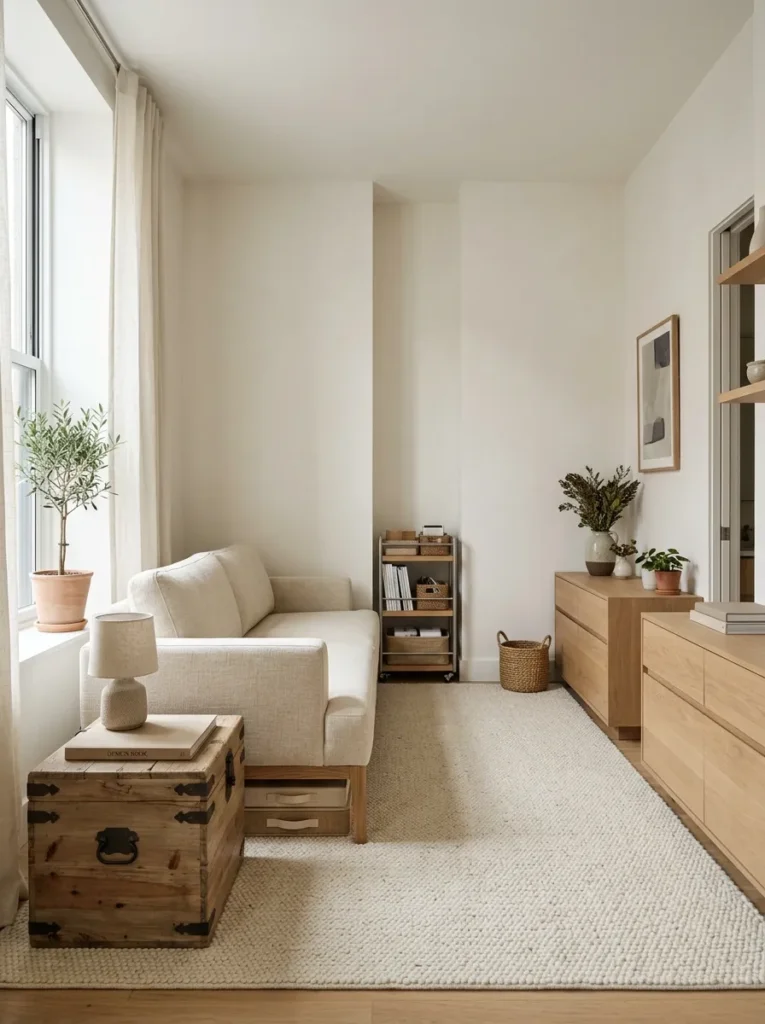
Many small living rooms have unused spaces that quietly go to waste. Look under, behind, and above existing furniture.
- Slide flat storage boxes or baskets under the sofa or console.
- Use the back of a door for hooks, a slim organizer, or a hanging pocket system.
- Add a narrow rolling cart between the sofa and wall for books and supplies.
- Place decorative trunks or crates at the end of the sofa to double as side tables.
These solutions remove clutter from view without requiring extra furniture.
13. Add Greenery With Small Plants
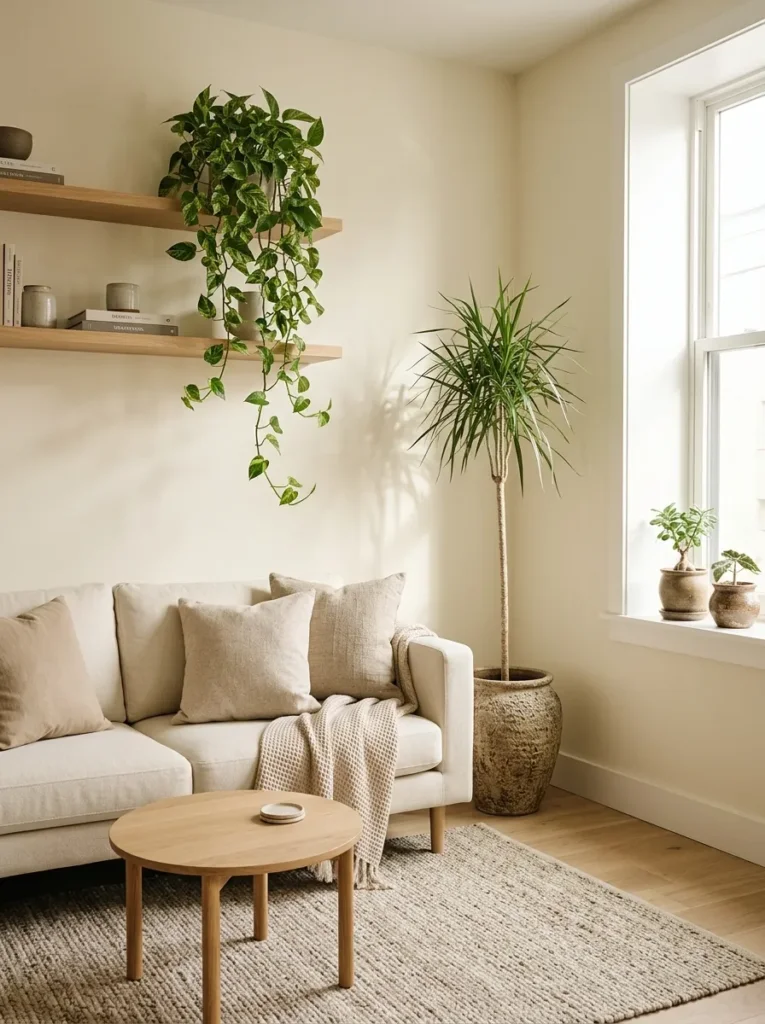
Plants add life, color, and a sense of calm, and they do not have to take up much room. Choose varieties that suit your light conditions and care routine.
- Trailing plants on a high shelf or in a hanging planter keep surfaces free.
- A tall, slim floor plant fills a corner without spreading wide.
- Small pots on a windowsill bring greenery without taking up table space.
- Use matching planters to give a collection a cohesive look.
If you do not have much natural light, look into low-light plants or high-quality faux ones for a similar visual effect.
14. Curate Art and Accessories Carefully

In a small room, fewer objects often look better than many. Edit what you display, and make each piece count.
- Group decorative items in odd numbers, such as three vases of different heights.
- Hang art slightly higher than usual to emphasize vertical space, but keep it at a comfortable viewing level.
- Use a gallery wall with consistent frames for a neat effect.
- Rotate items seasonally and store the rest away to avoid clutter.
A large piece of art can sometimes make a stronger statement than several small ones, which can appear busy on a compact wall.
15. Create Zones in an Open or Multi-Purpose Space
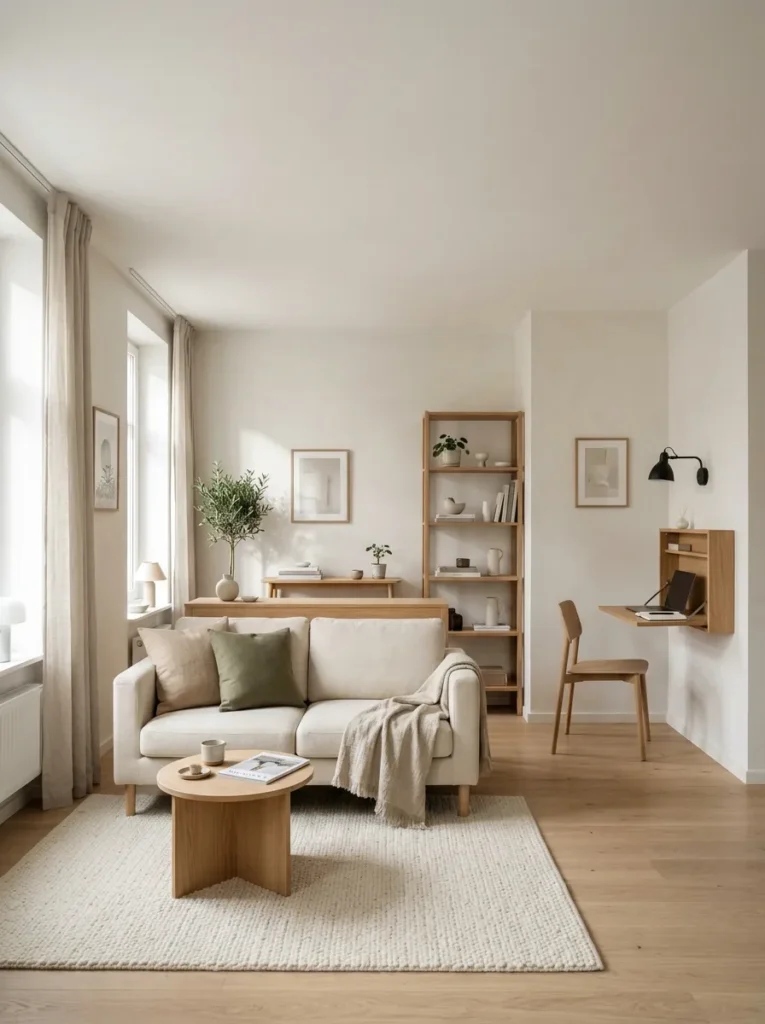
If your living room shares space with a dining area or workspace, define each zone to keep the room organized.
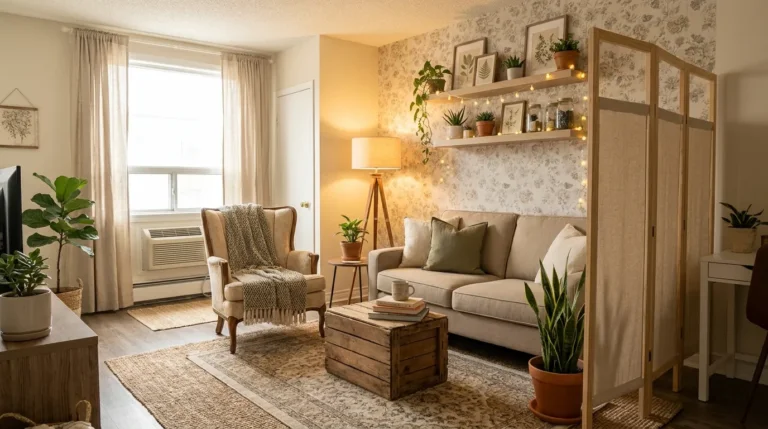
- Use a rug or a slim shelving unit to divide areas visually.
- Place a console table behind the sofa to mark the edge of the lounge area and add storage.
- Choose a foldable desk or wall-mounted drop-leaf table for occasional work.
- Keep lighting different in each zone to create a sense of separation.
Zoning helps each part of the room serve its purpose and prevents belongings from spreading across the whole space.
Common Mistakes to Avoid in a Small Living Room
Even well-designed spaces can go wrong if a few common mistakes creep in.
- Buying oversized furniture. Always measure first and consider the visual weight of each piece.
- Ignoring vertical space. Leaving upper walls empty wastes useful storage and display room.
- Choosing too many small items. A collection of tiny accessories can look cluttered. Group or reduce them.
- Skipping a decluttering session. No storage system will help if you keep more than you need. Sort belongings before you buy containers.
- Using only one light source. Flat lighting can make a room look smaller and less welcoming.
A Simple Weekend Plan to Get Started
If the list feels like a lot, break it into small steps.
- Saturday morning: Declutter the room and sort items into keep, donate, and store.
- Saturday afternoon: Measure the room, sketch the layout, and make a short shopping list.
- Sunday morning: Rearrange the furniture, add baskets, and place mirrors and lamps.
- Sunday afternoon: Style shelves, add plants, and finish with textiles such as cushions and throws.
You will often notice a big difference after just one weekend, even before buying anything new.
Conclusion
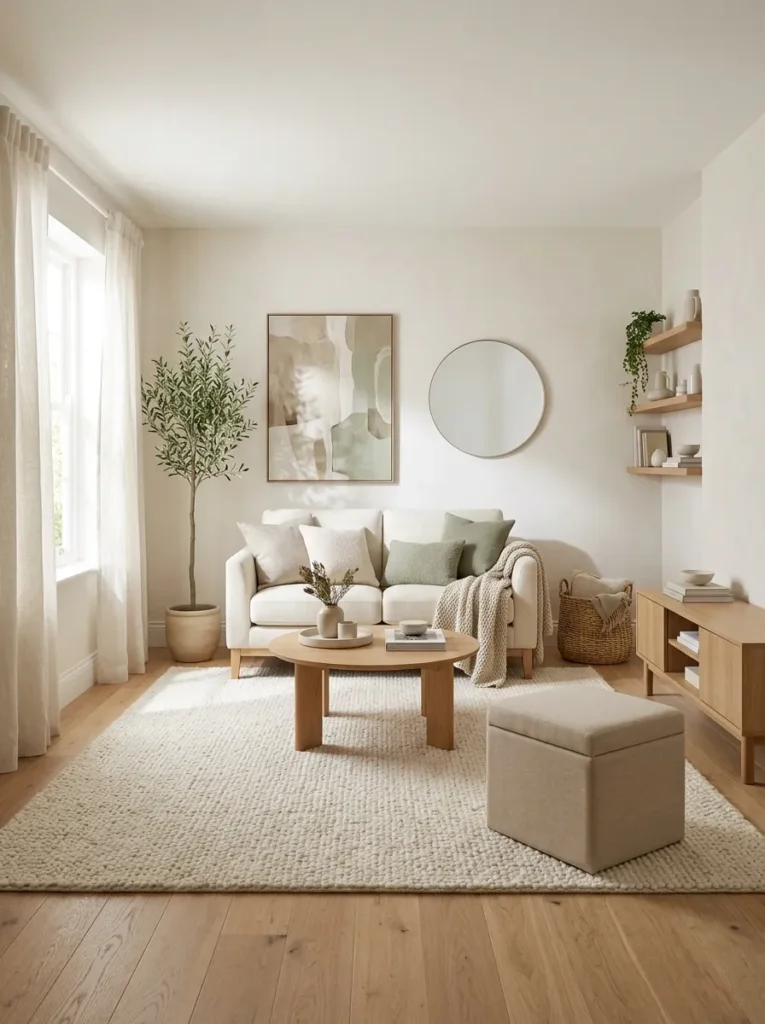
A small room does not have to feel limiting. By combining smart furniture, vertical storage, light colors, and well-chosen accessories, you can create a living room that looks stylish and stays organized. The most effective small living room decor ideas are the ones that make storage part of the design, so every item has a purpose and a place.
Start with a clear layout, choose pieces that work hard, and edit what you display. With a little planning, even a compact room can become a calm, functional, and welcoming part of your home.
Frequently Asked Questions (FAQs)
- What are the best small living room decor ideas on a tight budget?
Begin with low-cost changes that make a big visual difference: decluttering, rearranging furniture, painting walls in a lighter shade, and adding a mirror. Secondhand shops and online marketplaces are good sources for baskets, shelves, and side tables. Focus on a few multi-purpose pieces rather than buying many small items.
- How can I add storage to a small living room without making it look crowded?
Use vertical space and furniture with built-in storage, such as ottomans, benches, and consoles with doors. Choose containers that match your color palette so they blend in, and keep surfaces mostly clear. Closed storage works best for everyday clutter, while open shelves can be reserved for a few items you enjoy displaying.
- What furniture arrangement works best in a small living room?
The best arrangement depends on the shape of the room, but a few principles help. Keep walkways clear, choose a clear focal point, and group seating so people can talk comfortably. In many rooms, an L-shaped or slightly floating arrangement works better than pushing every piece against the walls. Test a layout by marking furniture positions with painter’s tape before moving heavy items.