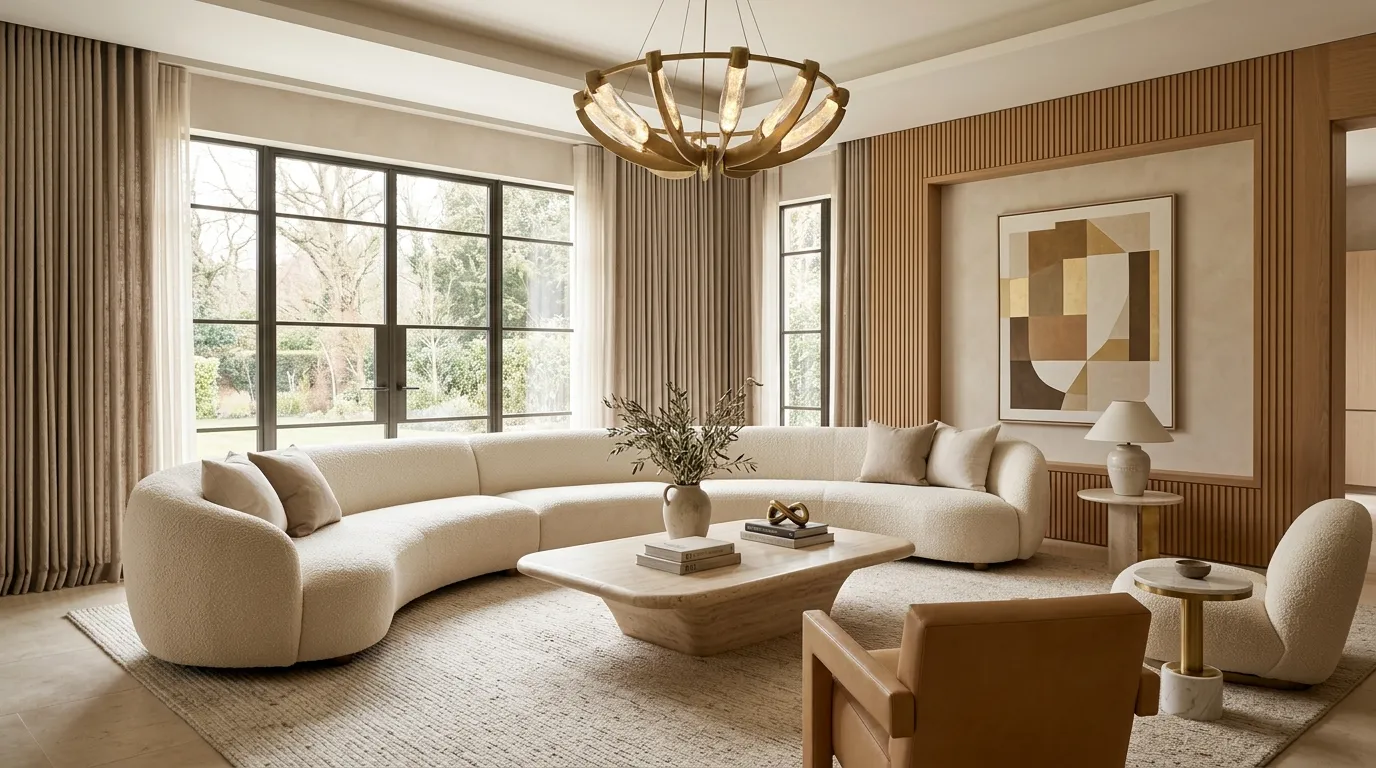
12 Luxury Living Room Design Ideas With a Modern Feel
Luxury doesn’t announce itself the way it used to. The gilded, maximalist living rooms of decades past have given way to something quieter and more confident — rooms defined by proportion, material quality, and restraint rather than sheer volume of decor. A truly luxurious living room today feels effortless, even when every detail has been deliberately considered.
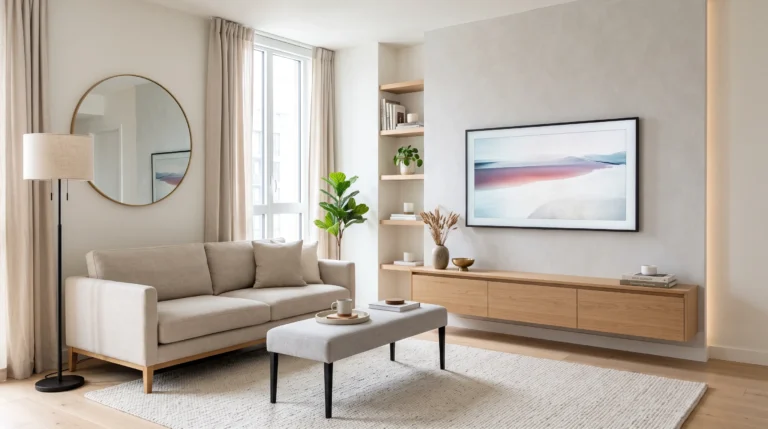
That shift is exactly why modern luxury living room design has become such a specific, sought-after aesthetic. It borrows the warmth of traditional luxury — rich materials, generous scale, layered lighting — but strips away anything that feels fussy or dated. The result is a room that feels expensive not because of how much is in it, but because of how well everything works together.
If you’re planning a living room refresh or a full renovation and want that unmistakable high-end feel without tipping into overly formal or cold, these twelve luxury living room design ideas will give you a clear, practical roadmap.
What Defines Modern Luxury in a Living Room
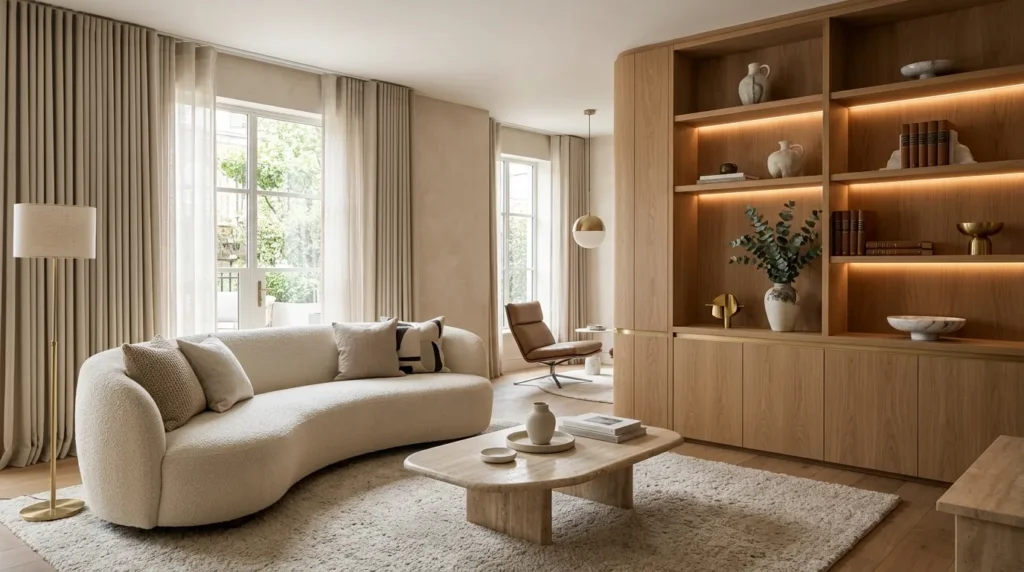
Before getting into specific ideas, it helps to define what “modern luxury” actually means in a living room context, since the term gets used loosely. Modern luxury living room design generally combines a few consistent characteristics:
- Clean architectural lines paired with soft, tactile materials
- A restrained, cohesive color palette rather than a busy, decorated one
- High-quality materials used generously rather than many cheaper materials mixed together
- Statement lighting and art treated as focal points, not afterthoughts
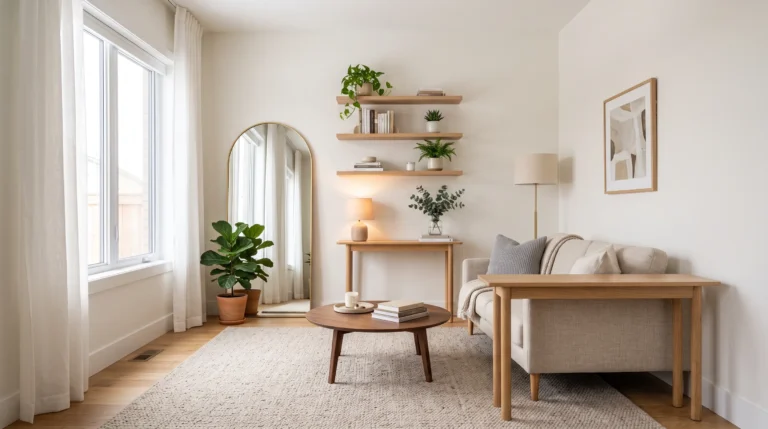
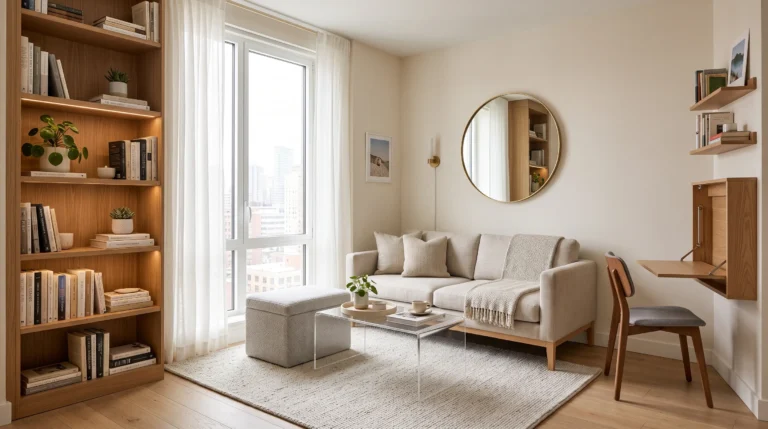
- Negative space — the deliberate choice to leave some areas uncluttered
With that foundation in place, here are twelve ideas that bring this look to life, room by room and detail by detail.
1. Anchor the Room With an Oversized Sculptural Sofa
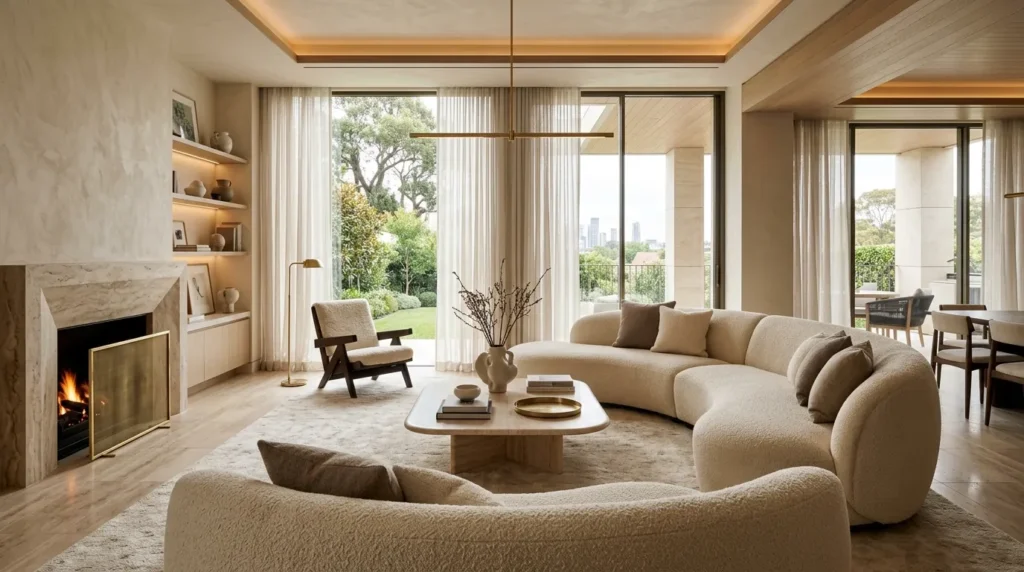
The sofa is almost always the visual and physical center of a living room, which makes it the single highest-impact investment in a luxury living room design. Modern luxury favors deep, oversized sofas with clean, sculptural silhouettes — think gently curved arms, low profiles, and substantial cushioning — rather than boxy, traditional shapes.
- Choose a bouclé, velvet, or heavyweight linen upholstery for a tactile, high-end feel.
- Opt for a neutral or deeply saturated single color rather than a patterned fabric, which reads as more sophisticated and versatile.
- Prioritize deep seating (at least 38–40 inches) for a lounge-like, generous feel rather than a shallow, formal seat depth.
Picture a curved, channel-tufted sofa in warm ivory bouclé, positioned against a backdrop of floor-to-ceiling windows with soft daylight pouring across its rounded arms — this single image captures the essence of modern luxury seating.
2. Use a Neutral Palette With One Deep, Saturated Accent
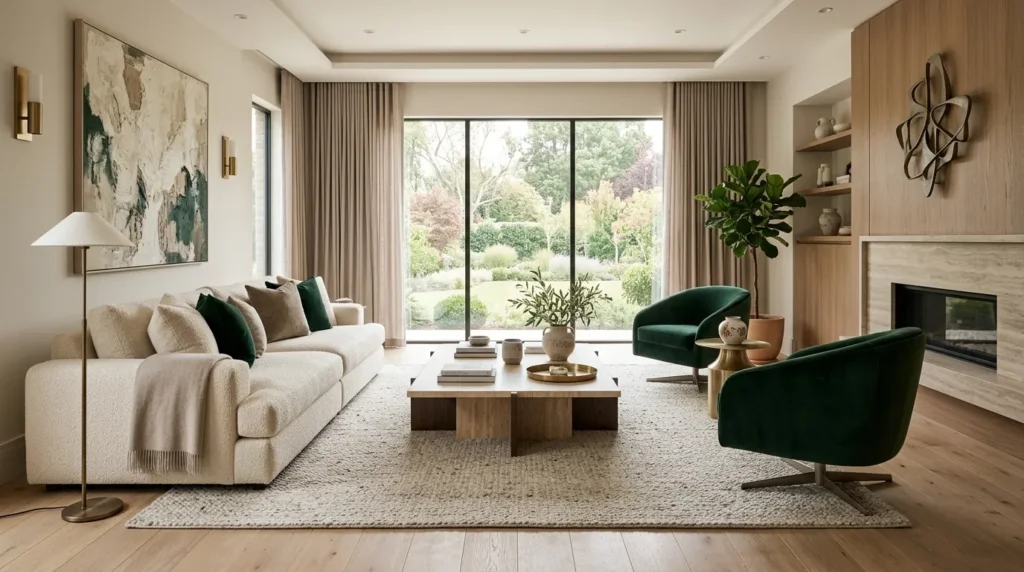
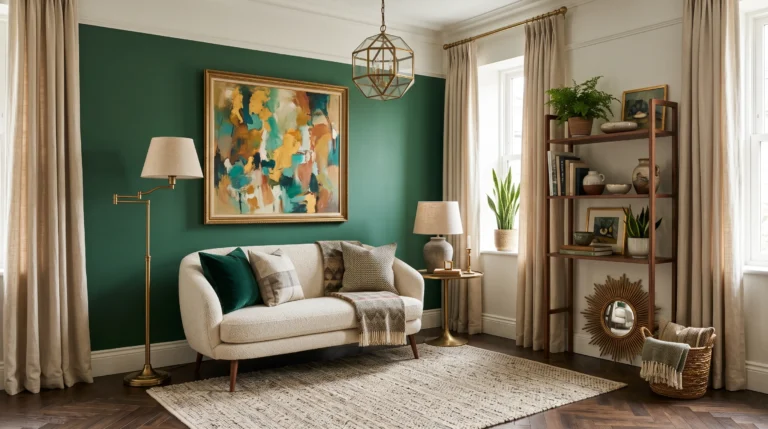
Modern luxury living rooms rarely rely on bold, multicolor palettes. Instead, the formula is typically a warm neutral base — cream, taupe, warm greige — paired with one deep, saturated accent color used deliberately throughout the room.
- Popular accent choices include deep emerald, ink navy, burnt terracotta, and espresso brown.
- Apply the accent color in two or three places (a rug, an accent chair, drapery) rather than scattering it in small doses throughout.
- Keep wall colors and larger furniture pieces in the neutral base, reserving the accent for pieces that can be updated more easily over time.
This restrained approach to color is one of the clearest visual signatures separating luxury living room design from a more casual, eclectic living space.
3. Install a Statement Lighting Fixture as the Room’s Focal Point
Lighting does more than illuminate a modern luxury living room — it acts as a piece of sculpture. A single, well-chosen statement fixture, whether an oversized chandelier, a sculptural pendant, or a dramatic linear fixture over a seating area, instantly elevates the entire room.
- Oversized, organically shaped chandeliers in brass, smoked glass, or matte black create drama without feeling ornate.
- Sculptural floor lamps with curved arms or stone bases work well as secondary statement pieces near a reading chair.
- Warm-toned bulbs (2700K or lower) are essential — even the most striking fixture loses its luxury feel under harsh, cool lighting.
Imagine a large, asymmetrical brass chandelier suspended above a low coffee table, its warm light catching the folds of a linen sofa and casting soft shadows across a plaster-finished wall — this is the kind of layered, cinematic lighting moment modern luxury design is built around.
4. Layer Multiple Light Sources at Different Heights
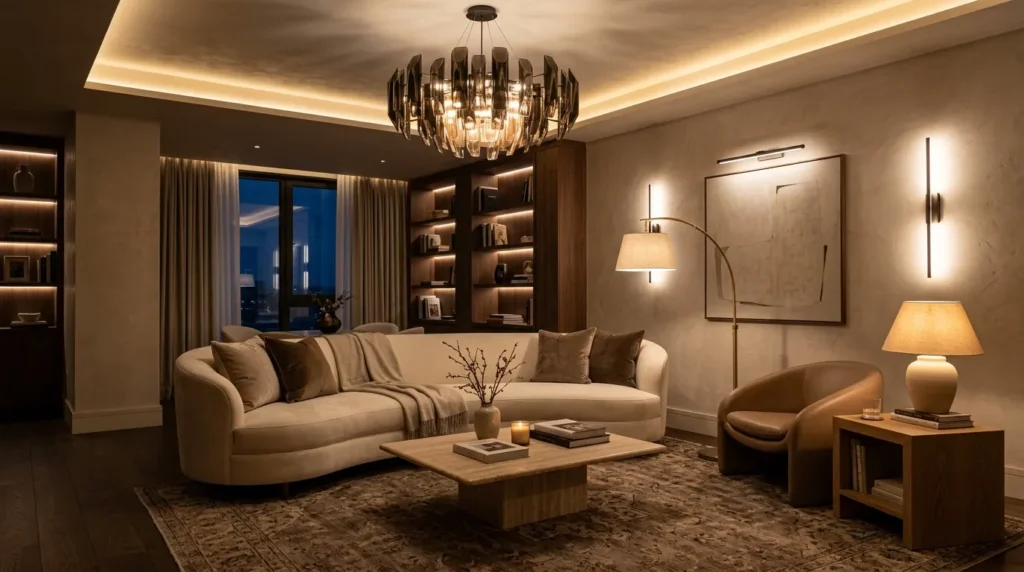
Beyond the statement fixture, true luxury living room design relies on layered lighting throughout the room — ambient, task, and accent light working together rather than a single overhead source doing all the work.
- Add floor lamps and table lamps at seating areas for softer, adjustable light.
- Use picture lights or wall-mounted sconces to highlight art or architectural features.
- Install dimmers throughout so the room can shift from bright and functional to moody and atmospheric depending on the time of day.
This layered approach creates the same dimensional glow found in high-end hotel lobbies and lounges — a hallmark of rooms that feel curated rather than simply furnished.
5. Choose Natural Stone for Surfaces and Accents
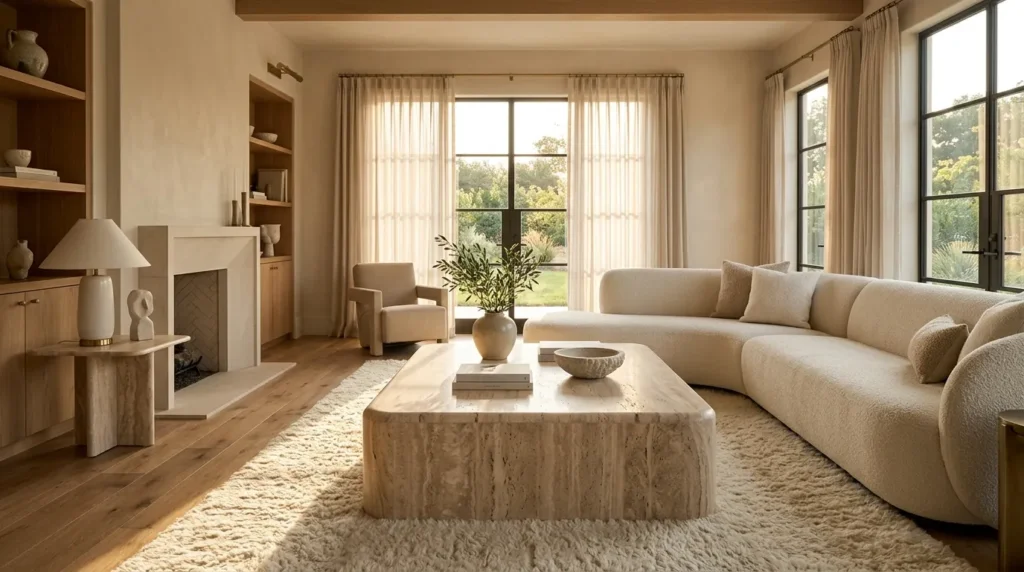
Few materials communicate luxury as immediately and consistently as natural stone. Marble, travertine, and limestone all bring a sense of permanence and richness that synthetic materials simply can’t replicate.
- A marble coffee table with dramatic veining serves as an instant focal point.
- Travertine side tables or a fireplace surround add warmth and texture without overwhelming the room.
- Even smaller stone accents — a stone bowl, a set of bookends, a stone-based lamp — introduce material richness in a more affordable way.
Visualize a large, honed travertine coffee table with soft, rounded edges sitting atop a plush wool rug, its warm, textured surface catching the late afternoon light streaming through sheer linen curtains.
6. Add Architectural Millwork or Paneling
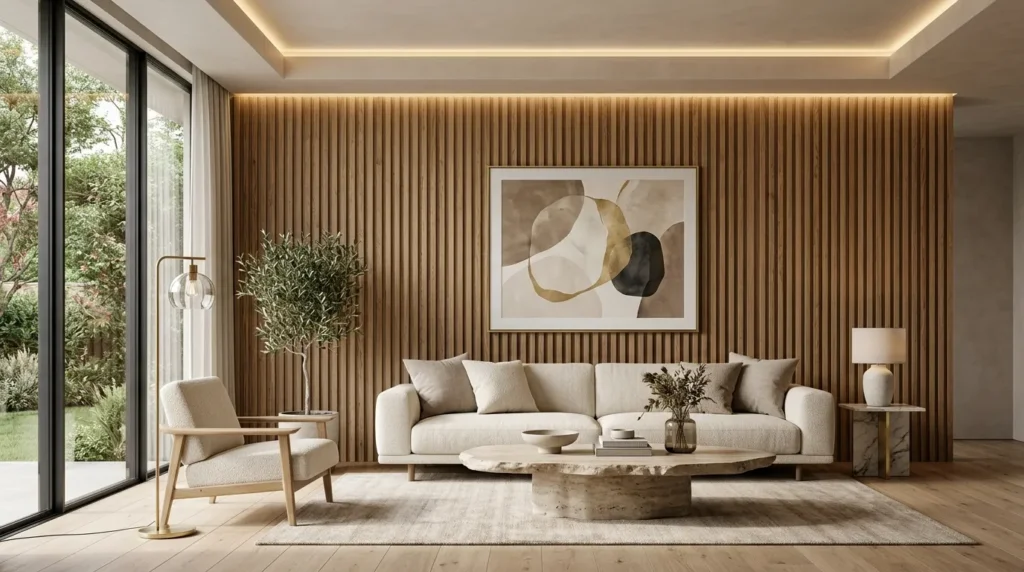
Wall paneling and millwork have made a significant comeback in modern luxury interiors, adding depth and architectural interest to what would otherwise be a flat wall. Unlike traditional, ornate molding, modern paneling tends to favor simple, geometric lines.
- Vertical slat paneling in warm wood tones adds texture and a sense of craftsmanship.
- Large-format square or rectangular panels, painted in a tone-on-tone finish, create subtle depth without pattern.
- Paneling behind a sofa or media area instantly transforms a plain wall into a designed focal point.
Picture a wall of vertical oak slat paneling rising behind a low-profile sofa, the wood’s warm grain contrasted against a soft plaster ceiling and a single oversized abstract painting mounted at its center.
7. Introduce a Statement Rug That Grounds the Room
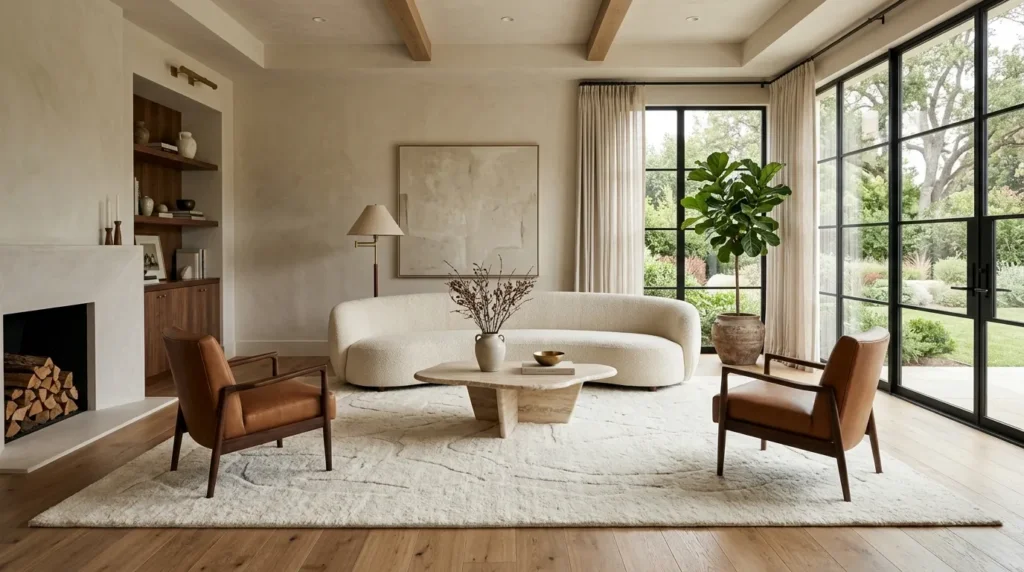
An expansive, high-quality rug does more to elevate a luxury living room design than almost any other single element, since it anchors the entire furniture arrangement and adds an immediate layer of texture and warmth.
- Choose natural fibers — wool, silk blends, or a wool-silk combination — for a soft, substantial feel underfoot.
- Size matters: all furniture legs should ideally sit on the rug, or at minimum the front legs, to avoid a disjointed, floating look.
- Subtle, tonal patterns (rather than bold, high-contrast designs) tend to read as more sophisticated in a modern luxury setting.
Imagine a large ivory wool rug with a barely-there abstract pattern, softly lit from above, grounding a seating arrangement of a curved sofa and two leather accent chairs positioned around a stone coffee table.
8. Use Floor-to-Ceiling Drapery for Height and Softness
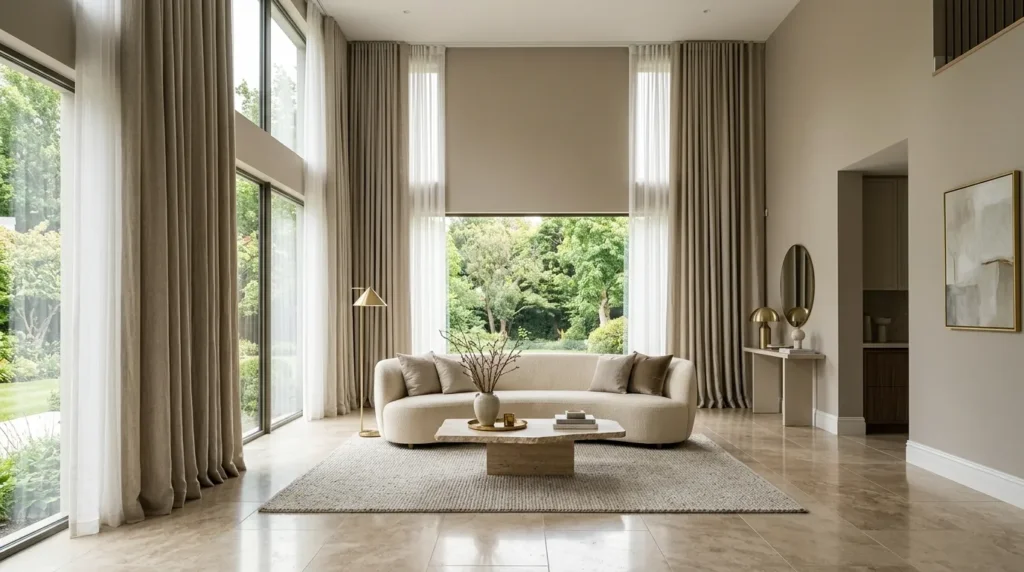
Full-length drapery, hung from ceiling to floor rather than stopping at the window frame, is a classic technique for adding both height and softness to a modern luxury living room. This trick makes ceilings appear taller and softens the hard lines of large windows.
- Choose heavyweight linen or velvet in a color that complements (rather than matches) the wall color.
- Hang curtain rods as close to the ceiling as possible, extending several inches beyond the window frame on either side.
- Avoid short or skimpy panels, which immediately undercut an otherwise luxurious room.
9. Mix Metal Finishes Intentionally, Not Accidentally
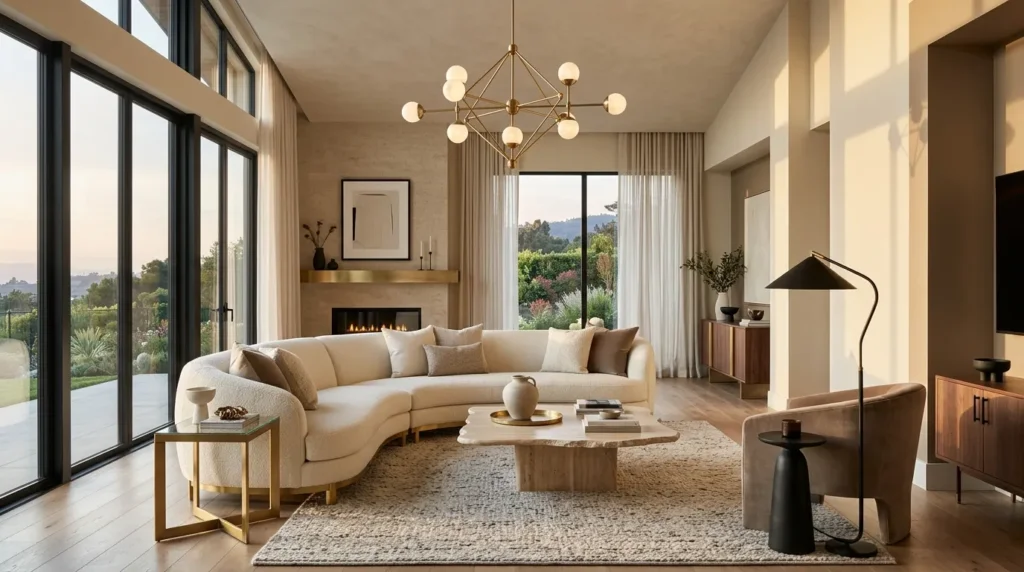
While consistency matters in a luxury living room design, an entirely single-finish room can start to feel flat. Modern luxury interiors often introduce a secondary metal finish deliberately — warm brass alongside matte black, for instance — to add depth without looking mismatched.
- Choose one dominant metal finish (used in lighting and larger fixtures) and one secondary finish (used in smaller accents like frames, hardware, or a side table base).
- Keep the ratio intentional — roughly 70/30 — so the secondary finish reads as an accent rather than competing for attention.
- Warm metals (brass, bronze, warm gold) tend to feel more luxurious and inviting than cooler metals like chrome in a living room setting.
10. Display Art as a Central Design Element, Not an Afterthought
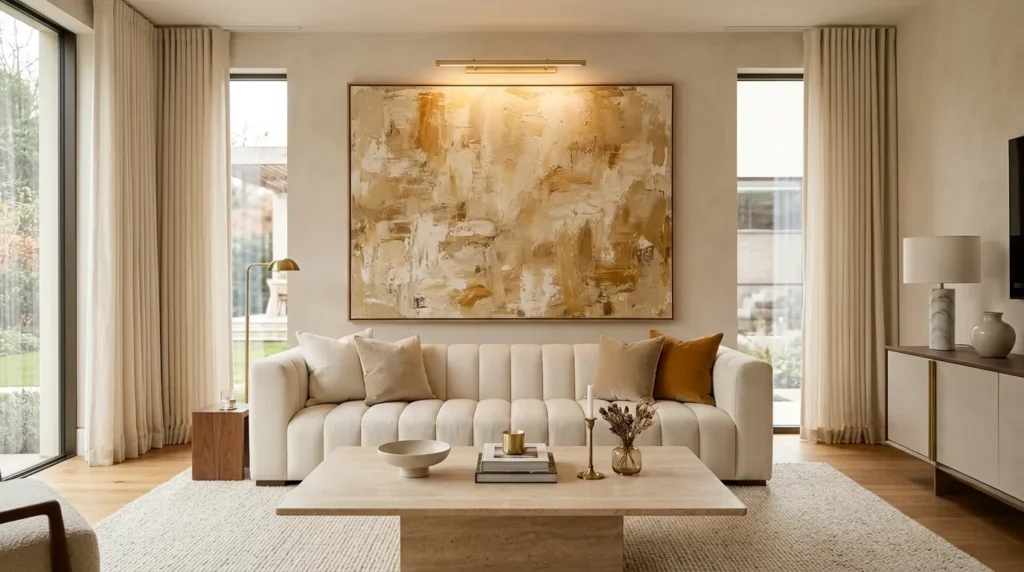
In a modern luxury living room, art isn’t decoration added at the end — it’s often one of the first elements considered, since it sets the tone for color, scale, and mood throughout the room.
- Choose one large-scale piece over a sofa or fireplace rather than several smaller pieces scattered around the room.
- Abstract, textural, or tonal pieces tend to complement the restrained color palettes typical of modern luxury design.
- Proper lighting — a picture light or well-placed accent lighting — ensures the art reads as intentional rather than incidental.
Picture a single, oversized abstract canvas in warm ochre and cream tones, hung above a channel-tufted sofa, illuminated by a slim brass picture light that casts a soft, warm glow across its textured surface.
11. Incorporate a Statement Coffee Table
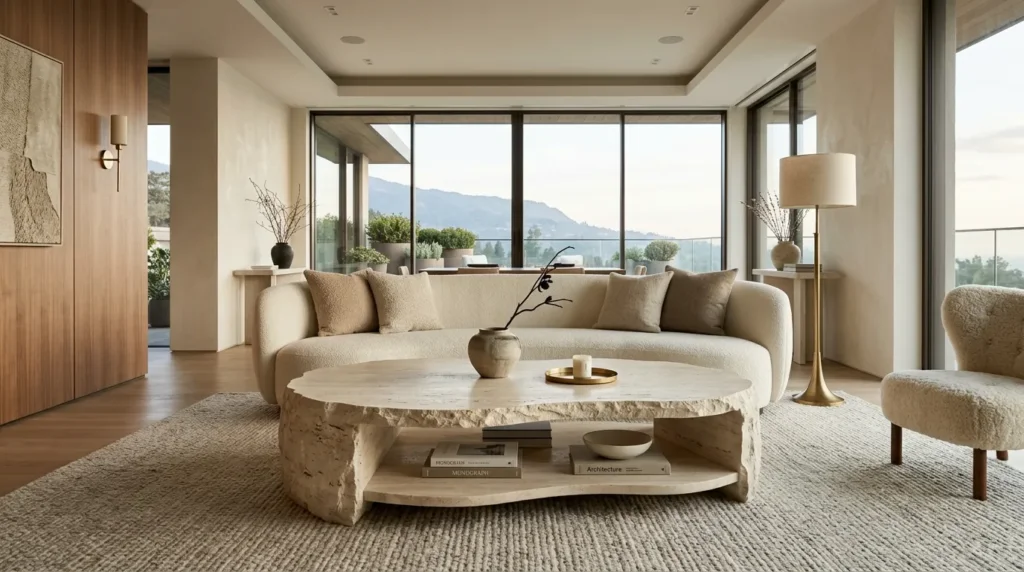
The coffee table often becomes a secondary focal point in a modern luxury living room, particularly in open-concept spaces where it’s visible from multiple angles. An interesting shape, material, or scale here adds significant visual weight to the overall design.
- Organic, curved shapes in stone or plaster feel distinctly modern compared to traditional rectangular wood tables.
- A two-tier design adds functional storage while maintaining a sculptural silhouette.
- Scale matters — an undersized coffee table can make an otherwise well-designed room feel unbalanced, especially with an oversized sofa.
12. Balance Negative Space With Curated Styling
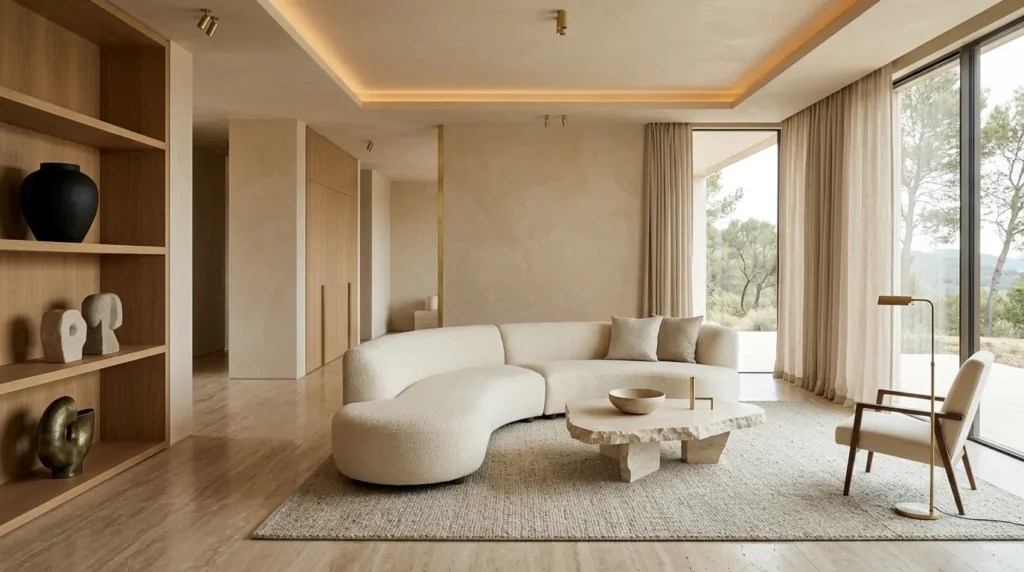
Perhaps the most important — and most overlooked — principle in modern luxury living room design is restraint. Luxury rooms feel expansive and calm because they leave room to breathe, rather than filling every surface and wall with decor.
- Style shelves and surfaces with a limited number of intentional objects, allowing empty space around each one.
- Avoid clustering furniture too tightly; generous walking paths and breathing room between pieces read as more luxurious than a tightly packed layout.
- Choose fewer, larger decorative objects over many small ones, which tend to visually clutter a room.
This principle ties every other idea on this list together — no matter how beautiful the individual elements are, a luxury living room design ultimately depends on how much space is left around them.
How to Prioritize These Ideas Based on Budget
Not every luxury living room design idea requires the same investment. If you’re working through this list with a defined budget, consider this general order of impact versus cost:
- Highest impact, lower cost: lighting layers, rug, drapery, art placement, styling restraint
- Moderate investment: statement lighting fixture, coffee table, accent chair or secondary seating
- Larger investment: sofa replacement, stone surfaces, wall paneling or millwork
Starting with lighting, textiles, and styling often delivers the most noticeable transformation relative to cost, while bigger structural changes like paneling or stone surfaces can be phased in over time.
Common Mistakes to Avoid
Even with a clear vision, a few missteps can prevent a living room from achieving that polished, modern luxury feel:
- Too many competing focal points – A statement chandelier, a bold rug, and an oversized piece of art can compete rather than complement each other. Choose one primary focal point and let the rest support it.
- Undersized furniture – Furniture that’s too small for the room is one of the fastest ways to undercut a luxury feel, regardless of quality.
- Overly cool lighting – Harsh, cool-toned bulbs flatten even the most beautifully designed room. Warmth is non-negotiable in luxury lighting.
- Skipping the rug or choosing one that’s too small – An undersized rug makes furniture look disconnected and can make the whole room feel unfinished.
- Overcrowding surfaces – More objects don’t equal more luxury. Restraint and negative space are just as important as the pieces themselves.
Conclusion
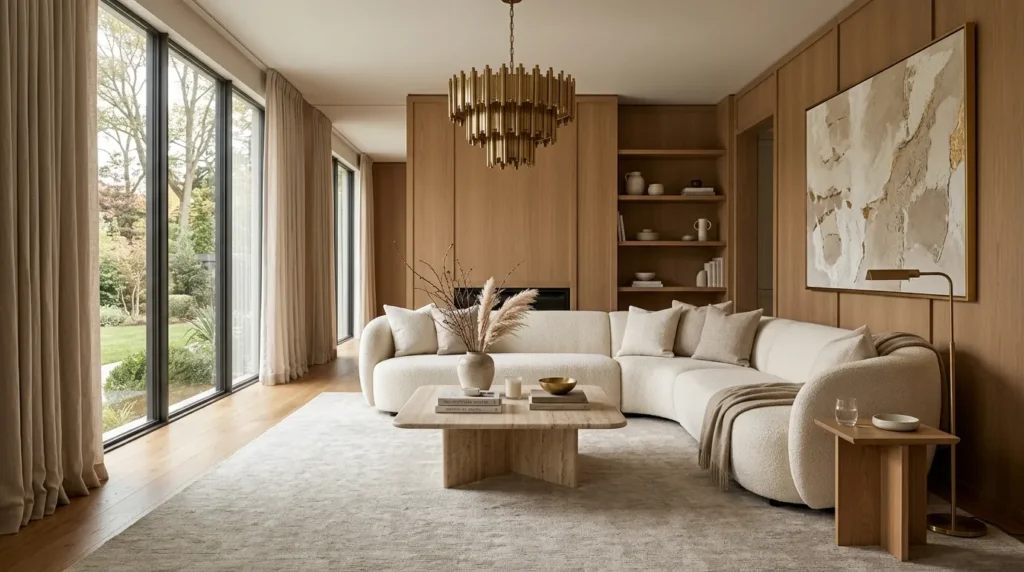
Modern luxury living room design isn’t about excess — it’s about intention, proportion, and material quality working together. From an oversized sculptural sofa and layered warm lighting to natural stone surfaces, statement art, and the discipline of negative space, these twelve ideas all point toward the same underlying principle: a luxury living room feels effortless because every element has earned its place.
You don’t need to implement all twelve ideas at once, and you don’t need an unlimited budget to see meaningful results. Start with lighting, textiles, and styling restraint, then build toward larger investments like a statement sofa or natural stone surfaces as your plans and budget allow. The result is a living room that doesn’t just look expensive — it feels calm, considered, and genuinely luxurious to spend time in.
Frequently Asked Questions
What colors are best for a modern luxury living room? Warm neutrals — cream, taupe, warm greige — paired with one deep, saturated accent color like emerald, navy, or terracotta tend to define modern luxury living room design. The key is restraint: a cohesive, limited palette reads as more sophisticated than a room with many competing colors.
Do I need expensive furniture to achieve a luxury living room look? Not necessarily. While a few well-chosen investment pieces (like a quality sofa or a natural stone coffee table) make a noticeable difference, lighting, textiles, rug quality, and styling restraint often have an outsized impact relative to their cost and can be updated gradually.
How important is lighting in luxury living room design? Extremely important. Warm, layered lighting — a mix of a statement fixture, table lamps, and accent lighting, all in warm color temperatures — is one of the defining characteristics of a luxury living room. A beautifully furnished room can still feel flat or cold under harsh or single-source lighting.
What’s the biggest mistake people make when trying to design a luxury living room? Overcrowding the space. Luxury design relies heavily on negative space and restraint — fewer, higher-quality pieces with room to breathe around them almost always look more sophisticated than a room filled with many smaller items or competing focal points.