10 Cozy Small Home Ideas That Bring Boutique-Hotel Style
There’s a particular feeling that comes with checking into a well-designed boutique hotel room. It’s not the size of the room that makes it memorable — most boutique hotel rooms are actually quite compact. It’s the sense that every detail was chosen on purpose: the lighting, the layering, the scent, the way the small space somehow feels indulgent rather than cramped.
That same feeling is entirely achievable in a real, lived-in home. A cozy small home doesn’t need more square footage to feel like a retreat — it needs the same intentionality that boutique hotels build their reputations on. Limited space actually works in your favor here, since a smaller footprint makes it easier (and more affordable) to apply thoughtful, high-impact design choices throughout the entire home rather than just one or two rooms.
If you’ve been searching for ways to make your space feel more like a getaway and less like a place you’re simply making do with, these ten ideas will help you turn a cozy small home into something that feels genuinely designed, room by room.
Why Small Homes Are Perfectly Suited to Boutique Style
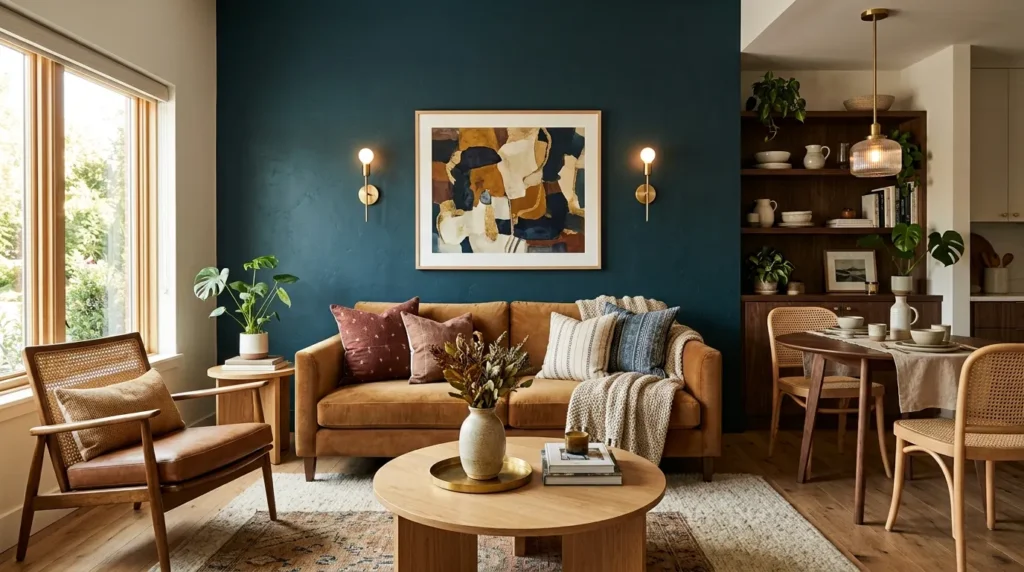
Boutique hotels succeed by treating every square foot with intention. Nothing is filler. Every surface, light fixture, and textile earns its place. That same principle applies directly to a cozy small home, where there’s simply less room to hide half-finished design decisions or mismatched furniture.
In fact, small spaces have a few built-in advantages when it comes to achieving that boutique feel:
- Bold design choices (a statement wallpaper, a rich paint color) have more impact in a smaller footprint without becoming overwhelming.
- Layered textiles and lighting are more affordable to implement across an entire small home compared to a larger one.
- A cohesive design language is easier to maintain when there are fewer rooms and transitions to coordinate.
With that mindset, here are ten specific ideas that bring genuine boutique-hotel warmth into a cozy small home.
1. Commit to a Cohesive Color Story Throughout
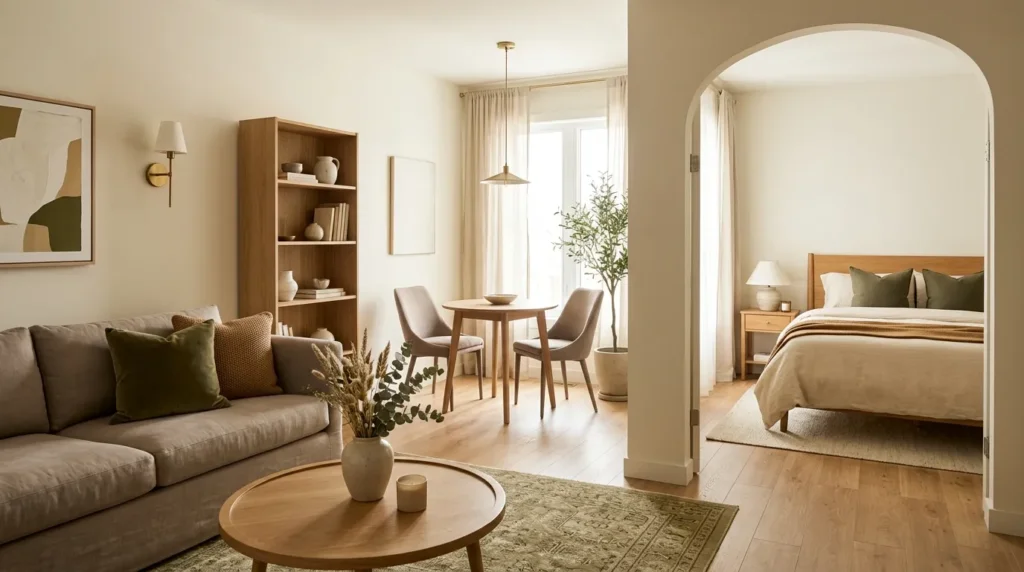
One of the biggest differences between a boutique hotel and an average home is consistency. Hotels rarely mix wildly different color schemes from room to room — instead, they carry a cohesive palette throughout, with small variations that still feel connected.
In a cozy small home, this is especially important because open sightlines mean you can often see multiple rooms at once. Choose two or three core colors (a warm neutral base plus one or two accent tones) and apply them consistently across walls, textiles, and furniture throughout the home, rather than treating each room as a completely separate design project.
2. Invest in Warm, Layered Lighting Everywhere
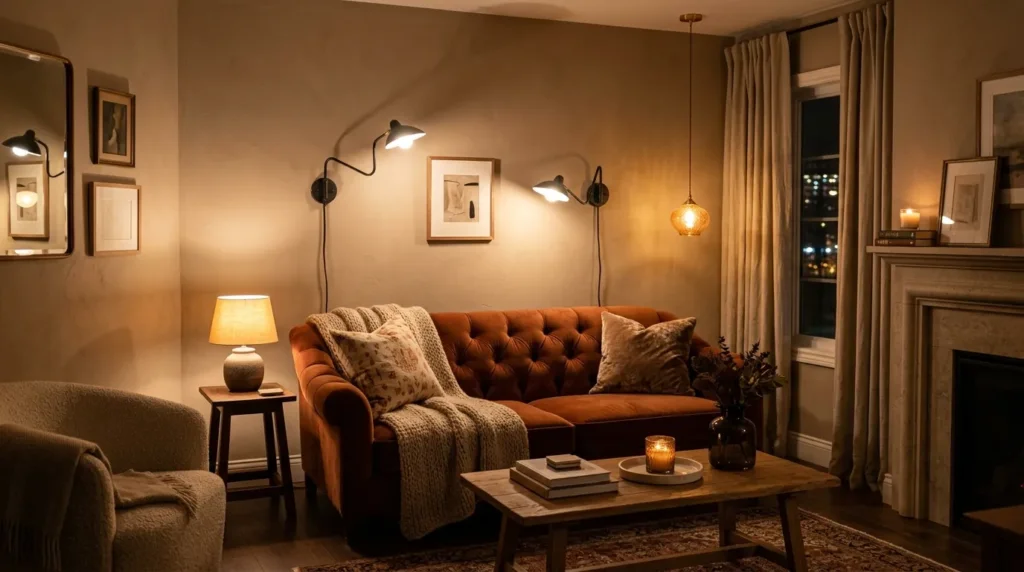
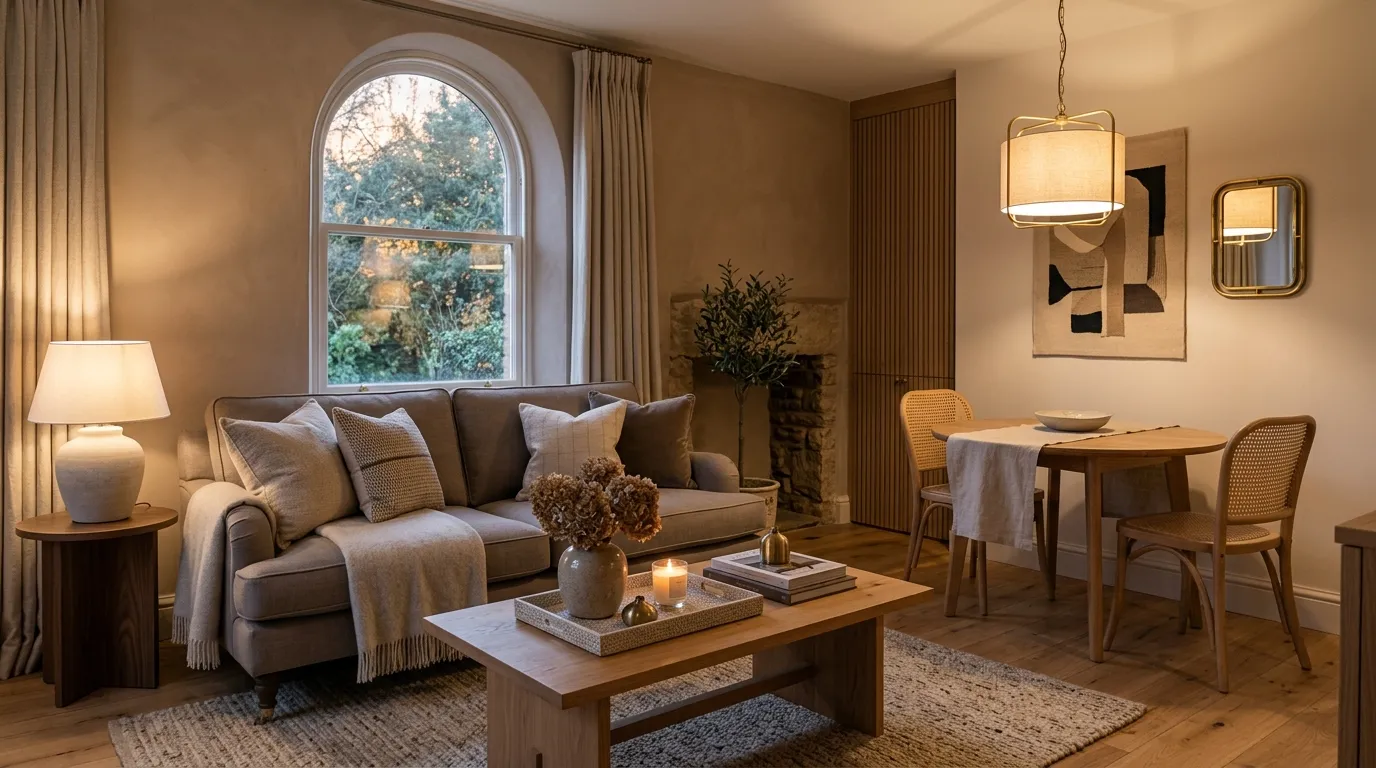
Boutique hotels almost never rely on a single overhead light. Instead, they layer table lamps, wall sconces, and accent lighting to create a warm, dimensional glow in every room, including hallways and bathrooms that homeowners often overlook.
- Swap any remaining cool-white or daylight bulbs for warm white (2700K or lower) throughout the home.
- Add at least one secondary light source — a lamp, sconce, or dimmer — to every main room.
- Use dimmers where possible so lighting can shift from bright and functional during the day to soft and relaxed in the evening.
This single shift, applied consistently, does more to create that boutique hotel feeling than almost any other change on this list.
3. Choose High-Quality Textiles Over More Furniture
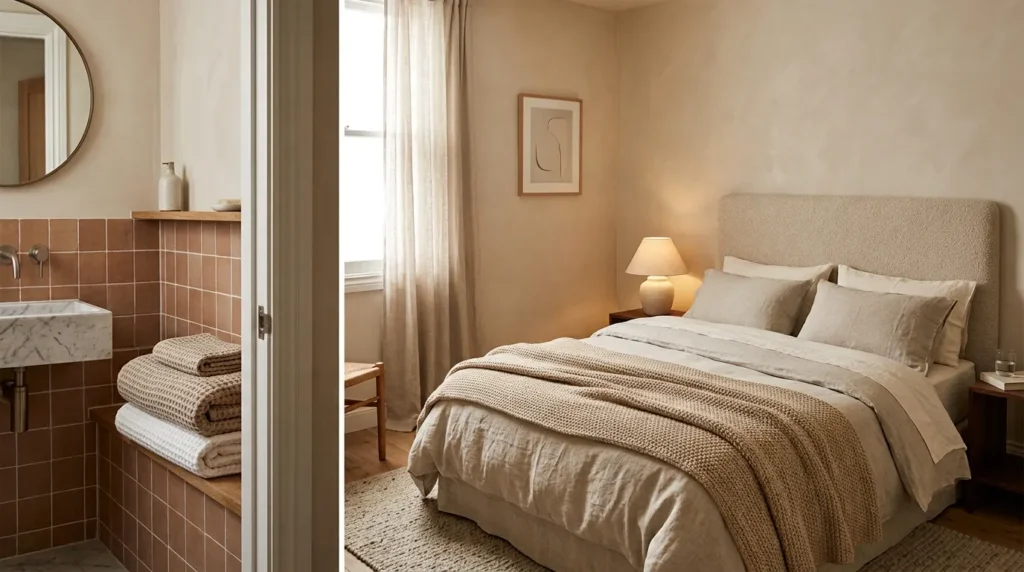
Boutique hotel rooms tend to be sparsely furnished but richly textured — a great duvet, a substantial throw blanket, a nice bath towel — rather than packed with furniture. This is a particularly useful principle for a cozy small home, where floor space for additional furniture is often limited anyway.
- Prioritize a well-made duvet or coverlet in a natural fiber like linen or cotton over adding more decorative pillows.
- Choose thicker, more substantial bath towels and bath mats, which read as more luxurious than a large quantity of thinner ones.
- Add one high-quality throw blanket per main living space rather than several lower-quality options.
4. Use Scent as Part of the Design
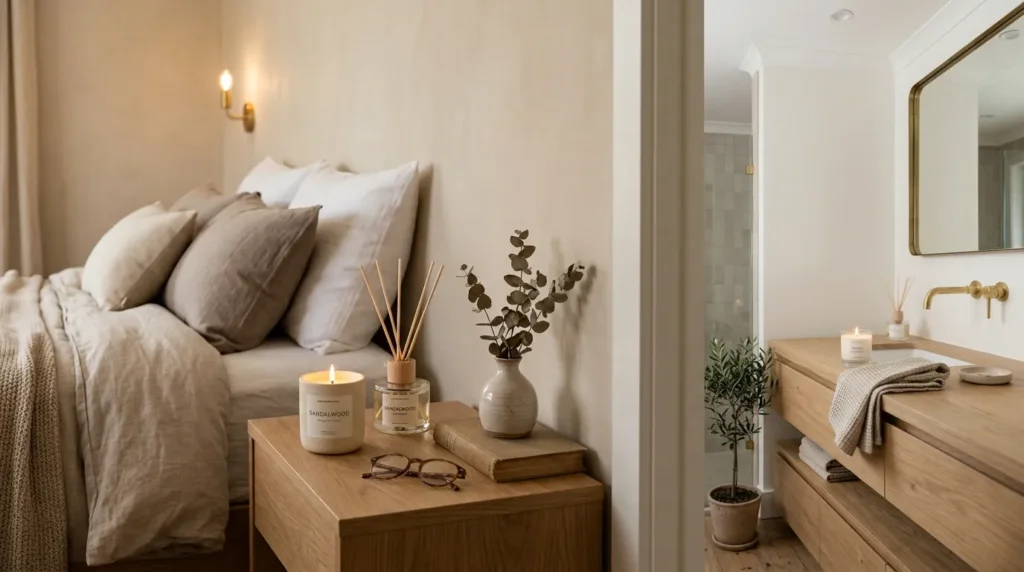
Scent is an underrated part of what makes boutique hotels feel distinct and memorable, yet it’s rarely considered in home design. Many boutique properties use a signature scent throughout common areas, creating a subtle sense of consistency and polish.
Bringing this into a cozy small home doesn’t require anything elaborate:
- Choose one or two signature candle or diffuser scents and use them consistently throughout the home, rather than a different scent in every room.
- Reed diffusers work well in smaller rooms or bathrooms where a lit candle isn’t practical.
- Keep scents subtle rather than overpowering, especially in a smaller home where scent travels more easily between rooms.
5. Add Furniture With a Sense of Craftsmanship
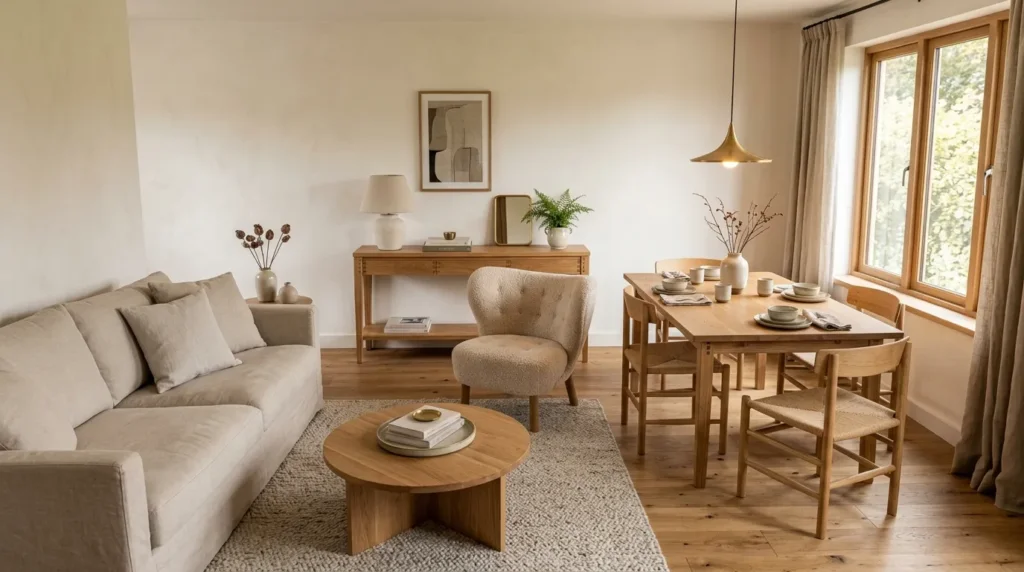
Boutique hotels typically avoid mass-produced, disposable-feeling furniture in favor of pieces with visible craftsmanship — solid wood, interesting joinery, tactile upholstery. In a cozy small home, this principle actually works to your advantage, since fewer pieces of furniture are needed overall, making it more feasible to invest in quality over quantity.
Rather than filling every room, choose a handful of well-made statement pieces — a solid wood dining table, a well-upholstered accent chair, a nicely finished console — and let simpler, more functional pieces fill in around them.
6. Style Surfaces the Way a Hotel Would
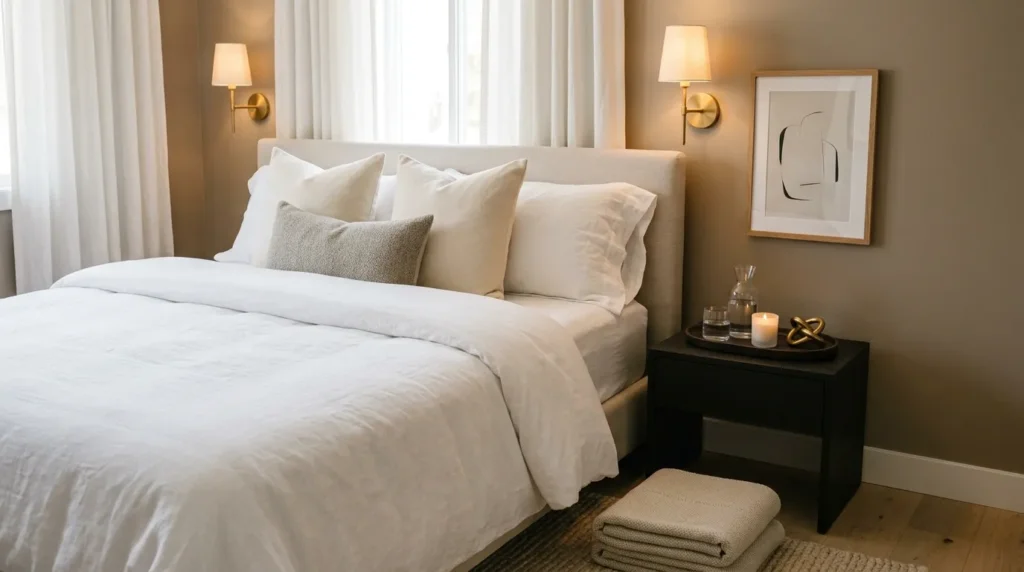
Walk into a boutique hotel room and you’ll typically see a few curated details: a small tray with a carafe and glass, a neatly folded throw at the foot of the bed, a single piece of art or a small plant on the desk. Nothing is excessive, but nothing feels bare either.
This kind of styling translates directly into a cozy small home:
- Add a styled tray to a nightstand, coffee table, or bathroom counter with two or three intentional items.
- Fold or roll extra towels and blankets neatly rather than leaving them loose, which instantly reads as more polished.
- Choose one meaningful piece of art per room rather than covering every wall.
7. Bring in Natural Materials for Texture and Warmth
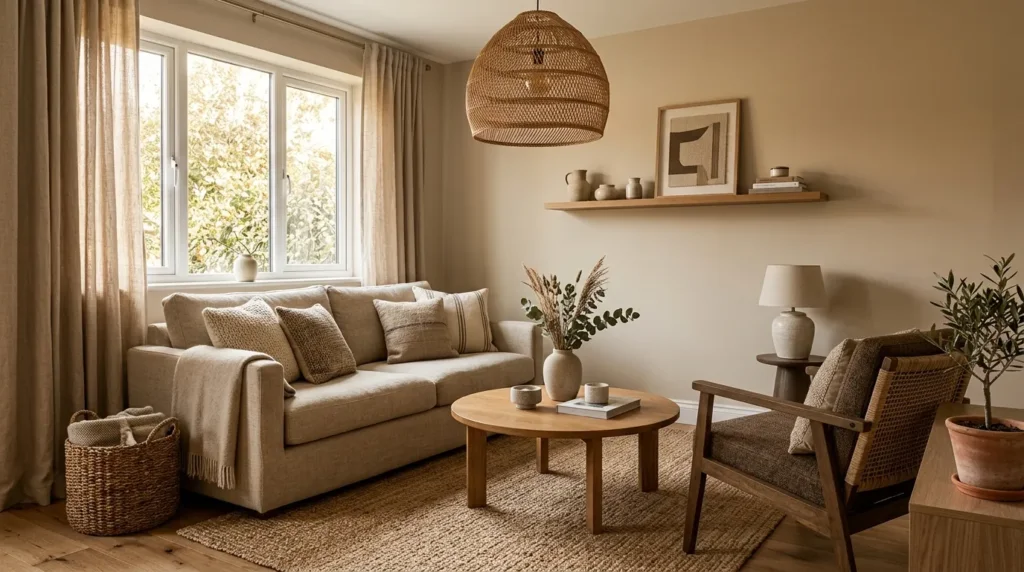
Boutique hotels frequently lean on natural materials — wood, stone, linen, rattan — to create warmth without relying on heavy decoration. These materials also tend to age well, which matters in a well-loved, lived-in cozy small home.
- Choose a wood or stone accent (a console table, a bathroom tray, a cutting board left out as decor) over plastic or synthetic alternatives.
- Add a woven rattan or wicker element, such as a pendant light shade or a storage basket, for texture.
- Layer a natural fiber rug — wool, jute, or a wool blend — rather than a synthetic one, especially in main living spaces.
8. Keep Storage Hidden, Not Just Organized
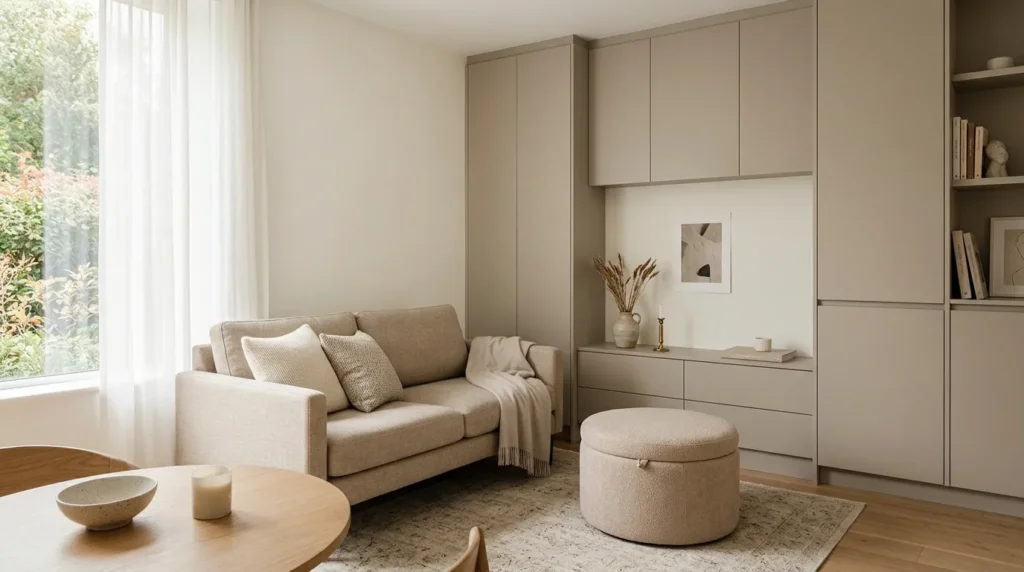
One reason boutique hotel rooms feel so calm is that there’s very little visible clutter, even though guests are actively using the space. This isn’t achieved through more storage necessarily, but through storage that’s designed to stay out of sight.
In a cozy small home, this might look like:
- Choosing furniture with built-in storage (a bed frame with drawers, an ottoman that opens) rather than adding more open shelving.
- Using closed cabinetry in kitchens and bathrooms where possible, reserving open shelving for a few styled items only.
- Designating a specific “landing zone” near the entry for keys, mail, and bags, so these items don’t end up scattered throughout the home.
9. Add a Focal Point to Every Main Room
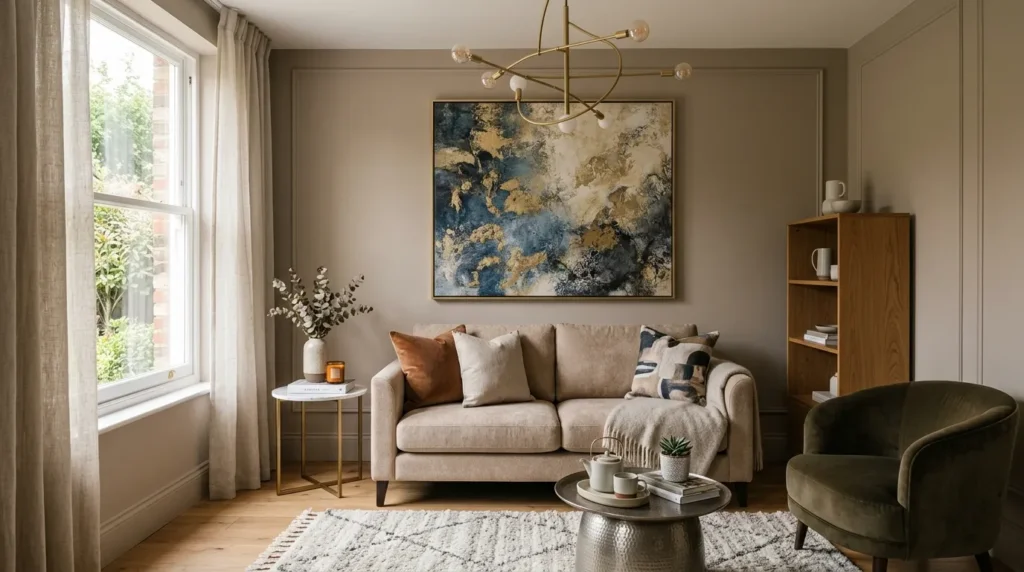
Boutique hotel rooms are designed around a clear focal point — often the bed, a statement headboard, or an interesting light fixture — so the eye has somewhere intentional to land. Applying this same principle to a cozy small home helps every room feel deliberately designed rather than just functionally furnished.
- In the living room, this might be a well-placed piece of art above the sofa or a statement light fixture.
- In the bedroom, an upholstered or interesting headboard often works well as the natural focal point.
- In the kitchen, an interesting backsplash or a single pendant light over an island or table can serve the same purpose.
Every room doesn’t need multiple standout features — one clear focal point is usually more effective than several competing for attention.
10. Treat the Entryway Like a Hotel Lobby
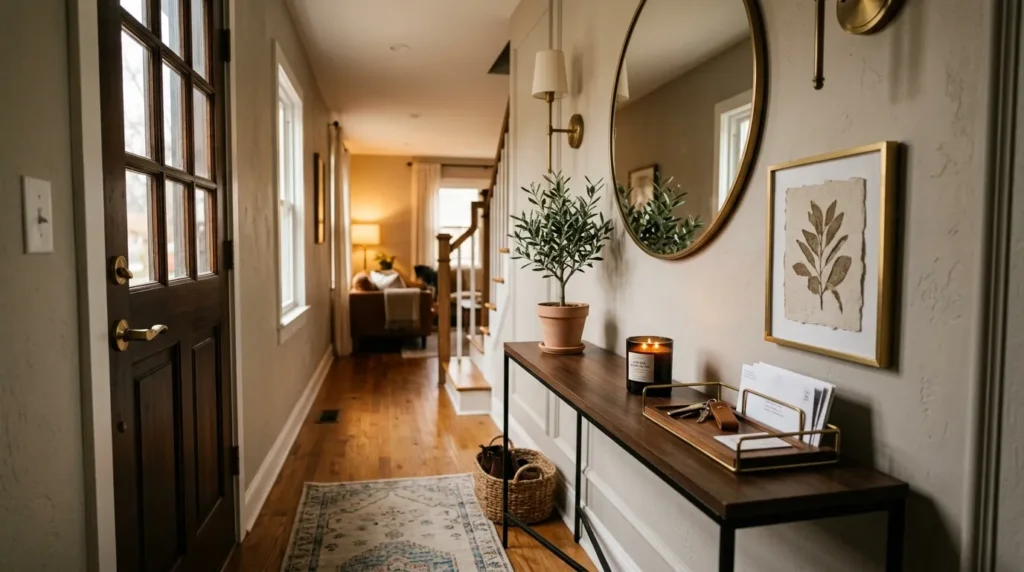
The entrance to a hotel sets the tone for the entire stay, and the same is true of a home’s entryway, even a small one. A cozy small home benefits enormously from a welcoming entry point, since it’s the first impression for both residents and guests every single day.
- Add a small console table or shelf, even a narrow one, for keys and mail.
- Include a mirror near the entry, which also helps make a small entryway feel larger.
- Add a plant, a piece of art, or a scented candle near the entrance to immediately set a warm tone upon walking in.
Bringing the Ten Ideas Together
While each of these ideas works individually, the boutique-hotel effect really comes from consistency across the whole home. A single beautifully styled living room paired with a cluttered, poorly lit bedroom won’t achieve the same overall feeling that a cozy small home can offer when every space receives the same level of care.
A practical way to approach this gradually:
- Start with lighting and color consistency, since these two elements affect the entire home with relatively low cost and effort.
- Move on to textiles — bedding, towels, throws — since these are relatively affordable upgrades with a big visual payoff.
- Finish with styling details like trays, scent, and focal points, which pull everything together once the foundational elements are in place.
Common Mistakes to Avoid
Even with the best intentions, a few missteps can prevent a cozy small home from achieving that boutique-hotel feel:
- Overfurnishing – More furniture doesn’t equal more comfort. Boutique hotels succeed with fewer, better pieces, not more of them.
- Inconsistent lighting – Mixing warm and cool bulbs throughout the home breaks the cohesive feeling that makes boutique spaces work.
- Visible clutter – Even well-organized clutter can undercut an otherwise well-designed room. Prioritize closed storage where possible.
- Too many competing scents – Multiple strong candle or cleaning product scents can feel chaotic rather than intentional. Stick to one or two signature scents.
- Neglecting transitional spaces – Entryways, hallways, and staircases are often left undecorated, even though they set the tone for the rest of the home.
Conclusion
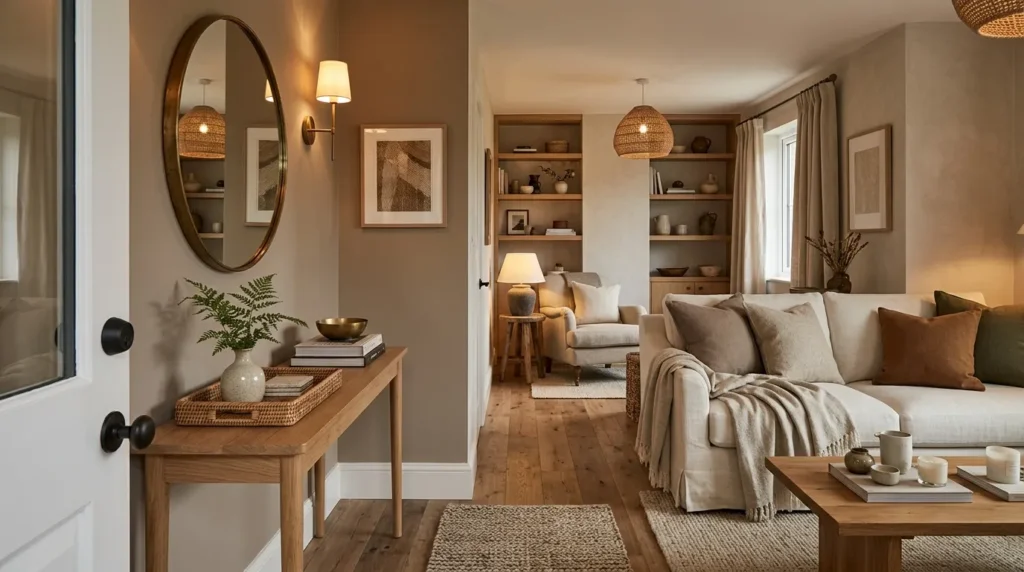
Creating a cozy small home with boutique-hotel style isn’t about square footage — it’s about intention. A cohesive color palette, warm layered lighting, quality textiles, natural materials, and thoughtfully styled surfaces all work together to create that sense of a well-designed retreat, regardless of how many rooms you’re working with. In many ways, a smaller home makes this easier, since fewer rooms mean fewer decisions and a more achievable path to consistency throughout.
Start with the foundational elements — lighting and color — then build outward with textiles, natural materials, and styling details. The result is a cozy small home that feels genuinely considered from the moment you walk in the door, the same way a well-designed boutique hotel room does the moment you turn the key.
Frequently Asked Questions
What’s the easiest way to start making a small home feel more like a boutique hotel? Lighting is usually the fastest, most affordable place to start. Swapping to warm white bulbs and adding a secondary light source, like a lamp or sconce, to each main room creates an immediate shift in atmosphere before any bigger design changes are made.
Does a cozy small home need a specific color scheme to feel like a boutique hotel? Not a specific scheme, but consistency matters more than the exact colors chosen. Sticking to two or three coordinated tones throughout the entire home, rather than a different palette in every room, is what creates that cohesive, intentional feeling boutique hotels are known for.
How can I make a small home feel boutique without buying a lot of new furniture? Focus on textiles, lighting, and styling rather than furniture. Upgrading bedding, towels, and lighting, while decluttering and styling existing surfaces more intentionally, can transform the feel of a cozy small home without requiring a full furniture overhaul.