11 Facts About How Much Does a Tiny House Cost
If you’re considering the switch to a smaller footprint, you’ve probably already searched “how much does a tiny house cost” and found wildly different answers. One source says $30,000. Another says $150,000. A third throws out numbers as high as $200,000. That inconsistency isn’t a mistake—it reflects just how many variables go into pricing a tiny home.
This article breaks down 11 facts that explain why tiny house costs vary so much, what actually drives the price up or down, and what you should realistically expect to budget for, whether you’re building yourself or buying a professionally finished home.
1. The National Average Falls Between $30,000 and $95,000
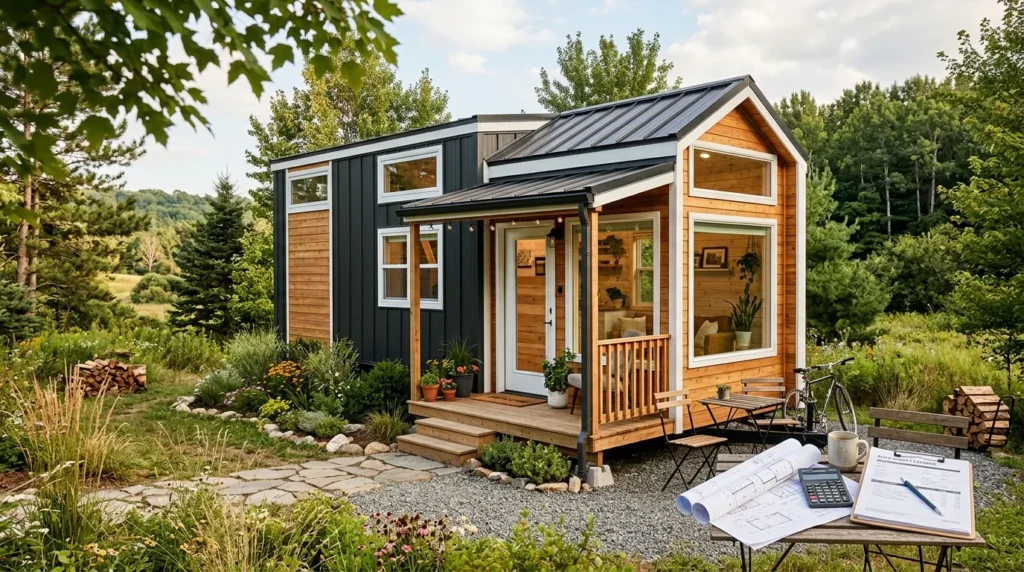 Most sources agree that a typical tiny house build lands somewhere in the $30,000 to $95,000 range, with the national median price sitting around $60,000 to $70,000 for a fully finished, livable tiny home. That’s a wide spread, but it reflects real differences in size, finish level, and whether you’re hiring professionals or doing the work yourself. Tinyhousel
If you’re just starting to plan a budget, this range is a reasonable starting point, though it’s worth digging deeper into the specific factors that will push your project toward the lower or higher end.
2. DIY Builds Can Cost Significantly Less Than Professional Ones
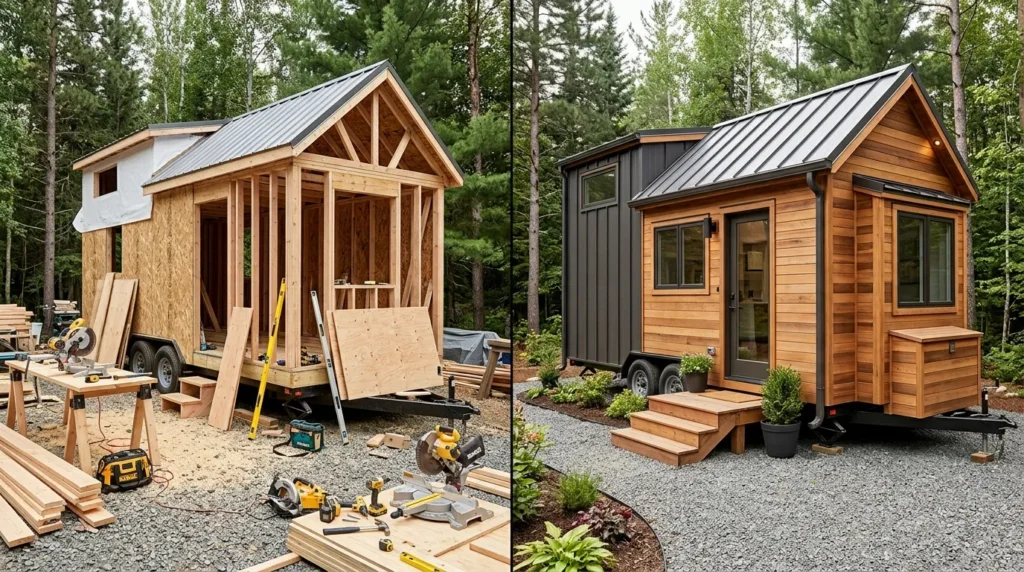
One of the biggest cost factors is simply who does the work. DIY builders typically spend between $17,500 and $57,000, while professionally built tiny homes generally run from $41,000 to $87,000 or more. Littlehousesforsale
Building your own tiny house can cut costs substantially, but it comes with a serious time commitment. A self-build typically requires 800 to 2,000 hours of skilled labor, which is a significant consideration if you have a full-time job or limited construction experience. For many people, the money saved needs to be weighed against the time, tools, and skills the project demands. Littlehousesforsale
3. Extreme Budget Builds Are Possible, But Rare
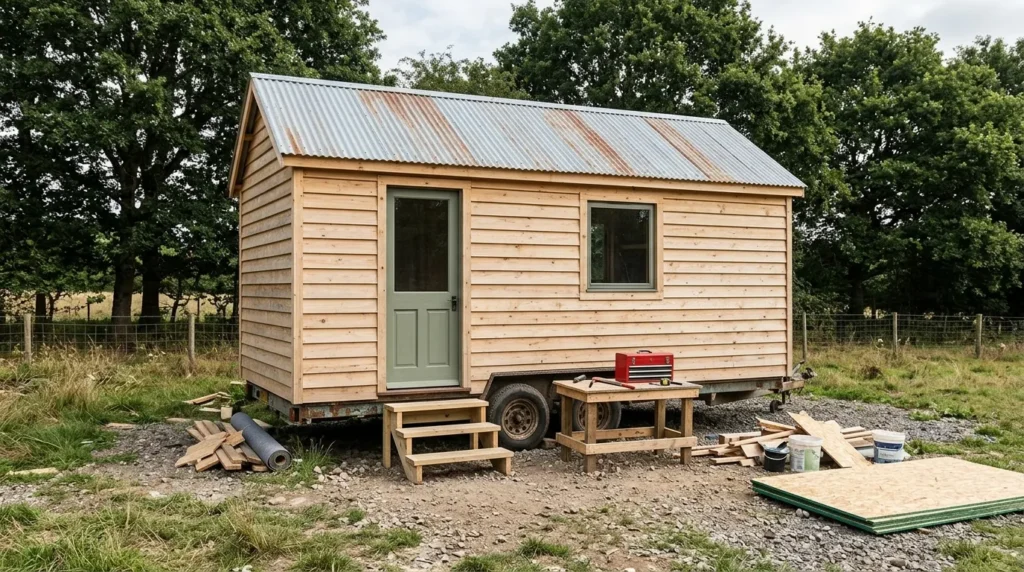
At the very low end, it is technically possible to get into tiny house living for close to $10,000 if you’re using a basic kit and doing nearly all the labor yourself. This kind of build typically means minimal finishes, a very small footprint, and significant sweat equity.
While this number gets cited often, it’s not representative of what most people end up spending. It’s more of a floor than a realistic target, useful mainly for understanding the outer edge of what’s possible rather than what to expect.
4. Cost Per Square Foot Is Often Higher Than a Traditional Home
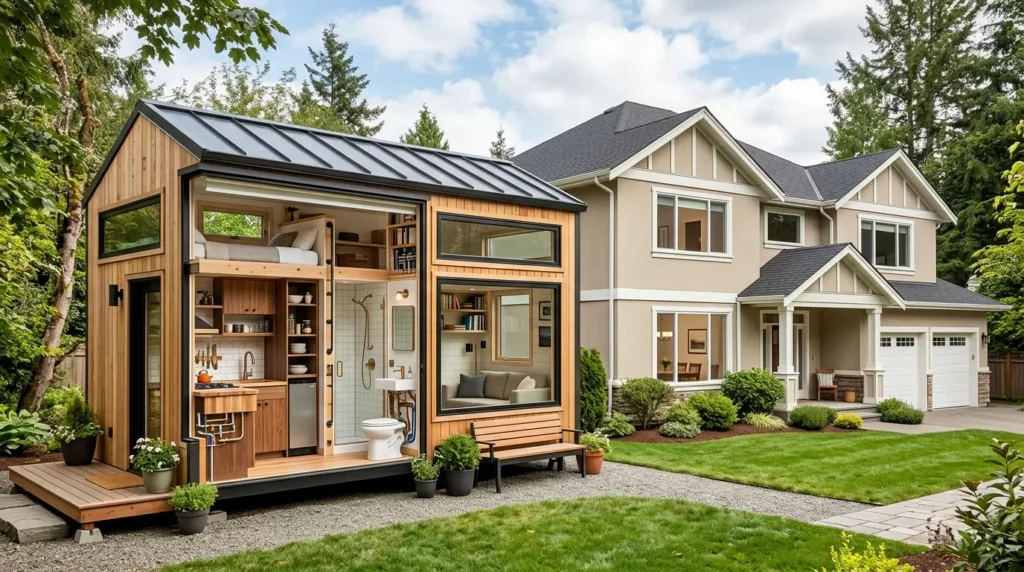
This is one of the most counterintuitive facts about tiny house costs: smaller doesn’t always mean cheaper per square foot. On average, tiny homes cost $150 to $400 per square foot, which is often higher than traditional homes due to compact design and custom features packed into a smaller space. Brewminate
This happens because tiny homes require the same core systems as a full-sized house—plumbing, electrical, insulation, a kitchen, and a bathroom—compressed into a much smaller area. You’re not scaling down complexity, just square footage, which drives up the cost per foot even as the total price stays lower than a conventional home.
5. Tiny Homes on Wheels Tend to Cost More Than Foundation Builds
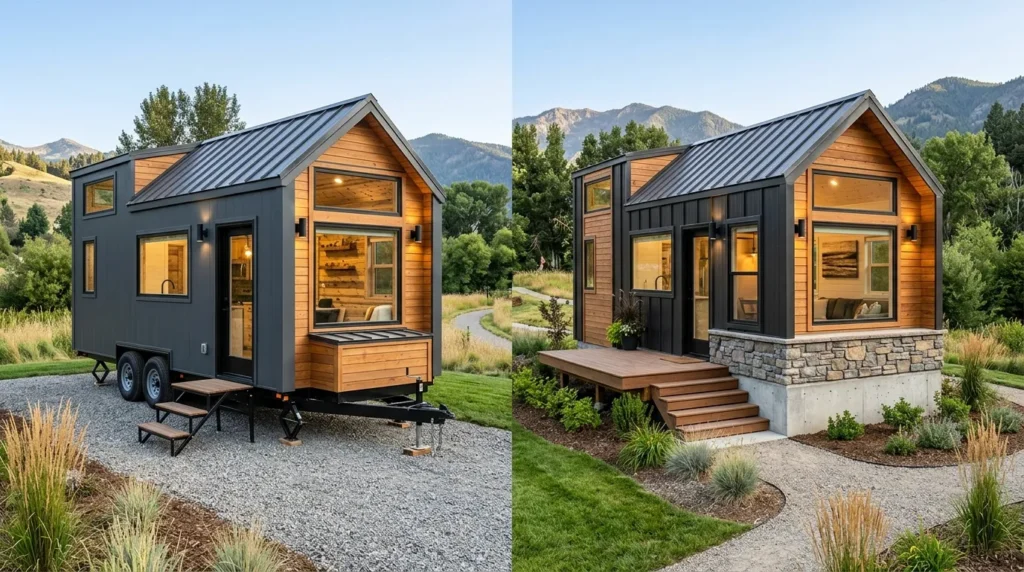
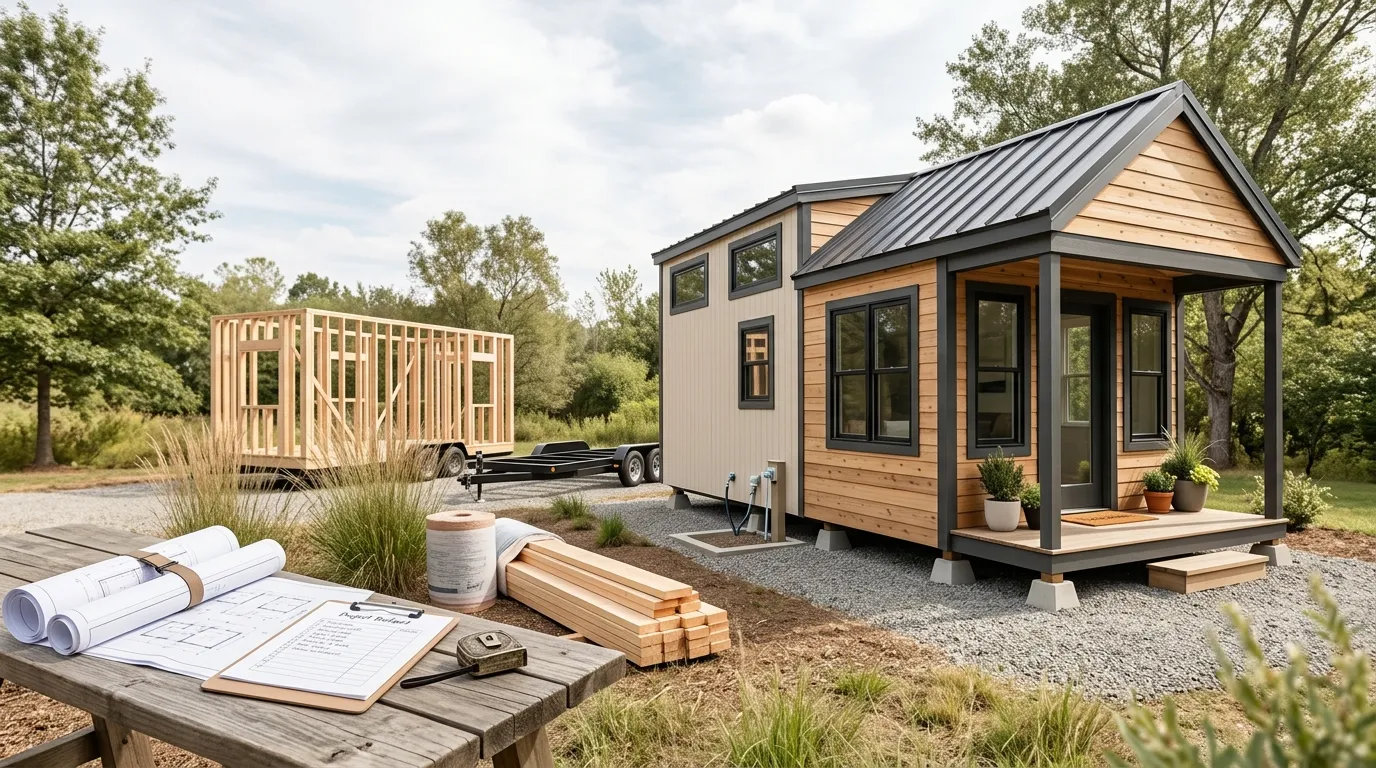
If you’re comparing a tiny house on wheels to one built on a permanent foundation, expect the wheeled version to often cost more for a comparable level of finish. A professionally built tiny home on wheels typically costs $70,000 to $150,000, with most buyers paying between $80,000 and $130,000. Clever Tiny Homes
This higher cost comes down to a few factors:
- Specialized trailer construction designed to handle the weight and movement of a full home
- Engineering requirements to keep the structure stable and durable while towable
- Compact, space-saving systems that often cost more than standard-sized equivalents
By comparison, building on a foundation typically costs $33,000 to $78,000 or more, not including the cost of land. HomeGuide
6. The Trailer Alone Can Cost Thousands
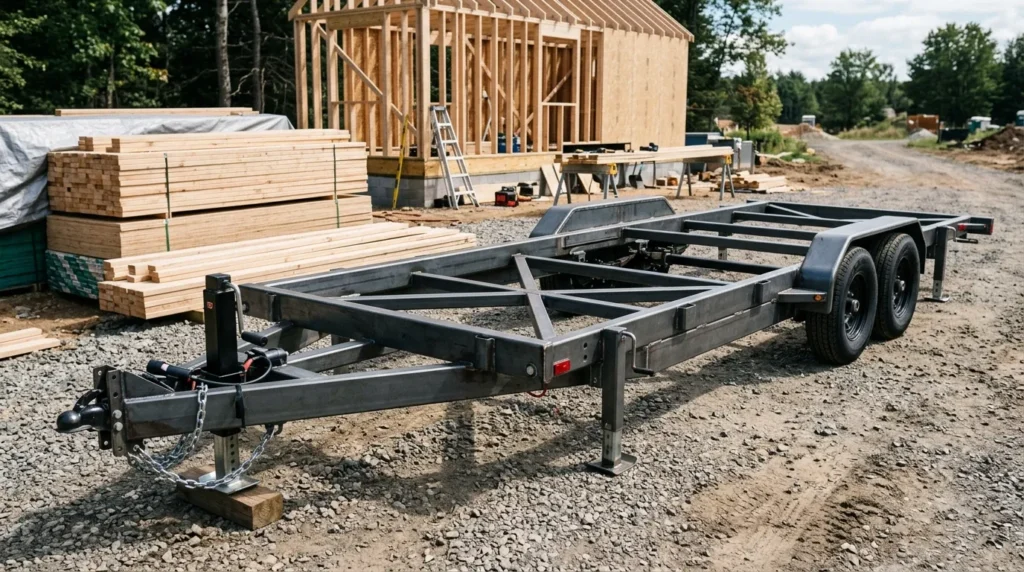
If you’re building a tiny house on wheels, the trailer itself is a significant line item most people underestimate. A tiny house trailer typically costs $4,500 to $11,000, depending on length, width, material, and style. HomeGuide
There are a few common trailer types to know about:
- Bumper pull hitch trailers, which attach via a standard ball hitch
- Gooseneck trailers, which extend over a truck bed for added stability
- Fifth-wheel hitch trailers, similar to gooseneck but using a hinged-plate connection
Choosing the right trailer isn’t just about cost—it directly affects towing safety and long-term durability, so it’s not an area worth cutting corners on.
7. Materials and Labor Typically Split the Budget
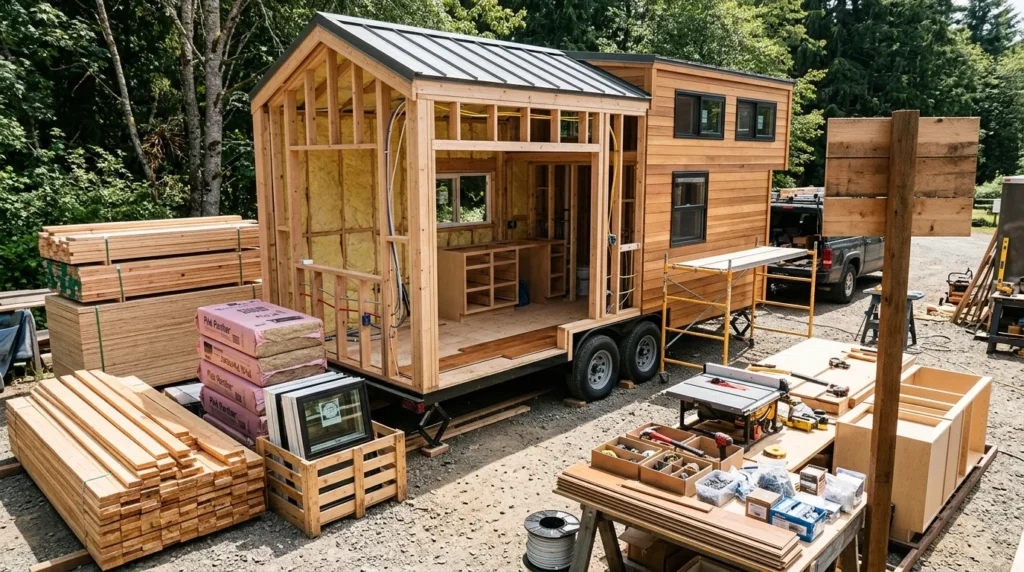
Understanding where your money actually goes can make budgeting far less abstract. Materials typically account for 40 to 50 percent of total costs, while labor makes up another 30 to 40 percent if you hire professionals. Skilled builders often charge $100 to $250 per square foot, depending on the complexity of the project. TinyhouselTinyhousel
This breakdown is useful because it shows how much control you actually have over your final number. Choosing simpler finishes or handling parts of the labor yourself can meaningfully shift these percentages in your favor.
8. Prefab and Kit Homes Offer a Wide Price Spread
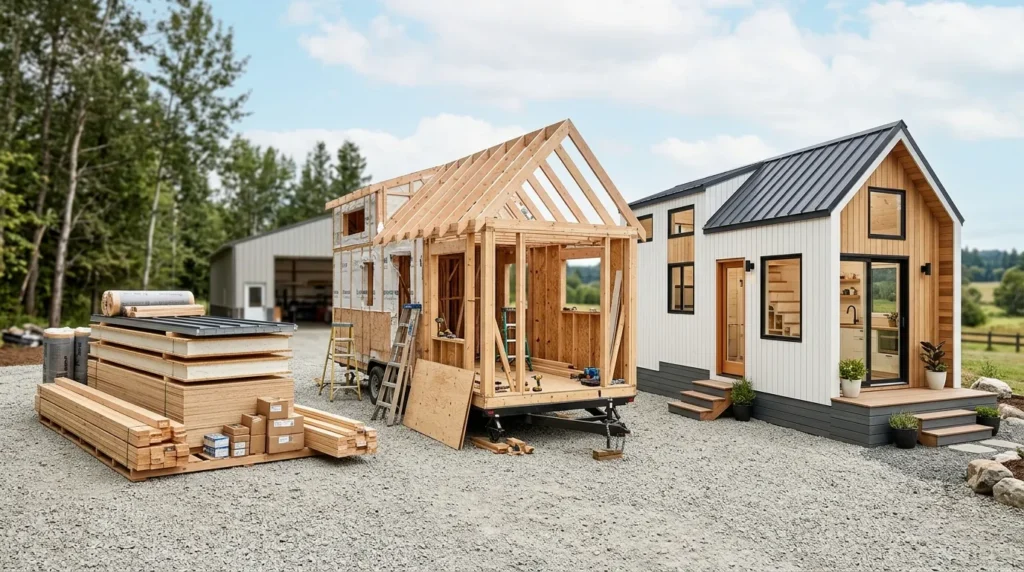
Not all tiny homes are custom-built from scratch. Prefab options offer a much broader price range depending on how finished the home is when it arrives. A prefab tiny house can cost anywhere from $4,000 to $80,000 or more, depending on whether it’s an unassembled kit, a finished exterior shell, or a fully finished home with all fixtures and appliances included. HomeGuide
This makes prefab a flexible option for different budgets and skill levels, but it also means you need to read the fine print carefully. A “prefab tiny house” listed at a low price might only include the shell, leaving plumbing, electrical, and interior finishing as separate costs.
9. Land Isn’t Usually Included in the Build Price
One of the most common budgeting mistakes is forgetting that most tiny house cost estimates don’t include land. If you don’t already own property, this is a separate—and sometimes substantial—expense. Average land costs run around $19,000 per acre nationally, though this varies enormously by region and lot size. Clever Tiny Homes
If purchasing land isn’t in your immediate budget, renting a lot is a common alternative, with land rental typically running $200 to $600 per month depending on location and amenities. Littlehousesforsale
10. Hidden Costs Add Up Quickly
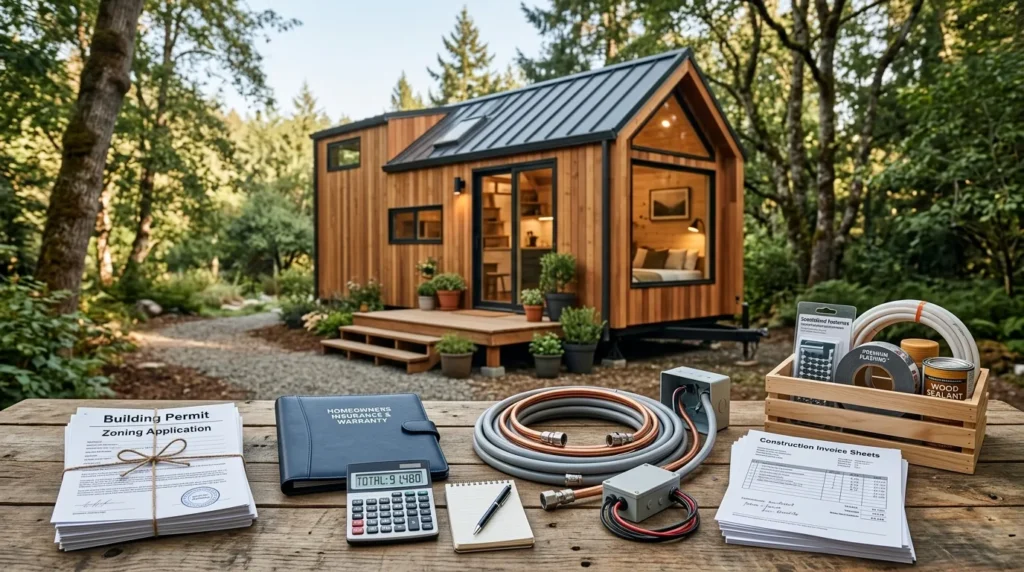
Beyond materials, labor, and land, there’s a category of expenses that frequently catches first-time tiny house buyers off guard. These hidden costs include:
- Permits, typically ranging from $500 to $3,000 depending on your municipality
- Utility hookups, which can run anywhere from $2,000 to $35,000 depending on how remote the site is
- Insurance, generally $500 to $1,500 per year
- Financing costs, since tiny homes often don’t qualify for traditional mortgages
These additional expenses are a major reason final costs often exceed initial estimates. Budgeting an extra 10 to 20 percent beyond your core construction estimate is a reasonable way to account for these surprises before they derail your plans.
11. Location Significantly Changes the Final Price
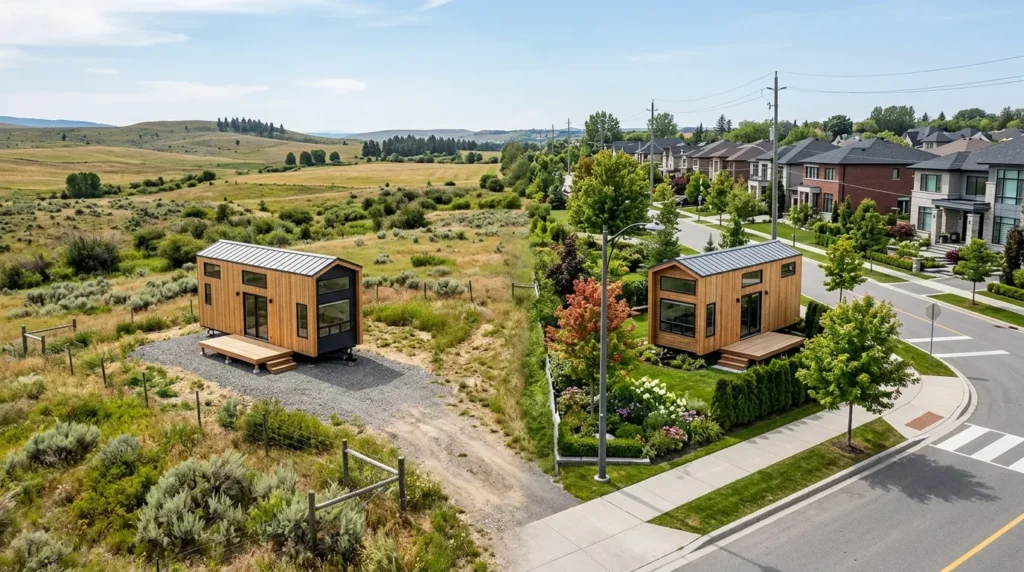
Where you build matters just as much as how you build. Regional labor rates, permit requirements, and material costs all shift the total price significantly. In California, for example, tiny home costs per square foot typically run $325 to $650 or more, compared to a national average closer to $200 to $450 per square foot, largely due to higher labor costs, stricter building codes, and more expensive land. Golden State ADUs
This means two nearly identical tiny homes can carry very different price tags depending purely on geography, which is worth factoring in early if you have flexibility about where you build.
Bringing It All Together
So, how much does a tiny house cost? The honest answer is that it depends heavily on your choices: whether you build it yourself or hire professionals, whether it sits on wheels or a foundation, how finished your materials are, and where you’re located. Most people should realistically expect to spend somewhere between $30,000 and $95,000 for a professionally built home, with DIY builds potentially costing significantly less in exchange for hundreds of hours of labor.
The key to avoiding budget surprises is accounting for the full picture, not just construction costs. Land, permits, utility hookups, and insurance can add tens of thousands of dollars beyond the base build price if they’re not planned for from the start. With a realistic, well-researched budget, tiny house living remains one of the more affordable paths to homeownership, even with all the variables involved.
Frequently Asked Questions
- Is it cheaper to buy a tiny house or build one yourself?
Building your own tiny house is typically cheaper in terms of raw dollars, often costing $17,500 to $57,000 compared to $41,000 or more for a professionally built home. However, DIY builds require significant time and skill, so the savings come with a real labor trade-off. - Do tiny houses qualify for traditional mortgages?
Most tiny homes, especially those on wheels, don’t qualify for conventional mortgages since they’re often classified more like RVs than traditional real estate. Many buyers instead use personal loans, RV loans, or specialized tiny home financing, which can carry different interest rates and terms than a standard mortgage. - Why do tiny homes cost more per square foot than regular houses?
Tiny homes require the same essential systems as full-sized homes—plumbing, electrical, insulation, kitchens, and bathrooms—just condensed into a much smaller space. This compression, combined with custom-built components, drives up the cost per square foot even though the total price remains lower overall. - What’s the biggest hidden cost people forget to budget for?
Utility hookups are frequently underestimated, and can range from a couple thousand dollars to well over $30,000 depending on how remote the property is and what infrastructure already exists. Land costs and permit fees are also commonly overlooked during initial budgeting.