9 Home Design Ideas Inspired by Modern Organic Style
Many homes look polished but feel strangely cold. The furniture matches, the lines are clean, and yet the rooms lack warmth. If you want a space that feels both refined and genuinely comfortable, modern organic style is worth a closer look.
This approach blends the clean lines of contemporary design with natural textures, soft curves, and warm light. It is one of the most useful sources of home design ideas right now because it works in apartments, family homes, and everything in between. Below you will find nine practical ideas, plus guidance on planning, budgeting, and avoiding common mistakes, so you can bring the look into your own space with confidence.
What Is Modern Organic Style?
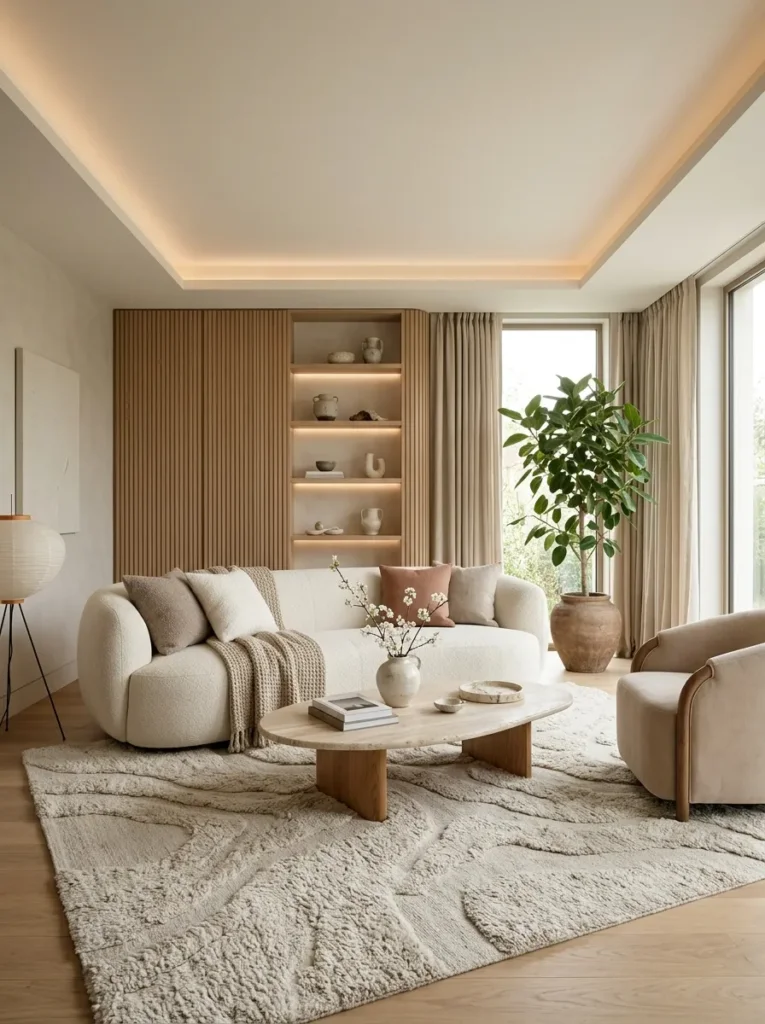
Modern organic style takes the simplicity of modern design and softens it with elements drawn from nature. Instead of stark white walls and sharp edges, you see warm neutrals, natural wood, stone, rounded forms, and plenty of tactile fabrics.
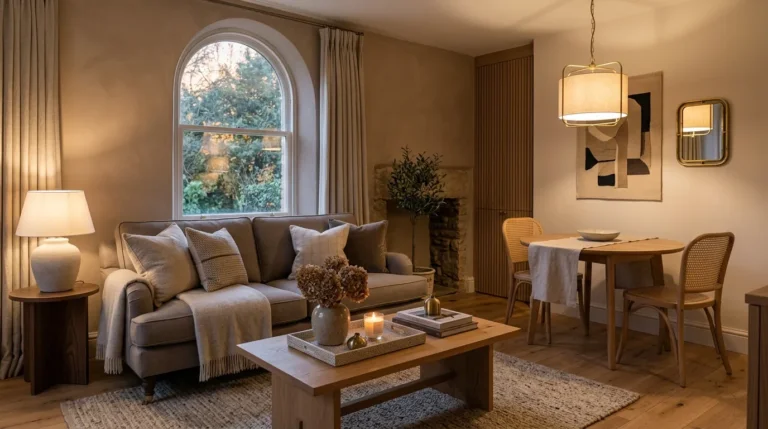
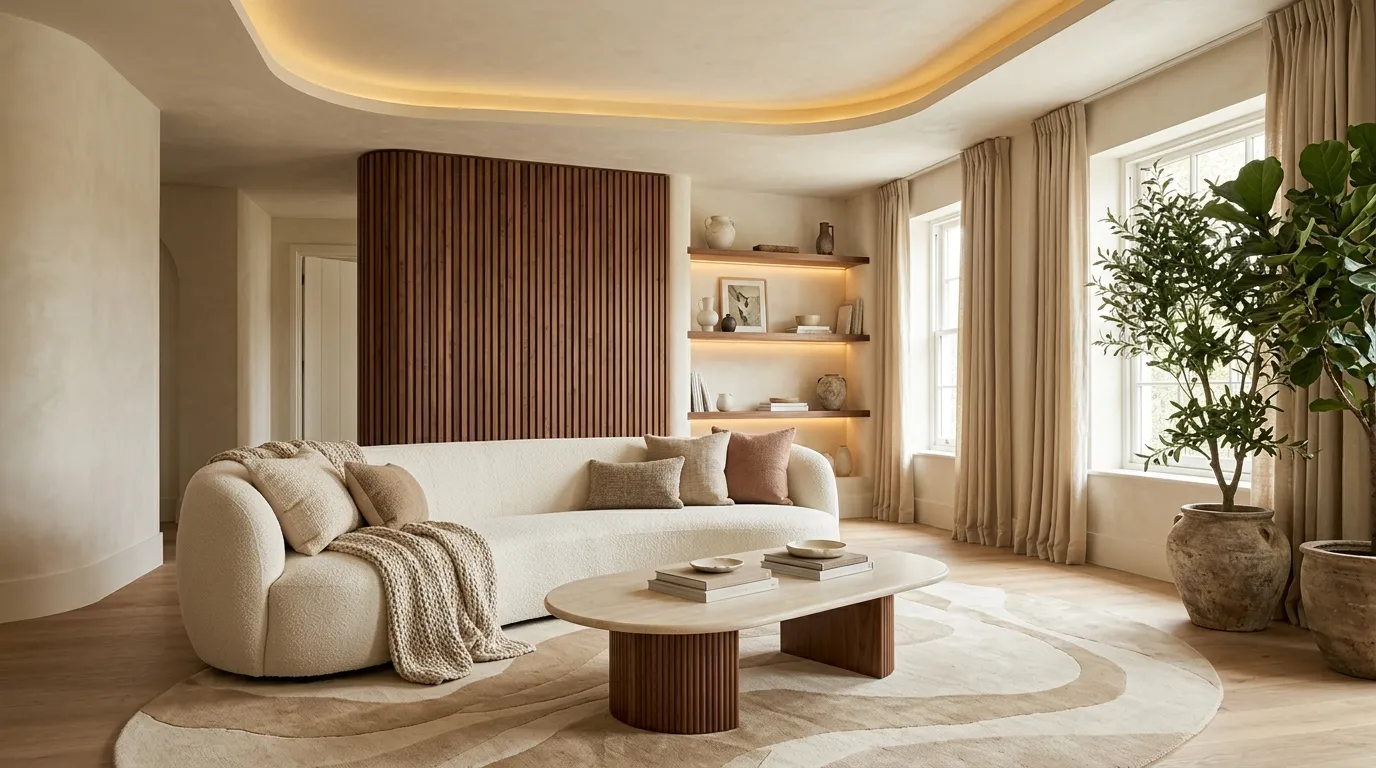
The goal is a home that feels calm, grounded, and lived in without looking cluttered. Think of a living room with cream sofas, a fluted wood feature wall, a marble-topped coffee table, and gentle light glowing from the ceiling edges and shelves. Nothing looks harsh, and every surface invites touch.
It differs from some related styles in a few ways:
- It is warmer and more textured than strict minimalism.
- It is more polished and curated than rustic or farmhouse looks.
- It favors curves and natural materials over heavy ornament.
The Core Principles Behind the Look
Before exploring the nine ideas, it helps to understand the principles that connect them. When you keep these in mind, you can adapt the style to any room and budget.
Natural materials first. Wood, stone, linen, wool, cotton, rattan, and ceramic form the foundation. If a material is synthetic, it should still look and feel natural.
A calm, warm palette. Cream, sand, taupe, soft brown, and muted terracotta create a soothing base. Color is introduced through earthy accents and plants rather than bright, saturated shades.
Soft shapes. Rounded sofas, circular tables, arched mirrors, and curved lighting soften the geometry of a room.
Layered texture. Smooth marble beside nubby knit, glossy ceramic beside raw wood. Contrast in texture keeps neutral rooms from feeling flat.
Warm, layered light. Lighting does as much for the mood as furniture does. Indirect and concealed sources create a glow rather than a glare.
9 Home Design Ideas Inspired by Modern Organic Style
1. Build a Warm Neutral Palette With Earthy Accents
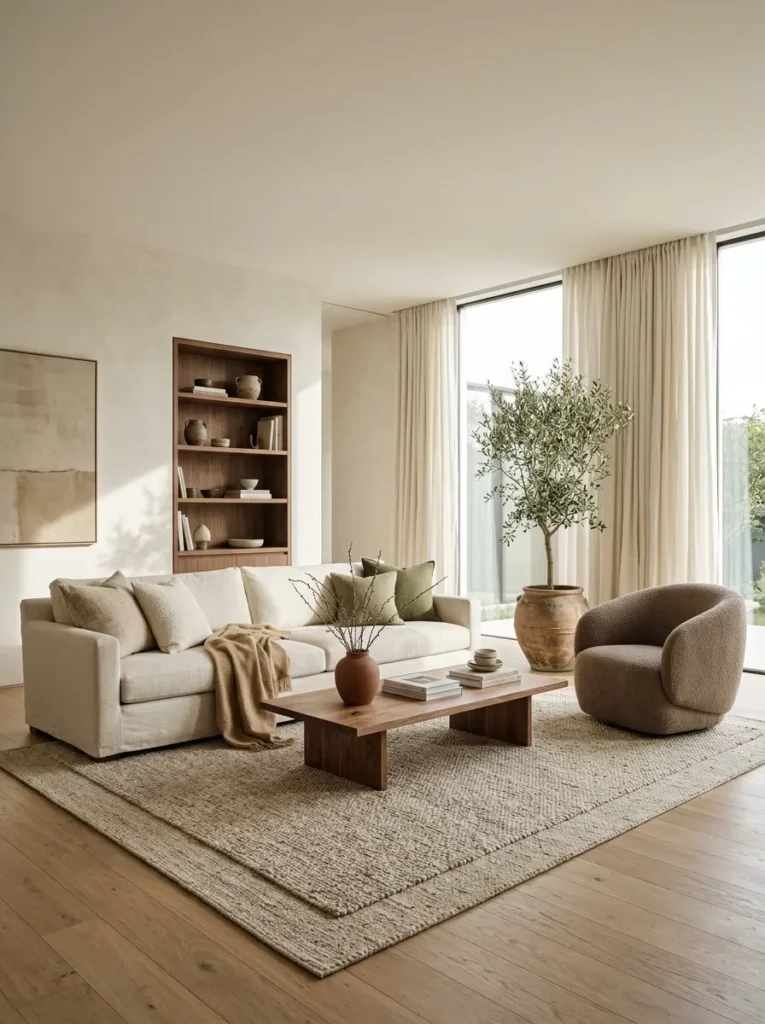
Everything starts with color. A warm neutral backdrop makes a room feel open and inviting, and it gives you room to layer texture without visual chaos.
- Choose a base of cream, ivory, or soft beige for walls, sofas, and large surfaces.
- Add mid-tones such as sand, camel, and mushroom through rugs, curtains, and throws.
- Introduce depth with walnut, chestnut, or deep brown wood.
- Use one or two muted accent colors, such as terracotta, rust, or olive, in cushions and small decor.
A useful guideline is to keep roughly sixty percent of the room in your base color, thirty percent in secondary tones, and ten percent in accents. This is a loose rule rather than a strict formula, but it helps keep the palette balanced.
When choosing paint, test samples on different walls and look at them during morning and evening light, since warm neutrals can shift noticeably.
2. Create a Fluted Wood Feature Wall
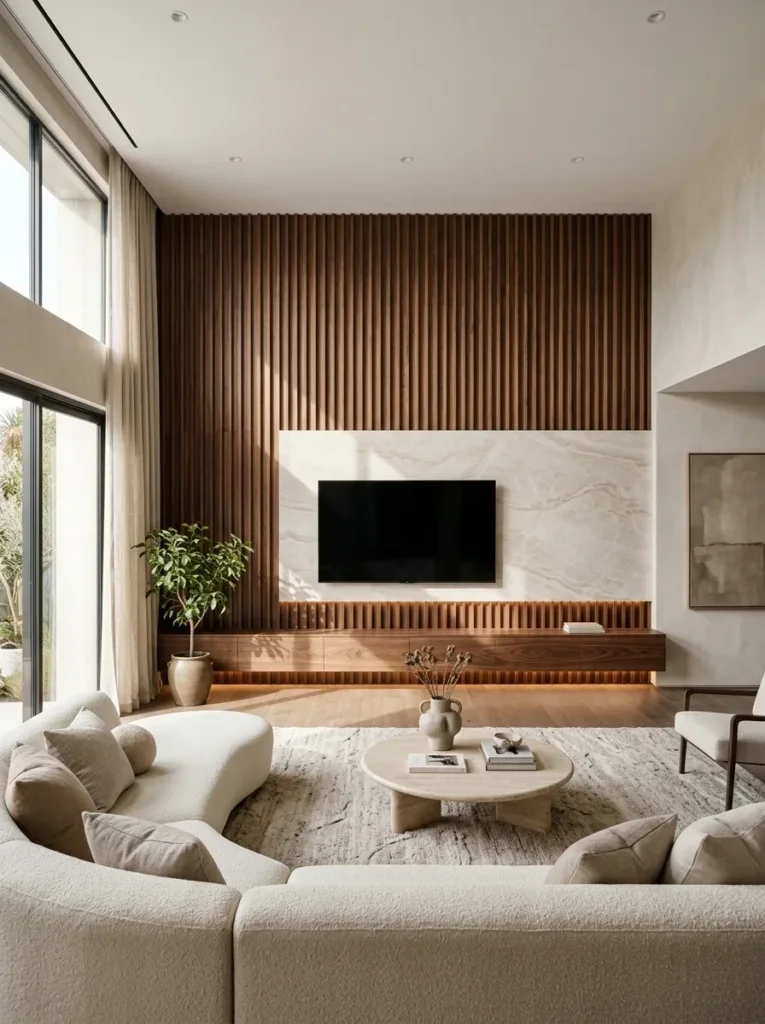
Vertical wood slats have become a signature of modern organic interiors. They add rhythm, warmth, and subtle shadow lines without needing any pattern or color.
- Place the feature wall behind the television, bed, or dining area.
- Combine slats with another natural surface, such as a marble-look panel, for contrast.
- Choose a wood tone that harmonizes with your flooring and furniture.
- Use slat panels with a felt or acoustic backing if you want to soften sound in an echoing room.
If you rent or prefer a lighter project, ready-made slatted wall panels and peel-and-stick versions are available. For a more budget-friendly approach, you can build a similar effect with thin wooden battens and a coat of stain or paint.
3. Use Curves in Furniture and Architecture
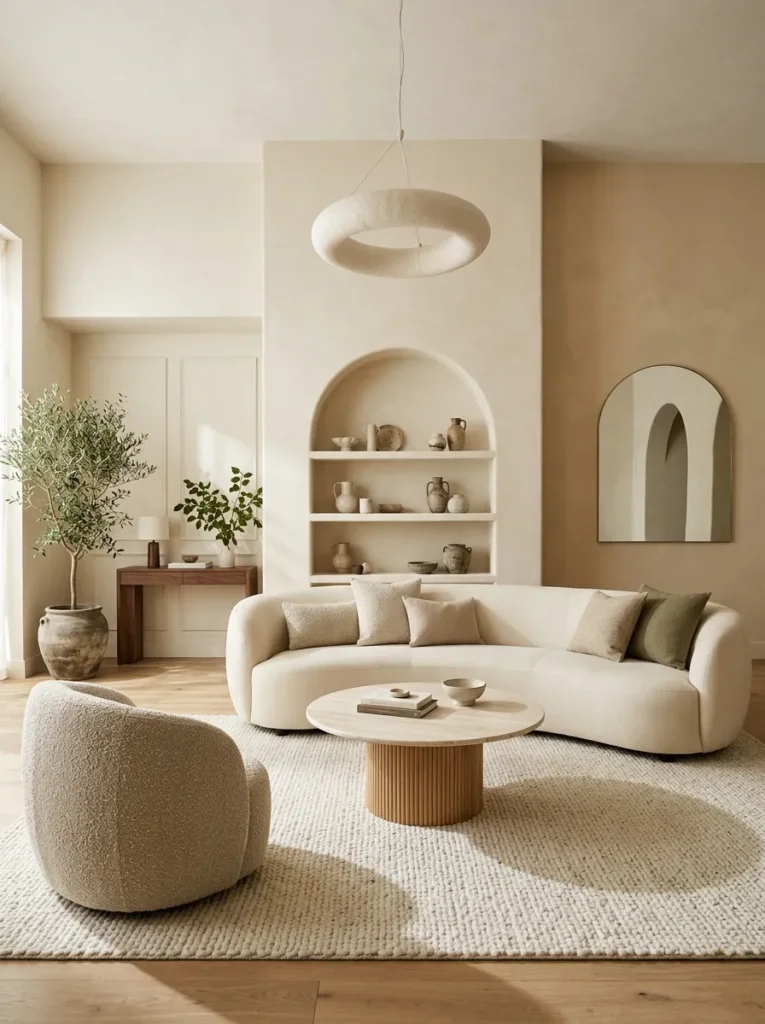
Curves are what make a modern room feel organic. They soften corners, guide the eye, and make a space feel more relaxed.
- Swap a rectangular coffee table for a round or oval one, ideally with a stone top and a fluted wood base.
- Choose sofas with rounded arms or a gently curved back.
- Add an arched mirror, a circular wall decor piece, or a round pendant.
- Consider rounded corners on built-in shelving, niches, or kitchen islands.
A circular illuminated panel behind a television, for example, can turn a plain wall into a focal point while echoing the curves elsewhere in the room.
Keep a balance, however. Too many curves can look playful rather than refined, so mix them with a few straight lines for structure.
4. Bring In Natural Stone and Marble Surfaces
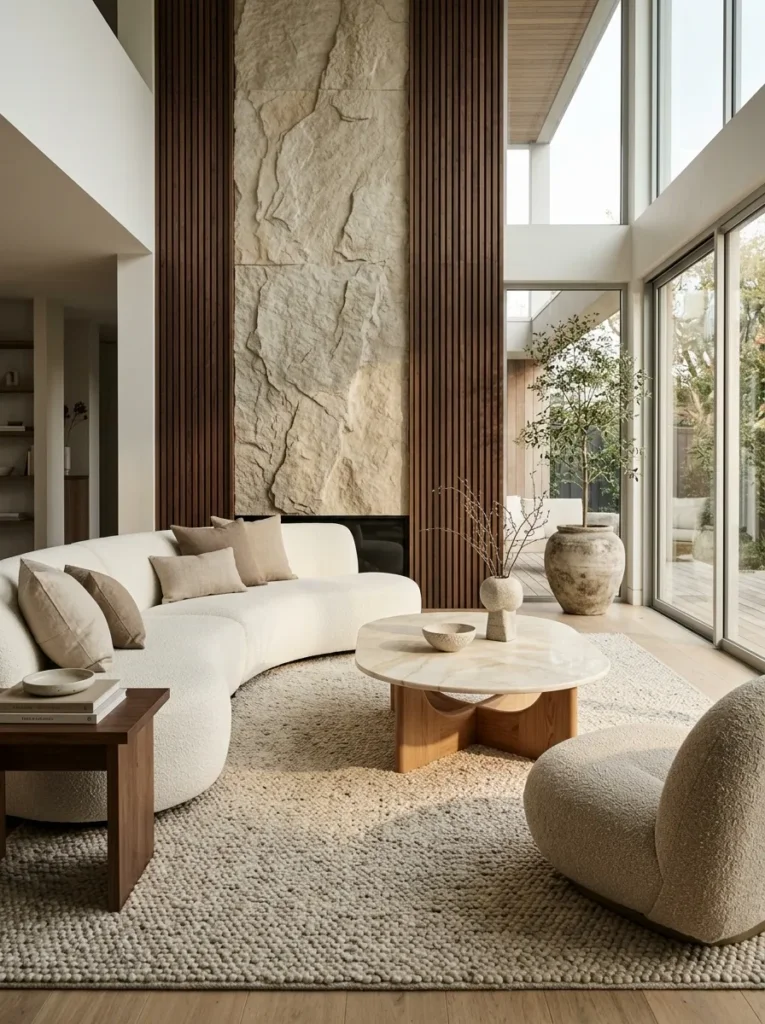
Stone adds a sense of permanence and quiet luxury. In a modern organic home, it is used with restraint, usually in a few well-chosen places.
- Use marble or marble-look porcelain for a coffee table top, feature wall panel, or kitchen backsplash.
- Choose soft veining in cream, grey, or gold rather than dramatic dark patterns if you want a calm effect.
- Consider honed or satin finishes, which feel softer than highly polished surfaces.
- Pair stone with warm wood to prevent the room from feeling cold.
Remember that natural marble is porous and can stain or etch, so it needs sealing and careful cleaning. If you want an easier option, engineered stone or large-format porcelain slabs offer a similar look with simpler maintenance.
5. Layer Cove Lighting and Soft Ceiling Details
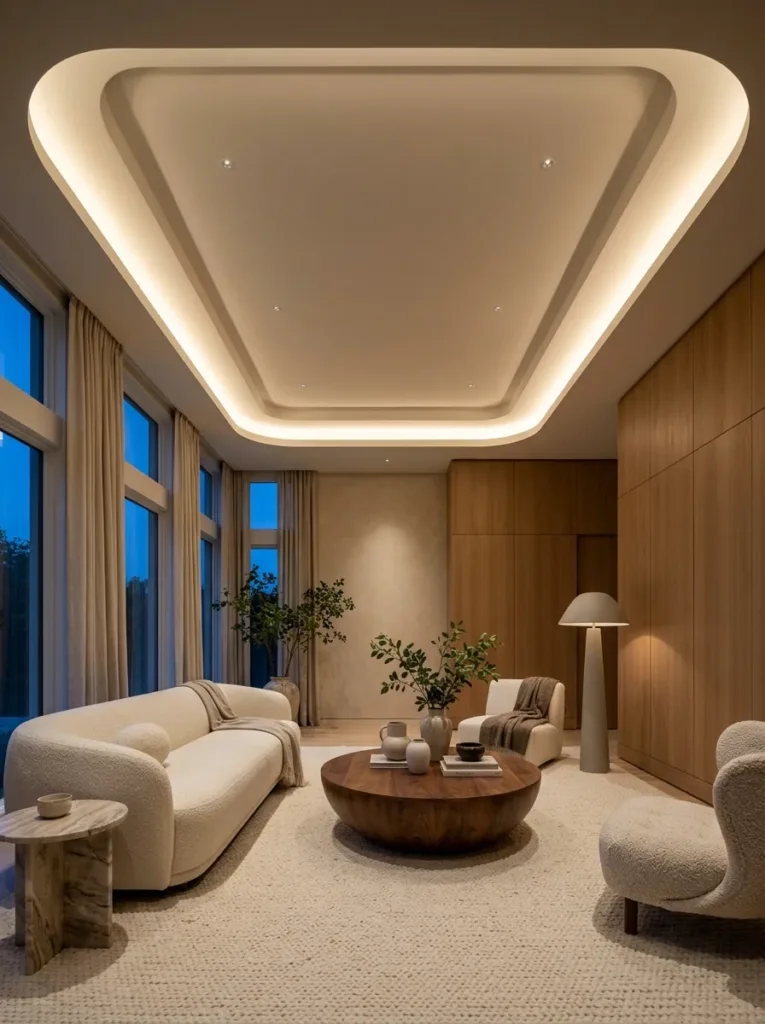
Lighting is the idea that changes a room the most. In modern organic design, much of the light is indirect, glowing from hidden sources along ceilings, shelves, and walls.
- Add a layered or recessed ceiling detail with a concealed LED strip around the edge for a gentle halo effect.
- Combine recessed spotlights with warm cove lighting to avoid a flat, overhead look.
- Use dimmers so you can lower the lights in the evening.
- Choose warm white bulbs, generally in the 2700K to 3000K range, to keep wood and fabric tones inviting.
If your ceiling cannot be modified, you can still get a similar effect by using wall sconces, arc floor lamps, and LED strips hidden behind shelving or furniture. Always follow local electrical rules and use a qualified electrician for hardwired work.
6. Install Illuminated Built-In Shelving
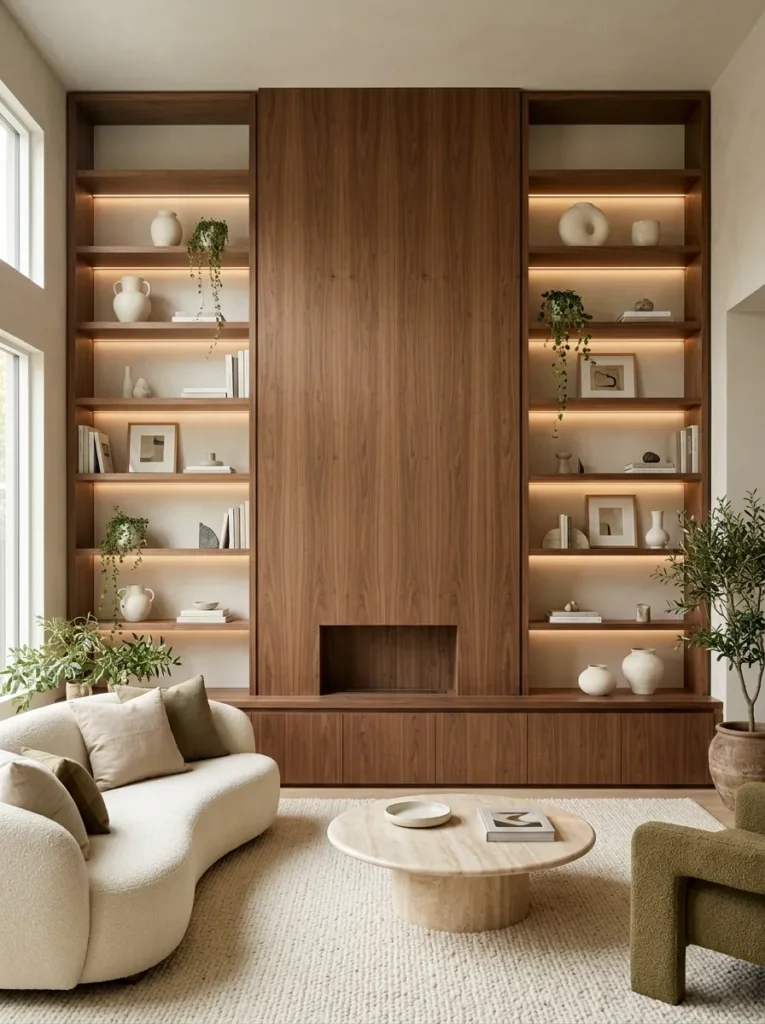
Built-in shelves frame a room and give you a place to display objects, books, and plants. When they are lit from within, they also act as a soft source of ambient light.
- Use tall, narrow shelving on either side of a feature wall to create symmetry.
- Add warm LED strips along the shelf edges or inside the verticals.
- Style each shelf with a mix of ceramics, framed art, small plants, and books, leaving some space empty.
- Choose a finish that matches your wood panels or blends in with the wall color.
The key is restraint. A shelf that feels curated, with a few meaningful pieces, looks far more elegant than one filled edge to edge.
7. Layer Textiles for Comfort and Depth
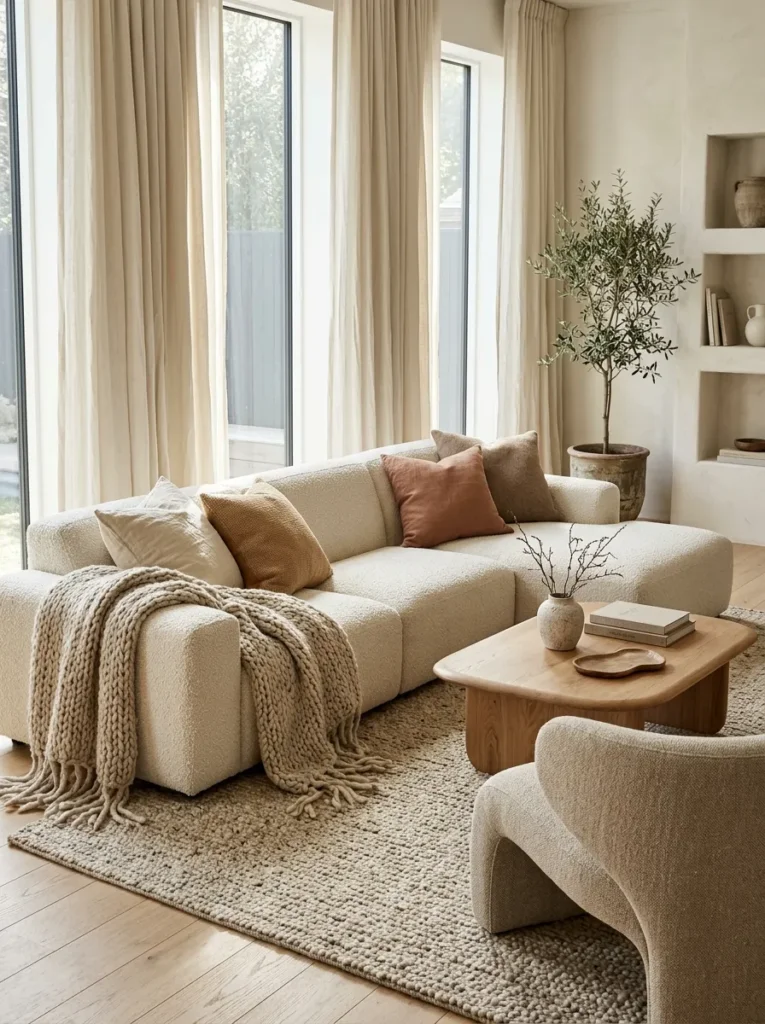
Textiles are the easiest way to add warmth and texture, and they are simple to change when you want a refresh.
- Sofas and chairs: Look for tufted, bouclé, linen, or velvet upholstery in cream and soft neutrals.
- Cushions: Mix sizes and textures, and include a few earthy tones such as terracotta or caramel. Flower-shaped or sculptural cushions can add a playful touch.
- Throws: Drape a chunky knit or woven throw over the arm of a sofa.
- Curtains: Choose floor-length sheers or linen panels in cream or sand to soften the light.
To keep the look refined, stay within a tight color range and vary texture rather than color. Three to five different textures in one seating area is often enough.
8. Ground the Room With an Organic Rug
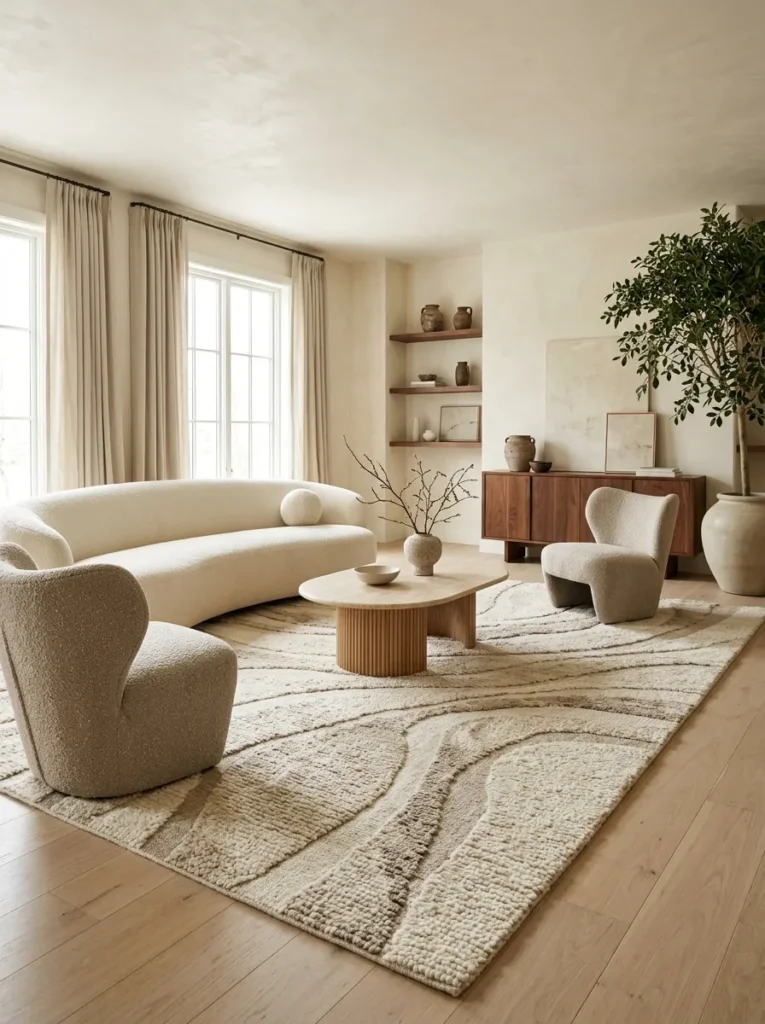
A rug does more than protect floors. In a modern organic home, it anchors the seating area and introduces pattern in a subtle way.
- Choose a rug with a soft, flowing, wave-like or abstract design in neutral tones, instead of strict geometry.
- Pick a size large enough for at least the front legs of the sofas to sit on it.
- Wool or wool-blend rugs are durable and feel natural underfoot, while low-pile styles are easier to vacuum.
- Layer a smaller textured rug over a larger one if you want more depth.
If your floors are glossy tile or marble, a rug also adds warmth and helps reduce echo and slipperiness. Use a non-slip pad for safety.
9. Add Greenery and Natural Accents
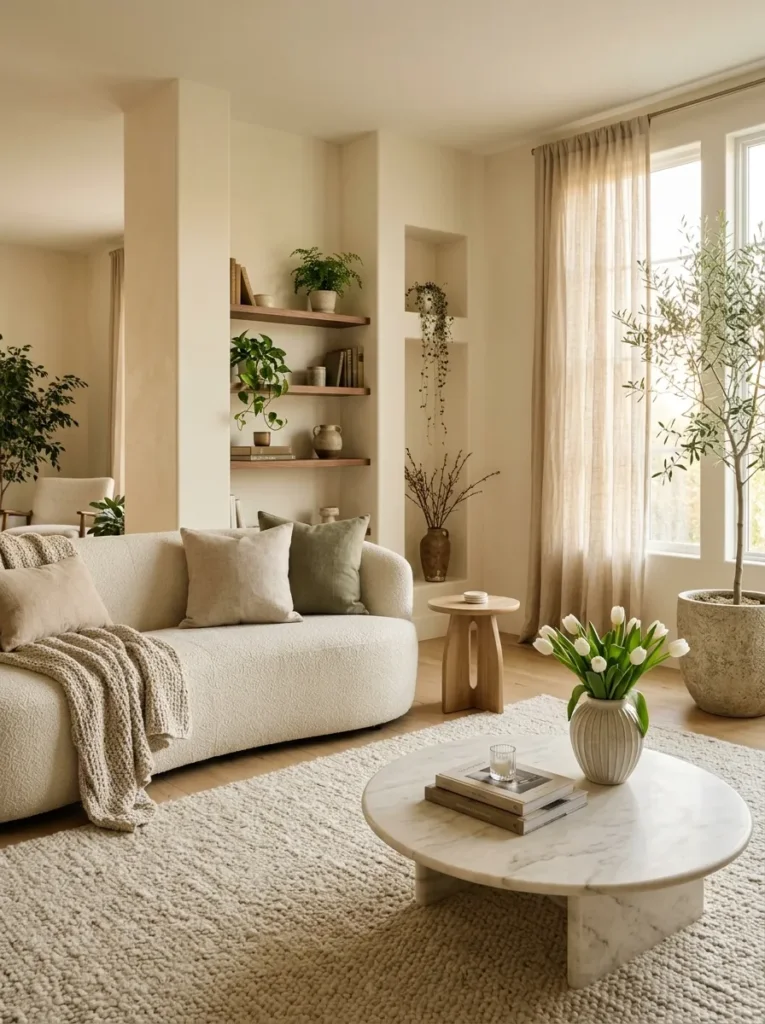
Plants and natural objects bring the organic quality into the room in a literal way. They add life, color, and a sense of calm.
- Place a large leafy plant in a corner and a few smaller ones on shelves and tables.
- Use trailing plants to soften the edges of built-ins.
- Display fresh flowers, such as tulips or soft white blooms, in a ribbed ceramic vase.
- Add dried branches, textured vases, and handmade ceramics for year-round interest.
- Include a few candles or small lanterns in glass holders for evening atmosphere.
Choose plants that suit your light conditions and the time you can give them. High-quality faux plants can fill gaps in low-light areas, but mixing them with real ones usually looks more natural.
How to Apply Modern Organic Style Room by Room
You do not have to transform the entire house at once. Start with one room, then let the style spread naturally.
- Living room: Focus on the feature wall, lighting, and seating arrangement. This is where the style has the biggest impact.
- Bedroom: Use a slatted or upholstered headboard, warm bedside lamps, linen bedding, and a soft wool rug.
- Kitchen and dining area: Combine wood cabinetry, stone countertops, rounded stools, and woven pendant lights.
- Entryway: Add a curved mirror, a slim console, a ceramic bowl, and a basket for everyday items.
- Bathroom: Use warm stone tile, a wood vanity, soft sconces, and a few plants.
Repeat two or three materials, such as walnut wood and cream fabric, across rooms so the home feels cohesive.
Common Mistakes to Avoid
Even a simple style can go wrong if a few details are overlooked.
- Going too beige. A palette without contrast and texture can look flat. Add dark wood, plants, or deeper accents.
- Overusing one material. Too much wood can feel heavy, while too much stone can feel cold. Aim for a mix.
- Ignoring lighting. Even beautiful furniture looks dull under a single harsh bulb.
- Buying everything at once. Build the room in layers, starting with the largest pieces and finishing with accessories.
- Cluttering surfaces. The look depends on calm. Leave breathing space around objects.
Budget-Friendly Ways to Get the Look
You can capture the spirit of modern organic design without a full renovation.
- Repaint walls in a warm neutral and replace cold white bulbs with warm ones.
- Add wooden battens or slat panels to a single wall.
- Swap hard-edged accessories for round trays, rounded vases, and soft cushions.
- Use LED strips and plug-in sconces for layered light.
- Shop secondhand stores for ceramics, wood furniture, and baskets.
Small changes add up. Many of the best home design ideas begin with a single adjustment, such as better lighting or a more thoughtful rug.
Conclusion
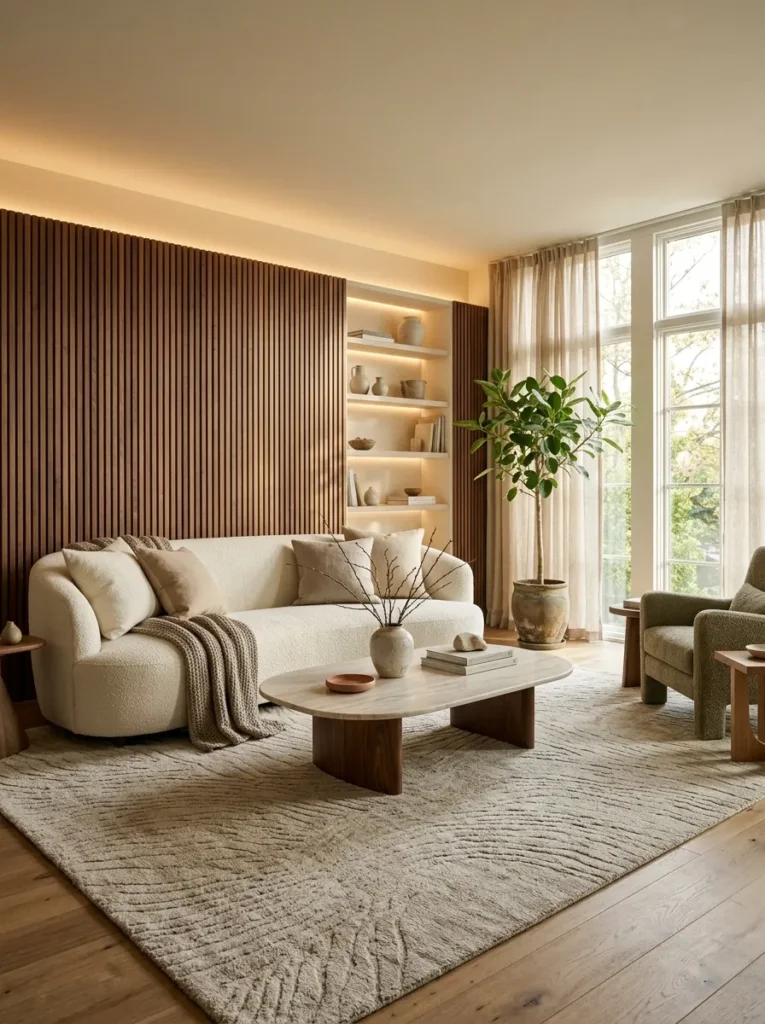
Modern organic style proves that a home can be sophisticated and comfortable at the same time. By combining warm neutrals, natural materials, soft curves, layered textures, and glowing light, you create rooms that feel calm and look beautiful in every photograph. The nine home design ideas in this guide give you a flexible starting point, whether you are updating a single living room or planning a whole-home refresh.
Begin with the elements that matter most to you, such as lighting, a feature wall, or a better rug, and build gradually. Keep the palette warm, the textures varied, and the surfaces uncluttered, and your space will feel welcoming for years to come.
Frequently Asked Questions (FAQs)
- What colors work best for modern organic home design ideas?
Warm neutrals such as cream, ivory, sand, taupe, and soft brown form the base. Add depth with walnut or chestnut wood tones, and use muted accents like terracotta, olive, or rust. Avoid very bright or neon shades, which can disrupt the calm feel of the style.
- Is modern organic style suitable for small homes?
Yes. The light palette, curved shapes, and multi-functional natural furniture suit compact spaces well. In a small home, use mirrors, concealed lighting, and a few well-chosen textures instead of many decorative objects, so the rooms stay open and uncluttered.
- How is modern organic different from Japandi or Scandinavian style?
The styles overlap in their love of natural materials and simplicity, but they are not identical. Scandinavian design tends to be brighter and lighter, with more white, while Japandi focuses on restraint and minimal ornament. Modern organic is generally warmer and softer, with more emphasis on curves, rich textures, and glowing, layered lighting.
- Can I achieve this look if I rent my home?
Many elements are renter-friendly. You can add a statement rug, textured cushions and throws, plug-in wall lights, plants, ceramics, and freestanding shelving. Peel-and-stick wood-effect panels and removable wallpaper can also create a feature wall, but check your lease first and test products on a small hidden area.
- How do I keep a neutral, organic room from looking boring?
Focus on texture and contrast instead of bright color. Mix smooth stone with nubby knits, glossy ceramics with raw wood, and soft fabrics with metal accents. Add plants, flowers, and a few earthy accent colors. Good lighting also makes a big difference, since warm, layered light brings out the depth in every material.