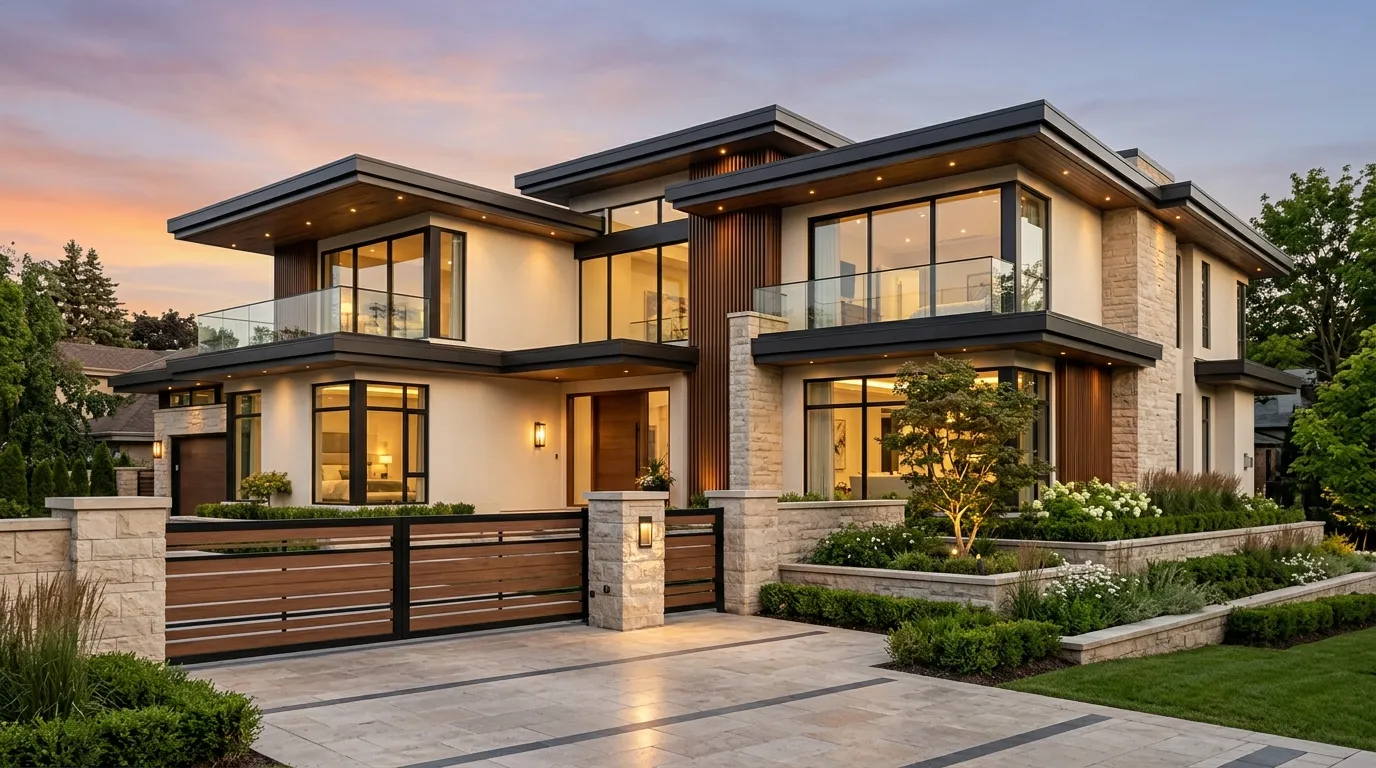
Home Design Aesthetic Exterior Ideas That Look Luxurious
First impressions of a home happen in seconds, long before anyone steps inside. A clean, balanced, well-lit facade can make a house feel valuable and welcoming, while a plain or cluttered one can undersell even the best interior.
If you are planning a new build or refreshing an existing property, the right home design aesthetic exterior does more than look good in photographs. It sets the tone for the whole home, improves curb appeal, and can make daily life more comfortable. This guide shares thirteen practical ideas for creating a luxurious exterior, from architectural shape and materials to lighting, gates, and landscaping, so you can make confident choices at every stage.
What Makes an Exterior Look Luxurious?

Luxury on the outside is rarely about size or price alone. Many modest homes look refined, while some large ones look confusing. The difference usually comes down to a handful of qualities.
- Proportion and balance. Window sizes, rooflines, and wall surfaces feel related to each other.
- Quality materials used with restraint. A few well-chosen surfaces look better than many competing ones.
- Layers and depth. Overhangs, balconies, and recessed areas create shadows that make the facade feel dimensional.
- Thoughtful lighting. Evening light adds warmth, highlights texture, and gives the home a welcoming glow.
- Care in the details. Gates, hardware, house numbers, and planting show that every element has been considered.
Keep these qualities in mind as you move through the ideas below.
13 Home Design Aesthetic Exterior Ideas That Look Luxurious
1. Start With Layered Architectural Volumes
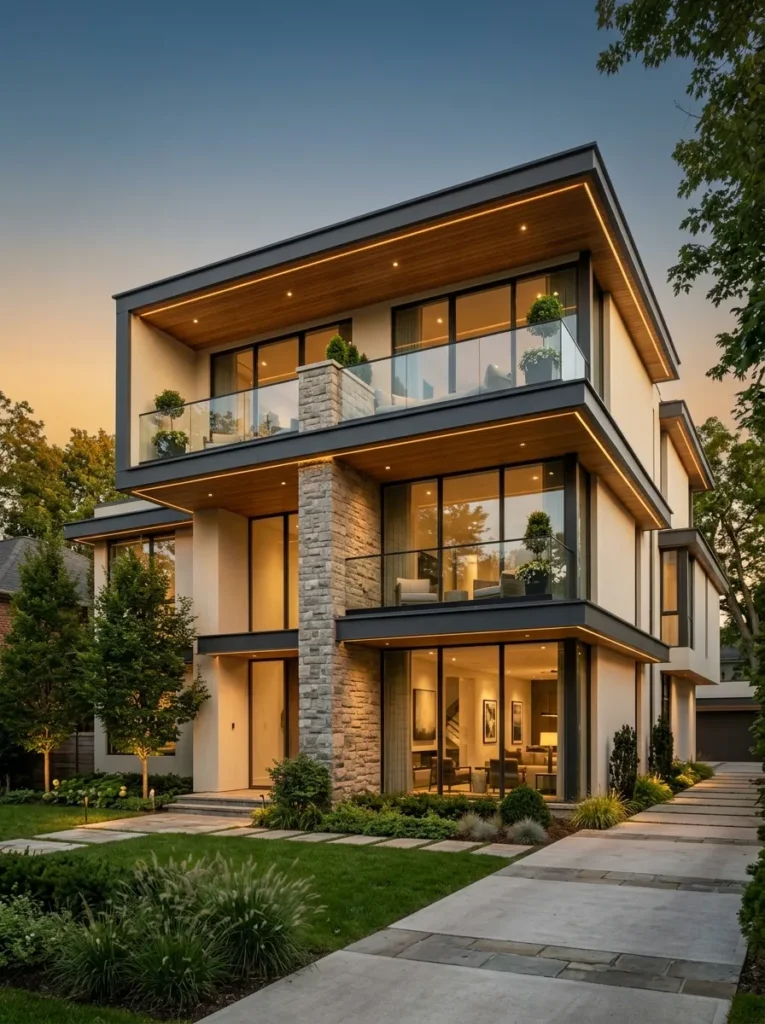
The most striking contemporary homes are rarely a single flat box. Instead, they combine stacked or offset volumes that create movement and visual interest.
- Use cantilevered upper floors or deep overhangs to add shadow and drama.
- Step floors back slightly so each level has its own terrace or balcony.
- Mix flat roof sections with different heights for a layered silhouette.
- Keep the lines clean and horizontal, with a few vertical accents for contrast.
If you are renovating rather than building, you can create a similar effect by adding a canopy, a porch roof, or a projecting frame around the entrance.
2. Mix Natural Stone, Wood, Stucco, and Glass
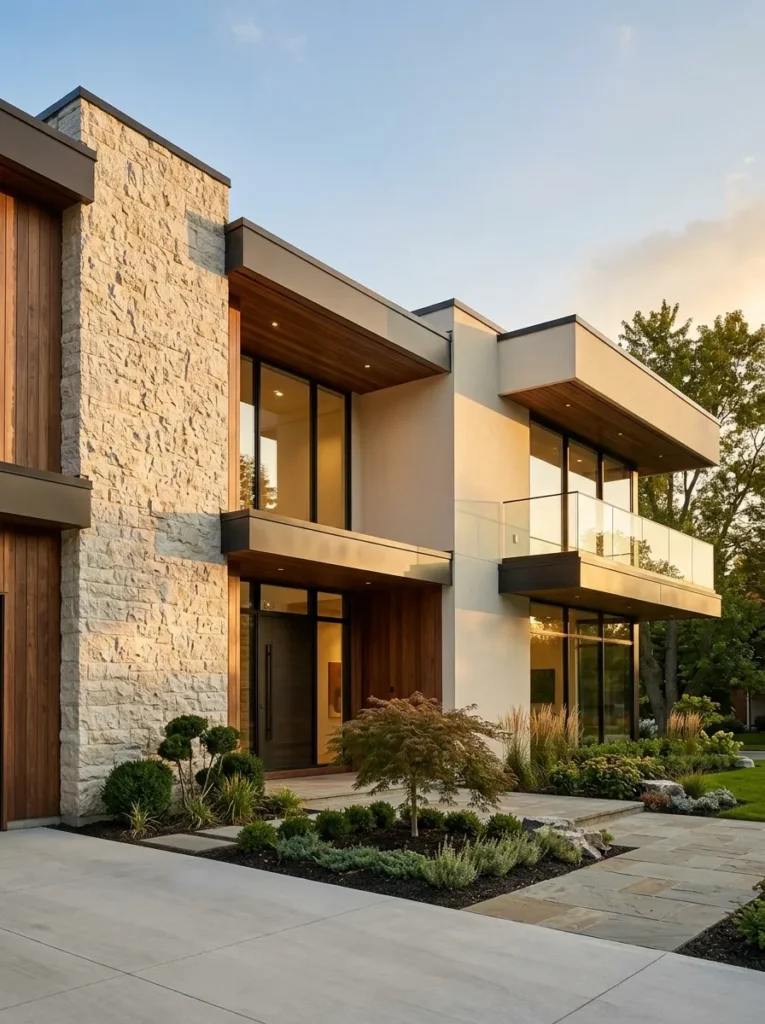
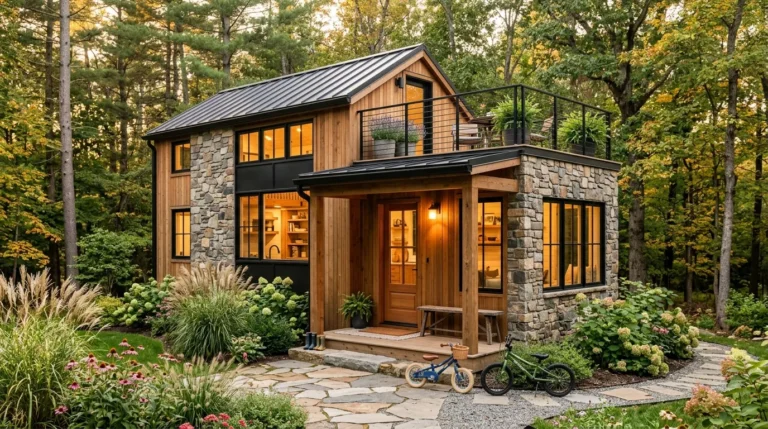
Material contrast is at the heart of a high-end facade. A balanced combination keeps the house from looking flat or overly busy.
- Smooth plaster or stucco in cream, soft grey, or warm white forms the calm base.
- Natural stone cladding adds texture on a feature wall, pillar, or garden boundary.
- Wood or wood-look panels bring warmth and soften the overall look.
- Glass and dark metal provide a sleek, modern counterpoint.
A useful guideline is to use no more than three or four main materials, and repeat each in at least two places so the design feels cohesive.
3. Add Warm Wood Soffits and Ceilings
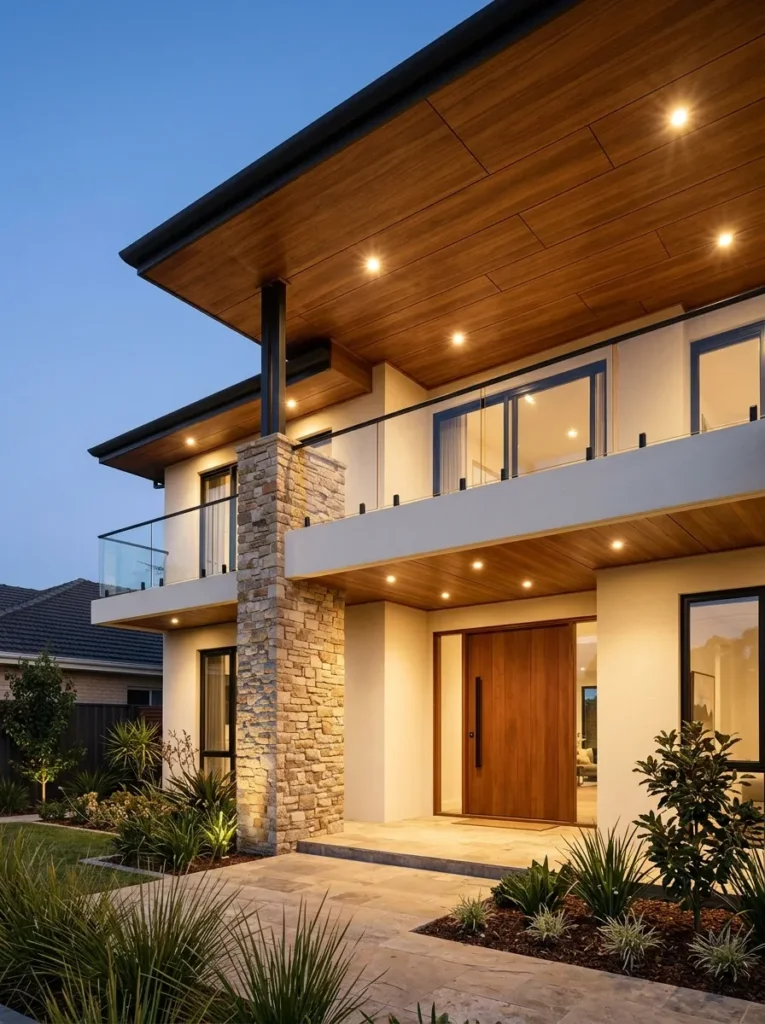
Look up from the entrance of a well-designed home and you will often notice a warm timber ceiling. Wood soffits under balconies, porches, and carports soften the structure and glow beautifully when lit.
- Use tongue-and-groove or slatted panels in a warm, medium tone.
- Embed small recessed spotlights in rows for a refined, evenly lit effect.
- Choose treated or exterior-grade timber, or a durable wood-look alternative, to resist moisture and sun.
- Plan for sealing and periodic maintenance according to the manufacturer’s guidance.
If real wood is outside your budget, high-quality aluminum or composite panels with a wood finish can provide a similar look with less upkeep.
4. Use Large Black-Framed Windows
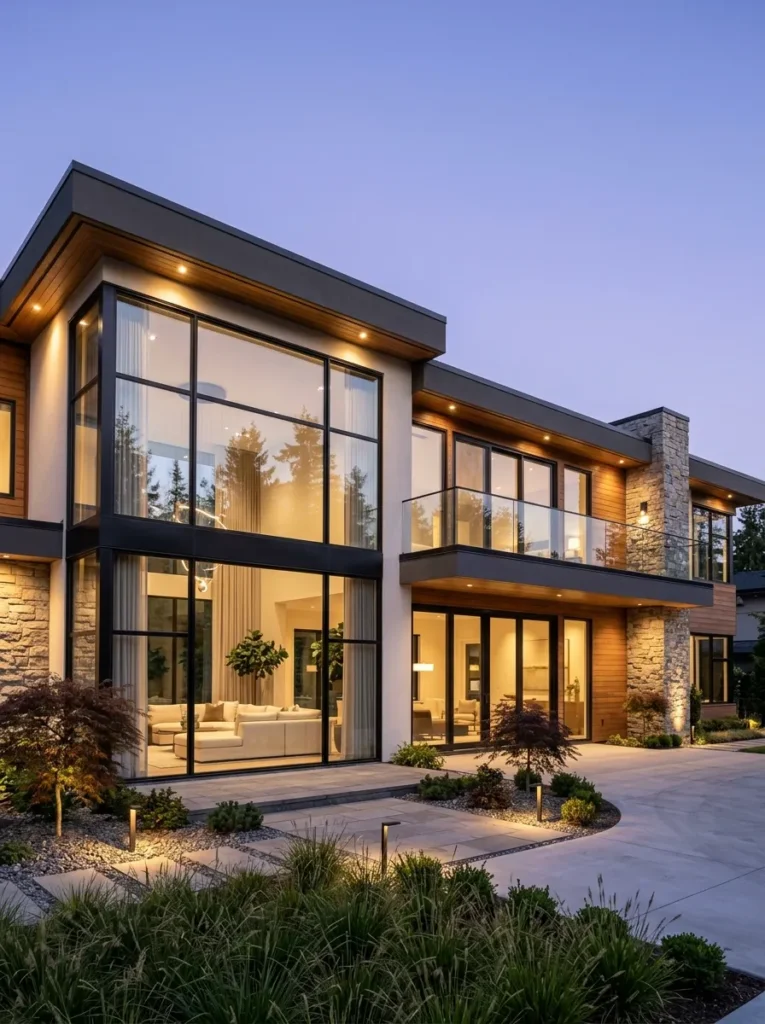
Big windows with slim, dark frames create a sharp, architectural look and let light flow through the interior. They also allow glowing rooms to become part of the facade in the evening.
- Choose floor-to-ceiling or tall windows on feature walls and living areas.
- Keep frame colors consistent, such as matte black or charcoal, across the whole house.
- Add sheer or light curtains inside to soften the view and increase privacy.
- Consider energy-efficient glazing and appropriate shading for sun-facing walls.
When the interior lights are warm and the curtains are light, the windows add a quiet, luxurious glow from the street.
5. Design Glass Balconies and Terraces With Planters
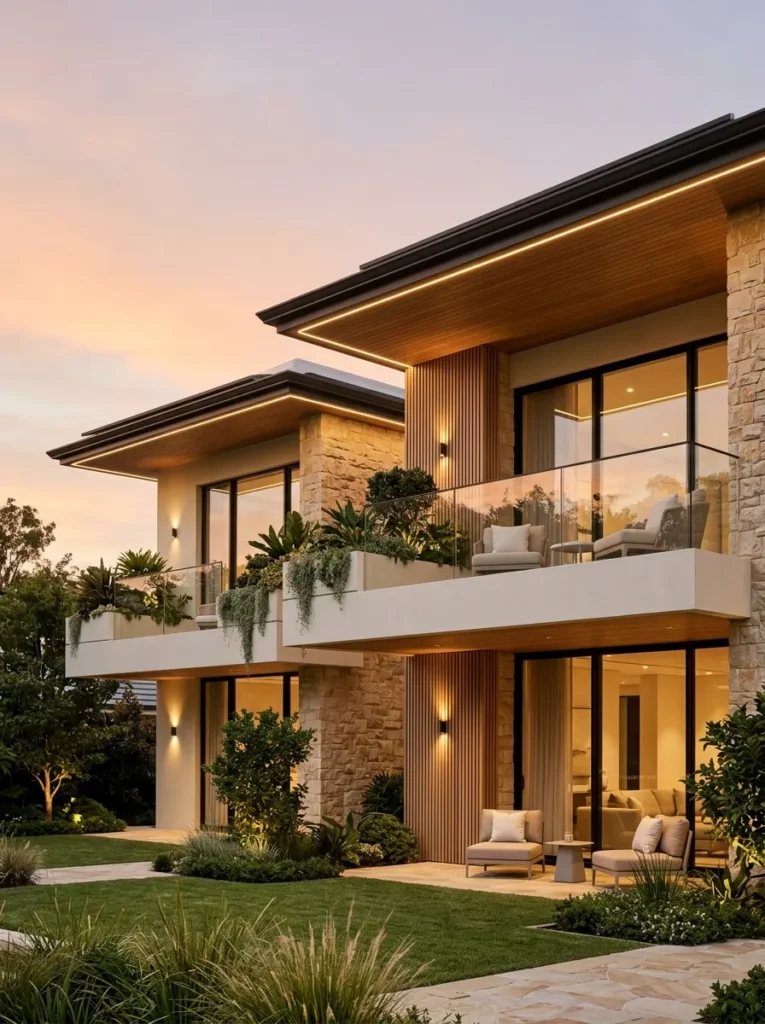
Balconies are more than extra space. They add layers to the facade and provide a place to bring greenery to upper floors.
- Use frameless or minimal glass balustrades for clear views and a light appearance.
- Add built-in planters along the edge, filled with trailing and structured plants.
- Choose outdoor furniture in neutral tones, with comfortable cushions.
- Use wall lights or in-floor lighting to keep terraces usable after sunset.
Make sure balcony railings and glazing meet local safety standards and are installed by qualified professionals.
6. Introduce Vertical Wood Fins and Screens
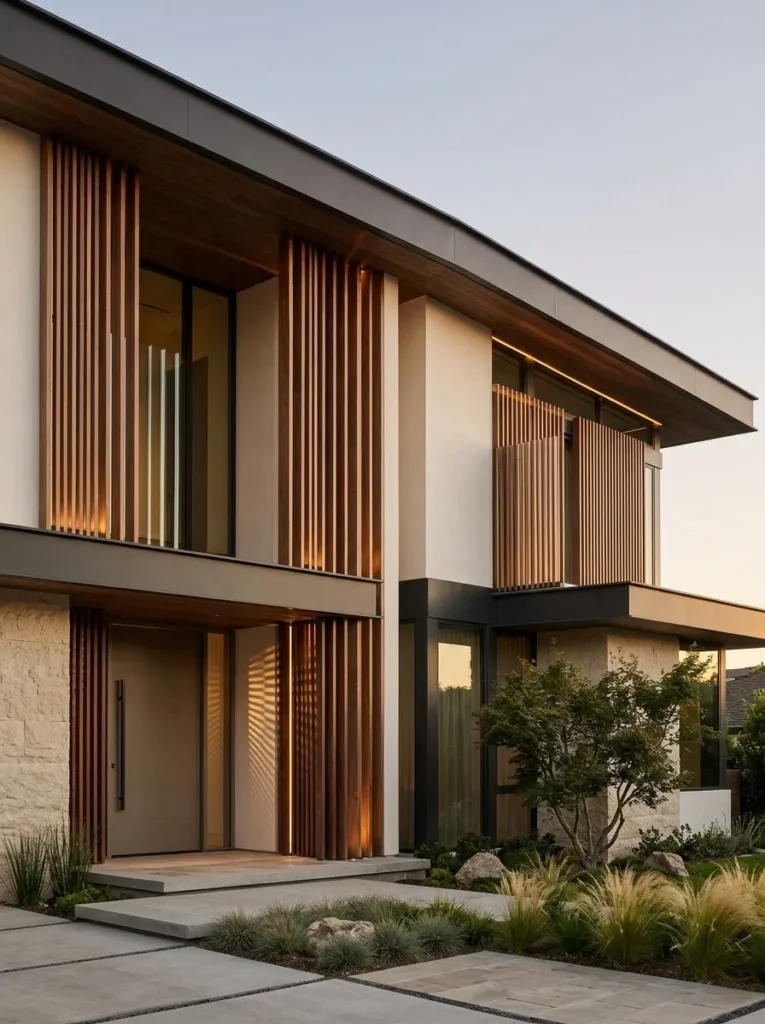
Vertical slats add rhythm and can turn an ordinary wall into a design feature. They also work as functional screens for shade and privacy.
- Place wood or metal fins beside tall windows to frame them.
- Use a slatted screen to hide utility areas or soften a blank wall.
- Add concealed LED strips behind the slats for a subtle glow.
- Keep spacing consistent so the pattern feels crisp and intentional.
Vertical elements also make a home appear taller, which can be useful on narrow plots.
7. Create a Statement Gate and Entry Pillars
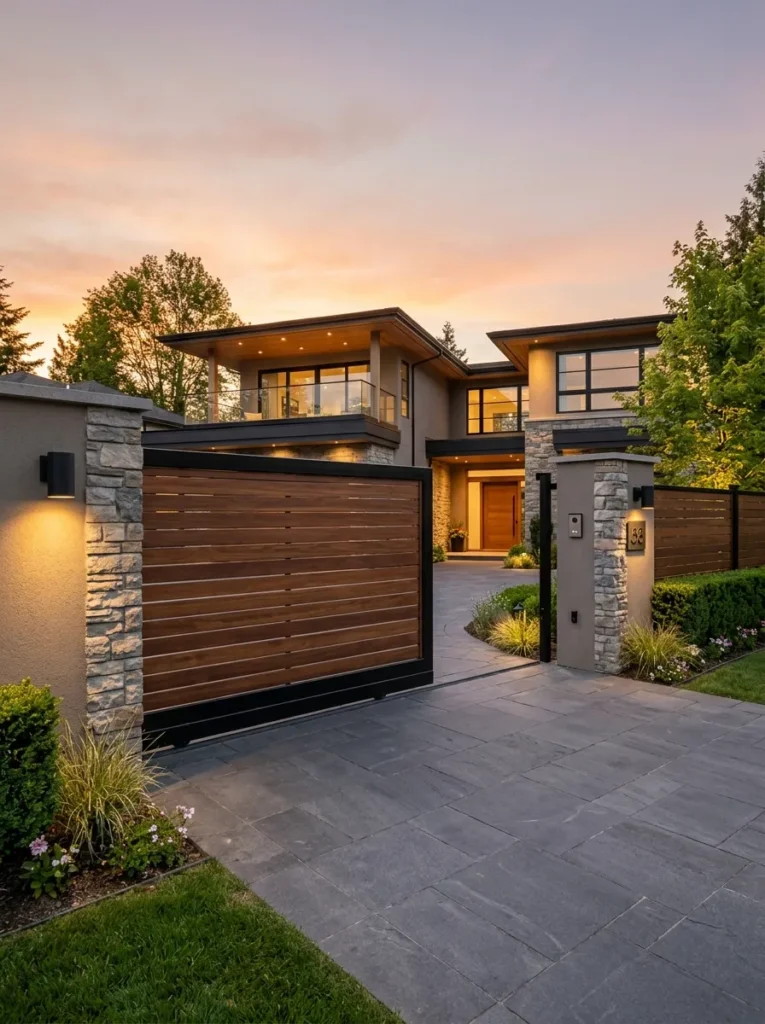
The gate is the first thing visitors see, so it should look as considered as the house itself. A modern gate combines wood and metal in a clean, balanced design.
- Choose horizontal wood-look slats within a black metal frame for a contemporary look.
- Add solid stone or plastered pillars on either side to anchor the entrance.
- Include a built-in lantern, a discreet intercom, and a neat house number plaque.
- Make sure the gate height and style suit the scale of the house and your privacy needs.
An automated sliding or swing gate adds convenience, but it should be installed according to safety guidelines and local regulations.
8. Layer the Exterior Lighting
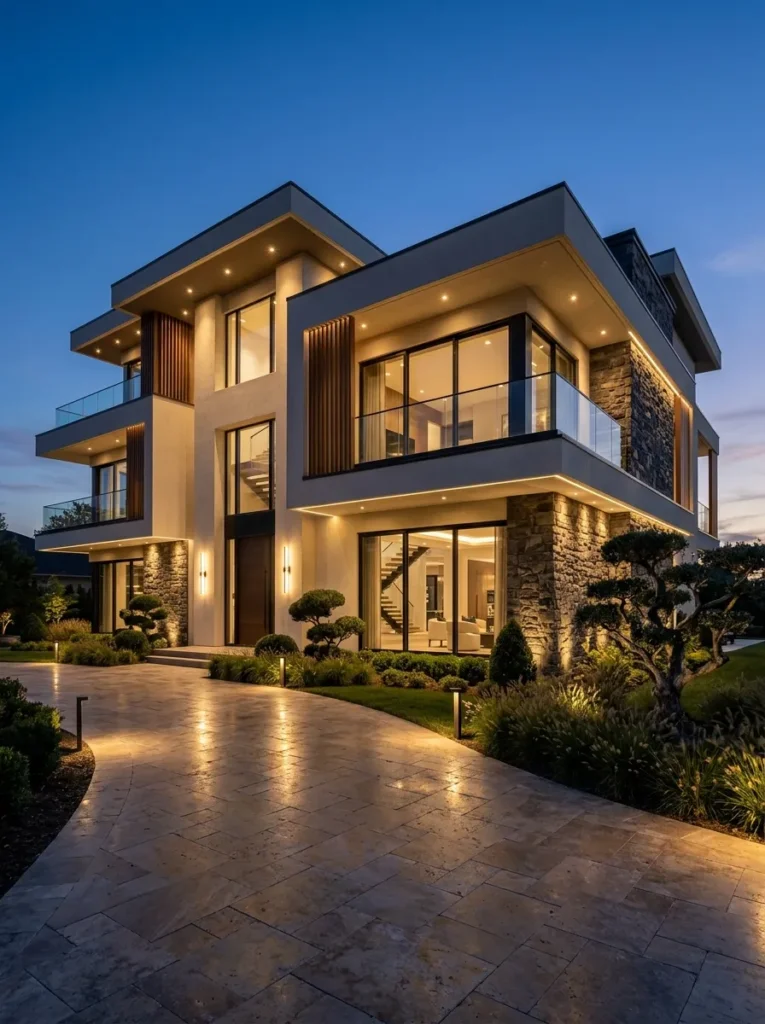
Lighting is what turns a handsome house into a luxurious one at night. Instead of a single bright floodlight, use several layers of soft, warm light.
- Architectural lighting: recessed spotlights in soffits, wall washers on stone, and concealed strips in cove details.
- Path and landscape lighting: bollards, step lights, and low garden lights that guide movement.
- Accent lighting: uplights on trees, plants, and textured walls to add depth.
- Entry lighting: wall lanterns or sconces by the door and gate for a welcoming feel.
Choose warm white bulbs, generally around 2700K to 3000K, and fixtures rated for outdoor use. Use timers or smart controls to turn lights on and off automatically, and hire a licensed electrician for installation.
9. Elevate the Driveway With Polished Stone and Inlay Lines
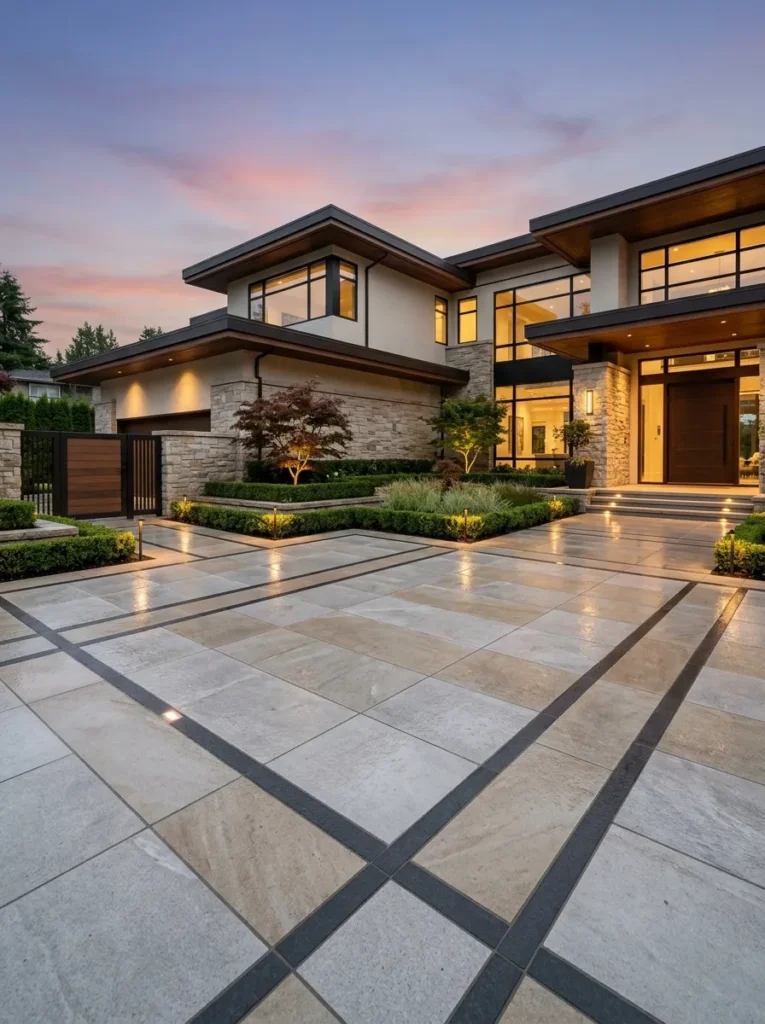
The driveway and forecourt are often overlooked, yet they take up a large part of the view. A well-designed surface can make the entrance feel grand.
- Use large-format stone or high-quality pavers in light grey or beige for a clean look.
- Add thin dark inlay lines to create a refined grid and guide the eye toward the entrance.
- Choose a finish with enough texture to remain safe in wet weather, as polished surfaces can become slippery.
- Plan proper drainage so water does not collect near the house or gate.
The slight sheen of stone after rain or at sunset also reflects the lights and architecture beautifully.
10. Plan Tiered Landscaping With Texture
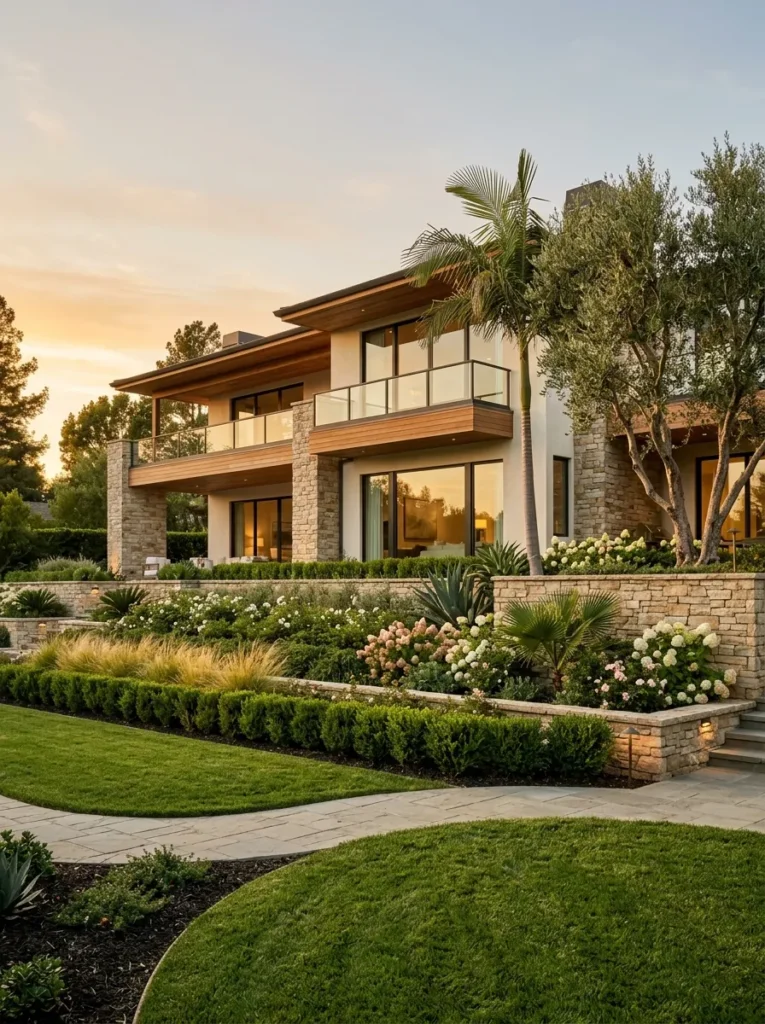
Greenery completes the picture and softens hard edges. In a luxurious exterior, planting is structured and layered, not random.
- Combine low hedges, flowering shrubs, ornamental grasses, and a few feature trees.
- Choose plants suited to your climate, soil, and maintenance time.
- Use a retaining or boundary wall in stone to add texture and create a backdrop.
- Keep a neat lawn or ground cover for contrast with darker plants.
A single tall palm or sculptural tree near the corner of the house can add height and a resort-like feel where the climate allows.
11. Build a Rooftop Pergola or Outdoor Lounge
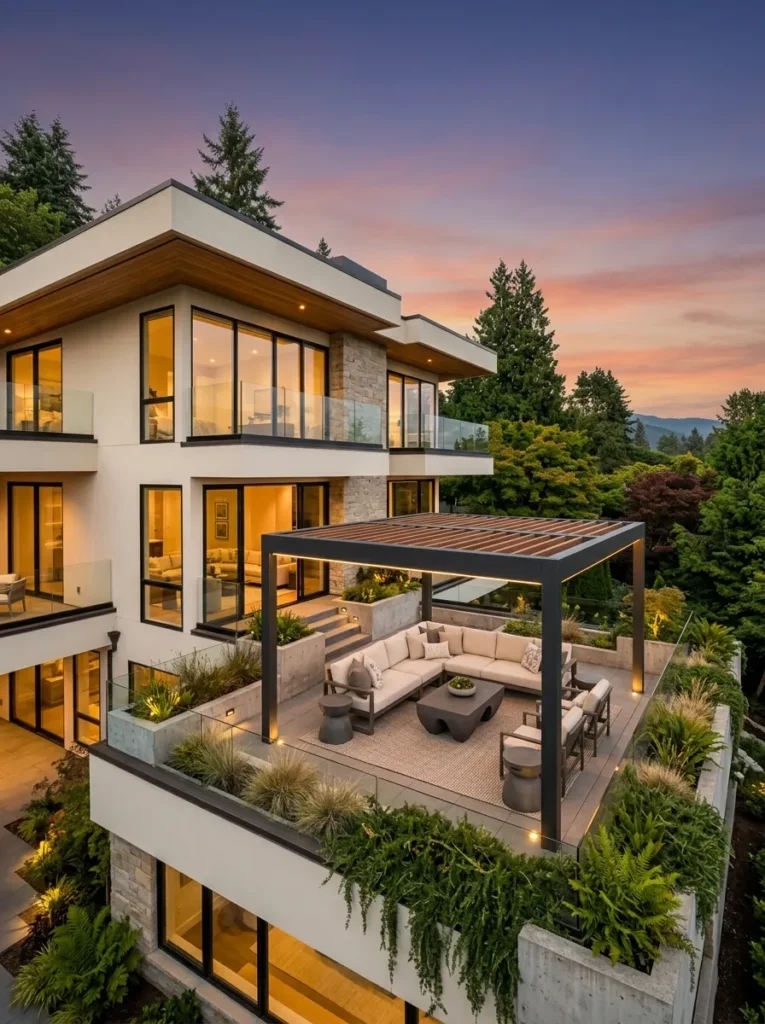
An upper-level terrace with a pergola adds both style and function. It becomes an extra living room under the sky and gives the roofline a distinctive silhouette.
- Choose a slatted timber or metal pergola to cast striped shadows during the day.
- Add built-in seating, planters, and low lighting for evenings.
- Use weather-resistant furniture and fabrics.
- Consider shading, wind protection, and waterproofing in your design.
Because rooftop structures involve engineering and safety concerns, work with an architect or structural professional.
12. Refine the Details: Numbers, Lanterns, and Hardware
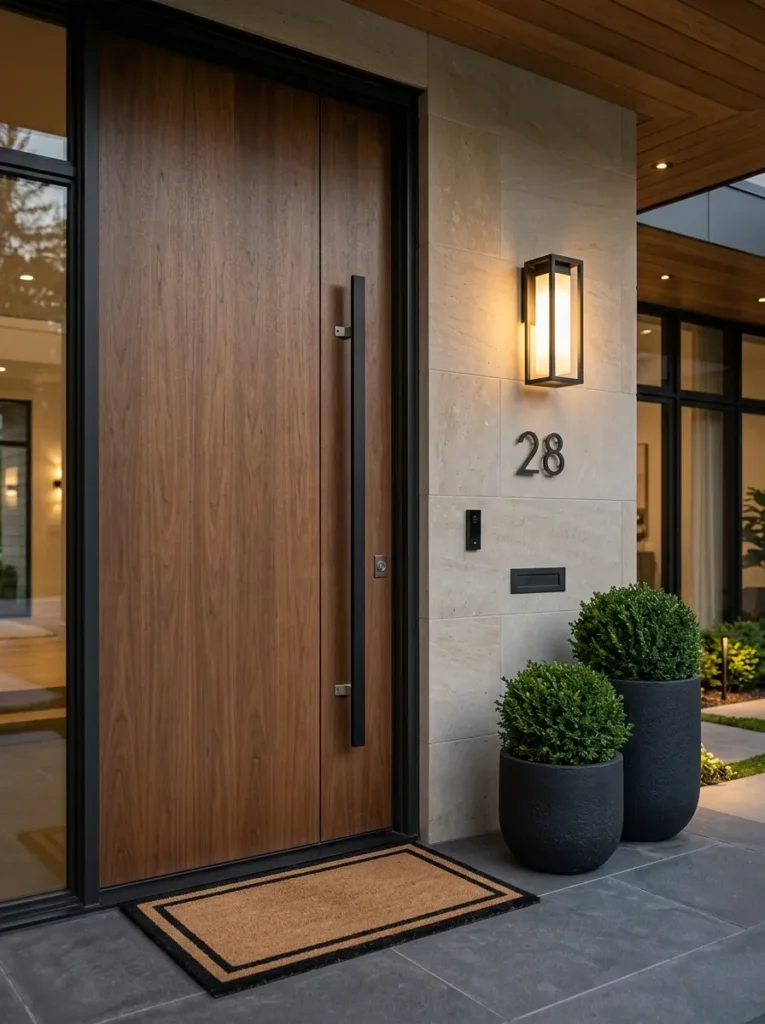
Small details signal quality. They are also among the easiest upgrades if you are working with an existing home.
- Install a clean, modern house number in matte black, brass, or stone.
- Choose a consistent style for lanterns, sconces, and door handles.
- Upgrade the front door with a solid wood or high-quality finish and a good-looking handle.
- Add a neat mailbox, doormat, and a couple of well-chosen planters.
Finishes should coordinate with each other so the entrance feels pulled together.
13. Keep the Color Palette Warm and Cohesive
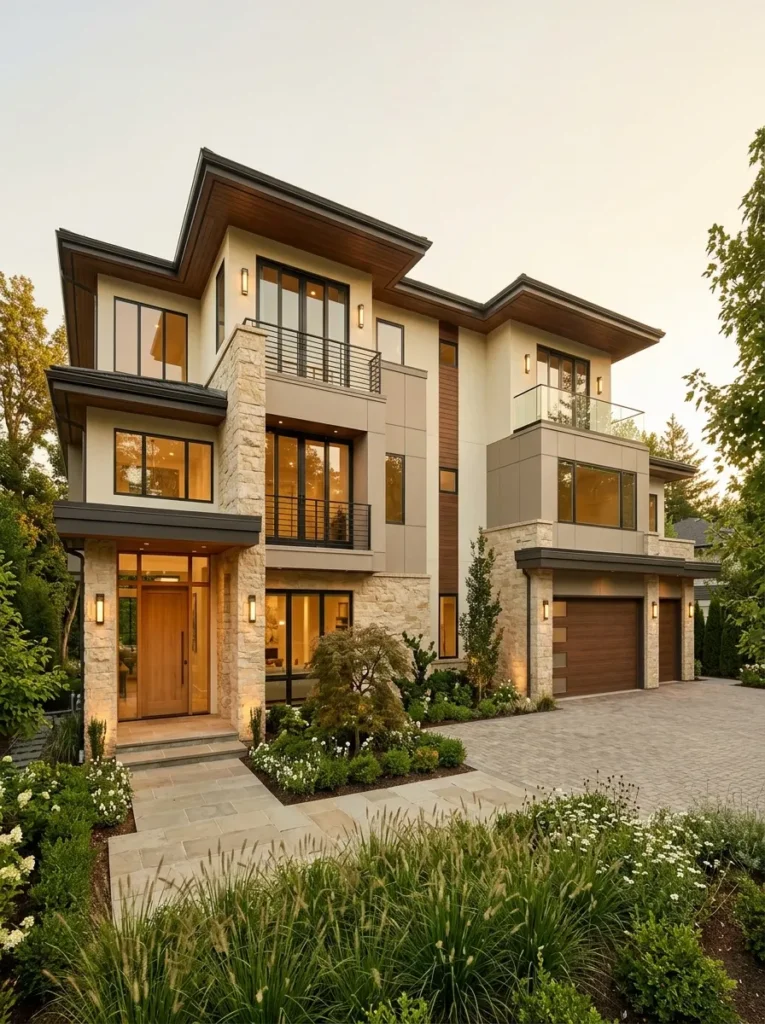
Color is the glue of the exterior. A restrained palette keeps the home looking calm and expensive.
- Use warm neutrals like cream, sand, soft taupe, and light grey for large surfaces.
- Add depth with charcoal or black on window frames and railings.
- Introduce warmth through timber tones and natural stone.
- Reserve brighter colors for flowers, a front door, or small accents.
Test paint or cladding samples on the actual wall and observe them in morning, midday, and evening light before committing.
How to Plan Your Exterior Upgrade Step by Step
A luxurious result comes from a sensible order of work. Here is a simple approach.
- Assess what you have. Photograph the house from the street and note what works and what feels dull.
- Set a budget and priorities. Decide whether architectural changes, lighting, or landscaping will have the most impact.
- Choose a material palette. Select three or four materials and a limited color range.
- Plan lighting early. Wiring and fixtures are easier to install before landscaping and paving are finished.
- Consult professionals. An architect, landscape designer, and electrician can save time and prevent costly mistakes.
- Check regulations. Local codes, permits, and neighborhood rules may affect gates, balconies, and exterior changes.
- Build in stages. If the budget is limited, start with lighting, the gate, and planting, then add larger features over time.
Common Mistakes to Avoid
Even good ideas can lose their impact if a few common errors creep in.
- Using too many materials. Competing textures and colors make a facade look cluttered.
- Ignoring maintenance. Wood, light stone, and large glass areas need regular care to stay beautiful.
- Harsh lighting. Cool, bright floodlights can feel more like a commercial building than a home.
- Oversized or undersized elements. Check that gates, pillars, and planters suit the scale of the house.
- Forgetting the climate. Materials and plants should suit your local weather, humidity, and sun exposure.
- Neglecting the approach. The driveway, gate, and boundary walls are part of the home design aesthetic exterior, not an afterthought.
Budget-Friendly Ways to Make an Exterior Look More Luxurious
You do not need a full rebuild to create a more refined appearance. A few focused changes can make a visible difference.
- Repaint the facade in a cohesive warm neutral and the trim in dark charcoal.
- Replace old light fixtures with modern, warm-toned lanterns and sconces.
- Add wood-look cladding or slats to a single feature area, such as the gate or entrance wall.
- Install a neat house number, new door hardware, and matching planters.
- Clean and reseal driveway paving, and trim hedges for a crisp edge.
- Add low-voltage path lights and a few uplights on trees.
These upgrades work well for a refresh and can be done in stages.
Conclusion
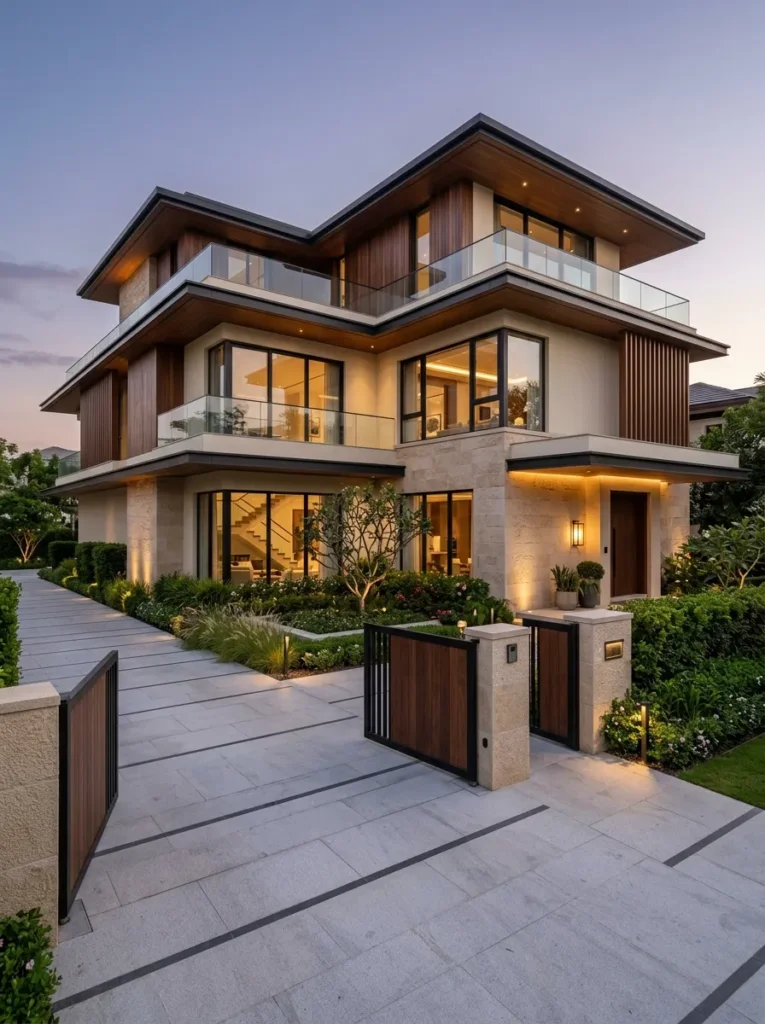
A luxurious exterior is built from thoughtful choices, not excess. Layered architecture, a restrained mix of stone, wood, and glass, warm lighting, tidy paving, and structured landscaping all work together to create a home that feels welcoming and refined. When you plan each element with the whole picture in mind, your home design aesthetic exterior becomes a cohesive statement rather than a collection of separate features.
Start with the elements that will make the biggest difference for your property, such as lighting, the entrance, and planting, and then build outward. With careful planning and attention to detail, your home can look beautiful in daylight and truly glow at dusk.
Frequently Asked Questions (FAQs)
- What is the best home design aesthetic exterior for a modern luxury look?
A contemporary style with clean lines, layered volumes, large windows, and a mix of natural materials is widely associated with modern luxury. Combining stucco, stone, wood, and dark metal in a warm, neutral palette gives you a refined and timeless result. The best choice still depends on your climate, location, and the style of nearby homes.
- How can I improve my home’s exterior on a limited budget?
Focus on high-impact, low-cost changes: a fresh coat of paint, updated lighting, a new front door or hardware, a clear house number, and tidy landscaping. Adding a wood-look accent wall or gate panels can also lift the appearance without major construction. Tackle projects in stages to spread the cost.
- Which exterior lighting works best for a luxurious look?
Layered, warm-toned lighting works best. Combine recessed soffit lights, wall lanterns at the entrance, path lights along walkways, and uplights on trees or textured walls. Choose fixtures designed for outdoor use, and consider timers or smart controls so the lighting turns on automatically. A licensed electrician should handle installation.
- How do I keep wood and stone exterior features looking good over time?
Choose materials suited to your climate and follow the manufacturer’s care guidelines. Wood usually benefits from regular sealing or re-staining, while natural stone may need cleaning and sealing to resist stains and weathering. Keep drainage clear, clean surfaces regularly, and inspect them seasonally so small issues are fixed early.