

17 Small Bedroom Style Ideas for a Cozy Modern Retreat
Small bedrooms get a bad reputation they don’t really deserve. Yes, square footage is limited, and yes, a king bed and a walk-in closet’s worth of furniture simply won’t fit. But limited space doesn’t mean limited style — in many cases, a smaller bedroom is easier to make feel intentional and cohesive than a large one, since there’s less room to fill with mismatched furniture and clutter.
If you’ve been scrolling through small bedroom style ideas hoping to find something that actually works for a real, lived-in space (not just a staged photo shoot), this guide is for you. The seventeen ideas below focus on practical, achievable changes — smart furniture choices, color strategies, and layout tricks — that make a compact bedroom feel like a cozy, modern retreat rather than a cramped afterthought.
Why Small Bedrooms Need a Different Design Approach
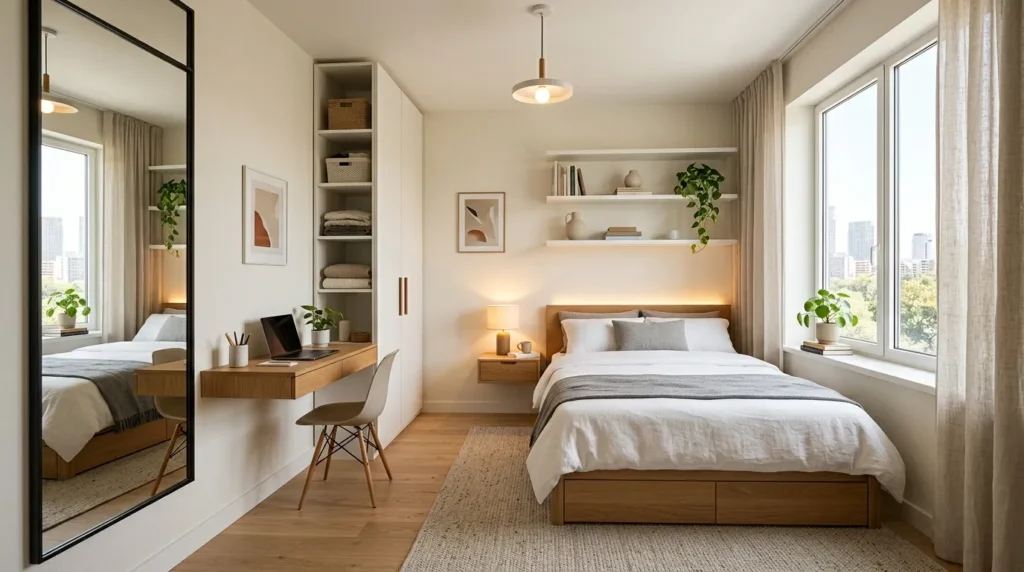
Before jumping into specific ideas, it helps to understand why small bedroom design isn’t just “the same ideas, scaled down.” In a larger room, mistakes get absorbed into the extra space. In a small bedroom, every piece of furniture, every color choice, and every inch of clutter has an outsized visual impact.
That means small bedroom style ideas generally need to accomplish a few things at once:
- Maximize functional storage without overwhelming the room visually
- Create the illusion of more space through color, lighting, and furniture choices
- Prioritize furniture that’s proportioned correctly for the room, not just what looks nice in a showroom
With those priorities in mind, here are seventeen ideas that consistently work in real small bedrooms.
1. Choose a Low-Profile Bed Frame
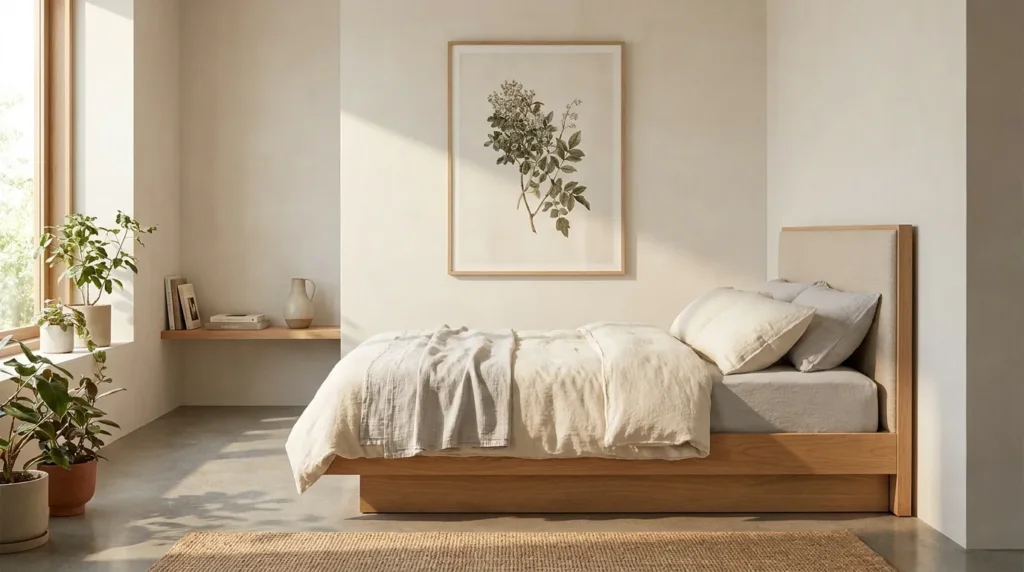
A bed frame with a tall headboard or high platform can make a small room feel more closed in, since it draws the eye upward and adds visual bulk. A low-profile frame — one with a slim headboard or none at all — keeps sightlines open across the room, making the ceiling feel higher and the space feel airier by comparison.
2. Use Vertical Space With Wall-Mounted Storage
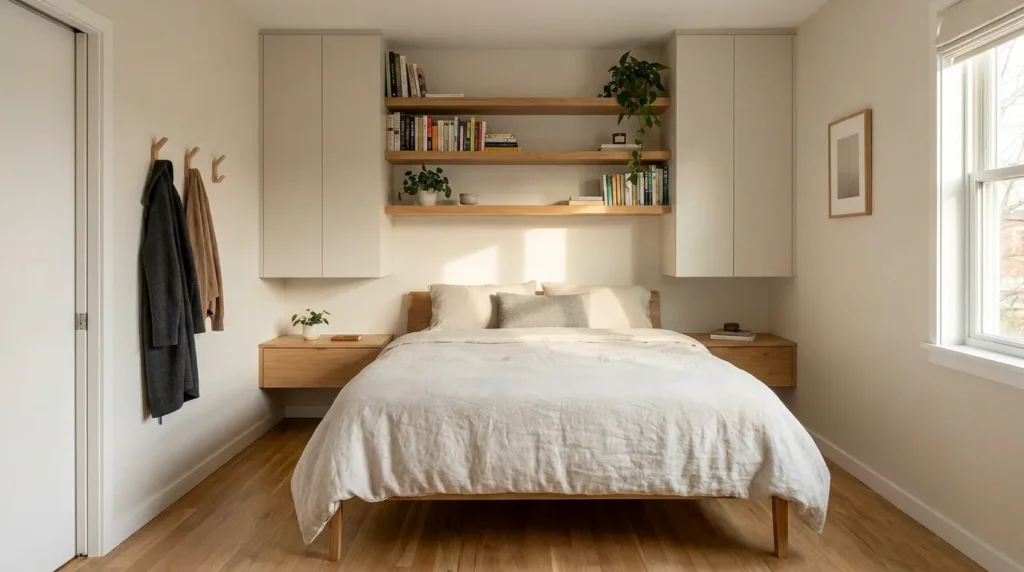
Floor space is precious in a small bedroom, which is exactly why vertical storage matters so much. Wall-mounted shelves, hanging cabinets, and floating nightstands all keep the floor visually clear while still providing real storage capacity.
- Floating shelves above the bed can replace a traditional dresser for books, decor, or folded clothing.
- Wall-mounted hooks near the closet keep frequently used items (bags, jackets) off the floor.
- Pegboard-style organizers offer flexible, customizable storage without the bulk of freestanding furniture.
3. Pick a Cohesive, Light-Reflective Color Palette
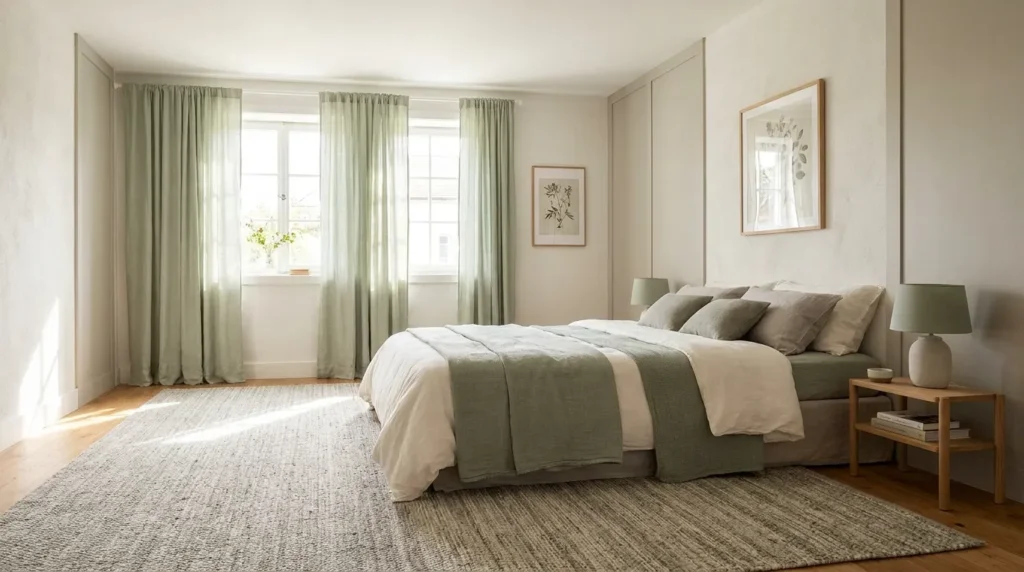
Color is one of the most powerful (and least expensive) tools in any small bedroom style idea list. Light, soft colors — warm whites, soft greiges, pale sage, dusty blue — reflect more natural and artificial light than dark colors, which helps a small room feel more open.
That doesn’t mean small bedrooms are limited to all-white schemes. A cohesive palette of two or three related tones, applied consistently across walls, bedding, and accessories, creates a calm, unified look that reads as intentional rather than cluttered.
4. Add a Statement Ceiling Instead of a Statement Wall
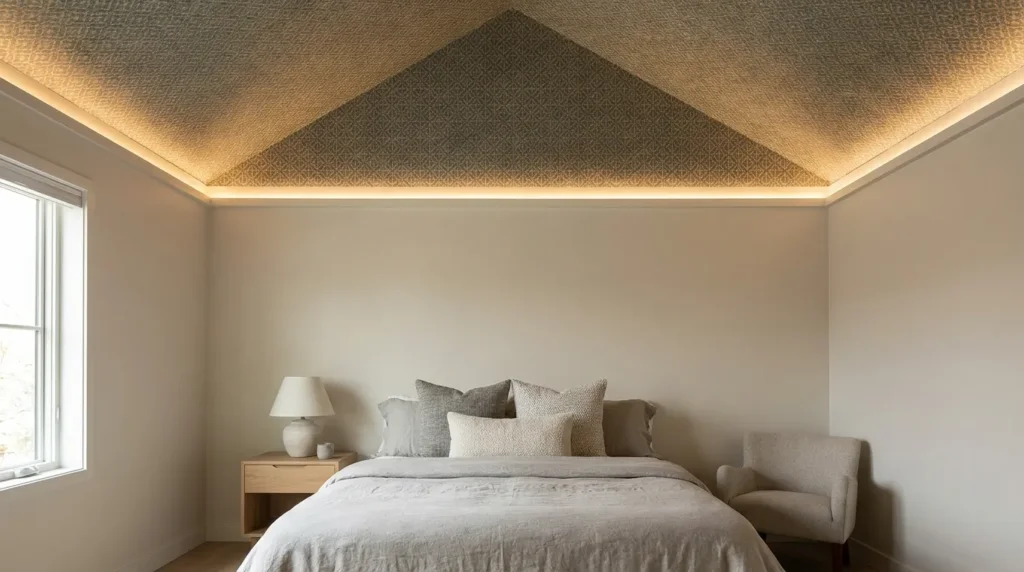
In a small bedroom, wall space is often taken up by the bed, dresser, or closet, leaving little room for a dramatic accent wall. The ceiling, on the other hand, is almost always available. A bold paint color, wallpaper, or even a simple two-tone treatment on the ceiling draws the eye upward and adds personality without competing with furniture placement.
5. Choose Multi-Functional Furniture
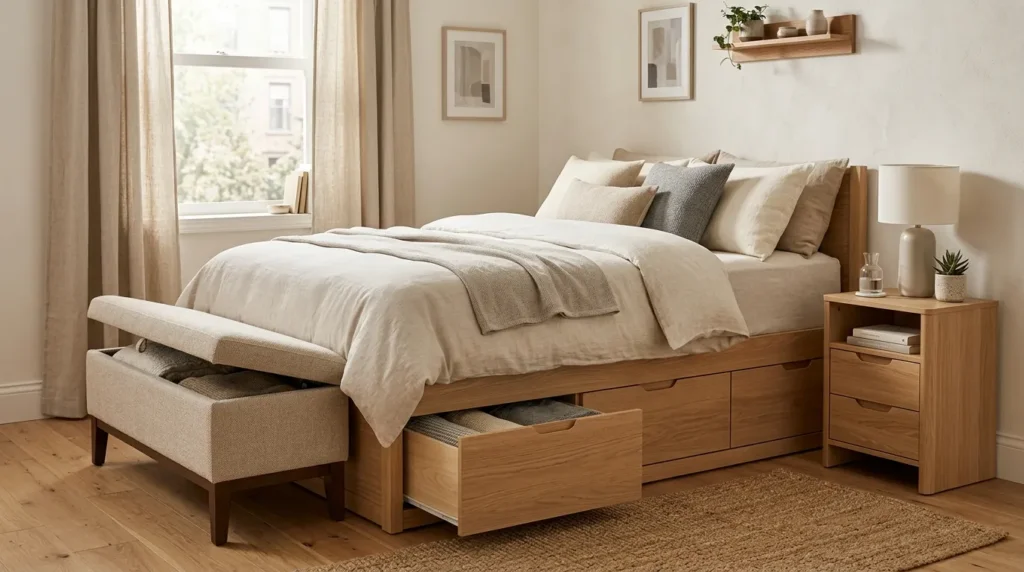
Every piece of furniture in a small bedroom should ideally do more than one job. This is one of the most practical small bedroom style ideas because it directly addresses the biggest challenge: not enough space for everything you need.
- A storage bed with built-in drawers underneath eliminates the need for a separate dresser.
- A bench with hidden storage at the foot of the bed doubles as seating and a place to stash extra bedding.
- A nightstand with drawers, rather than an open shelf, keeps small items contained without adding visual clutter.
6. Use Mirrors to Expand the Sense of Space
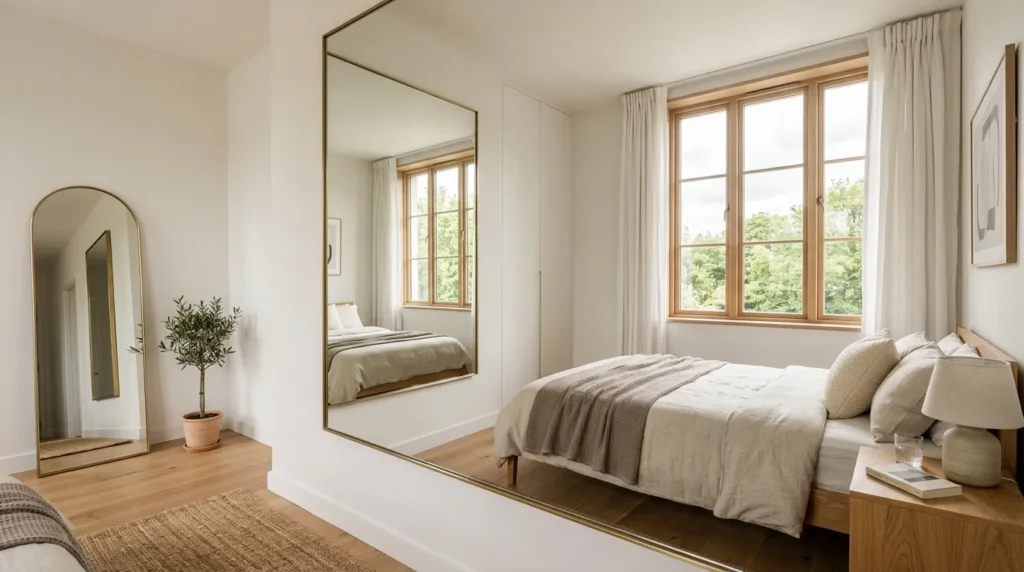
Mirrors are a classic small-space trick for a reason — they genuinely work. A large mirror placed opposite a window reflects natural light back into the room, while a floor-length leaning mirror in a corner adds both function and the illusion of extended depth.
- Position mirrors to reflect a pleasant view (a window, a piece of art) rather than clutter or a blank wall.
- An oversized mirror often has more impact than several smaller ones scattered around the room.
7. Keep Curtains Simple and Let Light In
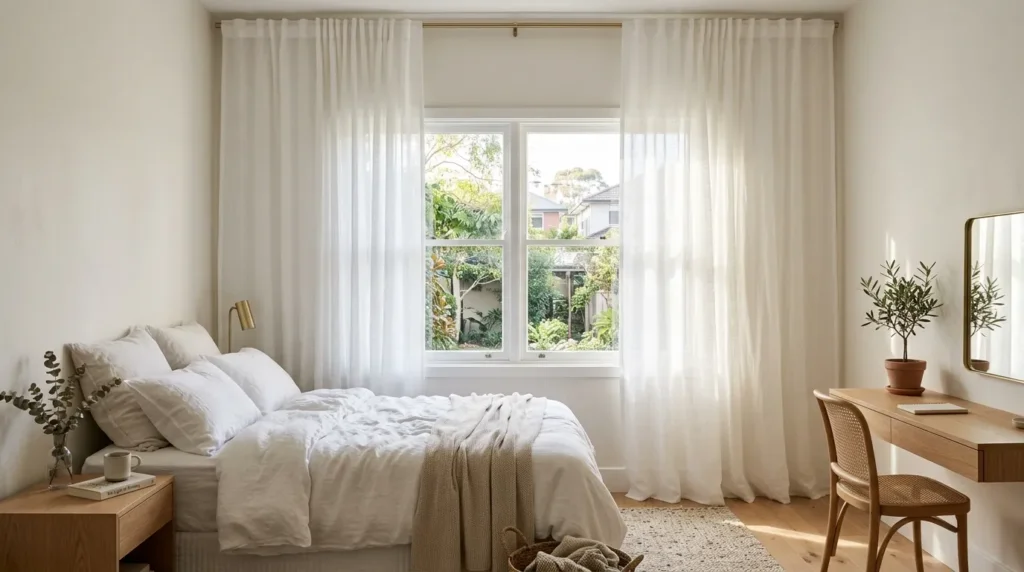
Heavy, dark drapes can visually shrink a small bedroom, especially if they’re hung close to the window frame. Lighter, sheer, or simply hung curtains let more natural light into the room, which makes a noticeable difference in how spacious it feels.
For rooms that need more privacy or light control, hanging curtain rods slightly wider and higher than the window frame itself creates the illusion of a larger window without sacrificing function.
8. Add a Rug to Define the Space Without Adding Bulk
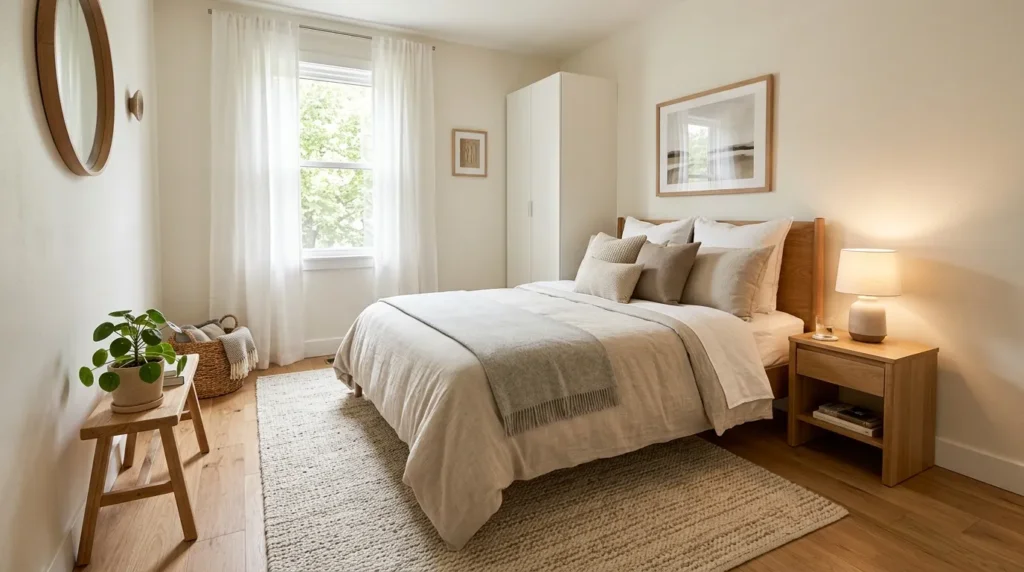
A well-chosen area rug adds warmth and texture to a small bedroom without taking up any real storage space. Lighter rug colors keep the floor feeling open, while a rug that extends slightly under the bed (rather than stopping abruptly at its edges) makes the room feel more grounded and cohesive.
9. Use Under-Bed Storage Intentionally
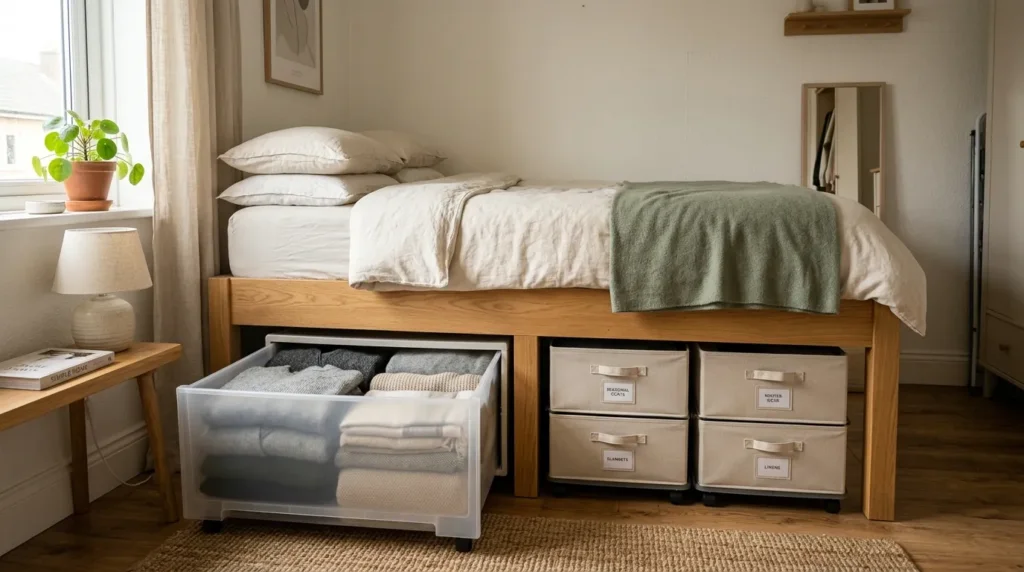
The space underneath a bed frame is one of the most underused areas in a small bedroom. Storage bins, slim rolling drawers, or vacuum-sealed bags for out-of-season clothing all make use of this space without requiring any additional furniture.
- Choose bins with lids to keep dust out and maintain a tidy look if the bed frame doesn’t have a skirt.
- Label bins if you’re storing several categories of items, to avoid digging through all of them to find one thing.
10. Opt for a Slim Console Instead of a Full Dresser
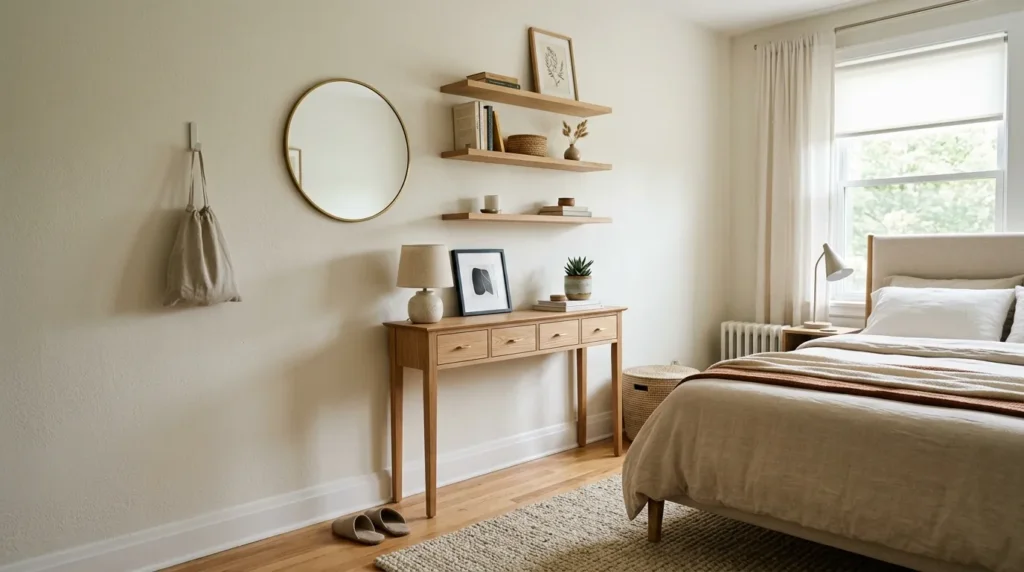
If a full-size dresser overwhelms the room, a slim console table or a narrow chest of drawers can provide similar storage in a fraction of the footprint. Pairing it with wall-mounted storage elsewhere in the room can make up for any lost capacity without sacrificing floor space.
11. Add Warm, Layered Lighting
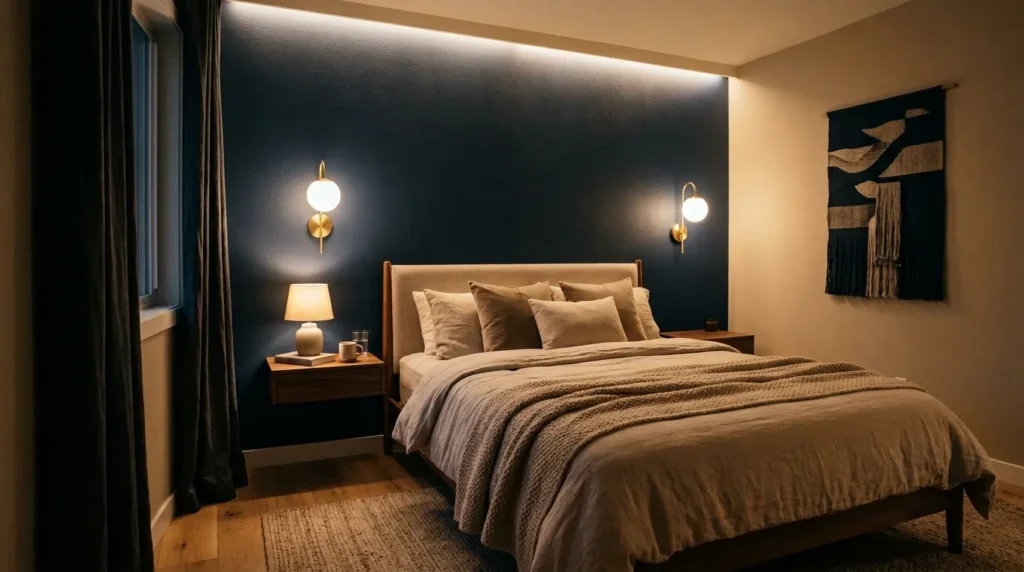
Just like in any bedroom, lighting plays a major role in how cozy a small space feels. Relying on a single overhead fixture tends to flatten the room, while a mix of a bedside lamp, a wall sconce, and warm-toned bulbs (2700K or lower) adds depth and a more inviting atmosphere.
Wall-mounted sconces are particularly useful in small bedrooms, since they free up nightstand space that would otherwise be taken up by a table lamp.
12. Choose a Headboard That Adds Storage or Shelving
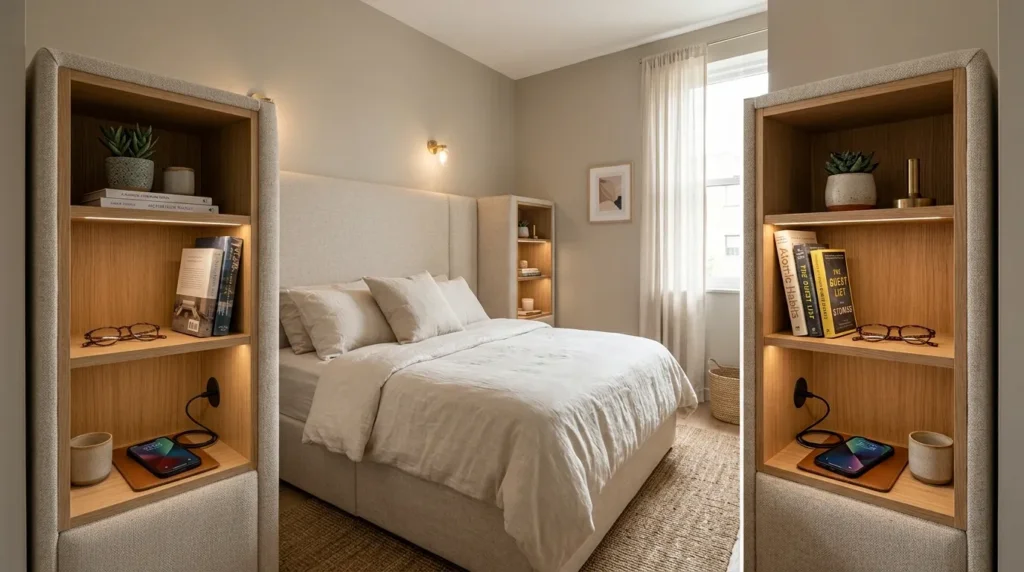
An upholstered headboard looks polished, but in a small bedroom, a headboard with built-in shelving or storage compartments can pull double duty. Small cubbies for books, glasses, or a phone charger eliminate the need for a full nightstand on one or both sides of the bed.
13. Use Vertical Stripes or Patterns to Add Height
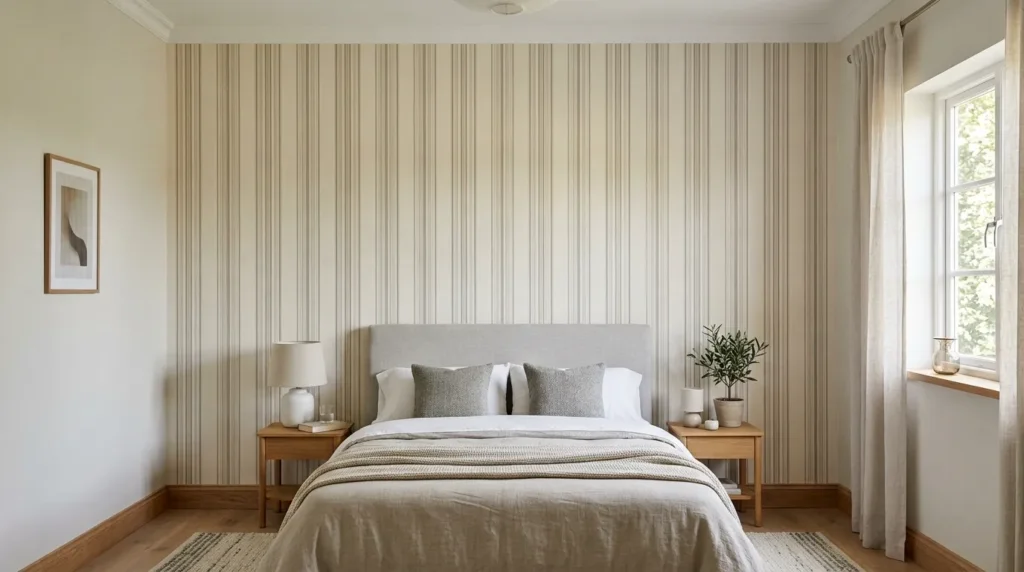
Wallpaper or paint with a vertical stripe pattern is a classic visual trick for making a room feel taller than it is. This works particularly well in small bedrooms with lower ceilings, where the goal is to draw the eye upward rather than emphasizing the room’s width.
14. Declutter Ruthlessly and Style Intentionally
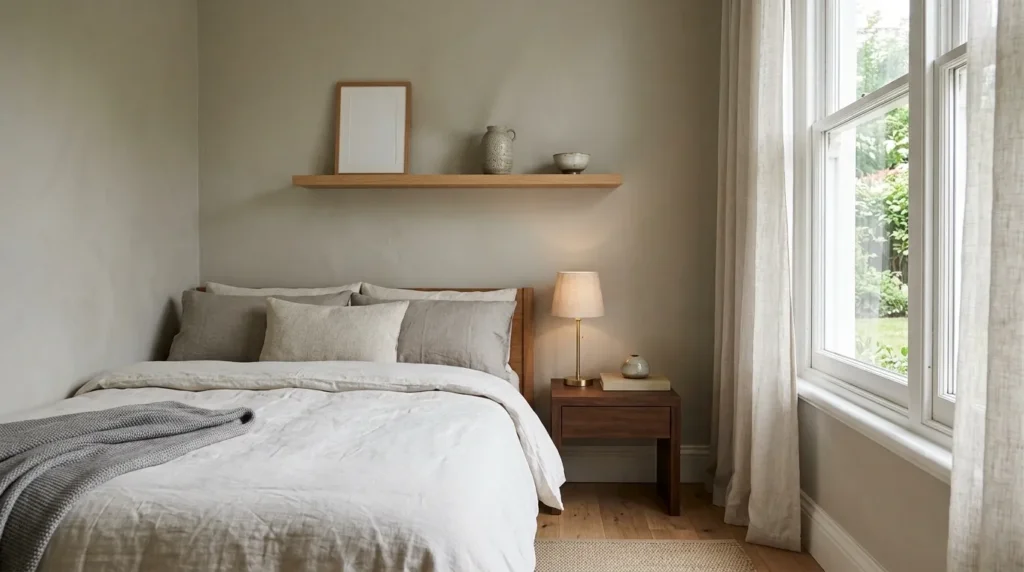
This is less about a specific design choice and more about a mindset shift, but it’s one of the most impactful small bedroom style ideas on this list. In a small room, every visible object carries more visual weight than it would in a larger space. A single styled shelf with three or four intentional items looks more sophisticated than a shelf crammed with a dozen random objects.
A simple approach:
- Keep nightstand surfaces to two or three items maximum.
- Store out-of-season clothing elsewhere if closet space is tight, rather than letting it spill into the bedroom.
- Choose a few meaningful decor pieces rather than filling every surface.
15. Add Texture Through Textiles, Not Furniture
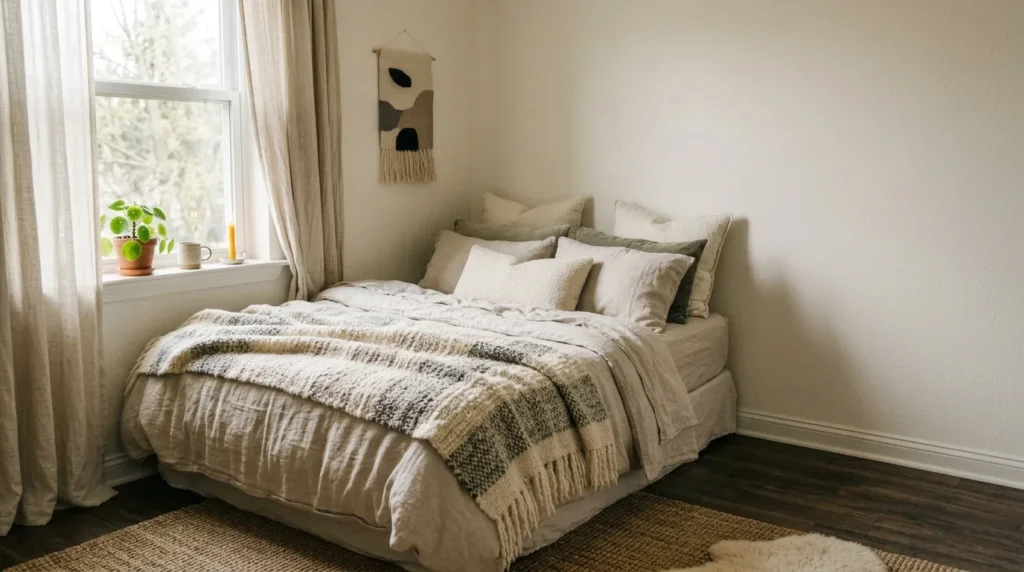
When floor space is limited, texture becomes an easy way to add warmth without adding bulk. Layered bedding, a woven throw blanket, textured curtains, or a boucle accent chair (if space allows) all add visual interest through material rather than additional furniture pieces.
16. Use a Daybed or Corner Bed Placement for Flexibility
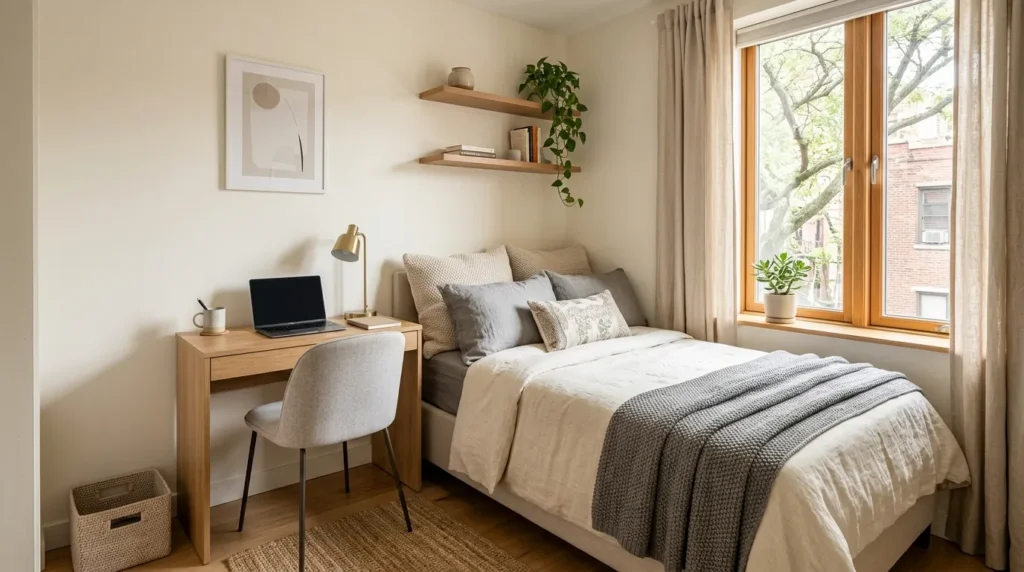
In very small bedrooms, pushing the bed into a corner rather than centering it against a wall can free up meaningful floor space for a small desk, chair, or extra storage. A daybed style, with the bed positioned against two walls and styled with bolster pillows, also gives the room a more lounge-like, multipurpose feel during the day.
17. Add One Bold, Personal Element
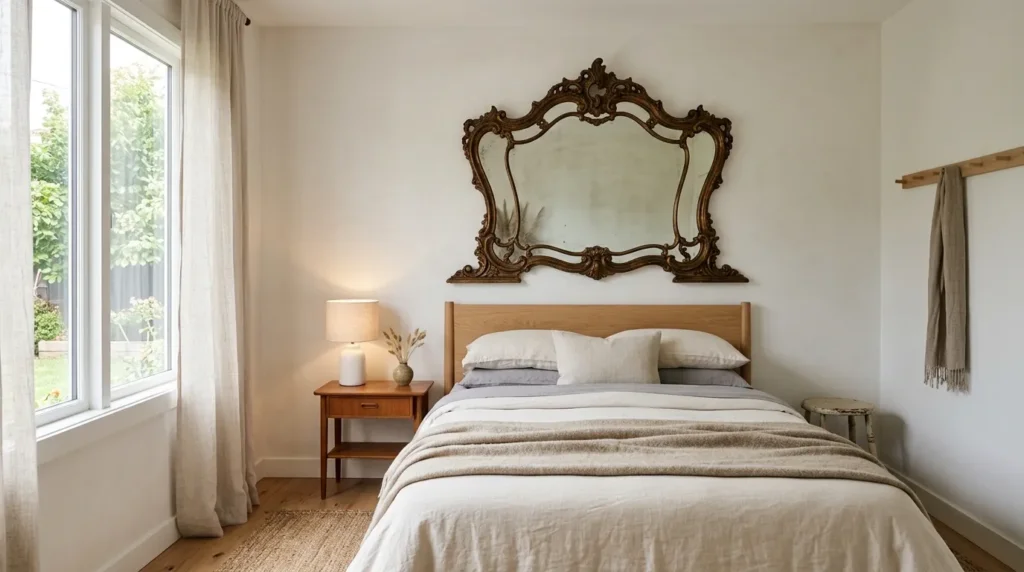
With so much emphasis on maximizing space and keeping things streamlined, it’s easy for a small bedroom to end up feeling more like a hotel room than a personal retreat. Choosing one bold element — a piece of art, a patterned throw pillow, a vintage rug, or a uniquely shaped mirror — keeps the space from feeling overly minimal or impersonal.
The key is restraint: one or two standout pieces read as intentional, while too many competing statement items can make a small room feel chaotic rather than curated.
Layout Tips for Small Bedrooms
Beyond individual design choices, the overall layout of a small bedroom has a major impact on how functional and spacious it feels. A few general principles worth keeping in mind:
- Leave clear walking paths. Aim for at least 24 to 30 inches of clearance around the bed and any major furniture pieces, even if it means choosing a smaller bed size than you initially planned.
- Float furniture away from corners when possible. Pulling a piece slightly away from a corner, rather than jamming it in, often looks more intentional and can make the room feel less boxy.
- Prioritize the door swing. Make sure furniture placement doesn’t interfere with doors (bedroom door, closet door) opening fully, which can make a small room feel even more cramped.
- Measure before you buy. It’s tempting to fall in love with a piece of furniture online, but in a small bedroom, exact measurements matter far more than they would in a larger room. Always measure the space and account for walking paths before purchasing.
Common Mistakes to Avoid in a Small Bedroom
Even with good intentions, a few common missteps can undercut an otherwise well-planned small bedroom:
- Oversized furniture – A bed or dresser that’s slightly too large for the room will make it feel cramped no matter how well it’s styled.
- Too many dark colors at once – While dark, moody bedrooms can look stunning in large spaces, an all-dark palette in a small room without enough natural light can feel heavy rather than cozy.
- Ignoring vertical space – Many small bedrooms have untapped storage potential above eye level, near the ceiling, or above the closet that goes unused.
- Overdecorating – More decor doesn’t equal more style. In small spaces, restraint usually looks more polished than abundance.
- Skipping a rug because of size concerns – A well-proportioned rug, even a smaller one, adds warmth. Leaving the floor completely bare often makes a room feel less finished, not more spacious.
Conclusion
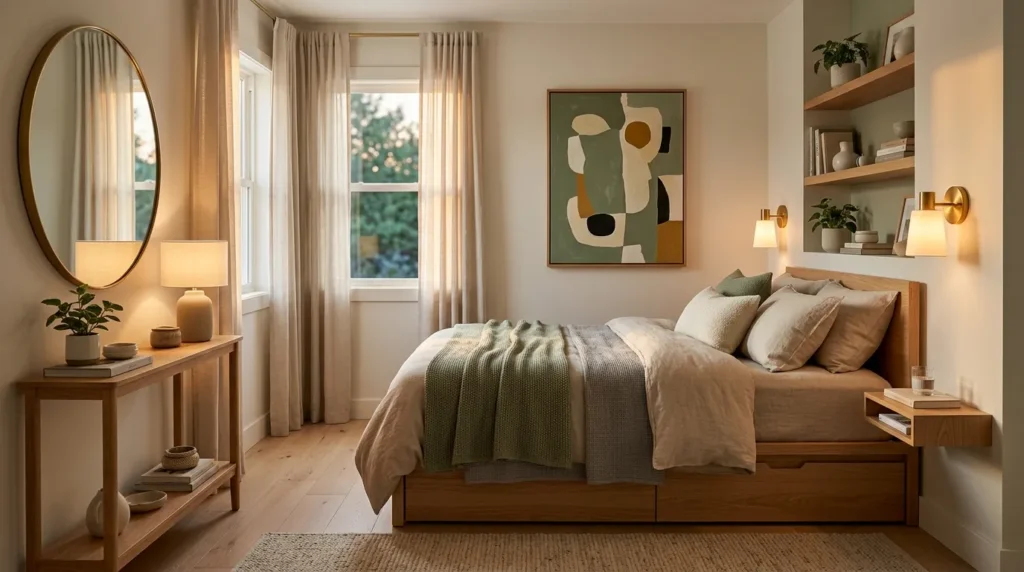
A small bedroom doesn’t have to feel like a compromise. With the right combination of multi-functional furniture, smart storage, a cohesive color palette, and layered lighting, even a modestly sized room can feel like a genuinely cozy, modern retreat. The seventeen small bedroom style ideas covered here — from low-profile bed frames and vertical storage to bold ceilings and intentional decluttering — all share a common thread: every choice in a small space needs to earn its place, whether that’s through function, visual impact, or both.
You don’t need to implement every idea at once. Start with the layout and furniture basics, then layer in lighting, texture, and personal touches over time. The result is a bedroom that feels considered and comfortable, not cramped — proof that small bedroom style ideas can deliver a big impact regardless of square footage.
Frequently Asked Questions
What is the best bed size for a small bedroom? A queen or full-size bed generally works well in most small bedrooms, leaving enough clearance for walking paths and additional furniture. In very compact rooms, a full-size or even a well-chosen twin/XL frame may be a better fit, especially if the room needs to double as a home office or guest space.
What colors make a small bedroom look bigger? Light, warm neutrals such as soft white, pale greige, and light sage tend to reflect more light and make a small bedroom feel more open. That said, a cohesive darker palette can also work well in small rooms with strong natural light, since the goal is coordination rather than avoiding color altogether.
How do I add storage to a small bedroom without making it feel cluttered? Focus on storage that’s built into existing furniture, such as a bed frame with drawers or a bench with a hidden compartment, and use vertical wall space for shelving rather than adding more freestanding pieces. Keeping surfaces styled with only a few intentional items also helps storage feel organized rather than crowded.
Should I avoid rugs in a small bedroom? No — a properly sized rug actually helps define the space and adds warmth underfoot. The key is choosing a rug that’s proportioned to the room and bed size, ideally extending slightly under the bed rather than floating in the middle of the floor, which can make the room look smaller and less cohesive.


