

10 Cozy Ways How to Decorate a Bedroom With Warm, Layered Lighting
Walk into a hotel room that feels instantly relaxing, and chances are it isn’t the furniture doing the heavy lifting — it’s the lighting. A single overhead bulb can make even the most beautifully furnished bedroom feel like a waiting room, while a thoughtful mix of warm, layered light sources can turn a plain space into a retreat. If you’ve been searching for how to decorate a bedroom that actually feels calm and inviting at the end of a long day, lighting is where you should start.
Most people decorate bedrooms visually — a new duvet, a rug, some wall art — and only think about lighting as an afterthought. But light shapes mood more than almost any other design element. It affects how colors read, how spacious a room feels, and even how well you sleep. The good news is that fixing bedroom lighting doesn’t require an electrician or a big budget. It just requires understanding a few principles and layering your light sources intentionally.
This guide walks through ten practical, cozy ways to decorate a bedroom with warm, layered lighting, along with the reasoning behind each one so you can adapt the ideas to your own space.
Why Layered Lighting Matters When Decorating a Bedroom
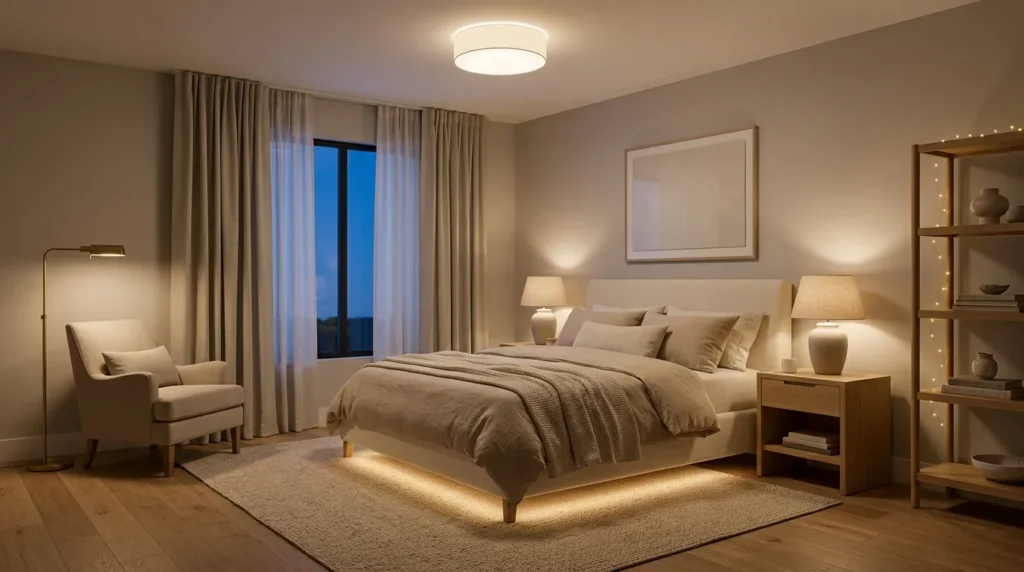
Before diving into the specific ideas, it helps to understand the concept of “layering.” Interior designers generally talk about three types of lighting:
- Ambient lighting – the general light that fills the room (ceiling fixtures, overhead lights)
- Task lighting – focused light for specific activities like reading or getting dressed
- Accent lighting – decorative light that adds mood, warmth, and visual interest
A bedroom that relies only on ambient lighting — one bright overhead fixture — tends to feel flat and clinical. When you combine ambient, task, and accent lighting at different heights and intensities, the room gains depth. Shadows soften, corners glow instead of going dark, and the whole space feels more intentional. This is the foundation of learning how to decorate a bedroom that feels warm rather than sterile.
With that in mind, here are ten specific ways to bring that layered warmth into your own bedroom.
1. Swap Overhead Lighting for Warmer Bulbs
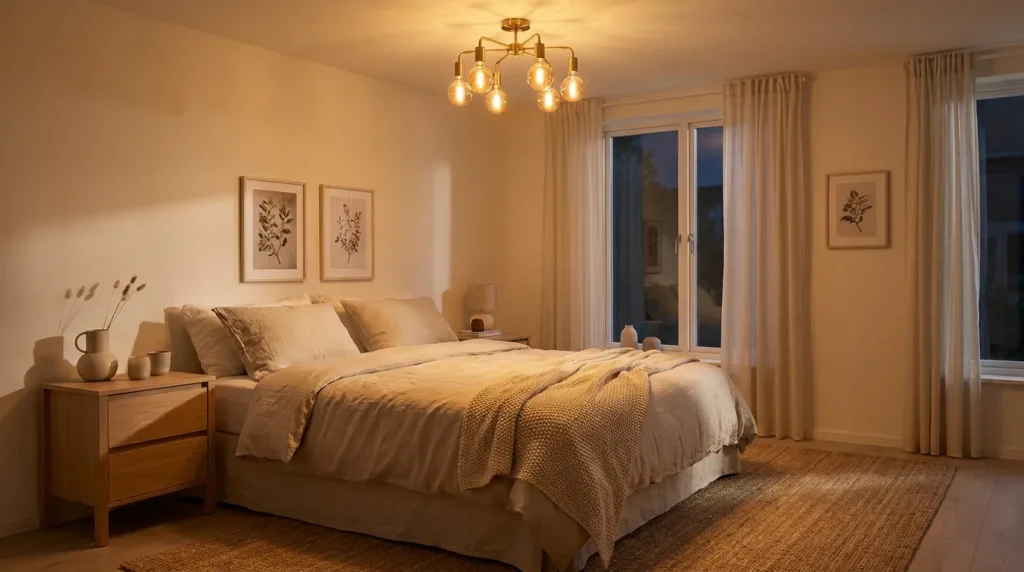
The single easiest change you can make is switching your bulbs. Most builder-grade fixtures come with cool white or daylight bulbs (5000K–6500K), which are designed for offices and kitchens, not bedrooms. For a cozy feel, look for bulbs in the 2200K–2700K range, often labeled “soft white” or “warm white.”
- Choose dimmable LED bulbs so you can control intensity depending on the time of day.
- Avoid anything labeled “daylight” or “cool white” for bedroom fixtures.
- If your fixture allows it, consider a slightly amber or filament-style bulb for extra warmth.
This one swap instantly makes a room feel softer, even before you add any new fixtures.
2. Add a Dimmer Switch to Your Main Light
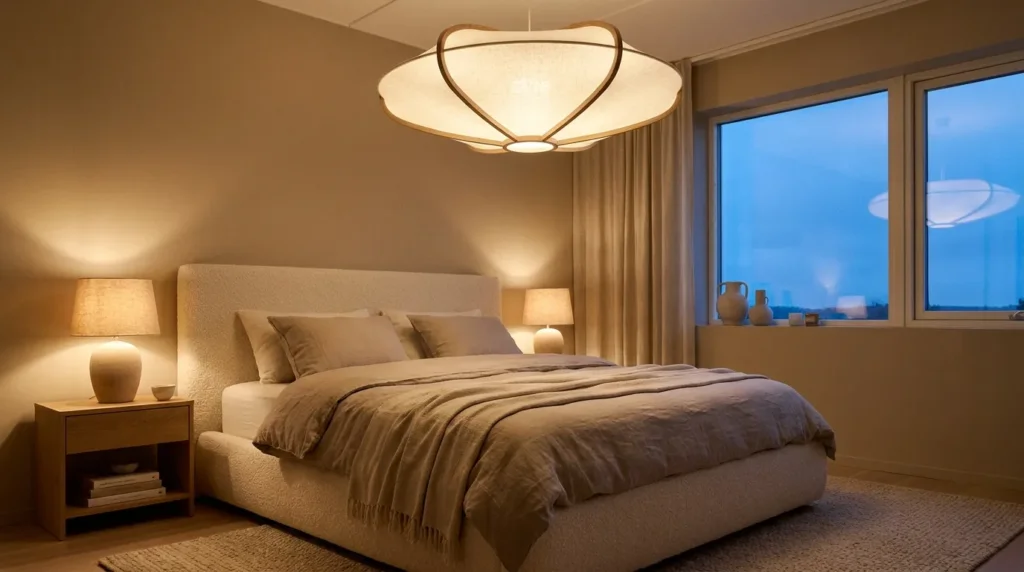
A dimmer switch is one of the most underrated upgrades in bedroom design. Full brightness is rarely necessary — most of the time you want soft, diffused light, and a dimmer lets you adjust on the fly rather than being stuck with one setting.
Installing a dimmer is a relatively simple electrical project, and many hardware stores sell plug-and-play dimmer switches that don’t require rewiring. If you rent your space and can’t modify wiring, plug-in dimmer modules for lamps are an easy workaround that gives you the same flexibility.
3. Layer in Bedside Table Lamps
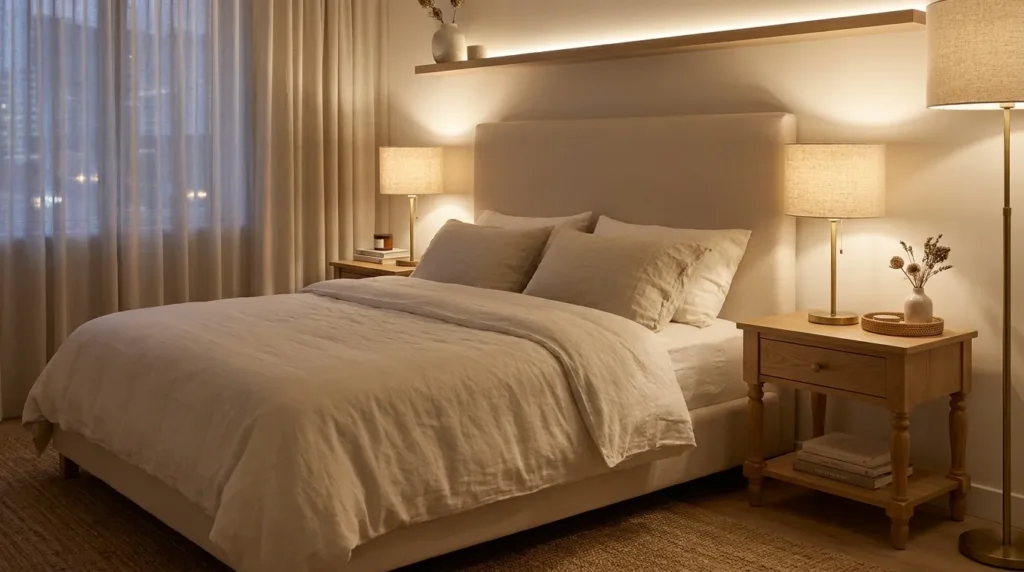
Nightstand lamps are a classic element of cozy bedroom decorating for good reason: they sit at a lower height than overhead lighting, which creates a softer, more intimate glow across the room. When choosing bedside lamps, consider:
- Shade material – linen or fabric shades diffuse light more softly than metal or glass
- Bulb warmth – stick to the same warm color temperature as your other fixtures
- Height – the bottom of the shade should generally sit at eye level when you’re sitting up in bed, so the light doesn’t shine directly into your eyes
Matching (or intentionally mismatched) lamps on either side of the bed also add symmetry or personality, depending on the look you’re going for.
4. Introduce a Floor Lamp in a Reading Corner
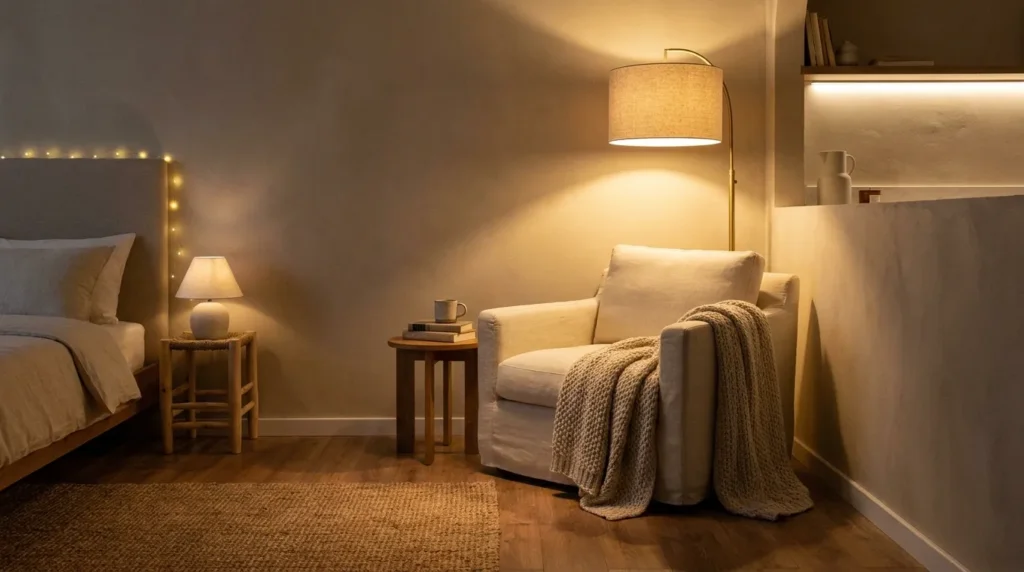
If your bedroom has a chair, bench, or reading nook, a floor lamp adds both function and atmosphere. A floor lamp with a fabric drum shade casts a warm pool of light downward and outward, perfect for reading before bed without flooding the whole room with brightness.
Arc floor lamps work well positioned near a chair without taking up floor space directly beside it, while tripod or pharmacy-style lamps are ideal for more compact corners. This is also one of the simplest ways to add height variation to your lighting layers, since it sits between the low glow of a table lamp and the higher position of ceiling fixtures.
5. Use String Lights or Fairy Lights With Restraint
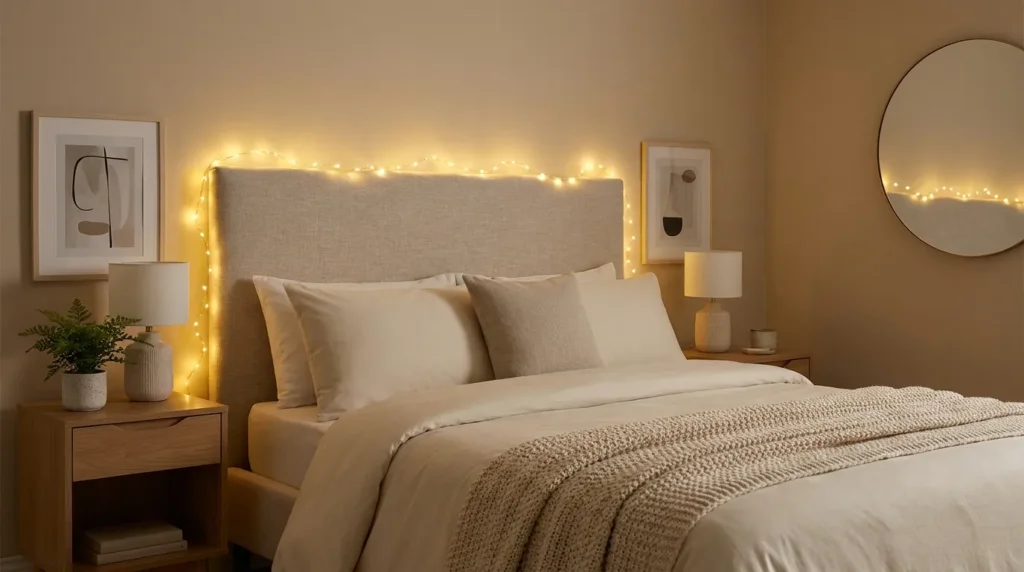
String lights have become a go-to for cozy bedroom decorating, and when used thoughtfully, they genuinely work. The key is restraint — a few well-placed strands read as intentional, while too many can feel cluttered or dorm-room-like.
Ideas that work particularly well:
- Draping warm white string lights along a headboard or behind a canopy frame
- Weaving them through an indoor plant or a decorative branch in a vase
- Outlining a window frame for a subtle glow at night
Choose warm white (not multicolor or cool white) LED string lights for a grown-up, polished look rather than a festive one.
6. Add Wall Sconces for a Boutique Hotel Feel
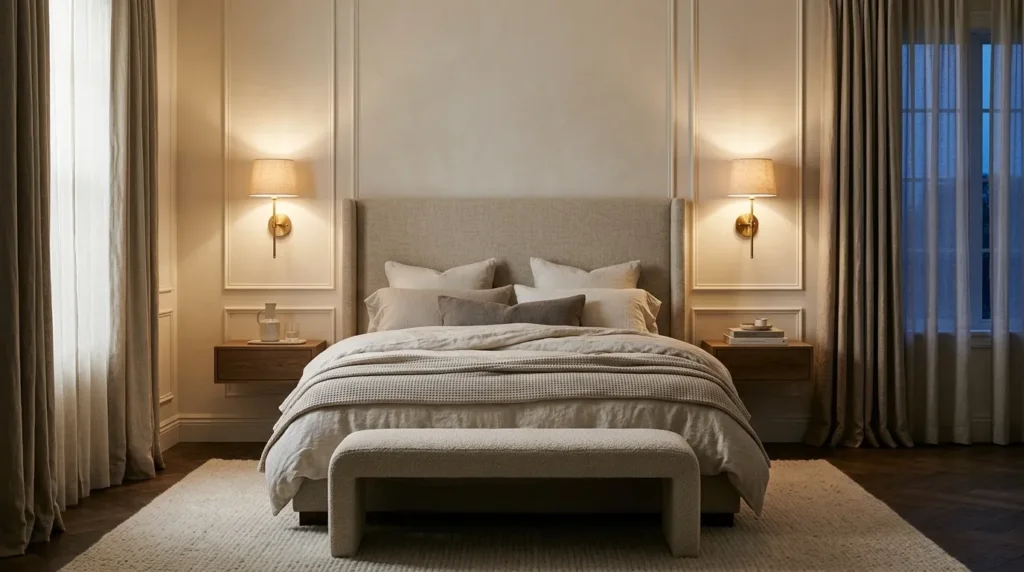
Wall sconces are a favorite among designers because they add ambient light without taking up any surface space — ideal for smaller bedrooms or nightstands that are already crowded with books, water glasses, and alarm clocks.
Plug-in sconces have made this upgrade accessible even for renters, since many models simply hang on a hook and plug into a nearby outlet, with the cord hidden using an adhesive cord cover. Positioned on either side of the bed at roughly shoulder height when seated, sconces create that soft, symmetrical glow often seen in boutique hotels.
7. Bring in Candles or Flameless Alternatives
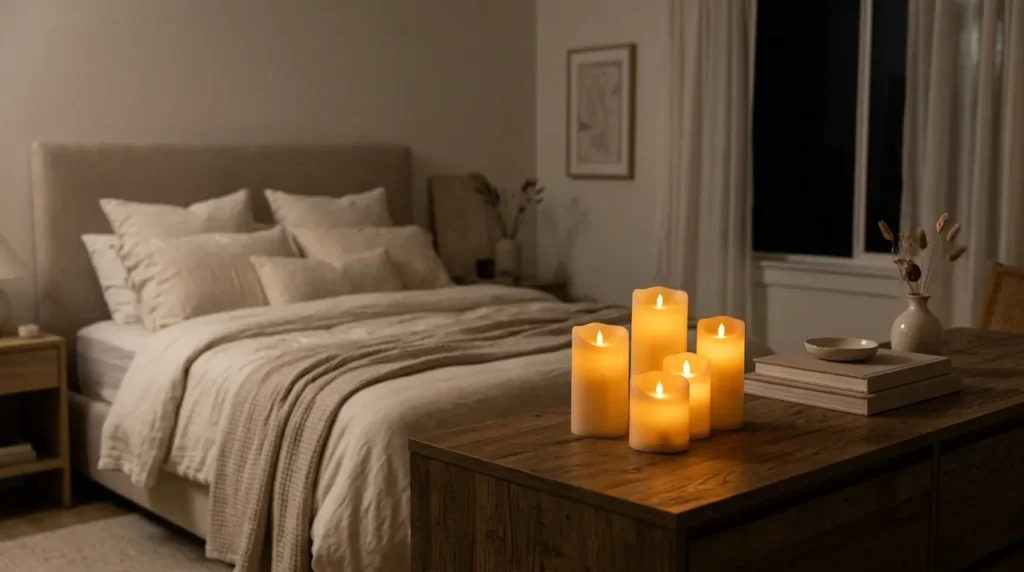
Nothing says “warm and layered” quite like candlelight. The flickering, low-intensity glow of a candle is one of the coziest light sources available, and it works beautifully as an accent layer rather than a primary light source.
- Cluster a few candles of varying heights on a dresser or windowsill for visual interest.
- If open flame isn’t practical, flameless LED candles with a realistic flicker effect offer a safer alternative, especially useful near bedding or curtains.
- Unscented or lightly scented candles are generally better for bedrooms, since strong fragrances can interfere with sleep for some people.
This is a small addition, but it adds a noticeable amount of warmth and texture to the overall mood of the room.
8. Try a Himalayan Salt Lamp or Amber-Toned Accent Light
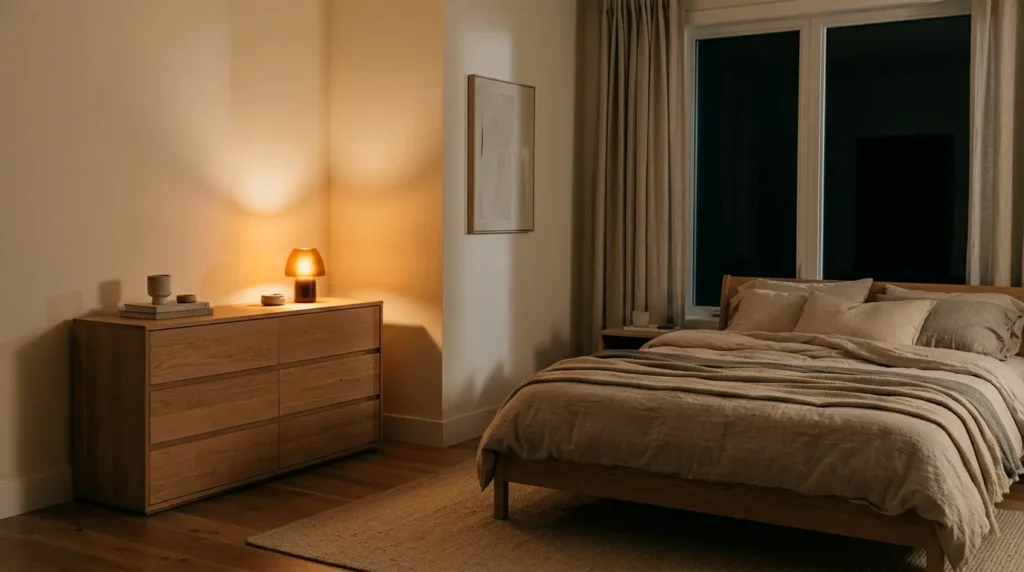
For a soft, ambient glow that works well left on overnight, an amber or salt-toned accent lamp is a simple addition. These lamps emit a naturally warm, low-intensity light that’s gentle on the eyes if you wake up during the night, without the harshness of a standard nightlight.
Place one on a dresser, windowsill, or low shelf rather than at eye level, so the light source itself stays out of your direct line of sight while still filling the corners of the room with a gentle glow.
9. Add Under-Bed or Under-Furniture LED Strips
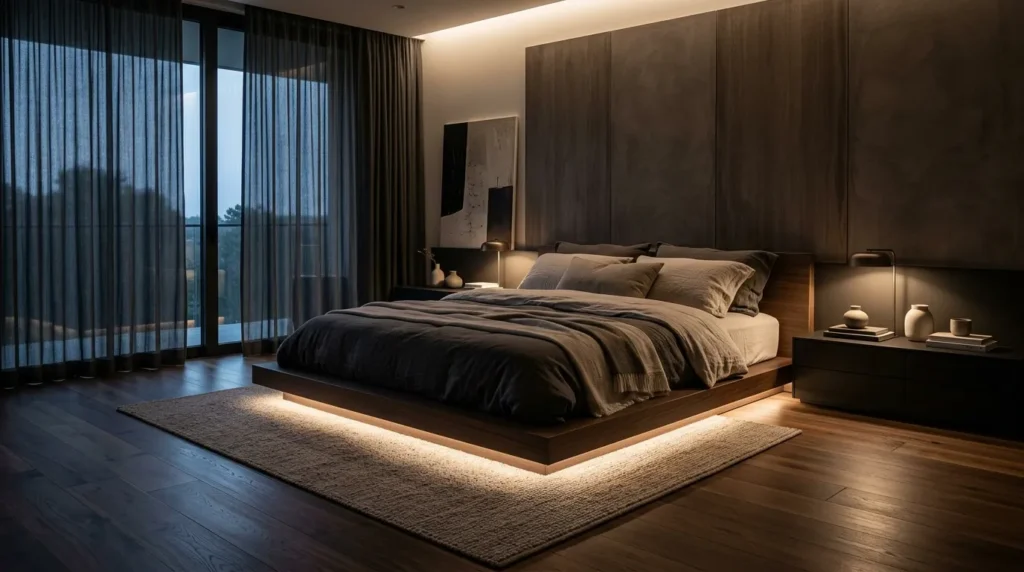
For a more modern take on layered lighting, LED strip lights tucked beneath a bed frame, floating nightstand, or dresser create a soft “floating” effect that adds depth without visual clutter. This technique is especially effective in bedrooms with darker flooring, since the glow reflects subtly against the floor.
- Choose warm white strips (again, avoid cool white or default “daylight” settings)
- Use a remote or app-controlled strip so you can adjust brightness without unplugging anything
- Keep the strip tucked out of sight so you see the glow, not the light source itself
This works particularly well in bedrooms with platform beds or open-frame furniture where there’s a visible gap beneath the piece.
10. Group Light Sources at Different Heights
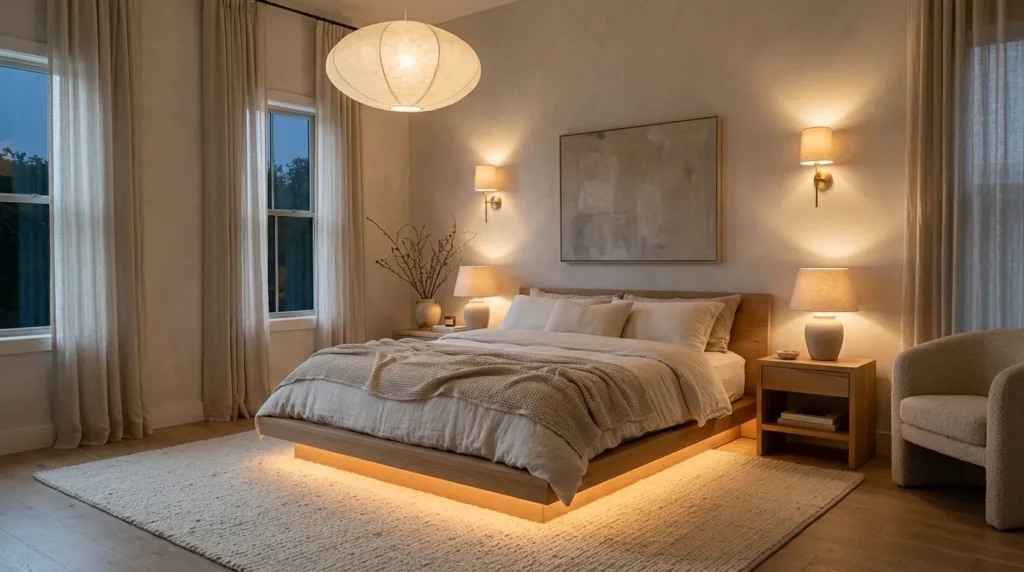
The final and arguably most important step in learning how to decorate a bedroom with layered lighting is thinking about height variation as a whole. Instead of treating each lamp or fixture as a standalone item, step back and look at the room holistically:
- Low light: floor lamps, under-bed strips, salt lamps
- Mid-level light: table lamps, wall sconces
- High light: pendant lights, flush-mount fixtures, string lights along a headboard or ceiling line
When light sources are spread across these different heights rather than clustered at one level, the room reads as layered and dimensional rather than flat. This is the visual effect that makes professionally designed bedrooms feel so much cozier than a standard setup with a single ceiling light.
Common Mistakes to Avoid
Even with good intentions, a few missteps can undercut your efforts:
- Mixing bulb temperatures – Combining warm and cool bulbs in the same room creates a mismatched, uneven look. Stick to one warm color temperature throughout.
- Relying on one light source – A single lamp, no matter how nice, can’t replace layering. Aim for at least three different light sources at varying heights.
- Overly bright accent lighting – Accent lights like string lights or salt lamps should stay soft and secondary, not compete with your main light source.
- Ignoring dimmers – Fixed-brightness lighting limits flexibility. Dimmers (or smart bulbs with adjustable brightness) let the room adapt from morning routines to nighttime wind-down.
- Forgetting natural light – Sheer curtains that filter daylight softly during the day pair well with warm artificial lighting at night, keeping the room balanced around the clock.
Conclusion
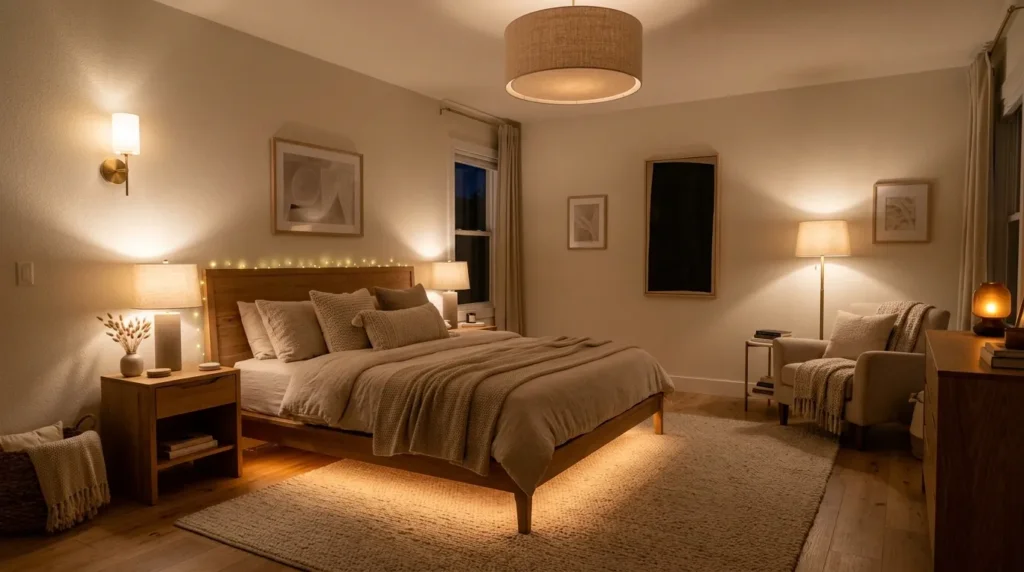
Lighting is one of the most overlooked yet impactful elements when decorating a bedroom. A few strategic changes — warmer bulbs, a dimmer switch, a bedside lamp, a floor lamp in a reading nook, restrained string lights, sconces, candles, an amber accent lamp, under-furniture LED strips, and thoughtful height variation — can transform a flat, uninviting room into a genuinely cozy retreat. You don’t need to implement all ten ideas at once. Start with the bulb swap and a bedside lamp, then build up your layers over time as you get a feel for what the room needs.
Ultimately, learning how to decorate a bedroom with warm, layered lighting comes down to one principle: light should feel like it’s coming from multiple soft sources rather than one harsh one. Once you get that layering right, everything else in the room — the bedding, the artwork, the furniture — tends to feel warmer and more intentional too.
Frequently Asked Questions
What color temperature is best for bedroom lighting? For a warm, cozy feel, look for bulbs in the 2200K–2700K range, often labeled “soft white” or “warm white.” Anything above 3000K starts to read as cooler and more clinical, which works well in kitchens or bathrooms but tends to feel out of place in a bedroom meant for relaxing and sleeping.
How many light sources should a bedroom have? There’s no strict rule, but aiming for at least three light sources at different heights — such as an overhead fixture, a bedside lamp, and one accent light like a floor lamp or string lights — creates the layered effect that makes a room feel cozy rather than flat. Larger bedrooms may benefit from four or five sources spread around the space.
Is it okay to use string lights in an adult bedroom? Yes, as long as they’re used with restraint and in warm white rather than multicolor. Draping a single strand along a headboard or weaving them through a plant reads as intentional and stylish, while covering an entire wall or ceiling can start to feel more like a dorm room than a designed space.


