Front Room Interior Design Ideas: Simple Tips for a Stylish Living Space
Introduction
The front room often creates the first impression of a home, so its design needs to balance style, comfort, and everyday function. Whether your front room is a formal sitting area, a family living room, or a flexible space used for entertaining, small design choices can make a significant difference. The right layout can improve movement, a thoughtful color palette can establish the mood, and carefully selected furniture can make the room feel both polished and comfortable.
If you are looking for front room interior design ideas, it helps to begin with the basics rather than buying decorative items immediately. Think about the room’s size, natural light, existing furniture, storage needs, and the way your household uses the space. The ideas below focus on practical decisions that can help you create a stylish living area without making it feel overdecorated.
- Start With a Practical Front Room Layout
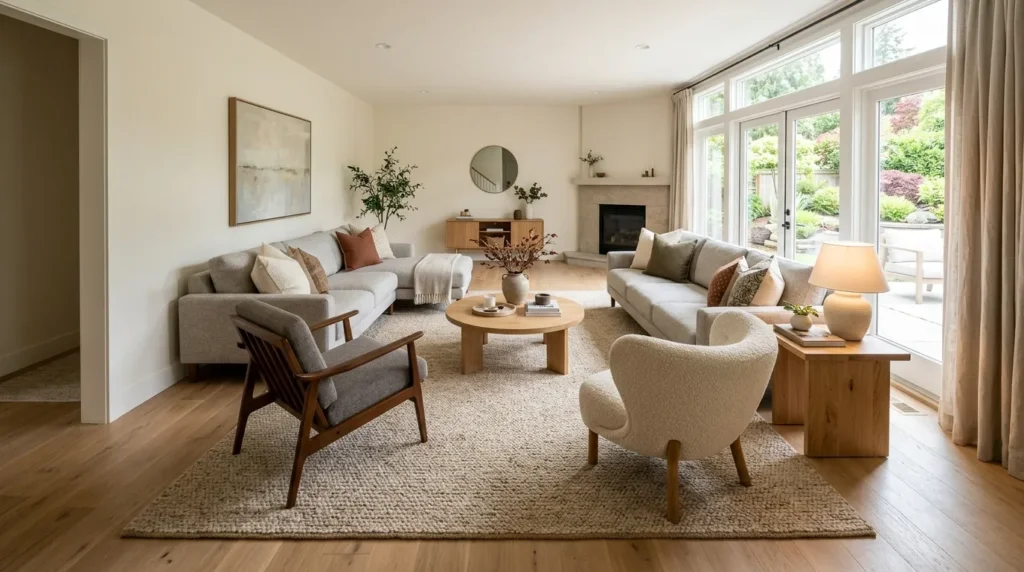
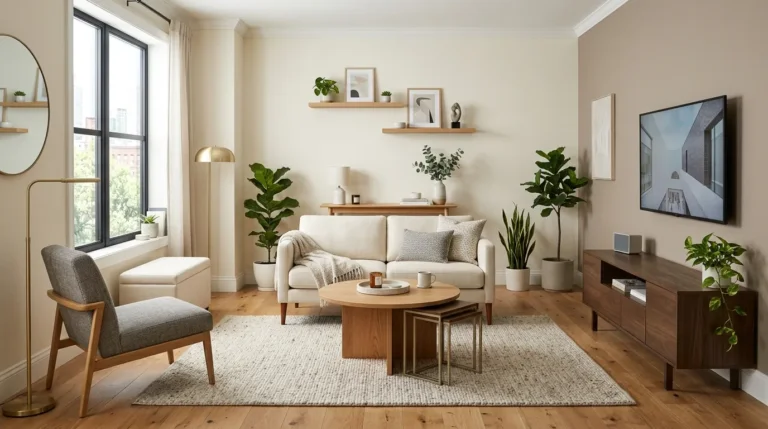
A well-planned layout is the foundation of attractive front room interior design ideas. Before choosing furniture, consider how people enter the room, where they naturally walk, and which areas should remain open. The main seating should encourage conversation while still leaving enough space to move comfortably around tables and doorways.
Begin with the largest pieces, usually the sofa, chairs, and media unit. Position them first and then add smaller furniture around them. Avoid filling every wall simply because there is empty space. A little negative space can make the room feel more spacious and organized.
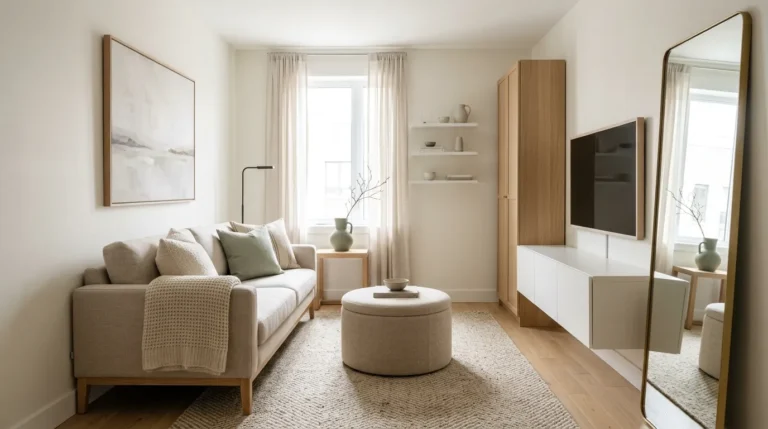
If the front room is narrow, consider a compact sofa paired with one or two accent chairs instead of an oversized sectional. For a larger room, you can create a central conversation area using a sofa, chairs, and a coffee table. The layout should reflect how you actually use the room rather than following a fixed furniture arrangement.
- Choose a Color Scheme That Sets the Mood
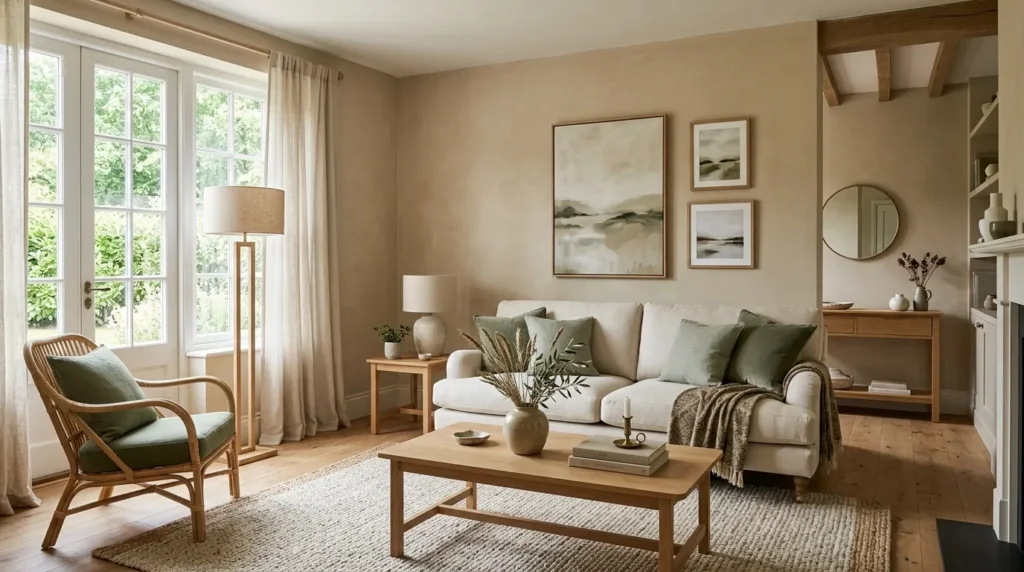
Color has a major influence on how a front room looks and feels. Soft neutrals such as warm white, beige, cream, and light greige create a calm foundation and make it easier to change decorative accents later. If you prefer a more dramatic room, deeper shades can be introduced through one wall, furniture, curtains, or artwork.
A simple approach is to choose one main wall color, one supporting neutral, and one or two accent colors. For example, warm beige walls can work with cream seating, natural wood, and muted green accessories. A neutral base also allows statement furniture or artwork to become the visual focus.
Pay attention to natural light before selecting paint. A shade that looks warm in a brightly lit room may appear different in a darker space. Test samples on the actual wall and observe them during both daytime and evening lighting before making a final decision.
- Select Furniture That Fits the Room
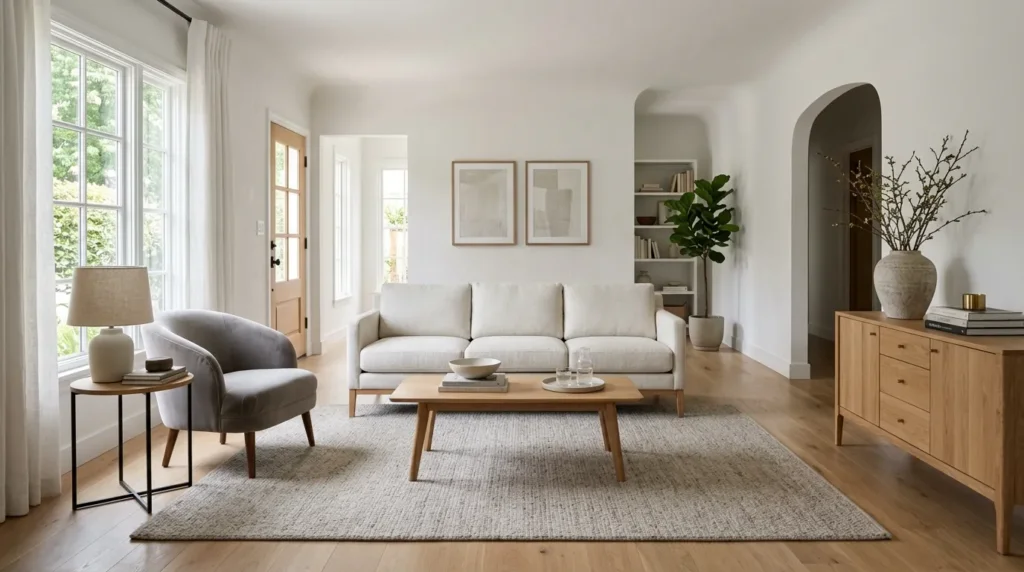
Furniture should be proportional to the size and shape of the front room. One of the most common decorating mistakes is choosing pieces that are too large for the available floor area. A sofa should provide comfortable seating without making the room difficult to navigate.
Measure the room and the furniture before purchasing anything. Leave practical clearance around doors, walkways, and frequently used surfaces. In a compact room, furniture with exposed legs can create a lighter visual effect, while built-in or streamlined pieces can reduce visual clutter.
Do not feel that every item has to come from the same collection. Mixing a contemporary sofa with a traditional side table or natural wood furniture can create a more layered interior. The important thing is to repeat a few materials, colors, or shapes so the room still feels cohesive.
- Create a Focal Point With a Statement Element
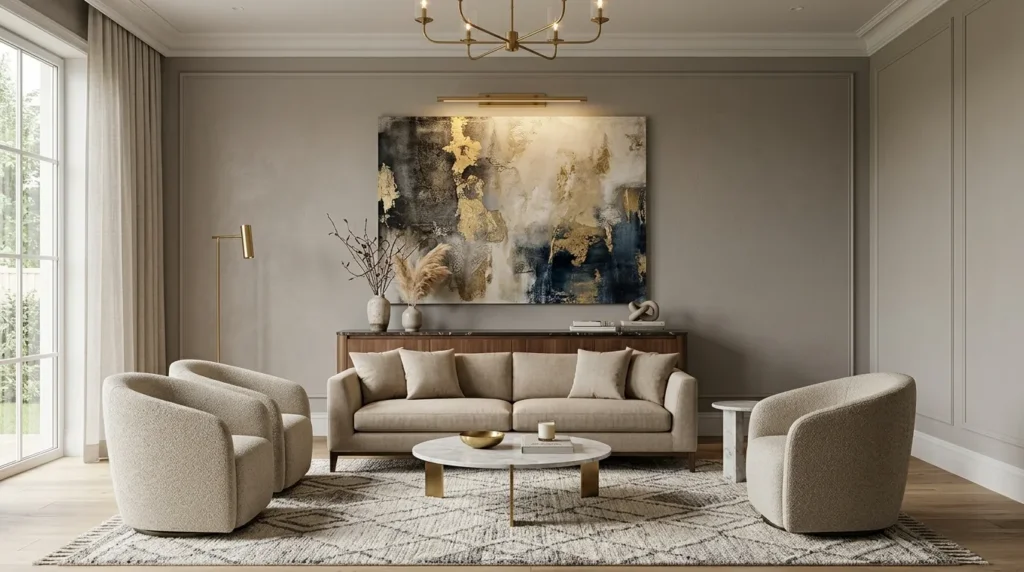
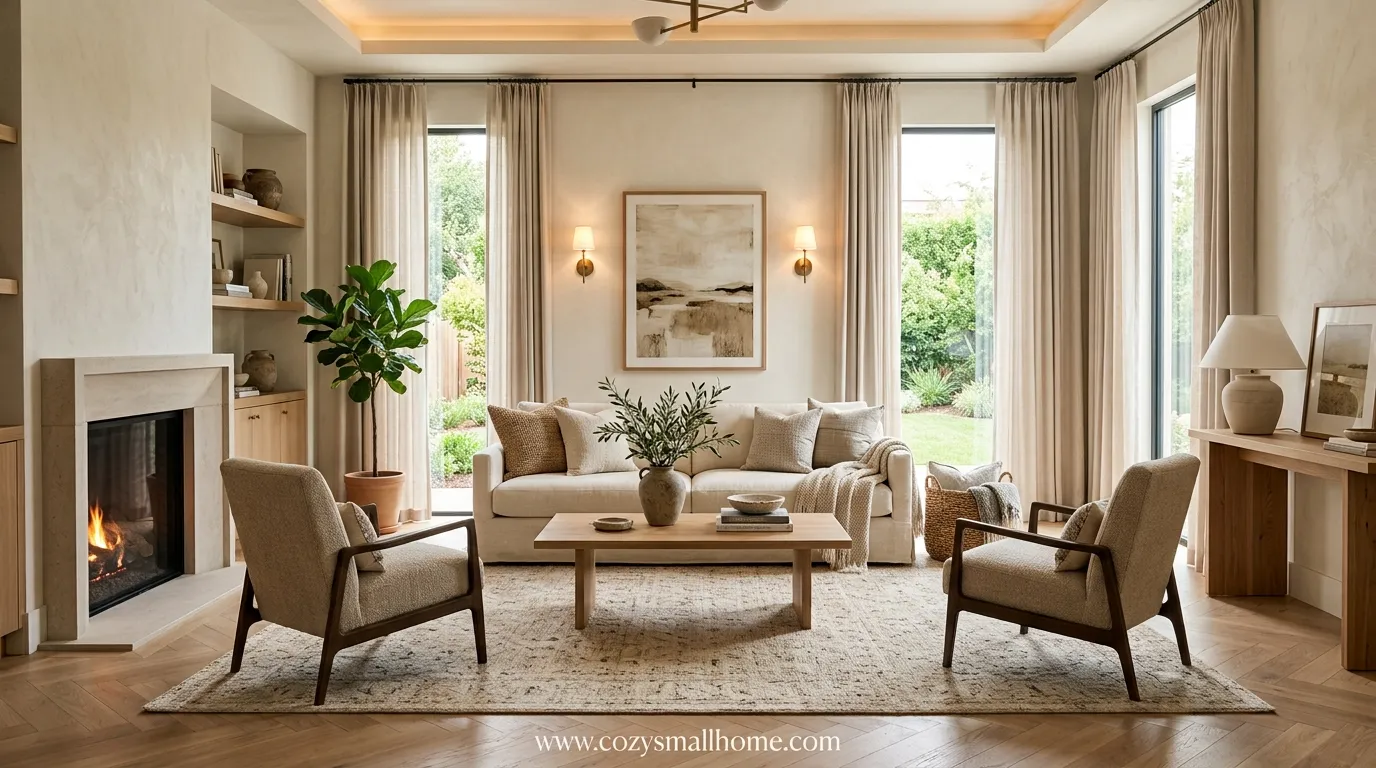
Every front room benefits from a visual focal point. This could be a fireplace, a large artwork, a feature wall, an attractive media unit, or even a distinctive piece of furniture. A clear focal point gives the eye somewhere to rest and helps the rest of the décor feel intentional.
If the room already has an architectural feature, use it instead of competing with it. A fireplace can be emphasized with artwork or carefully selected accessories. If there is no obvious feature, a large framed artwork or an accent wall behind the sofa can establish one.
Keep the area around the focal point relatively controlled. Too many competing decorations can weaken the effect. A strong focal point usually works better when the surrounding elements support it rather than trying to attract equal attention.
- Use Lighting to Add Warmth and Function
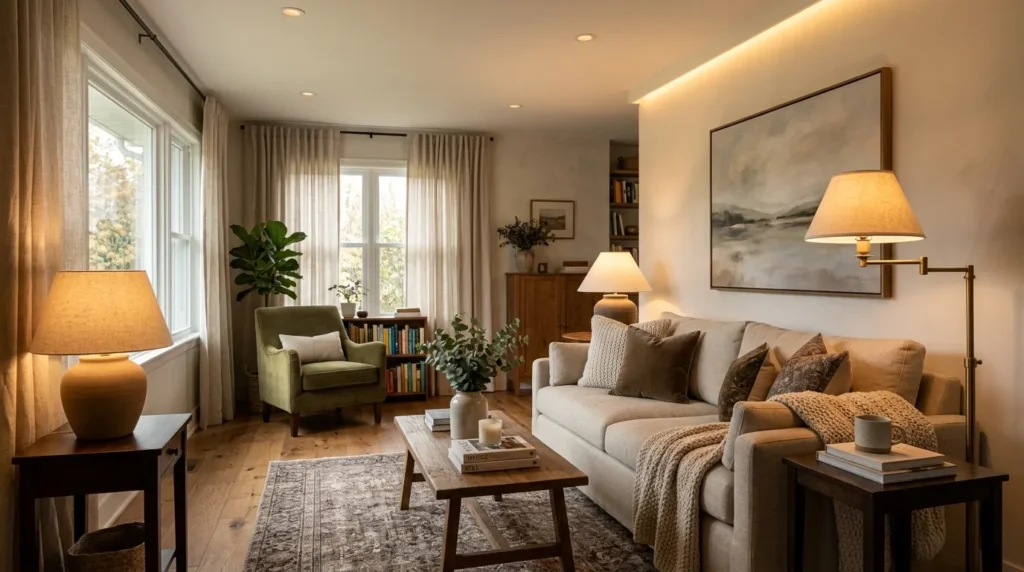
Lighting is one of the most effective ways to improve a front room without changing the furniture. Instead of relying on a single ceiling fixture, use several layers of light. Ambient lighting provides general illumination, task lighting helps with reading or focused activities, and accent lighting highlights artwork or architectural details.
A floor lamp beside a sofa can create a comfortable reading corner, while a table lamp can add warmth to a side table or console. Wall lights can be useful when floor space is limited. If the room has good natural light, keep window treatments flexible so daylight can enter freely during the day.
The color temperature of your bulbs also affects the atmosphere. Warm lighting generally creates a relaxed residential feel, while brighter, cooler lighting can feel more energetic. Use lighting intentionally according to the activities and mood you want the room to support.
- Add Texture With Rugs, Curtains, and Accessories
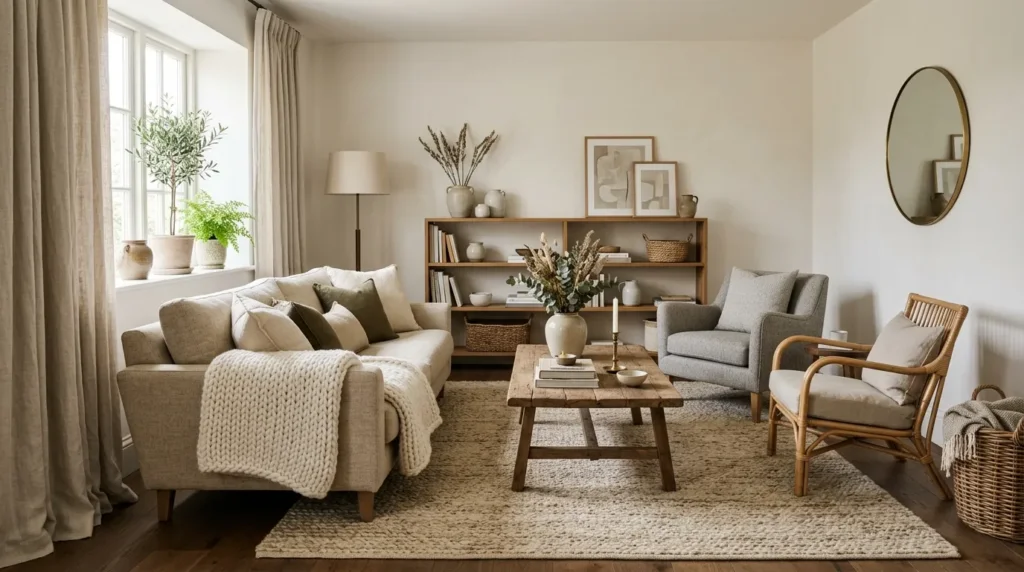
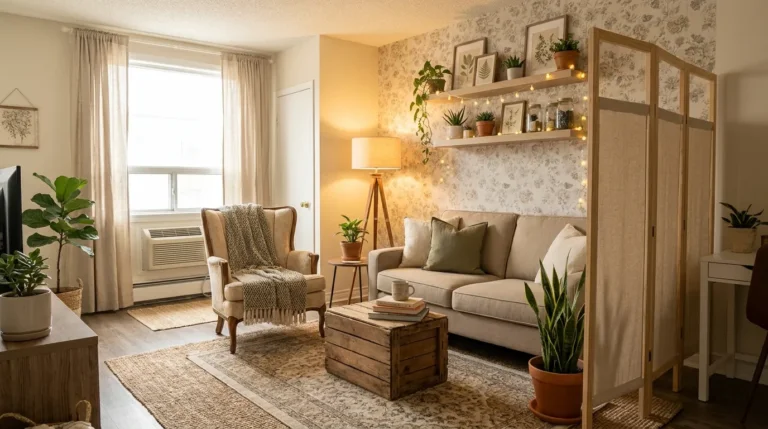
A room can have the right furniture and colors but still feel flat if every surface has the same texture. Layering materials is a simple way to make front room interior design ideas feel richer and more comfortable. A rug, curtains, cushions, throws, and upholstered furniture can introduce softness and visual depth.
Choose a rug large enough to connect the main seating pieces where possible. A rug that is too small can make the furniture arrangement look disconnected. Curtains can also make a room feel more finished, especially when they are hung at an appropriate height and extend enough to frame the window.
Mix materials rather than using the same finish everywhere. Wood, woven fabrics, metal, glass, and ceramics can work together when they share a consistent color direction. Texture is particularly valuable in neutral rooms because it adds interest without requiring strong colors.
- Decorate Walls Without Creating Clutter
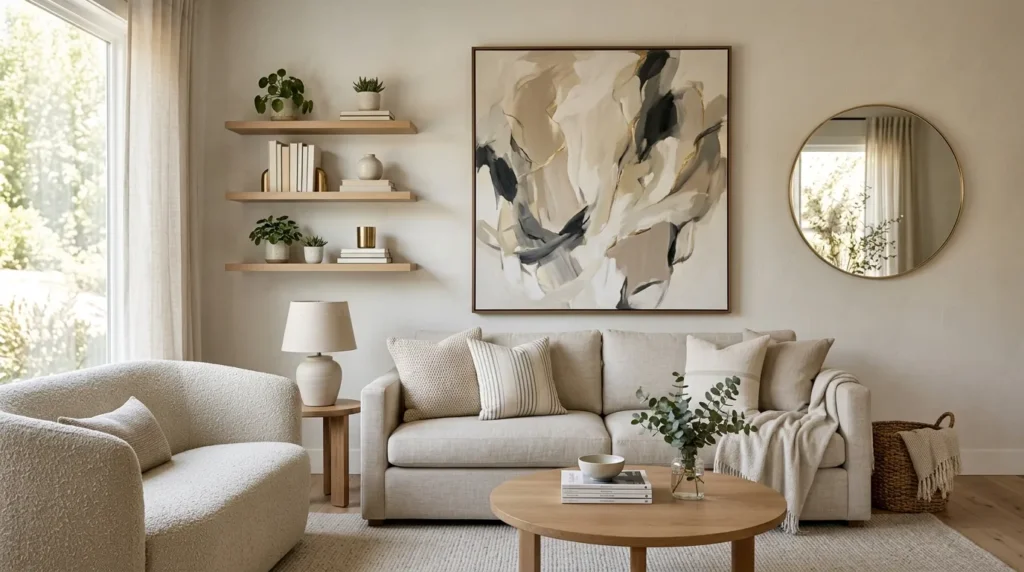
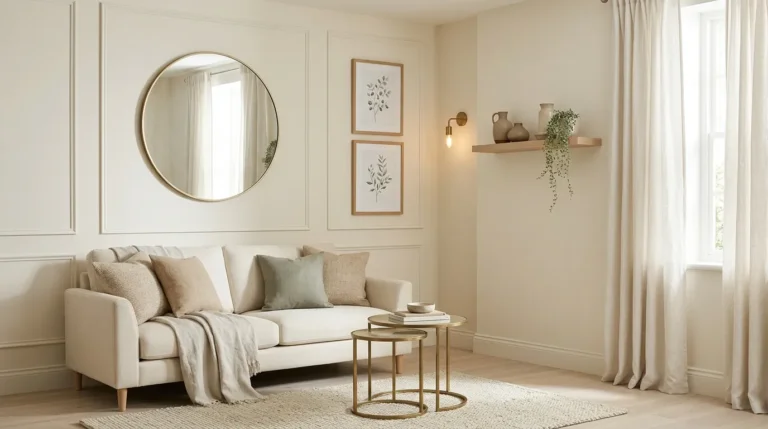
Wall décor can personalize a front room, but more is not always better. Start by identifying one or two walls that would benefit from artwork, mirrors, shelves, or a feature treatment. A large artwork can often create more impact than many small pieces scattered around the room.
A gallery wall can work well when the frames and artwork have a visual connection. For a simpler look, choose one oversized print above the sofa or console. Mirrors can also make a room feel brighter and visually expand the space, particularly when positioned to reflect daylight or an attractive part of the room.
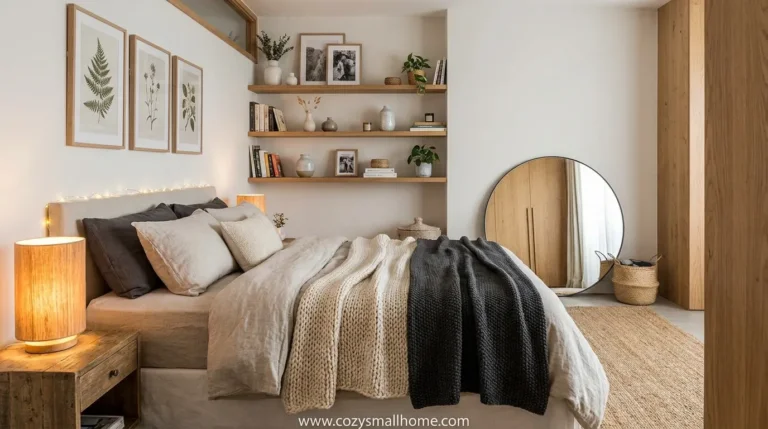
Shelves should be styled with a mixture of books, small objects, plants, and empty space. Avoid filling every shelf completely. Leaving some breathing room helps the display look deliberate rather than crowded.
- Front Room Interior Design FAQs
What should I put in a front room?
A typical front room can include comfortable seating, a coffee table, side tables, lighting, a rug, window treatments, and selected decorative pieces. The exact combination should depend on the room’s size and how you use it.
How can I make my front room look stylish on a budget?
Start with layout and decluttering before buying new items. Updating cushions, curtains, lighting, artwork, or a rug can make a noticeable difference without replacing all the furniture.
What colors are best for a front room?
Warm white, beige, cream, greige, soft gray, and muted earthy shades are versatile choices. Stronger colors can be added through accents or a feature wall.
How do I make a small front room look bigger?
Use appropriately scaled furniture, keep walkways open, maximize natural light, reduce visible clutter, and consider light or consistent colors. A well-positioned mirror can also increase the sense of openness.
How many decorative items should a front room have?
There is no fixed number. Aim for a balanced arrangement in which useful surfaces and shelves have enough decoration to feel personal without becoming visually crowded.
Bring the Room Together With a Personal Touch

A stylish front room does not need expensive furniture or complicated decoration. The strongest results usually come from getting the fundamentals right: a practical layout, a coordinated color palette, appropriately sized furniture, useful lighting, and a controlled amount of décor.
Once those elements are in place, add pieces that reflect your taste and make the room comfortable to use. A favorite artwork, a meaningful object, natural materials, or a few well-chosen textiles can give the space character without overwhelming it. The goal is to create a front room that feels welcoming when guests arrive and comfortable enough for everyday life.